
Targeted ads coming to TV

Ready for TV ads customized to your age, sex and income? Too late

Topics: Television, Advertising, commercials, technology, Business, Sony, Gracenote, , , , ,

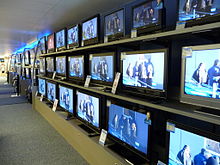
Targeted ads coming to TV Televisions (Credit: via Wikipedia)

Get ready for TV that watches you back.

As targeted advertising has fueled the growth of internet giants like Google and Facebook, the $70 billion TV commercial market has remained in the dark. Sure there are beer ads during the Super Bowl, but to a far greater degree than on the internet, advertisers just pay for their spots and hope to find a receptive audience. That could change next year with the debut of a new technology from Gracenote, a division of Sony.

TechCrunch reports, “Gracenote‘s new ad replacement system combines viewing habits with personal info to show you more relevant commercials.” While some consumers will undoubtedly appreciate a technology that delivers ads for things they’re more likely to buy—reporter Josh Constine writes “I literally left my meeting with company giddy with the possibilities” – some blowback about personal data collection is probably inevitable, like the last gasps of a defeated army.

Constine describes the technology as follows:

Uses video fingerprinting to identify what you watch and when a show is about to go to a commercial. It integrates your viewing habits data with another tech provider like INVIDI’s ad decisioning engine that pulls in public information about your gender, age, income, if you rent or buy your home, if you have a car lease, and other credit profile info. The ad decisioning engine’s algorithms crunch the data and decide what ad would be most relevant to you.

The article describes a demonstration where a man with income of $50,000-$75,000 might see an ad for a Honda while a younger, women with a lower income watching the same program would see an add for Levis. Through another technology, Gracenote will also be able to coordinate with “second screens” such as tablets to customize that part of the viewer experience as well.

While TechCrunch doesn’t lay out a definitive business model for Gracenote it offers several clues. The technology could be built into TVs which would also alter “the balance of power in TV ads by giving TV makers a seat at the table with broadcasters and advertisers” and provide a boost to the moribund manufacturing business. Gracenote will also be able to collect much more accurate information about TV commercial performance, data big advertisers would be happy to pay for.


Continue Reading Close

Alex Halperin is news editor at Salon. You can follow him on Twitter @alexhalperin.

Next Article

Featured Slide Shows

What To Read Awards: Top 10 Books of 2012 slide show

close X
  • Share on Twitter
  • Share on Facebook
  • Thumbnails
  • Fullscreen
  • 1 of 10
  • 10. "The Guardians" by Sarah Manguso: "Though Sarah Manguso’s 'The Guardians' is specifically about losing a dear friend to suicide, she pries open her intelligent heart to describe our strange, sad modern lives. I think about the small resonating moments of Manguso’s narrative every day." -- M. Rebekah Otto, The Rumpus

  • 9. "Beautiful Ruins" by Jess Walter: "'Beautiful Ruins' leads my list because it's set on the coast of Italy in 1962 and Richard Burton makes an entirely convincing cameo appearance. What more could you want?" -- Maureen Corrigan, NPR's "Fresh Air"

  • 8. "Arcadia" by Lauren Groff: "'Arcadia' captures our painful nostalgia for an idyllic past we never really had." -- Ron Charles, Washington Post

  • 7. "Gone Girl" by Gillian Flynn: "When a young wife disappears on the morning of her fifth wedding anniversary, her husband becomes the automatic suspect in this compulsively readable thriller, which is as rich with sardonic humor and social satire as it is unexpected plot twists." -- Marjorie Kehe, Christian Science Monitor

  • 6. "How Should a Person Be" by Sheila Heti: "There was a reason this book was so talked about, and it’s because Heti has tapped into something great." -- Jason Diamond, Vol. 1 Brooklyn

  • 4. TIE "NW" by Zadie Smith and "Far From the Tree" by Andrew Solomon: "Zadie Smith’s 'NW' is going to enter the canon for the sheer audacity of the book’s project." -- Roxane Gay, New York Times "'Far From the Tree' by Andrew Solomon is, to my mind, a life-changing book, one that's capable of overturning long-standing ideas of identity, family and love." -- Laura Miller, Salon

  • 3. "Billy Lynn's Long Halftime Walk" by Ben Fountain: "'Billy Lynn's Long Halftime Walk' says a lot about where we are today," says Marjorie Kehe of the Christian Science Monitor. "Pretty much the whole point of that novel," adds Time's Lev Grossman.

  • 2. "Bring Up the Bodies" by Hilary Mantel: "Even more accomplished than the preceding novel in this sequence, 'Wolf Hall,' Mantel's new installment in the fictionalized life of Thomas Cromwell -- master secretary and chief fixer to Henry VIII -- is a high-wire act, a feat of novelistic derring-do." -- Laura Miller, Salon

  • 1. "Behind the Beautiful Forevers" by Katherine Boo: "Like the most remarkable literary nonfiction, it reads with the bite of a novel and opens up a corner of the world that most of us know absolutely nothing about. It stuck with me all year." -- Eric Banks, president of the National Book Critics Circle

  • Recent Slide Shows

  • Share on Twitter
  • Share on Facebook
  • Thumbnails
  • Fullscreen
  • 1 of 10

More Related Stories

Comments

4 Comments

Comment Preview

Your name will appear as username ( profile | log out )

You may use these HTML tags and attributes: <a href=""> <b> <em> <strong> <i> <blockquote>