

None of us was prepared for what happened next in Zuccotti Park. It was surprising enough that the police did not immediately evict the occupiers. We expected the most likely scenario was for hundreds of riot cops, backed up by horses and copters, to be unleashed against us that very night. This would certainly be in keeping with the style of the NYPD, whose usual strategy is to overwhelm protesters with sheer force of numbers. Yet in this case, someone made the decision to hold back.
One reason was the ambiguity of the legal situation: While public parks close by 12 p.m., Zuccotti Park was a public-private hybrid, owned by an investment firm, Brookfield Office Properties. Technically such “privately owned public properties” are accessible to the public twenty-four hours a day. Still, by our experience, the mere existence of such a law would have been of little relevance if the authorities decided they wanted to evict us anyway, but it allowed something of a fig leaf. But why did they even want a fig leaf?
At first, the police strategy was, instead, one of constant petty harassment, to make conditions so unpleasant we would eventually leave. “No tents” became “no tarps”; power was cut off; generators were appropriated; all forms of amplification were declared illegal, but mysterious construction projects involving jackhammers began all around us. While no one was arrested for sleeping in the park, protesters were made aware they could be arrested for almost anything else: On the very first day, when a small group marched to a nearby branch of Bank of America to chant slogans outside, two were arrested for having bandanas around their necks — on the basis of an obscure eighteenth-century masking law originally created to control Irish highwaymen in colonial New York. The fact that none of the protesters were actually wearing their bandanas as masks and the arrest was clearly illegal was irrelevant — or, depending on how you look at it, the entire point. The next day, police upped the ante by arresting two occupiers for writing slogans with chalk on the sidewalk. When onlookers pointed out that in New York it is not illegal to write with chalk on the sidewalk, the arresting officer remarked, “Yeah, I know.”
The park continued to host thousands during the day, and hundreds remained at night. A community began to emerge, with a library and kitchen and free medical clinic, livestream video teams, arts and entertainment committees, sanitation squads, and so on. Before long there were thirty-two different working groups, ranging from an Alternative Currency group to a Spanish-language caucus. General Assemblies were held at 3 p.m. every day. Even more remarkably, other camps began springing up across America. They, too, created General Assemblies and tried to implement the hand signals and other means of operating by consensus-based direct democracy. Within a week or two there were at least a hundred, and within a month, purportedly, six hundred different occupations: Occupy Portland, Occupy Tuscaloosa, Occupy Phoenix, Occupy Cincinnati, Occupy Montreal.
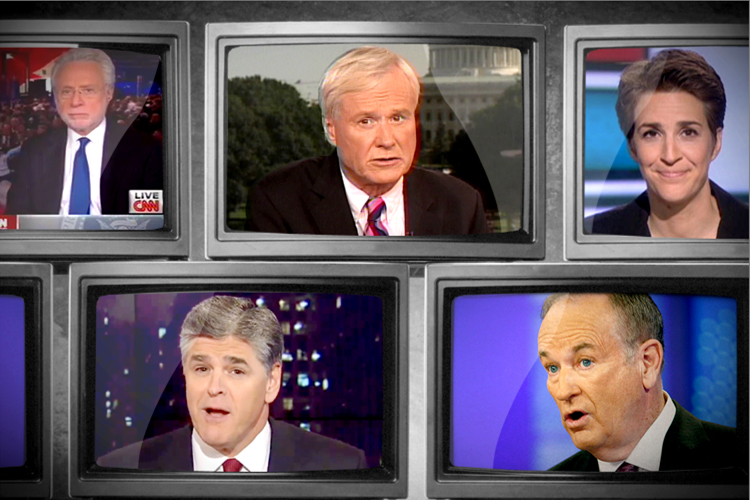
The occupiers were not only studiously nonviolent, at first their tactics, other than the encampment itself, consisted of little more than marching — though they began to expand to nonviolent civil disobedience with the famous blockade of the Brooklyn Bridge on October 2. Here is where the NYPD unleashed their traditional ferocity. This wasn’t surprising: Non-violent protesters, in New York, as in most U.S. cities, even at legal but unpermitted events, can regularly expect to be physically attacked. Anyone who strayed off the sidewalk, for example, could not only expect to be arrested, but, typically, slammed against the nearest vehicle or have their heads repeatedly smacked against the concrete. Batons were used freely on unresisting marchers. All of this is standard fare, and most of us protest veterans saw nothing particularly remarkable about it. What was unprecedented in this case was that some in the mainstream media, at first largely the cable media like MSNBC, but before long, even network news, began to notice and make an issue of it. This was in part because some of the phone-camera videos of the police violence went viral on the Internet; before long, Tony Bologna, a police officer caught on video arbitrarily pepper-spraying two young women trapped behind a barricade, then casually sauntering away, became very close to a household name. But in the past, even such a viral video would never have made it onto the evening news.
As a result, our numbers grew dramatically. What’s more, union support materialized and rallies became larger and larger — instead of a couple thousand people coming to Zuccotti to rally or assemble for marches during the day, the crowds swelled to the tens of thousands. Thousands across America began trying to figure out how to send in contributions and started calling in an almost unimaginable wave of free pizzas. The social range of the occupiers also expanded: The crowd, which in the first few days was extremely white, soon diversified, so that within a matter of weeks we were seeing African-American retirees and Latino combat veterans marching and serving food alongside dreadlocked teenagers. There was a satellite General Assembly conducted entirely in Spanish. What’s more, ordinary New Yorkers, thousands of whom eventually came to visit, if only out of curiosity, were astonishingly supportive: According to one poll, not only did majorities agree with the protests, 86 percent supported the protesters’ right to maintain the encampment. Across the country, in just about every city in America, unlikely assortments of citizens began pitching tents, and middle-aged office workers listened attentively to punk rockers or pagan priestesses lecturing on the subtleties of consensus and facilitation or arguing about the technical differences between civil disobedience and direct action or the truly horizontal way to organize sanitation.
In other words, for the first time in most of our living memories, a genuine grassroots movement for economic justice had emerged in America. What’s more, the dream of contaminationism, of democratic contagion, was, shockingly, starting to work. Why?
Enough time has passed, I think, that we can begin to piece together some of the answers: Why was the U.S. media coverage of OWS so different from virtually all previous coverage of left-wing protest movements since the 1960s?
There has been a lot of discussion about why the national media treated Occupy so differently from protest movements of the past — really, almost any since the 1960s. Much attention has been paid to social media, or perhaps a felt need for balance to compensate for the inordinate attention paid to relatively small numbers of Tea Partiers in the immediate years before. No doubt all these were factors, but then again, the media’s initial portrayal of the Occupy protests was as airily dismissive as their portrait of what they dubbed the “Anti-Globalization Movement” in 1999: A collection of confused kids with no clear conception of what they were fighting for. The New York Times, the self-proclaimed paper of historical record, wrote absolutely nothing about the occupation for the first five days. On the sixth, they published an editorial disguised as a news story in the Metropolitan section, titled “Gunning for Wall Street, with Faulty Aim,” by staff writer Ginia Bellafante, mocking the movement as a mere pantomime of progressivism with no discernible purpose.
Still, the media’s eventual decision to take the protests seriously was pivotal. The rise of Occupy Wall Street marked, for perhaps the first time since the civil rights movement in the 1950s, a success for Gandhian tactics in America, a model that depends on a certain degree of sympathy from the media. Gandhian nonviolence is meant to create a stark moral contrast: It strips bare the inherent violence of a political order by showing that, even when faced by a band of nonviolent idealists, the “forces of order” will not hesitate to resort to pure physical brutality to defend the status quo. Obviously, this contrast can only be drawn if word gets out about what’s happening, which has in the past rendered Gandhian tactics almost completely ineffective in the United States. Since the 1960s, the American mainstream media has refused to tell the story of any protest in a way that might imply that American police, acting under orders, engaged in “violence” — no matter what they do.
One flagrant example was the treatment of tree sitters and their allies protecting old-growth forests in the 1990s in the Pacific Northwest. Activists attempted a campaign of classic Gandhian nonviolence by sitting in trees and daring developers to cut them down and “locking down” — that is, chaining themselves together, or to bulldozers or other equipment, in ways that made them extremely difficult to remove, but at the same time left arms and legs incapacitated. When one tree sitter was killed and local police refused to order a murder investigation, activists locked down to blockade the scene to prevent evidence being destroyed. Police reacted by taking cotton swabs and rubbing cayenne pepper concentrate — otherwise known as pepper spray — directly in their eyeballs in amounts calculated to cause maximum physical pain. Apparently, however, the torture and murder of pacifists was not enough to convince most of the American media that police behavior was necessarily inappropriate, and local courts declared the application of pepper spray to eyeballs an acceptable tactic. Without coverage or legal recourse, the contradictions that Gandhian tactics are meant to bring out in the open were simply lost. The activists were tortured and killed without furthering Gandhi’s aim of “quickening the conscience of the public” in any meaningful sense. In Gandhian terms, then, the protest failed. The next year other activists planned a campaign of lockdowns to blockade the WTO meetings in Seattle, and veterans of forest defense campaigns warned them, correctly as it turned out, that police would simply attack and torture those in lockdown, all with an approving media looking on. And indeed this was precisely what happened. Many of the forest activists, in turn, played a key role in creating the famous Black Bloc that, after the predicted attacks had begun, struck back by a calculated campaign of smashing corporate windows — an act the media then used to justify the police attacks on nonviolent activists with batons, tear gas, plastic bullets, and pepper spray that had begun the day before. Yet, as Black Bloc participants were quick to point out, they would have justified it anyway. Breaking some windows didn’t hurt anyone, but it did succeed in putting the issue on the map.
This was the kind of history we were facing even before the wake of 9/11, when police assaults on nonviolent protesters became far more systematic and intense, as in the case of the New School occupation and other events. Nonetheless, in our planning assemblies for Occupy we decided to take a Gandhian approach. And somehow, this time it worked.
The conventional story is that the rise of social media made the difference: While activists at Seattle had made extensive use of web-based guerrilla reporting, by 2011 the omnipresence of phone cameras, Twitter accounts, Facebook, and YouTube ensured such images could spread instantly to millions. The image of Tony Bologna casually blasting two young women behind a barricade with a chemical weapon appeared almost instantly on screens across the nation (the most popular of the many camera phone uploads you can find on the Internet has well over a million views). I would hardly deny social media was important here, but it still doesn’t explain why the mainstream media did not play its usual role of presenting only the official police point of view.
Here I think the international context is crucial. Another effect of the Internet is that in media terms, the United States is not nearly as much of an island as it once was. From the very beginning, international coverage of the protests was very different from American coverage. In the international press, there were no attempts to ignore, dismiss, or demonize the protesters. In the English-speaking world, The Guardian in England, for example, began producing detailed stories on the background and aspirations of the Occupiers almost from day one. Reporters from Al Jazeera, the satellite TV news network based in Qatar that played an instrumental role in the Arab Spring by airing videos and other testimony of state violence provided by grassroots activists through social media, quickly appeared on-site to play the same role in New York as it had in Cairo and Damascus. This led to wire stories in newspapers almost everywhere except America. These in turn not only helped inspire a wave of similar occupations as far away as Bahia and KwaZulu Natal, but sympathy protests in such unlikely places as China, organized by left-wing populist groups opposed to the Chinese Communist Party’s embrace of Wall Street–friendly policies at home, who had learned of the events by monitoring foreign news services on the web.
On the very same day as the blockade of the Brooklyn Bridge on October 2, OWS received a message signed by fifty Chinese intellectuals and activists:
The eruption of the “Wall Street Revolution” in the heart of the world’s financial empire shows that 99% of the world’s people remain exploited and oppressed — regardless of whether they are from developed or developing countries. People throughout the world see their wealth being plundered, and their rights being taken away. Economic polarization is now a common threat to all of us. The conflict between popular and elite rule is also found in all countries. Now, however, the popular democratic revolution meets repression not just from its own ruling class, but also from the world elite that has formed through globalization. The “Wall Street Revolution” has met with repression from U.S. police, but also suffers from a media blackout organized by the Chinese elite. . . .
The embers of revolt are scattered amongst us all, waiting to burn with the slightest breeze. The great era of popular democracy, set to change history, has arrived again!
The only plausible explanation for this kind of enthusiasm is that dissident Chinese intellectuals, like most people in the world, saw what happened in Zuccotti Park as part of a wave of resistance sweeping the planet. Clearly, the global financial apparatus, and the whole system of power on which it was built, had been tottering since its near collapse in 2007. Everyone had been waiting for the popular backlash. Were the uprisings in Tunisia and Egypt the beginning? Or were those strictly local or regional affairs? Then they began to spread. When the wave hit the very “heart of the world’s financial empire” no one could deny that something epochal was happening.
Now, this convergence between social media and international excitement explains why the U.S. media bubble could be momentarily popped, but it isn’t sufficient in itself to explain why it actually was popped — why, CNN, for instance, eventually began treating the occupation as a major news story. The U.S. media after all has a notorious history of concluding that North American phenomena that nearly everyone else in the world considers significant are of no interest to American audiences. This is particularly true of figures on the left. Mumia Abu-Jamal is a household name in France, but relatively unknown in the United States. Or even more strikingly, Noam Chomsky’s political works are reviewed in mainstream newspapers and magazines in almost every country in the world except America.
Twenty years ago, one suspects that is exactly what the media would have concluded — that no one in America would care. I think when the future history of OWS is told, the media attention it garnered will be shown to owe much to the almost unprecedented attention so recently given to the right-wing populists of the Tea Party. The media’s massive coverage of the Tea Party probably created some feeling that there should be a minimal gesture in the way of balance. Another factor in the media coverage was the existence of a few pockets of genuinely left-of-center media like MSNBC that were willing to latch on to OWS insofar as they thought the movement might morph into something along the lines of a left-wing Tea Party, that is, a political group that accepted funding, ran candidates, and pursued a legislative agenda. This at least would explain why, the moment it became fully clear that the movement was not about to go that route, media attention halted almost as abruptly as it had begun.
Still, none of this explains why, even before the mainstream media picked up the story, the movement spread so quickly inside America — including to places where Al Jazeera isn’t even available.
From the book “The Democracy Project” by David Graeber. Copyright © 2013 by David Graeber. Reprinted by arrangement with Spiegel & Grau, an imprint of The Random House Publishing Group, a division of Random House, Inc. All rights reserved.
