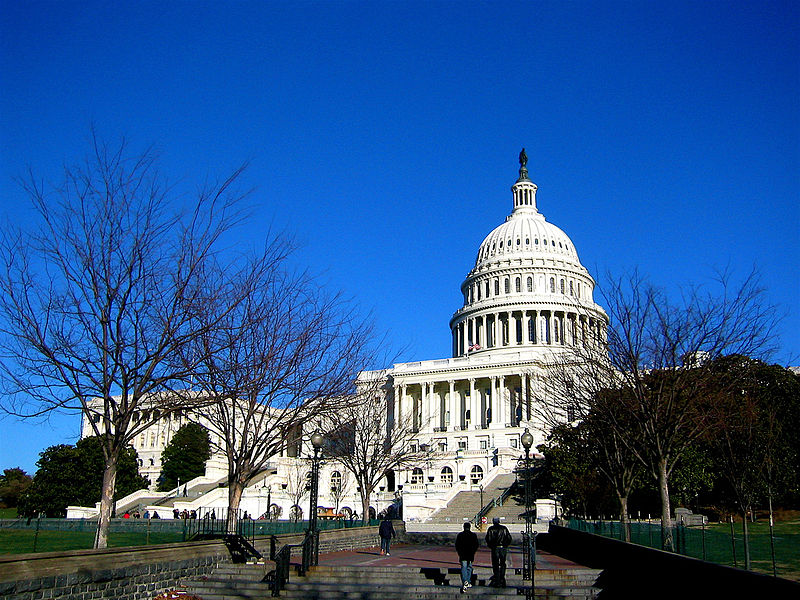

Behind the worst economic recovery on record

Until we abandon supply-side tax cuts, the inequality gap will widen and our economy will continue to flounder

Topics: RobertReich.org, George W. Bush, Keynes, Bush Tax Cuts, sequester, ,

Behind the worst economic recovery on record (Credit: Wikimedia/Eliot.P)
This originally appeared on Robert Reich's blog.

The biggest economic debate is between Keynesians (who want more government spending and lower interest rates in order to fuel demand) and supply-side “austerics” (who want lower taxes on the wealthy and on corporations to boost incentives to hire and invest, and who see government deficits crowding out private investment).

But both approaches have problems.

George W. Bush tried supply-side tax cuts but nothing trickled down. Jobs and wages declined. And austerity economics has been a disaster for Europe.

Unfortunately the U.S. is now adopting supply-side austerics by making the Bush tax cuts permanent for 98 percent of taxpayers, hiking Social Security taxes back up, and implementing the sequester.

I’m on the Keynesian side. Yet the biggest weakness of modern Keynesian economics is it doesn’t have a clear answer for how much spending is necessary in an economy, like ours, in which wages keep dropping and government debt keeps growing. Simply arguing “more” won’t cut it.

John Maynard Keynes urged that governments “prime the pump” to stimulate demand but pump priming has limited effect if the well is running dry.

Both sides of the modern debate have neglected the scourge of widening inequality.

We’re now witnessing what happens when all of the economic gains go to the top, and the rest of the population doesn’t have enough purchasing power to keep the economy going.

Four years into a so-called recovery and we’re still below recession levels in every important respect except the stock market. A measly 88,000 jobs were created in March, and total employment remains some 3 million below its pre-recession level. Labor-force participation is it’s lowest since 1979.

Businesses won’t hire and expand unless they have more customers, but most Americans can’t spend more. Last Friday’s retail sales report showed sales down .4 percent in March. Consumer sentiment has fallen to its lowest level in nine months.

The underlying problem is the vast middle class is running out of money. They can’t borrow more — and shouldn’t, given what happened after the last borrowing binge.

Real annual median household income keeps falling. It’s down to $45,018, from $51,144 in 2010. All the gains from the recovery continue to go to the top.

Widening inequality is not inevitable. If we wanted to reverse it and restore middle-class prosperity, we could.

We could award tax cuts to companies that link the pay of their hourly workers to profits and productivity, and that keep the total pay of their top 5 executives within 20 times the pay of their median worker. And impose higher taxes on companies that don’t.

We could raise the minimum wage to half the average wage.

We could increase public investment in education, including early-childhood.

We could eliminate college loans and allow all students to repay the cost of their higher education with a 10 percent surcharge on the first 10 years of income from full-time employment.

We could expand the Earned Income Tax Credit.

And we could pay for all this by adding additional tax brackets at the top and increasing the top marginal tax rate to what it was before 1981 – at least 70 percent.

But none of this will happen until the public understands why widening inequality is so damaging. Even the rich would do better with a smaller share of a rapidly-growing economy than a large share of one that’s barely growing at all.

Our political leaders in Washington have for now chosen supply-side austerity economics over Keynesian economics. That’s bad enough. Their inability or unwillingness to do much of anything about widening inequality will prove a larger problem.

Robert Reich, one of the nation’s leading experts on work and the economy, is Chancellor’s Professor of Public Policy at the Goldman School of Public Policy at the University of California at Berkeley. He has served in three national administrations, most recently as secretary of labor under President Bill Clinton. Time Magazine has named him one of the ten most effective cabinet secretaries of the last century. He has written 13 books, including his latest best-seller, “Aftershock: The Next Economy and America’s Future;” “The Work of Nations,” which has been translated into 22 languages; and his newest, an e-book, “Beyond Outrage.” His syndicated columns, television appearances, and public radio commentaries reach millions of people each week. He is also a founding editor of the American Prospect magazine, and Chairman of the citizen’s group Common Cause. His widely-read blog can be found at www.robertreich.org.

Next Article

Related Stories

Featured Slide Shows

The week in 10 pics

close X
  • Share on Twitter
  • Share on Facebook
  • Thumbnails
  • Fullscreen
  • 1 of 11
  • This photo. President Barack Obama has a laugh during the unveiling of the George W. Bush Presidential Center in Dallas, Tx., Thursday. Former first lady Barbara Bush, who candidly admitted this week we've had enough Bushes in the White House, is unamused.
    Reuters/Jason Reed

  • Rescue workers converge Wednesday in Savar, Bangladesh, where the collapse of a garment building killed more than 300. Factory owners had ignored police orders to vacate the work site the day before.
    AP/A.M. Ahad

  • Police gather Wednesday at the Massachusetts Institute of Technology to honor campus officer Sean Collier, who was allegedly killed in a shootout with the Boston Marathon bombing suspects last week.
    AP/Elise Amendola

  • Police tape closes the site of a car bomb that targeted the French embassy in Libya Tuesday. The explosion wounded two French guards and caused extensive damage to Tripoli's upscale al-Andalus neighborhood.
    AP/Abdul Majeed Forjani

  • Protestors rage outside the residence of Indian Prime Minister Manmohan Singh Sunday following the rape of a 5-year-old girl in New Delhi. The girl was allegedly kidnapped and tortured before being abandoned in a locked room for two days.
    AP/Manish Swarup

  • Clarksville, Mo., residents sit in a life boat Monday after a Mississippi River flooding, the 13th worst on record.
    AP/Jeff Roberson

  • Workers pause Wednesday for a memorial service at the site of the West, Tx., fertilizer plant explosion, which killed 14 people and left a crater more than 90 feet wide.
    AP/The San Antonio Express-News, Tom Reel

  • Aerial footage of the devastation following a 7.0 magnitude earthquake in China's Sichuan province last Saturday. At least 180 people were killed and as many as 11,000 injured in the quake.
    AP/Liu Yinghua

  • On Wednesday, Hazmat-suited federal authorities search a martial arts studio in Tupelo, Miss., once operated by Everett Dutschke, the newest lead in the increasingly twisty ricin case. Last week, President Barack Obama, Sen. Roger Wicker, R.-Miss., and a Mississippi judge were each sent letters laced with the deadly poison.
    AP/Rogelio V. Solis

  • The lighting of Freedom Hall at the George W. Bush Presidential Center Thursday is celebrated with (what else but) red, white and blue fireworks.
    AP/David J. Phillip

  • Recent Slide Shows

  • Share on Twitter
  • Share on Facebook
  • Thumbnails
  • Fullscreen
  • 1 of 11

Comments

15 Comments

Comment Preview

Your name will appear as username

You may use these HTML tags and attributes: <a href=""> <b> <em> <strong> <i> <blockquote>