
Ron Paul casts lot with extremists, conspiracy theorists

The advisory board of the outspoken libertarian's new organization is stacked with members of the far right

Topics: Southern Poverty Law Center, Ron Paul, Libertarianism, Conspiracy theorists, Fox News,

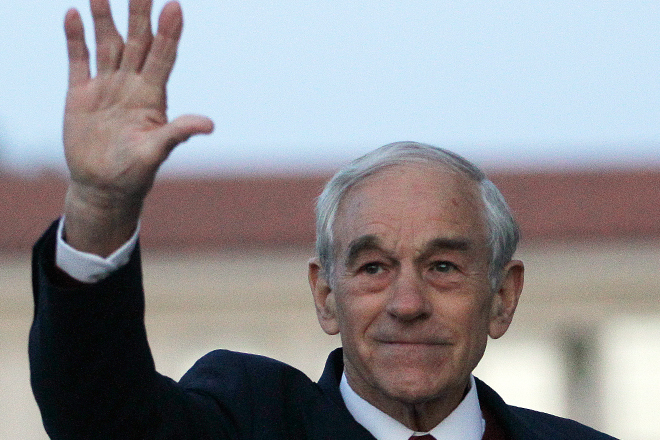
Ron Paul casts lot with extremists, conspiracy theoristsRon Paul (Credit: AP/Ben Margot)
This article was originally published by The Southern Poverty Law Center.

The Southern Poverty Law Center Ron Paul, the libertarian former Texas congressman whose hard-line views are widely admired on the radical right but who claims to reject racism, has started a new organization stacked with a hodgepodge of far-right extremists.

As The Daily Beast reported yesterday, the Ron Paul Institute for Peace and Prosperity is ostensibly designed to promote a discourse about U.S. foreign policy. But its advisory board is stacked with what writer James Kirchik characterized as “a bevy of conspiracy theorists, cranks, and apologists for some of the worst regimes on the planet.”

And just who are the far-right luminaries helping guide Paul’s new endeavor?

One is Lew Rockwell, Paul’s former congressional chief of staff who now heads the Ludwig von Mises Institute, an Auburn, Ala., think tank with deep ties to the neo-Confederate movement. There’s Judge Andrew Napolitano of Fox News and journalist Eric Margolis, both 9/11 “truthers” who suspect that the Sept. 11, 2001, terrorist attacks may have been orchestrated by the government.

And alongside them sits Butler Shaffer, a Southwestern Law School professor who similarly once asked: “In light of the lies, forgeries, cover-ups, and other deceptions leading to a ‘war’ in Iraq, how can any intellectually honest person categorically deny the possibility of the involvement of American political interest in 9/11?”

But that’s not the worst of it, according to The Daily Beast.

“Also on Paul’s board are prominent former government officials who claim that American Jews constitute a ‘fifth column’ aimed at subverting American foreign policy in the interests of Israel,” Kirchick reported. One of those is Michael Scheuer, a former CIA intelligence officer who has accused a long list of individuals and organizations of “being intent on involving 300 million Americans in other people’s religious wars,” The Daily Beast said.

Still another board member is Walter Bloch, a fellow at the Mises institute who The Daily Beast said “believes the wrong side won the ‘war against Southern secession’ and blames most of America’s current problems on ‘the monster Lincoln.’”


Yesterday’s article wasn’t the first to note the affinity many extremists have for Paul. An article in The New York Times in 2011, when Paul was running for president, noted that while white supremacists, survivalists and anti-Zionists had allied behind Paul’s campaign, he had not disavowed their support. Paul told the newspaper: “If they want to endorse me, they’re endorsing what I do or say –– it has nothing to do with me endorsing what they say.”

The controversy surrounding Paul’s new organization is reminiscent of past revelations. Paul has been accused of authoring a series of newsletters, written under his name, that Kirchik says “reveal decades worth of obsession and conspiracies, sympathy for the right-wing militia movement, and deeply held bigotry against blacks, Jews and gays.” When Kirchik first detailed those newsletters in 2008, Paul claimed that he had not written them and he had no idea who had. Kirchik says in his latest article that the newsletters, which ostensibly gave supporters “political news and investment advice,” “netted his family over $1 million per year.”

The November 1990 issue of the Paul’s “Political Report,” for example, praised neo-Nazi and former Klan leader David Duke. A month later, an issue described the Rev. Martin Luther King Jr. as a “world-class adulterer” who “replaced the evil of forced segregation with the evil of forced integration.” Also that year, as the Rev. Al Sharpton led efforts to rename New York City after King, Paul’s newsletter suggested possible alternatives including “Welfaria” and “Zooville.”

The vitriol ostensibly coming from Paul also targeted the LGBT community. A 1994 issue of the “Ron Paul Survival Report” asserted that people “who don’t get a blood transfusion, and who don’t swap needles, are virtually assured of not getting AIDS unless they are deliberately infected by a malicious gay.”

The stated mission of the Ron Paul Institute for Peace and Prosperity is to provide “the tools and the education to chart a new course with the understanding that only through a peaceful foreign policy can we hope for a prosperous tomorrow.” But with the revelation of who its principals really are, one can only wonder what that means.

Featured Slide Shows

7 motorist-friendly camping sites

close X
  • Share on Twitter
  • Share on Facebook
  • Thumbnails
  • Fullscreen
  • 1 of 9

Sponsored Post

  • White River National Forest via Lower Crystal Lake, Colorado
    For those OK with the mainstream, White River Forest welcomes more than 10 million visitors a year, making it the most-visited recreation forest in the nation. But don’t hate it for being beautiful; it’s got substance, too. The forest boasts 8 wilderness areas, 2,500 miles of trail, 1,900 miles of winding service system roads, and 12 ski resorts (should your snow shredders fit the trunk space). If ice isn’t your thing: take the tire-friendly Flat Tops Trail Scenic Byway — 82 miles connecting the towns of Meeker and Yampa, half of which is unpaved for you road rebels.
    fs.usda.gov/whiteriveryou


    Image credit: Getty

  • Chattahoochee-Oconee National Forest via Noontootla Creek, Georgia
    Boasting 10 wildernesses, 430 miles of trail and 1,367 miles of trout-filled stream, this Georgia forest is hailed as a camper’s paradise. Try driving the Ridge and Valley Scenic Byway, which saw Civil War battles fought. If the tall peaks make your engine tremble, opt for the relatively flat Oconee National Forest, which offers smaller hills and an easy trail to the ghost town of Scull Shoals. Scaredy-cats can opt for John’s Mountain Overlook, which leads to twin waterfalls for the sensitive sightseer in you.
    fs.usda.gov/conf


    Image credit: flickr/chattoconeenf

  • Nordhouse Dunes Wilderness Area via Green Road, Michigan
    The only national forest in Lower Michigan, the Huron-Mainstee spans nearly 1 million acres of public land. Outside the requisite lush habitat for fish and wildlife on display, the Nordhouse Dunes Wilderness Area is among the biggest hooks for visitors: offering beach camping with shores pounded by big, cerulean surf. Splash in some rum and you just might think you were in the Caribbean.
    fs.usda.gov/hmnf


    Image credit: umich.edu

  • Canaan Mountain via Backcountry Canaan Loop Road, West Virginia
    A favorite hailed by outdoorsman and author Johnny Molloy as some of the best high-country car camping sites anywhere in the country, you don’t have to go far to get away. Travel 20 miles west of Dolly Sods (among the busiest in the East) to find the Canaan Backcountry (for more quiet and peace). Those willing to leave the car for a bit and foot it would be remiss to neglect day-hiking the White Rim Rocks, Table Rock Overlook, or the rim at Blackwater River Gorge.
    fs.usda.gov/mnf


    Image credit: Getty

  • Mt. Rogers NRA via Hurricane Creek Road, North Carolina
    Most know it as the highest country they’ll see from North Carolina to New Hampshire. What they may not know? Car campers can get the same grand experience for less hassle. Drop the 50-pound backpacks and take the highway to the high country by stopping anywhere on the twisting (hence the name) Hurricane Road for access to a 15-mile loop that boasts the best of the grassy balds. It’s the road less travelled, and the high one, at that.
    fs.usda.gov/gwj


    Image credit: wikipedia.org

  • Long Key State Park via the Overseas Highway, Florida
    Hiking can get old; sometimes you’d rather paddle. For a weekend getaway of the coastal variety and quieter version of the Florida Keys that’s no less luxe, stick your head in the sand (and ocean, if snorkeling’s your thing) at any of Long Key’s 60 sites. Canoes and kayaks are aplenty, as are the hot showers and electric power source amenities. Think of it as the getaway from the typical getaway.
    floridastateparks.org/longkey/default.cfm


    Image credit: floridastateparks.org

  • Grand Canyon National Park via Crazy Jug Point, Arizona
    You didn’t think we’d neglect one of the world’s most famous national parks, did you? Nor would we dare lead you astray with one of the busiest parts of the park. With the Colorado River still within view of this cliff-edge site, Crazy Jug is a carside camper’s refuge from the troops of tourists. Find easy access to the Bill Hall Trail less than a mile from camp, and descend to get a peek at the volcanic Mt. Trumbull. (Fear not: It’s about as active as your typical lazy Sunday in front of the tube, if not more peaceful.)
    fs.usda.gov/kaibab


    Image credit: flickr/Irish Typepad

  • As the go-to (weekend) getaway car for fiscally conscious field trips with friends, the 2013 MINI Convertible is your campground racer of choice, allowing you and up to three of your co-pilots to take in all the beauty of nature high and low. And with a fuel efficiency that won’t leave you in the latter, you won’t have to worry about being left stranded (or awkwardly asking to go halfsies on gas expenses).


    Image credit: miniusa.com

  • Recent Slide Shows

  • Share on Twitter
  • Share on Facebook
  • Thumbnails
  • Fullscreen
  • 1 of 9

Comments

95 Comments

Comment Preview

Your name will appear as username ( settings | log out )

You may use these HTML tags and attributes: <a href=""> <b> <em> <strong> <i> <blockquote>