
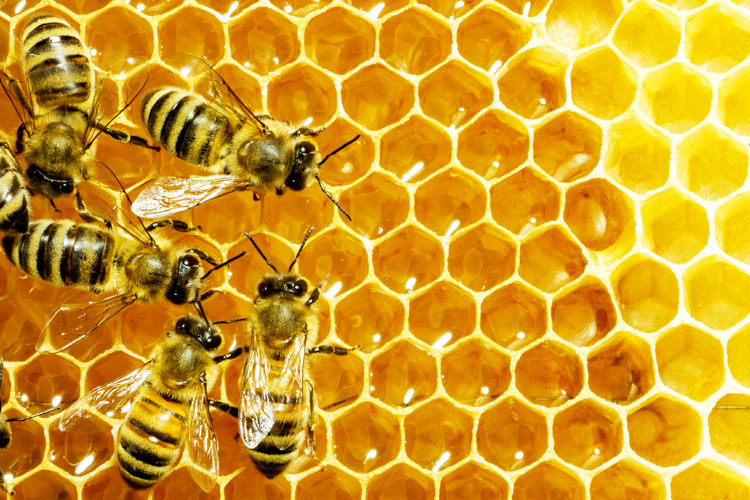

If you are an almond farmer in the Central Valley of California, where 80 percent of the world’s production is grown, you had a problem earlier this spring. Chances are there weren’t enough bees to pollinate your trees. That’s because untold thousands of colonies — almost half of the 1.6 million commercial hives that almond growers depend on — failed to survive the winter, making this the worst season for beekeepers in anyone’s memory. And that is saying a lot, because bees have been faring increasingly poorly for years now.
Much of this recent spike in bee mortality is attributed to Colony Collapse Disorder, a mysterious condition where all the worker bees in a colony simply fly off as a group and never make it back to the hive. Scientists have been studying this odd phenomenon for years and they still aren’t sure why it is happening.
But a slew of recent studies have pointed an accusing finger at a class of pesticides, the ubiquitous neonicotonoids (neonics for short), which include imidacloprid and clothianidin, manufactured by Germany’s agro-giant Bayer, and thiamethoxam, made by Syngenta. The neonics, the world’s leading insecticides, are applied on a whopping 75 percent of the farmlands in America, according to Charles Benbrook, research professor at Washington State University’s Center for Sustaining Agriculture and Natural Resources. Neonics are a so-called systemic pesticide. That means that they are taken up by the plant’s vascular system and get impregnated into all parts of the plant that an insect encounters, including the leaves, seeds, nectar and pollen. Corn and soybean seeds are typically coated with the pesticide before planting. Fruit trees and many vegetables are sprayed.
Few researchers believe that the neonics alone are to blame for the bees’ troubles, which appear to result from a perfect storm of contributing environmental factors. Pollinators have been called the canaries in the coal mine for ecosystem health. The declining numbers of both wild species and domesticated bee colonies worldwide is regarded as a troubling barometer of the state of the environment, reflecting habitat loss, the spread of agricultural monocultures, infestation by viral pathogens and bee parasites like the Varroa mite, climate change and even electromagnetic radiation, which seems to interfere with bees’ homing ability.
But the neonics, which contains a chemical related to nicotine that attacks an insect’s nervous system, have been demonstrated to kill bees — and especially the queens — when applied in high enough doses. And a growing body of research suggests that at sub-lethal concentrations, these agro-chemicals mess with their navigation, foraging and communication abilities, throw off their reproductive patterns, and weaken bee immune systems, making them susceptible to sudden colony collapse.
One study published by scientists at Purdue University in 2012 showed high levels of clothianidin and thiamethoxam in bees found dead near agricultural fields. Other bees at the hives were observed exhibiting uncoordinated movement, tremors and convulsions, all signs of insecticide poisoning.
In yet another study conducted by scientists at the Harvard School of Public Health, which I reported on in Reuters last April, researchers actually re-created colony collapse disorder in several honeybee hives simply by administering small doses of a popular neonic, imidacloprid.
These and other recent studies led the European Union to call on Monday for a provisional ban on neonics for two years to see what impact this has on Europe’s endangered bees. The use of the pesticides had already been temporarily suspended in Germany, France and Italy.
The vote in Brussels was split (15 of the 27 EU countries voted for the ban). The British Newspaper the Observer said that there was “a fierce behind the scenes” campaign to prevent the ban. The paper reported that agricultural multinational Syngenta, facing what it called “serious damage to the integrity of our product and reputation,” threatened to sue individual European Union officials involved in publishing the damning report about the dangers of neonics. The U.K. voted against the ban, alleging that the science is inconclusive and that barring the pesticides would be hugely expensive and potentially cripple food production.
But the ban had lots of public support, including a petition signed by over 2.5 million Europeans. And it was universally applauded by environmentalists, who have been fighting for it for years. Andrew Pendleton of the U.K division of Friends of the Earth said: “This decision is a significant victory for common sense and our beleaguered bee populations. Restricting the use of these pesticides could be an historic milestone on the road to recovery for these crucial pollinators.”
Pressure has been building in the U.S. to restrict the neonics. A coalition of beekeepers and environmental groups filed suit in March against the U.S. Environmental Protection Agency for its failure to ban the pesticides, saying that the agency didn’t consider the impact of the pesticides on vital pollinators. The American Bird Conservancy published in March a review of 200 studies on neonics, including industry research obtained through the U.S. Freedom of Information Act, which concluded that the neonics are lethal to birds and other wildlife and to the aquatic systems on which they depend.
These threats to wildlife are significant, but the world’s attention is rightly focused on bees, which are responsible for pollinating nearly a third of our food supply. These industrious insects are in serious trouble. And if their decline continues unchecked, we humans may soon be in trouble too.
