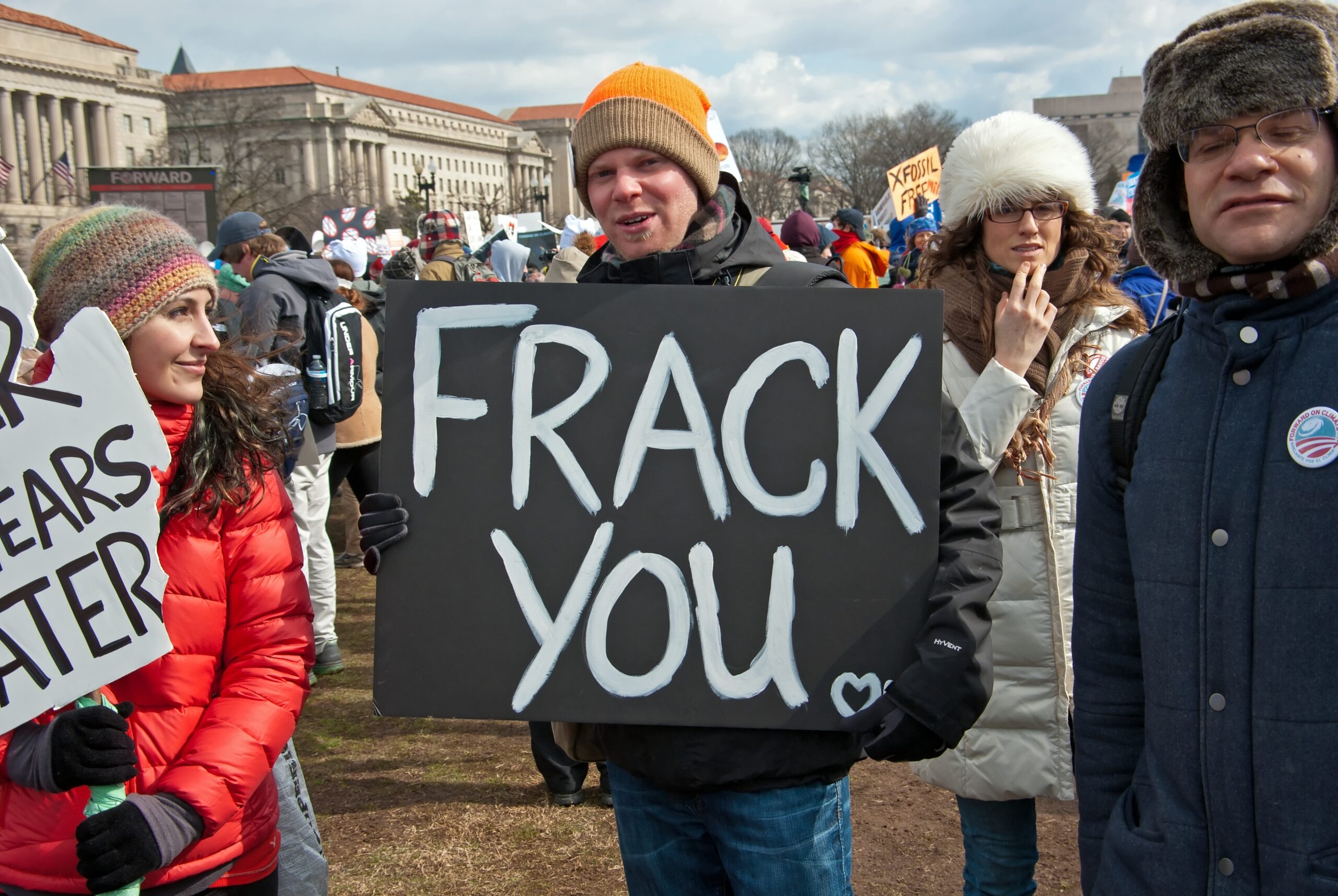

How a big fracking setback got overlooked

A potential 2016 contender softens his pro-fracking stance, citing unsettled science. So why is it being ignored?

Topics: fracking, anti-fracking, John Hickenlooper, Colorado, 2016 Elections, Media Criticism, , ,

How a big fracking setback got overlooked (Credit: Shutterstock/Michael G McKinne)

As an oft-rumored 2016 presidential candidate, a regular subject of obsequious profiles in the local and national press (including in this week’s New Yorker), and the chief executive of one of the biggest fossil fuel states in America, Colorado Gov. John Hickenlooper’s declarations about environmental issues carry weight. And so his stunning admission late last week is, indeed, big news in how it so definitively proves that political money buys hostility toward environmental science.

With his election campaigns bankrolled by the fossil fuel industry, Hickenlooper has long ignored troubling drilling-related data from (among others) the Environmental Protection Agency, Duke University, the University of Colorado and the fossil fuel industry itself. Instead, as he rakes in massive amounts of fossil fuel campaign cash Hickenlooper has paid back his donors by publicly declaring that “there is literally no risk” associated with hydraulic fracturing (“fracking”) and by claiming to Congress that fracking fluid is safe to drink (it isn’t).

That’s where Hickenlooper’s admission comes in. At a forum on energy issues last week, Hickenlooper simultaneously defended his assertion that fracking is perfectly safe and yet according to the Associated Press, he also “said the science on the impact of fracking is far from settled.”


In other words, the chief executive of a major fossil fuel state is now on record at once claiming fracking is totally safe but admitting he believes we don’t have enough science to know that his reassuring assertions are true. Worse, he is admitting the need for more scientific research into fracking while actively working to kill legislation to scientifically study the effects of fracking.

When a governor admits his absolutist positions in support of fracking are not rooted in science, it should generate headlines — especially when that same governor has amassed a record like Hickenlooper. He is, after all, one of the fossil fuel industry’s chief political spokespeople; indeed, he actually moonlights as one of the industry’s official spokesmen in its paid political advertisements. Additionally, Hickenlooper is one of the industry’s best political friends: He is not only right now fighting his own party’s legislation to punish polluters, he has also publicly denied that global climate change is even happening; appointed one of his fossil fuel industry donors to a key regulatory position; fought state legislative initiatives that would have empowered municipalities to better regulate oil and gas operations in their midst; threatened to sue cities that regulate drilling; and reduced regulatory enforcement in the face of drilling-related spills.

Yet, despite this industry loyalist admitting his public policy positions are not supported by science, and despite the media’s obsession with the Colorado governor, Hickenlooper’s statements have garnered little attention. Why?

First and foremost, the Hickenlooper fans in the national press corps typically drop into Denver for a few days and produce long essays about the governor’s charisma and charm — that is, about everything other than his actual record.

The resulting hagiography subsequently credits him for much of the state’s high-profile progressive successes despite the fact that most of those successes have come from the Legislature and ballot initiatives in spite, rather than because of, the governor. The one thing you don’t hear much about in this kind of puffery is arguably the single most important responsibility of any Colorado governor: the responsibility to regulate our state’s most financially powerful and environmentally rapacious industry. The result is that you hear more about how goofy and fun-loving and swell ol’ Hick is than you do about the fact the Hickenlooper Era has coincided with a frightening rise in drilling-related spills, a precipitous decline in environmental enforcement and parts of Colorado becoming toxic hazard zones.

But obsequiousness is only part of the explanation for the media blackout. The other part is about an undying devotion to The Narrative — that is, the meme that projects all political stories through a red-versus-blue prism, and that therefore casts hostility to science as only a Republican phenomenon rather than what it really is: a transpartisan side effect of political money.

Yes, it’s true; whether pretending climate change is a hoax or casting aspersions at the notion of independent peer-reviewed research, Republican politicians tend to reject scientific data more often than Democratic politicians. Because of that, a press corps that seems only able to portray issues as partisan showdowns tends to portray the so-called War on Science as an exclusively Republican onslaught. That same press corps, though, simply cannot process or comprehend the notion of a Democrat helping his donors wage a war on science (especially one like Hickenlooper who touts his geology degree) because that kind of politician contradicts the preconceived story line.

This Narrative, of course, is only further exacerbated by what I’ve previously called the “No Money” rule. Simply put, reporters don’t like to acknowledge the role that campaign cash plays in politicians’ positions because in elite political circles, acknowledging rank corruption is considered impolite and uncouth.

Thanks to these dynamics, a revealing and incredibly newsworthy admission by a bankrolled Democratic governor is, thus, wholly ignored — as is the science that should be driving our energy policy.

David Sirota

David Sirota is a nationally syndicated newspaper columnist, magazine journalist and the best-selling author of the books "Hostile Takeover," "The Uprising" and "Back to Our Future." E-mail him at ds@davidsirota.com, follow him on Twitter @davidsirota or visit his website at www.davidsirota.com.

Featured Slide Shows

7 motorist-friendly camping sites

close X
  • Share on Twitter
  • Share on Facebook
  • Thumbnails
  • Fullscreen
  • 1 of 9

Sponsored Post

  • White River National Forest via Lower Crystal Lake, Colorado
    For those OK with the mainstream, White River Forest welcomes more than 10 million visitors a year, making it the most-visited recreation forest in the nation. But don’t hate it for being beautiful; it’s got substance, too. The forest boasts 8 wilderness areas, 2,500 miles of trail, 1,900 miles of winding service system roads, and 12 ski resorts (should your snow shredders fit the trunk space). If ice isn’t your thing: take the tire-friendly Flat Tops Trail Scenic Byway — 82 miles connecting the towns of Meeker and Yampa, half of which is unpaved for you road rebels.
    fs.usda.gov/whiteriveryou


    Image credit: Getty

  • Chattahoochee-Oconee National Forest via Noontootla Creek, Georgia
    Boasting 10 wildernesses, 430 miles of trail and 1,367 miles of trout-filled stream, this Georgia forest is hailed as a camper’s paradise. Try driving the Ridge and Valley Scenic Byway, which saw Civil War battles fought. If the tall peaks make your engine tremble, opt for the relatively flat Oconee National Forest, which offers smaller hills and an easy trail to the ghost town of Scull Shoals. Scaredy-cats can opt for John’s Mountain Overlook, which leads to twin waterfalls for the sensitive sightseer in you.
    fs.usda.gov/conf


    Image credit: flickr/chattoconeenf

  • Nordhouse Dunes Wilderness Area via Green Road, Michigan
    The only national forest in Lower Michigan, the Huron-Mainstee spans nearly 1 million acres of public land. Outside the requisite lush habitat for fish and wildlife on display, the Nordhouse Dunes Wilderness Area is among the biggest hooks for visitors: offering beach camping with shores pounded by big, cerulean surf. Splash in some rum and you just might think you were in the Caribbean.
    fs.usda.gov/hmnf


    Image credit: umich.edu

  • Canaan Mountain via Backcountry Canaan Loop Road, West Virginia
    A favorite hailed by outdoorsman and author Johnny Molloy as some of the best high-country car camping sites anywhere in the country, you don’t have to go far to get away. Travel 20 miles west of Dolly Sods (among the busiest in the East) to find the Canaan Backcountry (for more quiet and peace). Those willing to leave the car for a bit and foot it would be remiss to neglect day-hiking the White Rim Rocks, Table Rock Overlook, or the rim at Blackwater River Gorge.
    fs.usda.gov/mnf


    Image credit: Getty

  • Mt. Rogers NRA via Hurricane Creek Road, North Carolina
    Most know it as the highest country they’ll see from North Carolina to New Hampshire. What they may not know? Car campers can get the same grand experience for less hassle. Drop the 50-pound backpacks and take the highway to the high country by stopping anywhere on the twisting (hence the name) Hurricane Road for access to a 15-mile loop that boasts the best of the grassy balds. It’s the road less travelled, and the high one, at that.
    fs.usda.gov/gwj


    Image credit: wikipedia.org

  • Long Key State Park via the Overseas Highway, Florida
    Hiking can get old; sometimes you’d rather paddle. For a weekend getaway of the coastal variety and quieter version of the Florida Keys that’s no less luxe, stick your head in the sand (and ocean, if snorkeling’s your thing) at any of Long Key’s 60 sites. Canoes and kayaks are aplenty, as are the hot showers and electric power source amenities. Think of it as the getaway from the typical getaway.
    floridastateparks.org/longkey/default.cfm


    Image credit: floridastateparks.org

  • Grand Canyon National Park via Crazy Jug Point, Arizona
    You didn’t think we’d neglect one of the world’s most famous national parks, did you? Nor would we dare lead you astray with one of the busiest parts of the park. With the Colorado River still within view of this cliff-edge site, Crazy Jug is a carside camper’s refuge from the troops of tourists. Find easy access to the Bill Hall Trail less than a mile from camp, and descend to get a peek at the volcanic Mt. Trumbull. (Fear not: It’s about as active as your typical lazy Sunday in front of the tube, if not more peaceful.)
    fs.usda.gov/kaibab


    Image credit: flickr/Irish Typepad

  • As the go-to (weekend) getaway car for fiscally conscious field trips with friends, the 2013 MINI Convertible is your campground racer of choice, allowing you and up to three of your co-pilots to take in all the beauty of nature high and low. And with a fuel efficiency that won’t leave you in the latter, you won’t have to worry about being left stranded (or awkwardly asking to go halfsies on gas expenses).


    Image credit: miniusa.com

  • Recent Slide Shows

  • Share on Twitter
  • Share on Facebook
  • Thumbnails
  • Fullscreen
  • 1 of 9

Comments

15 Comments

Comment Preview

Your name will appear as username ( settings | log out )

You may use these HTML tags and attributes: <a href=""> <b> <em> <strong> <i> <blockquote>