
Robert Reich: “Cynicism is a self-fulfilling prophecy”

A reminder to the graduating class of 2013 that social progress is attainable

Topics: Abortion, Time, SCOTUS, Supreme Court, Martin Luther King, Jr., Vietnam War, ,

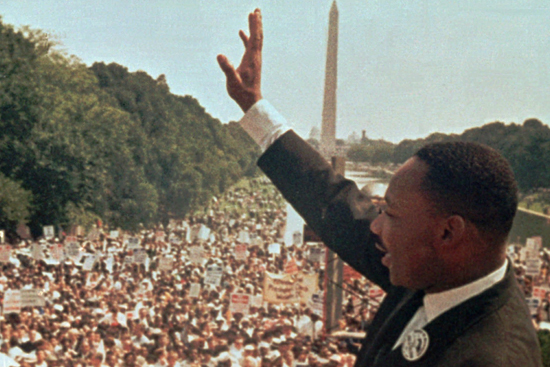
Robert Reich: Martin Luther King Jr. acknowledges the crowd at the Lincoln Memorial for his "I Have a Dream" speech during the March on Washington on Aug. 28, 1963.
This originally appeared on Robert Reich's blog.

Many of you soon-to-be college graduates are determined to make the world a better place. Some of you are choosing careers in public service or joining nonprofits or volunteering in your communities.

But many of you are cynical about politics. You see the system as inherently corrupt. You doubt real progress is possible.

“What chance do we have against the Koch brothers and the other billionaires?” you’ve asked me. “How can we fight against Monsanto, Boeing, JP Morgan, and Bank of America? They buy elections. They run America.”

Let me remind you: Cynicism is a self-fulfilling prophesy. You have no chance if you assume you have no chance.

“But it was different when you graduated,” you say. “The sixties were a time of social progress.”

You don’t know your history.

When I graduated in 1968, the Vietnam War was raging. Over half a million American troops were already there. I didn’t know if I’d be drafted.  A member of my class who spoke at commencement said he was heading to Canada and urged us to join him.

Two months before, Martin Luther King Jr. had been assassinated. America’s cities were burning. Bobby Kennedy had just been gunned down.

George (“segregation forever”) Wallace was on his way to garnering 10 million votes and carrying five southern states. Richard Nixon was well on his way to becoming president.

America was still mired in bigotry.

I remember a classmate who was dating a black girl being spit on in a movie theater. The Supreme Court had only the year before struck down state laws against interracial marriage.

My entire graduating class of almost 800 contained only six young black men and four Hispanics.

I remember the girlfriend of another classmate almost dying from a back-alley abortion, because safe abortions were almost impossible to get.

I remember a bright young woman law school graduate in tears because no law firm would hire her because she was a woman.

I remember one of my classmates telling me in anguish that he was a homosexual, fearing he’d be discovered and his career ruined.

The environmental movement had yet not been born. Two-thirds of America’s waterways were unsafe for swimming or fishing because of industrial waste and sewage.

I remember rivers so polluted they caught fire. When the Cuyahoga River went up in flames Time Magazine described it as the river that “oozes rather than flows,” in which a person “does not drown but decays.”

In those days, universal health insurance was a pipe dream.


It all seemed pretty hopeless. I assumed America was going to hell.

And yet, reforms did occur. America changed. The changes didn’t come easily. Every positive step was met with determined resistance. But we became better and stronger because we were determined to change.

When I graduated college I would not have believed that in my lifetime women would gain rights over their own bodies, including the legal right to have an abortion. Or women would become chief executives of major corporations, secretaries of state, contenders for the presidency. Or they’d outnumber men in college.

I would not have imagined that eleven states would allow gays and lesbians to marry, and a majority of Americans would support equal marriage rights.

Or that the nation would have a large and growing black middle class.

It would have seemed beyond possibility that a black man, the child of an interracial couple, would become President of the United States.

I would not have predicted that the rate of college enrollment among Hispanics would exceed that of whites.

Or that more than 80 percent of Americans would have health insurance, most of it through government.

I wouldn’t have foreseen that the Cuyahoga River – the one that used to catch fire regularly – would come to support 44 species of fish. And that over half our rivers and 70 percent of bays and estuaries would become safe for swimming and fishing.

Or that some 200,000 premature deaths and 700,000 cases of chronic bronchitis would have been prevented because the air is cleaner.

Or that the portion of children with elevated levels of lead in their blood would have dropped from 88 percent to just over 4 percent.

I would not have believed our nation capable of so much positive change.

Yet we achieved it. And we have just begun. Widening inequality, a shrinking middle class, global warming, the corruption of our democracy by big money – all of these, and more, must be addressed. To make progress on these — and to prevent ourselves from slipping backwards — will require no less steadfastness, intelligence, and patience than was necessitatedbefore.

The genius of America lies in its resilience and pragmatism. We believe in social progress because we were born into it. It is our national creed.

Which is to say,  I understand your cynicism. It looks pretty hopeless.

But, believe me, it isn’t.

Not if you pitch in.

Robert Reich

Robert Reich, one of the nation’s leading experts on work and the economy, is Chancellor’s Professor of Public Policy at the Goldman School of Public Policy at the University of California at Berkeley. He has served in three national administrations, most recently as secretary of labor under President Bill Clinton. Time Magazine has named him one of the ten most effective cabinet secretaries of the last century. He has written 13 books, including his latest best-seller, “Aftershock: The Next Economy and America’s Future;” “The Work of Nations,” which has been translated into 22 languages; and his newest, an e-book, “Beyond Outrage.” His syndicated columns, television appearances, and public radio commentaries reach millions of people each week. He is also a founding editor of the American Prospect magazine, and Chairman of the citizen’s group Common Cause. His widely-read blog can be found at www.robertreich.org.

Featured Slide Shows

7 motorist-friendly camping sites

close X
  • Share on Twitter
  • Share on Facebook
  • Thumbnails
  • Fullscreen
  • 1 of 9

Sponsored Post

  • White River National Forest via Lower Crystal Lake, Colorado
    For those OK with the mainstream, White River Forest welcomes more than 10 million visitors a year, making it the most-visited recreation forest in the nation. But don’t hate it for being beautiful; it’s got substance, too. The forest boasts 8 wilderness areas, 2,500 miles of trail, 1,900 miles of winding service system roads, and 12 ski resorts (should your snow shredders fit the trunk space). If ice isn’t your thing: take the tire-friendly Flat Tops Trail Scenic Byway — 82 miles connecting the towns of Meeker and Yampa, half of which is unpaved for you road rebels.
    fs.usda.gov/whiteriveryou


    Image credit: Getty

  • Chattahoochee-Oconee National Forest via Noontootla Creek, Georgia
    Boasting 10 wildernesses, 430 miles of trail and 1,367 miles of trout-filled stream, this Georgia forest is hailed as a camper’s paradise. Try driving the Ridge and Valley Scenic Byway, which saw Civil War battles fought. If the tall peaks make your engine tremble, opt for the relatively flat Oconee National Forest, which offers smaller hills and an easy trail to the ghost town of Scull Shoals. Scaredy-cats can opt for John’s Mountain Overlook, which leads to twin waterfalls for the sensitive sightseer in you.
    fs.usda.gov/conf


    Image credit: flickr/chattoconeenf

  • Nordhouse Dunes Wilderness Area via Green Road, Michigan
    The only national forest in Lower Michigan, the Huron-Mainstee spans nearly 1 million acres of public land. Outside the requisite lush habitat for fish and wildlife on display, the Nordhouse Dunes Wilderness Area is among the biggest hooks for visitors: offering beach camping with shores pounded by big, cerulean surf. Splash in some rum and you just might think you were in the Caribbean.
    fs.usda.gov/hmnf


    Image credit: umich.edu

  • Canaan Mountain via Backcountry Canaan Loop Road, West Virginia
    A favorite hailed by outdoorsman and author Johnny Molloy as some of the best high-country car camping sites anywhere in the country, you don’t have to go far to get away. Travel 20 miles west of Dolly Sods (among the busiest in the East) to find the Canaan Backcountry (for more quiet and peace). Those willing to leave the car for a bit and foot it would be remiss to neglect day-hiking the White Rim Rocks, Table Rock Overlook, or the rim at Blackwater River Gorge.
    fs.usda.gov/mnf


    Image credit: Getty

  • Mt. Rogers NRA via Hurricane Creek Road, North Carolina
    Most know it as the highest country they’ll see from North Carolina to New Hampshire. What they may not know? Car campers can get the same grand experience for less hassle. Drop the 50-pound backpacks and take the highway to the high country by stopping anywhere on the twisting (hence the name) Hurricane Road for access to a 15-mile loop that boasts the best of the grassy balds. It’s the road less travelled, and the high one, at that.
    fs.usda.gov/gwj


    Image credit: wikipedia.org

  • Long Key State Park via the Overseas Highway, Florida
    Hiking can get old; sometimes you’d rather paddle. For a weekend getaway of the coastal variety and quieter version of the Florida Keys that’s no less luxe, stick your head in the sand (and ocean, if snorkeling’s your thing) at any of Long Key’s 60 sites. Canoes and kayaks are aplenty, as are the hot showers and electric power source amenities. Think of it as the getaway from the typical getaway.
    floridastateparks.org/longkey/default.cfm


    Image credit: floridastateparks.org

  • Grand Canyon National Park via Crazy Jug Point, Arizona
    You didn’t think we’d neglect one of the world’s most famous national parks, did you? Nor would we dare lead you astray with one of the busiest parts of the park. With the Colorado River still within view of this cliff-edge site, Crazy Jug is a carside camper’s refuge from the troops of tourists. Find easy access to the Bill Hall Trail less than a mile from camp, and descend to get a peek at the volcanic Mt. Trumbull. (Fear not: It’s about as active as your typical lazy Sunday in front of the tube, if not more peaceful.)
    fs.usda.gov/kaibab


    Image credit: flickr/Irish Typepad

  • As the go-to (weekend) getaway car for fiscally conscious field trips with friends, the 2013 MINI Convertible is your campground racer of choice, allowing you and up to three of your co-pilots to take in all the beauty of nature high and low. And with a fuel efficiency that won’t leave you in the latter, you won’t have to worry about being left stranded (or awkwardly asking to go halfsies on gas expenses).


    Image credit: miniusa.com

  • Recent Slide Shows

  • Share on Twitter
  • Share on Facebook
  • Thumbnails
  • Fullscreen
  • 1 of 9

Comments

15 Comments

Comment Preview

Your name will appear as username ( settings | log out )

You may use these HTML tags and attributes: <a href=""> <b> <em> <strong> <i> <blockquote>