
The woman behind the NSA scoops

Laura Poitras is "one of the bravest and most brilliant people I've ever met," Glenn Greenwald tells Salon(Updated)

Topics: Media, NSA, Glenn Greenwald, Washington Post, Editor's Picks, Edward Snowden, The Guardian, oscar nominations, Bradley Manning, , , ,

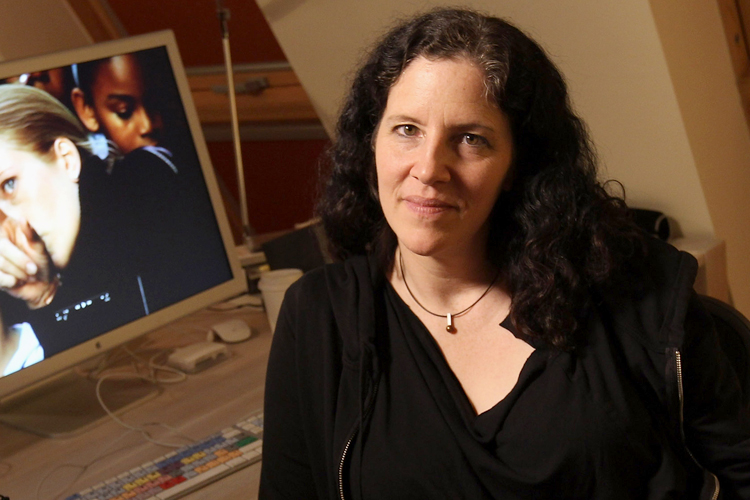
The woman behind the NSA scoopsLaura Poitras(Credit: Sean Gallup)

By now, we know the revelations about U.S. government surveillance published in the Guardian and the Washington Post in the past week have the same source, Edward Snowden. And despite what Politico, in typically overheated fashion, is calling a “feud” between reporters at the two news organizations, they share something else: the involvement of award-winning documentary filmmaker Laura Poitras.

Despite the customary competition between news sources — heightened, in this case, by differing accounts of how the story was reported — Poitras achieved the unusual distinction of sharing a byline both with Barton Gellman on the June 6 Washington Post story on PRISM and with Glenn Greenwald and Ewan MacAskill on the June 8 Guardian story naming Edward Snowden as a source. In the accompanying video interview of Snowden, Greenwald is credited as “interviewer” and Poitras as “filmmaker.” Greenwald wrote in a tweet this morning, “The reality is that Laura Poitras and I have been working with [Snowden] since February, long before anyone spoke to Bart Gellman.”

Salon reached out to Poitras, Gellman and Greenwald to elaborate on her involvement in the reporting, but they have not yet responded to those queries. However, Greenwald did offer up this comment on his colleague: ”She’s easily one of the bravest and most brilliant people I’ve ever met.”

Poitras is a MacArthur genius grantee who was nominated for an Oscar for 2006′s “My Country, My Country” on the impact of the Iraq War on ordinary Iraqis, the first of a trilogy of documentaries about American post-9/11 policies. The second documentary, “The Oath,” focused on Salim Hamdan (former driver to Osama bin Laden and namesake of a major Supreme Court case on detention policies and military commissions) and his brother-in-law, and the third, currently in the works, is not coincidentally about whistle-blowers.


“My work is absolutely, completely dependent on the people who open their lives to me and take huge risks in doing so, often,” Poitras says in a video on the MacArthur Foundation’s website. “In most of the films that I’ve been working on in this trilogy, pretty much everyone has their life on the line in one way or another. Their life, their freedom. The films are based on their courage to sort of allow me to go along on these journeys.”

Julian Assange has said he and WikiLeaks cooperated with Poitras on her upcoming film, the title of which hasn’t been publicized. In March, Poitras and Jenny Perlin released a video short, “Providence — a short film featuring Bradley Manning’s voice,” in which Manning discussed the 2007 Baghdad Apache airstrike video. She’s on the board of the Freedom of the Press Foundation, which is “dedicated to helping promote and fund aggressive, public-interest journalism focused on exposing mismanagement, corruption, and law-breaking in government,” alongside Greenwald, Daniel Ellsberg, John Cusack and Xeni Jardin, among others.

Since “My Country, My Country,” Poitras wrote in the New York Times last year, she has been detained at U.S. borders over 40 times. “In 2006 I was put on a watch list and I’ve been repeatedly detained at the U.S. border as I travel,” she told NPR last year. She added, “At the moment, it feels safer for me to work outside of the United States, which is a sad thing to say.”

According to an opinion piece she published in the New York Times last year, a border agent at New York’s John F. Kennedy Airport told her in 2011, “If you don’t answer our questions, we’ll find our answers on your electronics,”

In 2012, Greenwald wrote about her repeated detention for Salon, saying she “produces some of the best, bravest and most important filmmaking and journalism of the past decade, often exposing truths that are adverse to U.S. government policy, concerning the most sensitive and consequential matters.” He also noted that “documents obtained from a FOIA request show that DHS has repeatedly concluded that nothing incriminating was found from its border searches and interrogations of Poitras.” A coalition of nonfiction filmmakers, including Albert Maysles, Alex Gibney and Morgan Spurlock, signed an open letter protesting Poitras’ treatment at borders and calling her “one of America’s most important nonfiction filmmakers.”

Also last year, Poitras presented a “Surveillance Teach-In” at the Whitney Biennial, which Filmmaker magazine described as “part technological seminar, part radical teach-in, and part DeLillo-esque spy theater.” Visitors, the reviewer wrote, “were forcibly detained as they tried to enter the museum, while downstairs a masked man handed out leaflets with lists of addresses (NSA listening posts?), sinister in their nondescription. Slides flashed, of the anonymous desert buildings that house the servers that index our every email, phone call, transaction. And on the dais, an odd couple riffing one acronym after another: ‘NSA, NARIS, AES….’”

“The job of an artist is to express things; we’re not activists, we’re not organizers, we’re not politicians. So even though I do have political beliefs, my job as an artist is to express how I’m perceiving the world,” Poitras said in a 2011 video interview with the New York Times. ”And so the work I’ve tried to do as a storyteller, as a filmmaker, as somebody who captures images, is to create documents, to create a record, and to create a record that’s grounded in human stories. ”

Update: After viewing this post, Laura Poitras agreed to an interview with Salon, in which she detailed how she was contacted by Edward Snowden, among other things.

Irin Carmon

Irin Carmon is a staff writer for Salon. Follow her on Twitter at @irincarmon or email her at icarmon@salon.com.

Featured Slide Shows

7 motorist-friendly camping sites

close X
  • Share on Twitter
  • Share on Facebook
  • Thumbnails
  • Fullscreen
  • 1 of 9

Sponsored Post

  • White River National Forest via Lower Crystal Lake, Colorado
    For those OK with the mainstream, White River Forest welcomes more than 10 million visitors a year, making it the most-visited recreation forest in the nation. But don’t hate it for being beautiful; it’s got substance, too. The forest boasts 8 wilderness areas, 2,500 miles of trail, 1,900 miles of winding service system roads, and 12 ski resorts (should your snow shredders fit the trunk space). If ice isn’t your thing: take the tire-friendly Flat Tops Trail Scenic Byway — 82 miles connecting the towns of Meeker and Yampa, half of which is unpaved for you road rebels.
    fs.usda.gov/whiteriveryou


    Image credit: Getty

  • Chattahoochee-Oconee National Forest via Noontootla Creek, Georgia
    Boasting 10 wildernesses, 430 miles of trail and 1,367 miles of trout-filled stream, this Georgia forest is hailed as a camper’s paradise. Try driving the Ridge and Valley Scenic Byway, which saw Civil War battles fought. If the tall peaks make your engine tremble, opt for the relatively flat Oconee National Forest, which offers smaller hills and an easy trail to the ghost town of Scull Shoals. Scaredy-cats can opt for John’s Mountain Overlook, which leads to twin waterfalls for the sensitive sightseer in you.
    fs.usda.gov/conf


    Image credit: flickr/chattoconeenf

  • Nordhouse Dunes Wilderness Area via Green Road, Michigan
    The only national forest in Lower Michigan, the Huron-Mainstee spans nearly 1 million acres of public land. Outside the requisite lush habitat for fish and wildlife on display, the Nordhouse Dunes Wilderness Area is among the biggest hooks for visitors: offering beach camping with shores pounded by big, cerulean surf. Splash in some rum and you just might think you were in the Caribbean.
    fs.usda.gov/hmnf


    Image credit: umich.edu

  • Canaan Mountain via Backcountry Canaan Loop Road, West Virginia
    A favorite hailed by outdoorsman and author Johnny Molloy as some of the best high-country car camping sites anywhere in the country, you don’t have to go far to get away. Travel 20 miles west of Dolly Sods (among the busiest in the East) to find the Canaan Backcountry (for more quiet and peace). Those willing to leave the car for a bit and foot it would be remiss to neglect day-hiking the White Rim Rocks, Table Rock Overlook, or the rim at Blackwater River Gorge.
    fs.usda.gov/mnf


    Image credit: Getty

  • Mt. Rogers NRA via Hurricane Creek Road, North Carolina
    Most know it as the highest country they’ll see from North Carolina to New Hampshire. What they may not know? Car campers can get the same grand experience for less hassle. Drop the 50-pound backpacks and take the highway to the high country by stopping anywhere on the twisting (hence the name) Hurricane Road for access to a 15-mile loop that boasts the best of the grassy balds. It’s the road less travelled, and the high one, at that.
    fs.usda.gov/gwj


    Image credit: wikipedia.org

  • Long Key State Park via the Overseas Highway, Florida
    Hiking can get old; sometimes you’d rather paddle. For a weekend getaway of the coastal variety and quieter version of the Florida Keys that’s no less luxe, stick your head in the sand (and ocean, if snorkeling’s your thing) at any of Long Key’s 60 sites. Canoes and kayaks are aplenty, as are the hot showers and electric power source amenities. Think of it as the getaway from the typical getaway.
    floridastateparks.org/longkey/default.cfm


    Image credit: floridastateparks.org

  • Grand Canyon National Park via Crazy Jug Point, Arizona
    You didn’t think we’d neglect one of the world’s most famous national parks, did you? Nor would we dare lead you astray with one of the busiest parts of the park. With the Colorado River still within view of this cliff-edge site, Crazy Jug is a carside camper’s refuge from the troops of tourists. Find easy access to the Bill Hall Trail less than a mile from camp, and descend to get a peek at the volcanic Mt. Trumbull. (Fear not: It’s about as active as your typical lazy Sunday in front of the tube, if not more peaceful.)
    fs.usda.gov/kaibab


    Image credit: flickr/Irish Typepad

  • As the go-to (weekend) getaway car for fiscally conscious field trips with friends, the 2013 MINI Convertible is your campground racer of choice, allowing you and up to three of your co-pilots to take in all the beauty of nature high and low. And with a fuel efficiency that won’t leave you in the latter, you won’t have to worry about being left stranded (or awkwardly asking to go halfsies on gas expenses).


    Image credit: miniusa.com

  • Recent Slide Shows

  • Share on Twitter
  • Share on Facebook
  • Thumbnails
  • Fullscreen
  • 1 of 9

Comments

72 Comments

Comment Preview

Your name will appear as username ( settings | log out )

You may use these HTML tags and attributes: <a href=""> <b> <em> <strong> <i> <blockquote>