
Dear Internet Tough Guys: Cut it out

The plague of ridiculous "do you know who I am" threats has to stop

Topics: Internet Culture, Bullying, Paul Carr, Media, Alec Baldwin, Editor's Picks,

Dear Internet Tough Guys: Cut it out

One corner of the Internet was atwitter yesterday over this Valleywag post, which reprints some emails PandoDaily founder Sarah Lacy and writer/publisher Paul Carr sent to employees employees and cofounders of an event space in Los Angeles. If you don’t know who those people are, then congratulations. The only thing you need to know about them is that they think they are Very Big Players in their little world, which in this case is writing very boosterish things about tech companies. And they are indeed both quite well-known in that sphere. As these emails showed, they are also both raging assholes, drunk on entitlement.

The problem was, PandoDaily had an event at this space, and Lacy got upset about the event space putting its logo up somewhere, and also maybe some other random inconvenience of the sort that reasonable people get annoyed with but do not usually end up threatening extortion over. Lacy said this person could either “work off the $20k you stole from us” by giving PandoDaily free use of the space for eight additional events — no one “stole” $20 thousand from anyone, that is just what PandoDaily claims to charge for “brand sponsorship,” which is to say, putting a sign up in your own space with your logo on it — or else Lacy would “let people know why when they ask and we’ll reference it in our next post about our next LA event,” which means she will use her very large platform to disparage this event space. In short: Give us free things or we trash you.

The event space’s CEO pointed out that this sounded a bit extortiony. Then Paul Carr, a writer who used to work with Lacy and who is somehow affiliated with PandoDaily, jumped into the conversation, unbeckoned, to unleash what I am very sure he thought was a very righteous smackdown on these jerks who “threatened” his friend. Please read the entire thing at Valleywag. Here are some excerpts:


I don’t like it when my friends are threatened. Actually it’s my least favorite thing in the world. So let me be absolutely clear, as someone with no legal or financial ties to PandoDaily, that from today, I will not rest until every man, woman and child knows the unvarnished truth about how fucking appalling CrossCampus is to work with.

By this I mean that if, on any given day, the tiniest company in the entrepreneurship community so much as makes a sideways glance as they walk past your venue and does not immediately recall my views on the place, I will know my work is incomplete. There’s no extortion here — no “unless, or but” — I don’t want *anything* from you. In fact, PandoDaily is the first company that I’ll be urging to walk away from you clowns. Whether they take my advice is down to them. But please know, if they don’t, at the next event I’ll spend my introduction ripping you a new one from the stage.

Very Brave, Very Tough. Paul Carr will insult you at a future event. Carr goes on, feeling, I’m sure, quite proud of this next bit:

As for your threats of retribution against anyone who tells the truth about you. Bring them the fuck on, but against me, not PandoDaily. Bring your lawyers and your apparently ethnically relevant backers. Bring them with lawsuits and writs and injunctions and whatever dark threats of baseball bats and dark alleys really lay behind your email. But first, do me a favor: Google me. Read a few of my columns in the Guardian, the Times, the Wall Street Journal or on blogs like TechCrunch and — of course — PandoDaily. Or pick up one of my books. Read what *always* happens when someone starts a public fight with me, or attempts to shake down one of my friends. I don’t use lawyers or pathetic fratboy threats. I simply tell the truth, again and again and again and again until when people hear the words “CrossCampus” their face becomes contorted into an involuntary grimace, and maybe they throw up a little in their mouths.

Instead, here’s what I suggest you do next Ronen. I suggest — and it’s not really a suggestion — you fuck off and stop trying to play with the big leagues. You’re barely ready for pre-school, let alone a pathetic “our lawyers are bigger than your lawyers” dance.

Emphasis mine, because while most people I know spent yesterday mocking the “Google me” bit (I mean, “Google me,” come on), it is actually that second paragraph that amuses me the most.

Let’s propose a voluntary rule, for every English-speaking person on this earth: Unless you are actually a professional baseball player, currently on the roster of a major league team — we’ll be generous here and say the expanded roster, even though many of those men are actually playing in the minor leagues — you should never, ever claim to be associated with “the big leagues.” Because you sound ridiculous. Paul Carr is in the “big leagues” of … writing about shit on the Internet? The big leagues of over-the-top emails sent to people who did not actually email him to begin with? The big leagues of hyperbole? I don’t know. It’s just a very silly thing men say when they are trying to sound cool and sort of intimidate people. On message boards, it is sometimes called “hardman” talk.

The Urban Dictionary has a definition for “Internet hardman” that sort of gets it, and Encyclopedia Dramatica’s (NSFW/purposefully offensive content alert) “Internet Tough Guy” entry is pretty on the ball. They are people who respond to anyone who disagrees with them with wildly over-the-top claims regarding their physical strength, wealth and power.

They claim to be ex-Naxy SEALs, they claim to be experts at all forms of martial arts, they claim to be rich and to have had a large number of sexual partners. They claim to be expert hackers, sometimes, who just “backtraced” you and know where you live, and they are always going to fly to wherever you are and beat the shit out of you. They call the people they are raging at “little boy” or “fag” or something else intended to emasculate. And on the Internet, everyone laughs at them, because they are ridiculous.

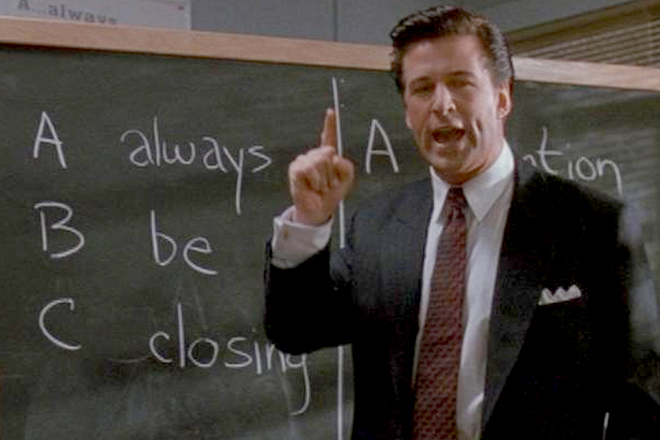
These people also exist outside the Internet (as most people do), and use this language in real life. They say things like “I will destroy you” in business meetings, as former New York Post publisher Paul Carlucci did, once. They pretend they’re Alec Baldwin in the fucking “coffee is for closers” scene. (Or Alec Baldwin in real life, possibly.) They say “little man” and mean it without irony. They accuse men of being effeminate. (See: Tiresome media gadfly Michael Wolff casually implying that someone he dislikes is kinda gay.) And they say, “fuck off and stop trying to play in the big leagues.”

Look: Adult men should not speak to others in the language of Big Dog T-shirts. It’s humiliating — for the speaker, not the target of the attempted intimidation. You, grown man typing an email or sending an Internet message referred to by the sound a tiny bird makes, sound ridiculous.

This is by no means a “call for civility.” I don’t give a fuck about civility. I love insults, devastating takedowns, things that could be described by Twitter hacks as “shots fired,” and funny ad hominem attacks. All of that should be pretty obvious. What I’m calling for is an end to bullshit macho posturing. Especially by fucking professional writers. It was stupid when Norman Mailer did it and it’s unforgivably stupid now. It doesn’t even deserve to be described as “bullying,” because it’s too pathetic.

I think some people who do this think they are being “gonzo,” but they are just being “asshole.” There was, truly, only ever one gonzo writer, and he’s dead. Even when he was alive he didn’t act like some overcompensating pseudo-macho prick in his writing. He insulted the powerful and deserving. He didn’t try to intimidate people with his connections and influence. But the only lessons modern gonzo writers learned from this man were “add funny swears to your writing” and “mention that you have done drugs.”

And look, this Carr email, it would’ve been sort of rude and dickish but basically acceptable if he’d just left out the “Google me” and “big leagues” bullshit. He doesn’t really seem to understand that. In fact, he’s quite proud of himself for shouting DO YOU KNOW WHO I AM to some person who just wanted to rent Carr’s friend a venue for a goddamn Q&A with a rich guy. Carr is proud of himself for shocking the squares.

Yeah, no one is “shocked.” People are actually just saying, “Can you believe what a prick this guy is?” That inability to discern between puritanical umbrage at a teller-of-bold-truths and the normal reaction to a repellent personality is just one of the blind spots you develop when you imagine yourself swaggering about in “the major leagues.”

As a society, we need to put a stop to this. You’re not a big dog, you’re not in the major leagues, no one gives a fuck who you are.

Update: For Paul Carr’s side of the story, he has a response to the email, and his explanation of its context, on his site.

Also I neglected to mention one of the greatest Internet Hardmen ever: Esquire’s Chris Jones. I regret the omission.

Alex Pareene

Alex Pareene writes about politics for Salon and is the author of "The Rude Guide to Mitt." Email him at apareene@salon.com and follow him on Twitter @pareene

More Related Stories

Featured Slide Shows

  • Share on Twitter
  • Share on Facebook
  • 1 of 11
  • Close
  • Fullscreen
  • Thumbnails

    Ten spectacular graphic novels from 2014

    Beautiful Darkness by Fabien Vehlmann & Kerascoët
    Kerascoët's lovely, delicate pen-and-watercolor art -- all intricate botanicals, big eyes and flowing hair -- gives this fairy story a deceptively pretty finish. You find out quickly, however, that these are the heartless and heedless fairies of folk legend, not the sentimental sprites beloved by the Victorians and Disney fans. A host of tiny hominid creatures must learn to survive in the forest after fleeing their former home -- a little girl who lies dead in the woods. The main character, Aurora, tries to organize the group into a community, but most of her cohort is too capricious, lazy and selfish to participate for long. There's no real moral to this story, which is refreshing in itself, beyond the perpetual lessons that life is hard and you have to be careful whom you trust. Never has ugly truth been given a prettier face.

    Ten spectacular graphic novels from 2014

    Climate Changed: A Personal Journey Through the Science by Philippe Squarzoni
    Squarzoni is a French cartoonist who makes nonfiction graphic novels about contemporary issues and politics. While finishing up a book about France under Jacques Chirac, he realized that when it came to environmental policy, he didn't know what he was talking about. "Climate Changed" is the result of his efforts to understand what has been happening to the planet, a striking combination of memoir and data that ruminates on a notoriously elusive, difficult and even imponderable subject. Panels of talking heads dispensing information (or Squarzoni discussing the issues with his partner) are juxtaposed with detailed and meticulous yet lyrical scenes from the author's childhood, the countryside where he takes a holiday and a visit to New York. He uses his own unreachable past as a way to grasp the imminent transformation of the Earth. The result is both enlightening and unexpectedly moving.

    Ten spectacular graphic novels from 2014

    Here by Richard McGuire
    A six-page version of this innovative work by a regular contributor to the New Yorker first appeared in RAW magazine 25 years ago. Each two-page spread depicts a single place, sometimes occupied by a corner of a room, over the course of 4 billion years. The oldest image is a blur of pink and purple gases; others depict hazmat-suited explorers from 300 years in the future. Inset images show the changing decor and inhabitants of the house throughout its existence: family photos, quarrels, kids in Halloween costumes, a woman reading a book, a cat walking across the floor. The cumulative effect is serene and ravishing, an intimation of the immensity of time and the wonder embodied in the humblest things.

    Ten spectacular graphic novels from 2014

    Kill My Mother by Jules Feiffer
    The legendary Pulitzer Prize-winning cartoonist delivers his debut graphic novel at 85, a deliriously over-the-top blend of classic movie noir and melodrama that roams from chiaroscuro Bay City to Hollywood to a USO gig in the Pacific theater of World War II. There's a burnt-out drunk of a private eye, but the story is soon commandeered by a multigenerational collection of ferocious women, including a mysterious chanteuse who never speaks, a radio comedy writer who makes a childhood friend the butt of a hit series and a ruthless dame intent on making her whiny coward of a husband into a star. There are disguises, musical numbers and plenty of gunfights, but the drawing is the main attraction. Nobody convey's bodies in motion more thrillingly than Feiffer, whether they're dancing, running or duking it out. The kid has promise.

    Ten spectacular graphic novels from 2014

    The Motherless Oven by Rob Davis
    This is a weird one, but in the nervy surreal way that word-playful novels like "A Clockwork Orange" or "Ulysses" are weird. The main character, a teenage schoolboy named Scarper Lee, lives in a world where it rains knives and people make their own parents, contraptions that can be anything from a tiny figurine stashable in a pocket to biomorphic boiler-like entities that seem to have escaped from Dr. Seuss' nightmares. Their homes are crammed with gadgets they call gods and instead of TV they watch a hulu-hoop-size wheel of repeating images that changes with the day of the week. They also know their own "death day," and Scarper's is coming up fast. Maybe that's why he runs off with the new girl at school, a real troublemaker, and the obscurely dysfunctional Castro, whose mother is a cageful of talking parakeets. A solid towline of teenage angst holds this manically inventive vision together, and proves that some graphic novels can rival the text-only kind at their own game.

    Ten spectacular graphic novels from 2014

    NOBROW 9: It's Oh So Quiet
    For each issue, the anthology magazine put out by this adventurous U.K.-based publisher of independent graphic design, illustration and comics gives 45 artists a four-color palette and a theme. In the ninth issue, the theme is silence, and the results are magnificent and full of surprises. The comics, each told in images only, range from atmospheric to trippy to jokey to melancholy to epic to creepy. But the two-page illustrations are even more powerful, even if it's not always easy to see how they pertain to the overall concept of silence. Well, except perhaps for the fact that so many of them left me utterly dumbstruck with visual delight.

    Ten spectacular graphic novels from 2014

    Over Easy by Mimi Pond
    When Pond was a broke art student in the 1970s, she took a job at a neighborhood breakfast spot in Oakland, a place with good food, splendid coffee and an endlessly entertaining crew of short-order cooks, waitresses, dishwashers and regular customers. This graphic memoir, influenced by the work of Pond's friend, Alison Bechdel, captures the funky ethos of the time, when hippies, punks and disco aficionados mingled in a Bay Area at the height of its eccentricity. The staff of the Imperial Cafe were forever swapping wisecracks and hopping in and out of each other's beds, which makes them more or less like every restaurant team in history. There's an intoxicating esprit de corps to a well-run everyday joint like the Imperial Cafe, and never has the delight in being part of it been more winningly portrayed.

    Ten spectacular graphic novels from 2014

    The Shadow Hero by Gene Luen Yang and Sonny Liew
    You don't have to be a superhero fan to be utterly charmed by Yang and Liew's revival of a little-known character created in the 1940s by the cartoonist Chu Hing. This version of the Green Turtle, however, is rich in characterization, comedy and luscious period detail from the Chinatown of "San Incendio" (a ringer for San Francisco). Hank, son of a mild-mannered grocer, would like to follow in his father's footsteps, but his restless mother (the book's best character and drawn with masterful nuance by Liew) has other ideas after her thrilling encounter with a superhero. Yang's story effortlessly folds pathos into humor without stooping to either slapstick or cheap "darkness." This is that rare tribute that far surpasses the thing it celebrates.

    Ten spectacular graphic novels from 2014

    Shoplifter by Michael Cho
    Corinna Park, former English major, works, unhappily, in a Toronto advertising agency. When the dissatisfaction of the past five years begins to oppress her, she lets off steam by pilfering magazines from a local convenience store. Cho's moody character study is as much about city life as it is about Corinna. He depicts her falling asleep in front of the TV in her condo, brooding on the subway, roaming the crowded streets after a budding romance goes awry. Like a great short story, this is a simple tale of a young woman figuring out how to get her life back, but if feels as if it contains so much of contemporary existence -- its comforts, its loneliness, its self-deceptions -- suspended in wintery amber.

    Ten spectacular graphic novels from 2014

    Through the Woods by Emily Carroll
    This collection of archetypal horror, fairy and ghost stories, all about young girls, comes lushly decked in Carroll's inky black, snowy white and blood-scarlet art. A young bride hears her predecessor's bones singing from under the floorboards, two friends make the mistake of pretending to summon the spirits of the dead, a family of orphaned siblings disappears one by one into the winter nights. Carroll's color-saturated images can be jagged, ornate and gruesome, but she also knows how to chill with absence, shadows and a single staring eye. Literary readers who cherish the work of Kelly Link or the late Angela Carter's collection, "The Bloody Chamber," will adore the violent beauty on these pages.

  • Recent Slide Shows

Comments

Loading Comments...