
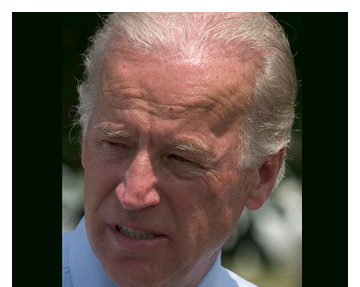

Sen. Joseph Biden sat down with Salon Tuesday morning for an interview in the back seat of his campaign van while en route from Cedar Rapids to Grinnell.
How angry will you be if this turns out not to be a serious election on the issues and is instead decided over who has the best “Sopranos” parody video or who had the most maladroit haircut? Or even, who shouts the loudest about how much they hate the Iraq war?
If it turns out to be that, I will be very disappointed that I didn’t spend the summer at Rehoboth Beach [Delaware]. You think I’m kidding, I’m not. And it would mean that the Democrats are going to lose if that’s what happens.
But I don’t think that’s where it is. I think that of the candidates who might fit into that categoric description now, it’s possible that one of them could step up. I think one of them can. Others can’t.
The reason I’m asking this question is that I’m really worried that answering questions from 100 people in a coffee shop in Cedar Rapids, as you just did, may be old politics. We may have entered a new era that neither you as a candidate nor me as a reporter have ever seen before.
Look, I think that is a genuine possibility. I quite frankly think it’s what several of the candidates are banking on since it’s their ticket in. And I don’t blame them for that, what the hell.
But I don’t think that’s going to happen. If I thought that the polling data out there now actually reflected people making up their minds, I’d be really worried. But I believe from being on the ground in Tupelo, Miss., or out in Los Angeles or in Cedar Rapids, I don’t think people are even close to making up their mind.
I think this is so wide open. Right now it’s more like — and this is not a criticism of the process but an observation — it’s more like a celebrity show. It’s interesting, when you think about it.
What you have too is a bit of a romance factor. [Barack Obama and Hillary Clinton] are serious people, but you have a romance factor here that this is what we’ve been fighting for as Democrats. The thing that I say to people — my supporters — when they say, “Don’t you get discouraged?” If after 1968, getting out of law school, I had been sent on a space capsule to Mars and I was now reentering the planet Earth and people were giving me an update on what’s going on politically and they say, “By the way, in the Democratic Party, you’ve got this woman and this guy, an African-American, who are doing well,” I’d say, “That’s great. That’s great.”
We’re about to get by that. That doesn’t mean that those two people can’t rise up to the next level and say, “By the way, not only am I a leading celebrity as a woman senator and an African-American senator, but guess what, I’m the real deal. And here’s where I can show you that.”
I will be disappointed if, in fact, we never got to that stage and it ends like you expressed it. But I think we will. If at that stage, the Democratic Party, after a serious look, says that these other two are better prepared to lead the country and deal with these real problems, I’ll say that’s OK. I can die a happy man not hearing “Hail to the Chief” played for me.
Is that the difference between you now and when you first set out to run for president in the 1988 election? [Biden dropped out of the race in late 1987 after using the autobiographical words of British Labour Party leader Neil Kinnock without attribution during an Iowa speech.]
Absolutely … I realized later that I was focused on my conviction that I was a better candidate than the other people — and not that I was ready to lead the country. There is a difference.
I’m in this one because I really believe that I know what needs to be done to lead this country. I really believe that I can do this. I can lead the country to a new place. And the difference between being 44 and 64 is that my belief in my ability [back then] stemmed from my confidence in my analytical ability and my early life experience.
My belief now is that a lot of the things that are front and center are things that I have been deeply involved in for the past 12 to 15 years and I have turned out to be, I think, right about. I have made recommendations to presidents and made recommendations to senators that in the end have reinforced my confidence in my judgment to be able to do this. And that’s a big difference.
I have read the paper that you wrote with [former president of the Council on Foreign Relations] Leslie Gelb advocating a tripartite federal system for Iraq that divides the country among the Shia, the Sunnis and the Kurds. But given the rate at which things are deteriorating in Iraq, is there a point at which it becomes impossible for this plan to be implemented when a new president takes office on Jan. 20, 2009?
What I have been straightforward about saying all along is that I believe what I have recommended would, if implemented now, work. But I have also said that I may be left on Jan. 20, 2009, with no option but to withdraw and contain. To literally have inherited a fractured country. Not just a divided country, but a fractured country where there is no way to put Humpty-Dumpty back together.
For me, the first step here for a political solution to have a chance of working is to disengage from this civil war, limit the mission and provide circumstances where the political option, led by the international community, is there.
When Les [Gelb] and I laid out that plan [in May 2006], had President Bush accepted that plan, he could have implemented that plan as a made-in-America idea. Today, we have so little credibility in the world and the region that you have to have the international community as the one putting its stamp on this.
That’s an example of how we have limited our ability to affect outcomes, having lost our credibility so profoundly that you have to have the permanent five [members of the United Nations Security Council] being the catalyst for this political solution. And who knows what happens in 20 months.
Looking forward to those 20 months, do you have any idea of the residual force levels that would be necessary to be in Iraq in a Biden administration?
If, in fact, you were able to generate a political solution — that is, a federal system of some kind — I can envision a residual force not unlike what exists in the Balkans, but multilateral, that would have to be there for some time to come.
Even all the Democrats are talking, “Get out, get out, get out!” Governor [Bill] Richardson, God love him, says that he is the only one who is going to get out entirely, but he is going to leave enough forces to protect our embassy. He ought to talk to the Marines; they say that’s 10,000 troops.
We have one of two options. I think as the next president, I am either having all forces out — all forces out — and try to contain on the borders and keep this civil war from metastasizing, or b
When you say “contain on the borders,” you mean American troops protecting the borders?
Yeah. Or [the second option would be] participating with some kind of coalition of regional forces — including the Turks or the Syrians or whomever — to try to figure out how to keep this war from becoming a regional war.
I guess what I am saying is that this is either going to deteriorate so badly that we’re not only going to have our force out, we’re going to have to get our embassy out.
Or it is going to be more like Bosnia, where you have a political agreement that is continuous and requires confidence building underpinned by a significant international force made up primarily of Americans.
I assume that with a reduced American presence there is always the danger of being in a situation like the Dutch were in in Srebrenica. [In 1995, Dutch U.N. peacekeepers did not intervene when Bosnian Serbs overran a U.N. safe haven and massacred Bosnian civilians.]
Absolutely. You can’t do that. That’s my point. Srebrenica — as you recall my shouting about that at the time — the problem there was that it was not in the context of any international decision based on a political outcome for the region. We had not made up our minds internationally that we were going to stop the [Bosnian Serbs from crossing the line] so the Dutch were left in an untenable position without us having made the decision that we were willing to commit force to stop Milosevic’s forces.
So that’s the example of what you could not let happen [in Iraq]. If you end up without any power sharing or regional stability, then you’ve got to get the hell out of the way completely. I don’t know how you stay.
I believe that [the Bush] administration is, once again, divided and you have [Secretary of Defense Robert] Gates and [Zalmay] Khalilzad, our ambassador to the U.N., and I believe — I don’t know — Condi Rice concluding that something between what [the] Baker [Commission has proposed] and [what] Biden has proposed needs to be done.
But I believe that Cheney, who is a very smart guy, and the neocons who are left, who are very smart people, believe that there is no workable solution. So I believe that all they’re doing is to try to rope-a-dope it and hand it off to the next president. That’s what I think it’s all about for real.
Therefore, I think that whoever over the next three months in the administration wins that debate essentially casts the die for what the next president is going to inherit. And it’s going to be either that you have to get the hell out totally — more of a Saigon model. Or you’re going to have more of a [Bosnian] model with an international force, who are not the guarantors, but are the arbiters of an international compromise.
The worst part about this is that every opportunity over the last four years that this president has had to maybe salvage an outcome that we could live with, he has scorned it … It’s why I proposed in January the resolution about coming out against the surge. It wasn’t to change the president’s mind, but to bring Republicans over and embarrass them [into pressuring Bush to change policy].
Much of the Democratic base places great importance on symbolic gestures regarding the war in Iraq. In your opinion, do they understand what the next president is going to inherit? I am thinking about the opposition that you encountered by voting for the war appropriations bill without a withdrawal timetable attached.
When I cast that vote, I knew what the right political vote was. But the great thing about the guys [campaign advisors] whom I have worked with over the years is they know better than to call me to suggest how to vote. But we did discuss it because the next day I was coming to Iowa. And I set up 14 town meetings on Iraq. And there was a split about whether I was going to get hammered. And I believed that I wouldn’t.
There are people who are really well intended. But it is sort of like the blogosphere is way out there on the point you made. The average person — even the average activist liberal Iowa caucus-goer — knows that this is complicated.
I’ll give you an example. We showed up at the University of Iowa on the second or third day after my being the sole vote for funding [among the Democratic presidential contenders]. A public park in Iowa City, right near the campus. There were about 200 people there and there were about 25 very angry protesters carrying signs that said, “Impeach Biden.”
So the advance guys said, “We’ve got to slow up here, let’s not go in.” And I said, “No, no. Let’s just go.” I got out of the car and the chants started — “Impeach Biden” — and they also had “Impeach Harkin” [Iowa Democratic Sen. Tom Harkin]. I said to them, “I promise I’ll answer all your questions, come into the pavilion. There’s TV cameras in there” — implying that you’ll make your case better in there. And I said, “Let me make my statement and then I’ll answer your questions.” After it was all over, several of them signed up for the campaign. All of them stopped protesting and they begrudgingly understood my position. And some of them changed their minds.
You and I go back to the Vietnam era —
And we remember how temperate some of the opposition to the Vietnam War was.
Exactly right. The difference between now and then, though, is that everybody believed then that if you just got out, period, there were no more shoes to drop, period. And we could get back to attending to the business of Europe — you remember, the Year of Europe and all that. And we could move on.
Don’t forget the big “peace dividend.”
Bingo. Nobody believes that. Nobody believes that merely by ending a tragedy we are in good shape then in the Middle East or in good shape in the world. So it’s much more sophisticated. So they are intuitively much more sophisticated.
[Biden turns to his pollster John Marttila and refers to a Marttila survey of 2,000 voters.] Correct me if I’m wrong now, but essentially [the voters] have my position. The country is “We want out, but you can’t just leave. There are going to be consequences. What are you going to do about the consequences.” So that’s where I think the simplicity and the race of some of the candidates to capture what they perceive to be the left [is wrong]. I don’t think it is the left. I don’t think that’s where the party is.
That’s the reason why I think I’m going to win. I’ll give you an example. One of my colleagues on the [Senate] Foreign Relations Committee, a good guy, was, in the early days of the surge, going to put in an amendment to put a cap on troops. I went to him and I said, “You don’t want to do that.” I knew why he wanted to do it, because MoveOn.org and, you know — And so he introduced it and I said I’m going to debate you on it. I pointed out that it couldn’t possibly work. He’s capping [the troops] at an artificially high level. “Whoa,” he said, “that’s not what I mean to do.”
So I guess what I’m trying to say is that every one of these things that these other guys — I haven’t had a chance to debate Bill Richardson yet, but Bill goes out and he makes a speech to a group that I am going to speak to. The Daily Kos thing. I am going to go to that.
I’m sure that Bill … is going to go out and tell them, “I’m the only one who says remove troops.”
Well, I am going to stand there and say, “Hey, guys, what’s he going to do with the embassy personnel, the several thousand there?”
[And Richardson will say],”Well, we have to leave [soldiers] there to protect them.”
[And I’ll say] So how many troops is that?
[Richardson:] “Well, I don’t know.”
Well, I can tell you. Somewhere between 5,000 and 10,000. Are you all for that?
In other words, when you take people through this, they know that it is not a simple deal. And so I don’t believe that this sort of red-meat, “I’ll get out quicker than the other guy” [competition] has resonance. And I think it has a real danger.
Now when you take the extreme position — I’m leaving, force is bad — Dennis Kucinich, God love him, and Gravel, whose position is that war is never necessary or justified or whatever. Then what you do is you flip the Democratic nominee into the unenviable position that every Democratic nominee has had to face since John Kennedy.
That they’re “not tough enough.”
They’re not tough enough. And the truth of the matter is that Democrats want somebody tough and smart. They want you smart enough to get you out of a war you know you shouldn’t be in. But tough enough to do whatever you need to do to intelligently protect American security.
And you run the risk in a primary of appealing to the New Left, I’ll call it, of the Democratic Party and putting the party nominee in the position he can’t win a general election.
Do you think in the era of YouTube and video cellphones, you can get away with being Joe Biden? I mean being a guy who in the space of two minutes in Cedar Rapids started to tell a joke about Al Gore and the Internet and made a reference to George Wallace in a discussion of healthcare plans.
The answer is probably not. But I’ll tell you what — one of the things I’m not going to do. I’m not going to let that system alter who I am. For example, one of the things that happens is that the public is coming to grips with how to deal with this instant, unfiltered information that may be deliberately mis-edited.
But I think — and this is naive maybe — I have confidence that the American people will put this in perspective. Like when one of the bloggers said, “We’re going to take back the Democratic Party.”
They don’t own the Democratic Party. What are they talking about? So, for example, my pointing out George Wallace from 1968 and quoting what he said, somebody could take that out of context and say “Biden quoted Wallace,” making it sound like Biden is being favorable about Wallace.
At the end of the day, I think what happens is that people basically take a motion picture of their candidate and not a snapshot of their candidate. It’s a little bit like the Barack comment. [Just as he was launching his presidential campaign in late January, Biden gave an interview in which he maladroitly referred to Obama as “articulate and bright and clean.”]
Not a serious person in the press thought that I meant anything other than being complimentary. The good news is that I have a 34-year record on civil rights. Nobody, nobody could suggest that I was being prejudiced. But initially on the blogosphere, this was taken in a different context.
The answer is that there are two sides to my being straightforward and candid. And that is, I’m going to get myself in trouble. But the only thing I decided to do — I can’t start trying to calibrate all this stuff. I really believe that at the end of the day, the public in the primaries, as well as the general election, are going to judge me for all of who I am.
Let me squeeze in a money question, since you only raised $2.4 million in the second quarter. Is that because people aren’t coming to your fundraisers, or you’re not making the calls, or when you call people, instead of giving you $2,300, they write you a check for $500?
I think it is all of the above. But mostly what I think it is is that I have never focused on fundraising. We are in the process of trying to put together a first-rate fundraising operation. A lot of it has to do with organizational structure because where we go, people are responding. I realize that part of it is me, since I haven’t from the outset made this a priority.
I haven’t done anything political in 20 years. You know what I mean by that?
Easy Senate reelections, no need to raise a large amount of money until now?
I haven’t gone out and put together a national fundraising organization. I haven’t put together any of this stuff. And the other piece of it is that — I may be wrong — I continue to believe that the money is not going to be the difference.
It is what it is. I think it’s Iowa and New Hampshire and we’ll have enough money to compete there. I think we’re going to do fine.
And if you don’t, all the money in the world wouldn’t have saved you?
I think that’s true. I really do. I think this is more about two things. Very serious press people … reaching a generic consensus that Biden — not that he should or shouldn’t be president — but that Biden is qualified to be president. He’s the real deal, he’s qualified.
And the second piece of it is that I have to reintroduce myself to the public. One of the interesting polls — I think it was the CBS poll — is that a lot of people know who I am, but they don’t know anything about me. They know about my positions, but they don’t know anything about me.
Are you married? Divorced? People want to know those things to measure your character. And that to me is the second piece of this that I hope gets revealed. And people make judgments in the primaries about character. And we’ll see whether I have the right character. I’m not beating my chest and saying, “My character — ”
As somebody said in one of our [campaign] meetings, people look at me and they kind of picture me as the guy beyond the podium who is the secretary of state and who went to Yale and comes from a wealthy family.
There’s really no connection with my roots, who I am. And that will get unfolded along the way here. [Pause.] I hope.
