
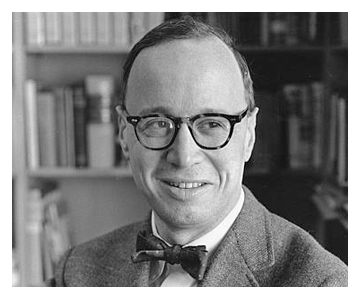

Arthur M. Schlesinger Jr., who died this past February, would have celebrated his 90th birthday this week, on Oct. 15, an event commemorated with the publication of his “Journals: 1952-2000,” culled by two of his sons, Andrew and Stephen, from 6,000 pages down to a mere 858, far too short. If the American century were cast as a Broadway show, this would be the playbill.
Schlesinger lived many lives, in academia, in politics and in cafe society. Of course, he was among the greatest historians of his generation, continuing the tradition of his distinguished father, the originator of the cycles of American politics, and his reputed ancestor, George Bancroft, the 19th-century historian and political intimate of Democratic presidents. Schlesinger was also a speechwriter and advisor to Democratic politicians and presidents, serving famously in the Kennedy White House. Before he went to work with John F. Kennedy, he had already published his magisterial histories, “The Age of Jackson” and the three volumes of “The Age of Roosevelt.”
After the White House years, Schlesinger wrote his indispensable chronicles of John F. and Robert F. Kennedy, “A Thousand Days” and “Robert F. Kennedy and His Times,” respectively. As one of the few people who had experienced the presidency from the inside out, he used his knowledge to explain in “The Imperial Presidency” the winding path to Richard Nixon’s transformation of its positive powers into negative ones. And he revisited his father’s theory in “The Cycles of American History.”
Perhaps most important, Schlesinger was preeminent among those thinkers who worked out post-New Deal liberalism during the long twilight struggle of the Cold War. In books such as “The Vital Center” and “The Politics of Hope” he provided renewed coherence. He was not a do-gooder progressive concerned with projecting earnestness and protecting purity. There was nothing precious about Schlesinger. While the progressives despised and feared politics itself, he saw it as the only way to conduct human affairs in a democracy. He believed in conflict, the battle of many contending interests, and in giving way to the other side when you lose and fighting hard to get back in. His politics were imbued with a sense of humility and tragedy, irony and paradox, and contempt for the utopian. He had sheer disdain for the militantly innocent in politics, often prey to sanctimonious fanaticism. He felt a kinship with those who grasped the ambiguities of politics but who also lacked ambivalence about being in politics. It was no accident he wound up with John F. Kennedy.
Schlesinger loved politics — “the greatest fun” — and believed in it. He was one of its happiest warriors. He preferred martinis and bourbon. This sparkling book is his champagne. To understand “Journals” one has to have either read all the histories of the 20th century or known the dramatis personae. There were only a few people who crossed all the social worlds he did, the spheres of the arts, movies, academia, international affairs and politics, not only in Washington and New York but also in Europe and Latin America. Few people lived as fully in as many places.
“Journals” is a record of only some aspects of his political and social life. For years, really decades, his effervescent social whirl was a kind of compensation for his losses in politics. While seemingly everybody makes an appearance in “Journals,” there are no descriptions whatsoever of Schlesinger’s intellectual influences and closest personal and professional relationships, such as those with John Kenneth Galbraith, Isaiah Berlin and Reinhold Niebuhr. Very little of Schlesinger’s intellectual life or method is present in “Journals.” He notes how much he enjoyed spending time with manuscripts in libraries, but we do not learn how he developed his thoughts or composed his histories. Unlike his proper books, which are filled with brilliantly drawn profiles, “Journals” is catch as catch can. It is the record of a sensibility.
“Journals” opens with a scene in Washington, in 1952, at a quintessential political event for hacks, a Jefferson-Jackson dinner, where the young Arthur is having a ball, judging President Truman’s speech, jumping into Averell Harriman’s car and hanging out afterward with Adlai Stevenson. Harriman pushes Stevenson to run against Eisenhower. “Adlai groaned, looked as if he were going to cry, put his head in his hands, and finally said, half humorously, half agonizedly, ‘This will probably shock you all; but at the moment I don’t give a god damn what happens to the party or to the country.'” Harriman ascribes Stevenson’s comments to a cold. Schlesinger is soon recruited as a speechwriter and advisor for the Stevenson campaign. He discovers that he loves just about everything about politics, the plotting, the gossip, schmoozing with pols and press, spending time in hotels, the rallies, the whole picaresque life.
Schlesinger had the great good luck to catch the upside of the political cycle. He was almost exactly the same age as Kennedy, six months younger. He finds in JFK a personification of how to conduct politics and, indeed, of liberalism.
In the late 1950s, Schlesinger faced a mood of resignation and detachment even after Kennedy was nominated. There was a feeling that politics couldn’t accomplish much. Kennedy was probably the first candidate to be labeled inauthentic, setting off the pseudo-omniscience of the chattering classes against all grimy politicians as packaged products. After all, he wasn’t Kennedy yet as we understand him, though Schlesinger saw the possibilities where others disdained what they saw as a callow and merely ambitious politician. Schlesinger felt compelled to write a short book to meet the malaise head-on, “Kennedy or Nixon? Does It Make Any Difference?” Even in his book his hopes for Kennedy are measured while he gleefully eviscerates Nixon. Liberals were still captivated by the high-minded romantic image of Stevenson, whose ambivalence about politics was taken as inspirational and authentic. Until his dying day, Stevenson remained a beautiful loser, because by losing he remained pure.
Kennedy’s leadership would not be fully apparent until the Cuban missile crisis. He made liberalism the politics of the possible, hesitating sometimes, pushed by others, but then expanding the boundaries. In “Journals” the wry, skeptical Kennedy learns from failure, maintains a sense of disinterest while being at the center of action, quickly understands complexities, and claims political ground as his own. JFK doesn’t just embody Schlesinger’s ideas, but teaches the historian more about politics and statecraft than the professor could suggest to the president.
The White House was the central experience of Schlesinger’s life. Having studied Democratic presidents and charted the arc of liberalism from Jackson to Roosevelt, he suddenly found himself thrust in the middle of it. Before being summoned to work in the White House, he had already written his best historical work. Kennedy’s assassination sends history careening off the tracks and makes possible the eventual turn of the political cycle against liberalism. In this act, Schlesinger glimpses the inscrutability of history. The rest for him truly was commentary. But he was not operating as a pundit, constrained by the narrow ambit of the present; instead he drew upon the past to interpret current events, including his own invaluable experience.
Stevenson turns out to be not the dream figure Schlesinger thought he was. In his description of Stevenson’s funeral in 1965, he still claims to “love” him and to have found him “enchanting,” but he is in reality disillusioned. Earlier, on Dec. 5, 1963, two weeks after the assassination, Stevenson tells Schlesinger, “You know, things are ten times better for me now than they were before.” Later, Schlesinger records saying to a friend, “I do not think I have ever heard him say a generous thing about John Kennedy.” Schlesinger’s nostalgia for Stevenson is his way of letting go. It’s the end of the affair.
Schlesinger had known Lyndon Johnson for years, as he seemingly knew everyone, and had written speeches for him, too. But Johnson as president was an interloper, never meant to be, but rather a pure product of Congress. Having been at the center, Schlesinger understands better than ever the mystery of presidential leadership. Without political leadership the party of hope as opposed to the party of memory (taking his cue from Emerson, as he often did) would lose direction, fall apart and succumb to squabbling. And this is what happens under Johnson as he sinks into Vietnam, which Schlesinger resolutely believes Kennedy never would have allowed. Now, Schlesinger thinks he sees the quality of leadership in Bobby, but the tragedy of assassination is reenacted before there’s a true test.
The many joyful pages of the “Journal” after November 1963 and June 1968 are streaked with melancholy. “I could not but think how many such sorrowing Kennedy homes I have been through,” he writes in 1990.
Schlesinger despises Jimmy Carter and even speaks of voting for Ronald Reagan. After Ted Kennedy’s disastrous campaign for the Democratic presidential nomination in 1980, Schlesinger sporadically tries to do what he can, but he’s the wrong man in the wrong place at the wrong time. He finds his niche, a grand personality in the world’s most cosmopolitan city, but it’s still a smaller niche than he would like. He’s distant from power, his president murdered, and it was not going to come together for him again. He finds pleasures in private life, his highly visible articles and the honors he rightfully earned. He turns impatient with Stevenson manqués. In 1994, he attends a speech by Sen. Bill Bradley, “pretentious and interminable — the deep thoughts of a bright sophomore.”
For a long time, the closest Schlesinger comes to power is through his old friend Henry Kissinger. The relationship dates to their early days teaching at Harvard. Schlesinger was the older man lending advice to the younger one. Arthur was from an old American family, had won the Pulitzer Prize, and knew the great and good, while Henry was an immigrant, unknown and scrambling. In “Journals” Kissinger waltzes through as a half-comic, half-malevolent figure, an unreliable narrator and inside dopester. In 1977, Kissinger tells him, “Donald Rumsfeld was the rottenest person he had known in government.” In 1982, Kissinger confides: “You know, I have much less sympathy for Nixon now than I had in 1974-5. I think what really finished it for me was the trip to [Anwar] Sadat’s funeral — when I went along with Nixon, Ford and Carter. As soon as we got into the plane, Nixon was his old self again, trying to manipulate everybody and everything, dropping poisonous remarks, doing his best to set people against each other. Later, when we were in a car by ourselves, Ford said to me, ‘Sometimes I wish I had never pardoned that son of a bitch.'” In 1992, Kissinger praises Dan Quayle as “well-informed and intelligent.” “I take this to mean two things,” writes Schlesinger, “that Quayle listens reverently to Henry and that Henry thinks Quayle may be President some day.”
With Bill Clinton’s election, Schlesinger is drawn again into the action. Al Gore asks him to help write his acceptance speech to the 1992 Democratic convention. “He talked with passion about the rescue of the planet — ‘the central organizing principle for the 21st century.’ (All this is from notes taken at the time.)” But Schlesinger gazes into the mirror and sees himself as the gray eminence he has become. “Of course, like an old firehorse responding to the bell, I was delighted by the invitation. I also had forebodings. Speechwriting is a young man’s game, and you have to be in the thick of things to do it right.” He recalls an incident from the 1952 campaign when FDR’s speechwriters, Robert Sherwood and Samuel Rosenman, were conscripted to write a speech for Stevenson. “They were really not much good. Sherwood and Rosenman had been out of things too long. So have I.” After attending the Democratic convention nominating speeches, he goes to a party in Ted Kennedy’s hotel suite, and reflects that his first book was published 53 years earlier.
But Schlesinger continued to carry on. No degree of fashionable defamation of left- and right-wing variants could ultimately dim the aura of the Kennedy presidency he kept burning as bright as he could. He lent that past to the present when he testified in November 1998 before the House Judiciary Committee against the impeachment of President Clinton. (I had helped to arrange this appearance.) Viciously attacked and stalwartly defended, he was back at the center. “I have not enjoyed such a fusillade for a third of a century. It makes me feel young again,” he writes.
The age of Schlesinger has ended, but his notion of the vital center was never static. It was always full of tension and irresolution. His theory of the cycles of American politics, moreover, was always more than a theory of cycles. It reflected an attitude about politics. Power, as he saw it, is impermanent. Nothing is or can be perfect. Even the best that we can do is conditional. He accepted conflict as inevitable in politics and embraced it as essential to democracy. Democracy, he believed, following Madison, has its way of containing conflict so that it doesn’t release either destructive passions or lead to an unfettered concentration of power. Schlesinger saw through the bullying of the jingo and the sentimentality of the populist. His politics will never satisfy small minds of whatever persuasion, but remains the broad terrain on which a new vital center may be built again.
I knew Arthur for about 20 years. The last time I saw him was about two years ago, in Washington, at lunch with his wife, Alexandra, and son Robert (a fine writer who has contributed articles to Salon). Arthur had his steak and martini and was as avid as ever to talk about politics. It’s a shame he will not be here to see the cycle turn and his vindication.
