
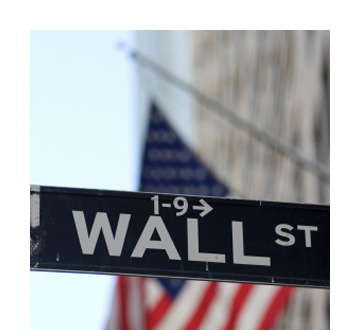

Wall Street sits at the eye of a political hurricane. Its enemies converge from every point on the compass. What a stunning turn of events.
For well more than half a century Wall Street has enjoyed a remarkable political immunity, but matters were not always like that. Now, with history marching forward in seven league boots, we are about to revisit a time when the Street functioned as the country’s lightning rod, attracting its deepest animosities and most passionate desires for economic justice and democracy.
For the better part of a century, from the 1870s through the tumultuous years of the Great Depression and the New Deal, the specter of Wall Street haunted the popular political imagination. For Populists it was the “Great Satan,” its stranglehold over the country’s credit system being held responsible for driving the family farmer to the edge of extinction and beyond. For legions mobilized in the anti-monopoly movement, Wall Street was the prime engine house of monopoly capitalism, leaving behind it a trail of victimized businesses, consumers, captive municipalities, and crushed workers. For Progressive reformers around the turn of the 20th century, Wall Street’s “money trust” was the mother of all trusts, its tentacles — and the octopus was indeed a popular image of the time — choking off economic opportunity for all but a favored few. Its political power in Congress, in presidential cabinets, in statehouses, in both major political parties was seen as so overwhelming as to threaten to suffocate democracy itself.
All the periodic panics and depressions — 1873, 1884, 1893, 1907, and 1913 — that, with numbing regularity, punctuated economic life until the Crash of ’29 and the Great Depression brought the house down, seemed to begin on the Street. And whether they actually began there or not, all the misery that followed in their wake — the homelessness, the armies of tramps and hobos, the starvation, the bankruptcies, the broken families, the crushing sense of dispossession — was regularly laid at the feet of the Street.
Despite the hot-tempered invective directed its way, the “Great Satan” didn’t face its comeuppance until the New Deal in the 1930s. Then, all its transgressions — its speculative greed, its felonious insider-dealing, its cynical manipulation of popular credulity, its extravagant incompetence and seemingly limitless capacity for self-delusion — left Wall Street truly vulnerable. Its reputation had struck bottom.
Wall Street’s Invisible Decades
Just like our Wall Street heroes of the recent past, so, too, back in the 1920s the savants of the Street claimed credit for the rickety prosperity of the Jazz Age. With the Crash they took the blame for the disaster, just as they had taken the credit for the prosperity, and were despised for their hypocrisy as well. Just as seems to be starting to happen today, congressmen, some of whom had spent their careers genuflecting before the titans of Wall Street, suddenly hauled them before investigating committees, there to be defrocked, treated to a withering storm of biblically inspired injunctions and Shakespearean curses, and indicted in the court of public opinion. Wall Street was, as it now seems about to be again, excommunicated.
Suddenly weak beyond compare, the Street was powerless to resist Franklin D. Roosevelt’s regulatory state. In rapid succession came the Glass-Steagall banking act and the Federal Deposit Insurance Corp., the two securities acts of 1933 and 1934, the creation of the Securities and Exchange Commission (SEC), the Public Utility Holding Company Act, and much more. When, in 1936, the president summoned the people to battle against the “economic royalists,” everyone knew just whom he was talking about.
It’s long been said that FDR’s New Deal saved capitalism from itself. That is true. One ironic consequence of that fateful turn of events was, politically speaking, to cloak Wall Street in invisibility. After all the shouting was over, after the installation of legislative reforms had further chastened an already cowed Street and constrained its penchant for financial wilding, it ceased to function as the magnetic north for all those troubled by the inequities, injustices, and deformations of capitalism.
During the long prosperity of the postwar years from 1945 to 1970, when the income and wealth inequalities that had always been associated with Wall Street narrowed dramatically — economic historians know this as “the great compression” — news of the Street retreated to the business pages and remained there. Except for an occasional act of street theater, even in the tumultuous 1960s, the Street remained largely exempt from sustained political criticism. Once the bête noire of all those who found themselves in opposition to the ravages of laissez-faire capitalism, Wall Street had been neutered.
Just as remarkable is how long that immunity from criticism lasted. After all, Wall Street’s record over the past quarter-century is nothing to boast about — unless, that is, you happened to have made your living on it or in its environs.
Beginning in the 1980s, the Street supervised and profited handsomely from the de-industrialization of America. “Lean and mean” capitalism, the watchword of the Reagan era, added up to the systematic dismantling of the core of American industry. This was done in the interests of “shareholder value,” as well, of course, as the bounteous short-term returns offered by the merger, acquisition, and junk-bond mania of those years. Did the rise of a speculative economy of virtual wealth and the fall of an economy that had once employed millions productively at decent wages disturb the political equanimity of American public life? Barely.
When the financial regulatory apparatus of the New Deal was weakened, piece by piece, or simply eliminated by a triumphant conservatism, the economy began to re-experience the cycles of bubble and bust so familiar to previous generations of Americans. In 1987, the stock market briefly collapsed. Then, during the late 1980s, a large-scale savings and loan bailout was accompanied by the rescue of banks caught short holding shaky Latin American debt. Not long after that came the savaging of the “Asian tiger” economies by Thomas Friedman’s “electronic herd” of speculators, and the government-arranged bailout of that period’s biggest hedge fund, Long-Term Capital Management.
Before the country could catch its breath, matters got really serious with the popping of the dot-com bubble, Enronization, and finally, of course, our current catastrophe. Through all of this — until now — the political fallout was virtually nil. Sarbanes-Oxley, the act passed by Congress in 2002 in response to an avalanche of Wall Street and corporate scandals that began with Enron, was a remarkably tepid piece of reformist legislation, given the scale of the debauch; yet, within moments of its passage, howls of protest could be heard from our offended friends on the Street, grievous complaints treated with all due seriousness by the media, somehow still infatuated with Wall Street’s rainmakers.
The Return of the Repressed
No longer. There is a new agenda in America and it calls for re-regulation, recovery, and retribution. It is enough to make one gasp in disbelief, but nowadays there is practically universal agreement that the financial sector must be more or less rigorously reined in and regulated. (Hedge fund managers and some other holdouts demur, of course.) Yet mere weeks ago, “government regulation” was still a phrase to be avoided like the plague, ranking right up there with “liberal” in the vocabulary of political obloquy.
It’s hard not to be reminded of just how quickly the political chemistry of the country changed at the end of the 1920s. The presiding figure who had loomed over that decade was Secretary of the Treasury Andrew Mellon — then considered the greatest Treasury secretary since Hamilton. In 1929, his insane faith in the free market led him to suggest to President Herbert Hoover that the way out of the Depression was to do nothing, except “liquidate stocks, liquidate labor, liquidate the farmer, liquidate real estate.” That thought earned him the enmity of a once admiring country. So, too, laissez-faire has suddenly become much too French for Americans who, but moments ago, treated it like the Holy Grail. We are all regulators today.
Of course, the devil, as every politician on television now makes sure to say, will lie in the details of just what re-regulation consists of. If all it involves is transparency, that won’t be nearly enough. After all, that is precisely what Sarbanes-Oxley promised when it required financial institutions to make full disclosure of their activities. When it comes to circumventing the rules of information sharing so as to leave the insiders in the know and the rest of us out in the cold, where there’s a will, there will always be a way. The new regulatory regime must have powers that extend beyond umpiring. New rules need to be invented whose purpose is as much to assure economic recovery and equity as it is to police the borders of illegality.
Indeed, popular anger fueling the regulatory crusade now seems to be coupled with a deep-running fear of a coming depression and an urge to reverse course. This, too, is symptomatic of a shift in the axis of political debate, in the zeitgeist, if you will.
The meltdown of the financial system has called into question American economic behavior over the last generation. Wall Street has come to stand for a paper economy that produces nothing useful, nothing tangible the way it once did. It has frittered away resources on embarrassingly grotesque forms of conspicuous consumption and patently non-productive forms of investment. It has left the real economy underdeveloped, its infrastructure rotting away in plain sight, its wealth fractured by unprecedented inequalities, dependent on sweated labor, and its industries, across a broad spectrum, technologically second-rate. It has left the country lost in a sea of debt and headed for an abyss of unemployment, bankruptcy, and evictions. Somehow regulation — although not all by itself — must address this, or so, for the first time in a long while, large numbers of Americans hope and desire.
People are now looking to the government — that ogre of the dying old order — as the only power resourceful and strong enough to direct the flow of capital where it’s needed rather than where the discredited overlords of the financial system think may be most profitable. Conservatives, especially those who rightly balk at the mega-bailout now in the works as unfair to the American taxpayer, decry what they call financial socialism. But what then?
The Meaning of Retribution
As it did in 1929, the free market has failed beyond tolerance. Overwhelming popular sentiment (which each new poll registers with added vehemence) may, sooner or later, bring not only a full recognition of just how wrong-headed the country has been for how long, but how much in need it is of fresh institutions. New forms of public authority, closely overseen by the mechanisms of democracy rather than turned over to some autocrat on leave from his day job as an investment banker, might have a chance of doing what was once unthinkable: de-sanctifying private property and compelling it to perform in the general interest when its private misuse has placed us all in peril. The New Deal ventured in that direction. We need to venture further.
Here’s a first principle: Refuse to reward those institutions that have done us no service. If that entails their liquidation (to borrow a word from Andrew Mellon), so be it. The world won’t end, only the world as they have known it.
Let’s use what’s left of their grossly inflated assets to re-start the engines of real economic development. Compel investment in the re-industrialization of the country along lines that reward labor not parasitism, end the reign of the sweatshop, rescue the country from environmental suicide, revise the division of wealth and income so we can all live free of the indecencies of lavish piggery, and insist that social responsibility takes precedence over the bottom line.
Many will seek retribution as well, just as Americans used to do in the decades before the Great Depression. How could they not? That’s what happens when simple rage turns into moral outrage, when people are finally called to account for the damage they’ve done. The emotion fuels a chemical reaction even now at work in our cultural innards. It may prove the catalyst for an intellectual and emotional explosion that someday will add up to a genuine break with the past. It did so back in 1929.
However justifiable, cutting CEOs loose from the life-support systems they’ve used to drain corporate treasuries for decades is small potatoes. Do it, but let’s hope the instinct for retribution will be turned to better purposes — to, in fact, reintroducing into our political life and our economic behavior an ethos of social solidarity. Let’s see where that might take us. We could do much worse.
