Aluf Benn

Why Israelis support the Gaza offensive

Israel's post-traumatic war is not just about stopping Hamas rockets, but about repairing reputations -- and erasing the stain of failure.

  • more
    • All Share Services

Why Israelis support the Gaza offensive

If there is one issue separating Israel from its role models in the West, it is the perceived legitimacy of using force. In Europe, and in many parts of American public opinion, military power is seen as an option of last resort; a primitive, old-fashioned and often counterproductive tool of policy. To us, hitting our enemies once in a while feels like a necessary behavior in a tough neighborhood. It may backfire, as it often does, but still, most Israelis believe it’s impossible to survive in the Middle East without resorting to occasional aggression.

That is why in Washington, London or Paris, governments must sweat to build political consensus for going to war, while in Jerusalem, war resolutions enjoy wide parliamentary support. Israeli governments find it hard to pass peace treaties through the Knesset. That’s where political difficulty lies.

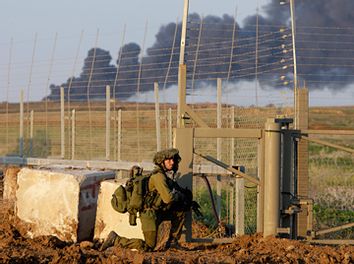
Israel’s military operation against Hamas in Gaza, now in its 10th day, is an excellent example of this rule. The war enjoys strong public support among Israel’s Jewish majority. Only Israel’s Arabs, identifying with their Palestinian brothers, and the far political left, which is all but pacifist, have protested against it. All the rest have united behind the government, including the more established left. The novelist Amos Oz, a moral compass for Israel’s peace camp (and an eventual critic of the 2006 war in Lebanon), gave his blessing to the war.

Israelis believe that operation “Cast Lead” in Gaza is a justified war of no choice against an extremist, uncompromising enemy. Hamas and its smaller proxies have targeted Israel’s towns and villages near Gaza for several years with thousands of rockets and mortar bombs. They kept rocketing even after Ariel Sharon evacuated Israel’s settlements and forces from the Gaza strip in 2005. Lacking a credible response, or an anti-rocket technology, Israel appeared helpless against a primitive weapon, which killed relatively few people, but disrupted life for hundreds of thousands.

The common narrative here involves self-justification with insult. “No other country would have absorbed thousands of rockets on its territory without retaliation” is the way most Israelis analyze the situation. “We pulled out of Gaza, and they thanked us with shells and rockets” is another widely used explanation. Bombing and invading Gaza to “teach them a lesson” follows this logic naturally.

To its credit, Prime Minister Ehud Olmert’s government has built its case for attacking Gaza, both domestically and internationally, by showing restraint for a long time and agreeing to a truce that lasted several months. Hamas, with its Islamist ideology and Iranian alliance, has very few friends. This explains the global support of Israel’s actions. There may be protests in the streets in Arab nations and European capitals, but note the lazy pace of diplomatic efforts to call a cease-fire. Egypt, which previously mediated between Israel and Hamas, and brokered the ill-fated truce, all but gave Israel a green light to crush Hamas. Only after the beginning of the ground offensive did Cairo express uneasiness.

Nevertheless, beyond its immediate political-military context, the current war serves a deeper need for Israelis: recovering from the trauma of our debacle in Lebanon in 2006. We grew to believe that our military is invincible, and whenever it fails to fulfill our expectations, we feel defenseless and doomed. The only way out of it is to go for another round and hope for better results. It is not a new idea, nor does it necessarily work: In 1982, leading the invasion of Lebanon, Prime Minister Menachem Begin boasted that it “cured the trauma of the Yom Kippur War” nine years before. As it happened, Begin’s operation soured, creating a new and lasting national trauma. But Israeli governments keep trying.

Gaza is Olmert’s second chance. The similarities are striking. As in 2006, Israel is fighting an Islamic group that grew from a small terrorist organization to a quasi-state, expelling Israeli forces from its territory in the process. In both cases, the enemy hit Israel’s population with rockets, and the Israel Defense Forces proved incapable of stopping it.

But here the analogy ends. In 2006, Israel went to war unprepared, didn’t know when to stop, and failed to defeat several hundred fighters of Hezbollah. Overall, it was an embarrassing show of military incompetence. This time, the military planned and practiced in advance. Its political masters have learned their lesson, and went by the checklist of the post-Lebanon commission of inquiry. This resulted in more modest goals, and in media shyness. And most important, the enemy is weaker this time, as evidenced by its smaller firepower. Unlike Hezbollah, which enjoyed the hilly terrain of Lebanon and open lines of supply via Syria, Hamas is encircled in the small enclave of Gaza, where Israel controls the gates. Egypt has kept the Rafah crossing, which connects it with Gaza, closed in order to prevent a spillover of Gaza’s troubles onto Egyptian territory.

The opening move of the Gaza operation, on Dec. 27, reminded Israelis of their glorious military past. War was in the air for several days, following the collapse of the truce, but everybody expected some ground incursion. Instead, Israel’s air force surprised by attacking dozens of targets simultaneously, killing hundreds of Palestinians in a matter of a few minutes. The military equated the attack with its most successful operation ever, the destruction of Egypt’s air force in the opening move of the 1967 Six Day War. The analogy is doubtful, as Hamas lacks any air defenses, but it shows the craving for success in the military.

The first day was exhilarating. Israelis saw the IDF as they want to remember it, smart, daring and vengeful. The subsequent and ongoing ground operation, launched after several days of hesitation, serves a similar psychological motive. The enemy ridiculed Israel for relying on its air power, fearing the inevitable casualties of ground war. The military wanted to smash this cowardly image.

How long will it last? Public support will wane if the number of casualties grows, or if the military is stuck in a pointless war of attrition. Or if something goes terribly wrong, as in Lebanon. The government would like to end the operation by next week, leaving a clean table for President Barack Obama. It hopes to make Hamas raise a white flag, by killing more of its fighting force. Bringing down Hamas’ rule in Gaza is beyond the scope of the current operation. Israel would like to see Hamas weakened, not destroyed. After all, given the state of Fatah, it’s the only power that can take care of Gaza with some responsibility. With Hamas gone, Israel might have to deal with a Somali-style cauldron of gangs and warlords.

This means that strategically, the Gaza war will probably end up as a blip, rather than as a historic turning point. It is another one of Israel’s long list of cross-border operations, rather than an effort to turn the tide on Islamic extremism. At best, Israel’s government hopes to scale back the rocket-launching capabilities of Hamas and weaken its military arm. This should lead to the sort of armed coexistence that Israel has with Hezbollah in the north. In other words, Israel is buying time.

Domestically, too, the war will hardly change the political reality. Israel went to war in the midst of an election campaign. Olmert, the prime minister, resigned under corruption allegations, and is not running for reelection. He only wants to repair his reputation from the Lebanon damage. His partners in the decision-making War Trio, Defense Minister Ehud Barak and Foreign Minister Tzipi Livni, are leading rival parties, Labor and Kadima, which compete for the center-left constituency. Billboards in Israel are showing the two, often side by side, with amazingly similar slogans (Barak is “looking at the truth” and Livni is “speaking the truth”). In the first week of the war, Barak gained support in the polls, but he is still lagging behind as an aspiring national leader. Even if the Gaza ground operation ends in some glorious victory, it will probably be too late for Barak to change the national sentiment before the Feb. 10 election.

Given the division on the left, the election front-runner remains Binyamin Netanyahu, leader of the right-wing Likud party. As opposition leader, Bibi is out of the decisions loop, serving instead as a TV propagandist for Israel. Nevertheless, he can use the war to his advantage, arguing that Olmert et al. were merely following his advice. The polls indicate, however, that the war may enable the left to prevent a right-wing majority in the Knesset. This means that Israel’s next government will probably be a right-center one, in which Netanyahu shares power with Barak, or Livni, or both.

How will all this affect Obama’s expected effort to reenergize the Israeli-Palestinian peace process? On one hand, the Gaza war is showing that Israel can stand up to its enemies, thus strengthening national self-confidence. Alas, the war has also shown that there is no credible way to stop rockets, as Hamas has launched them deeper into Israeli territory than ever before. At this backdrop, it will be difficult to build public support for a West Bank withdrawal. Israelis will be even more reluctant to expose Tel Aviv and the Ben Gurion airport to the possibility of rocket fire from the West Bank. The new American president will have to work hard to overcome this fear. Otherwise, Israelis will still find it easier to go to war than to wage peace.


The Obama show lands in Israel

He got a rock-star reception here, but an intriguing question lingers: Which U.S. presidential candidate is better for this country?

  • more
    • All Share Services

The Obama show lands in Israel

The 2008 U.S. presidential race has been marked by several historical firsts, one of which is the globalization of the campaigning. Visits to Israel and the Palestinian Authority have become part of the trail to the White House this time around; never before have the nominees from both parties visited during an election year. But this is not a typical campaign — it’s a struggle between two visions of America and its place in the world.

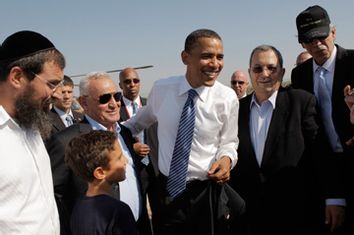
John McCain visited back in March but did not make much of a splash. Barack Obama by contrast, touring Israel on Wednesday, received rock-star treatment from the media. Israel’s top politicians, immersed as they are in political crisis and expecting a leadership change following Prime Minister Ehud Olmert’s corruption case, scrambled for a slot in Obama’s 24-hour schedule.

Obama’s itinerary included much of the usual for high-level foreign VIPs: visiting the Holocaust Memorial and the Western Wall in Jerusalem, calling on President Shimon Peres and Prime Minister Ehud Olmert, and making a quick visit to the Palestinian Authority’s Mahmoud Abbas in Ramallah. He also took a helicopter trip to Sderot, the border town near Gaza that has been hit by thousands of Palestinian rockets in recent years. Now Sderot is quiet, thanks to a cease-fire with Hamas, but Obama had his own near encounter with local terrorism. Several hours before his arrival on Tuesday, a Palestinian bulldozer operator ran over passersby near Obama’s hotel in Jerusalem. Two dozen people were wounded before the perpetrator was shot and killed.

As expected, Obama has said all the right things in terms of what the Israeli establishment wants to hear. Like any other American politician, he repeated his commitment to Israel’s security and its special relationship with the United States, condemned terrorism, and pledged to prevent the Iranian nuclear threat. But while acknowledging his charm, his Israeli interlocutors seem to sense that Obama is not proficient in the nitty-gritty of Israeli-Palestinian peacemaking and does not expect any quick breakthrough toward peace. Clearly, he has more pressing issues on his foreign policy agenda; Israel’s problems are way down his list, after Iraq, Afghanistan, Iran, and the economy and energy reform back home.

Nevertheless, Obama’s high-profile visit here is no accident. Israel has played an arguably overblown role in the 2008 campaign, as Obama’s rivals have sought to push falsehoods about his “Muslim background” (he is Christian) and his associations with known anti-Israel figures to scare away Jewish voters and other supporters. This tactic appears to have been effective. In many meetings with Jewish American visitors this year, I have heard strong doubts about voting for Obama in November. “I have never supported a Republican, but this time it’s different,” was a recurring theme I heard. “I have a dilemma,” confided one young Jewish financier from New York. “McCain is more pro-Israel than Obama, but he will appoint conservatives to the Supreme Court, who may overturn Roe v. Wade.” A tough choice for some, undoubtedly.

Mindful of the possible defection of Jewish voters to McCain, Obama’s campaign has been at pains to convince the U.S. electorate that he is genuinely pro-Israel. He was pushing his message to the limits of political correctness when in June he announced his support for an “undivided Jerusalem” at the annual gathering of the American Israel Public Affairs Committee in Washington. In the charged lingo of the conflict, this term is anathema to the Palestinians, and Obama backed away from it the next day. But he kept courting Israel (as well as American supporters) by writing an Op-Ed in Israel’s largest newspaper, Yediot Aharonot, for the country’s 60th anniversary. He even deemed appropriate Israel’s bombing last year of Syria’s suspected nuclear reactor — you can’t really go much further than that as a Democrat who campaigned on his opposition to the Iraq war.

Despite all the excitement and commentary this week, an intriguing question lingers here: Which candidate would be better for Israel? Taking into account that campaigning is not synonymous with political reality, there are several possible answers to this question.

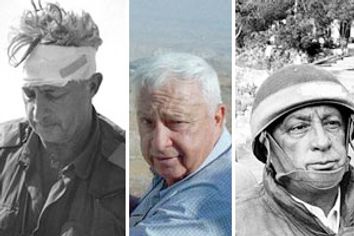
Instinctively, the Israeli establishment is warmer to McCain. His gray hair, wrinkles and combat record are key elements of the Israeli concept of leadership. Think of David Ben-Gurion, Yitzhak Rabin or Ariel Sharon. We tend to be suspicious of young, TV-savvy leaders without experience in matters of war and peace, and prefer the tribal elders. Moreover, McCain appears to be more receptive to using force, which is the usual point of contention between Israeli and Western public opinion. For these reasons, he appears like a good uncle, a follow-up to Bush’s supportive eight years.

Obama offers a more exciting — albeit more challenging — vision to Israelis. If he can bring about a change of perception that America is once again optimistic in its strength, more accepted in the world and less dependent on oil, it would boost Israel’s strategic position. But in order to get there, Obama wants — and needs — to be friendlier with the Europeans, Arabs and Iranians, all of whom are less friendly to Israel in various degrees. The inference, then, is that an Obama administration would pressure Israel to change its behavior and withdraw from the occupied territories and the settlements. To Israel’s right wing, this amounts to an unacceptable sellout. To the left, it’s fulfilling the old dream of “strong American intervention” to impose peace.

What will Obama actually do in this region, if elected? He (and perhaps even McCain) will likely try to appear more involved in Israeli-Arab peacemaking, if only to show a change from the Bush years. Dennis Ross and Daniel Kurtzer, veterans of the Israeli-Palestinian peace process, are part of Obama’s entourage for this visit. Both are known supporters of active American mediation in the Middle East. But realistically, they have little room to maneuver. If they seek a potential agreement quickly under a next administration, they might try the Syrian track first. If they want to show compassion to the Palestinians, which could give America more credit across the Middle East and elsewhere abroad, they risk the usual long and frustrating path.

Ultimately, many Israelis see little difference between American presidents in terms of the U.S. relationship with Israel. Over and above personal chemistry, U.S. policy has tended to follow a basic set of rules: Whenever a key American interest is at stake — say, when Israel is selling arms to China — then declarations of close friendship are set aside and brutal arm-twisting is applied until Israel falls into line. If a vital Israeli interest is involved — as in, say, the Palestinian issue, American military aid, or Israel’s nuclear deterrent — then Washington tends to follow Jerusalem’s lead. When any issue falls in between, like the Iranian question, there is some give and take, but the American side essentially has the final word. Note how the Bush administration decided to talk to the Iranians recently, shattering Israeli hopes (or illusions) of an impending U.S. military attack.

This is why Israelis in general pay relatively little attention to the American campaign, and why, once the traveling Obama show moves on, the excitement will dissipate. Few here who aren’t politics buffs see much difference between Democrats and Republicans, or understand the subtleties of congressional vs. presidential power. And pre-election expectations tend to be wrong: Neither Bill Clinton or George W. Bush were favorites of Israel’s leaders, although both turned out to be among the friendliest presidents ever to Israel. This time, too, despite all the media attention and commentary, we will have to wait until after Election Day to really find out what lies ahead, even if the next U.S. president is the candidate who brought his historic campaign to our shores this week.

Continue Reading Close

The real two-state solution

President Bush's peace summit for Israelis and Palestinians ignores a painful truth -- one that we are already living in the Middle East.

  • more
    • All Share Services

The real two-state solution

This week President Bush will convene an international conference in Annapolis, Md., to promote the “two-state solution” for Israelis and Palestinians. The meetings and noble proclamations toward that goal, however, will bear little relation to reality here in the Middle East. Essentially, Bush is too late. For most Israelis, the two-state solution already exists.

When I grew up near Tel Aviv in the 1970s, Palestinians from the West Bank and Gaza were an indispensable part of the environment. Many of them worked in construction sites, laboring to turn my hometown’s strawberry fields into a modern suburb. Others stood every morning in line at the town’s highway intersection — a common sight in Israeli cities then — waiting for their chance to get a day job. Luckier Palestinians got jobs filling gas at service stations, washing dishes in restaurants and bars, or fixing cars. They served Israeli customers, and were even given Hebrew aliases by their employers. Thus, Ghazi became “Roni” and Mustafa turned into “Moti.” Despite a class system problematic in its own right, many of these workers experienced at least a measure of integration.

“The Arabs,” as they were called then, manned our country’s service sector for two decades after Israel occupied the West Bank and Gaza in June 1967. But lacking civil or political rights, this underclass rebelled in December 1987. Termed the first intifada, the Palestinian uprising abruptly changed Israel’s reality. Palestinian workers disappeared from sight, first the young ones, then the elders.

Born a few months after the outbreak of the first intifada, my daughter grew up in a very different environment than I did. She has never met a Palestinian from the West Bank or Gaza. Now 19, she has seen our Palestinian neighbors only on TV, and views them as aliens. She is much more familiar with American brand names and sitcom characters than with the people who live 15 miles east of her Tel Aviv home.

My daughter is far from alone in her experience. Today’s mainstream Israelis living comfortably in the Tel Aviv area hardly ever cross the “Green Line” separating Israel from the West Bank. In pre-intifada times, many Israelis traveled the short distance up the hills to buy cheap furniture at Bidyah or get their cars fixed in low-cost workshops in Jenin. Not anymore. Since the much bloodier second intifada erupted in September 2000, all Palestinian towns and villages are legally off-limits to Israelis. Moreover, few Israelis would even visit the controversial Israeli settlements on the hilltops. (Conversely, their religious, highly ideological inhabitants would feel out of place in Tel Aviv, just like Palestinians would.) Now, the only reason to go to Nablus or Ramallah, or to one of the Israeli settlements around them, would be for military duty. Otherwise, entering these towns is a life-threatening prospect for Israelis.

Even the Old City of Jerusalem, officially a sovereign part of Israel, has lost its appeal for most Israelis. As a child and teenager, I toured the Old City’s alleys, the souk and holy places countless times with my family, my classmates and my friends. We would walk on top of the Ottoman-built wall, or eat hummus at Abu Shukri and have tea down the alley in the Christian Quarter. Imagine visiting one of the world’s most exotic wonders, within an hour’s drive from home! But few Israelis who grew up in the post-intifada reality would even recognize these places now. These days, I visit the souk only when I have visitors from abroad. For many of my peers in Tel Aviv, the Old City is more remote than New York, London or Thailand. For them, the Jewish part of the city suffices. They see East Jerusalem, with its Palestinian dwellers, as too scary and alien to visit.

The truth is, the popular divorce that has hardened in place between Israelis and Palestinians has an acute political meaning. If you don’t ever go to the West Bank or Gaza except for military duty, then for all practical purposes those places lie across the border. Official state or not — it doesn’t matter. Only diehard leftists and peace process buffs here still talk about “the occupation.” The majority of Israelis, who never witness its ugly expressions — the checkpoints, the travel bans, the house demolitions — hardly bother to think about the occupation anymore.

This political parallax explains a paradox with Israeli public opinion. Polling data indicate strong support among Israelis for the establishment of a Palestinian state in the West Bank and Gaza. Yet, this majority support has not translated into action. The last three Israeli prime ministers — Ehud Barak, Ariel Sharon and the incumbent Ehud Olmert — have declared that Palestinian statehood is in Israel’s interest. In reality, however, its establishment appears as remote as ever. The West Bank is ruled by an ad hoc hybrid: Israeli security forces, who also control the external borders; Israeli settlers and their municipal organs; the dysfunctional Palestinian Authority, which delivers civilian services; and Palestinian terrorist groups. Gaza is now controlled by Hamas, but with Israel essentially controlling basic services like food and electricity. It’s a complicated mishmash, a patchwork of authorities and responsibilities. But, as destitute as parts of the Palestinian areas now are, to most Israelis the situation appears to be working somehow.

From the perspective of most Israelis, then, “if it ain’t broken, don’t fix it.” Supporting Palestinian statehood in principle, and voting for it in public opinion polls, cost nothing. But why bother paying the costs of actually implementing the two-state solution if it already exists de facto? An Israeli withdrawal from the West Bank, a prerequisite for a Palestinian state there, mandates the relocation of tens of thousands of resistant settlers, who could disrupt public order and even turn to violence. It also means that the Israeli military would have to cede control of hills overlooking Israeli population centers and an international airport, exposing them to Palestinian militants’ rocket fire and suicide bombers.

Under these circumstances, changing the status quo is hardly appealing, for better or for worse.

The detachment of Israelis from the occupied territories has not been only a voluntary reaction to Palestinian anger, violence and deadly terrorist attacks. It has been a deliberate government effort. In the past 15 years, all Israeli governments have implemented a policy of “separation,” aimed at distancing and shielding the bulk of Israeli society from the unpleasant reality beyond the Green Line.

On May 24, 1992, Fouad el-Umarin, an 18-year-old Palestinian from Gaza, attacked Helena Rapp, a 15-year-old Israeli student on her way to school in Bat Yam, near Tel Aviv, stabbing her to death. At the time, Israel was only weeks away from a crucial election, in which Labor leader Yitzhak Rabin challenged the incumbent prime minister, Likud leader Yitzhak Shamir. Rabin pledged to create Palestinian “autonomy” in the West Bank and Gaza, while Shamir, the last believer in Greater Israel, favored keeping the territories under full Israeli occupation. His idea of responding to the first intifada was to build more Jewish settlements in the West Bank.

The murder of Helena Rapp was followed by three days of violent anti-Palestinian protest in Bat Yam. Mobs destroyed property and beat passersby who looked like Arabs. This gave the Rabin campaign an ace card. “We should take Gaza out of Tel Aviv,” declared the former military leader, who held the respect of Israelis as “Mr. Security.”

By August 1993, the newly elected Rabin signed the Oslo agreement with Palestinian leader Yasser Arafat. The Palestinian Authority, under Arafat’s leadership, was formed in Gaza and parts of the West Bank, while Israel kept its overriding responsibility for security, including for the Jewish settlements there. Hamas, which opposed the peace process, launched a wave of terror — first with knives and then with human bombs.

Rabin’s response was to accelerate the separation process. Even before Oslo, his government declared a “full closure,” forbidding Palestinians from entering Israel and working there. Then it built special roads for the Jewish settlers, saving them the unpleasant and increasingly dangerous drive through neighboring Palestinian towns. (In later years, Israel created two entirely separate road systems in the West Bank, forbidding Palestinians from using the “Israeli” roads.) A fence was built around the Gaza Strip, isolating it from Israel, which still kept more than 20 Israeli settlements on its other side.

These measures turned out to be irreversible. In a key shift, Israel began importing workers from Thailand, Romania and China to replace the Palestinians in the fields and on the scaffoldings. Independent from Palestinian labor, and more accepted globally, thanks to the Oslo peace process, Israel’s economy geared itself rapidly toward the West and the new markets opened to it in Asia and the former Soviet Bloc. Its remaining ties with the dwindling Palestinian economy involved exports of basic products and services.

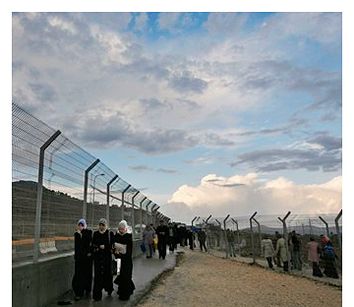
A second round of separation occurred under the leadership of Ariel Sharon, who took office in 2001. Sharon was a political pariah for many years, but his election was the response of angry and threatened Israelis to the collapse of the peace process and to the second intifada, which, unlike the angry stone throwing of the first one, exploded with weapons and suicide bombings. It was a first-rate historic irony that Sharon, an architect of the settlement project and Israel’s long-term hold over the occupied territories, did more than his peers to scale it back. Facing the worst wave of suicide bombings in 2002, Sharon grudgingly agreed to build a security barrier to separate Israel from the West Bank. While its route, leaving about one-tenth of West Bank territory on the western, Israeli side remains controversial outside Israel, most Israelis view “the fence” as a blessing. Its construction coincided with a marked reduction in suicide bombings, which gave Israelis a renewed sense of security. More important, it created a physical division between the two sides. As it approaches completion today, it becomes increasingly impossible simply to cross the hills to the West Bank or vice versa.

In 2005, Sharon carried out his most daring endeavor, the “disengagement” from Gaza. He ordered the removal of all Israeli settlements and military posts, withdrawing to the pre-1967 line. While this move was supported by a majority of Israelis at the time, many had second thoughts later, when the evacuated area turned into a bastion of Hamas supporters and a basis for rocket attacks against Israeli border towns and villages. Nevertheless, the disengagement sealed Gaza behind high fences, and in the past two years, Israel has sought to cut its remaining ties and responsibilities there. The government declared Gaza “a hostile entity” and marked the crossings as border points.

The ever-increasing separation measures, the economic independence from the Palestinians and above all the physical barriers have isolated Israelis like never before from the “other side.” This has enabled Israel to flourish as a first-world, Western wannabe, an enclave in the heart of an otherwise largely stagnant Arab world.

But this situation comes with a price. While allowing Israelis to ignore their unfriendly neighborhood, and live under the illusion that their country exists somewhere in Europe or North America, the status quo reduces Israelis’ motivation to seek compromise and peace with the Palestinians. To observers of the Palestinians’ deteriorating situation in the occupied territories, that symptom of Israeli denial can appear morally repugnant. And as the destitution in those areas mounts, the status quo is not likely to be sustainable — a deeper chaos could erupt and become a much greater problem for Israel’s government and people.

Perhaps most significant, the hardened status quo hinders the Jewish state’s eventual acceptance in the Middle East, already a difficult goal. When Iran and its proxies aim to undermine the legitimacy of Israel, and even actively pursue its destruction, self-imposed isolation by Israel may be one of the biggest dangers of all.

Continue Reading Close

Spinning the disaster in Gaza

Bush and Olmert scramble to prop up Abbas, but the Hamas takeover boosts Iran and leaves hopes for a Palestinian state in tatters.

  • more
    • All Share Services

Spinning the disaster in Gaza

As Hamas completed its violent takeover of Gaza last week, officials in the Israeli and American capitals realized they had a disaster on their hands. Both governments’ flawed policies toward the shattered Palestinian Authority had just been delivered a major blow. Images of Hamas fighters throwing one of their Fatah rivals out of a high-rise window to his death, and of the brutal assassination of a senior Fatah official, were broadcast worldwide and painted an ominous picture: A militant Islamic group, whose record includes some of the worst terrorist attacks on Israelis, had just taken control of a small but contiguous territory of nearly 1.5 million inhabitants.

Strategically, the Gaza takeover marked a clear victory for Iran and its allies in the Arab world, and another setback for the pro-American, moderate Arab nations willing to compromise with Israel. After winning the Palestinian parliamentary election in January 2006, Hamas grew ever stronger in the Gaza Strip as violence increased between Hamas and Fatah. Under Saudi pressure, both factions eventually agreed to form a “unity government,” but it couldn’t hold. Violence resumed, and Hamas proved itself a more effective force than Fatah, whose commanders fled Gaza, leaving their soldiers alone in the final battle, which lasted barely three days.

From the Israeli perspective, less than a year after the Israeli Defense Forces failed to defeat Hezbollah and its allies in Lebanon, the Hamas takeover in Gaza is a disaster. And for the Bush administration, preoccupied with the quagmire in Iraq, Gaza marks another failure in the Middle East. The White House forced Israel to allow Hamas’ participation in last year’s election, thus legitimizing Hamas’ political role, but the strategy backfired with Hamas’ decisive victory. Faced with the disappointing outcome, U.S. and Israeli officials sought to “isolate the extremists and strengthen the moderates” through a diplomatic and economic boycott of Hamas, and by pledging further support for Fatah leader Mahmoud Abbas, who kept his position as the president of the weakened Palestinian Authority. But even despite European support for this policy, Hamas withstood all pressure to recognize Israel’s right to exist, renounce terror and abide by past Israeli-Palestinian agreements. At the same time, Israel’s willingness to help Abbas was at best half-hearted. It never went beyond token moves and empty gestures, usually citing security concerns, domestic political problems or Abbas’ weakness.

U.S. and Israeli leaders scrambled to spin the new reality in Gaza favorably. Instead of mourning Abbas’ clear defeat, Israeli Prime Minister Ehud Olmert spoke of “a new opportunity,” as if a good thing had happened. U.S. and European governments were quick to lift the boycott on the Palestinian Authority and resume foreign aid, while Israel pledged to follow suit and release frozen Palestinian tax revenues. On Tuesday, Olmert visited President Bush at the White House, and as always, both committed themselves to the elusive “two-state solution” for Israel and Palestine. Olmert pledged to make “every possible effort” to cooperate with Abbas, while Bush vowed to strengthen Abbas and Salam Fayyad, the hastily appointed Fatah prime minister in the West Bank, whom Bush called “a good fellow.” Speaking to reporters at the Oval Office, Olmert said, “I’m absolutely determined that there is an opportunity,” and pledged to supply the conditions for a Palestinian state. Bush again spoke of an “ideological conflict” between moderates and extremists, tying together Iraq, Lebanon and Abbas in a fledgling web of democracy.

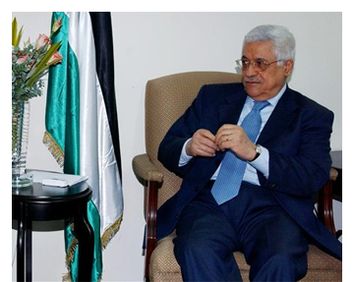
It was hard to believe. Only days ago, Abbas was seen as a hopeless weakling who could offer little beyond nice words. Israeli officials showed respect for Abbas’ stated anti-terrorist position but failed to persuade him to confront Hamas and opposed any efforts to accommodate the militants. Even within Fatah, Abbas has had only limited authority. Lacking the charisma and public admiration of his predecessor, Yasser Arafat, the soft-spoken Abbas could not rein in the many offshoots and private armies that spun off from Fatah. And he has only been further diminished by the humiliating defeat in Gaza at the hands of the smaller but more disciplined Hamas force.

Even the remaining few in Israel’s “peace camp” have little faith in Abbas. One prominent leader of the political left, who has a long history of talking to Palestinian leaders, told me recently that Israel should still work to negotiate a draft peace agreement with Abbas — even knowing full well that he will not be able to implement it. “It’s important for Israel’s legitimacy,” the Israeli leader said. Realistically, the Bush White House has long shared the view of Abbas as an ineffective leader, but it had no alternative Palestinian leader to back — hence its continued support for Abbas.

Their doubts and disappointment notwithstanding, both Bush and Olmert have an interest in casting Abbas and the situation in Gaza in a positive light. Olmert, in particular, is trying to recover from his unpopularity at home. His trip to Washington has been part of a comeback effort, following the devastating report of a Commission of Inquiry over his decision to launch the war in Lebanon last year and his conduct of it. Last week, Olmert enjoyed two rare moments of relief: His old friend, former Prime Minister Ehud Barak, won the Labor Party primary and joined Olmert’s cabinet as defense minister. A day later, Israeli elder statesman Shimon Peres, a political ally of Olmert’s, was elected to the titular job of Israel’s state president. Bush played his part by praising Olmert’s “strong leadership,” but the events in Gaza threaten to undermine Olmert’s rehabilitated image.

Prior to Olmert’s Washington trip, U.S. and Israeli policies toward the Palestinians did not appear to be in a state of harmony. Secretary of State Condoleezza Rice, who has framed Palestinian independence and statehood as a moral issue that is in the United States’ interest, was pushing for a “political horizon” — namely, an Israeli commitment to a future West Bank withdrawal to facilitate the creation of a Palestinian state. Olmert reluctantly agreed to discuss it with Abbas. The American advisor to the Palestinian Authority, three-star General Keith Dayton, believed that Abbas’ loyal forces in Gaza could be developed and become effective in maintaining security, and that Israel could therefore ease movement restrictions on Palestinians in the West Bank. But Israel’s security establishment dismissed Dayton’s plan as a fairy tale, revealing their disbelief in the strength of Fatah. Now they are saying, “We told you so.”

Though Israel never put this forth as its official policy, it has long sought to isolate the two geographically separate parts of the Palestinian Authority in the West Bank and Gaza. The Hamas takeover has deepened that separation, through the de facto creation of two different entities: “Hamastan” in Gaza, where there are no longer any Israelis, but where Israel controls the borders, sea and air space; and “Fatahstan” in the West Bank, where Abbas has limited control over several Palestinian enclaves, surrounded by Israeli settlements and roads, and the Israeli Defense Forces control overall security. The complexity and absurdity of the developing scenario can be seen in this prospect: Hamas controls Gaza from the inside, vowing to destroy Israel, but remains at Israel’s mercy when it comes to supplies of electricity, water, food and other basics needed for the dense and beleaguered population.

Olmert and Bush now pledge to support and promote the West Bank “moderates,” and prove to the Gaza “extremists” that moderation pays off. But this policy of separate treatment is unlikely to succeed. Hamas and its regional allies are not going to sit still and wait for Israel and the United States to overthrow them. Moreover, following recent rocket attacks on Israel’s territory from Lebanon and Gaza — two areas from which Israel has evacuated — another West Bank withdrawal appears, essentially, out of the question. Israelis would not want their population centers and one international airport to be attacked, and given Olmert’s precarious political stature, he will not risk his coalition with a withdrawal plan that would alienate his right-wing coalition partners. Between Olmert’s narrow maneuvering room and Abbas’ chronic weakness, any possibility of Palestinian statehood in the foreseeable future is beyond belief.

Hamas also faces a formidable challenge. Killing off adversaries, taking over their headquarters and looting their homes are easier tasks than feeding 1.5 million people. Religious zeal and militia discipline are not enough, and Hamas will next have to find a modus vivendi with Israel. In the aftermath of its victory in Gaza, Hamas focused on consolidating its hold on power rather than rocketing Israeli towns and villages — but there is no stable cease-fire. Hamas may well try to provoke an Israeli military response that could unify the Palestinians against their occupiers once again.

The situation remains combustible. Israel will try to blockade and contain Gaza while trying to shore up Abbas and Fatah in the West Bank. And there is little appetite to invade Gaza among Israel’s national security establishment. But another wave of rockets or suicide attacks by Hamas might push Israel into another major operation. Meanwhile, Israel now has to contend with hundreds of Fatah supporters and their families who fled to the border crossing, pleading for Israeli permission to move to the West Bank. If not properly cared for, this pressing exodus from Gaza may turn into another refugee problem, one of many facets of a deepening crisis in the region.

Continue Reading Close

Israel’s wounds of war

A scathing criticism of Ehud Olmert's failed war on Hezbollah last summer points to much deeper problems for the country.

  • more
    • All Share Services

Israel's wounds of war

Even in a crisis-prone country like Israel, the Winograd report on the second Lebanon war, published on Monday, came as an unexpected bombshell. Israelis have a penchant for commissions of inquiry, but the Winograd Commission has broken all previously known records of national self-criticism. It concluded that Prime Minister Ehud Olmert “failed as a leader” in his hasty decision to go to war last summer. His accomplices, Defense Minister Amir Peretz and the outgoing military chief, Gen. Dan Halutz, fared no better. And this is just for starters: The current partial report covers only the opening days of the war. The final document, expected in August, is bound to be even harsher.

The severe criticisms about his leadership and Olmert’s refusal to resign are, of course, making headlines in Israel. But the Winograd Commission did not criticize only the top leaders and their decision-making process. It criticized the very logic of going to war at all, without proper goals, and without sufficient operational plans and training. It cast serious doubts on the Israeli reflex of retaliation and reliance on military force.

Ironically, a key problem, according to the commission, was the perception that such wars were no longer necessary. In a carefully worded statement, the commission found that many in Israel’s political-military establishment believe wrongly that the “era of wars is over” — that Israel is strong enough to deter its adversaries and will never need to go to war again against its will, beyond fighting low-intensity conflicts like the Palestinian intifada. “By this analysis, there was no need to prepare for war, but there was also no need to seek eagerly paths towards stable, long-term agreements with our neighbors.” In other words, Israel’s false sense of military invincibility has been a major obstacle for peace with its Arab neighbors. If there will be no more war, then there will be no need for lasting peace. Why bother with territorial concessions when the other side is too weak to get them by force?

Israel’s national security policy was thus trapped in a fateful purgatory, only to plunge into what would become its longest-ever war with a neighboring foe.

It all happened within a few hours last July 12. Around 9 a.m., Hezbollah fighters crossed the Lebanon-Israel border and abducted two reservist soldiers, Ehud Goldwasser and Eldad Regev, from a patrol vehicle. That was followed by artillery and rocket fire along the border. Olmert heard the bad news in his Jerusalem office, while he was meeting the parents of Gilad Shalit, a conscript who had been abducted two and a half weeks before in a similar manner in Gaza.

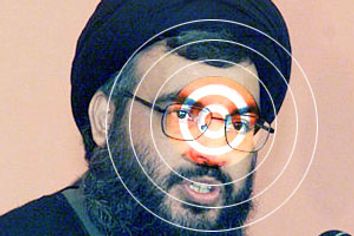
This was too much to take; barely six months in office, Olmert felt he had to prove his strength as a national leader. His predecessor, Ariel Sharon, had been Israel’s top battlefield commander, but Olmert hardly did any military service. He felt that the country’s enemies, Hamas and Hezbollah, were putting him to test — indeed, Hezbollah leader Hassa Nasrallah had mocked his inexperience — and Olmert vowed to teach them a lesson.

Olmert praises himself on his ability to make quick decisions instead of hesitating and deliberating. Here was his chance to be the new Churchill. Sharon had been traumatized by his failure in the first Lebanon war, in 1982, and during the previous five years sought to “contain” periodic Hezbollah attacks and avoid reopening the northern front. Olmert apparently believed that he could do better, and he was not held back by the haunting history Sharon had carried.

At lunchtime, reporters gathered at the inner yard of the prime minister’s official residence in Jerusalem, among flowerpots of red geraniums. Olmert came out with his guest, then Japanese Prime Minister Junichiro Koizumi. The Japanese leader spoke at length about Mideast peacemaking, while Olmert showed obvious signs of impatience. Peace was the last thing on his mind that day, in lieu of fierce retaliation against Hezbollah. When his turn to speak came, he announced that “our response will be very, very, very painful” for the Lebanese. “This is war,” concluded the reporters who rushed to file.

And that was it. The Winograd report found no trace of serious consideration at the highest levels of government about this pivotal decision, which it likened to having taken place inside a black box.

But the unfolding tragedy quickly became national in scope. By midnight, the Israeli Cabinet unanimously approved a military plan to bomb Hezbollah’s long-range rockets and other facilities inside Lebanon. The public gave overwhelming support to the government, with even die-hard left-wingers backing the massive retaliation and calling for more. Nobody stood in the way. Dissenters within the Cabinet, such as former Prime Minister Shimon Peres, whispered some concerns about possible complications but, quickly rebuffed, eventually voted with the crowd. It was groupthink at its worst.

And they were deadly wrong, concluded the Winograd report. Instead of singing the chorus, the ministers should have asked the enthusiastic Olmert and the overconfident chief of staff, Halutz, how they planned to defeat a well-positioned guerrilla force armed with thousands of rockets trained on the entire northern part of Israel. Hezbollah had prepared for exactly this kind of war for six years, ever since Israel’s unilateral withdrawal from south Lebanon in May 2000. Yet the Israel Defense Forces lacked a credible, tested operational plan for the northern front. Moreover, in the fateful summer of 2006, the commission found, Israel was led by a team of rookies who lacked both experience in matters of war and intimate knowledge of the Lebanese theater.

Israeli culture is built upon improvisation. According to an old military slogan, “Every plan is merely the basis for changes.” Nevertheless, this was outright negligence, the Winograd Commission said. Occupied for six years with fighting in the occupied territories against the Palestinians — who lacked a military organization, modern weaponry or fortifications — the Israeli army was untrained for the well-organized, well-armed force entrenched in Lebanon. But Halutz told Olmert, who visited general headquarters the day before the war, “You can trust us” to crush Hezbollah.

That was enough for the Israeli prime minister. Olmert, Halutz and others did not bother to weigh options other than a massive bombing campaign. They did not ask whether Sharon’s policy of restraint and containment should be preserved, despite the abduction. They did not set credible, attainable goals for the operation. They did not conceive an exit strategy. And despite their understanding that Hezbollah would retaliate by targeting Israel’s north, they ignored the implications that a barrage of rocket attacks would have “on the operational plan, its timeline or its chances of success.”

Indeed, what started as a blitzkrieg-style aerial bombing developed into a quagmire. The IDF failed to destroy Hezbollah or stop the daily barrage of rockets. And despite their reluctance, Olmert and Halutz were eventually dragged into large-scale ground operations, carried out halfheartedly and with few achievements, while proving costly in lives.

The Winograd Commission, appointed by Olmert shortly after the war, was seen initially as a whitewash to fend off public criticism. But its five members, led by the 80-year-old former district judge Eliahu Winograd, took the country by surprise. They mocked Olmert’s argument that his decision making was flawless, along with his declaration that the war had ended in an Israeli victory. And they ripped into the hierarchical status quo, which they said overemphasizes military considerations and gives the IDF too much influence over national policy.

Olmert has vowed to embrace the “organizational” conclusions of the Winograd report, but where will that lead Israel? In the short term, the report has thrown the country further into familiar political turmoil. Israelis were less than enthusiastic with Olmert’s leadership from the beginning, giving him only lukewarm support in the March 2006 election. The failed war in Lebanon was followed by an endless string of sex and corruption scandals at the highest levels of government. At around 13 percent, Olmert’s approval ratings have been the lowest in Israel’s history. But Olmert has kept on, relying on a coalition of weak parties and fearing another election while having at least some floor under him from a booming economy and a decline in Palestinian terrorism. (The latter, however, is largely considered a legacy of Sharon’s.)

True to stubborn form, Olmert has vowed to keep his job and overcome the blow to his already tenuous hold on power. He is doubtful of his success, but he is trying to fight anyway, arguing that the Winograd report does not explicitly call for his resignation and that his ouster would inevitably throw the country into another election. He may survive for several more months, pending his ability to ignore public protest and keep his coalition partners beside him. On Tuesday morning, Eitan Cabel, a junior minister from the Labor Party, submitted his resignation. But Cabel is a political lightweight; Olmert’s fate hangs on Tzipi Livni, the popular foreign minister and Olmert’s deputy. If Livni — who got a more positive nod from Winograd for her initiative to find a diplomatic way out in the early days of the war — jumps off Olmert’s sinking ship and is joined by several more members of the Kadima ruling party, it would prove fatal to Olmert.

Olmert’s downfall may lead to an early election, which would probably be another contest between two former premiers, Benjamin Netanyahu (who leads the opinion polls) and Ehud Barak, who is currently running for Labor Party leadership. Another scenario holds the 83-year-old Peres returning as an interim steward of the country. After all, the Winograd Commission favors experienced leaders, and nobody has more experience than Peres, who started his political career in the 1940s.

But either way, whatever slim hopes there were for a resumed Israeli-Palestinian peace process are doomed for now. Olmert is unable to make any real decisions, and his Palestinian counterpart, President Mahmoud Abbas, is hardly any stronger. Israelis are preoccupied with the leadership crisis; they want a leader they can trust under fire. Before the Winograd report, Olmert tried to persuade prominent members of Israel’s peace camp that he was willing to go full speed ahead with the Palestinians if the left would shore up his political survival. But this appears no more than a fairy tale now, given his precarious position.

The censure of Olmert is not only ominous for the career of the beleaguered prime minister, but for the prospect of regional stability. Israel’s military is warning of explosive upheaval in Gaza, or another war in the north, perhaps with Syria. And an American-led confrontation with Iran over its nuclear program is looming. The second Lebanon war convinced Israelis anew that Iran, with its rocket-armed allies and proxies in Syria, Lebanon and Gaza, is aiming toward Israel’s collapse — emboldened by America’s perceived weakness in the region because of the debacle in Iraq. The Winograd Commission affirmed this analysis in its report.

Indeed, some worry that the power of deterrence stemming from Israel’s military might was seriously damaged by the failure in Lebanon. The IDF lost its image of invincibility — clearly, it is not the same military that defeated three Arab states in six days in 1967 and brought back hostages from Entebbe, Uganda, in 1976. However, the world stood idly by while Israel’s air force crushed Lebanon for almost five weeks, killing hundreds of civilians and destroying roads and bridges. (Washington did, however, veto Halutz’s plan to black out Lebanon’s electric grid.) If Syria is tempted, or lured by Iran, to liberate its occupied Golan Heights by force, it would still have to worry about suffering the wrath of Israeli air power. Olmert publicly warned Damascus of “miscalculation,” in a recent meeting with visiting U.S. Defense Secretary Robert Gates, and the threat is still hanging in the air.

Middle East wars usually erupt when nobody wants them. Following the war in Lebanon, the government increased the IDF budget, and the military launched a massive retraining program. But the perception of a leadership vacuum in Jerusalem may prompt Israel’s adversaries to attack before the IDF completes its reconstruction.

Yet, dark as its conclusions are, the Winograd report gives hope in the longer term for a change in the national attitude. It calls for recasting the policy-making process and giving stronger emphasis to civilian institutions, such as the foreign ministry. It also seeks to strengthen Israel’s National Security Council, now a secondary instrument of the prime minister’s office, and give it authority over interagency intelligence assessments and preparations for Cabinet sessions. Such recommendations were made, and rejected, in the past. But the fallout from the Winograd report may be unique enough to force true reform, which if implemented could motivate Israelis to consider peaceful options before rushing to the battlefield. Feeling vulnerable, rather than invincible, may be the greater source of security in the long run.

Continue Reading Close

The coming earthquake

Having failed on the battlefield, Israelis question their leadership and their national direction.

  • more
    • All Share Services

The coming earthquake

Israelis are digesting their lack of success in the month-old war against Hezbollah in Lebanon — formally ended as a United Nations-sponsored cease-fire went into force early Monday morning — and the country is gearing up for a postwar political bloodbath and national soul-searching over goals, aims and priorities.

Israelis were surprised by the visible inability of their military, considered the strongest and most sophisticated in the Middle East, to defeat a guerrilla army of a few thousand fighters. Having become accustomed to quick victories against Arab armies, as in the wars of the past, the current reality in Lebanon has been unprecedented and unexpected.

Israelis were astonished by Hezbollah’s seemingly intact ability to hit northern Israel with a daily barrage of 100-200 rockets, holding about a million people in shelters, regardless of what the Israel Defense Force was doing to the Lebanese. And they were shocked by the government’s incompetence in dealing with the plight of the Israeli civilian population in the rear. The fact that Lebanon’s civilians have been hit much harder was hardly comforting.

And last, but not least, Israelis were unprepared for the war in Lebanon — which remained off the public agenda in recent years — or for the length of the war. The world, and especially the American administration, stood by and allowed the shooting, killing and destruction to go on without turning over the famous “diplomatic hourglass” to stop the belligerents in their tracks.

To the older generation, the current mood in Israel is similar to that in the aftermath of the Yom Kippur War. Back in October 1973, the country lost thousands of men in the Sinai and Golan Hieghts battlefields. The Yom Kippur duel opened with a timed surprise attack by Egypt and Syria, and ended with a narrow Israeli victory, as the IDF stood closer to Cairo and Damascus than before the war. In 2006, the military and political leaders are trying in vain to convince the public that the war ended in Israel’s favor.

In both cases, the enemy shocked Israelis with its willingness and ability to fight, and the public sank into despair and got angry with a dysfunctional leadership. But unlike in 1973, this time the civilians in the rear were among the 150 casualties, and there was extensive rocket damage to many cities. And unlike in 1973, there were no “winning images” like Ariel Sharon’s crossing of the Suez Canal, which turned the tide of the war on the Egyptian front. Instead, the world saw images of a thousand Lebanese casualties, most of them civilians.

Ehud Olmert, Israel’s prime minister, is now fighting for his political survival. Olmert decided to go to war almost instantly after hearing that Hezbollah had abducted two IDF soldiers and killed eight others in a cross-border attack on July 12. The country’s nerves were already wrecked by a similar ambush and abduction conducted by Hamas near Gaza, and Olmert felt that he must react forcefully to the additional provocation on the Lebanese border. His credibility as a leader was in question, as both he and Amir Peretz, the defense minister, had had no experience in war and peace matters. So they decided to hit back. Sharon, Israel’s best battlefield commander, or Ehud Barak, the IDF’s most decorated soldier, could say that “restraint is strength” without losing face. But not Olmert, who hardly did any military service, or Peretz, a former junior ordnance officer. Hassan Nasrallah, the Hezbollah leader, even mocked his adversaries’ inexperience.

Before the recent escalation on both fronts, Gaza in the south and Lebanon in the north, Olmert and Peretz were trying to sell their lack of military background as a virtue — namely, that “civilian leaders” are better suited to lead contemporary Israel than their ex-general predecessors. The civvies, argued their supporters, would bring a fresh attitude to their jobs, rather than “watching the Arabs through the gun sights” like Sharon, whom Olmert replaced in early January. Peretz, a former trade union boss, campaigned before the March 28 election on a “social-economic platform” and argued for shifting resources from defense to welfare programs.

Alas, their initiation to the violent realities of Israel’s neighborhood occurred earlier than anybody had expected. On Aug. 12, the Olmert-Peretz coalition Cabinet marked its first 100 days in office. Rather than initiate foreign policy and domestic reforms, as it planned, the government is now preoccupied with security matters — and will remain so for a while, if indeed it survives in power. Before the election, Olmert pledged to turn Israel into a country “that’s fun to live in.” Fun is now the last thing on the minds of Israelis. Tens of thousands are still mobilized in emergency reserve duty, or need to rebuild their ruined homes and businesses in northern cities and villages.

The Lebanon campaign has shown Israelis that military experience at the top is a necessity, rather than a luxury, in a country that has been at constant war with its Arab neighbors since its inception in 1948. Olmert and Peretz failed to grasp the subtleties of using military power, and unnecessarily prolonged the war in search of an elusive victory.

The prime minister sought to use the pretext of the Israeli soldiers’ abduction to eradicate the threat posed by Hezbollah, which had accumulated thousands of missiles and rockets since Israel’s May 2000 withdrawal from its “security zone” in south Lebanon. Israeli planners viewed this arsenal as a forward base of Iran, Hezbollah’s main source of arms, money and spiritual guidance. As Israel — and perhaps America — is drawn closer to confronting Iran’s nuclear program, the threat to Israel’s rear could have complicated their calculations. Moreover, Olmert argues that had Israel waited a couple of more years, Hezbollah’s arsenal would have grown larger and more dangerous — and even compounded by an Iranian nuke umbrella.

After an initial air attack, which according to the IDF destroyed most of Hezbollah’s long-range-missile capability, Olmert could have stopped the war. Nevertheless, strengthened by strong public consensus — even the left viewed the war as justified in the beginning — and wide international backing, he was tempted to hit stronger and deeper, gradually escalating the air campaign and sending ground forces into the Hezbollah-defended area in south Lebanon. This got him entangled in the notorious Lebanese “quagmire” that has consumed Israel’s energy for almost two decades. As the ground operation grew larger, so did military casualties, but Hezbollah did not collapse under the IDF pressure and kept fighting effectively till the last day.

In his defense, Olmert blames his predecessor, who had neglected the Hezbollah threat and left the problem on his doorstep, along with an unprepared army and undefended rear. His other culprit is the military command, which presented him with the wrong solutions — relying too much on air power alone and bringing in ground forces too late to decide the war. Indeed, the IDF chief of staff, Gen. Dan Halutz, is a former fighter pilot and air force commander who got the job last year in the first-ever promotion of an aviator to the top military job. Sharon and Shaul Mofaz, his ex-general defense minister, could appoint Halutz and keep their watchful professional eyes on him. Their inexperienced successors are left with blaming Halutz and the military for failing to deliver.

The military, in turn, blames its political masters for dragging their feet in approving needed measures. It’s the old “the politicians stabbed us in the back” argument of disappointed generals. This time, however, Olmert had given them lots of political time to accomplish the mission. His main mistake was allowing a wide-scale ground offensive at the last minute, even after he realized that the IDF ground forces were clueless against their adversaries. This final-hours operation achieved little, but cost the lives of 30 servicemen, including the son of David Grossman, one of Israel’s most famous novelists. A few days before his son’s death, the writer had turned publicly against escalating the war.

Olmert argues that Aug. 11′s U.N. Security Council Resolution 1701, which ended the war, reflects an Israeli achievement and will improve the strategic situation along the northern border.

Lebanon’s government decided to enforce its sovereignty in the south, along the Israeli border, and deploy its army — strengthened with U.N. forces — instead of Hezbollah. From Israel’s perspective, it’s an important step for stability. It’s better to deal with a government, even a weak one like Lebanon’s, than a private army like Hezbollah. But this hardly constitutes a victory, and few in Israel believe that the noble goals of Resolution 1701 — like disarming Hezbollah and preventing its rearming and demilitarizing south Lebanon — will be fulfilled at all. And the fighting did nothing to bring home the abducted soldiers; Israel will have to enter prisoner exchange negotiations with Hezbollah, just like Nasrallah proposed after the abduction.

Given this poor outcome, the most-asked question in Israel today is, “Will they survive?” “They” are Olmert, Peretz and Gen. Halutz, as well as several lower-level generals responsible for the war’s other failures: poor intelligence, logistics and battlefield command. There are calls to appoint an inquiry commission; the government will probably try to circumvent that by nominating its own lesson-learning team. Politically, Olmert and Peretz are dependent upon the reluctance of the newly elected Knesset members to commit political suicide through calling an early election. Their main challengers, former Premiers Benjamin “Bibi” Netanyahu and Ehud Barak, are quietly advocating an “emergency cabinet” in which they would hold senior portfolios.

At this point, it is too early to assess the political life span of Olmert’s Cabinet. It has yet to bring the forces back from Lebanon or to negotiate the return of the three abductees from Gaza and Lebanon. Beyond these pressing missions, however, Olmert is lacking an agenda. His campaign platform had been the West Bank “realignment” — removing most of Israel’s settlements and unilaterally drawing a new border with the Palestinians. Olmert argued that settlement removal from dense Palestinian areas is essential to preserve the Jewish character of Israel, and that given the lack of a credible Palestinian “partner” Israel must go it alone. He won an unconvincing electoral victory in March while pledging to implement this idea.

Sadly for Olmert, however, the war killed his plan. Unilateralism has fallen out of favor with Israelis, as both Lebanon and Gaza — evacuated in 2000 and 2005, respectively — have turned into launching pads for rockets aimed at Israeli towns and villages. With the Islamists of Hamas running the Palestinian Authority, it appears too risky to most Israelis to leave the high terrain of the West Bank, which overlooks Israel’s population centers and vital infrastructure, in Palestinian hands. Moreover, the risk of a domestic rift still looms. When Olmert mentioned during the war that a Lebanon success might contribute to this West Bank realignment, soldiers from the settlements threatened to refuse service in Lebanon. He backed off. And since negotiations with the Palestinians are deemed useless — Abu Mazen, the P.A. president, is too weak, and Hamas too hostile — the chances for rapid diplomatic progress vis-à-vis the Palestinians appear dim.

Left-wing politicians like Defense Minister Peretz favor reopening negotiations with Syria, which have been frozen since 2000. Indeed, Syria appears to be the real winner of the Lebanon conflict. It kept its strength as the power broker there without firing a single shot. But peace with Syria means Israeli withdrawal from the Golan Heights, with its superior terrain and water resources. Given Olmert’s reluctance, his government’s poor stance and the public’s unwillingness to surrender the precious territory, chances for this “Syrian track” are slim as well.

Olmert, therefore, must find a new postwar agenda. Otherwise, even if he survives in office, he will have little to do beyond petty political wheeling and dealing. He still believes that despite what happened in Lebanon, tackling the Palestinian issue is paramount. But he may lack the political leverage to deal with it seriously.

The nation’s soul-searching goes beyond the fate of its leaders. The summer fighting has awakened the Israeli siege mentality and the feeling that peace is hopeless when your neighbors don’t really want you around. The short period of relative normalcy, which Israel had enjoyed since the Gaza evacuation last summer, ended abruptly. Foreign tourists disappeared, and Depeche Mode called off their long-anticipated Tel Aviv concert at the last minute, although Tel Aviv was untouched by the war (save for the noise of helicopters and fighter jets in the skies.)

The war will also affect Israel’s relations with its main backer, the United States. The Bush administration was disappointed by the poor performance of the IDF relative to Hezbollah, despite the generous diplomatic timetable and emergency arms supplies that Washington allowed. Secretary of State Condoleezza Rice, who negotiated the cease-fire, was angry at Olmert for thwarting her idea of a wider Israeli-Lebanese deal, aimed at strengthening Fouad Siniora, the U.S.-backed Lebanese premier. These feelings will undoubtedly fuel the ongoing debate about Israel’s strategic value to the United States.

From Israel’s side, the war prompted criticism of the American alliance, mostly from the left. The main argument was that Israelis should not risk their lives for Bush’s regional design. Others wondered if Israel should copy the peaceful European model, rather than America’s more belligerent one. While still marginal, these are interesting voices that promise to stir more controversy and debate even when the war is over.

Throughout the fighting in Lebanon and the rocket hits on Israel’s north, the Tel Aviv stock exchange and the Israeli shekel kept their value. To some economists, it represented the strength of the economy. Others argued that it only shows the indifference of the money and power elites to the plight of the poorer, weaker citizens in bombed towns like Haifa, Safed and Kiryat Shmona.

Before the war, Israel was headed for a major debate over the priorities of the 2007 national budget. Olmert’s coalition partners demanded a reconstruction of Israel’s welfare state, which has been weakened in recent years through budget cuts and privatization of public entities. Last year’s growth and budget surplus could have facilitated the change. Now that money, and probably higher taxes, will go to the military. At the same time, however, there is a growing awareness of the importance of a social-support network during war, and that market forces are an insufficient remedy during crises. This may lead to a stronger demand for welfare reconstruction, despite the tighter resources.

This debate, however, is still down the road. Israelis need first to grasp the implications of what happened up north, and have a serious reassessment of their limits of power. Only then will they be able to find a new national direction.

Continue Reading Close

Page 1 of 9 in Aluf Benn