Beth Aviv

The anguish of quitting my hormone drugs

I went cold turkey after recent warnings about cancer. Now my doctor thinks I'm crazy -- and sometimes I do, too

  • more
    • All Share Services

The anguish of quitting my hormone drugs

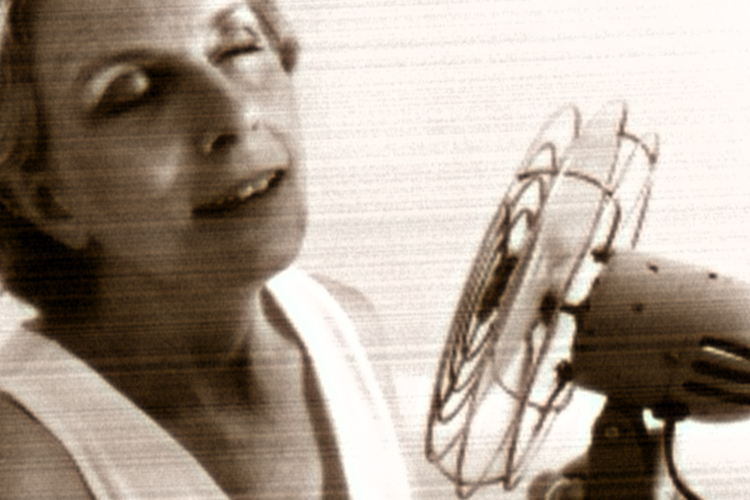
Meryl and I meet in the hall beside the garbage cans. Our faces are red and glistening. It’s not because the refuse from our kitchens is heavy. It’s not because we walked up the nine flights to our apartments rather than taking the elevator. It’s because we both stopped — cold turkey, as they say — taking our hormone replacement therapy after reading an article in the New York Times. The article warned that HRT, which helps regulate and ease the erratic symptoms of menopause by supplying our bodies with an extra dose of estrogen and progesterone, may not only cause cancer, but may cause a more deadly form of cancer.

It’s November in New York City — 34 degrees outside — and I’m wearing a tank top; Meryl’s wearing a gossamer-thin cotton blouse.

“I can’t stand it,” Meryl says, wiping her forehead with the back of her hand.

“At least 20 sweats last night,” I say. “Three hours of sleep.”

“Lunch?” Meryl asks. “The little Japanese place around the corner? We can have tofu.”

We know tofu has the same mysterious quality that estrogen has. It’s supposed to trigger something in our 50-something female bodies that will control our heating systems that go haywire at unpredictable times of the day and night — like the steam heat in our building. Part of me thinks I’m crazy to have entered the realm of hot flashes, chills, insomnia and memory loss when there is a perfectly good cure for what ails me — and it’s in my bathroom cabinet.

It is absurd that two women would voluntarily choose to suffer when modern science has become sophisticated enough to offer a medicine for nearly every ill, but maybe that’s part of the problem: Modern science has become so complex that navigating our way through the attendant studies is formidable. Conflicting messages and warnings intimidate us. We don’t want to mindlessly pop pills that could haunt us years later. We don’t want a treatment that is worse than the ailment.

This is not the first time I’ve heeded controversial claims regarding HRT. Four or five years ago, when earlier warnings about HRT’s risks came out, I gave up my estrogen patch and pink progesterone capsules. I’d be in front of a class of high school students when my heart would start up in a rapid beat and my face would grow red and covered with sweat. I’d grip the desk, pause, lose my train of thought, rip off my sweater. (I wore only button-up silk or cotton sweaters. Never pullovers that could yank up my tank top. Never, ever wool.) I’d pull a Kleenex from the box on my desk, wipe my forehead and neck and ball the soggy tissue in my hand, holding onto it for protection the way I might hold onto a talisman for good luck — then I’d go on with my lesson.

Eventually, I succumbed and went back on HRT — in order to get up at 5:30 a.m., to teach “Macbeth” and “Gatsby,” to grade a hundred papers a week, to get a decent night’s rest. For three years, the spontaneous combustion that happens in the pituitary gland — that giver and taker of estrogen, that regulator of body temperature — was controlled. Until a few weeks ago, when results from the Women’s Health Initiative study provided the grim report I saw in the Times. That evening, I peeled off the patch from my lower left abdomen and stopped taking my nightly pink pill.

At Suma Sushi, Meryl and I each order entrees of tofu. We commiserate about how we shouldn’t drink coffee or wine, our favorite beverages, because they’re triggers for hot flashes. Two large plates arrive heaped with lightly fried squares of coagulated bean curd. We pick up our chopsticks and dig in, feeling a little self-righteous — and a lot hopeful.

I admit I functioned better on hormones. But the recent report about cancer’s link to hormone therapy is scary. I’ve recently lost two close friends to breast cancer and another good friend just finished a chemo regimen for ovarian cancer. No one wants to be one of the unlucky three in 500 women who use hormones and get cancer. The urge to fight that at any cost is powerful. But am I logically sorting through the facts? Am I too influenced by what I read in the papers? In 2002 when earlier results from the Women’s Health Initiative came out, enough women stopped taking their HRT that cancer and death rates dramatically dropped according to a study published in February 2010, in the American Journal of Public Health. But what about studies that show hormones decrease our chances of getting Alzheimer’s? (Of course, later studies showed that hormones would not decrease our risk of getting Alzheimer’s, that they might even cause dementia in older groups.) Meryl and I worry we might start forgetting, that our brains will get foggy. We swear we’ll go back on hormones if that happens.

And so, I load up on natural remedies: Soy yogurt. Sage leaves. Dong quai. Black cohosh. Evening primrose oil. Motherwort.

And still, I wake in the middle of the night, heat percolating to the surface like an underground spring — flooding between my fingers, into elbows, under my arms, onto my chest, my neck, my scalp until my straightened hair curls. If you could slide your fingers over my forehead, it would feel like you were finger-painting. Sleep does not return for hours.

I call my gynecologist in the morning. “You’re crazy,” she says. “Go back on your hormones. You need a good night’s sleep. You’ve only been on hormones for five years and the ones I put you on are pure, they’re not the synthetic ones.” But I don’t want hormones; I want a homeopathic cure. “If you’re not going to go back on the hormones, you can try Effexor, which is an antidepressant or Neurontin, which is a painkiller. And if you really want my homeopathic recipe, it’s black cohosh, Progest cream and evening primrose — which causes breast cancer and is an omega-6 so you have to balance it with an omega-3 like flaxseed or fish oil.” While we’re talking I reach for a napkin on the kitchen table to wipe my flooded forehead.

I consult a friend who once went cold turkey from his heroin addiction. “This is nothing,” he says, referring to the ability of his doctor to treat me. “Bob Abramson has a DDS and an M.D. and has trained in Chinese medicine. He will know by examining a strand of hair what drugs you’ve been taking. He will talk to you for two hours. He will concoct herbal remedies. He will poke you with needles. He will charge a lot.”

I tell him I will do anything. I want to sleep again. I want to go outside on a cold day without being chilled by sweat. I don’t want to constantly need a shower.

The next morning I walk into a doctor’s office that reminds me of a yoga studio: bare hardwood floors, a stone Buddha posed in the lotus position at the far end, a sign to please turn off all cellphones. For a half-hour this doctor with white hair and a kind touch asks about my health history. He holds my wrist in his hand and takes my pulse from five different points, feeling for my qi (pronounced “chee”) or “energy flow.” He notes that the qi in my left wrist is blocked.

“Why did you stop taking your hormones?” he asks in a mild reprimand. “If you were going to stop, you should have stopped more gradually. It might not have been as bad.” He suggests, as did my gynecologist, that I shouldn’t pay such heed to every study the newspaper reports, and more important, shouldn’t have messed with my body’s balance without consulting my doctor. “But don’t go back on the hormones,” he says. “Let’s see what we can do.”

He sticks 12 hair-fine needles into my back along my spine, several more into my wrists and my ankles (which don’t hurt) and into my baby toes (which do). He tells me the names of the acupuncture points: This one’s called Spirit Gate. This one Yang Pond. This one Body Pillar.

I feel ultra-calm and spacey — the same mellow “high” I get from practicing yoga and lying in shavasana. For the next 12 hours, I do not break into a sweat and that night, I actually sleep seven hours without waking. But the night after, and the night after that, I am up at 3 a.m., my eyes tired, my body a sauna.

I remember how smug I felt on hormones — getting a good night’s sleep, staying cool and calm, suggesting HRT to others who suffered from menopausal symptoms. Now, I try to convince myself that I’m doing the right thing, that it’s OK to let my body go out of whack, that it’s good to be on the safe side of the divide between those who would increase their chances for horrible disease and those who would err with caution. Ultimately, what I may be doing — even more than managing my health — is managing my anxiety. Which of these outcomes will be the easiest to live with: ignoring health warnings and suffering needlessly down the line, or suffering now, perhaps needlessly?

A few days later, Meryl’s in the hall putting newspaper in the recycling bin. I ask how she’s doing.

“Not well,” she says. “I miss our magic drug.”

“You want to come over for some dong quai with a hit of motherwort and a tofu salad sandwich?”

“Only if it’s iced.”

And so we endure, making choices our doctors do not advocate, giving up prescriptions for proscriptions, toasting to each other’s health — and sanity.

Beth Aviv is a writer living in New York City.

The hot young teacher they hired instead

I have decades of experience in the classroom, but when I went up against Alex for a job, I knew how it would end

  • more
    • All Share Services

The hot young teacher they hired instead

She breezes past my desk in the English office like a model on a runway — hips swinging, heels clacking on the linoleum. Today she’s wearing skinny jeans tucked into her leather knee-high boots and a black sweater hugging her waist. She’s nearly 5 foot 8 and has such perfectly chiseled features that I find myself quickly looking away. I don’t want to be caught staring.

Five years ago, I left a tenured teaching position (and husband) in Michigan to move to New York to start a new life. But I never expected this: The new man in my life has worked out well. The new job has not. This is the second time since giving up tenure that I’m being replaced by someone younger — and cheaper.

Only women my age who wear Eileen Fisher ensembles and thick rubber-soled shoes understand. All I have to say to my girlfriends is, “knee-high boots, four-inch heels,” and they scream: “We hate her.”

The truth is, I can’t really say anything bad about Alex, who’s smart, hard-working, and liked and respected by her students and the teachers in our department. Except maybe she’s too pretty or dresses too sexy to be a high school English teacher. I imagine she’s the daughter of movie stars: Glenn Close and Kevin Kline or Susan Sarandon and Tim Robbins. Some days, she wears pencil skirts and stiletto heels. Other days, she looks almost ordinary in her flared wool trousers and Dansko clogs. But no, she’s never ordinary.

I Google Alex with the same fervor that I Googled Sarah Palin when she became John McCain’s running mate and I spent hours digging for gossip. I find only Alex’s shadowy Facebook silhouette and have to wonder why I’m doing this. My obsession is clearly overdetermined. This is not a reaction to an educational system that values cost over experience. It is a visceral feeling that I’m being superseded by an astonishingly beautiful young woman. She is happy and thriving and wanted — and I am not.

In past years, my principal has told me by December that he wanted me back the following year. This year, no word in December, or January, or February. In March I realize Alex and I will be vying for the one open position in the English department. (The woman on leave whom I was replacing will return in September.)

Now, when I go to the principal’s office to speak about this or that, he doesn’t make eye contact. He is in a hurry to get back to his e-mail or to his next scheduled meeting.

New York State law prohibits discrimination based on age, and so we are told the job will be posted and we will have to apply for it and go through an interview process (to be fair!), despite our administration’s knowing me and my work for almost three years and their knowing Alex and her work for the last seven months. Surely they know whom they want. Surely any process we go through will be a charade to prevent a lawsuit.

- – - – - – - – - – - -

I’ll be 59 in two weeks. Ten or fifteen years ago, I realized I could not remotely rely on my youth and looks to get by. I no longer had an Oil of Olay complexion or a size 6 figure. I couldn’t get away with wearing short skirts or tight sweaters or acting cute or coy. I’d have to depend on other qualities, the ones my grandmother said you could see in the dark: personality, intelligence and character.

I consider cutting years off my résumé. Maybe I’ll be hired if they think they don’t have to pay me so much. (Compensation scales based on years of experience allow me to make twice what first- and second-year teachers earn.) The recession isn’t helping; districts are paring activities and staff. Nationally, according to the New York Times, 150,000 teachers may lose their jobs this year. Some districts have already received more than 450 applications for each advertised position.

In the last few months, I’ve applied for dozens of jobs. No response — except for automated e-mails thanking me for applying and advising they will call if they’re interested. One school asked me to call to set up a pre-screening interview. When I called within 20 minutes of receiving the e-mail, the secretary said, “All slots are already taken.” And that was for an interview for an interview!

I think of the Hillary Clintons and Ruth Bader Ginsbergs — women over 60 who are still active and vibrant and employed at a level they deserve. I worry I’ll have to do what I did when I graduated from college: answer phones, make coffee, and type carbon copies that have to be retyped if there are mistakes. I imagine working as a proofreader — editing and correcting the grammar of my grown-up students. I imagine myself behind the counter of a coffee bar or bookstore. Or taping up signs with my phone number on little flaps offering to walk dogs or tutor.

As I was growing up in the ’50s and ’60s, my mother encouraged me to date boys on the golf team and to wear pale pink lipstick; my father encouraged me to be a nurse, a librarian, a dental hygienist or a teacher — the kinds of jobs women could have until they got married and had children. In high school I bought into that dream. I even skipped chemistry and physics to take three semesters of weaving and three of sewing so I could be more “domestic.” Yes. I did use that word.

By my junior year of college I’d discovered Gloria Steinem, Betty Friedan and consciousness-raising groups — and soon thereafter stopped shaving. Those of us who came of age during the nascent feminist movement disdained fashion-magazine beauty. We let our hair go natural, went bra-less, wore Birkenstocks or Earth shoes and no makeup. We rallied for the right to have careers as well as families, and we worked hard to do both. Now, before we’re ready, we find ourselves replaced by our daughters’ generation.

- – - – - – - – - – - -

Interviews for the open English position at our school take place on a Thursday afternoon in early May. I get my hair cut and blown out. I take a Valium the night before so I’ll get a good night’s sleep. I lay out my clothes — freshly cleaned and pressed black slacks, a purply-pink jacket, and black Thierry Rabotin ballet flats. I wear make up (and take extra with me to apply just before the interview).

After teaching all day, I freshen up in the ladies’ room. I look in the mirror and feel overwhelmed with sadness. Tears are starting to pool. I tell myself that losing a job is not like losing a husband. But it is. Losing a job wakes all the other losses: the mother-in-law you loved, time with your children when they were young, the house that was home. I apply lipstick and somehow walk down the hall to the assistant principal’s office.

We sit around a table and talk and laugh. And then they ask me to prepare a demonstration lesson for Monday. As if they don’t know how I teach and relate to my students. The principal and assistant principal have already written at least 10 classroom observations, all surprisingly wonderful reflections of my work, for which I am grateful.

I take the demo seriously — as if my job depended on it. The kids are raising their hands, talking about the significance of the fallen tree in “All My Sons,” talking about the morality of selling cracked cylinder heads to the Army, comparing that to the faulty parts that caused the Deepwater Horizon oil spill in the Gulf, talking about what’s at stake when Kate denies the death of her son.

It’s a good lesson: My students make connections, grapple with the unfamiliar, and go against and beyond the grain of their expectations — and mine. Still, I know I won’t get rehired.

The next day I’m wearing my red Hawaiian shirt, red clogs and chinos. It’s hot and humid and my hair is curly-wild. When I pass the assistant principal, I wave hello and smile big. My buoyant mood surprises me. She returns my smile with a pout and her empathic eyes connect in a way that says, “I’m sorry. I’m really sorry.”

The principal e-mails me to come to his office after school. Good news is conveyed during school, when you don’t have to go back to the classroom upset or angry. I warn my department chair that if it’s bad news, I won’t be at the meeting after school. I know I won’t be able to bear looking at anyone, especially Alex.

The principal’s door is open. He asks me to sit and says with a calm, low voice, “I am recommending Alex for the English position.”

“I knew in February,” I say.

He looks surprised. “I guess I don’t have a poker face.”

“I have to go,” I say. “This is too painful.” Like a spurned older wife, I leave with a lump the size of a peach pit swelling in my throat.

When I get home, I pour a cordial of Macallan 12 Year single malt scotch, and another, and another. It goes down smoothly with good dark chocolate — and helps numb the pain. It’s not about the loss of a paycheck (though, yes, that matters), but loss of community, of good friends, of form to my day, of my professional identity.

And so I return to work every morning for six more weeks: waking at 5:40, in my car by 6:20, heading up the West Side Highway by 6:30, slouching toward school where I must spend the day with my soon-to-be ex-colleagues and students. I run into a teacher-friend as I come into school. She tries to reassure me that I’ll be OK, that I’ll find another job.

I go sit on a stepladder in the back of the book room — among the “Hamlets” and “Mockingbirds” and “Jane Eyres,” waiting for my breathing to steady — before going into my classroom, where for a little while, my 9th and 10th graders — full of optimism and trust — help me forget.

We’re reading excerpts from the play “Red” and looking at Rothko paintings. I smile when they insist, “Any kid could paint like that!” and guide them toward discovering the incorporeal beauty of literature and art.

Later, I’m at one of the English-office computers checking e-mail when Alex approaches, rests her lithe arm on top of the brown Formica carrel, and says, “Hey, Beth. I know it’s awkward. I just want to say that.” Her face is animated, her blue eyes radiant.

“It is awkward, ” I say. “I appreciate your stopping by. Congratulations.”

I avert my eyes to my wrinkling hands on the keyboard. When I glance up, she’s stepping away, one foot in front of the other, posture erect, head high. She has her career in front of her: the joys and intimacies and pitfalls and pain. I’ve been there. I’ve walked that path.

I call after her, “You’ll have fun.” And I mean it.

Beth Aviv is the author of “Bearing Witness: Teaching about the Holocaust.” She’s taught high school English for 30 years.

Continue Reading Close