It was a brisk and beautiful fall day when I first met Steffi, the madam of an upscale brothel in the Czech Republic town of Plzen. Steffi’s Club was one of the many houses of ill-repute surrounding the Namestm (town center), but it had the reputation of being more clean and reputable — unlike many of the rundown establishments that imported poverty-stricken young Russian women in what pretty much amounted to slave trade. I had heard many glowing reviews of Steffi’s from happy German clients while drinking beer at the local cafes. This, I soon learned, was the problem. Steffi had too many German clients and not enough Brits and Americans. Plzen was becoming a more popular destination for English-speaking tourists vacationing in Prague, all of them wanting to sample the world-famous beers brewed in the city that invented Pilsner.
We met at the 24-hour strip club around the corner from my office at the University of West Bohemia. I was a regular at the bar because of Svatka, a bartender and weekend dancer at the club. Svatka was a sweet girl, generous and outgoing. She had the most amazing tattoo I had ever seen: a single, intricate, long-stemmed rose growing out from what she innocently referred to as her “field of dreams.” (Czech women go gaga over Kevin Costner.) We had begun dating after Svatka allowed me to closely inspect her tattoo during a private lap dance to celebrate my 32nd birthday. Steffi was one of her best friends.
From the beginning, Steffi was all business. She told me she had four young ladies on her staff (Lenka, Magda, Renata and Tereza), and though they could all speak enough English to get by with a client, Steffi thought they needed to know some cute phrases, colloquialisms and dirty slang to inspire return business and word-of-mouth advertising. She asked if I would be interested in becoming their teacher, providing them with five one-hour lessons a week, with payment to be taken in cash or trade. Since I was already dating Svatka, and university lecturers made a meager $250 a month, I took the cash. Now I had to create lesson plans.
Although I had never used the services of such ladies before, I did know a bit about the business. Before I arrived in Plzen, I lived for six months in Margate, England, along the Kent coast. I rented a basement flat from a friend and lived next to two Scottish girls who turned tricks part-time to supplement their incomes as waitresses at a popular fish-and-chips shop. On slow nights the girls would wander over to my flat with flagons of ale and talk shop. It was from them that I learned that British clients like to be called “daddy” (due to some bygone parental feelings of the vanquished empire) and that Americans liked to be called “soldier.” They didn’t quite know why young American men liked to be called “soldier,” and I offered that it was probably due to the fact that they came from a generation that never experienced war, and it made them feel more masculine and worldly. They agreed with my deduction.
I also learned a bit about the prostitution business from reading Xaviera Hollander’s two infamous 1970s books, “The Happy Hooker” and “Xaviera,” detailing her experience as one of New York’s premiere madams. I didn’t actually choose to read the books. It was during my first cold winter in the Czech Republic, and when you are in a foreign country with limited reading material, you’ll take what you can get. And those were the only two English books available in the used bookstore, other than evangelical Christian and Mormon texts. Hollander, though, is a good writer and her insights about call girls and their clients were certainly informative. She strips away taboos and myths (such as the one that holds all hookers have been abused and every john is a pervert).
Steffi took me to meet her girls the following week. Her nightclub was above an Italian restaurant and you needed to be buzzed in to enter. An immense man with a long ponytail, dressed in what looked to be a black Armani suit, greeted us at the door. His name was Stepan, and he was well known in Plzen. Stepan was the wealthy son of a Russian politician who had been involved with the Czech communist regime that was peacefully overthrown in 1989. Like many sons of these old politicians, he stayed on in the country under the guise of “businessman.” In reality this meant he was part of the Russian Mafia, which has its hands in much of the gambling, restaurant and prostitution business in the Czech Republic.
Stepan was Steffi’s boyfriend and, as I soon learned, he provided her and her girls with protection from the local competition. A prominent adversary was Tony, a vicious little Gypsy with a large stable of streetwalkers. Tony’s maliciousness was exacerbated by the fact that he was also crippled, the victim of a failed assassination attempt. He had crossed one of the local gangsters and was thus tossed in front of a speeding tram. But the assassin’s timing was off and Tony luckily ricocheted off the side, which saved his life but left him with a horribly crippled foot. Stepan warned me that Tony wouldn’t like the fact that I was teaching the girls English, so I asked him if his “protection” would include me too. He just laughed and told me that people who couldn’t protect themselves from him deserved what he got. I couldn’t argue with that.
We walked into Steffi’s lounge, which was divided into two rooms, one painted red, the other blue. Lenka, Magda, Tereza and Renata were sitting in the red room, which contained a small bar with four stools and a large wraparound sofa. Not allowed to drink before work (the clients gave them enough during the night), they were all sitting on the sofa laughing and sipping orange juice. Like many Czech women, they were stunningly beautiful, with long legs, high cheekbones, full lips and perfect breasts. (Steffi attributed the breast size of Czech women to the fact that chicken farmers load the birds with growth hormones — I’ve yet to corroborate that fact.) Magdá quickly pulled me onto the sofa between the giggling foursome, and as I put my arms around her and Tereza, I felt like Hugh Hefner and began to question my reasoning in accepting cash for services instead of trade.
We started our lessons right away. The girls were better students than those I had at the university, even if they couldn’t understand a lot of what I said. After all they didn’t need to know why they should call British clients “daddy,” and Americans “soldier,” they just needed to know the vocabulary. At first, they were worried about their accents and wanted to practice pronunciation. But I put a quick end to that, reminding them of their famous thick-accented Czech colleague, Ivana Trump.
In subsequent lessons we learned cute euphemisms for the male anatomy (General Patton, Mr. Churchill, Uncle Wiggly) and for bodily functions (tinkle, wee-wee and No. 2), as well as old-time flirt lines like “Is that a rocket in your pocket or are you just happy to see me?” (Let me tell you, boys: There is nothing sexier than that line delivered by a pretty Czech harlot with a heavy accent.) And, of course, I taught them all the bad, naughty words to use during sex and foreplay with those clients looking for a whore in bed rather than a mythical virgin.
The girls were quick learners, and by the end of a month had mastered most of their lessons. Steffi thought that two classes a week would be sufficient now, but, knowing of my poor financial situation working at the university, she offered me another job: limited partner. For every client I steered or brought to the club, she would give me half of her 50 percent take. (The girls kept all tips.) By this time I was so incredibly bored with the rampant plagiarism and lack of initiative that is known as Czech education that I took her up on the offer. She handed me 100 Steffi’s Club business cards, and I went to work.
Up to this point, I had kept my moonlighting at Steffi’s a secret from my friends and colleagues. Now I figured: Why not do a favor for the hard-up ones who hadn’t been laid in a while and were reduced to ogling young teens (by the way, 15 is the legal age for adult relations in the Czech Republic) on the streets? To a degree, I figured I was performing a public service. First there was Tom, an American teacher in the Pedagogical Department who was in his 40s, foolishly trying to pass as 30 in a desperate attempt to pick up students. He became a regular. Then there was William, a young Irish guy on the law faculty who had been complaining to me for months that his German girlfriend wouldn’t perform oral sex on him. We fixed him up. Then there was Robert, Scott, Joel, Danny … after a few weeks, I was getting surreptitiously pulled aside by my Czech colleagues, who wanted to know prices for (and details of) Steffi’s girls. Never underestimate the poor sex lives of those around you.
Money was starting to pour in at such a brisk pace that I started to get greedy, recruiting tourists at the local clubs and hotel bars. I tried to be extremely selective about who I chose to send to Steffi’s, and in general the clients were always polite and tipped well. The only major fiasco occurred when I got drunk with two Southern rednecks who worked as engineers at an American military base in Germany. Big Dan was from Alabama and Jimmy was from Georgia. They would come into Plzen about every other weekend to pick up girls and drink up a storm. Ordinarily, I wouldn’t have given them a second thought, but after they plied me with single malt scotch for a couple of hours, I invited them over to the club. Big Dan went immediately for Lenka, as she was the tallest and skinniest of the four. Jimmy chose the redheaded Tereza while I took a seat at the bar to chat with Steffi. Things seemed to be going along fine in the bedrooms. Big Dan had busted into a raucous version of “The Love Boat” tune, keeping time with the bedsprings (unusual, but not too out of the ordinary).
Then screams started coming from Tereza’s room. I leaped from the sofa, grabbed a truncheon that Steffi kept behind the bar and burst into the room, just in time to rip Jimmy off her before he could force her into anal sex. It’s on nights like these that I feel ashamed to be an American.
For several days after the episode with Big Dan and Jimmy, I had the unshakable feeling that it was a bad omen. Then one night it happened. I was walking up the alley behind Steffi’s to catch a late-night tram when Tony appeared, brandishing a pocketknife. Tony hadn’t bothered me when I was simply teaching the girls English, but my new status as Steffi’s limited partner was obviously the last straw. He came running at me like a lunatic, but too fast for his little legs with the crippled foot, and I quickly stepped aside, tripped him up and sent him in a somersault to the pavement. Then I high-tailed it out of there.
Tony’s vengeance, though, would not be denied. Two days later I unexpectedly faced him in a vacant restroom inside the Hlavnm Nadrazm (Main Train Station). This time he had one of his goons with him, an obese, greasy-looking Gypsy with long stringy hair. It wasn’t looking good. I imagined that the rotund Gypsy was going to pin me to the wall with his immense belly while Tony kicked me in the shins until something snapped. Then the little shit would laugh demonically while I pulled myself along the floor to seek help.
Luckily, help arrived sooner than I could have hoped. Suddenly Stepan the Russian loomed large, and miraculously, in the doorway, having needed to relieve himself of a six-pack he drank on his train journey back from Prague. He began screaming at the two gypsies in fearsome Czech. What he actually said, I don’t know, but after the two slunk away he told me reassuringly, “Tony won’t be bothering you again. He knows next time I toss him in front of tram, I won’t miss. You need drink?” I nodded, wondering how the hell my life had turned out this way.
Soon after, Stepan was suddenly deported without apparent reason. Though he told us not to worry, that he would be returning “toot sweet” (one of the many phrases I taught the girls), we all began to feel a little nervous about losing our Russian guardian. Steffi decided that since summer was fast approaching, she would close shop for a month to give the girls a break before the busy tourist season began. And I, having escaped jail and bodily injury, decided it was a sign to cut out while ahead. The university had not renewed my contract due to “budget cuts,” though rumors of my moonlighting activities had been circulating awhile. And, after spending three years abroad, I was becoming tired of European life, and looked forward to returning to the States. So, one last time, I climbed the stairs to Steffi’s Club to give the girls a farewell English lesson. This time they insisted I take my payment in trade.
Some men go for breasts. Others gaze, slack-jawed, at long legs that never end. In Japan, the nape of the neck can send a man into rapture. Painters obsess with abandon over fulsome, pear-shaped bottoms. Rapidly dwindling, though, is the clavicle man, the philosopher of the female form, the one whose heart quickens at the first sight of an exquisitely shaped clavicle, known more popularly (and less poetically) as the collarbone.
I come from a long line of clavicle men. My father was one, as his father before him. The earliest record of this family trait can be traced to a thin pamphlet titled “Can I Touch It?” published by my great-great-great Uncle Julius in 1870. During a three-year period, Julius measured the length and angle of some 120 female collarbones, correlating the statistics with a personality test he developed and administered to the subjects while they were naked. By all accounts, he was a bit of a fanatic.
Unfortunately, not one copy of Uncle Julius’ seminal work on the subject exists. The virtues of a woman’s clavicle have thus been handed down religiously from generation to generation of Blyler men through an oral tradition accompanied by bottles of Calvados and frequent homages to Goethe. Dreamy German Romantics are all the members of the Blyler clan have ever been.
I was about 15 when my father first sat me and my brothers at the dinner table to sing the virtues of the clavicle. A sensible mathematician by trade, he suddenly turned lyrical:
“If the eyes are the windows to her soul, then the clavicle is its artifice. Like a finely fashioned stiletto heel, the collarbone dramatizes a woman. It frames the face. Lifts the shoulders. Accentuates the neckline and breasts, raising her high upon the pedestal of goddess and muse … Yes, my boys, it’s that good.”
Dad went on to tell us that, sadly, many women were unaware of the magic of their collarbones. He warned us that we men had to be guarded in our admiration of the soul’s artifice, especially around women with big hooters (or as he put it, “girls built like brick shithouses”). Although big-breasted women love to feign indignation and bewilderment at men’s fascination with their twin scoops of femininity, my father warned us that deep down such women were highly proud of their endowments.
Personal experience has certainly borne this out. More than once have I felt the fury of a scorned D cup when, after she delivers her favorite line, “Why are you talking to my breasts?” I rapidly apologize that it is not her breasts but the beautiful curve of her clavicle that I am admiring.
Confusion suddenly turns to shock, followed by the frequent accusation: “My collarbone? What are you, some kind of pervert?!”
I stammer and stutter hopelessly for a moment, but before I can explain, she has pivoted on her heels to escape, leaving me alone to watch her jiggling backside go bounce, bounce, bouncing away. Despair.
It is at such times that I wonder if, with some effort, I could adore another facet of the female form. It’s not as though I dislike tits and ass. I certainly can understand how my gender obsesses over them. The list of virtues is long: One or the other may be spanked, bit or suckled during extended foreplay; held onto and kneaded passionately during a rigorous mounting; and be used lastly as a soft place to lay ones weary head in post-coital slumber. How can the clavicle stand up to such competition?
Admittedly, the collarbone does not possess the utilitarian properties of breasts and bums. In all my discussions with fellow clavicle men, the only one to be found is that of wine chalice: the clavicle forming a lovely hollow at the base of the neck that can be filled with wine and drunk in erotic-poetic foreplay.
But where the clavicle wins hands down is in the realm of mind, not body. The clavicle reminds us of the eternal mystery of woman, a mystery that arouses, puzzles and inflames us with sexual desire. Once upon a time a woman’s exposed ankle had the power to invoke this mystery and fire a man’s imagination. But as the skirts slowly rose and the shirt sleeves grew shorter, little kindling was left to catch a spark. And as the last bikini strap fell, and woman stood unadorned in her nakedness, all that was left to remind us of her unknowable sexual mystery was the clavicle, that finely fashioned piece of bone and marrow, concealed beneath her form-fitting birthday suit, the one she could never take off, which would forever hold onto the mystery inside her, the one men long to penetrate while making love, that inner essence we can approach but never fully know, the ultimate symbol of her sexiness, her uniqueness, her femininity. Bliss.
For those less philosophically oriented, the clavicle has equal benefits. Although my father could wax poetic about my mother’s collarbone, he was by all measures a sensible man. And he would always bring us down to earth with the practicalities of day-to-day living. He never failed to admonish us that a clavicle man is always a far happier man in the long run:
“Listen, boys, if you can get yourself a wife with a nice, strong collarbone, your marriage is going to be good and sound. Why? Because she knows that you love a part of her body that will never fatten, droop or be subject to the other ravages of time, not to mention high plastic surgery bills. She’ll be comfortable in her own body and likewise more beautiful. By lifting this stress from her shoulders, you will never be subjected to such unanswerable questions as, ‘Would you love me more if I got a boob job?’ or ‘Do these pants make my butt look big?’” (Big in relationship to what?)
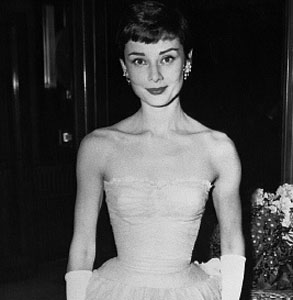
Like Audrey Hepburn, Marlene Dietrich and Jackie Onassis, whose angelic collarbones placed them among the worlds most beautiful women for decades, the wife or lover of a clavicle man knows that, in his eyes, she is a living sculpture of beauty, lovely today, tomorrow and for many years to come. And if she is obliging, he may even drink a dry Burgundy from it.
Continue Reading
Close
It all starts one quiet afternoon at the brew-pub. I’m sitting
with my associate Bobby, enjoying a pint of the house ale, when
Stephen Covey (author of “The 7 Habits of Highly Effective
People”) suddenly appears on the bar television. I can’t quite
describe the level of annoyance that the bald business guru
brings to a room of gentle drinkers, trying to enjoy themselves
while the rest of the populace is at work, but a sudden wail
from a man in the far corner, similar to that of a small dog
yanked forcefully by the tail, alerts everyone that something is
terribly wrong. In a matter of moments all eyes are fixed in
distress upon the television.
Soon customers with clenched fists start to share horror stories
of managers who force-fed Covey’s book to them. And of group
leaders who scurried around the office pasting up signs like:
“Synergy!” or “Be Proactive!” or “What would Covey do in your
situation?” Rage and desperation had finally forced our fellow
drinkers to leave their professions and find solace in the thick,
rich ales fermented by the pub’s microbrewery.
Bobby and I are amazed. Having spent 10 years carving out lives
as professional grad students, we’ve been oblivious to the rising
tide of worker despair. I remember seeing a Covey infomercial
several months back; it seemed harmless enough. Watching
employees become automatons spouting Covey’s catch phrases at
every opportunity was the funniest thing I had seen on television
in quite a while. But now, as the man in the corner begins
weeping, Bobby and I realize that larger issues are at hand.
Covey is no business guru, but rather the result of a world gone
awry — the world of work made worthless. Gone are the large
expense accounts. Gone are the smoke breaks and three martini
lunches. Gone are the innocent office flirtations. Good lord, who
would want to work in an environment like that?
I slam my fist on the table. “We need a book about the 7
Vices of Highly Creative People before the whole country ends up
in a straitjacket!” Bobby agrees enthusiastically, grabs a
stack of napkins and begins writing. All the years we’ve spent
studying history and literature are finally paying off. It isn’t
easy. But after six hours and five pitchers we finish the job.
The pub closes so we gather the napkins and head for a late-night
bar to celebrate. It isn’t quite a book, but what the hell. We
have better things to do than write another damn self-help book.
Vice one: Be a
drinker
Winston Churchill, a great fan of the martini, once said that it
must always be remembered that he has taken more out of alcohol
than alcohol has taken out of him. For Churchill, like many other
great drinkers, alcohol was a tool used to feed creativity and
social discourse. For others, like Ernest Hemingway, alcohol was
a way to place the mind on a different plane after writing all
day at a desk. This is what old Papa had to say:
I have drunk since I was 15 and few things have
given me more pleasure. When you work all day with your head and
know you must again work the next day, what else can change your
ideas and make them run on a different plane like whiskey?
Some people might say that this is to use alcohol as a crutch,
but that’s always been the case. Mark Twain, who drank from
morning until night, would periodically abstain from drink and
smoke just to silence the critics who said he was a slave to his
vices. And on his feistier days, he would give them a severe
tongue-lashing. “You can’t get to old age by another man’s road!”
he’d scream. “My vices protect me but they would assassinate
you!” His critics would then shuffle away to their
href="/health/feature/1999/06/16/alcoholism/index.html
">12-step programs and the organizing of their sock
drawers.
To be a drinker means, of course, to be social. Sure, it’s all
right to drink by oneself on occasion. But because the highly
creative live so often in the private world of ideas, they also
need to mingle with their friends at a good party. That’s why F.
Scott Fitzgerald threw his fantastic “Gatsbyesque” parties on
Long Island, inviting such other besotted artists as Gloria
Swanson, Sherwood Anderson, John Dos Passos and Dorothy Parker.
Remember, though, that when entertaining the highly creative some
ground rules need to be set. Fitzgerald’s were posted at the
entrance to his home in Great Neck:
Visitors are requested not to break down doors in
search of liquor, even when authorized to do so by the host and
hostess … Weekend guests are respectfully notified that the
invitation to stay over Monday issued by the host-hostess during
the small hours of Sunday morning must not be taken seriously.
It’s always good to think ahead.
Lastly, something should be said for the occasional weekend
bender, that is as long as your head is in the right place. If a
person is suppressing problems or going through severe emotional
distress, alcohol can bring out bad tendencies … like singing
karaoke. But if you’re secure with yourself, the occasional
bender can be a rather helpful mystical experience. As Henry
James once wrote, “Sobriety diminishes, discriminates and says
no, while drunkenness expands, unites and says yes!”
Vice Two:
Begin with a Smoke
In today’s climate,
href="/health/feature/2000/02/08/i_smoke/index.html">smoking
might be the most unpopular of all the vices. To say that the
furor over its ill effects has reached irrational levels is an
understatement. Let’s accept the guidance of journalist
Fletcher Knebel, who keenly observed as far back as 1961 that
smoking is the leading cause of statistics. The fact is that most
people who smoke don’t die of lung cancer. But all people who
don’t smoke do die of something. Marlene
Dietrich, who had her own special love of cigarettes, put it into
proper perspective:
People who quit smoking think that they have made a
pact with the devil and believe they will never die. In reality
they die from other illnesses: intestinal cancer, stomach cancer,
cancer of the pancreas. Cancer forever gropes around for further
victims. So let’s not place blame on the lowly cigarette for the
infirmities of the world. Yes, smoking has its risks. So does
getting out of bed in the morning. But a good smoke is often a
lovely affair worth pursuing.
Take the great Spanish filmmaker Luis Buquel, an ardent lover of
tobacco and life’s pleasures. He elevated cigarettes to the level
of poetry:
If alcohol is queen, then tobacco is her consort.
It’s a fond companion for all occasions, a loyal friend through
fair weather and foul. People smoke to celebrate a happy moment
or hide a bitter regret. I love to touch the pack in my pocket,
open it, savor the feel of the cigarette between my fingers, the
paper on my lips, the taste of tobacco on my tongue. I love to
watch the flame spurt up, love to watch it come closer and
closer, filling me with its warmth. Makes you want to light one up right now, doesn’t it?
Smoking has often been linked with creative
genius. For example, French philosopher Albert Camus is well
known to have savored his smokes though his lungs were withered
by tuberculosis. And who can imagine Albert Einstein without his
pipe, George Burns without his cigar or Jackson Pollock without a
cigarette dangling from his lips? Though a stimulant, smoking has
a relaxing influence and allows the mind to empty itself,
enabling new thoughts to enter. Following the wisps of smoke as
they leave one’s mouth might actually be thought of as a creative
exercise or, at the very least, as Oscar Wilde once observed,
smoking a cigarette is “a perfect pleasure, because they are
exquisite and leave one unsatisfied.”
Vice Three:
Put Gambling First
Gambling
is at the heart of every worthwhile accomplishment in life.
Consequently, vice three is essential for the success of your
creativity. Instinctively, the highly creative person knows that
nothing matters except the throw of the dice. As the French say,
“There are two great pleasures in gambling: that of winning and
that of losing.” Or, in the words of Mark Twain, “There are two
times in a man’s life when he should [gamble]: when he can’t
afford it and when he can.” These are vital lessons.
The world is full of stories of highly creative people whose
success was based on the big gamble. A young Steven Spielberg
sneaks into a Hollywood film studio, sets up an office and
proceeds to act like an employee, thus beginning the most
lucrative directorial career in history. Thirty-year-old Henry
Miller moves to Paris with little money and no prospects,
determined to become the most talked-about American novelist of
his generation, and does.
href="/people/bc/1999/12/28/hefner/index.html ">Hugh Hefner
boldly walks into the offices of John Baumgarth and acquires the
rights to reproduce the photograph of a nude
href="/people/feature/1999/11/10/marilyn/index.html">Marilyn
Monroe, a little known starlet, for his yet-to-be-published
magazine.
Certainly, there are horrifying stories of those who gambled and
lost heavily, whose compulsive involvement in games of chance,
often played out in the arena of big business, nearly ruined them
and scores of others. But it’s not until the end of life that we
truly know what we’ve won or lost. French philosopher Denis
Diderot summed it up eloquently:
The world is the house of the strong. I shall not
know until the end what I have lost or won in this place, in this
vast gambling den where I have spent more than 60 years,
dicebox in hand, shaking the dice. Vice Four:
Think Oysters
The hysteria concerning eating habits has nearly reached the
grotesque levels granted smoking. Fat or non-fat? Cholesterol
free? Salt or no salt? Most eaters, as long as they exercise a
modicum of restraint, don’t have to worry about dying from their
diet. And all those critics who have tried to convince us that
food is poison should be taken behind the shed and whipped with a
massive slice of uncooked bacon.
Let us bow to the wisdom of the marvelous chef
href="/people/feature/1999/08/20/child/index.html">Julia Child, now an octogenarian. When asked about so-called health foods
and non-fat products, she gnashed her teeth and stated
emphatically that she never would buy such crap, that they have
nothing to do with the enjoyment of life.
Make no mistake, the highly creative do enjoy life. Sure,
sometimes there is a suicide among the group, and many are
often prone to fits of depression. But when they finally decide
to stop wallowing in their suffering, they embrace life with
passion. And when it comes to food, they want to eat well, and
eat properly. In other words, foie gras, fresh asparagus and
filet mignon will always win out over a plate of french fries and
greasy burgers. At least it will for those who are truly creative
and whose imaginations permeate their lifestyles as well as their
art. Something that sadly can’t be said of lesser creatives –
Rosie O’Donnell and Tom Arnold come to mind.
Certain foods are frequently associated with highly creative
people. None more so than the oyster. The inspiration of this
shellfish can be traced throughout the canon of English
literature. From Geoffrey Chaucer to George Bernard Shaw, it
reaches its zenith with a tribute by Saki, who wrote, “The oyster
is more beautiful than any religion, nothing in Buddhism or
Christianity matches its sympathetic unselfishness.”
I’m not sure I would describe them in such exalted terms, but I
do know I have had more invigorating conversations with writers
and painters over a plate or two of fresh oysters than any other
food. The elegant bivalves inspire a level of discourse often
missing in our quick-meal culture — yet one that any dining
experience should never be without. And for many people there is
the added pleasure of oysters being the next best thing to sex.
After all, we don’t eat for the good of living but the enjoyment
of it.
Vice Five:
Seek Fashion First, Then seek to be Understood
In these days of dressing down and “casual Fridays,” it’s prudent
to remember that the highly creative have always known that
communication with words is secondary. When winning friends and
influencing people, the primary concern is your attire — your
own peculiar fashion statement. It is through the impact of this
image that both friends and enemies will initially come to know
you. What is more gratifying than having everyone stop and stare,
wondering why they feel so drab and ineffectual, when you enter a
room? If you’ve got a stylish wardrobe, the battle to be
understood is merely a stroll in the park.
One of the inevitable consequences of dressing down is that
everyone today
href="/people/feature/1999/10/07/taste/index.html ">looks the
same — and those with designer logos like Hilfiger plastered
on their clothes look plain stupid. The highly creative always
choose their wardrobes with a more consistent flair. Whether it
be Picasso with his striped sailors’ tops, which he imagined gave
him an eternally boyish edge; or Hugh Hefner with his classic
pipe and silk pajamas, which he believed gave him a kind of
worldly nonchalance (and could be stripped off quickly when
opportunity knocked); the creative spirit picks a style and
sticks with it.
Today there is a growing demand for comfort without any regard
for style that numbs the mind. Comfort is, at times, a worthwhile
consideration. But simply because your clothes aren’t comfortable
doesn’t mean you can’t enjoy them. In the days of Mozart,
fashion was notoriously uncomfortable. Yet in a letter to his
sister he once gushed, “We put on our new clothes and were as
beautiful as angels.” Sure, he sounds like a twit, but the
important point is that the beauty and style of Mozart’s wardrobe
overshadowed any discomfort. And it is this attitude that
inspired our own Benjamin Franklin to proclaim, “We eat to please
ourselves, but dress to please others.”
Vice Six: Sex
The sexual appetite and prowess of those possessed by creativity
can’t be argued. Anecdotes abound regarding the bedroom antics of
famous writers, artists and actors. But why is it that sex yields
such power over these individuals?
Perhaps Omar Sharif summed it up best when he remarked, “Making
love? It’s communion with a woman. The bed is our holy table.
There I find passion and purification.” This sense of
purification is extremely important, because such an experience
is needed to begin the whole creative process anew, and is a
state difficult to achieve now that religious rituals have fallen
by the wayside.
The catharsis that comes from this experience often leads highly
creative people to pursue several lovers. And many are venomously
referred to as philandering Don Juans. But it isn’t for lack of
affection that a Don Juan goes from woman to woman, as Camus
explained: “But rather because he loves them with equal
enthusiasm and each time with all himself, that he must repeat
this gift and this exploration. Why must one love rarely to love
well?”
Richard Burton’s lovers would agree. They proclaimed it made no
difference if he were with another woman the following week
because when he was with them they were his whole world (try
finding a woman that understanding these days). But it’s not
surprising that Burton found so many willing lovers. This is how
he described his lovemaking: “When you are with the only woman –
the only one you think there is for that moment — you must love
her and know her body as you would think a great musician would
orchestrate a divine theme.” (Today most men maneuver
themselves the way a line cook orchestrates a three-minute egg.)
Consequently, Burton felt that in many ways he was monogamous,
because when he was with one woman, he never thought of another.
Needless to say, the highly creative are highly creative at
rationalizing their behavior.
Lastly, something need be said with regard to the highly creative
who are lovers of the same sex. Writer and historian
href="/books/int/1998/01/cov_si_14int.html">Gore Vidal is
quoted famously as stating, “There are no heterosexuals or
homosexuals, only homo- or heterosexual acts. Most people are a
mixture of impulses.” Maybe. But before the days of George
Michael and public toilet rendezvous, sex for those driven by a
desire for their own gender often took an even more mystical form
than heterosexual love. In the mind of American poet Walt
Whitman, sex encompassed:
all bodies, souls, meanings, proofs,
delicacies, results, promulgations, songs, commands, health,
pride, the maternal mystery, the seminal milk, all hopes,
benefactions, bestowals, all the passions, loves, beauties, and
delights of the earth. Heckuva list.
Vice Seven:
Abuse the Card
To nurture the previous six vices resources are needed. Because
most highly creative people never fully enter the work force, nor
make a salary sufficient to their needs, credit is a necessity.
Hunter S.
Thompson cut to the chase nicely when he declared that the
first and most important rule of a writer is: abuse your credit
for all it’s worth. The highly creative travel an expensive road,
and the best way to stay between the yellow lines, or at the very
least keep food on your table, is to Abuse the Card. And the
larger the debt the better the bet. As the essayist Samuel
Johnson observed:
Small debts are like a small shot — they are rattling
on every side and can barely be escaped without a wound. Great
debts are like a cannon, of loud noise but little danger.
Which must be the reason I feel so safe and secure when my card
authorizes another round of drinks for the table.
Don’t fear if your creditors come closing in on you. When the
highly creative find themselves in financial straits, they skip
town. For example, in 1891 Mark Twain took a much-deserved
vacation in Europe, which lasted nine years, leaving his legion
of creditors to antagonize the less fortunate along the banks of
the Mississippi. Today, it is even easier to take a long,
literary holiday. And don’t forget, bankruptcy is an option
always worth considering. In fact, some highly creative people
find utter destitution spiritually enriching. Novelist
href="/08/features/updike.html">John Updike once wrote:
Bankruptcy is a sacred state, a condition beyond
conditions, as theologians might say, and attempts to investigate
it are necessarily obscene, like spiritualism. One only knows
that he has passed into it, and lives beyond us, in a condition
not ours. Having nearly reached this “sacred state” several times already,
I can’t say I would describe it in such lofty terms. I prefer the
more pragmatic view Shakespeare took: “He who dies pays all
debt.” Or Oscar Wilde’s strangely sentimental one, “It is only by
not paying one’s bills that one can remain in the memory of the
commercial classes.” For my part, I’m doing all that I can to be
remembered for a very long time.
In the end, everyone should remember that the highly creative
always have expectations of great things. Their accumulated debt
should thus be viewed only as an advance on their future
earnings. But it’s not an easy life. One should never
underestimate the amount of distress caused by overzealous
creditors. Especially when they bear down on poor debt-ridden
artists, for these harassed souls are often the true visionaries
of our time, or any time. When approached yet again by one of his
many creditors, Lord Byron implored, “It is very iniquitous of
you to make me pay my debts. You have no idea the pain it gives
one.” I feel his pain.
style="text-transform:uppercase">Conclusion
If anyone should still be left unconvinced on the benefits of
pursuing these vices, let us remember these sage words of
href="/books/it/1999/04/30/lincoln/index.html">Abraham
Lincoln: “It has been my experience that those with no vices
have very few virtues.”
Keep that one in mind during the next presidential election.
Continue Reading
Close