David Bowman

Karen Finley smears Bush all over

The notorious performance artist talks about censorship, where Bush will go after he dies, and her new work "George and Martha," in which Martha Stewart has a tryst with W. and finds Osama hiding in his colon.

  • more
    • All Share Services

Karen Finley smears Bush all over

When I was a younger man, I once remarked to Barnard professor of philosophy Mary Mothersill that a girl I was dating was “sublime.”

“Flesh-and-blood women can never be sublime,” I remember her scolding. “Not even girls you meet at CBGBs. To find a sublime woman, we must go to the classic tragedies of Racine such as Phaedra and Iphigenia.” Ah, those old tropes about hysterical women, incest and slaughter. Mothersill was probably right in theory, but then she had never seen Karen Finley perform.

Finley is sublime. Finley is terrifying the way Rainer Maria Rilke writes “every angel is terrifying.” For 25 years, she has been performing — usually beginning or ending up naked onstage, hollering a self-penned blue tirade dotted with scatological grunts, a verbal eruption given while Finley smears her naked self with chocolate syrup or other foodstuffs, such as the mashed yams she once stuffed in the cleft of her buttocks while mooning the audience (“Yams Up My Granny’s Ass”). (For the brave, other foods smeared on, in or across her naked body include ice cream sandwiches/kidney beans (“Mr. Hirsh”); chocolate syrup (“A Different Kind of Intimacy” and “Return of the Chocolate Smeared Woman”); and honey (“Shut Up & Love Me”). She has also painted invisible black velvet paintings using her breast milk as the artistic medium.)

The narrative premise behind her tantrums is usually political. (The chocolate represents the feces that white cops were accused — falsely — of smearing on Tawana Brawley.) As a writer, she modulates between brilliance and simple insipidity. The vignettes in her Obie Award-winning “The American Chestnut” are incisive and biting, but also sometimes beautiful in their simplicity:

“When Nicky got to the party, her grandmother was blowing out the candles. Then Lilly stood up to make a speech. We have something else to celebrate tonight. The American chestnut has bloomed for the first time in over 75 years! You see, the American chestnut was once the most common tree in America. But a blight wiped out nearly every tree … The disease caused the tree to never mature, but to continually send up new shoots, trying to survive … Later at the party, Mr. Dove, Beatrice, and Lilly and other people stood around the tree … Nicky could hear the conversation. ‘Sometimes if you keep trying you just might bloom, even at our age.’ Beatrice, Mr. Dove, and Lilly laughed. A warm wind swept through the tree and made beautiful sound.”

Then there is Finley’s newest piece, “George and Martha” — first a play, now a novelette from Verso. During an illicit tryst with President Bush during the 2004 Republican Convention, lover Martha Stewart discovers that Osama bin Laden is literally hiding inside the president’s … rectum: “Martha, why don’t you stop using my colon for comparison shopping?” Bush says. “The problem with you liberal types is that I have bin Laden up my ass and you’re asking why. Honey, my ass is Central Intelligence so let’s keep the whys out of it.”

Try as I may, I cannot find chestnuts in Finley’s dialogue about Bush’s asshole. I can, however, imagine being Finley, performing on the brink of rationality, never forgetting my family history — my bipolar Illinois dad who blew his brains out in the family garage (laying his head on a piece of cardboard to minimize the mess). The clinical depression and schizophrenia on mom’s side of the tree. Finley is a woman who puts her entirety at risk with each dab of yam or squirt of chocolate.

Unfortunately, back in the early 1990s, Jesse Helms (now officially afflicted with dementia and living in a convalescent facility near his Raleigh, N.C., home) didn’t see it that way. He led the charge against the National Endowment for the Arts and its funding of “indecent” artists, such as Karen “Yams” Finley. She became the poster girl for the First Amendment. The eventual trial went all the way to the Supreme Court. Finley lost. Uncle Sam would no longer pay for her grocery list of yams, ice cream sandwiches, kidney beans, chocolate syrup and honey.

You might ask, “And why should he?”

After talking with Finley you realize that the money isn’t the point. The point is the legal endorsement that government money gave. Museums and theaters that receive grants or other public or corporate funding could show “dangerous” art like Finley’s plays without worrying about being harassed by the police for indecency — after all, public decency crusader Anthony Comstock had been dead since 1915. Now everything was different. In Finley’s case, the Museum of Contemporary Art in San Francisco even returned one of her sculptures from its permanent collection. Before the Supreme Court ruling, the piece was art. Now, it was just potential trouble.

Back in 1998, Finley responded to the Supreme Court ruling by posing nude in the July issue of Playboy. Feminist supporters saw Finley’s cheesecake as a travesty, but her centerfold dabbling emphasized an important point — not about the First Amendment but about theatrical aesthetics. If you’ve ever seen Finley naked, you know that the woman sure has nice tits. Her butt isn’t bad either. I don’t believe anyone has expressed those obvious sentiments in print before. I do so now because I can imagine male performance artists like Britain’s Kipper Kids standing onstage in their jock straps and beer bellies smearing yams upon their privates. That would be grotesque and possibly comic, but certainly not sublime. Although Finley uses her performance art to attack bad politics while exploring the perimeters of sanity, her own physical beauty allows these acts to be either entertainment or questionable art.

On a mythological level, the post-Supreme Court Karen Finley has transformed from a sublime Rilke angel to a prototype of Walter Benjamin’s Angel of History — Finley is the angel being blown backward to the future by a wind from heaven. Where we perceive a chain of events, she just sees one single theatrical catastrophe that keeps piling wreckage upon wreckage at her feet. She would like to stop moving and awaken the dead. Make whole what has been smashed. But there is that storm blowing her backward from paradise. Benjamin says this storm is what we call “progress.” For Finley, her storm is what we call the Republican Party.

I interviewed this spent angel at her publisher’s office. She was dressed tastefully, but she was dressed in all black.

Let’s begin with your book “George and Martha.” I’ve only seen Martha Stewart once on TV and she was demonstrating flower arrangement. I’ve worked as a florist — what she was suggesting was complete nonsense. Did you spend any time watching her show?

Maybe it was on for a fleeting moment or two. What I am aware of is this nation’s captive attention to her — people putting her on a pedestal, making her a national personality. That’s what intrigued me — what motivates her to put so much involvement with the domestic arena in the public arena.

Do you know the writer Erica Jong slept with Martha’s husband? She tells all in her new book.

No, really? I think why I spent so much time on Martha is examining why the nation has selected her. She is so drawn to be the best mother in the world, to outdo all mothers. To treat the domestic world as if it affects physics. As if she is working on the Manhattan Project. Her urgency is so off balance. Cooking is not a military exercise. There is a joy that goes with it. I consider Martha’s need to be a better mother as Oedipal. She wants to be a better mother than her own mother and to replace her, yet she feels guilty about that and believes that she should be punished. That is why she went to jail. She volunteered. She had two different occasions when she could have plea bargained and just paid a fine. So what fascinates me is her need to suffer. I think the reason we are all involved with Martha is because many of us has that same Oedipal desire to become our mothers.

I was born in Chicago and grew up in Evanston [Illinois]. I’m the eldest of six. Having a large family, there definitely was a lot of people in the house, lots going on. My home was different in that my family was very involved intellectually. They didn’t put as much emphasis on ‘doing things.’ Everything wasn’t invested in the home. I think of Martha coming from an immigrant background — Polish; her last name is Kostyra. Traditionally, the immigrant female is more controlled. The power within the home is with the father. This is why Martha approached traditional feminine attributes like a military zone.

I personalize Martha as if she were my mother. I grew up in a spic-and-span home. Every Saturday I had to vacuum the house and clean the bathroom. Our digs were decorated top to bottom with doilies and napkin holders. It was a house that was cleaner and more decorated than any of the homes of my friends. I grew up believing that my mother had great taste. It wasn’t until I hitchhiked to New York City that I realized our house was wall-to-wall kitsch. My mother had terrible taste. I see Martha in that context.

That’s so beautiful. I was listening to what you’re saying and I hear you saying how children growing up participate in chores. I did the dishes for eight people every night. I didn’t even think twice about it. If you have children, would you have them doing chores?

That’s one of the reasons that I’ve never wanted to sire children. How much of your mother is in Martha?

My mother was able to do all of the things that Martha talks about. I know how to do all those things that Martha talks about. I know how to sew. I know crochet and knitting. I worked as a cake decorator. I can understand these things. But I don’t understand the overabundance at the expense of joy. When you see Martha doing her work, I don’t see any joy. She promotes a world of constantly doing, doing, doing. I think the mania of the approach of doing, doing, doing is a way for us not to have space. What’s the emotion that is being kept at bay? I think that is one of the reasons we’re in Iraq today — just to keep busy.

Do remember the “perfect mother” shows we grew up on, like “Leave It to Beaver” and even “Lost in Space”?

I never cared for those shows at all. I was more interested in “I Dream of Jeannie” and “Bewitched” — ones where women weren’t allowed to use their powers. That always fascinated me. I think that the two most powerful women in the country are Oprah Winfrey and Martha Stewart. Like Martha, Oprah deals mainly with the home. In some way she is still the ultimate domestic. And we are her children. Oprah is the mammy who will come and take care of all of our problems.

The iconic image of your performance work is the naked woman smearing foodstuffs on her body — the antithesis of housecleaning and being proper.

That’s really great because on a Freudian level that is a way of making a mess and cleaning it up.

In a perfect performance, you would strip down and smear chocolate sauce on yourself, and Martha Stewart would come out and clean you up.

That’s a nice image.

Did you start out transgressive in the theater?

From the beginning I was able to make a creative connection translating the transgressive that I would see in the outside world, and politically and personally in my social and family life, and make that into art. I had an arts background. I was a nerd growing up. I spent my evenings going to the library. I didn’t go to prom. I didn’t graduate from high school; I graduated from night school because I had to work. My first performances were when I would be sitting next to someone on the train going into Chicago and write them notes. Or I would stage seizures on the street outside of restaurant windows. Then I would do things at school — work with people doing social experiments. I came to New York in December of 1983. I wasn’t established. [Pause.] I’m still trying to establish myself.

I remember hearing about you in ’77.

I performed at the Kitchen that year [an avant-garde theater then in SoHo]. I had been performing in San Francisco. I had made an underground name for myself. I had performed in Europe. I did England and Germany. I was 25 years old. I performed with the Kipper Kids. I had performed at Franklin Furnace [another Manhattan performance piece venue] in the fall of ’83. I got a review in the Village Voice and that was impressive.

What’s the farthest uptown you’ve performed?

Lincoln Center. And the 92nd Street Y. Or Symphony Space.

Were you attacked during the Bush senior years?

I started having problems very early in my career — censorship problems. That escalated to my Supreme Court case that I lost in ’98.

Did you ever meet Hustler publisher Larry Flynt? He once told me about going to the Supreme Court and telling the justices to “fuck themselves.”

I don’t know if that was true. The Supreme Court has numerous monitors who make sure no one in the audience says anything at all. You are not allowed to speak in the Supreme Court. You can’t write. You can’t move. You’re not allowed to stare at the judge to attract attention. They have your attorneys speak and give oral arguments for your case. And then the Supreme Court asks questions just of the attorney. This all happens in a room that is like something from Mount Olympus. You have to climb all these stairs to get there — quite theatrical. Everyone is in robes.

Did you think about packing it up after you lost the case?

I wasn’t prepared that I would have a show at the Whitney and have it be canceled. And I could no longer be produced. I had plenty of publicity, a lot of great reviews. That is not the point. It’s that there is a precedent that my work does not have to be funded. Major institutions work on corporate or public support. I now work in academia. I still have my visual work going on, I still perform outside of America. There are many people who had been in situations like mine and they never recovered. They don’t have an afterlife in their work. Like Lenny Bruce. He suffered badly.

Speaking as your constituency, I never knew the Whitney canceled you after the lawsuit.

The Whitney is run by Leonard A. Lauder. Corporations aren’t going to be affiliated with me. It’s just too risky. I even had work returned from museums. The Museum of Contemporary Art in San Francisco returned one of my sculptures. I had death threats. Since the case, I’ve been really trying to keep a body of work going on that is more political than ever. Intellectually I’m more pointed and more mature, and can see things with more exactness than I did 15 years ago. I think my reflections are now much more exacting and much more analytical and more pivotal. I have to say that is the one thing I got out of that experience. I found out I can use that skill.

I suppose you have also found out who your friends were.

Oh yeah! [Long pause.] I was interested in those who wanted to use me as a cause. Who would get upset when I did something out of the party platform, especially when I posed for Playboy. I was just the cause du jour for some feminists. I was just one of Jerry’s kids. At least I can say there was a process in this country. And that’s why I can take my citizenship seriously. I care about the First Amendment very seriously.

Did the Supreme Court seem like a real functioning body?

I think their decision was predetermined. [Pause.] I’m just speculating.

Well, the Supreme Court voted in Bush in 2000.

Yes. So there is something going on.

So, speaking of the second character in your newest work — George Bush was a boy who never grew up having to clean the house for his mother.

Don’t be so sure. His sister died of leukemia when he was about 8 years old. He had a father who was practically absent, while George Jr. was dealing with a grieving, mourning mother. Little George had to take his father’s place to comfort his mother. It’s been noted that when he was a boy, and other boys came to his house to ask him to go out, he told them, “I can’t. I have to comfort my mother.” Imagine being at that place, being a young boy at 8 or 9. It doesn’t go away. The resentment must be to his father as well, the absent parent not providing the emotional support to George’s mother. I think that George really hates his father. In order to disguise his feelings of patricide, George places it all on Saddam Hussein, who actually had a plot to assassinate his father. Yes, there is oil, and the landscape of Texas looks like Iraq. I think in a way George Bush is bombing himself. I think he’s out to destroy this country.

Do you think George would ever committee adultery (not necessarily with Martha Stewart)?

Emotional adultery, sure. That’s what happened with his mother — the emotional infidelity. When you’re taking on such a thing like that.

I marked a section in your book that I’d like you to read. It’s one of Martha’s monologues. I’d love to hear it in your voice.

[Looks at the section and is about to read it, but stops.] I just don’t think that I can do it. I’m not very good at being a trained seal. I just don’t think I can all of a sudden go in and start being Martha. I wish I didn’t have those limitations. Maybe that’s why I’m not such a good actress.

Have you backed off from theater performances?

No. I did this first as a play. And now I’m doing “The Passion of Terri Schiavo.” This is a passion like the temptations of Christ.

What is your religious background?

I was raised Catholic, but I’m probably four different religions.

Are you practicing any of them?

I think that I am doing spiritual work. How about yourself?

I saw God once when I was in a coma. (I wasn’t as bad off as Terri Schiavo.)

Are you being serious? This is so great.

I was run down by a truck on Jan. 3, 1989. In my coma I met Roy Orbison, who had just died. He was pissed off that he was dead. I told him, ‘Roy, you’re alive, you’re dead, it’s not a big deal.’ Then I met Jesus and he was even more jaded than me. Then I saw the feet of God. [Shudders.] I had nothing more to say about that. I finally woke up and my brain kicked as I was being wheeled through a hospital lobby, where there was a newsstand. It was just after the ’89 inauguration and the Daily News headline was something about “President Bush.” I remember thinking, “We have to take this guy seriously?”

Will you put this in the article? And George Bush is when your mind kicked in … I just want to go back to you with your coma: Did they know you were going to wake up? There are such mixed feelings about these comas. That’s what I have with my Terri Schiavo piece.

But she was brain-dead. They knew I was eventually gonna come around.

How did they get you back?

My wife finally made them stop giving me the drugs they were giving me and I woke up that night.

Sometimes they do it to protect you. I’m so glad you had someone to be your advocate. Terri Schiavo was brain-dead 15 years. In the autopsy they discovered that her brain actually atrophied. That’s what’s so sad.

Well this is where you get into spirituality. My wife says, “I’ve seen you in a coma, David, and you’re not your brain.” I was just reading about a tone-deaf guy who started singing opera after his heart transplant. It turned out the donor had been a singer.

So perhaps the brain is a greater thing than just in the head.

Do you believe in the soul?

I definitely do. I do believe in probably the unconscious being part of the conscious. And different realities going on at the same time.

Sometimes I think the ancients invented the soul because they didn’t know they had an unconscious. They mistook their dreams for something divine.

I think the soul is something that goes beyond our own understanding. I think the soul is meaning. It’s where being alive makes sense.

Will the soul be judged?

[No answer.]

Let’s not forget that George Bush has a soul.

Yes, George Bush has a soul. I think … That’s for him — that he has to know. [Long pause.] I hope that he’s going to hell.

An officer and a gentleman

Elegant 80-year-old fiction writer and ex-military pilot James Salter talks about writing sex scenes, meeting the "charming" John Updike, and being rejected by the New Yorker.

  • more
    • All Share Services

An officer and a gentleman

I waited until it was dark in the Hamptons before I drove to James Salter’s place intending to steal his garbage. I knew where he lived. I had interviewed the renowned novelist and short story writer that morning at his beach house. I noted the three cans standing neatly by the road. As for the contents of his rubbish, James Salter types and retypes his prose on a typewriter. What if he threw his earlier drafts away with his French newspapers and caviar tins and Tanqueray bottles?

I didn’t care about that later garbage, of course. It’s Salter’s prose that is priceless. What I could learn from Salter’s discards, his edits! Salter is a “frotteur” — French for someone who “rubs words in his hand” so he can find the best phrase. In America, Salter has always been under-appreciated (outside of the rarefied air of the late George Plimpton’s Paris Review, which, despite its name, was published from uptown Manhattan). In Paris itself, Salter is considered an American treasure. French journalists assume Americans feel even stronger about the man. Salter’s wife, playwright Kay Eldredge, has forbade her husband from correcting their impression.

Salter was born in 1925, and raised in New York City; he spent World War II at West Point. He then flew fighter jets in the Korean War. Out of the service, he tried to sell swimming pools, and later worked off and on in the film industry as a writer and director. In 1967 he wrote a book called “A Sport and a Pastime.” It was and still is an erotic masterpiece about a young American Yale dropout named Dean and a French shopgirl he has a sexual tempest with. Although the summer of 1967 was the Summer of Love, the book was ignored. “Doubleday [my publisher] didn’t know what to do with it,” Salter remembers. “Nobody wanted to review it. It was too sexual. It had a certain language in it that is in no way obscene, but was unacceptable at the dinner table at that time. Now, in an era where even anal sex is discussed on prime-time TV, the book is completely inoffensive.” He pauses. “Although the book lost that aspect of its strength, it still retains everything else. It’s just as good a book as when it was written.”

Eight years passed before Salter’s next novel, “Light Years” (1975) — an anecdotal description of a failed bourgeois marriage set in the Hamptons before the Hamptons became the Hamptons. Salter’s wonderfully limpid descriptions of autumnal Long Island landscapes — “The day is white as paper”; “In the morning, the light came in silence”; “The river was a brilliant gray, the sunlight looked like scales” — cause the novel to transcend its yuppie milieu. Salter knows all Chekhov’s tricks.

Four years later, Salter turned an unproduced script about mountaineering into an underappreciated novel, “Solo Faces” (1979). “A Sport and a Pastime” and “Light Years” continued to sell in various paperback editions because of word of mouth. In the 1980s, a rumor took hold that Salter had written two books before “A Sport and a Pastime.” Remember, the Internet wasn’t around, so such information was difficult to confirm. The story went further: Salter had hired someone to physically drive a station wagon through backwater used bookstores and buy up any copies of those early books and then burn them. Is this true? “I can’t deny all these stories,” Salter laughs. “I’ll be left with nothing.”

The truth is that Salter wrote two autobiographical novels about the Air Force in 1957 and 1961, respectively, “The Hunters” and “The Arm of Flesh.” Both were published by Harper Brothers. “The Hunters” sold quite well for a first novel, but his sophomore effort was a flop. Salter recently rewrote both for republication. He has also published a short story collection, “Dusk and Other Stories” (1998), a memoir “Burning the Days” in 1997, and now a second short story collection, “Last Night.” The new book is as elegant as anything Salter has written and his similes are to die for. In the first story alone, “Comet,” a man so admires his new wife that “he could have licked her palms like a calf does salt.” This man is also “mannerly and elegant, his head held back a bit as he talked, as though you were a menu.”

In person, Salter is also “mannerly and elegant,” but he talks to you as if you were a patient whom he is coaxing to describe your symptoms. He asks as many questions about the interviewer as the interviewer asks about him. Salter himself only appears middle-aged, yet he is 80 years old. I suppose that makes him an “old man.” Yet his vibe of vitality is so strong you still believe that his best work is yet to come.

Incidentally, when I drove to Salter’s street my dignity kicked in. I turned around. I’d just wait for Salter’s next book like everybody else.

Are you comfortable with your identity as a “writer’s writer.”

[Gives a dry chuckle.] Writers are the best readers. That’s what that “writer’s writer” means to me.

One of the features of a writer’s writer is that he is brilliant sentence by sentence.

Sentences should not cause you to stop and admire them. They should be in the service of the page.

Ah. “You have to kill your darlings.”

I think that was what I was trying to say — if the sentence is standing up to be admired.

Have you ever abandoned a novel?

Yes. I wrote a novel maybe five years ago. It was insufferable. Distance always helps. Somebody said, Mayakovski maybe, “After you write a poem, put it in a drawer for a least a week.”

A good writer I know brags that he writes slowly sentence by sentence and never revises. The samurai method.

William Styron says the same thing. He never goes to another page until that page is satisfactory. I don’t think that works for me. If the page is not satisfactory, I just go on and come back later.

What made you decide to rewrite your first two books?

Jack Shoemaker, the publisher, had wanted to reprint both titles with matching spines. He finally persuaded me to revise the text. He was very persistent. Have you ever taught writing? The first book was like a student’s work. I reread it and thought it was a mess. I liked it when I wrote it, but I didn’t know anything back then. [Shrugs.] People get married and change their mind.

It’s strange to suddenly think of you as an ex-military man, a pilot.

They’re going to call you a pilot no matter what you do, but that had so little to do with my identity. In France — where I do all right — they keep referring to my experiences in the [Korean] war. Years from now are they still going to refer to Paris Hilton as the “former home video sex star”? I don’t know.

What if Paris Hilton suddenly revealed she possessed a secret intellect and began writing books with the razor-sharp prose of Joan Didion?

Joan Didion! Geeze. Could she? You know, I’ve never even seen the celebrated Paris Hilton sex film. I don’t know how to get it. I’d go into one of those video stores and they’d recognize me, and then where would I be?

Your novel “Light Years” just won the Fadiman Medal (awarded by the New York Mercantile Library) 15 years after it was written.

That’s gratifying. I’ve reread it. It’s not bad. I was just thinking about the book this morning. I’ve only read a few books that got such overwhelmingly negative reviews as “Light Years.” Anatole Broyard, writing in the daily New York Times, said the book was “insulting to our patience and our expectations.” Then in the Sunday Times, Robert Towers wrote such a well-written terrible review that even the publisher using ellipses couldn’t find a few words to use. [Towers called it "an overwritten, chi-chi and rather silly novel."] You don’t just shrug reviews like those off. They are blows.

How did your memoir “Burning the Day” come to be written?

I wrote an autobiographical piece for Esquire called “The Captain’s Wife.” Joe Fox, my editor at Random House, read it and liked it, and urged me to write additional pieces that came from life. Gradually they assembled themselves into a book that can’t be called autobiography. In fact, I didn’t call it that. It’s too damn incomplete — the book ended 20 years or more ago. I didn’t want to call it “memoir.” Even then [1997] that word had a certain pretension. So I called the book a “recollection.”

For the past 20 years have you felt like a short story writer?

I felt like a writer. Short stories aren’t very much different than other writing. They require different structure, but you still have to sit down to write them the same way. Most writers don’t specialize [between novels and short stories], although they may have their forte. John Cheever, for instance, is probably more famed as a short story writer, but he wrote novels as well. Who else do we have? Hemingway, of course. It’s only occasionally that you come across someone like Alice Munro or perhaps Lorrie Moore or maybe Grace Paley who seem to specialize or write only short stories. I know Shirley Hazzard, who’s just won a big prize, talks about this very thing. She started writing short stories. Her first one was accepted by the New Yorker — by William Maxwell, famous editor and writer now gone — and the magazine accepted every story she sent in afterwards. Hers is like a fairy tale. What can I say? That’s like going to paradise.

Has the New Yorker ever turned you down?

Oh, sure. Oh, certainly. As a matter of fact I take some pride in that. My previous book of short stories ["Dusk"] won the PEN/Faulkner award [for short stories]. Nine of the 11 stories had been turned down by the New Yorker — and the two remaining stories I hadn’t bothered sending to the New Yorker because I knew they’d turn them down.

Do you get an idea for a short story on Monday and then write it on Friday? Or does it gnaw at you for a year or two?

I may get it on Monday and write it on Friday, but there could be an interval of many years between that Monday and Friday. [Pause.] That’s an interesting question. Short stories, sometimes you tear them out of the beak of life, so to speak. And sometimes they simply are lying there on the ground to pick up. You may have a certain idea for a story you have to tell, but the story didn’t exist before because it wasn’t lived by somebody else — you constructed it yourself. Some stories come completely assembled and ready to go. Otherwise it may be like one of those nightmare Christmas toys where they say “everything is included but the battery and assembly required.” You may spend hours and hours feverishly trying to make something of it.

Have you ever sat down and a complete story just poured out?

Yes. There is one such story in this present book that was written in the morning. And that is “Bangkok.” I had a start. I had two lines that someone had told me over the telephone — “Weren’t you going to call me back?” “Of course not.” I began with those two lines and just knew the rest of it. I knew the people. I was able to write the story.

In “Burning the Days,” you mention the three essential stories of Isaac Babel to read: “Guy de Maupassant,” “Dante Street,” and “My First Goose.” [I'd never read Babel before and the first two stories have changed my reading life!] If someone were to say, “Read these three stories of Salter’s.” What would they be?

I can’t answer that question because you mention Babel and that’s completely out of my class. It’s embarrassing. He is a genuinely great writer. He rewrote constantly. Revised and revised. The stories that read so effortlessly, that seem to have been written by an angel’s pen, were probably struggled over for months. I’ll recommend three stories in any case as long as there is no mention of Isaac Babel in the same breath. I think “American Express” in “Dusk.” In “Last Night,” I like “Comet.” And I suppose, can I go back to the other book ["Dusk"]? I’d say, “Am Strande von Tanger.” The title is pretentious, I know. I was in the phase where I thought, ‘I’ll floor them [the New Yorker] with this title!” It means “On the Beach in Tanger.”

Are there uncollected Salter short stories from some lost magazine?

Not worth mentioning. They’re just lying around. They refuse to come together. In short, broken pieces.

Is a new novel finally in the works?

I’m just starting. I don’t have a purchase on it. I’m just doing preliminary stuff. If we were talking in architecture terms, I’m still excavating to lay the foundation.

Don’t readers complain, “Why haven’t you written more books?”

They mention that. But let’s return to Shirley Hazzard for a moment. I notice that she hasn’t written any more than I have. I think I’m being compared to too high a standard. [Coincidentally,] I flew down from Boston with John Updike yesterday. Here is a man who’s written maybe 50 books — quite a few of them are really superb. I hardly know what to say. But maybe I spent a little more time kicking around than he did.

Were you sitting side by side?

Yes. It was wonderful. He’s absolutely charming. Unpompous. I don’t want to say “self-effacing,” but he is an unspoiled man who knows a lot. He has a very welcoming and habitual style, which is in no way false. He’s a bit shy. He doesn’t begin wheeling out titles of his work or anything. You’d like him.

Has Updike read you?

Yes. At least one. He once wrote me a postcard.

Which book did he read?

“Light Years.”

Was the card favorable? Wait. What a dumb question. “Dear Mr. Salter, Anatole Broyard was right. This book sucks.”

[Laughs] That would be memorable too. But that’s not his style.

So in the end, do you feel that Hollywood ate up your life?

It didn’t eat up my life, but it ate up those years to a large extent. I really can’t complain. I wasn’t drafted. I wasn’t shanghaied. I was earning a living. I enjoyed it. You always live in hope. You always say, “This fellow will be a terrific director. And this will be really a good film.” And so forth. Even earlier you say, “I am going to write a wonderful script for this. It will be remembered.” It’s not like selling stuff on the sidewalk on 14th Street. You know John Updike just wrote an introduction to a book of Hollywood stories by Daniel Fuchs ["The Golden West: Hollywood Stories"]. Fuchs is quoted saying something to the effect of “I managed to get my name on 10 films, one of which was a hit.” This is in 40 years. Think of this for a moment. “I managed to get my name on 10 films.” And it wasn’t only his name. It might be Daniel Fuchs and Edward Barnett, or something. Whatever. And the film he cited is a movie you’ve never heard of. Even despite his optimism, it’s pathetic. It’s so pathetic you feel like turning away and saying, “For Christ’s sake, Fuchs, get a grip.”

You know they say, “History is written by the victors”? Well, that’s wrong. History is written by writers.

And writers and former screenwriters have written most of the histories of Hollywood — thus the prejudice that writing hasn’t been accorded its due of importance. [Sighs.] Writers can go on bleating and bleating, but it’s not going to change things. The film belongs to the actor — the face you see on the screen. Everybody else is subordinate. There are some cases where the director’s imprint is so powerful, if you happen to be educated you know something about the director, but for the hundreds of millions who delight in these movies, it’s the actor they’re interested in.

Or George Lucas special effects. [Pause.] Here is a personal question. Your writing is constantly sexual, often directly autobiographical in your nonfiction or else sideways autobiographical in your fiction. And you’ve said that your wife is your first reader. It must be very difficult writing about the women you knew before you met her. Doesn’t that inhibit you –”What will Kay think when she reads this?”

There is a danger in that, of course. There may be some jealousy and things unexpressed, but these things still rankle her. In general, I think we can assume women do not like to hear about other previous women. I don’t know what to say. If it is clearly not fiction, think it over before you write it.

Continue Reading Close

The haunted 50s

In his new book about being middle-aged, James Atlas explores subjects writers rarely tackle: Limitation and loss.

  • more
    • All Share Services

The haunted 50s

How many of you feel oppressed by members of the so-called baby boom — that explosion of American birth that began when the young GIs returned home triumphant from the twin theaters of war in Asia and Europe? The first things that generation did — not necessarily in this order — were invent suburbia, get wives and begin procreating like crazy. This activity flourished throughout the dark ages of the Cold War, peaking with 4,300,000 births in 1957.

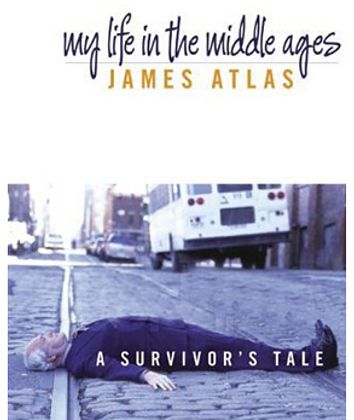
I believe we can authoritatively state that the baby boom itself began during June of 1946, the month when “The Pocket Book of Baby and Child Care,” by Benjamin Spock, first went on sale for 35 cents. This date dictates that the oldest official member of the baby boom is 59 years old. The youngest is in his or her early 40s. Only now has one of these boomers dared to chart the course of modern middle age — the novelist/biographer/critic/publisher James Atlas. His semi-memoir is titled “My Life in the Middle Ages.” The cover does not show a robust man swatting a tennis racket, or a wavy-gray-haired fellow nuzzling a blonde half his age, tossing away his bottle of Viagra over his shoulder. No, the cover shows a heavy-set man with a gray, receding hairline lying down on a brick street.

Atlas chose the cover image for his book. The man has a sense of humor about his condition. The raw material of Atlas’ chapters, however, began as soulless exercises edited by Tina Brown, back in the days when she was the modern Marie Antoinette/mantresse running the New Yorker. She encouraged Atlas to bellyache about the lack of privilege the privileged middle-aged citizens of New York believed they were suffering. (Let them eat brioche!)

Thankfully, a few years after Brown left the New Yorker to start the now-defunct Talk, Atlas rethought and rewrote the essays, discovering a genuine humanistic angle for the genre he was inventing — the middle-aged coming-of-age story. In his book’s introduction, Atlas recalls his father’s 50th birthday party: “[My father] announced to his assembled friends that he was now on the downward slope of the bell curve. At fifty you could just make out the far horizon and what lay beyond it — ‘Twilight and evening bell, and after that the dark.’”

Apparently, Dylan Thomas’ proclamation, “Do not go gentle into that good night … Rage, rage against the dying of the light,” is easier recited than followed. What the younger Atlas discovered was, “The greatest challenge of middle age — and as I write these words, I’m on the threshold of late middle age, which imposes a biological deadline far more terrifying than the demands of any editor — is to accept one’s limitations. It’s not easy. In my experience, it’s the hardest thing of all.”

The author’s blunt chapter titles concisely sum up the contents of the book: “Mom and Dad,” “Time,” “Home,” “Money,” “Failure,” “Shrinks,” “The Body,” “Books,” “God,” “Twenty-fifth Anniversary.” The chapters are poignant. Also, Atlas can laugh at himself. But there is no light at the end of the tunnel. The last chapter is titled “Death.” I suppose it’s a hopeful sign that “Death” is followed by “Acknowledgements.”

I met with Atlas in his Manhattan skyscraper office with a view of a thousand orange shower curtains flapping down in Central Park. Whatever “limitations” the 55-year-old Atlas — who presides over his own imprint, Atlas Books, at HarperCollins — may have, they are not physical ones. He is trim and dapper and looks to be in his mid-40s. Christ! He still has all his hair. I knew that Atlas had experienced both literary triumphs and bile in his career, yet, when I talked to him, he refused to really bad-mouth anyone. By the interview’s end, I did, however, discern a hidden Truman Capote vibe in Atlas. And by that I’m thinking of the famous photograph of Capote filing his fingernails with a stiletto. There was a quiet edge of danger about Atlas. This man does not appear to be someone who plans to be going gentle into any damn good night anytime soon.

Are you prepared to be the spokesman for your middle-aged generation?

No. I’m comfortable being a spokesman for myself. I did not wish to write a memoir as such. I didn’t want to write a book that was revelatory in that way. My book has resonance beyond me. I wanted to write in a way that allowed me to write about my generation.

So how old do I look?

I don’t know. Significantly younger than I am. Say, late 30s.

I’m 47. So I’m middle-aged?

Sorry. But you are, yeah. You’re middle-aged, definitely.

Does anyone fear you?

Fear me? You’ve got to be kidding.

My father told me that the mark of success when you’re middle-aged is to be powerful enough that a number of people fear you professionally.

I suppose people used to fear me when I was a smart-alecky book critic for the New York Times. Who would fear me now? I can see what you’re getting at, but I can’t stand the idea of frightening the people who work for me because I’ve had plenty of jobs where I’ve been bullied. It’s a very unpleasant experience. I have potential power as a father, but I don’t exercise it. As an editor I have potential power to insist on certain changes, but because I’m also a writer, I don’t want to do that.

So when you go to dinner parties, do you encounter writers you once panned in reviews or writers who have insulted you?

It happens. At one event my wife was talking to this man and admiring his little baby, and he was someone who had written very unkindly about my work. I hustled over to her and said, “Stay away from that so-and-so!” [Laughs.] It happens. But I’m not at war the way I used to be. I don’t walk into a room and feel anxious. Unless I’m mistaken, there seems to be a measure of goodwill. Also, as we get older we have fewer impulses to quarrel. That wasn’t true of the older generation.

Enemies. That’s akin to having people fear you.

My friend John Irving once said something great, “If you don’t have enemies, you haven’t lived.” So I’ve lived a full life.

You came of age during the 1960s. How rebellious were you?

Terribly. That’s why I have trouble with my kids who are normal. I just can’t believe that they’re not stoned and god knows what else. I explained that to my 17-year-old son last week when I was concerned that he was roaming around this hotel with some girls from Albany. It turned out they were just looking for a board game. And I believed him. He said, “Why don’t you trust me.” I said, “Because when I was your age I was stealing Heineken out of my father’s refrigerator in the garage and storming off in our car to smash it up.”

It’s strange how finely calibrated the baby boom is, because my brother, who is 60, missed the 1960s on the early side. I was in the middle of it. I was in Chicago in ’68. I was in the march on Washington. The riot in Tompkins Square. I wish I did more, though. I had a VW van and I wished I’d painted it in psychedelic colors.

No one could tell by looking at you today that you once had long hair and smoked dope. Are there any middle-aged contemporaries who were and still are squares — kids who had bought the Goldwater line of 1964?

I can’t think of any. But back then there were no squares. That category didn’t exist. We were uniformly nonsquare. I myself wanted to be a poet. I didn’t know that you can’t be a poet in America, that poets have no function in our society. In terms of being in this office and having my own company — that was never an ambition. Never.

In the failure chapter in your book you describe the humiliation of getting fired at age 50. Was that about the New Yorker?

I don’t want to go into the specifics of it.

But you obviously got a second chance. In American mythology you always get another chance.

Yes, that is so true. That widely quoted axiom of F. Scott Fitzgerald, “There are no second acts in American lives” — that’s ridiculous. There are as many acts as you are around for, it seems to me. I’ve had many “acts.” And I hope to have more. Also, the difference between getting it right and getting it wrong is so razor thin.

You’ve written that when you were writing this book you ran the text by a lot of people. Was there much that they said, “You can’t say this. You gotta take it out.”?

I had a lot of trouble with this book. I kept trying to do it right. There was a period about a year ago when I thought the book was a disaster and I wanted to pay back my advance (but I couldn’t afford to!). My friends and family helped me salvage the manuscript. I take a lot of editing. I listen. I’ve had great good fortune [with regard to editors]. The editor of my first biography, of Delmore Schwartz, was perhaps the greatest editor of his generation: Dwight Macdonald, who happened to be Delmore’s executor. For my biography of Bellow, I gave it to — I can say this because he’s dead now — the most unpleasant and curmudgeonly guy I could dig up, Edward Schils, who was part of Bellow’s circle. Schils wrote me a 16-page single-spaced memo tearing apart my book, eviscerating it. I thought, “Better him than Christopher Lehmann-Haupt.”

The New York Times book critic! Is he still alive?

Let’s not get into him. He writes the obits.

Oh. Because I never see his byline.

I hope you never do again. [Pause.] That’s not fair. He was nice to my first book. And my second book wasn’t very good.

In the book you mention the New Yorker article Tina Brown assigned you about being the only citizen in Manhattan who was still having fun in the 1990s.

I don’t remember being assigned that piece because I had a reputation for having fun or a reputation for not having fun. In my life I’ve had a lot of pain and a lot of fun, but something I haven’t had is being so deep, deep down that I couldn’t still enjoy myself.

In California terms, having a good time might mean hang gliding. In Manhattan, having fun has traditionally meant going to exclusive and expensive clubs or restaurants with one’s exclusive friends.

The point I was making was that the ’90s culture was changing and people were obsessively work oriented.

How do you imagine people who do not live in New York will relate to the book?

That’s a good question. I don’t know. Most of the people I’ve heard from live in New York. When I wrote the pieces for the New Yorker I heard from people all over the country. If only people in New York like the book, that’s OK. There are a lot of people in New York.

Who is the guy on the cover?

I don’t know. I got the photo out of a computer archive. I typed in “sad middle-aged men” and hundreds of images came up, images of men staring out windows, sitting alone, walking down the street in the snow. And then I saw this fellow lying in the street. Has the trolley passed him over or has it missed him? But he survived so … I wonder who he is. People sometimes say, “Where did you get that guy?” Maybe he’ll write to me.

Until I met you in the flesh, I had assumed you posed for the cover yourself.

I’d never do that. I set out to write about experiences I had without being overly confessional. You notice when I write the chapter called “Shrinks,” I don’t go into what I was actually talking to those psychiatrists about. This is why if what I wrote about strikes a chord, I feel lucky. One thing that pleases me is that women seem to like the book as much as men. I didn’t want to write one of these Jewish coming-of-age novels.

Is Jewish machismo different culturally than WASP machismo?

[Laughs] I didn’t think it existed. But in fact it does. My friend Rich Cohen writes wonderfully about Jewish machismo. He wrote “Tough Jews: Jewish Avengers.” He’s great. I’m not an authority on that. I write about Jewish weaklings.

But in terms of admitting weakness or disappointments, you’re either offhanded about it or you just kvetch. There’s a Jewish way to admit that you’ve fucked up without admitting shame that a goy would feel.

Is that true? I suppose there is a kind of self-irony to Jewish social characters.

Irony! That’s the word. Because WASP America doesn’t “get” irony.

Because this is a very success-oriented culture. A number of people have told me that they’ve been fired or their friends have been fired and no one will write about it. This seems an almost universal experience. Everyone’s been fired. When I first wrote about failure in the New Yorker, I got letters from the most famous people you can imagine — household names — you couldn’t believe they thought of themselves as failures.

Is being swamped with regret a symptom of middle age or old-man-hood?

I think everyone has regrets. In the 1960s, I was on a tennis team and was a ranked player in the Midwest. This was one of the deleterious effects of the 1960s — it was uncool to be in sports. I regret that I didn’t play tennis again for 20 years.

Your book makes it sound like when you play tennis today you exhibit machismo aplenty.

I certainly want to win. I play three times a week if I can get away with it. I play a wonderful guy retired from Morgan Stanley, a broker. He’s 70 and in phenomenal shape. He trounces me. I don’t think I want to win enough. I have trouble closing. When it comes right down to it, I fight all week long. When I get to the court, I can’t just struggle enough to win in another arena. So I lose a lot when I shouldn’t.

There is no room for irony when you’re playing tennis.

No, there isn’t. There’s room for neurosis. Like my son says to me once, “Dad, I figured out what’s wrong with your game?” I said, “What?” He said, “You’re crazy.”

So tell me the truth — weren’t you disappointed that your son was searching for a board game as opposed to finding a quiet spot to get it on with the Albany girls?

No! I thought that was really sweet.

Or else he knows how to play you for a sucker.

[James Atlas thinks about that one.]

Continue Reading Close

The world according to Nova

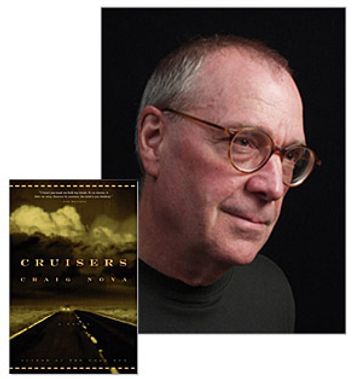
Novelist Craig Nova talks about Camus, New England exotica, and what it's like to be a writers' writer.

  • more
    • All Share Services

The world according to Nova

After 30 long years, Craig Nova has yet to Garp, but he’s Gatsby’d more than once. In other words, he’s a novelist who has yet to write a supermarket bestseller like “The World According to Garp,” but he has written at least two American classics that will likely resonate after his death, the way the poor-selling “Great Gatsby” did for poor ol’ F. Scott Fitzgerald.

The pair of Nova books that stand out immediately are “The Good Son” (1982) and “The Congressman’s Daughter” (1986). They both concern American politics and wealthy families. “The Good Son” is about a young WWII fighter pilot, born to a first-generation millionaire. The book begins: “My father is a coarse, charming man, a lawyer, and a good one, and when I was flying over the desert and the German pursuit pilot began pouring round after round into my plane (a P-40), I was thinking of how I learned to drive, and how it affected my father.”

“The Congressman’s Daughter” concerns a New England politician’s daughter forced into a shotgun marriage. Its opening sentence is brief: “I know more secrets than any man I have ever met.” These two titles belong to the “born to the purple” novels of Caucasians like Louis Auchincloss and Ward Just, although just like Gatsby, Nova’s characters go slumming. The novelist and Seattle critic Michael Upchurch believes that both “The Good Son” and “The Congressman’s Daughter” are “the all-American prose equivalent to Beethoven’s Symphonies … there’s a genuinely classical grandeur to Nova’s tales of erotic derailment and titanic family conflict.” After those titles, Nova wrote more than a few more novels. In 1994 came Nova’s seventh, “The Book of Dreams.” Upchurch, smart guy that he is, called this one a masterpiece too. “The Book of Dreams” is a brilliant Hollywood novel about a “Last Tycoon”-style movie producer, a hit man, and a performing elephant run amok in LA. It is up there with Raymond Chandler’s “Little Sister” and Bruce Wagner’s “Force Majeure.” Or to return to Upchurch’s musical reference, “The Book of Dreams” is less Beethoven and more “Morrison Hotel,” by the Doors. Although the bulk of Nova’s oeuvre is set in the eastern part of the country, he himself was raised in Hollywood in the 1960s. “I would race Steve McQueen on Mulholland Drive,” he says. “I had a ’55 Chevrolet, and McQueen had an AC Cobra. He would let me follow him for a little bit, then he would take off and wave to me.”

Since his Hollywood novel 10 years ago, Nova has written (among other things) a fishing memoir, a science fiction novel, and his newest and 12th novel, “Cruisers” — a modern exercise in classic existentialism à la Albert Camus. Nova’s title concerns a pair of antagonists dueling and dealing with American desires and American death along a Vermont highway.

I suspect the reason Nova isn’t a bigger draw at, say, Barnes & Noble, is because he’s difficult to peg. I spoke to Nova about this on the phone. He lives in Putney, Vt., located near the twin axes of the Massachusetts and New Hampshire borders. Coincidentally, I lived in Putney during Gerald Ford’s last year in office. As I remember, a rustic sawmill sits in the center of town. Down the road, a boulder lies marked with a red-painted devil’s head. I recall that a slinky European car used to buzz around with personalized Vermont plates that read GARP. It turned out that John Irving lived in Putney and was finishing “The World According to Garp” at the time. Nova is friends with Irving and moved to Putney on the latter’s recommendation.

If Nova himself hasn’t Garped yet, he at least lives in the right town.

What book of yours should uninitiated readers begin with?

That’s a tough question. All writers think their last book is their best because of the process of self-hypnosis that goes into it. The sense of immediacy. So I think this new book, “Cruisers,” is right in there. Tolstoy said someplace that “Many write books, but few are ashamed of them.” I am the exception to that. There are some books that I’d like to have back.

Which ones?

I published my first book when I was 26, so I had the misfortune of growing up in public as a writer. I’d like to retrieve one called “Turkey Hash” (1972), and another titled “Incandescence” (1989). I didn’t really grow up until my fourth novel, “The Good Son,” which was a big jump from the early books. It’s not that the early ones were insincere; they were just written by someone not sufficiently grown up to understand what it really means to write a novel. [Pauses.] Although I’m not sure if I’m at that point yet at 59.

Why didn’t you become one of those so-called California writers?

I was just thinking about that this morning — the influence that Los Angeles has on a writer who grew up there. I bet for every writer there is a “Los Angeles,” a place [where] you’re really in touch with anxiety and fear and the ominous. In fact I just got off the plane from L.A. — I went out there to do some stuff for the book. While I was there, it all came back from when I was growing up. You don’t know if the place is going to burn down, blow up, or be swallowed by the ocean. One of the things that I like to do in books is invoke the ominous. It’s a way of getting control of it, I suppose.

I was a California kid during the late 1960s and early 1970s. For me, the East Coast and New England were exotic America. I’d never been further east than Wisconsin.

Me too. In fact I grew up on this weird mythology of the East. My mother was born in Provincetown. Her grandfather had a farm in Vermont. When I was growing up in Hollywood she was always telling me stories about Vermont and blueberries and maple syrup and pancakes. Even then I knew there had to be more to the East than that, but the strange thing with the mythology was that even though I knew it was bogus, somehow it still took hold. Here I am.

I love the West for the desert. I love the Raymond Chandler mystique.

I left my family pretty young and moved in with the family of a friend of mine. His father was a screenwriter. When I left L.A. for New York to become a writer, he looked at me with tears in his eyes and said, “Whatever you do, don’t come back here.”

Did he mean, “Don’t come back here to write screenplays”?

Exactly. It’s a very dangerous thing to do. You know writers believe in merit and they like to take chances. This is a combination that is absolutely inflammatory and likely to incinerate every aspect of your life if you work for Hollywood. You’re willing to work harder than anyone else. You think you know that book better than anyone else. You think if push comes to shove that you’ll be able to charm people into doing what has to be done. Hollywood is — how can I say? I made a little money there, but it’s a very dangerous way for a writer to make money.

“The Good Son” and “The Congressman’s Daughter” are these great political genre novels about people with money and power, but some of your other books, like the new one “Cruisers,” are about the working class.

For an experiment, I did two socioeconomical versions of the same story, “The Good Son” and “Trombone” (1992). They’re both father-son stories modulated by differences in money and expectations, and image and power. One of the things about writers is they don’t fit in anyplace. That’s not to say that they’re aloof. They’re just comfortable/uncomfortable anywhere. [Pauses.] That’s why I live in the sticks.

Let’s talk about “Cruisers.” The publicity materials say that the novel is based on a true story, but they don’t say what the story is.

It’s something that got a fair amount of publicity in New England. A guy at the Canadian border went nuts and shut up a judge, a newspaper reporter, and a couple of cops. Then he trapped four other cops in a very bad spot. It happened the way I described it in the book. He stole a police car. He went up to the end of a wooded road. He put the radio on very loud. Walked back the way he had come, and then went up on a hill. Soon or later, the cops would come in and he would be behind them. One of those cops was the son of friend of mine. After it happened my friend wanted me to go up and see where his son had been trapped. I stood up there and could see where the guy stood. Where the cops had been pinned down. A couple of them had gotten shot. It was the most ominous place I had ever been. There was something in the air.

I was writing another book at the time, but as the years went by I kept thinking about that place. And I thought how it was that two people could meet there under those circumstances — a young vital, charismatic cop, and a man from the American depths. To write the novel, I began riding with a state trooper on [Highway] 91. He was one of the guys who had been trapped up there.

91 — does that go straight up to Canada?

Yeah. It seems like such an innocent thing — a highway in Vermont. But it isn’t. There’s heroin traffic between Burlington [Vt.] and Springfield [a working-class town in Massachusetts]. Very heavy-duty because the price of heroin in Burlington is twice what it is in Springfield. You don’t have to be a rocket scientist to figure out you can make a lot of money by buying in Springfield and bringing it to Burlington.

You know who Frank Kohler, your psychopath, reminded me of? The novelist James Ellroy.

Really? I like Ellroy. There is an intensity in his work that I really admire.

I mention Ellroy because when he was a kid his mother was murdered like Kohler’s mother had been.

I knew that. Actually the detail about Kohler’s mom came from a detail that I saw in a police barracks about a body in a trunk that had been found at the side of the river. [Pauses.] You know as we talk, I think one of the things that happens as you get older is there is a kind of distilling process and you give in to your influences. You internalized them so completely that they don’t feel like influences anymore but something that comes from yourself. One of this book’s influences is Albert Camus. The central ethical question in his work is “What do we do? We’re born. We die. We don’t like that.” Under those circumstances how are we obligated to other people? My character Russell [the highway patrol officer] has obligations to a woman he’s fallen in love with.

My other influence is Graham Greene. No one understood anxiety of the modern age like Greene did. And his books are still all in print. Everybody reads them. “Brighton Rock” was in my mind a lot when I was writing this book. Actually my wildest and most enthusiastic high about this book is I would like to think of it as a collaboration between me and Graham Greene and Albert Camus.

How much research do you do for each novel?

“Cruisers” is kind of an exception. The answer is usually not much. As a novelist you know you’re always looking for stories. Since this book was inspired by this thing, I felt you have to know what happens at night in a patrol car. How do you get the shotgun out? How does the radio work? What really goes on out there?

Sometimes you can just make stuff up and get it right. My first book is about a kid driving a cab with a dog. Now I’ve never driven a cab, let alone with a dog. I did no research. Recently I met the novelist Andrew Vachss. It turns out he once did drive a cab in New York, with his dog. I was expecting him to say, “You know nothing about cabs or dogs.” Instead he said he really dug my book.

The truth is, it works both ways. Stephen Crane never went to the Civil War. It is not necessary to experience everything you write about. In some ways it can be a crutch. In fact, I stopped hanging around with that trooper because he was so charismatic that he was taking over “Cruisers.” By the way, I did once drive a cab in New York City. That is a peculiar job that’s much like being a cop. People take cabs in emergencies. They get in a cab and they’re bleeding, and you take them to the hospital and they run in and you’re left with six bucks on the meter, and blood in the back seat. It can be an ominous job.

Why is the ominous such a theme?

It certainly seems to be much on my mind this morning. In this post-postmodern age, or post-post-postmodern age — whatever age we are living in — there are new demands on novelists. There are a million ways that writers try to face up to those demands. The one that I’ve picked out for me is storytelling, trying to set up a book where the reader wants to turn the pages and find out what is going to happen, yet at the same time they trust you. They know you may lead them into some scary places, but you’re going to bring them home all right. They know you’re not going to rape their sensibilities without nourishing their values a little bit.

Have you ever seen the old 1930s movie “I Am a Fugitive From a Chain Gang”?

Yes. The Paul Muni movie.

I saw it recently and remembered what it was like to take a fictional trip and be left in nothing but despair.

I think that’s one of the things that a good fiction writer doesn’t do. They find a way to take you there and then leave you informed but not violated. You’ve seen things that are true to what is known as the human condition, but not in such a way that you want to go out and get drunk. That is why Graham Greene is so important. You read his books and they’re pretty damn grim, but there is something in his sensitivity that makes his books enjoyable. I think this sensitivity is even more important with movies.

For some reason I’m thinking of this modern Japanese movie I saw about where people go after they die ["After Life"]. They spend a week in this purgatory where they have to remember one moment that represents their life — which is going to be recorded in this kind of celestial film archive. So you watch them choosing that one moment from their lives. Absolutely haunting. Only the Japanese could get away with something like that.

So for your movie would you choose the moment around a book being published? Or is the launch of new book now a casual experience for you?

No, I get wound up. No one can sit for two and a half years in a room trying to do their best work and then, “Well, you know I’m totally indifferent to what the reception is.” It’s impossible. The difficult part of the writing life is the up-and-down part. You go through a very bad time, and then you publish a book, and it’s optioned for the movies and sells for translation. You’re not rich, but you’re not sweating bullets to pay the mortgage. And you think that somehow you’ve gotten beyond the plateau where you have to worry about money so much.

Then a couple years go by and you’re right back down in the depths — you’re borrowing on the house to finish a book. You’re terrified to put gas in the car. And then for reasons you don’t understand, for some reason it all picks up and goes back up again. It’s the starting and stopping part that I find the most difficult. I really do. I am a writer who has published 11 novels and who isn’t very famous — not yet anyway.

Continue Reading Close

The king and queen of lower Manhattan

It was the night of the '77 blackout, and Natalie and I found ourselves naked between the twin towers.

  • more
    • All Share Services

The king and queen of lower Manhattan

About six months ago, an old friend I haven’t heard from in 20 years contacted me via e-mail. Her name is Natalie. I met her in a New England boarding school where we were both teenage poets. A year after graduation, I lived with her for a summer in Manhattan. It was 1977. Son of Sam’s summer. The summer Elvis disappeared. After that, Natalie and I lost track. She got married in New Hampshire, and had some daughters.

I remember Natalie as slight and lilting and freckled with long curly red hair and small granny glasses that made her look like a precocious 7-year-old. I had moved to Manhattan before her in May. She wrote me a letter saying that she planned to move into a cousin’s vacant East Village apartment come autumn. I suggested Natalie come a few months earlier and share my one-room apartment in Little Italy. She did.

Natalie and I were not “lovers.” We were deep friends first who also shared sex  that act usually happening after a session of criticizing each other’s poems. It was as if we were trying to reinvent Greenwich Village bohemia, like Warren Beatty and Diane Keaton in “Reds.” One week Natalie left for a poetry workshop on Cape Cod, and afterward announced in an excited voice that she had slept with the main act at the workshop, poet Saloir Kallington (not his real name). I was envious, but not jealous. Not a bit. I too wanted the opportunity to have sex with a famous poet.

One night in July, Natalie was sitting in a chair reading and I was lying on our futon reading when the electric light in the apartment just disappeared. The light didn’t abruptly vanish the way it does when you kill the lights, but rather the illumination seemed to evaporate into darkness. I ran to the back window and saw the lights of Little Italy blink off. Then in the distance the twin monoliths of the World Trade Center vanished as well.

Natalie and I put our tennis shoes on and rushed down to the street. Everyone was excited as if it was Mardi Gras or Halloween. A dude was standing in the middle of Lafayette Street directing traffic with a flashlight. Natalie and I walked west into SoHo and then headed downtown. I believe we were going to see if the Statue of Liberty was still lit. The neighborhood we were walking through is called TriBeCa today, but during that summer it was just nameless blocks of warehouses. With the city blacked out, this was the empty quarter. The end of the world. There were no cars on the street. There were no people. No one. Natalie and I were the queen and king of lower Manhattan.

We ended up at the World Trade Center. The pavilion between the towers was stark and empty. There were no people milling around. No guards or policemen. Had they successfully evacuated the towers and then just abandoned them? It was quiet, so quiet that you could actually hear the fabric of our jeans as we slid off our pants and began fucking between Tower 1 and Tower 2.

I lay on the concrete and Natalie pumped above me and I managed to have an ironic literary thought of how phallic the towers looked. For years afterward, when I remembered this moment (which I occasionally did), I quietly wondered why I was on the bottom. As bohemian as Natalie and I were, we performed enthusiastic but conventional missionary position sex. We were children of the suburbs after all. This was why it was such a hoot to be living in the dead vortex of urbanism, New York City; living in a one-room apartment in Little Italy where the bathtub stood out in the open beside the stove. Fuck going to college. Fuck worrying about a career. Fuck conventional notions of friendship and romance. Hell, maybe I would reject my suburban upbringing and welcome a chance to fuck Saloir Kallington just as Natalie had.

Twenty-four years and some months later, for no reason at all, I suddenly realized why I was on the bottom. Since that moment under the World Trade Center, I have lived an arty but inconspicuous life, and I have never again had sex in a usually public space. If I had, I would have realized the only chivalrous thing for a man to do when he’s entering a woman on concrete without benefit of cushions or blankets, is to take the bottom position.

So she and I continued doing what we were doing under the World Trade Center, and laughed when we finished. We pulled our pants on and were both amazed that there was still no one around. Still no light. I don’t remember whether we checked out the Statue of Liberty, but I do know that we drifted back uptown to investigate the impromptu street parties springing up throughout Greenwich Village.

It wasn’t until the next day that we heard that there had been looting farther uptown and in the Bronx, that the blackout hadn’t been a kick for every New Yorker.

Many years later when bin Laden took down the Trade Center, I watched it fall from my roof on East 12th Street. I felt a Hemingwayesque obligation to get as close to ground zero as possible, and by 3 that afternoon had zigzagged around the police road blocks, making it a few streets below Franklin. There was nothing to see beyond the hundreds of cops but billowing clouds of smoke. Under the volcano. At that moment I realized I had only one real memory of the World Trade Center, the one I just told. It seemed an inappropriate memory to share with anyone. That day was just too biblical.

A week later, after reading hundreds of eyewitness accounts in the newspaper of the chaos of that day, the noise, confusion, falling glass and rubble and people, especially people, falling bodies that no one could count — did dozens jump? hundreds?  the whole terrible two hours filled with special effects more Hieronymus Bosch than Hollywood, I wondered how the World Trade Center could ever have been as deserted as it was that night with Natalie.

I went and Googled the 1977 blackout. I learned that the power blew on July 13, at 9:34 p.m., after God shot lightning upon a Con Ed electrical transmission line in Westchester County. It was a Wednesday night. Surely down at the World Trade Center there had to have been at least several thousand miscellaneous cleaners and graveyard shift workers still toiling. It was only 9:34 p.m., after all. A work night. How on earth did they vacate the twin towers down the stairways in the dark and then disappear off the streets of Lower Manhattan in the short hour that it took Natalie and me to walk from Little Italy? I tried to Google an answer, but failed.

Then several weeks later, I received an e-mail from Natalie. She referred to our blackout. I was reminded that night had been real, not a teenage hallucination. Natalie referred to that night discreetly and in a way that was central to her own life since then: “My kids don’t know the half of me,” she wrote. “They might have a vague idea that I once wrote poetry, but they’ve never read any of it. They have no idea that I once tried to sensualize everything I could get my hands on, that I meant to be famous, that I did my best to shock. They have no inkling that I used drugs or had sex under the World Trade Towers during the blackout of ’77. If I died now, would they say I had a suburban soul?”

I saved the e-mail and mused that during the autumn of 1970, in Japan, there must have been former lovers living in, say, Osaka and Yokohama remembering a tryst they had 25 years before in Nagasaki. Or Hiroshima mon Amour. Half a century later, as many hours that we log watching CNN, I don’t believe there is anything that can prepare you for reconciling a private and personal moment with an apocalypse of history. At least Natalie remembered. And that moment had been real.

Continue Reading Close

Citizen Flynt

The hustler's new book accuses the president of paying for an illegal abortion, the press of lying down on the job and Ann Coulter of being a "fag hag."

  • more
    • All Share Services

Citizen Flynt

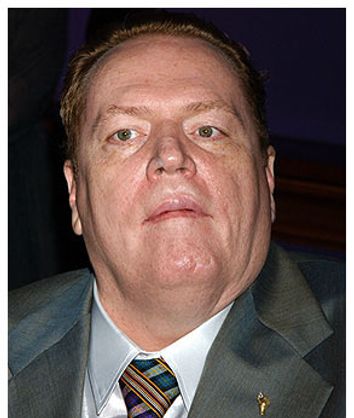
Only in America can a citizen’s psychic essence loom as big as a cartoon balloon in the Macy’s Thanksgiving Day Parade. Look! Here comes the Bill and Monica balloon, with Hillary racing behind! Next is the Arnold Schwarzenegger balloon, groping for clouds as if they were fat tits! And atop that floating wheelchair — it’s Larry Flynt, who has transcended the sewer of pornography to become our greatest protector of free speech!

It all began when Citizen Flynt was born in Magoffin County, Ky., in 1942, to poor white trash parents. Pop Flynt was a drunk, and young Larry and his mom soon fled without him to Indiana when the lad was just 10. When Larry turned 15, he fibbed his way into the Army. The kid’s age was discovered and he was discharged after a year. Larry then joined the Navy. He served on the USS Enterprise when it was an aircraft carrier and even met JFK when the president was inspecting America’s armada.

Larry split the Navy in 1964. He teamed up with his kid brother, Jimmy, to become Buckeye State burlesque entrepreneurs, opening eight strip joints in Ohio. In the early 1970s, the boys decided to publish a skin mag. The Flynts were not Hugh Hefner wannabes, wearing lounging pajamas and surrounded by beauties wearing bunny ears. The Flynts were salt of the earth. They weren’t ashamed to fart in public. They knew how to palm off food stamps for near beer. They could recite truck driver citizen’s band poetry of the pussy. The Flynts would call their magazine Hustler and stuff it with cartoons about poop along with photos of big-haired girls, legs akimbo, their vaginas presented like slices of sushi. The magazine was a hit. The boys became millionaires.

Then in 1975, the August issue of Hustler ran black-and-white photos of Jackie Kennedy Onassis strolling on a private beach as naked as if she thought she was Marilyn Monroe. Before these paparazzi photographs, Americans used to ask, “Where were you when you heard JFK had been shot?” Now some began asking, “Where were you when you first saw Jackie’s mound of Venus?”

The pages of Hustler were so regularly outrageous that Flynt was always being hauled or hauling himself into court. His first notable adversary was the notorious Catholic/Republican Charles H. Keating, who pulled strings to get Flynt tried on obscenity charges in Cincinnati in 1976. Flynt was found guilty, but the verdict was overturned. (Four years later Keating was convicted of fraud in the great savings and loan scandal of 1989.)

In 1976 Flynt married his fourth wife, Althea — an eccentric woman who two decades later would be portrayed by Courtney Love in the Milos Forman movie about the hustler’s eventful life, “The People vs. Larry Flynt.” (His beloved Althea would go to her reward in 1987, after drowning in a bathtub of a possible heroin overdose.) In 1977, under the ecclesiastical influence of President Jimmy Carter’s sister Ruth Carter Stapleton, Flynt became “born again,” asking the Lamb of God to stable in his pornographer’s heart. Flynt even made plans to transform Hustler into a Christian magazine of sorts. But Flynt was gunned down a year later by a notorious white supremacist, Joseph Paul Franklin, who was outraged over a photo shoot in Hustler of a black man enjoying sex with a white woman. Flynt was left permanently paralyzed from the waist down.

Our citizen was no Job. Flynt renounced Jesus. Next, he abandoned the plaintive state of Ohio to move with his dear Althea to the American Babylon of California, installing themselves inside a Mansion of Sin in Bel Air.

In 1983, Flynt was in federal court once again because he refused to disclose his source of surveillance tapes that showed the feds suckering automotive playboy John DeLorean into the cocaine deal that sent him to jail. Flynt was so outraged at the judge’s pro-FBI stance, that he appeared in court, in his wheelchair, wearing only a flag as a diaper, his belly flopping over the stars and stripes. Flynt also threw a Sunkist orange at the judge. The same year, Penthouse publisher Bob Guccione’s girlfriend Kathy Keeton sued Flynt for libel over a cartoon that suggested her paramour gave her the clap. The case dragged on until it reached the Supreme Court in 1983. Many legal arguments of great weight have been made before that mighty bench, but not even Clarence Darrow ever dared to yell, “Fuck this court! You’re nothing but eight assholes and a token cunt!”

Citizen Flynt did.

Flynt also found time to run for president against Ronald Reagan and to be sued by Jerry Falwell, the high priest of the Moral Majority. Falwell was enraged by a cartoon that claimed he lost his virginity as a boy with Mother Falwell inside an outhouse. This case also went to the Supreme Court, and in 1988, the “eight assholes and a token cunt” overlooked Flynt’s previous insult, to declare that public figures cannot recover damages of “emotional distress” based on satires. Flynt won.

With sex, lies and Republican hypocrisy in the air, Flynt returned to the spotlight during the Clinton impeachment wars. After Salon exposed the adulterous past of House impeachment czar Henry Hyde, Citizen Flynt offered a million-dollar reward for evidence documenting the sexual indiscretions of any other Washington lawmakers trying to crucify Bill Clinton over trysts with Monica Lewinsky.

Citizens lined up to squeal. The adulterer politician that Flynt nailed was the self-righteous House speaker, Republican Bob Livingston — heir apparent to Newt Gingrich. Rather than wear a scarlet letter, Livingston resigned and effectively stopped the momentum for Clinton’s public hanging.

That same year, Flynt’s eldest daughter, Tonya Flynt-Vega, published a memoir to counter her father’s new social standing as a First Amendment gladiator, claiming that as a child she’d been sexually abused by Flynt. (Flynt denied this.) Flynt’s feminist nemesis Gloria Steinem blurbed Tonya’s book: “The power of a father over a child is enormous, and [Tonya] tells us what happens when a daughter is born to a father whose business and obsession is the control and humiliation of women.” In her book, Tonya also claimed that she recently came upon Jesus freshly hanging from a cross up in the Catskills. Gloria Steinem had no comment.

Now, in the summer of 2004, Larry Flynt has a memoir in the bookstores called “Sex, Lies & Politics: The Naked Truth.” The book begins with several American soldiers selling him topless pictures of Jessica Lynch (taken at Fort Bliss, Texas) for an undisclosed amount of money. Flynt tells how he paid them their 30 pieces of silver, and then put Jessica’s photographs away in his drawer forever.

I talked to wheelchair-bound Citizen Flynt by phone. I was not prepared to hear how unintentionally chilling his voice is. It is a raspy, struggling-to-breathe gargle from hell; a drawl that emits from the furthest edge of humanity.

The first thing in your book that everyone is going to jump on is your claim that young George W. Bush paid for his girlfriend’s illegal abortion.

You can’t stay with a story this long and not believe in it. In 2000, I got a call from a lawyer in Houston. He told me that his client, “Susan,” could prove that George W. Bush arranged for his girlfriend to have an abortion back in the early 1970s. Her boyfriend at the time, “Clyde,” was pals with Bush and set up the procedure. We checked up and found that indeed “Clyde” was responsible for keeping Bush out of trouble. Bush had knocked up a girl named “Rayette.” We talked to the doctor that performed the abortion. We felt we really had a blockbuster story, but about two months before we were going to break the story, “Susan” disappeared. We finally found her. She was living in a half-million-dollar home in Corpus Christi, Texas. Before that she was living in a small apartment working for $13,000 a year as a cocktail waitress. I’m not saying Bush bought her off, but I’m confident that one or more of his cronies did. The only thing that interested me in this story is — I’m pro-choice, but to have a guy who is running on a pro-life platform … and this procedure was committed in 1971, two years before Roe vs. Wade, which would have made it a crime.

I went to two members of the national press (during the 2000 presidential campaign) and said, “Look. I don’t have anyone out on the stump. You guys do. At least ask Bush the question.” You know what? They refused to. One of them had the nerve to tell me that the election was too close. “We don’t want to be the ones to tip it in any direction.” I thought, that gives you a really great feeling about the press.

Ann Coulter once told me, “Liberals have turned hypocrisy into the only sin.” Maybe Christian Americans have sympathy for hypocrites because everyone but the pope in Rome and Jimmy Carter are guilty of minor, if not major, sins.

I’ll put it in a non-biblical context by simply saying anytime you take a public position contrary to the way you live your personal life, that’s hypocrisy, and you’re fair game.

You ran against Reagan in 1983. How do you feel now that he’s dead?

It couldn’t have happened to a nicer guy.

He’s been so sanctified in the press — it’s like Ollie North and “ketchup as a vegetable” never happened.

You know all the coverage they gave him [during the funeral] — they didn’t talk about the “arms for hostages,” they didn’t talk about Nicaragua. They didn’t talk about Panama. They didn’t talk about Grenada. It was just amazing. Everything that was positive about Reagan they aired on television. Anything that wasn’t, they didn’t.

Do we still have a free press?

I don’t think we have a free press by any means. Maybe the journalists on the beat think they are part of a free press, but we know the guys that sit in the ivory tower that call the shots, go to the White House for dinner, they’re doing the bidding of the elite. It’s getting worse. If they leave that idiot Michael Powell in charge of the FCC it’s going to get worse even faster.

Aren’t the people in the “ivory tower” the same people who were up there during Watergate?

It’s obvious that the L.A. Times and the Washington Post are trying to keep their ships afloat, and maintain a certain degree of independence and integrity.

But would the Washington Post have the balls to break the White House plumbers story if Watergate happened today?

That’s a good question. I don’t know. It’s frightening to think that they would not. But I can’t be sure that they would.

The press release for your new book claims that you are responsible for Clinton surviving the impeachment hearings. I thought that was just hyperbole until I remembered that you brought down Bob Livingston.

That really changed the whole tenor of the trial in the Senate. The guy who came out with “American Rhapsody” [Joe Eszterhas] — he was the one who said that I saved the presidency. I don’t think that’s true at all. I think Clinton would have survived just the same, but there were a lot of people asking for censure, wanting his head on a platter. You know, as soon as we started exposing Republicans one right after another, everybody accused us of going after Republicans. We weren’t. It’s just Republicans are always the ones with something in the closet. Livingston had been doing it with a judge in Louisiana and a lobbyist on Capitol Hill and a girl in his office.

Did you feel like a patriot when Bob Livingston threw in the towel before Congress? Did you yell, “I’m responsible for that!”

Livingston did an interview with the New York Times the following day and referred to me as a “bottom feeder.” The Times called me for a comment. I said, “Yeah, that’s right. I’m a bottom feeder. But look what I found when I got down there.”

Have any of Clinton’s cronies thanked you?

Oh yes. I think Clinton would really like to get together with me, but the media buzz would not be in his best interest … or mine for that matter.

You going to read his book?

I’m going to read it.

I’m imagining you’re privy to 30 years’ worth of inside information. I remember during Bush the elder’s term there was a story going around that he was having a discreet affair with a wealthy woman in Washington. Do you remember that?

Yes.

Now I think of poor old Bush exiled up in the wilderness of Maine with Mrs. Bush. As the song goes, I don’t think he gets around much anymore.

[Dry laugh.] I don’t have any information on that.

Oh, come on. You’re Larry Flynt. You sure you don’t know the true story?

No. I’ve just heard the true story. I know the Bush family denied it. Beyond that, I don’t know anything.

You mention Ann Coulter several times in your book. Did she really have an affair with Bob Guccione?

Bob Guccione Jr., who was the publisher of Spin magazine. And she was dating him. I find it hard to believe that any man could screw Ann Coulter, but they were having an affair.

I had the vibe when I was talking with her that she was in the closet, fulfilling some sort of Republican sexual irony.

You know, I call her a fag hag. She does like to hang out with gay guys a lot.

Both you and John Kerry were in the armed forces. Bush and Cheney got rich-kid deferments from active duty. How on earth did John Kerry allow himself to be put on the defensive as if he was the one who was a slacker?

Well, you know, I think Bush spent about $100 million on that attack, and caught Kerry off guard. But it didn’t seem to hurt Kerry that much. Kerry seemed to come back. Hey, I’m for anybody but Bush. Kerry wasn’t my choice, but you know we got a candidate we gotta get behind, and do what we can for him.

They stole the first election and got away with it. Think how powerful they are now.

My big worry this coming election is there are a lot of states with new voting machines. They’re the touch-type rather than the punch cards, and there could be some real screw-ups this time around. But if it doesn’t happen, I think Kerry is destined to win.

Well, the dirt on Bush and Cheney and Halliburton has been falling from the sky for more than a year, but no one seems to care. A special prosecutor has not been appointed to investigate the lies and corruption involving the Iraq war. There are no committee hearings. No riled-up citizens are storming the White House. That’s why I started the interview with the abortion question. America is the kind of place where the president’s secret abortion will fire people up. It’s a terrible thing that a guy paying for his girlfriend’s abortion would be a big deal, but this is America. You were born-again for a year — doesn’t every Christian feels like a sinner?

Unfortunately, I think most of the country is manic-depressive from time to time. That’s when a lot of these “born-again” experiences are brought about. If someone has a religious epiphany, he can’t go to a family member or a neighbor, he goes to the local church, and he winds up being caught up in the system rather than get counseling and good medication for his problem. I know what it’s like. I’ve been there. I’ve seen the visions. Heard the voices. I can understand why people are so dogmatic about their religion. Hey, if it helps ‘em get through the day, more power to ‘em. I just don’t want them imposing it on me.

Do you care about Bob Dylan?

I’ve always liked Bob Dylan.

Well, even Bob Dylan found Jesus for a while back in 1979.

Everybody in America finds Jesus, you know. [Laughs.] It’s no big deal. It’s figuring out why you found him that’s the problem.

Was there a single moment when the Holy Ghost touched you, and that was that?

Oh yes. It was with Jimmy Carter’s sister, Ruth Carter Stapleton. I just started seeing visions. And hearing voices. And talking in tongues. It was some weird experience. I knew that I wanted to hear from a good shrink what had happened. That’s who I sought out. I’ve been fine ever since.

So is “The People vs. Larry Flynt” — the movie of your life — the real thing?

Anytime they reduce your entire life to two hours on the silver screen, a lot gets left out. What is there is very accurate.

Did you feel any kind of affinity for Courtney Love?

I feel for Courtney. I think Courtney has a lot of problems. Has a lot to deal with. She doesn’t seem to be handling it very well. I’ve tried to help her, and haven’t had much success.

Do you still relish the moment you called the Supreme Court all assholes with “one token cunt”?

That was my finest hour.

Did you take in all their faces?

It was just an adrenaline rush. [Long pause. Raspy breathing.] I just wouldn’t recommend anyone else behave that way.

Has the Supreme Court done anything that you can respect in the last 25 years?

Yeah. My suit against Jerry Falwell — which has done more for free speech than anyone realizes. If you look at “Saturday Night Live” or Letterman, they’re on the cutting edge. When Carson was on back in the 1980s, if was very tame. It was funny and good, but it was tame. Now they can do the impersonations and say pretty much whatever they want to about anybody as long as it’s interpreted as a joke. That was the gray area that there was no case law to declare that jokes were protected speech.

But Jay Leno isn’t going to make a joke about George Bush getting an abortion for his girlfriend, is he?

No. Uh-uh. But it ain’t because of Jay. Jay would do it.

So let me ask a Jay Leno kind of question: After surgery, your dick works OK now, right?

Yes. My [sexual] positions are limited. But it works.

Do you keep track of Franklin [the white supremacist who shot him]?

He’s appealing his death sentence in Missouri.

He’ll never get out, will he?

No. They’ll electrocute him in the next four or five years, probably.

Do you still relive the moment he shot you?

No. I don’t even think about it. I don’t dwell on things I can’t do anything about.

Your children seem to remember everything about being raised by Larry Flynt.

I have five children, but only one child that I have a good relationship with — Teresa, my daughter. She runs my retail store chain. All the others spend their time complaining how I’ve fucked up all their lives.

Did you indeed fuck anyone’s life up?

I probably did. But you can’t go back and redo it, if you’re a bad father. You can’t go back 20 years later and correct it.

When you ran strip clubs in Ohio did you ever imagine you’d become an American icon?

No. When I started out I didn’t have two food stamps to rub together. I just wanted to make a buck. Hustler afforded me that. Everything mushroomed from that.

If you discovered that Hillary was sleeping with another person, would you follow it up or just let it go?

We would follow that.

Why?

Because she is living a life privately different than she is advocating publicly. I think when politicians do that you have to go after them.

I guess the real shocker would be if Hillary were still enjoying conjugal relations with her husband.

(Flynt laughs)

So in your heart of hearts, you feel Bush is going to be defeated.

Short of finding that Kerry is a transvestite, I think so. Iraq isn’t going to get any better. It’s only going to get worse.

What if they “find” bin Laden as an “October surprise”?

I don’t care if they drag him out of a hole the day before the election. I don’t think that it’s going to matter. The nation is polarized. I don’t know if you’ve been watching TV or not, but those bellwether states like Ohio and Michigan, they are solidly for Kerry. No one has ever won the presidency without them.

You’re older than me, but I can’t think of a worse four years than the ones we’ve been through.

You know, if you just had to pick out one thing that is so fucking disturbing you want to leave the country, it’s that goddamn PATRIOT Act that Bush and Ashcroft put through Congress. It goes against everything we stand for. We’re a beacon for democracy. If in order to fight terrorism we have to get down in the mud [and curb liberties guaranteed in the Bill of Rights], then we’re giving up everything that makes this nation great. Benjamin Franklin once said that “Those who would give up their civil liberties for security deserve neither.”

In the end, would you like to be remembered as an American patriot or “the sex guy”?

If I have any legacy at all to leave, I would like it to be that I fought to expand the perimeter of free speech. And I can’t think of any nobler goal than that.

Continue Reading Close

Page 1 of 20 in David Bowman