David Lindorff

Another strike against the death penalty

The U.S. Supreme Court lifted the death sentence on more than 100 cases, but some critics say court conservatives may only be trying to fine-tune the machinery of capital punishment.

  • more
    • All Share Services

It’s not the 1960s-era Warren Court, but in two remarkable decisions in the past week, the U.S. Supreme Court has lifted the death penalty from more than 370 formerly doomed prisoners — 10 percent of the total death row population — and opened the door to new appeals by hundreds more.

The decisions Monday and last Thursday stunned both sides in the contentious debate over capital punishment. Opponents cheered the unexpected victories, saying the rulings made over the opposition of Chief Justice William Rehnquist marked the most significant turn in the debate in 25 years. Advocates were left to wonder what has happened to a court that had been widely considered the most conservative in half a century.

Some analysts, however, suggested that the court’s fundamental support for capital punishment likely remains intact, and that conservative justices who joined Monday’s ruling may have been trying to pare away cases that are most vulnerable to criticism at a time when pointed questions have arisen about the overall integrity and fairness of the death penalty.

The latest decision on Monday overturned the death sentence of Timothy Ring, a man convicted in Arizona seven years ago of participating in the fatal 1994 robbery of an armored car, and simultaneously overturned all the death sentences currently on appeal in five states, including Arizona.

At issue was Arizona’s practice of having judges, instead of jurors, deciding whether a convicted person deserved death or life in prison without parole. While a jury had found Ring guilty because he had helped plan the robbery, trial testimony had not placed him at the scene of the crime, and thus they did not find evidence of premeditation. At a sentencing hearing before a judge, there was further testimony from an accomplice in the crime who claimed Ring had not only been at the scene but had been the shooter of the driver of the armored car. On that basis the judge sentenced him to die.

In its 7-2 decision, the high court decided that any facts that lead to an increased sentence, including the sentence of death, must be made by a jury, not by a judge. Court watchers had expected the Ring case to have the support of the four most liberal justices — David H. Souter, Ruth Bader Ginsburg, John Paul Stevens and Justice Stephen Breyer — but were doubtful about whether there would be any support from any of the court’s five more conservative members.

Much attention was focused on Justice Antonin Scalia, perhaps the court’s most staunch supporter of capital punishment, because two years ago he had written a strong opinion in support of the court’s 5-4 ruling in a case called Apprendi v. New Jersey. That case had established that juries had to determine the facts that affected sentencing in noncapital cases.

During the hearing on Ring last April, Scalia had suggested, with some of his questions to the attorneys in the case, that the Apprendi decision would not apply to death penalty issues because the Supreme Court’s requirement that all capital trials be separated into two parts — a guilt phase and a sentencing phase — was just a technical matter, not something rooted in constitutional or common law principles.

In the end, however, Scalia bowed to the new precedent he had helped set by Apprendi. As he wrote in his opinion supporting the majority decision in Ring: “I believe that the fundamental meaning of the jury-trial guarantee of the Sixth Amendment is that all facts essential to imposition of the level of punishment must be found by the jury beyond a reasonable doubt.”

Scalia was joined by two other conservative justices, Clarence Thomas, who had also supported the earlier Apprendi decision, and Anthony Kennedy, who had opposed Apprendi but who now said he felt bound by the court’s earlier decision on jury primacy.

In dissent in the Ring case were Rehnquist and Justice Sandra Day O’Conner.

The Ring decision immediately means that some 168 death row prisoners whose cases are still on direct appeal in the states of Arizona, Nebraska, Idaho, Colorado and Nebraska, where judges do all the capital sentencing, will have their sentences lifted. Before a court can decide whether those people’s sentences default to life in prison or whether they should be retried before a new jury to consider resentencing them to death, the legislatures in those states would have to pass new sentencing legislation.

The case will have much wider implications, though. In four other states — Florida, Alabama, Delaware and Indiana — a much larger number of people are on death row, sentenced by judges who first received recommendations from juries. But a large number of those facing death in those states were put there by judges who overrode jury recommendations of life sentences.

“The court didn’t deal directly with those states,” said Ring’s victorious attorney Andrew Hurwitz, “but they will have to face it before long. All those people are going to be filing new appeals based on this decision.”

Alan Dershowitz, a constitutional scholar and attorney at Harvard University, argues that the case will reach even further, to many of the people on death rows in the 31 other states in which juries do the sentencing. “This decision has broad implications for the whole process of jury trials,” says Dershowitz. Explaining that the Supreme Court has now given constitutional authority to the fact-finding function of capital juries, he predicted: “You’re going to see defense attorneys bring cases that challenge jury instructions, and that examine how juries reach their decisions about aggravating and mitigating circumstances, because the court has ruled that you have a constitutional right to a jury of your peers in your sentencing.”

Surveying the latest decision, as well as the 6-3 decision by the court last week barring the execution of the mentally retarded, Diane Clements, the president of a Texas-based national pro-capital punishment organization called Justice for All, called the effect “very disturbing.”

“We’ve all proceeded on the basis of case law that supported what we’ve done, and now the Supreme Court has done an about-face,” she said. “How do you move forward now when there’s no firm ground?

“I don’t think the Supreme Court is going to overturn the death penalty,” Clements added. “But they do seem to want to get rid of many of the death eligible cases.”

Indeed, there are some who suspect that some conservative members of the high court may be trying to shore up the “core death penalty” by paring away the more legally and politically vulnerable cases, such as those it has eliminated with its last two decisions. Many constitutional scholars expect the court sooner or later to also ban the execution of underage killers.

“I’m sure they (the conservative justices) are trying to preserve the core of the death penalty by getting rid of problems,” says Dershowitz. “But these decisions also do seem to suggest a change of attitude on the part of at least a few of the justices, who had once seemed hell-bent on opening up the process of executing people.”

Dershowitz also speculates that several of the conservative justices may be trying to make decisions that would position them for consideration to replace Chief Justice Rehnquist, who is expected to retire soon. “With the position of chief justice opening up, they may be trying to move to the middle,” he said.

Edward Lazarus, a former federal prosecutor who writes on Supreme Court issues, says the Supreme Court’s recent death penalty decisions show both a “hardening” of the anti-death penalty positions of the court’s four more liberal members, as well as a “softening” of the views of conservative Justices O’Connor and Kennedy. As a result, he says, “The anti-death penalty side really only needs one vote, either O’Connor or Kennedy, to prevail in any given case and the consequence will be, at least for the next few years, a substantial decrease in executions as death row inmates seek to take advantage of the new rulings.”

Meanwhile, David Elliott, a spokesman for the National Campaign to Abolish the Death Penalty, cautions that the two recent decisions, while making this court “the most favorable on the death penalty in 25 years,” do not herald any overturning of the nation’s capital punishment system, which still has over 3,300 people awaiting execution. “We are making a mistake if we count on the Supreme Court to do that,” Elliott said. “The only way capital punishment will be abolished is on a state-by-state basis through grass-roots organizing.”

Making sense of the Mumia Abu-Jamal decision

A federal judge frees the convicted cop killer from death row, but makes it less likely he'll get to argue his innocence at a new trial.

  • more
    • All Share Services

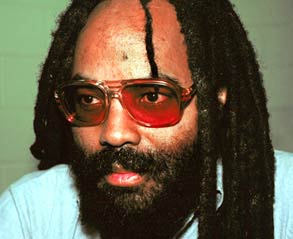
Mumia Abu-Jamal, arguably the world’s best-known death-row inmate, has been saved from the gallows, but not from a life in prison.

After mulling the habeas corpus appeal of the incarcerated journalist and former Black Panther for over two years, U.S. District Judge William Yohn on Monday issued a carefully worded decision overturning the penalty-phase verdict of the jury that sentenced Abu-Jamal to death in July 1982 for the slaying of Daniel Faulkner, a white, 25-year-old Philadelphia police officer.

Yohn overturned the death verdict on the narrow grounds that the jury had been wrongly instructed about the rules of mitigating circumstances that might apply to Abu-Jamal. Specifically, he agreed with Abu-Jamal’s claim that the jurors had been led to believe, incorrectly, that any finding of mitigating circumstances on his behalf would have to be agreed to unanimously by the panel. In fact, since 1988, the U.S. Supreme Court has held that if even one juror on a panel finds a mitigating circumstance in a defendant’s favor, that must be weighed in the jury’s decision on whether to vote for death.

But in issuing his decision, Yohn also denied all Abu-Jamal’s arguments for overturning his first-degree murder conviction. The ruling, which can be appealed by both Abu-Jamal and the Philadelphia district attorney’s office, makes it unlikely that Abu-Jamal will ever again face a death sentence, but also makes it much more difficult for him to challenge his first-degree murder conviction.

Lawyers in Philadelphia say that with better legal representation than he had at his original trial, Abu-Jamal — who had no criminal record at the time of his arrest on Dec. 9, 1981, had a solid history as a journalist and political activist in Philadelphia, and who has been a model prisoner during nearly 20 years on Pennsylvania’s death row — would be unlikely to be resentenced to death for the shooting of Faulkner. At his original trial, his lawyer, Anthony Jackson, didn’t put a single character witness on the stand to argue against a death verdict. That error would not be repeated.

But absent new evidence of innocence or legal error, Yohn’s denial of all constitutional claims about the original trial’s guilt phase means that, unless the ruling is overturned by a higher court, it would be next to impossible for Abu-Jamal to further challenge his conviction. Convicts are permitted only one federal habeas appeal.

The one remaining avenue left for Abu-Jamal to pursue his claim of innocence would be if a judge in any new penalty-phase hearing permitted him to introduce new witnesses or evidence aimed at mitigating the charge, or raising doubts in the minds of jurors about his guilt — what is known legally as “residual doubt.” While such new evidence, if permitted by the judge, would not automatically lead to a new trial on the underlying conviction, it could, if convincing enough, set in motion a political demand for a new trial that would be hard for any judge to resist.

“What Dan and I were seeking was a new trial,” says Abu-Jamal’s former lead appellate attorney Leonard Weinglass, referring to his associate, Daniel Williams. Both men were fired by Abu-Jamal last spring, after Williams published a book that discussed the history and some of the disputes within the defense team. “What Mumia was seeking was a dismissal of the charges. What he has gotten is the most minimal relief possible: a new jury to decide whether or not he should face the death penalty again.”

Williams, an expert in death-penalty law, was a little more enthusiastic about Yohn’s ruling. “This is a tremendous result for Mumia, for although he has been fighting for his freedom, getting off of death row and moving into the general prison population is a drastic improvement in the circumstances of his confinement.”

Abu-Jamal’s more ardent supporters were less positive in their assessment of the ruling. “This is the next to worst outcome that could have happened,” said one activist, who asked not to be identified. Efforts to reach Abu-Jamal’s new attorneys, Eliot Grossman and Marlene Kamish, were unsuccessful.

Hugh Burns, the assistant district attorney handling the case for the prosecution, said his office intends to appeal Yohn’s decision. Abu-Jamal missed his chance to appeal on the jury instruction error, Burns will argue, because it wasn’t raised until 1995 when his new lawyers, Weinglass and Williams, introduced it. Burns said that the decision by Yohn had split the difference between the two sides. “It’s not going to make anyone happy,” he said.

The Yohn decision comes after a major demonstration in Philadelphia Dec. 8 at which a number of pro-Abu-Jamal demonstrators were pummeled by police. At least eight people were arrested following the melee, with bail set in some cases as high as $80,000. Several were hospitalized.

It also comes at a time of considerable turmoil within the movement to free Abu-Jamal.

Last spring, Abu-Jamal fired his legal team, charging that they had betrayed him by publishing a book about his case. He hired his new legal team, and at the same time attempted to reopen his habeas appeal — the one that Yohn was considering — in order to introduce a new witness, Arnold Beverly, who claimed that he, and not Abu-Jamal, had actually slain Faulkner.

Beverly, in an affidavit filed with the court, claims that he had been hired by mobsters on behalf of corrupt police officers who wanted Faulkner executed because he threatened to expose them to federal investigators who at the time were looking into corruption in Philadelphia’s Center City police district.

The district attorney’s office had opposed introduction of the Beverly evidence, claiming that it had been known to Abu-Jamal as early as 1999, and had been rejected by him as not credible at that time. In fact, in 1999, Abu-Jamal had apparently been presented with a stark choice: If he wanted to rely on Beverly’s testimony in his appeal of his conviction, Weinglass and Williams, his lead attorneys who felt Beverly was not credible, said they would quit the case. But if he did not go with Beverly, his other two attorneys, Rachel Wolkenstein and Jon Piper, both activist attorneys with the Spartacist League-affiliated Partisan Defense Committee, and longtime supporters of his cause, would resign from the case. He chose at that time to stick with Weinglass and Williams, and to ignore Beverly’s claim. Wolkenstein and Piper quit the case.

Earlier this year, however, Abu-Jamal abruptly changed his mind. He hired new lawyers and began arguing that he had been misled and misinformed by Weinglass and Williams. He accused them, through his new attorneys, of having been more concerned with making money off of Williams’ book than with winning his case, or of having been afraid of death threats from corrupt police or of those connected with the alleged hit on Faulkner, and of thus having been unwilling to present Beverly’s testimony. The attacks on Weinglass, a prominent leftist advocate who had defended Angela Davis and taken on other major national political cases, angered many of Abu-Jamal’s supporters.

A state judge only weeks ago rejected Abu-Jamal’s claims of ineffectiveness and corruption on the part of his former attorneys, and declined, as did District Judge Yohn, to authorize a hearing on Beverly’s confession to the murder.

Ironically, it was the habeas corpus appeal written and filed by Weinglass and Williams that led to a lifting of Abu-Jamal’s death sentence. “This should put to rest the scandalous claims about my and Len’s representation of Mumia,” said Williams.

Maybe, but it is unlikely to end the two-decades-old struggle of Abu-Jamal to prove his innocence. Indeed, if he is removed from the near-total isolation of the super-max death row prison where he has spent over half his adult life — as may happen soon now that his death penalty has been voided — the prolific writer and activist will be much freer to advocate his case than he has been since the day he was arrested.

Continue Reading Close

Mumia’s all-or-nothing gamble

In a stunning switch, the convicted murderer's new lawyers now passionately claim he's completely innocent and that the real culprit was a mobster hired by corrupt Philly cops to kill one of their own. If the judge doesn't buy it, their client could die.

  • more
    • All Share Services

Mumia's all-or-nothing gamble

Mumia Abu-Jamal, the black Philadelphia activist and journalist facing execution for the 1981 killing of a police officer, announced in March he was dumping his crack legal team headed by veteran attorney Leonard Weinglass, saying he had lost confidence in it. He has replaced it with two relatively untested newcomers to the complex and technical minefield of death-penalty law, where a single misstep — whether based on a poorly conceived strategy, or on overconfidence and inexperience — can be fatal.

Jamal’s new legal team joins the case at a crucial moment, as the former Black Panther waits to see whether a federal judge in Philadelphia will agree to hear his last-ditch habeas corpus appeal of his death penalty and conviction on first degree murder charges. After this he has no more automatic right to appeal. It also represents a major shift in strategy. Rather than challenging the fairness of his original trial and subsequent appeals on constitutional grounds, he is now asserting his absolute innocence in the case.

The question on the minds of some longtime Jamal supporters is why this shift is occurring now, just as a federal judge is finally considering his appeal. Some speculate that after spending two decades on death row under almost solitary confinement conditions, already having faced two execution dates, and unable to meet family and friends except while shackled and seated on the other side of a thick plexiglass window, Jamal may have decided on his own not to rely on the appeals arguments developed by his former legal team.

He may instead, this theory goes, have opted for a high-risk political and legal strategy — a kind of legal “Hail Mary” pass — with a witness whose mob-hit conspiracy theory, if found credible, would necessarily result in Jamal’s being released from prison an innocent man. Indeed, in a recent statement by Jamal which Kamish read at a sparsely-attended two-day encampment at Philadelphia’s City Hall on May 12, Jamal tells his supporters, “I have received some criticism for recent changes in my legal team. I don’t fear criticism, but I must say I don’t agree with this one. You have seen lawyers violate their own rules with total abandon with the blessing of the courts. How can you say you don’t believe in the system and then believe lawyers who betrayed their so called client’s interests?”

He adds, “I thank you all for joining in this ongoing battle for freedom and justice. And, if you by chance choose not to join me, I have one simple request: don’t get in my way.”

While that sounds like a confident decision to move forward with a new strategy, it remains difficult to ascertain how much of that confidence is the result of advice received from two attorneys who have been offering him counsel behind the scenes, and behind his prior attorneys’ backs, for over a year. Nor is it clear how much Jamal knows about the paucity of trial and death penalty experience of his new legal team. After all, Jamal has little or no independent access to the outside world, and is largely dependent for his information on a handful of people who visit him in prison. A letter sent by express mail to Jamal back in mid-May asking for comment went unanswered.

It’s been more than a month now since Marlene Kamish and Eliot Lee Grossman introduced themselves as Jamal’s new attorneys at a hastily convened sidewalk press conference May 4 in front of the Philadelphia Federal Courthouse, where they had just entered their names as the attorneys of record in his crucial habeas corpus appeal for a new trial. Grossman is a California lawyer with expertise in international law and discrimination law, not death penalty work, but Kamish is widely credited within the Free Mumia movement as instrumental in getting artist Manuel Salazar off of Illinois’ death row in 1995.

Many of Kamish’s former colleagues on the Salazar case, however, are openly critical of her work. Though she bills herself (as do her supporters) as crucial to the legal effort that led to Salazar’s release, in fact her former boss says she was booted off one of Salazar’s legal defense teams, and was only peripheral to another. Attorneys who worked with her also claim she got overinvolved emotionally with Salazar, who like Jamal had been convicted of killing a cop, and that the entanglement led to some bad judgment concerning legal strategy. There were also questions about whether she may have coached witnesses to provide testimony that wasn’t entirely correct. In the end, many of her colleagues on that case remember her as a disruptive and negative force.

“She blocked our relationship with our own client,” says Karen Shields, Salazar’s lead attorney during his initial appeal proceeding, in which Kamish was the third-ranking lawyer on the team for a time. “For some unknown reason, she didn’t trust us and made sure that Salazar didn’t trust us either. It was all very odd. I cannot understand why she’d want to cut him off from everyone else who wanted to help,” says Shields, now a state court judge in Chicago.

Critics suggest that a similar scenario may be playing out in her relationship with and defense of Jamal. For the past 15 months, they note, Kamish has been living in the area around the SCI-Greene maximum security prison where Jamal is incarcerated, reportedly meeting almost daily with the otherwise isolated death row inmate. During this period, she, Grossman and Jamal have apparently decided upon a stunning new defense, based on the testimony of a purported mob hit man. This controversial witness, Arnold Beverly, claims that he, not Jamal, shot Officer Daniel Faulkner on that night in 1981, acting on behalf of corrupt Philly cops. And Jamal, for the first time telling his version of events, corroborates key parts of the supposed hit man’s tale — even though he and his former lawyers earlier decided the alleged mob hit man witness wasn’t credible, and rejected using him and his story.

Kamish and Grossman have also publicly criticized Jamal’s prior attorneys, accusing them of malpractice and incompetence. In the process they have angered many in the anti-death penalty movement, who view Weinglass especially with near-reverence.

“This area of law is a small circle of people, and we tend to help each other,” said a Philadelphia attorney familiar with the case, who noted that it was “unusual and unfortunate” to see new attorneys in a death penalty case attacking their predecessors. “There is no offense taken over a change of counsel, and it’s important to have the cooperation of the previous counsel. In this case, though, they seem to have just taken over the files and stopped communicating.”

Both Weinglass and Williams confirm that no effort has been made by the new attorneys to contact them for advice or for information about work they might have been doing on the Jamal appeal that had not yet made its way into the court documents and files that were turned over to them.

Repeated efforts to obtain comment from either Kamish or Grossman were unsuccessful. Calls to their offices with specific requests for them to explain their death penalty experience remain unanswered. A third attorney on the team, local counsel J. Michael Farrell, a graduate of Georgetown Law School and a former professor of criminal justice at the University of South Carolina, does have significant death penalty experience at the trial and appellate level, but he says he is “not significantly involved in the case,” serving only as the local representative at the court on behalf of the two out-of-state lead attorneys.

Former colleagues, and attorneys familiar with Kamish, who earned her law degree from the Kent School of Law of the Illinois Institute of Technology in 1990, agree she is an excellent organizer and a great investigator — both important skills in political cases like Jamal’s. But they insist she primarily played a peripheral and outside-the-courtroom role in the Salazar case, which involved the fatal shooting of a Joliet police officer.

Andrea Lyon, Kamish’s boss at the Capital Resource Center, which was handling Salazar’s defense, actually removed Kamish from her role as a liaison attorney at Salazar’s Post-Conviction Relief Act hearing — the second stage of his appeal. “I took her off the case because I was unhappy with the quality of investigation that she did, and I had questions about the way she handled witnesses in the case,” says Lyon.

“It’s a close call whether you are preparing witnesses or whether you are putting words in their mouths,” explains Ron Hayes, the No. 2 attorney in the Salazar case at that time, “and I think Marlene tried to push the envelope farther than she should have,” in preparing witnesses for testimony in the PCRA hearing

Several lawyers who worked with Kamish on the Salazar case at one time or another claim that she had become emotionally and personally attached to the client, to the extent that it may have impaired her objectivity. Specifically, several, including Lyon, say that she refused to go along with a legal argument developed by Salazar attorney Hayes, which ultimately led to Salazar’s getting a new trial. “She didn’t want that argument to be used because she said it would leave Salazar facing a manslaughter charge,” recalls Lyon, who is now a law professor at DePaul University Law School and director of the Center for Justice and Capital Cases, and is considered one of the leading women death penalty legal practitioners.

In fact, Hayes’ strategy worked. In his retrial, Salazar was convicted of the lesser crime of manslaughter and released for time served (11 years spent on death row).

Lyon’s account of Kamish’s tenure and her role in the Salazar matter was supported by other lawyers involved in the case, including Hayes and state Associate Judge Karen Shields, who was Salazar’s lead appellate attorney during his post-conviction relief hearing.

Like Shields, Hayes believes Kamish sowed doubt in Salazar’s mind about his attorneys. “It was very difficult to work with her,” he recalls. “Some of her actions alienated the client from us, which is not a good idea in such a serious case. She spent an awful lot of time meeting with and talking with the defendant on the telephone, and she drove a wedge between him and us.”

Kamish went on to serve as the third member of the legal team that handled Salazar’s appeal before the state Supreme Court, but Charles Hoffman, the lead attorney in that appeal, says of her role, “Let me put it this way: I wrote the brief in that case. The biggest contribution Marlene made is that she got 500 people down to Springfield for oral arguments, and she also managed to get Salazar’s paintings exhibited at a museum across the court from the state Supreme Court building during the hearing.”

Following the state Supreme Court’s overturning of Salazar’s original murder conviction, Kamish went on to assist with his subsequent retrial, and helped arrange to bring in lead attorney Milton Grimes, the prominent Los Angeles lawyer who had represented LAPD beating victim Rodney King. But even Grimes insists she played no role in the actual retrial of Salazar.

Recalls Grimes, “She was obsessed with the case — I’ll stay with that word — and she was helpful outside the courtroom in digging things up, but she didn’t interview any of the witnesses.” Meanwhile, he adds, “In the courtroom, she irritated and aggravated the hell out of the judge, so part of my job was just trying to bring him back down. She almost made herself more of a negative in the case.”

Grimes issued a belated warning, “She had better not start trying to be a trial lawyer in a death penalty case!”

Grossman, while a more experienced attorney than Kamish, also lacks significant experience with death penalty litigation, though attorneys familiar with his legal work say he has some expertise in international law and has handled some anti-discrimination cases. A graduate of Swarthmore College who earned his law degree from Hastings Law School in San Francisco in 1977, Grossman now has offices in San Francisco and Alhambra, Calif.

“I know people who are experts in all different areas of the law,” says one National Lawyers Guild attorney in California. “Eliot is not someone whose name would pop up on any of those lists.” A Lexis legal search for Grossman turned up no death penalty cases at the trial or appeal level where he acted as an attorney of record, though he is listed, along with Kamish, in a secondary role in the Salazar state Supreme Court appeal, and in the retrial of that case.

Grossman and Kamish are both members of the National Lawyers Guild, an association of radical activist attorneys, and are described by attorneys who know them as dedicated and committed progressive attorneys. Kamish especially is said to be a passionate opponent of the death penalty, and someone who throws herself wholeheartedly into cases she’s involved with. She is reportedly a good self-promoter, who has managed to get her name in the paper even on cases like Salazar’s where she was not a lead attorney.

But even those who praise her express concern about her very limited trial and death penalty experience. The Illinois Supreme Court’s guidelines for death penalty attorneys, for instance, say they should have tried at least eight capital cases — that is, they should have been on the team that handled those cases — before they ought to act as lead attorney in a death penalty case.

This would seem to be a poor time for Jamal to be breaking in new lawyers. His case is at a critical juncture, since a habeas corpus appeal to the federal court to review his state conviction is his last guaranteed right to a legal review of his case. Moreover, he has the power of the death-penalty-obsessed, 350-member Philadelphia D.A.’s office and much of the Pennsylvania legal establishment arrayed solidly against him. (Pennsylvania judges, all the way up through the Supreme Court, are elected, many with the endorsement of the Fraternal Order of Police, which has been publicly campaigning for Jamal’s execution.)

While federal District Judge William Yohn has the power to order an evidentiary hearing on evidence in Jamal’s case, to reexamine the fairness of his original trial and subsequent state appeals, and to order a new trial and/or a penalty phase hearing, he also has the power to reject the appeal. That would leave Jamal with little recourse to prevent his execution by lethal injection — a result that has been ardently sought not only by the Philadelphia legal establishment, but also by the state’s Republican governor, Tom Ridge.

Legal scholars who have examined this internationally famous case disagree about whether Jamal shot Faulkner. But most, including Stuart Taylor of American Lawyer magazine and Amnesty International, are convinced that whatever happened in 1981, he didn’t get a fair trial, and that even if he did shoot Faulkner, it was not a premeditated act deserving the death penalty. Jamal’s original habeas appeal, written by Weinglass and Williams and the rest of the earlier legal team and now awaiting Yohn’s decision, offers several powerful arguments for granting him a new trial, as well as for setting aside his death sentence.

Among these are claims that:

  • The prosecution withheld critical evidence, including the discovery of a replacement driver’s license application belonging to a friend of Jamal’s and his brother Billy Cook’s in Faulkner’s pocket after his death;
  • Jamal’s alleged confession to the killing in the hospital emergency room, reported by several police officers and a hospital security guard two months after the shooting, may well have been concocted by the prosecution;
  • Jamal’s attorney was ineffective and unprepared in both the guilt and penalty phases of the trial (in Pennsylvania, as in most death penalty states, there is a separate “trial” or hearing after guilt has been established, to determine the sentence, if the death penalty is an option);
  • Jamal was improperly denied the right to defend himself and to have an advisor of his own choice at the defense table;
  • Jamal’s jury was improperly and systematically purged of black jurors, and the prosecution provided incorrect information about that process to the state Supreme Court during an initial appeal.
  • Any one of these arguments, if accepted by the judge, would be sufficient to win Jamal a new trial. But one argument considered by the former Jamal defense team was not used.

    That was a claim by a witness named Arnold Beverly, taken in a sworn deposition in June 1999, that he, and not Jamal, actually fired the fatal shot to the forehead that killed Faulkner. In his controversial book “Executing Justice,” fired Jamal attorney Dan Williams says that after investigating Beverly’s claims, he, Weinglass and Jamal himself concluded that the witness was not credible, and rejected using him in the habeas appeal. That decision led two other Jamal attorneys, Rachel Wolkenstein and Jon Piper, lawyers for the Spartacist League-affiliated Partisan Defense Committee, to quit the case in 1999.

    Now, using his new attorneys Kamish and Grossman, Jamal has resurrected the Beverly statement and offered it as evidence of his innocence in a filing with Judge Yohn. Along with that affidavit from Beverly, the two attorneys, at their May 4 press conference, also filed with the court two dramatic sworn statements they had taken from Jamal and his brother Billy Cook, describing for the very first time, in their own words, their version of what happened on the morning of the Faulkner shooting.

    The Beverly statement is stunning. Some of it is also pretty hard to believe. The 51-year-old African-American witness claims he was a hit man hired by the Philadelphia Mafia, at the behest of corrupt Philadelphia cops, to execute officer Faulkner, an honest cop feared by his criminal colleagues. Beverly says he and another unidentified person fired the fatal shots into Faulkner, who had stopped Billy Cook’s vehicle, and that Jamal, who he says only ran across the street following the shooting, was himself shot by a second uniformed officer after Faulkner was already dead on the pavement. He claims he was helped to escape by another officer, who met him down in the subway tunnel where he ran after the shooting.

    In Jamal’s own sworn statement — the first account, sworn or otherwise, that he has ever given of the incident that landed him on Death Row — he offers support for this new version of the incident, saying that he only ran across the street after hearing shooting, seeing people running and seeing his brother staggering around on the street.

    Cook, also making his first public statement on the incident, says he was in his car rummaging around for a registration document at the time he first heard shooting, and then says he saw his brother shot in the street. All three witnesses offer evidence that is significantly at odds with prior testimony by key defense and prosecution witnesses, who, while sometimes mutually contradictory, did tend to agree that they saw either Jamal or someone coming across the street and then heard or saw shooting.

    The district attorney’s office, which is arguing against the judge’s even granting an evidentiary hearing concerning Jamal’s habeas petition, has ridiculed the Beverly statement as being “so clearly ridiculous that it should be obvious to any fair-minded person that it is a complete fabrication.”

    Adding the Beverly testimony to Jamal’s habeas appeal, assuming it is permitted, does not in any way erase the other claims made in the appeal drawn up by Weinglass and Williams. But if the judge were to grant an evidentiary hearing, or later, a new trial, the contradictions between what Beverly says happened and what other witnesses said during the original trial and the PCRA hearing could be used to undermine the credibility of other defense witnesses.

    On the other hand, that may be a risk Jamal and his new attorneys believe is well worth taking. It could be hard for Yohn to deny at least an evidentiary hearing when he has been presented with a man who says he is the real killer.

    Of course, Jamal and his new lead attorneys could always deal with the lack of experience on their team by bringing on a highly experienced death penalty lawyer to help them. The problem, say several death penalty defenders familiar with the case, is that in committing Jamal to a sworn statement concerning the events of Dec. 9, 1981, and filing it as a document with the federal court, they may have already committed several serious legal blunders. If Yohn were to grant an evidentiary hearing, Jamal could now be questioned under oath about his statement — conceivably even if he refused to take the stand, as he did at his last trial. (A defendant cannot be required to testify against him- or herself, but this constitutional right can be surrendered.)

    Lawyers say that if put on the stand, he could be widely questioned by prosecutors, who would only be constrained by having to show some connection between their questions and the facts of his declaration — a determination that would be up to the judge.

    His sworn account can also be used against him to prevent his attorneys from exploring other scenarios of the night Faulkner died — for example, the oft-cited theory that Faulkner fired the first shot, hitting Jamal in the chest. In the end, there is also the danger that the judge, finding the Beverly claim not credible, could just decide to toss out earlier habeas claims.

    Jamal’s new attorneys also opened the door to having both Jamal’s prior lead attorney, Weinglass, as well as Billy Cook’s attorney, Daniel Alva, called to the stand to be questioned about their advice to their clients. This is because at the press conference, Kamish and Grossman made claims (and allowed Jamal and Cook to state in their sworn affidavits) that Weinglass had advised both men not to testify during Jamal’s PCRA hearing in 1995, and subsequently. (In fact, the PCRA transcript shows that Alva told the court in 1995 that Weinglass had asked him to have Cook appear to testify, and Weinglass told the court he expected the brother to appear, but Cook never showed up at the hearing.)

    Ironically, fired attorney Williams may end up saving Jamal from the problems created by his new attorneys’ legal strategy. That’s because the district attorney’s office in mid-May actually cited information in Williams’ book to buttress its claim that the Beverly testimony should not be used. In a brief filed with the court in late May, D.A. Hugh Burns argues against a defense request that the judge order his office to take a deposition from Beverly. As part of that brief, Burns quoted from a section of Williams’ book in which he discusses the defense team’s 1999 decision not to use Beverly, calling the alleged hit man’s testimony “patently outrageous.”

    In the end, Williams wrote, Jamal himself rejected using it because he was “far too honorable to propagate a lie upon which to build a case for his freedom.” If the D.A. is successful in blocking the Beverly testimony, that would prevent its being used to discredit other possible scenarios the defense and Jamal supporters have long suggested to explain his actions and Faulkner’s death.

    Kamish and Grossman have also stumbled in handling the public relations aspect of their high-profile case. At their May 4 press conference, when asked by reporters why the Beverly evidence was only being disclosed and used in court now, nearly two years after it was discovered by the defense, they said they “didn’t know,” and said they had “just found it in with the documents received” from the previous attorneys in the case. Since this account was demonstrably false, the local press was quick to note that in fact the Beverly evidence had been rejected by Jamal and his legal team back in 1999 — something that the new lawyers clearly had to or should have known.

    The new defense team also released a transcript of a polygraph exam of Beverly conducted in 1999, a document they have also attempted to add to the habeas file. The test would appear to show Beverly was telling the truth, but the defense failed to mention that it was only one of two tests conducted — and that another was less positive. They also failed to note that the test in question had been known to Jamal back in 1999 when he decided against using Beverly’s testimony as part of his habeas appeal.

    Jamal’s stated reason for firing his prior legal team was that he felt betrayed by Dan Williams, whose book included accounts of the inner workings of the defense, including the dispute over whether or not to make use of the Beverly affidavit. But his dissatisfaction with his legal team clearly went beyond just the book and Williams, as evidenced by his firing of Weinglass, too, who had nothing to do with the book, and who in fact criticized Williams for publishing it without Jamal’s express approval.

    Firing Weinglass, the lead attorney in the case, and several secondary attorneys too, suggests not so much a loss of confidence in them as a profound decision to alter the strategy of the case, making it more of a frontal attack on the legal system itself, instead of simply an effort to find constitutional errors in the original trial or subsequent appeals that might overturn the results.

    Jamal’s new legal strategy poses a tough challenge to the international movement that has grown up over the years to campaign for Jamal’s freedom. There has always been a tension in that movement. On the one side are the true believers who are convinced of Jamal’s absolute innocence and his wrongful conviction, incarceration and sentencing. On the other are those who have taken a less absolutist view of the case, arguing instead that Jamal, confronted with a clearly pro-prosecution judge, an inept and overworked attorney (Anthony Jackson), and with prosecutorial misconduct, never had a fair trial in the first place, or a fair appeals process.

    In fact, one of the signal successes of the Free Mumia movement over the years had been its success in linking support for Jamal to broader opposition to the death penalty. While death penalty opponents can always be counted on to offer at least token support for anyone facing execution (even Timothy McVeigh had people protesting his execution), going with the current strategy could risk losing some of the enthusiasm that had made Jamal something of a symbol of the national and international campaign to abolish capital punishment in the U.S. Clearly, many of his supporters will be uncomfortable with a conspiracy theory that, while portraying Jamal as wholly innocent of killing Faulkner, also requires a belief in a cluster of implausible events: that Jamal just happened to be on the scene of a police rub-out; that corrupt police would risk hiring a lowlife mob hit man to kill a fellow officer on a public street; and that those same murderous cops would then help that hit man to escape so he could live to later betray them.

    It is significant that at the May 12-13 encampment rally for Jamal in the shadow of Philadelphia’s City Hall, the crowd was small and the speakers appeared to be almost entirely true believers in Jamal’s innocence. Many, citing Beverly’s confession to Faulkner’s murder, demanded that Jamal be released immediately, not simply retried for the shooting. Meanwhile Kamish, a small, intense but soft-spoken woman, made an impassioned plea for the May 12 crowd to “free Mumia,” saying, “This is the last opportunity for Mumia to be in court as a right. This moment in time is the time that we must free Mumia.”

    Calling her role as defense attorney “an awesome honor and privilege,” Kamish said, “Attorneys should be accountable for their actions and I want to be accountable.”

    Continue Reading Close

    Sneak attack

    Self-employed parents are the targets of financial aid discrimination -- and most of the time, they don't even know it.

    • more
      • All Share Services

    Sneak attack

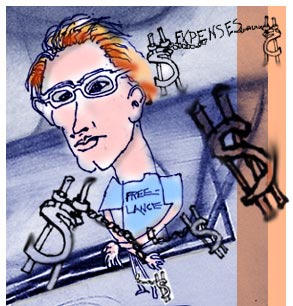
    It can get tough being a freelancer. People just seem to take advantage of you. Publishers pay you late, or sometimes not at all; the IRS audits you more frequently than it does other people; you don’t get any paid vacations or any health benefits; and, of course, the hours are terrible.

    But I always figured that when it came time to send my daughter off to college, we’d make out all right on the scholarships. It would be the first time, maybe the only time, that a low salary and zillions of business expenses would be an advantage.

    So I put a lot of effort into those infamous scholarship forms this year as my daughter prepared to graduate from high school. I did them all — the federal government’s Free Application for Federal Student Aid, the College Board’s College Scholarship Service form for private college assistance — and hoped for some hefty grants from her chosen schools.

    Little did I know that the financial aid gnomes at America’s private colleges and universities have no more affection for — or faith in — us freelance types than the grim auditors at the IRS.

    At most of the schools my daughter applied to — places like MIT, Swarthmore College and Princeton University, for example — the financial aid offices took one look at my carefully documented expenses for travel, lodging and meals, and just exed them out, adding back thousands of dollars of my expenses to my estimated income, and reducing my daughter’s scholarship offers by a similar amount. They did the same thing to the depreciation I claimed on my home office. The auto expenses my wife claimed for the van she owns to transport her harpsichord got the same treatment at most schools: Whack! Gone.

    The result was a stack of anemic financial aid packages for a family I couldn’t recognize — for a family, that is, that makes a lot more money than we do, and that does it with hardly any business expenses along the way.

    What’s going on here?

    Well, it turns out that America’s private colleges, where the total cost of sending a kid for an education can run as much as $36,000 a year, are so skeptical about the one in 11 Americans who are freelancers or self-employed that they routinely disallow — and add back to your income total — not just those kinds of basic expenses but also that IRA you invest in year after year in lieu of the pension your salaried neighbor gets courtesy of her or his employer.

    There’s a heavy dose of irony here. Princeton, for example, has been making a big investment in the arts lately — a new music building, resident writers to teach creative writing, etc. — on the theory that focusing exclusively on academics makes not just Jack but a whole campus kind of dull. Meanwhile, Wesleyan University, my alma mater, has long prided itself on producing independent-minded creative people — the kind of folks who might well go out on their own and work outside the corporate world.

    Yet when some Princeton-educated artist, or some musician who graduated from my old school, tries to send an heir to an alma mater, they may find that their way of earning a living is not well respected, or at least not well understood.

    “We don’t normally consider deductions for expenses for meals, entertainment, travel and lodging,” says an official in Princeton’s office of financial aid, echoing the policies of most financial aid offices contacted. “We add those back to income.” The explanation given here and at other schools is that it’s too easy for freelancers to exaggerate legitimate business expenses.

    The widespread nature of this ivory tower practice of adding back reported freelance business expenses to income might suggest to the more paranoid among us some conspiracy against the self-employed. And we might be right.

    When in doubt about these things, look to the College Board, the august membership organization that, among other things, brings us the ubiquitous SAT test and those dreaded College Scholarship Service forms. A spokeswoman at the College Board denies that the organization tells anyone how to evaluate parents’ financial information. “We do have a financial advisory committee,” says Linda Peckham, “but it doesn’t make those kinds of determinations. It doesn’t say things like ‘You should disallow meals and entertainment deductions.’”

    But at least one financial aid director, Heather McDonnell at Sarah Lawrence College, says that that isn’t the whole story. “That is a smoke screen they’re putting up at the College Board,” she says. “The College Board itself doesn’t tell us what to do, but there are standards that are given to us by an accountant who is contracted by the College Board to run workshops for financial aid officials.”

    That financial aid guru is James Briggs of Vermont, who describes himself as a self-employed accountant. He likewise denies that he dictates to anyone how to handle freelancers’ income statements. “I don’t know if it’s the right characterization for what I do,” he says. “I just teach them how to determine a given family’s cash flow.”

    Among the things Briggs says he does is warn financial aid officials that the self-employed are a slippery lot who have many ways they can manipulate their apparent cash-flow position. For example, expenses can be shifted from one year to a prior or future year, while revenues that come late in one year can be delayed to the following year — all of which is legitimate, though unacceptable in Briggs’ book.

    What colleges do with Briggs’ information and warnings is up to them, he says, but calls to private schools suggest that a surprising number of them do the same thing — they routinely disallow certain basic expense deductions.

    The College Board has reason to be careful about any hint of collusive behavior by its member colleges and universities. Some years back, the Ivy League colleges were threatened with an antitrust action by the U.S. Justice Department for their practice of sharing information on individual student financial awards — which they did to prevent students from playing the colleges off against one another to win higher scholarship offers. The schools responded to that threat by ceasing to share information about individual students.

    So what’s a poor self-employed parent to do? Speak now or forever pay more college tuition than you can afford.

    Unless you ask, you won’t even know if your child’s particular scholarship was based on disallowed expenses or not. That’s because when universities and colleges send out an award package, they don’t explain how they arrived at the number.

    The only way to find out those details is to ask some very pointed questions. In fact, the best move is to get the financial aid office to go down your Schedule C line by line to explain how it handled each deduction you took. If you find out, as we did, that your kid’s chosen school has disallowed certain business expense deductions, you need to — calmly and politely, but insistently — argue your case. Most, though not all, aid officials are willing to listen and reconsider reasonable expense deductions, once they understand the nature of your business and the importance of those expenses in the course of your generation of income.

    “We try to be understanding,” says Wesleyan financial aid director Elizabeth McCormick, adding, “It helps if a family can round out the very few data points that are collected from the Schedule C. The more information they provide in a usable form, the easier it is to understand their particular financial situation.”

    In my own case, appealing the initial aid awards based upon a reevaluation of the business expenses led to a variety of results, ranging from a $4,000 increase in MIT’s grant offer to no change in the offer from Swarthmore.

    Getting my business treated with some respect by at least a few schools took some of the sting out of being kicked again for being a freelancer, but not all of it. None of the schools we dealt with was ready to give me any credit for the $2,000 I put into my IRA. Apparently, we’re allowed a couple of expense deductions, but we still aren’t supposed to be able to retire like corporate stiffs.

    Continue Reading Close

    The death penalty’s other victims

    When prosecutors eliminate jurors opposed to capital punishment, they also weed out women and minorities and stack the deck against defendants.

    • more
      • All Share Services

    The death penalty's other victims

    Ellen Reasonover found out the hard way that no good deed goes unpunished. When the St. Louis resident approached police with information she thought might help them catch the killer of a gas-station attendant, they arrested her instead, based on highly circumstantial evidence.

    Constructing a case against her by relying on the testimony of two jailhouse snitches, the state sought the death penalty. An all-white jury convicted the young black woman, and all but one member of the panel voted to have her executed. Earlier this year, a federal judge threw out her conviction, ruling that the witnesses — with the knowledge of the prosecutor — had fabricated their testimony. So after serving 18 years in prison, Reasonover was released.

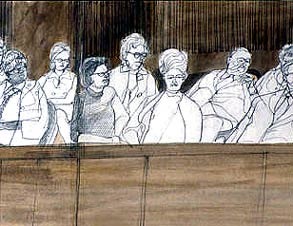
    Reasonover’s jury was ready and willing to believe the prosecutor’s case at least partly because, as in all capital cases, the jury pool had been carefully, and legally, purged of anyone who had doubts about the death penalty — a category that conveniently and disproportionately includes African-Americans and women. The very people many experts say are most likely to question prosecutors’ arguments and hold to a presumption of innocence — death-penalty opponents — had been systematically kept out of the jury box.

    A majority of Americans still back the death penalty, but polls have shown a steady erosion in support. A Gallup poll done in February, for example, indicated that 66 percent support it, down from 80 percent in 1984. Moreover, with growing numbers of people exonerated in the past few years after long prison stays, many people are apparently also losing confidence in the integrity and fairness with which it is administered.

    The fairness issue became a leitmotif in the presidential campaign. Although both presidential candidates said they supported capital punishment, the media focused on Bush’s record of presiding over more executions than any previous Texas governor, including 40 just this year, and on the apparent inequities in the state’s judicial system. During the second debate, Bush seemed to grin when discussing the death penalty — an action that prompted a pointed question from a member of the audience during the third and last debate.

    The questions about capital punishment have prompted some states to take some precautionary steps. In Illinois, where more than a dozen death-row inmates have been proven innocent since 1977, the Republican governor, George Ryan, announced a moratorium earlier this year. Other states are studying the issue and facing growing calls for similar moratoria and for automatic access by condemned convicts to DNA testing, which in some cases has conclusively exonerated inmates.

    Yet despite this new concern, a major and controversial element of the system is being largely ignored: the right of prosecutors and judges to eliminate, “for cause,” any potential jurors who say they might not be willing or able to vote for death during the penalty phase of a murder trial.

    Whatever one might think about the death penalty itself, the trouble with screening out death-penalty skeptics — a process known as “death-qualifying” the jury — is that it does a lot more than simply eliminate jurors opposed to capital punishment. It makes for juries that tend to be white, male and significantly more likely to convict the person accused of the crime in the first place. In a 1968 landmark study, Hans Zeisel, a law professor at the University of California at Berkeley, found that death-qualifying juries led to an 80 percent increase in the conviction rate.

    “When you excuse all the people who are opposed to the death penalty, it’s a kind of law-and-order screening device,” says Craig Haney, a professor of psychology and sociology at the University of California at Santa Cruz who has been polling jurors and studying jury selection for 35 years. “You end up with a group of people who evaluate evidence a little differently, who are more likely to find evidence to be incriminating, and who generally don’t even understand or accept the concept of presumption of innocence.”

    But proponents of death-qualifying say that if there were no such procedure, nearly every jury would likely include one or more members who would veto any death-penalty conviction, essentially rendering void the capital punishment statutes of 31 states and the federal judicial system. Moreover, they add, defense attorneys get to excuse any potential juror who publicly admits to an inflexible intent to impose death on anyone convicted of murder, regardless of mitigating circumstances or the instructions of a judge.

    But defense attorneys counter that since not many potential jurors are willing to state such a position so bluntly, few actually get excluded on those grounds. And they stress that the effects of death-qualification on the racial composition of juries can be quite stark.

    In a 1994 study, for example, Haney and coauthors Aida Hurtado and Luis Vega reported that while minorities accounted for 18.5 percent of the people in the California jury pools they examined, they represented 26.3 percent of those excluded from jury panels through the death-qualifying process.

    A North Carolina jury study conducted in 1982 found an even greater disparity, with 55.2 percent of black potential jurors being excluded during the death-penalty qualifying process in contrast to 20.7 percent of whites. Studies also indicate that women tend to be excluded, since they are also more likely to oppose the death penalty.

    The net effect is that — despite Supreme Court rulings that excluding jurors because of race is grounds for a mistrial — prosecutors can achieve much the same result without specifically using race as the criterion. “Death-qualifying a jury basically eliminates half of the potential black jurors,” agrees David Bruck, a South Carolina defense attorney who specializes in death-penalty cases. “It’s quite an ethnic cleansing that goes on and it is very disturbing.”

    The right to excuse jurors for cause is important because both sides in a criminal case are granted only a limited number of so-called “peremptory challenges,” which allow them to dismiss potential jurors without having to offer any reason at all.

    Prosecutors know that death-qualifying a jury is a great way to help ensure a conviction. That, say experts, is one reason why many of them — particularly in jurisdictions with high death-penalty rates like Texas, Florida, Illinois, Virginia, California and Pennsylvania — deliberately overcharge in murder cases even where they know the death penalty is not appropriate or likely.

    In other words, the process can lead to higher conviction rates — and most likely to more wrongful convictions — not just in capital cases, but in other murder cases, too.

    In Philadelphia, District Attorney Lynne Abraham seeks the death penalty from the outset in an astonishing 85 percent of murder cases, according to a study from the city’s public defender’s office. One reason for the Philadelphia district attorney’s predilection for capital cases may be a jury selection training tape prepared in the mid-1980s by then Assistant District Attorney Jack McMahon.

    In that tape, which is featured in the appeal by black journalist Mumia Abu-Jamal of his 1982 death sentence for the killing of a white Philadelphia cop, McMahon urges prosecutors to seek to impose the death penalty in as many cases as possible. That way, he explains helpfully, they then get the benefit of death-qualifying jurors, and with their peremptory challenges they can remove even those who express vague or minor concerns about imposing the ultimate sanction.

    Abraham’s office did not return repeated phone calls seeking comment.

    Ironically, McMahon, now in private practice, has become a vocal critic of the very practice he once championed. “The reason district attorneys like Abraham so frequently seek the death penalty is that they get a conviction-prone jury,” says McMahon, who now defends clients in capital cases. “Now they’ll all tell you they don’t do that, but they’re full of crap and they know it. No one who’s been working in this business would say that if they were honest. The whole process of death-qualification is terribly unfair.”

    McMahon insists that he hasn’t had a change of heart. “I’ve always known this to be true,” he explains. “But when you’re a prosecutor you do what works to your advantage as a prosecutor. It’s permissible, so you take advantage of it. But I will say that now that I’m on the defense side, I can see what a handicap it is for the defense.”

    In Abu-Jamal’s 1982 murder trial in Philadelphia, the jury pool was in fact gutted of blacks during the death-penalty screening conducted by prosecutor Joseph McGill, despite objections raised by the defendant’s attorney. In a city that is almost 44 percent black, the former Black Panther ended up with a single African-American on the jury that convicted him and sentenced him to death. In addition to screening out more than 20 black jurors through the death-qualification process, McGill used his peremptory challenges to eliminate another 11 black potential jurors who hadn’t expressed any particular concern about the death penalty.

    The National Association of Attorneys General takes no position on the issue of the fairness of death-penalty qualifying of juries.

    But one academic expert who does defend jury qualifying in death-penalty cases is Paul Cassell, a law professor at the University of Utah College of Law and a former federal prosecutor. A death-penalty advocate who served as an attorney for the families of victims of the 1995 Oklahoma City bombing, Cassell questions the accuracy and significance of the jury attitudinal surveys cited to challenge death-qualifying.

    “I am not sure that juror attitudes carry over into the convicting or sentencing of people,” he says. While conceding that he is not aware of any studies refuting the claim that death-qualified juries are more conviction-prone, he insists that the argument remains unproved.

    Meanwhile, critics of death-penalty qualifying say the problem is not just that the impaneled jurors are more inclined to listen to prosecutors. The very process of death-qualifying, they say, can bias potential jurors against the defendant.

    Consider this. In any other criminal trial, whether it’s petty larceny, assault with a firearm or attempted murder or rape, attorneys are expressly barred from discussing possible penalties before or during the trial. The reason: Courts have long felt that discussing the penalty could encourage the jurors to start assuming that the defendant is somehow guilty.

    “Yet in death-penalty cases, where the issue of guilt or innocence is most crucial, we go ahead and discuss the ultimate penalty every time before the trial,” says Santa Cruz psychology professor Haney.

    We all laugh when the Queen of Hearts in “Alice’s Adventures in Wonderland” says, “Sentence first — verdict afterwards.” But in this country’s capital trials, that’s basically what’s going on.

    The qualification process itself can become extremely contorted and bizarre. Once potential jurors have expressed opposition to the death penalty, the defense attorney — seeking to salvage that person for the panel or at least force the prosecutor to use up a peremptory challenge — often postulates particularly heinous murder scenarios so they will concede that under some extreme circumstances they might indeed consider voting for death.

    Take Betty Brown. The 67-year-old black Philadelphia woman was thrown off the panel of prospective jurors in the Abu-Jamal trial after she said she opposed the death penalty. Trying to keep her on the jury panel, a defense attorney asked how she would feel about the death penalty if one of her two sons had been murdered. “‘I don’t even like to think about something like that happening to my boys,’” she recalls saying. “But I told the judge, ‘Killing a murderer wouldn’t bring back my son’”

    Brown says she thinks it is “simply wrong” for people like her to be excluded from juries for their beliefs. But given her firm opposition to the death penalty, might she have been unable to find the defendant in that capital case guilty? “No, no,” she says flatly. “If he’s guilty, he’s guilty, and I’d say it. And I was willing to serve.”

    While many potential jurors are kept off panels because of their anti-death-penalty beliefs, Haney reports that some impaneled jurors who are squeamish about imposing the death penalty can end up having their earlier comments thrown back at them during the penalty deliberations.

    “A lot of jurors we’ve interviewed after trials have told us when they’d object to death other jurors would tell them, ‘You promised the judge that you’d be willing to impose the death penalty,’” says Haney. “The hypothetical argument that they could conceivably impose death in some particular situation is later treated like a pledge to do it.”

    Given the inherent problems in death-qualifying juries, why has there been so much focus on possible moratoriums, DNA testing, poor defense lawyering and other factors and so little concern expressed about the very fairness of the jury-selection process?

    Probably the main reason is that the Supreme Court has already ruled the matter — in favor of the prosecution. Before 1968, it was routine for all those opposed to the death penalty to be excluded from juries in capital cases. That year, in Witherspoon vs. Illinois, which dealt specifically with the process of vetting potential jurors for their death-penalty views, the Supreme Court imposed strict limits on how easily they could be excluded.

    After hearing about the higher conviction rates found in the Berkeley study and other research, it ruled that only those who absolutely, under no imaginable circumstances, could ever vote for death, could be excluded. The court held that by excluding all death penalty opponents the state had “crossed the line of neutrality” and created “a tribunal organized to return a verdict of death.”

    But in 1986, a reconstituted high court under Chief Justice William Rehnquist broadened the permissible grounds for excluding jurors. In Wainwright vs. Witt, the court basically granted prosecutors free rein to excuse any potential juror who expressed any qualms at all about imposing the death penalty, since that would “impair the performance of his duties as a juror in accordance with his instructions and his oath.” Under this standard, salvaging a juror through “witherspooning” — getting death-penalty opponents to acknowledge that under particularly heinous circumstances they would vote for death — has become much tougher.

    The high court also made state courts the final arbiters of the fairness of jury selection, making it extremely difficult to obtain federal review of convictions on jury-selection grounds.

    “The problem is that once the Supreme Court decides something, Americans have a tendency to assume that it means it is a good thing, not just an allowable thing, so they just stop thinking about it,” says South Carolina attorney Bruck. “But in this case, the court didn’t say it was a good thing, just that they’d allow it unless more studies came along to show it was a really serious problem.”

    A major difficulty in addressing the issue is that — short of eliminating the death penalty — there’s no easy fix. And though some members of Congress would like to reform the death-penalty system at the federal level, a Bush presidency does not augur well for change.

    Neither does the composition of the Supreme Court. Even if the courts found the practice to be unconstitutional because it ends up biasing a jury, it could cause monumental nightmares by potentially opening up the door to a new trial for nearly every one of the 3,600 inmates on death row — not to mention many more who, like Reasonover, received less than capital sentences but were judged by a death-qualified jury.

    Nor is simply allowing defendants’ attorneys the unfettered right to dismiss death-penalty proponents the answer. Assuming we maintain the death penalty, as is clearly the popular inclination at the moment, that approach would make it difficult to impanel jurors who would convict in capital cases — a politically untenable solution in death-penalty states.

    Some have suggested using unscreened jurors for the guilt phase of a trial and then screening and seating a new panel for the penalty phase. But the new pro-death-penalty jurors would have heard none of the nuances of the trial evidence and would clearly be prejudiced against a defendant already found guilty of the crime.

    A modified reform being proposed by some critics, including Haney and Bruck, is to wait until the penalty phase of a trial to death-qualify the jurors; those expressing strong objections to the death penalty could be replaced with alternate jurors who had attended the entire trial. But in order to have enough alternates on hand, there would have to be many more of them than usual to avoid the chance of a mistrial. Given the difficulty courts are already having filling jury boxes, this would be a major challenge.

    A third possibility suggested by death-penalty advocate Cassell would be to grant the judge the authority to impose the sentence without a jury’s direction, as happens in Colorado and Arizona. But for the most part both sides oppose such a move — prosecutors because it deprives them of the benefits of death-qualifying, and defenders because they generally would rather bet on convincing at least one juror to vote against death than on having to convince a judge.

    The public’s opposition to the death penalty is not likely to increase dramatically anytime soon. So unless new studies prove that qualifying juries is so discriminatory that even the current conservative Supreme Court feels compelled to reexamine the issue, we’re stuck with a process that is clearly flawed — and flawed in a way many experts agree increases the likelihood of mistaken convictions and executions.

    “Nowadays more people believe in the death penalty, so I don’t think there’s much chance there will be a change in the way we pick death-penalty case juries,” says Haney. “But my philosophy is that you have to keep collecting the data and making the case until some court is willing to look at it again and do something about it.”

    Continue Reading Close