Denise Dowling

Sexual healing

According to therapist Bryce Britton, "sex" is a 13-letter word, and it's spelled "communication."

  • more
    • All Share Services

Sexual healing

With her porn-star name and smoky purr over the phone, one conjures Bryce Britton as a cashmere sex kitten. But the Los Angeles sex therapist who answers the door of a salmon stucco bungalow is earth mama incarnate: a 50-ish, huggable redhead in a breezy violet dress. If male clients fantasize about crying on Britton’s pillowy shoulder, their baser impulses are reserved for the surrogates she pairs them with to experientially cure them of premature ejaculation, impotence or other dysfunction.

Britton is one of the few therapists to employ surrogates, whom she prefers to call “sensual guides,” since the term “surrogate” implies a substitute. In the past 15 years, she has helped more than 1,200 men and currently employs one male and two female guides. An average course of therapy is three months or 15 to 20 sessions and can cost up to $5,000.

No neon sign swings outside her Santa Monica, Calif., office, winking Sex Therapy! Still, strolling neighbors swivel their necks in “Exorcist”-worthy contortions and a mailman insists on hand-delivering her mail. Clients are referred from other therapists or respond to Britton’s ads in holistic magazines. Britton can discern from a phone conversation if someone just wants a shag — for instance, if the caller is panting.

Her two-room bungalow has hardwood floors and watercolor landscapes on walls painted shades of “Persian melon” and “ember light.” Native American flute music swirls with Indian guru incense, but the decor is more Martha Stewart’s weekend home than Playboy mansion. Of course, Martha probably doesn’t furnish her study with a massage table, a Mr. Hard Throb vibrator, plastic speculums and a dildo that would make Godzilla feel inadequate. Nor would her kitchenette contain a fruit bowl for an exercise called “Tom Jones feast,” in which a guide and client feed each other peaches or lick whipped cream off one another.

Since this is calorie-conscious Southern California, yogurt may be substituted. Speculums may be heated before a “sexiological,” where the guide and client examine each other’s genitalia, using flashlights for dark crevices and diagrams for reference. “Some men are terrified of kissing,” Britton explains. “So one guide created the mango exercise, where the client puts his tongue on the mango to get used to the moisture of a kiss. Other props include a foot bath for water rituals and lion and rabbit masks, as the lion mask allows an alpha male to wrestle a woman to the floor.”

Surrogate therapy peaked in the swinging ’70s, after sex researchers Masters and Johnson reported a 75 percent five-year cure rate using surrogates. After a client sued the pair, claiming abandonment because his wife had sex with a surrogate, surrogate therapy was closeted along with the lava lamps and bell bottoms. In the ’70s, Britton founded the (now defunct) Center for Sexual Education and Sensual Enhancement. Seminars were conducted in the sensorium, a simulated bedroom covered in tie-dyed plum silk, with audio-visual controls for dimming lights and tuning in the sounds of ocean surf or a forest rainstorm. A 24-week guide-training curriculum included masturbating while being hooked up to a recorder that measured changes in pulse rate and temperature, along with study groups where classmates have sex with each other. Homework might include observing people at strip joints or swingers’ clubs.

Aware that sex therapy is seen as having as much relationship to therapy as massage parlors have to massage, surrogates hasten to explain that “sex is the least of it.” On average, penetrating intercourse makes up 5 percent of a typical three-month course of counseling. “Many exercises are done fully clothed and the surrogate is not a stranger to the client,” Britton explains. “The surrogate-client connection should emulate a real relationship. A surrogate has to be genuine, because she is modeling how to be truthful, how to communicate likes and dislikes.”

Britton’s success rate is her best advertising: With premature ejaculators, it’s 98 percent; with impotence, 90 percent; and for lack of desire, 70-75 percent. People with fetishes or sex addictions prove the most challenging — with them Britton has a 30 percent success rate.

Britton’s clientele is about 40 percent couples, 25 percent women and 35 percent single men. Of the latter, a third are virgins in their late 40s, another third suffer from impotence and the rest are trigger-happy. The majority of couples are married.

“‘Sex’ is a 13-letter word,” says Britton. “It’s spelled ‘communication.’” Some couples can’t spell while others talk too much. “I truly believe that talking will only go so far in matters of sexuality and sensuality,” Britton says. “At a certain point, you have to make the heart and pelvis connect. I had a female client in her 50s who couldn’t orgasm without a vibrator. She was getting out of a 28-year marriage where she’d never experienced an orgasm with her husband. She’d wait until he was in the shower and pull out her vibrator. She started having affairs after meeting guys through chat rooms. Obviously, there was a communication problem.”

Britton doesn’t always suggest surrogacy when counseling a couple, but she often does when the wife feels the man is to blame or when couples are trying to conceive. “A surrogate can defuse the situation,” Britton explains. “The woman is anxious and making a lot of demands and the man loses interest. With a surrogate in the room, some couples feel they can speak more freely.” Britton refutes the notion that a couple may be forcing alchemy when there is just no chemistry.

“Sometimes flow is there and other times it’s not,” she shrugs. “What helps to make it flow is to move from one step to the next; couples who say they don’t have chemistry are usually the ones who go from point A to point F.”

Some female clients have contradictory impulses: They want to be in control, even if they claim they’re striving to be more passive. Some of that could be the investment they’ve made in such therapy, or that they feel strange about getting excited during the session. “All of my female clients have had genuine relationships before, but I do have some male clients who are older virgins,” says Britton.

“Some still live with their parents. Others are borderline; they have to check out of reality at times. But then I also see some very successful men, like this entertainment attorney who always had a beautiful woman on his arm. But he was very self-conscious about being short and was still a virgin, though you’d never suspect it. Some of the virgins are very inhibited and went to brothels and tried to befriend the prostitute first, which didn’t work. Others have put women on such a tall pedestal that it’s difficult for them to accept her as a real person.”

For hermetic males, a surrogate relationship is akin to a first girlfriend. They may even need a course in hand-holding. Surrogacy is a remedy because there is no risk of rejection. “I’ll have them do a dating service in conjunction with the therapy, and go to something like a happy hour with the surrogate to practice social skills or putting his arm around a woman,” says Britton. “Or I give them homework, like they have to ask if they can cut in front of someone at the grocery store so they get used to rejection.”

Couples are usually matched with a female surrogate because it’s less threatening to the husband than a male one. They might work with Alexis Lucca, a 46-year-old guide with a body built for speed. She typically sees two or three clients a day and earns $150 an hour. Because Lucca has nine years of experience, the bobbed brunette is at the top of the salary scale — less experienced guides typically earn $110 per hour.

Britton meets with each client for an hour before the client and the guide meet for another hour to do an exercise deemed appropriate for that week. Britton may be tapping on her computer in the next room while the session proceeds on the couch, massage table or futon, or she goes to her nearby home. When she returns, the three discuss what occurred during the session and the guide completes a written protocol that details the interaction, such as: “Client able to nurture tactile and oral tastes and smells. Good energy, less needy. Client had erection before manual stimulation. During front caress, client worried about me seeing him with an erection.”

Alexis teaches technique with a Girl Scout’s sense of duty. “You can’t just say, ‘Yuck! That was awful!’ You say, ‘Can you make your lips softer?’ ‘OK, let’s try to put your tongue on my lip.’ At first, it’s all about instructions and then when you want them to enjoy it — because they’re not enjoying that — you say, ‘Give me some body movement; start grinding a little bit.’ They get performance anxiety because they’re spectatoring: They focus on how they look doing something instead of what it feels like.”

Another exercise to diminish fear of sexual failure is “stuffing” or “quiet vagina,” when a surrogate straddles a man’s flaccid penis and puts it inside her. “I have to calculate when a client is emotionally ready for intercourse. I want them to return to what it was like as a teenager, when they would make out and fondle and kiss for hours — and then have to go home.”

All of her female clients have “body image issues,” as Britton puts it. Many can’t orgasm during intercourse, meaning they’ve had clitoral but never vaginal orgasm. Susan Romesh is one of Britton’s most successful cases. The 36-year-old zips through Hollywood in a convertible BMW, has blond ringlets to a willowy waist and doe-brown eyes. Romesh recently ended a nine-year relationship that was never consummated. She’d felt the ripples of the big-O with a clitoral orgasm, but technically, she was still a virgin. When Romesh turned 35, her biological clock was a bomb, but every foray into intercourse made her tear ducts expand and vaginal muscles contract. She had tried remedies ranging from hypnosis to rebirthing when she stumbled across Britton’s ad.

“I knew that, even if I found a reason for my phobia, it wouldn’t have solved the problem,” says Romesh. “I thought, How will I know I’m cured unless I practice? And I didn’t want to tell someone I was dating and work on the problem during a relationship.

“I trusted my guide, Mark Thomas, more than I would have trusted someone I was dating. I wanted to know that if I said stop, he would.” At first, every exercise made Romesh flinch. “I just wanted to get it over with. In the first session, we had to do a hand caress and I was like, ‘Eeew!’ I said, ‘I don’t want to hold hands. Can’t we just do it? I didn’t worry too much about whether I was doing something correctly or the way Thomas wanted. I was very clear that I was paying this money, so I was in control and he was here for my goal.

“I hadn’t been with many men and I thought, This sexual thing is so different than a relationship,” says Romesh. “You could put a paper bag over someone’s head and do this stuff!”

When Romesh and Thomas finally sealed the deal, it wasn’t exactly the Big Bang. “It was such a letdown,” Sue shakes her head. “I thought, This is it? This is what everyone makes such a big deal about? I wasn’t even sure he was inside me!”

Romesh credits the work for making her more comfortable sexually — and she flashes the engagement ring to prove it. “I spent close to $4,000, but it was worth every penny,” she says. “I’m cured in the sense that I’m no longer afraid to have intercourse. But I still need practice to become experienced. It’s like riding a bike!”

Covering up the breast

The National Cancer Institute decides not to publicize the results of a publicly funded implant study. What's the deal?

  • more
    • All Share Services

Covering up the breast

This is a story about breasts. And about a federal agency going out of its way to not alert journalists to a major publicly funded cancer study.

There was, to be sure, a press release. “In one of the largest studies on the long-term health effects of silicone breast implants, researchers from the National Cancer Institute (NCI) in Bethesda, Md., found no association between breast implants and the subsequent risk of breast cancer,” it began.

But even if you have breast implants, you undoubtedly haven’t heard about this study — unless you somehow stumbled across the release buried in the NCI Web site. NCI press officer Brian Vastag says that — in a peculiar deviation from normal procedures — he was “forbidden” from alerting journalists to the online release. In an up-yours gesture to his superiors (motivated, perhaps, by the fact that he’d already given notice to quit), Vastag last week forwarded the link for the press release to a listserv for members of the National Association of Science Writers.

“It makes me crazy when tax-funded public health research doesn’t make it to the public,” Vastag wrote in his e-mail. “So here’s the lead from the press release for anyone who’s interested.”

According to Vastag, NCI would routinely notify about 500 science writers about such studies by faxing or — with a few keystrokes — e-mailing them a press release. “These are the results of eight years of research,” Vastag explained about the $4 million study conducted by Dr. Louise Brinton, the principal investigator from NCI’s Division of Epidemiology and Genetics. “Brinton’s is the definitive study.”

Other researchers may or may not agree with that assessment, but science writers who received Vastag’s e-mail also found NCI’s behavior highly perplexing. “It’s very odd for a public agency to know about a major, publicly-funded study and choose not to release it in the normal manner,” noted science writer and NASW listserv coordinator Robert Finn. “What’s strangest is not the results of the study but that the NCI went to the trouble of preparing a press release — and then they were not allowed to release it to journalists.”

However, Pat Newman, chief of NCI’s mass media division, said the agency decided not to alert journalists because Cancer Causes and Control, the European-based journal that is publishing Brinton’s study in its November issue, embargoed it from distribution in hard copy — even though the journal has already posted an electronic version on its Web site and no one was asking NCI to disseminate hard copies in advance of publication.

“We felt a commitment to post that the study was out, but we couldn’t in good faith promote the information available in the journal until it was available in hard copy,” said Newman. However, she seemed surprised when asked if NCI plans to tout the study come November. “We’ve already posted the press release, so why would we distribute old news?” she said.

Brinton’s study is not the first to declare that silicone breast implants are not linked to breast cancer, but it is believed to be the most comprehensive. Unlike previous studies that tracked the effects of implants for less than a decade, Brinton’s followed nearly 14,000 women who had implant surgery for cosmetic reasons in both breasts for 13 years. In addition to refuting some earlier findings that appeared to link cancer to implants, Brinton’s study also counters other research suggesting an actual reduction in risk for implant recipients, a finding that perplexed researchers.

So given the estimated 1.5 million women with breast implants — and the huge number considering having them — why not tout the results to journalists who could disseminate the information to a mass audience? The reason, according to Vastag, is that Brinton herself wanted NCI to play mum — even though she herself has touted the project as “the most comprehensive epidemiological study of breast implants to date.”

Vastag said that Brinton was concerned because in the past she has been criticized by competing interests on all sides of the issue, especially lawyers defending the implant industry. Brinton herself denied that she asked the NCI not to publicize the findings. But she did acknowledge that the breast implant issue is so emotional that it sometimes appears impossible to satisfy anyone.

Throughout nine years of research, she says she was scrutinized by people who worried that her report might provide ammunition to anti-implant advocates. She said she has met with those on all sides of the issue — breast implant survivor groups as well as plastic surgeons and implant manufacturers. “If I talk to one contingent, another contingent uses that as evidence that I’m siding with that group,” she explained.

According to breast cancer expert and author Dr. Susan Love, since Brinton’s research confirms earlier findings it is ultimately a ripple, not a rupture, on the field of breast cancer research — but reading or hearing about it would help those most affected. “Maybe women with implants can feel more comfortable now,” she said.

Continue Reading Close

The Rembrandt of pulp

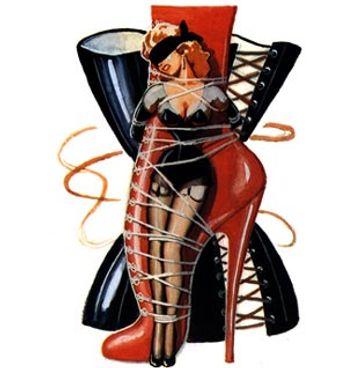
John Willie's bondage illustrations made hurting look so good.

  • more
    • All Share Services

The Rembrandt of pulp

My college roommate was Mistress Domino. She was also Carrie, a freshman from upstate New York who didn’t drink or do drugs or sociology assignments. Every day after class Carrie strolled down Fifth Avenue to a club near Wall Street, where she traded her sneakers for stilettos. She lounged on a satin sofa until a stockbroker tickled her Chanel vamp toes. Then she led him downstairs to a dungeon, called him a pig and swatted his behind with a horsewhip. That was all. Or that was all she would say after my jaw dropped when Carrie first told me about her extracurricular activities.

Like Carrie, J.B. Rund makes no apologies about a fondness for flagellation. “I’m not a pervert,” the Manhattan-based publisher declares in a scotch-and-cigarette voice. “So I get excited by high heels? And women tied up?”

For more than two decades, Rund has been publishing fetish art, books and cartoons in an effort to bring fetishism to the mainstream. “My friends look at these cartoons and say, ‘How can you get a hard-on from that stuff?’” he says. “But they only get turned on by ladies with big knockers. If they were normal, other things would excite them as well. I’m not sick; I’m different. Thank God for pistachio ice cream; it would be boring if everyone liked vanilla!”

His idol, the subject of his latest book, is John Willie, considered by many to be the father of modern fetishism. Rund encountered the erotic art of the British illustrator and photographer as a teenager in the late 1950s. “The first time I saw Willie’s work,” Rund says, “I knew he was the Rembrandt of pulp.”

Willie flirted with various mediums and styles, from comic art featuring flint-eyed Amazons with projectile breasts to coy damsels reminiscent of Esquire magazine’s Varga girls — only Willie’s girls preferred leather gags to linen hankies.

In the 1940s, Willie created an obscure fetish magazine called Bizarre and produced four cartoon serials, of which “The Adventures of Sweet Gwendoline” was best known. He contributed to gentlemen’s magazines such as London Life, Flirt and Wink — publications with Cosmo covers that enticed readers with headlines like “Spanking for Wives” and “She Strips to Conquer.” He also created private fantasy stories commissioned by mail-order customers.

Willie’s real name was John Coutts. He was born to an upper-middle-class family in 1902 and flitted between London, Australia and the States, making drinking buddies on every continent, before dying of a brain tumor in 1962.

While John Willie was a name in his day, he is obscure to most artists today, except for the fetish artists who consider him a legend. With the publication of “The Adventures of Sweet Gwendoline,” a collection of Willie’s life’s work, Rund wanted to acknowledge what elevated Willie above other erotic artists.

“I used to just look at the pictures,” Rund recalls. “But when I finally read the Gwendoline serials, I realized that Willie’s humanity made him better than all the others. His characters have dignity, which is very rare in pornography.”

Typically, slapstick comedy underscored Willie’s serial cartoons — with the villain Sir Dystic D’Arcy drawing Gwendoline into “spine chilling melodramas placing her in pungent peril.” In Willie’s “Diary of a French Maid” series and depictions of D’Arcy’s upper-crusty companion, a vixenish “Countess,” it’s clear the illustrator defected from his bourgeois homeland. The facade of breeding and etiquette is bared; underneath their couture, the “Ma’mselle” and the Countess are sadistic nymphos. The French maid and the farm-raised Gwendoline may be wild, but they stand by their man and you can bring them home to meet Mom.

Known for his generosity, Willie was survived by some staggering bar tabs. At the Cock N’ Bull, his favorite Los Angeles tavern, patrons drained their glasses when Willie arrived, confident that he’d buy the next round. Cash-strapped clients were told, “Just pay me with beer money.”

Intent on seeing Willie’s true legacy remembered, Rund spent years trying to get his work published. Eventually he decided to do it himself and founded Belier Press in the mid-’70s. “The Adventures of Sweet Gwendoline” sold 26,000 copies. Belier Press later published the first books about voluptuous 1950s pinup queen Bettie Page, as well as books by underground cartoonists such as R. Crumb and Art Spiegelman, creator of the “Maus” series.

While the content may have been risqui at the time, Willie colored within the lines in order to blend into mainstream publications. “He works within the clichi; he’s naughty in content yet so sweet in his representation,” observes California painter Whitney Cowing. “He doesn’t push the boundaries artistically; Willie wants to seduce good ol’ boys with an artistic style they are familiar with and a subject they have only dreamt of.”

Still, Cowing maintains that Willie had a strong influence on several modern cartoonists, including John Howard, who illustrates “Horny Biker Sluts,” a bimonthly comic that bookstore owners hide in the back room, away from the kiddies, because of its graphic depictions of sex (“every orifice,” groans one store owner).

Willie was known for his use of conventional crosshatching and other rustic pen marks to characterize the villains and a smoother, more idealized form for the heroines. Instead of explicit depictions of sex, Willie would bob and weave with an innuendo punch, unlike certain contemporaries who depicted “some despicable acts,” as Rund puts it. Willie’s two-step may have been a bow to censors (some of his private drawings were far more prurient), yet Rund believes that Willie was indeed bound by morals. “Willie grew up watching silent films,” Rund notes. “When he saw a woman tied up, he wanted to rescue the damsel, not rape her. In the context of Victorian melodrama, you can’t defile the heroine.”

Even Willie’s harnesses and masks have a feathery delicacy. One illustration depicts a bird untying the laces of a high heel, and the reader almost expects Snow White to skip into the series. Willie had married Holly Anna Faram, who became his model and muse. When acquaintances first visited his apartment, a black-and-white photo of a naked woman tied to a tree greeted them. “Oh,” Willie would shrug, “that’s the missus.”

Faram stayed in Australia when Willie decided to live in the States, but the couple remained married and Willie maintained a platonic understanding with his other models.

In the early ’90s, Rund’s friends encouraged him to do a second edition of “The Adventures of Sweet Gwendoline” after they observed how fetishism had infiltrated the mainstream, with Madonna’s book “Sex,” Manolo Blahnik stilettos and dominatrix shades in the clothing designed by Jean-Paul Gaultier. Yesteryear erotica is fashionable in the swinger/cocktail lounge set, and places like the Viper Room in Los Angeles feature a weekly burlesque routine. “Time does lend enchantment,” says James Maclean of the Erotic Print Review. “The pornography of yesterday probably is the erotica of tomorrow.”

Willie diluted sadomasochism’s sting by drawing the Sweet Gwendoline series’ villain, Sir Dystic D’Arcy, in his own likeness. Willie broke porn taboos, for the bad boy did not get the girl. “Making himself the villain and making the villain a loser was Willie’s way of acknowledging his own [career] failures,” Rund speculates. “Willie had certain self-esteem issues; if a woman is tied up, she can’t reject you.”

Rund contends Willie was the first fetish artist who illustrated only from models or from photographs he took himself. American fetish artist Eric Stanton, who specialized in illustrations of “fighting femmes” in the late 1940s and early ’50s, was a contemporary illustrator also noted for his realism, but “Stanton would create a fantasy and pretend it’s real,” Rund says. “Willie took reality and made it fantasy. But his realism made it unique; you could imagine these things happening because the poses were real.” But Rund distinguishes between proclivity and pathology. “For Willie, tying a woman up was a preference, not a necessity,” he writes in the book’s introduction.

“Some guys get excited by white panties but can’t get excited without them. You have to control the urge instead of letting the urge control your life,” Rund says. He was careful to package the book with a bow rather than a whip. “I try to present this [genre] as history,” he explains. “But I don’t feel a need to apologize for it. I don’t pretend this stuff is about love.”

It’s not about hate and misogyny, either. Rund is quick to add that Willie genuinely liked women and portrayed his female characters as the brains and his males as empty brawn. “You look at bondage and domination Web sites and they’re nailing tits to a table,” the 57-year-old growls. “Today you tie ‘em up and fuck ‘em, but with John Willie you only imagined that part. If Sweet Gwendoline is alone with the villain Sir Dystic D’Arcy, another character enters the picture before anything can happen.”

“What set John Willie apart was his humanity,” Rund says. “There was a part of him that was still that little boy reading a fairy book and fantasizing about rescuing a damsel in distress.” It was better that Willie’s readers had to wonder whether the boy got the girl. “If you have everything you want,” Rund says, “there’s nothing to look forward to.”

Continue Reading Close

Mr. and Mrs. Perfect Couple

Wanted: A down-to-earth twosome who will promote the values of marriage and aren't afraid of a little friendly competition.

  • more
    • All Share Services

Mr. and Mrs. Perfect Couple

Mr. Perfect Couple California has no pants. Somewhere between California and Texas, his pants went AWOL. He and his perfect wife must find tuxedo pants before tomorrow’s evening wear competition. Mrs. Perfect Couple Kentucky has a scratchy throat and she’s supposed to sing about God and an acorn for the talent segment. But Mrs. Kentucky and Mr. California know nothing’s perfect. Heck, even their marriages aren’t perfect! Just don’t let the judges hear that or they may be disqualified from the fourth annual America’s Perfect Couple pageant, held every November in Houston.

With so much divorce and adultery and couples waving their dirty laundry on talk shows, someone has to polish the image of a tainted institution. During the pageant, five couples compete in Western and evening wear and are grilled about what makes their marriage so special. Fluffy-covered albums with photos and love tokens account for 15 percent of their final score. Mr. and Mrs. California are automatically penalized because “no one told them to bring a scrapbook.” The winning couple must sign a contract stating they won’t separate or divorce in the next year.

“At first I was hesitant to enter because I thought, ‘Gosh, we’re not perfect,’” says Mr. California, Kenny Bray. “But the judges are just looking for a wholesome, down-to-earth couple to promote the values of marriage.” Kenny and his wife, Wendy, have been married for five years and finish each other’s sentences. Both have names that end in “y” and both look like they stepped off a Wheaties box. Kenny works for an airline and Wendy studies behavioral science. “I’m the envy of all my friends,” she gushes. “Every Sunday I get strawberries in bed, and when I’m taking a shower, Kenny warms up my robe in the dryer. The best part is, we don’t have to watch football on Sundays.” Though it was fun being single, Wendy likes having “a husband who loves me no matter what — even on that bad-hair day.”

David and Karin Jenkins, Mr. and Mrs. Florida, were voted “cutest couple” by their seventh-grade class. On the first day of sixth grade, Karin came home and opened the yearbook. “David Jenkins,” she murmured, tapping his photo. “That’s the boy I’m going to marry.” “Mmm,” her mother replied. “And how was lunch, dear?” David composed a love letter to Karin during study hall:

Dear Karen, do you like me, I mean more than a friend!?! I like you more than a friend!?! Write back and answer all questions!

The note is included in their album, which is decorated in satin with seashells in the shape of a heart. The Jenkins and their two children model for Disney Studios as the company’s “token white family.” In fact, they went to Disney World for their honeymoon. They own a wedding and pageant consultation business: Karin does makeup and David does hairstyles and designs the clothes (he created Karin’s pageant gowns). They also teach a marriage enrichment class. The Jenkins competed in America’s Perfect Couple 1995. “We want to promote marriage and it’s cool that this event celebrates marriage,” Mr. Florida says. “If we could just touch one couple with a spark that might save their relationship, that would be really cool.”

Roger and Cathy Carpenter, Mr. and Mrs. Kentucky, began a pen pal romance when she was 15. He’d dated one of her seven sisters before joining the Navy. “My mother should have been worried,” Cathy says. “I was 15 with a 21-year-old sailor at my junior prom. But Roger was more of a gentleman than the Randy Andies I’d dated before. He’s just a good ol’ country boy,” she adds, looking wistfully at the lanky man she married a month after high school graduation. Roger is an electrician whom everyone calls “the cowboy” because of the multigallon hats he wears. Cathy manages the family business with their 18-year-old daughter, Christella, who was recently named Miss Teen America. Christella is 5-9 (5-7 of that is legs) with strawberry blond hair. Under the application question, “What is your best asset?” Cathy wrote “my husband.” Roger wrote “my wife.”

“The word ‘perfect’ is intimidating,” Cathy admits. “God may have someone for everyone, but you still have to do some of the work.” Cathy is a Baptist. A halo would seem more fitting than a crown atop her cotton-candy hair. She claims she and Roger have never had a fight. “Well,” she pauses, “an argument is the closest we’ve come to a fight. My mother always said, ‘Never let the sun go down on your wrath.’” Roger strums guitar and serenades his wife with a song he wrote 32 years ago. It goes something like this: “She’s got pretty green eyes and the sweetest smile, beautiful red hair that drives me wild, lips like honey, oh me oh my, I’m a lucky guy.”

This marriage is the second round for Roger and Whitney Broach, Mr. and Mrs. Texas. He was divorced, and she was a widow. She has luminescent green eyes that never blink. She works as a paralegal and does tattoo removal and permanent cosmetics in a room that adjoins Roger’s law office. “My first husband was abusive and I vowed I would never marry again,” Whitney whispers in a petite voice. “But 20 minutes after meeting Roger, I knew he was a genius. And he’s fantastic in bed,” she adds, without batting a permanently lined lid. They eloped to Vegas on a very low budget. After spending $25 on a marriage license, Whitney talked a chapel owner into marrying them for $12. The honeymoon was dinner at a Mexican restaurant.

While Roger was recovering from heart surgery, Whitney averaged four hours of sleep in order to care for his clients as well as her patients. She wants to remove gang tattoos in exchange for ex-gangsters’ performing community service. If they win, Whitney and Roger plan to visit women in shelters and prisons to illustrate that not all marriages are bad.

Frannie and Jeff “Moose” Christiansen are the reigning Mr. and Mrs. Perfect America. They’re here to relinquish the title and compete for World’s Perfect Couple, a category in which they are the only contenders. They own an automotive company and are born-again Christians. The Christiansens’ key to a good marriage? Their hot tub, where they watch shooting stars. Instead of giving 50-50 to the marriage, each gives 100 percent. Their album chronicles the “progression of their love story” with metal hearts that play “Greensleeves” when you press them. When Frannie was filling out the perfect-couple application, she asked Jeff what to write for “name three qualities that describe your husband.” “I’m not in the pageant mood,” Jeff grumbled. “Just say, ‘Bald, disgruntled and overweight’”

Commitment and communication are the keys to a healthy marriage, the couples all agree. They are eager to share these secrets with the American public and serve as role models, representing marriage “the way it used to be.” Most have entered the pageant for another reason — Sylviane Sydney Kitchen. The director of America’s Perfect Couple and a former beauty queen from France, Kitchen plans to franchise etiquette workshops for children. She is the patron saint of pageants. Kitchen refers to the couples as “my babies” and they call her “Grandma.”

“As large as she is, Kitchen’s heart is three times larger,” says Joelle Mahoney, Mrs. All Nations Universal 1997 and the mistress of ceremonies. Everyone claims that Sylviane Productions is not like other beauty pageants. “No daaarling,” Kitchen oozes in her Cajun-fried accent. “Zis is not a beauty pageant, sweetheart. It don’t matter if you fat or skinny. What counts is inner beauty.”

J.J. Smith, the master of ceremonies, thinks Kitchen is “more beautiful than Miss Universe.” Smith is a pageant prodigy. Little J.J. used to watch the Miss America Pageant on television and could always pick the winner. “Sylviane sets a certain tone. In the dressing room here, if someone doesn’t have the right shade of lipstick, another girl will offer hers. I’ve been to pageants where girls had makeup cases shut on their fingers if they reached for someone else’s lipstick!” At Miss America, one contestant asked another to zip up her dress, and the girl said, “Are you kidding? Do you think I’d risk breaking a nail for you!?”

“Pageants have taken a black eye lately,” Smith sighs, alluding to the Jon-Benet Ramsey murder. “Pageant girls who go into modeling have a strike against them because photographers think they’re afraid to break a nail.” Advertising dictates popular styles, Smith explains, and the Calvin Klein look is anathema to pageantry. “Take Kate Moss,” he grimaces, “that girl hasn’t eaten in 23 years, she wears no makeup and she’s never had a curler in her hair!”

“Delegates” and “ambassadors” in the other Sylviane Productions pageants this weekend (which include Glamour Granny, Mrs. Universal All Nations, Mrs. All Nations of America, Mrs. Perfect Petite Lady and Ms. Perfect Lady) know that thorns accompany a crown. “There’s nothing glamorous about being a queen,” Mrs. Universal All Nations testifies. “A queen must adapt and never complain. No matter what happens, she has to smile.” Mrs. Universal All Nations knows all too well about obstacles. At her first appearance, Joelle had to change in a restroom in which the floor was flooded with water.

This year’s theme is “Love is in the air.” It was the theme last year and the one before that. Perhaps it could be changed to “Tension is in the air.” Kitchen pads about in stocking feet and a spangly black dress, whistling for quiet and smacking her forehead. The interviews are about to begin, and where are Mr. and Mrs. Texas? Punctuality counts, girls. You are applying for a job to be a role model, but we are here to have fun and Kitchen loves each and every one of us — and where are Mrs. Germany’s lederhosen?

Red, pink and sky blue chiffon streams from the Marriott’s ballroom ceiling. On the back wall “Sylviane Productions” is spelled out in pink rhinestones. Michael Bolton’s “Love Is a Wonderful Thing” blasts from the sound system as ambassadors are introduced. They have perfected the parade wave, high in the air to reach a sea of fans. The 15 people in the audience have a perfect view of the wave.

Four judges are armed with criteria sheets:

Stage interview: Did the contestant answer your questions? Did you like her answer? Is this lady composed and do you feel she is sincere in her response? Is she smiling?
Evening gown: Is the gown appropriate for the contestant? Does the gown complement the contestant?

Kitchen has warned everyone about taboo interview topics. “We are not here to discuss politics or religions. We are not here to save the world. No one can save the world … except God, and nobody is God. I would like to be God,” Kitchen chuckles, imagining the endorsement possibilities.

“Last time, they asked what makes our marriage perfect,” Frannie Christiansen mutters backstage. “I mean, what a stupid question!” Mr. and Mrs. Florida get stuck with that one this year. “Our love is like a wave,” David says. “We ride the crest of the wave together and occasionally we fall off, but we pick each other up. We work on our relationship a lot, but it doesn’t seem like work.” Frannie and Moose are asked what makes a good spouse. “Trust,” Moose answers, without missing a heartbeat. “If you can’t trust your wife to go to the grocery store or run an errand for you, if you think she’s not going to come back or might go out with another man, that’s bad.”

The couples had it easier than one of the Ms. Perfect Lady delegates. “I never dreamed they’d ask me that question!” she gasps, recovering from “What would you do if you won the lottery?” The other girls assure her she was right to answer, “I’d have to think long and hard about which charity I’d contribute to first.”

Sylviane Productions’ trademark camaraderie prevails in the dressing room. When Mrs. Germany asks, “Can you see my mustache?” the other girls lie. Or perhaps they just can’t see through the AquaNet haze. Maybe Kitchen was right and contestants can’t save the world. But must they destroy the ozone layer?

“Suck it and tuck it,” Ms. Houston Perfect Petite Lady advises Mrs. Perfect Couple Texas as she wriggles into a borrowed evening gown. Whitney’s dress still won’t zip. It might have something to do with her breasts, which have been pushed to her throat thanks to strategically placed duct tape. “Some girls like to slick Vaseline on their teeth,” Mrs. Perfect Couple Florida explains. “But if you get nervous and start salivating, it turns into cement. My only secret is ‘the Cadillac of bras’ from Frederick’s of Hollywood.” Another girl ignores Kitchen’s “just be yourself” mantra and tucks a silicone-gel falsie called Curves into her bra (if chilled in the fridge, Curves can double as a stress-relieving eye pack). “Thank God for the Wonderbra!” a contestant sings, as she fishes through a tackle box of makeup.

Onstage, a dapper Mr. Perfect Couple Florida twirls Mrs. Florida in her slit-legged sequin dress. White smoke curls from a nearby machine, adding a misty, watercolored memory effect. The Jenkinses float offstage and take a seat as other couples congratulate their smooth moves. “Oops,” David winces, glancing at his tuxedo pants. “My fly was unzipped!”

Before the show, our lovebirds recorded secret twitterings to each other. Speakers trumpet their Hallmark messages while couples stare at each other with that glaucomatous gaze of love:

Wendy may not have a castle, but she has a prince.

Karin loves David infinitely most.

Like the butterfly chain Roger put around Whitney’s neck, he set her free.

A drumroll, please. It’s almost time for the envelope. A collective tear drips through the room as Ms. Humble County Perfect Lady wheels up to the podium to receive a special award from Kitchen. On Friday night, Ms. Humble took a tumble doing the Texas two-step at the Cadillac Ranch. She spent the rest of the pageant in a wheelchair. But like a true queen, she smiled through the injustice of it all.

Was it fate that tripped Ms. Humble? And did fate award America’s Perfect Couple to not one but two couples? When J.J. Smith announces a tie between Florida and Kentucky, a hush descends. This is unprecedented! And confusing, since prizes and public appearances will have to be split. “Can we borrow the sash and scepter?” Mr. Florida asks Mrs. Kentucky during the post-pageant photo op. Titles and goodie bags are distributed to all. Mr. and Mrs. Texas are America’s Sweetest Couple and Mr. and Mrs. California are America’s Friendliest Couple. The Christiansens are (drumroll, please) the World’s Perfect Couple.

Mr. and Mrs. Florida aren’t sure if they’ve won or lost. “After it was announced, girls kept patting our hands and saying, ‘Sorry,’ ” Karin recounts. “The victory is a little bittersweet,” David adds.

Mrs. Kentucky seems more amused than annoyed that she and Roger are half of a perfect equation. “We didn’t need a title to be who we are,” Cathy smiles. “I don’t mind telling people we’re not the only perfect couple.”

Continue Reading Close

“Pimpin' is hard work”

Managers of the flesh compete for pimp of the year at Chicago's annual Players Ball.

  • more
    • All Share Services

Don Juan was born to pimp. The Chicago dandy always had a way with the ladies. Girls at school handed him their lunch money and, after graduation, their welfare checks. “Growing up in the inner city, my role model wasn’t no doctor or no lawyer,” he explains. “Either I was watchin’ some pimp come out with three girls or I was watchin’ a dope dealer get into a fine automobile. I tried to work, but it just wasn’t in my blood. I considered the pimp game a great trade because I didn’t like going to jail. I’d rather send someone else in my place.”

Don Juan is one of hundreds of men attending the Players Ball, Chicago’s annual gathering of pimps and their stable of prostitutes. The party has been a November tradition since 1974, when bell-bottomed macks or pimps, from Milwaukee and Chicago, first gathered to celebrate Don Juan’s birthday with drinking and dancing. “The Players Ball brings people together to recognize that pimpin’ is hard work, despite what the public thinks,” Don Juan rasps in his whiskey-stale voice.

“The ball appreciates the blood, sweat and tears it takes for a guy with a third-grade education to be driving a Rolls and wearing diamonds.” The event, billed as an international competition although foreigners rarely show, is always held at a Chicago nightclub and it is a party, not a pageant. There is no onstage parade of pimps in crushed velvet evening wear, no macks strutting in Speedo swimsuits.

Since Don founded the ball, it’s probably no coincidence that he was pimp of the year for 13 consecutive years. The voting process is scientifically arbitrary: A month before the ball, Don and his cronies meet for drinks and argue over which mack made the most money and the biggest name for himself that year. “The criteria for winning is what we call the 365-day-a-year workout,” Don explains. “It’s all about activity: your bankroll, what kinda car you drive, did you buy a big house, lemme see your jewelry.”

Flashy homes, clothes and jewels are how pimps flaunt their success and lure more prostitutes to their stable. “Being named pimp of the year is based on how well you are known and respected, how wise you are to picking up the tricks of the trade,” Don adds. “It’s like the Academy Awards: If you win, you get more girls, your light be able to shine.” To punctuate his words, Don waves cigar-fat fingers weighted by diamond knuckle-dusters that spell “Magic” and “Juan.”

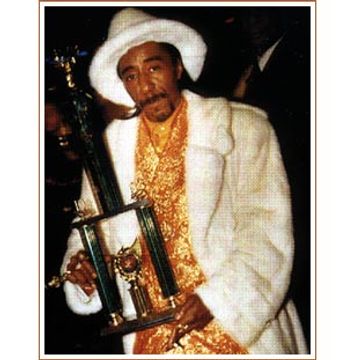
In order not to bruise a pimp’s peach of an ego, there are many categories: If you’re not “No. 1 International Pimp of the Year,” you might walk away with a trophy for being a “No. 1 Super Player” or the “No. 1 Boss Player.”

At the November 2000 ball, a millennial mack will be chosen. It may be someone like Scorpio, who was pimp of the year in 1998. It’s incomprehensible that this doe-eyed, candy-voiced man is a pimp; he looks like he should be liberating dolphins trapped by tuna nets. How can he be pimp of the year, next to a shark like Good Game, who looks like he was conceived in a Caddie and teethed with gold-capped incisors.

Scorpio may not be the sharpest-dressed pimp — his orange and gold paisley lami suit looks like it was stitched from Howard Johnson drapes — but he’s a harbinger of the new millennium, a politically correct pimp who eschews whips and hangers, yet manages to keep his women in pocket. “Ain’t nothin’ I like better than a happy hooker,” Scorpio purrs to his stable of six girls. “Long as you’re happy, I’m happy.”

Pimps eyeball at the ball, passing out business cards like candy. The first rule of the pimp game is: Don’t let your woman look at another pimp. “Because if she look at another pimp and she like him, your money stopped,” explains Pimpin’ Ken, a 34-year-old college-educated mack from Milwaukee who majored in business and sociology. Ken also likes to brag about having a Ph.D. in Pimpin’ Ho’s.

Pimpin’ Ken claims that history justifies his job; prostitution is the oldest profession in the world, he says. But a historical precedent of slavery, as these African-American pimps should acknowledge, does not make slavery acceptable. When they talk about their girls, they believe in free will, saying, “She chose me; no one’s forcing her to do this.” But when it comes to their own careers, pimps believe in fate. Their disenfranchised youth is to blame; they had no choice but pimping or dealing drugs.

Scorpio is considered a “gentleman pimp” for his hands-off approach. Then there are mother pimps, who coddle the girls, and dope fiend pimps, who inoculate theirs. A whore’s job is to break a pimp down, Ken says, and a nagging prostitute makes a pimp beat her. “But you can only beat a person for so long,” he adds. “I tried, but it wasn’t easy to jump on someone and then sleep next to her. When I look at most women, I have to consider my mother and the love that I have for her; if it weren’t for that, I’d probably be just as cold and callous as other pimps.”

Now Ken is into space-age pimping, where the philosophy is that a woman stays because of choice, not force. He has to control a woman’s mind without physical abuse by selling her a dream. “Besides,” he adds, “if you beat a woman and destroy her face, how can she get your money?”

A “godfather” is the mentor who befriends a greener pimp, and Don learned from a craggy man nicknamed God. “I don’t think a pimp should be a role model,” God confides over the craps table. “But they are on Chicago’s West Side.”

God no longer hustles and Don claims he retired from pimping in 1985, after he found the Judeo-Christian God during a PCP-induced haze and a televangelist show. Now he’s “Bishop Don Magic Juan” and ministers to “the outcasts of society.”

And while he wouldn’t have won a humanitarian award during his pimping career, the Don says his girls were treated with respect. Instead of calling them bitches or ho’s, he called them by their names. Don concedes it was a tough love approach. When a girl got out of line, if he had to reach between her gap to see if she had his trap [money stash], she got a whoopin’. Implements varied from a hanger, whip or pimpstick, a gilded cane pimps like to carry. If she was very bad, the girl had to stand in a tub while Don poured alcohol on her cuts or rubbed salt into them.

“If a woman stood up under that, you knew you had a good thoroughbred that was ready for the track,” Don snarls. “You got to have a woman that no matter what, she want to see you on top, whether she has to spend 150 years in jail.

“I had a girl got shot in the thigh and she went home, tied her leg up and went straight back to work. Another girl got shot five times, I get to the scene and the girl says, ‘Daddy, I want to get up from here so I can go get your money.’ Her momma said, ‘What have you done to my daughter?’ I didn’t do nothing, that’s dedication.”

Such tales are chronicled in his autobiography, “From Pimpstick to Pulpit: it’s Magic!” It’s a roller-coaster read of a life steered by Don’s magic wand, which plums Dionysian depths before the Holy Spirit uplifts him.

Don Juan glides through the ghetto in his green and gold Rolls Royce sipping Mokt on the rocks from a plastic cup. The Don dresses and decorates in green and gold (green for the money and gold for the honey his women sold). During Don’s prime in the late ’70s and ’80s, his home dripped green and gold carpets and drapes. Toilet seats were made of clear glass and lined with $50 and $100 bills. His poodles Don and Juan sported colored fur and his women, the Juanettes, were branded by “Property of Don Juan” tattoos. Don dyed his beard yellow and the Juanettes were famous for Sharon Stoneing their golden bushes. But those were glory days.

“Dope is the new pimp,” many of them growl. Some pimps were forced into early retirement because their women left them to work for drug dealers, who drove Lamborghinis and Ferraris instead of Cadillacs.

The party is tame compared to prior years when bods built for speed performed Thai bar-girl tricks. Later, during a motel after-hours party, the birthday boy will have his dancing girls. For two nights and a day, there is no sign of Don Juan but a greasy stack of room service plates and the buttery sound of Al Green from Suite 1619. Then one morning a woman peeks out, a giggling tart in lemon gown, flaxen wig and gold-dusted lids. In the Econo Lodge parking garage, the Bishop and his queen board their magic carpet and fly from the ghetto, far from the projects where he was born. Don Juan flutters farewell with a diamond wave and flashes a 24-karat gold-capped grin.

Continue Reading Close

The Date Doctor is in!

A new romance service offers professional daters who will chat, flirt and tear you apart for a fee.

  • more
    • All Share Services

The Date Doctor is in!

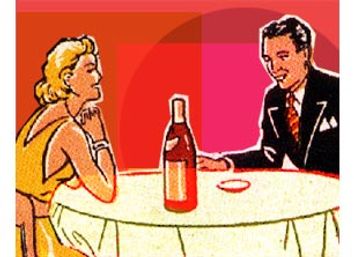
All men should be smooth as Gerald. When he fetched me for our date, it
wasn’t on his bicycle. He brought a buttery yellow rose and opened every
door. At the Pacific Ocean Pier in Santa Monica, Calif., he sacrificed the tickets he
won at the arcade shooting gallery so I could trade them for a barbed-wire
tattoo appliqui like Pamela Anderson’s real one. At the first sign of
goose bumps, he offered a sweater and at the end of the evening, he didn’t
try to paw me. Gerald was a perfect gentleman — for only $75 bucks an hour.

Gerald is an actor by day and power dater by night. He works for Bart Ellis,
a Los Angeles social worker and relationship expert who founded “power
dating” 10 years ago. The Date Doctor can’t promise to cure
lonely hearts, but he can up your eligibility if you get a sorry-I’m-busy
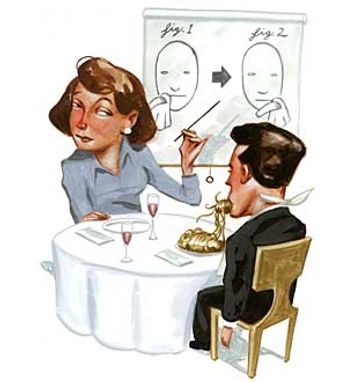
signal after every date. Ellis sends clients on a mock date with one of his
10 power daters, who then reports back to the doctor on how a client could
improve the stakes for finding a mate. Then Ellis delivers the unexpurgated
advice. Perhaps a client needs to stock up on her Scope, for instance, or
keep his monologues to a minimum. While few amateur dates would ever dare
offer such self-improvement tips, these pros are trained to dispense advice readily. One employee wrote that a client’s clothing style was “retirement home-ish,” before adding, “He was so boring. He prattled on about his family and baseball — I thought he would never shut up! He’s a nerd!”

Unlike the hundreds of singles services and matchmaking businesses, the
Date Doctor doesn’t pretend to play Cupid. Ellis shoots for compatibility,
but he’s not running an introduction service. For my date, Ellis asked such probing
questions as, “Do you want a sophisticated kind of guy? What about hair, do you want a full head of hair?” Surprise me, I said. As long as the guy pays for our date, I
assured him, I would be happy.

“And don’t worry, the feedback session is gentle,” Ellis added. “It’s
the sort of stuff a woman tells her girlfriend about a date the next day.”
Until then I had regarded my adventure into dating education with the
blithe condescension of someone who already has a boyfriend, for whom
this is just another professional challenge. But Ellis’ remark made me
nervous. I hoped these daters were more tactful than my
friends, who skewer men with morning-after exclamations like, “He had the
smallest penis west of Nantucket!”

Clients pay $150 for a two-hour date and critique session, although with
Ellis’ recent appearance on a French TV show and other media attention, he
plans to raise prices to $495 for a 3-hour date.

Ellis recruits surrogate daters through ads or they contact him through
word of mouth. “I look for people who can improvise when something isn’t going well, like if a client is painfully shy,” Ellis explains. “A lot of them are actors, though they’re not acting on the date. I didn’t want to hire psychologists who would approach the date
clinically. The power dater merely serves as a video camera or a mirror.”
Like his employees, the 60-year-old, happily married doctor peppers
conversation with non-clinical observations — such as “Women are usually on the receiving end of a lot of shit, but that doesn’t mean every guy is a schmuck.”

While not expected to render deep psychological analyses, power daters do
have to possess some skills. Ellis says being single and perceptive are
prerequisites. Moreover, he tosses resumés of those candidates who
drool over getting paid to meet chicks. Ellis expects power daters to flirt
with a client to test how they respond to touch and intimacy. (If things go well, power daters are allowed to pursue relationships with clients, but it’s more common for the clients to develop crushes.) Of course, knowing a date is dating you in order to criticize you dampens the chance for a love connection. As ex-client Dawn Herriot says, “It’s scary being assessed by someone while you’re ordering dinner.”

Like an uncooperative patient, my critique showed that I was unwilling to
flirt. When Gerald got flirty, at the arcade by a machine that was supposed to measure sex appeal, I just heard bad voice-over script: He [brushing her shoulder blades
lightly]: “Oh look, here’s a game for you. [Coyly] Do you want to try it?

I begged off, saying that I would fall into the Ice Queen category.
But really I just felt silly responding to scripted flirtation. Ellis
acknowledges that a client’s behavior can be largely determined by
the mock dater. “It takes six or seven dates to really get to know a
person,” he admits. “So the power date is only a snapshot, not a
full-length movie.”

But Ellis believes he can deduce flaws despite incompatibility.
“There are people who say, ‘I don’t think so-and-so read it right, let me go
out with a different power dater.’ Then they go out with someone else and the
same patterns emerge, like concealing too much of yourself during a date.

“Some bad behavior doesn’t require a psych degree to note,” he continues: “One woman got so drunk, she began eating off her power date’s plate. Then she called out to
the waiter, ‘Somebody marry us quick! I’ve only got one egg left, and I’m
sure it’s fried.’ One man sank 1,000 ships after his power date confided
that her mother had passed away recently and he responded, ‘I know how you
feel — my dog just died!’”

Doug Warhit, a 43-year-old who retired from power dating a few years ago,
wishes more women would leave a guy wanting more. “Don’t unpack all your
baggage on a first date,” he advises. Another taboo is talking about what a
jerk an ex-boyfriend was or telling a date that your therapist thinks you
need to meet more people. According to Warhit, the most common mistake among
women is fantasizing that this is The One before a main course had been
served.

“There’s nothing wrong with having a checklist,” he adds, “but some girls put
a man through the Spanish Inquisition.” Another no-no is discussing that
former coke habit or gynecological problems (which leaves politics, sex and
religion as conversation fodder).

Sixty percent of Ellis’ clients are men; Ellis claims many are “competitive daters.” Often successful film producers or executives, these men are obsessed with being the best at whatever they do, including dating. “These are not nerds or losers,” Ellis insists.

The rest of his clients, however, may deserve these untoward descriptives.
“We’re supposed to try to say something positive about the client,” sighs
power dater Laura Buehl. “But sometimes you really have to dig deep. I’ve seen so many guys who are desperate to get laid, it’s scary.” Others just want to “iron out their
dating style,” Ellis says. Just as a Botox injection irons out those
furrowed brows, power dating professes to plump personality wrinkles.

According to Ellis, the service averages 20 clients a month, and in the past
six months it has garnered a groupie following. Adventure seekers sign
on for a power date because it’s a novel experience, like bungee jumping.
“They do it as a happening that blows their mind because they get another
perspective on themselves,” he explains. “It’s another way to explore
consciousness. They’re not doing it to find out what they do wrong on a
date.”

Power dating makes economic science out of romantic alchemy. Operating on
the premise that one can buy love, the client invests money in
self-awareness, with the expectation that they’ll become more attractive.
Ellis considers his service to be the same kind of investment as a sexy new outfit bought for a date. Competitive daters don’t power date to find love. They approach it
like a business plan: to identify deficiencies, either mask or correct
them, and thereby become more marketable. “The cost for a consult with the Date
Doctor is far less than what it will cost you for countless dating disasters, or worse
yet, for divorce court, alimony payments and child support, etc.,” Ellis
surmises. And indeed, perhaps we are more willing to accept criticism when
we pay for it — if Aunt Bessie gave the same advice, we’d shut our ears and open our
mouths in defense.

But if power dating becomes a fad, what will it portend for the future of
romance? In an age of biotech eugenics and New Age self-help, will power
dating become the answer to those nagging personality problems that neither
manuals nor gene therapy can cure? Just as we can build a baby from genius
sperm and fashion-model ova, maybe we’ll all learn to camouflage personality
scars to make ourselves more romantically marketable.

But it’s difficult to imagine a world where so many people are gluttons for power-dating punishment. Asking to be personally, intimately assessed feels masochistic even for a carefree freelancer accustomed to grueling criticism and abundant rejection. Gerald was right. I was guilty of behaving too much like a journalist, but his gall irked me anyway. Maybe I was a little — well — unrevealing. But I’m from New England. Once you’ve weathered the ice storm of suburban Connecticut, it’s difficult to acclimate to California’s sun-drenched confessional booth. Skeptical Yankees subscribe to a heal-thyself doctrine; we self-actualize the old-fashioned way — by sleeping on a bed of nails.

Still, blind dates — even fake ones — are always angst-producing
experiences. The day of my rendezvous with Gerald, I broke out with a
Texas-sized pimple, changed no fewer than six times and regressed to my
first outfit. And when I went to the bathroom during the chips-and-salsa
chat with Gerald, I realized that while the date might be fake, that sprig of cilantro
wedged between my teeth was real. Besides, compared to the last blind date
I went on — during which the man unloaded a steamer trunk of 12-stepping emotional baggage, then stuck a wormy tongue in my throat — my mock date was perfect. So, as a gesture
of gratitude (and so I get the last word), I’ve penned a Dear Jerry letter:

Dear Gerald,

You and me, it wasn’t meant to be. Sigh. I could never fall for a man
who earned his living by criticizing me. And I forgive you for telling the
Date Doc I was boring. It stung, though — and just for the record, when I haven’t driven seven hours and inhaled traffic exhaust for an additional two, clogged on the
artery known as the Santa Monica Freeway, I’m a real party girl. Hoo boy, I
could tell you about some wild nights — if only I could remember them. I
know you were never truly interested in me (how could you be, when I’m so
BOOORING?!) But you’re an actor and your performance was flawless. I mean
that, babe! You were fab — what do those Colgate commercial directors know?
I hope you get your big break soon, so you can give up this gig — because
dating librarian types like me for $15 an hour must be one of the oddest
ways to earn a living that Hollywood has invented for its legions of unemployed wannabes.

Continue Reading Close

Page 1 of 2 in Denise Dowling