Dennis Loy Johnson

Interview with the heretic

Renata Adler says she's proven that she didn't defame Judge Sirica, so how come the media still doesn't believe her?

  • more
    • All Share Services

Interview with the heretic

In an episode reminiscent of Mary McCarthy’s famous, hell-raising put-down of Lillian Hellman — “Every word she writes is a lie, including ‘and’ and ‘the.’” — a single sentence recently caused a furor in the New York literary scene.

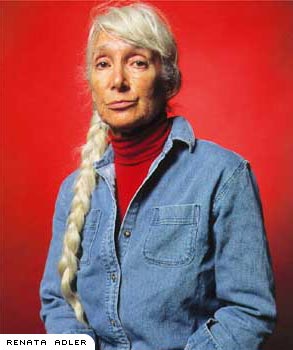
Renata Adler had already been under heavy fire for weeks before anyone even noticed her statement, in her book “Gone: The Last Days of the New Yorker,” that she’d once declined to review the autobiography of Watergate icon Judge John Sirica because he was “a corrupt, incompetent, and dishonest figure, with a close connection to Senator Joseph McCarthy and clear ties to organized crime.”

The discovery revivified the controversy kicked up by the book, which is an angry cri de coeur arguing that the fabled magazine had passed from a literary showcase to a trendy slick with fashion coverage and celebrity profiles. “Gone” got generally favorable reviews in the rest of the country, but reviews in New York — many of them written by people associated with the New Yorker, such as one by former editor Bob Gottlieb — were generally scathing.

None of them, however, mentioned the Sirica comment. It wasn’t until a month later that Sirica’s son, Jack, a reporter for Newsday, called it to everyone’s attention by faxing a letter to Adler’s publisher, Simon & Schuster — and distributing copies to the press — that demanded Adler provide either a retraction or “any evidence whatsoever.”

It was a demand that the New York Times soon endorsed in an editorial, two days after a piece by Times reporter Felicity Barringer recounted a stormy interview with Adler. Barringer asked Adler to provide support for the statement about Sirica, and Adler declined to do so, saying she intended to write her own account of the matter at a later date. Barringer wrote that when she’d asked Adler, “Why wait months to publish your evidence?” Adler had called the question “deeply silly.” Adler calls the Times’ coverage of her book “institutional carpet bombing” — negative articles about her in nearly every section of the paper, including Arts, the Sunday Book Review and Sunday Magazine, Business/Financial and the Week in Review. Adler also noted that Barringer asked Bob Woodward to comment on the Sirica charge, even though Adler had famously trashed his volume “The Brethren” on the front page of the Times Sunday Book review; and that the Times’ strongly worded editorial page indictment of Adler’s ethics was written by Eleanor Randolph, whom Adler had cited for some inaccurate reporting in “Gone.”

Adler wrote a letter to the editor protesting that she was being ganged up on (“The Times has now attacked my ‘irritable little book’ no fewer than six times — in its Sunday and daily papers, its Letters column, its Arts, Media, Editorial and Business sections. The prose has been colorful: ‘off-hand evisceration of various literati,’ ‘drive-by assault,’ ‘Iago,’ ‘irresponsible,’ ‘despicable,’ and so forth. I wonder what the Sports section will say”), that conflicts of interest were being ignored and that Barringer had misquoted her.

However, Times executive editor Joe Lelyveld refused to run it, telling Adler he had decided it was time to “give the matter a rest.” Two days later, the Times ran an item on the clash in the Sunday edition’s Week in Review.

Adler was once a star writer for the Times herself, and wrote on and off for the New Yorker starting in 1963. She wrote speeches for the Nixon impeachment inquiry of the House Judiciary Committee, and as a reporter she covered Selma and the Six Day War, and was one of the first female journalists in Vietnam. But she has felt a collegial chill for her blunt opinions before — her previous most famous single sentence was one in which she said film reviews by her New Yorker colleague Pauline Kael were “piece by piece, line by line, and without interruption, worthless,” because Kael was harsh on independent filmmakers. And in her book, “Reckless Disregard,” Adler rather conclusively showed that esteemed news organizations CBS and Time magazine had been somewhat less than fair — or honest — in stories about Gen. William Westmoreland and Ariel Sharon, respectively.

Still, that book got rave reviews — including one in the Times — as did Adler’s three previous books. (Michiko Kakutani called her novel “Pitch Dark” a work of “magic.”) Just last year, she won a Washington Monthly Journalism Award for her blistering critique of the Starr Report, which appeared in Vanity Fair.

In the current issue of Harper’s magazine, Adler defends the Sirica comment and discusses the Times coverage of it. But the roots of the current controversy — and Adler’s feud with the Times — seem to go back further than that.

In a lengthy interview, she discussed her embattled year so far, and proved herself to be as unfiltered in real life as in her writing.

Let’s start at the beginning: What made you decide to write “Gone”?

Well … it was time, it was time. What happened at the New Yorker seemed such a waste. There were things that could have been done. There weren’t many people who were placed to do them, but for example, if you take Bob Gottlieb — Tina Brown, I mean Tina Brown is Tina Brown, but Bob Gottlieb, there was something else he could have done. But he was too busy talking about how loved he was. So, I thought that was it. I mean, it wasn’t something in a day, but it was a loss.

A loss you document, at least partly, by portraying the changing character of staffers there, including some absolutely devastating characterizations — in particular, you unload on Adam Gopnik.

I do. People characterized that as “cruel,” and that surprises me. Because if you look at it, physically, it’s not cruel. I mean, there’s no deformity.

What about describing him as “meaching”?

Well, he was meaching!

Fabulous word, but it conveys such a Dickensian image of stoop-shouldered sniveling and hand-wringing.

Well, I thought, this is the distillation of the genuine article. I mean, I really intended it as I wrote it, think of it as an understatement and would write it again. I guess with the Pauline Kael piece, I said what I think and do: It isn’t fair to attack somebody weak, or some poet in a garret. You go for the bullies. I think I did that here.

Such characterizations constituted an attack on a very well connected elite. You must have known trouble would ensue.

I guess so, but I really underestimated it terrifically. Because one thing that was clear was it wasn’t going to be an enormous bestseller. I thought there’d be sort of a “Who cares that much?”

Every single person in New York, apparently. You even got bad reviews from some old friends — such as John Leonard, who once said, “Nobody writes better prose than Renata Adler.”

John Leonard knew what he had to do and he did it. And I wouldn’t expect anything else.

In a New York magazine profile, Michael Wolff actually draws on your personal friendship.

But it was friendly, so I was really grateful for it. You know, Joan Didion once said about reviews of her books: If they’re unfavorable, you always think, well, thank God they didn’t find the part that’s really terrible.

What did you think about the piece in the New York Observer by Bob Gottlieb, whom, once upon a time, you recommended for the top job at the New Yorker?

I can’t remember much about it except that he said he was cast as a bad guy or something. And I thought, I didn’t cast him as a bad guy, I cast him as an idiot — which I think he abundantly was.

He says the “book is riddled with errors, of varying degrees of importance and disingenuousness,” and backs it up with some facts you did indeed get wrong — several names, and the date of Richard Nixon’s resignation.

Well, here’s the thing: All factual errors, including typos, are lamentable and there’s no excuse for them and I feel bad about them. On the other hand, these errors cannot be disingenuous. What’s he talking about — I misspelled people’s names for disingenuous reasons? I mean, Nixon resigned the year he resigned and I knew it perfectly well — I was on the impeachment inquiry. This stuff is inexcusable but it’s absent-minded.

However, it bolsters an opinion that you just rushed something off the top of your head.

Well, that’s fair. It’s inaccurate, but it’s fair.

And some of his accusations are more substantive: He says you are “seriously wrong” when you claim the New Yorker didn’t really begin to lose money until his tenure.

He’s wrong. I mean, why does he think Si Newhouse fired him?

Gottlieb was one of the first to shift discussion to a psychological analysis of you as someone caught up in a “dysfunctional family.” Your response to such discussion?

It’s just clichi and it’s so stupid — about a magazine! That I was competing for Mr. Shawn’s attention against Jonathan Schell — I mean, it’s so nuts! First of all it’s not true — it’s so patently untrue, because it means you can never discuss an issue. This is one of those analysands, I’m afraid, who say, “Well, we have here a classic.” But whatever they look at they have here a classic, so there are no issues, there are no real personalities. I mean it’s a catty piece but it’s just so dumb. It’s just a retribution piece.

Arthur Lubow’s profile in the Sunday Times Magazine relied heavily on Freudian analysis, too, portraying you as a woman — a notably single woman — possibly deranged by deep-seated issues with men based on some father fixation. For example, he says you obtained degrees from Bryn Mawr, Harvard, Yale and the Sorbonne as a way of “treading water as she waited, like most women of her generation, to marry.” Is that something you told him?

No! But the Freudian stuff — and the wool — whatever business he said my father was in — I mean, it just wasn’t right.

Your father didn’t run a wool factory in Danbury, Conn., as Lubow says in the article?

No, he never had anything to do with wool in his life.

The family money doesn’t come from wool factories in Germany?

No. There is no wool in our family at all.

Where did he get all that?

Beats me.

Well, how about when he says, “Shawn first appeared to Adler to be the father she had never had (warm, supportive, accessible) and then proved to be quite like the father she did have (remote, self-involved, unreliable)”? Is that how you would describe your father?

No, not at all. Nor is it how I would describe Mr. Shawn. It’s just dime-store analysis, and it’s wrong.

OK, a month later, new stories about you — especially at the Times — began to focus on something more clear-cut: the Sirica comment. I want to ask you about the now-famous interview with Felicity Barringer, because that’s where most people first read about this, and almost every piece the Times has run since refers to comments you make in it. First, how did Barringer approach you?

She said, “I’m writing a piece about ethics in book publishing — these people who slap something between two covers –” she actually said that “when I have to justify to my editor what I’m going to print. What are your sources?” It was rude, it was bellicose, it was …

She was rude and bellicose?

Oh, very. There wasn’t a moment’s pretense. It was “Don’t give me anything about this, and don’t give me anything of that.” Very bad detective in the good-bad detective thing. And the fact is that, unless you think, Oh … my … God, this is the New York Times!, it’s a totally ineffective way to report. I thought, Wait a minute — “slapping between two covers,” and “Don’t give me any of this”? Well, it doesn’t take a radar …

What about your “deeply silly” comment? I gather it had to do with being asked to give up your source –

Through her! To a newspaper that is on the record as saying they never give up sources. But she also said, “When and in what publication will it appear?” The reason that’s a deeply silly question, unless you’re working at the New York Times, is you have no guarantee from anybody of when and where it’s going to appear. She said, “So is it going to be in [mocking tone] Vanity Fair?”

But when you wrote that sentence about Judge Sirica originally, didn’t it occur to you that without a little more backing it was inflammatory?

Well, the truth is, if I had it to do again, I would amplify, but only by another sentence or two.

So do you regret now that it wasn’t amplified?

No, I don’t know if it would have mattered at all. I mean, the Times ran four pieces about me even before Sirica. I don’t think I did an injustice, I don’t think it was wrong to leave it that way — I was not doing a reporting piece, I was writing a memoir of what happened at the New Yorker.

Still, you must have expected a backlash.

I guess I really did think other reporters knew about it. I mean, there was all the criticism of Sirica from lawyers, including very conservative professors of law, at the time.

Your critics are questioning your evidence of Sirica’s criminal connections. The Times focused on your contention that the police were paid off to protect the bootlegging operation of Judge Sirica’s father, Fred. As the Times’ Alex Kuczynski put it, you state this “without citing a direct source.”

But I did! I did cite a direct source — right at the beginning of the paragraph in which I say that.

The testimony you cite from William R. Emmons, the son of Fred Sirica’s partner?

Exactly.

Which is what, precisely?

Letters.

Letters to you?

No.

Then to whom?

That, I’d rather not say.

Why not?

My source asked me not to if I don’t have to. I’m allowed to protect sources, too. I mean, Bob Woodward would have said, “I talked to Deep Throat and he says it isn’t so.” What I have is written evidence, and it sure beats Deep Throat.

Well, what else is in them?

That his father shared equally with Judge Sirica’s father, that Judge Sirica’s father himself distributed liquor to customers — there’s stuff about how he talked them into it, what the connections were — there’s more.

You also show that Sirica broke the law by being involved with boxing in Washington, where it was illegal, which is why he did it under an assumed name. Inside.com — which is run by another former New Yorker staffer, Kurt Andersen — called this “remarkably thin stuff.” They cite boxing historian Bert Sugar, who said only fighters at the very top were corrupt. They also quote Felicity Barringer as saying of your evidence, “I guess that means Joe Louis had ties to organized crime.”

That’s a preposterous misrepresentation. Joe Louis, so far as I know, never promoted fights where they were illegal, never fought under pseudonyms where it was illegal to fight under pseudonyms and was not breaking the law while he was also an attorney. He was never described as a hero in the political life of his country, he was never a judge of the court, he was never a U.S. attorney responsible for prosecutions under the Volstead Act when he was living in his father’s house when his father was running a bootlegging operation. You know, I didn’t want to attack Sirica’s whole life, nor do I want to spend my whole life attacking Judge Sirica. I just wanted to say my sentence about him was sound. I don’t think there’s any question that there is a mass of substantive, public, written evidence to back that sentence.

Yet before your Harper’s article even hit the newsstands, the Times had run Kuczynski’s article, and one by Martin Arnold saying there was no proof in it at all.

Martin Arnold’s piece is an egregious example of absolute disinformation. You can’t say there’s nothing there. I mean, you’ve got to address it.

Arnold also uses “Gone” as evidence that publishers don’t fact-check books.

I mean, the New York Times, talking about fact-checking — there are no fact-checkers for the daily news! None! So for Martin Arnold to say you can’t rely on my book as you can your favorite newspaper — by which he meant, of course, the Times — that’s just total, absolute nonsense.

So, here’s your chance to set the record straight — was “Gone” fact-checked?

Oh, of course there was checking! It’s much more careful at Simon & Schuster than at the New York Times. I’ve worked for both so I know.

Judging from your account it seems there has been a personal edge to this thing between you and the Times since the beginning. Any idea why? Does it have to do with your press criticism in “Reckless Disregard”?

Even leaving aside “Reckless Disregard,” you’re just not allowed to criticize the press. I mean, what are they so angry about really? If they were really so interested in my claims about Judge Sirica, they’d look into it themselves, instead of telling me to go do it for them.

Why don’t they, do you think?

“Lazy” is such a key word in this stuff. Being on the phone is what they call legwork now — you know, somebody who has an agenda calls you and demands your sources. It’s very strange. But it’s a bureaucracy at the Times, where nobody has jurisdiction, as though they were all independent fiefdoms. They’re just an organ of a certain kind of dogma where they praise each other. It’s like a Vichy newspaper, trying to ingratiate itself. Except there’s no Vichy government. So they’re the government as well — it’s not just Pravda, it’s the Kremlin. It’s scary when you take a book that’s not been overpraised, Lord knows, it’s not a source of information for what they claim to be interested in, and to write 10 pieces, well — who’s the David here and who’s the Goliath?

And the other publications that have been critical — they’re just following the Times’ lead?

Well, it’s interesting that since Dinitia Smith’s piece, the first piece in the Times about “Gone,” they all quote from each other that I left the New Yorker in 1989. I don’t know where they got that date. I never left the New Yorker.

What do you mean?

Nothing happened in 1989.

You never quit the New Yorker?

No, I still get the staff list and I’m on it, for what it’s worth.

Billy and the bullies

Did the New York Times, Random House and "America's most popular poet" gang up to smear a small poetry publisher?

  • more
    • All Share Services

Billy and the bullies

It was a story that broke like a sex scandal — in a front-page newspaper article that fueled a wildfire of gossip. By the time it was over months later, the reputation of a literary star would be questioned, a highly regarded journalist would reveal a conflict of interest and the biggest publisher in the world would look like a blundering bully.

Who ever thought such a story would take place in the poetry world?

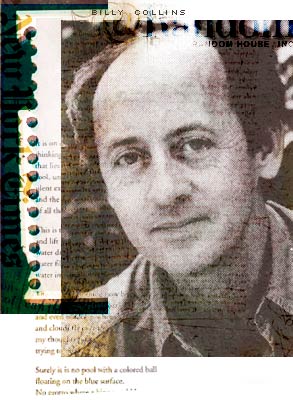
It all began on Sunday, Dec. 19, 1999, when the New York Times ran a story about poetry on the front page, something none of the many poets I talked to while researching this story could remember ever having happened before. But there it was: an article by Bruce Weber, one of the Times’ top cultural reporters, about Billy Collins, who Weber contended was, based on sales figures, “the most popular poet in America.” (Admittedly, many of my sources mocked the claim. One acidly pointed out, “Sales figures would indicate that, actually, Jewel is our leading poet.”)

There was no denying that Collins was hot. His popularity had soared after a couple of 1998 appearances on Garrison Keillor’s “A Prairie Home Companion” showcased his funny and accessible poems, and within weeks sales of his new collection, “Picnic, Lightning,” had topped 20,000 copies — bestseller status for a poetry book. (This reviewer, by the way, gave it a rave.)

Soon Collins was in demand as a reader at colleges and reading programs around the country, and his three most recent books — “Picnic, Lightning,” “Questions About Angels” and “The Art of Drowning” — were on the poetry bestseller list at Amazon.com. Within a few months, the biggest publishing house in the world came calling. In the spring of 1999 Random House lured Collins away from his publisher, the tiny University of Pittsburgh (“Pitt”) Press, with a three-book, six-figure contract. For a literary poet, it was an unprecedented offer. And whether other poets like Collins’ work or not, the deal’s lavishness seemed to buoy the spirits of the entire poetry community, coming, as it did, at a bleak time; as Manhattan’s publishing giants have grown explosively bigger via conglomeration, they’ve become less interested than ever in low-profit poetry.

Then came the Times story. The very fact that Collins could get himself on the front page of the newspaper of record seemed like cause for celebration.

But despite Weber’s glowing portrait of Collins — he opened with a dramatic scene of the poet reading to some not so poetically inclined high school students and keeping them “in his thrall” — the article was actually about the business of publishing poetry. Specifically, it reported on negotiations between Random House and the Pitt Press for the rights to some of Collins’ poems.

Random House, Weber reported, had been just two months away from publishing a volume of Collins’ selected poetry — a collection of 80 previously published poems — when the university press refused permission to reprint the 61 poems Collins had previously published with Pitt, forcing cancellation of the “already completed” book. Weber termed Pitt’s refusal “an affront to Mr. Collins” and cited anonymous “publishing executives” describing it as a nearly unprecedented attempt by a publisher to “unduly stand in the way of an author’s success.”

But, as was revealed when negotiations between the two publishers finally concluded late last month, the true story — and Weber’s own interest in it — was considerably more complicated.

“I became almost physically ill,” Pitt Press director Cynthia Miller told me, describing the moment when she first saw the Times story last December and read the headline — “On Literary Bridge, Poet Hits Roadblock.” Miller knew instantly that what she’d considered typical rights negotiations had been turned into something else.

What the average reader learned first from Weber’s article was that Collins is “weary after almost thirty years of teaching English,” though he nonetheless gives his all to his students. Weber then went on to marvel at other aspects of Collins’ popularity before finally getting to the disagreement between his publishers. That, Weber limned quickly: Miller had abruptly “denied” Random House the right to reprint poems that would make up over three-quarters of “Sailing Alone Around the Room,” the volume of Collins’ selected poems.

Weber briefly quoted Miller’s all-business explanation — allowing reprints from Pitt’s recent Collins books would hurt a “return on that investment” — then the reporter called in a large cast to give damning evidence against her. The anonymous “publishing executives” were joined by Random House associate publisher Mary Barr, who said, “This is an anomalous hurdle, unprecedented for poetry,” and “it would have been beyond prophetic for us to predict that Pittsburgh would be this obstinate.” Weber wrote that “Mr. Collins and Random House” contended that the selected volume would only help sales of Pitt’s books and paraphrased the 58-year-old Collins’ complaint that “he has already earned what is generally considered the special honor” — that is, the publication of a volume of selected work — that more typically goes to older poets.

In what is perhaps the article’s most scathing accusation, Collins’ agent, Chris Calhoun, angrily implied that Pitt had demanded an extortionate amount of money — some $200,000 — for the reprint rights. “And two complimentary review copies,” Calhoun added sardonically.

By the time the story ended with some more sympathetic portraiture (Collins, “the son of an electrician,” readers were told, “was born in a small New York hospital”), it was hard not to share in the sense of outrage. In short order many people did, even though Weber’s characterization of Pitt didn’t sound like the honorable little press so well known in the publishing world. (It certainly didn’t sound like the place I’d known firsthand when I was a judge of its Drue Heinz Literary Prize in 1994.)

But in innumerable online poetry chat groups, at literary events in New York and at writing programs across the country, it seemed everyone was talking about how evil the Pitt Press was being toward the heroic Collins. Anger only intensified a week later when Publishers Weekly picked up the story and reported — incredibly and, as it turned out, incorrectly — that Collins, according to Calhoun, his agent, had “waived royalties” (i.e., let Pitt keep his share of the income from the three books he’d published with the press), as an apparent plea to Miller to release the reprint rights.

Soon thereafter, poets published by Pitt began getting letters from Pulitzer Prize-winning poet Henry Taylor, announcing that he was boycotting their work. I interviewed Taylor at the time and asked him what had motivated him.

“I’m a friend of Billy’s,” he told me. He said he was at Collins’ house in Somers, N.Y., just north of New York City, for lunch the day the Times story appeared, and the two had talked about it. “It all comes down to whether Pittsburgh is behaving reasonably or punitively. I think they’re behaving punitively,” Taylor said. He said he hoped others would join him, and that he would be “guided by Billy Collins” as to when to end the boycott. After that interview was published, I received a few letters from readers offended by the idea of a book boycott, but even more letters came from people who told me they were joining Taylor.

As Pitt continued to be pounded, however, Collins remained silent. Many fans were surprised that the affable poet let the rancor build without comment, especially those who knew something of his dealings with Pitt. Hadn’t Collins indicated to the Times that when another large New York house, Morrow, let his “Questions About Angels” lapse out of print, he’d been delighted to sign with Pitt because “first, the Pitt Poetry Series is well known, with a real litany of first-rate authors. And second because they have a reputation for always keeping books in print”?

What’s more, Pitt had bought back “Questions About Angels” and marketed it aggressively. It had also done a remarkable job promoting and distributing “Picnic, Lightning,” with the resulting sales figures unequaled by conglomerate publishers. But Collins had nothing more to say about Pitt, and attempts to reach him through Random House were summarily rebuffed. “I don’t have his telephone number,” his publicist there told me.

In Pittsburgh, meanwhile, Miller was getting “dozens” of supportive e-mails from other university press directors. Still, how do you counter accusations in the New York Times? Her letter to the editor went unpublished and unanswered.

In retrospect, Miller said, what upset her most was how “the many things I said to Bruce Weber that would have directly addressed the things Random House was saying were the things that did not appear in the article.”

The real story, Miller said, was that Random House had reneged on an earlier promise to publish a collection of Collins’ new poems first, in 2000, and wait to put out the selected volume until late in 2001. That schedule, she said, would have allowed plenty of time for the still hot “Picnic, Lightning” to “sell through a normal life cycle,” and provide the small nonprofit with money to publish more new poetry books. Based on that 2001 publication date for the book of selected poetry, Miller offered Random House “standard reprint fees” (approximately $6 per line).

But in November, before contracts were signed, Miller learned by chance — an employee was surfing the Web — that Random House was advertising “Sailing Alone Around the Room” on Amazon.com for February 2000 release. Apparently, Collins had failed to deliver the manuscript of new work, and the book of selected poetry had been put into production even though rights had not yet been obtained. Random House had listed the book in its catalog, too, which had already been sent to book buyers. All of this, Miller felt, explained why pre-Christmas sales of Collins’ Pitt books, expected to be high, had instead “plummeted by 50 percent.”

When Miller protested, Calhoun asked her to estimate the potential income lost to Pitt by the change in the publication date, she said, to clarify the severity of the selected volume’s impact. The Pitt accountant’s “conservative estimate” was $200,000, which Miller stressed “was never a negotiating demand.” In other words, Miller maintains that Pitt never asked Random House for $200,000. If it had, she added, half of that sum would have belonged contractually to Collins — something the Times article never mentions.

Why hadn’t the Times article clarified this fact, instead of merely relaying Calhoun’s angry remark? In a phone interview, I asked Weber why he’d left it out.

“Did Cynthia also tell you that her entire strategy was basically to tell Random House to go fuck yourself?” he asked me. He admitted this wasn’t an exact quote, then explained, “The ‘inside baseball’ of a book contract didn’t seem to be entirely relevant to the case, and it certainly would have bored the shit out of our readers.”

But something else that Weber left out of his story offers another explanation: his friendship with Collins’ agent, which was the subject of rumors I’d heard from sources in both New York and Pittsburgh. It would not be unusual or necessarily questionable to be professionally acquainted with a subject on such a contained beat — the New York publishing scene is surprisingly small. And indeed, knowing people in the business gives a reporter advantages in covering it. But a more personal friendship with someone who has a vested interest in the outcome of the events being reported on (literary agents like Calhoun typically receive as much as 20 percent of their clients’ earnings) is another matter.

Weber admitted without hesitation that the rumors were true. Asked specifically if the relationship was personal or professional, Weber characterized it as a “close friendship” going back to college days, “so I’ve known him for a good long time.” Asked if he didn’t see this as a conflict in reporting the story, Weber laughed and said, “Well, no.”

Two days after news of Weber’s conflict of interest broke, Collins called Miller and asked if talks could resume. “Everybody in New York is suddenly my best friend,” she told me at the time, but that was all she would say on the record. She told Collins she’d talk only if Random House “called off the dogs,” and she had agreed not to talk to the press herself until negotiations were over.

When she was at last able to speak with me in April, Miller told me about a telephone conversation she had with Daniel Menaker, Collins’ editor at Random House, a couple of weeks before Weber’s article ran in the Times. Up to that point, Miller says, every solution she’d suggested to Random House and Calhoun had been “dismissed out of hand, as if they weren’t even reasonable things to talk about.” Still, she insisted once more to Menaker that Random House either delay publication of the selected volume or “give us fair recompense.” Then, she says, Menaker abruptly warned her, “‘Our spin doctors are going to be all over this. This is going to be all over the media.’”

Miller, who had not spoken to Weber at that point and was unaware of the upcoming Times article, said Menaker’s remark startled her. “He repeated it over and over,” she said. “I kept thinking, why would this be all over the media? People fight over permissions all the time. You don’t normally read about it in the New York Times.” (Attempts to reach Menaker for clarification were rebuffed by Random House publicity.)

Whoever the “spin doctors” Menaker mentioned might be, there are other reasons to question the impartiality of Weber’s story: Numerous sources were cited on one side of the issue, and only one on the other. It seems notable that Weber didn’t talk to Ed Ochester, for example, the well-known director of Pitt’s poetry publications, and Collins’ editor there. (Ochester certainly would have added a kind of balance — he told me he thought the Times story was “bilge water” and “a setup job” orchestrated on behalf of Random House. “They have egg on their faces,” he said. “What they’ve done is foolish. For any place to begin producing a book without securing the rights is bizarre.”)

Weber also misrepresented some aspects of the publishing industry — it is not standard operating procedure to hand over rights to material as hot as “Picnic, Lightning.” Nor is it normal to put out a selected volume so soon on the heels of such a hit; it is highly doubtful, for example, that Random House would have considered putting out “Sailing Alone Around the Room” this year if it had published “Picnic, Lightning” itself. Nor is it normal to put into mass production books for which the rights have not yet been procured.

But perhaps most troubling of all are the questions the matter raises about Collins himself: Why did he remain silent while a small press with a stellar reputation for supporting poetry — particularly his poetry — was being unfairly maligned? Why didn’t he call off poet Taylor from his divisive poetry book boycott?

Collins missed another diplomatic opportunity in late April, when Miller and the Pitt Press quietly issued a press release announcing the settlement of the rights negotiations. Miller had asked Random House negotiators to join in the statement, but they declined. Collins, meanwhile, finally spoke, but only to make a brief, angry statement to the Washington Post. “The poems are being held hostage,” he declared, but refused to elaborate.

In Pitt’s release, however, Miller stated that her “primary concern” was to “protect the success” of all three of Pitt’s Collins books, not just the 61 poems slated for the selected volume. And despite Collins’ remarks, his Pitt poetry is still in circulation and selling quite actively — all three books are among the top 20 poetry bestsellers on Amazon.com, for instance.

Ultimately it was Random House, not Pitt, that chose to delay the publication of Collins’ selected volume. Once negotiations reopened in January, Pitt offered a licensing deal whereby Random House could have put the book out earlier for a sliding permission fee. Instead, Random House chose to give Miller what she’d asked for in the first place: “Sailing Alone Around the Room” will be released in late 2001, and will feature the 61 poems purchased from Pitt for “standard permission fees.”

Continue Reading Close