Harry R. Weber

Halliburton objects to Gulf spill settlement

  • more
    • All Share Services

Cement contractor Halliburton is objecting to a proposed $7.8 billion settlement between BP and a plaintiffs group representing more than 100,000 victims of the 2010 oil spill in the Gulf of Mexico.

Halliburton said in a filing in federal court in New Orleans late Tuesday the settlement improperly seeks to assign certain claims that BP has made against Halliburton to the Plaintiffs Steering Committee.

The Houston-based company says allowing the settlement to be approved under those conditions would affect its ability to independently settle with the PSC or individual plaintiffs. Halliburton also asserts it can’t be made to contribute to payments BP makes to the plaintiffs without a legal obligation to do so.

Preliminary approval of the momentous settlement is expected to be considered by a federal judge on Wednesday.

Environmental groups challenge Shell drilling plan

U.S. government approved an oil exploration plan that involves five proposed deep sea wells

  • more
    • All Share Services

Environmental groups challenge Shell drilling plan

Environmental groups are asking a federal appeals court to throw out a U.S. government decision to approve a Shell oil exploration plan that involves five proposed wells under more than 7,000 feet of water in the Gulf of Mexico.

The Bureau of Ocean Energy Management Regulation and Enforcement approved the plan in May. The plan also includes three previously approved wells 72 miles off Louisiana.

Defenders of Wildlife, the Center for Biological Diversity and the Natural Resources Defense Council claim in a petition filed Thursday in the 11th Circuit U.S. Court of Appeals in Atlanta that the decision violates the law and that the environment would be harmed if it stands.

New regulations for deepwater drilling were imposed following last year’s deadly rig explosion and Gulf oil spill.

BP sues partners as Gulf marks year since spill

Still widely criticized for spill, the oil giant filed a $40 billion lawsuit alleging negligence by the rig owner

  • more
    • All Share Services

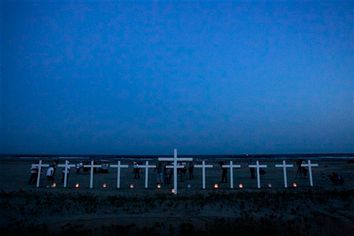
BP sues partners as Gulf marks year since spillPeople gather near crosses -- 11 for the workers who died in the Deepwater Horizon oil rig explosion and one for the Gulf of Mexico, center -- during a vigil to mark the first anniversary of the BP PLC oil spill on a beach in Grand Isle, La., Wednesday, April 20, 2011. (AP Photo/Patrick Semansky)(Credit: AP)

BP marked the first anniversary of the massive Gulf of Mexico oil spill with a $40 billion lawsuit blaming the disaster on its partners, as Gulf residents held somber vigils and relatives flew over the waters where 11 oil rig workers died.

A year after the rig explosion that triggered the worst offshore oil spill in American history, President Barack Obama vowed to hold BP and others accountable for “the painful losses that they’ve caused.”

For its part, BP filed a lawsuit alleging negligence by the rig owner and by the maker of the device that failed to stop the spill. Both of those companies filed their own claims, a reminder that lengthy court battles lie ahead.

The disaster began on the night of April 20, 2010, when the Deepwater Horizon rig burst into flames and killed the 11 men. The rest of the crew evacuated, but two days later the rig toppled into the Gulf and sank to the sea floor. Over the next 85 days, 206 million gallons of oil — 19 times more than the Exxon Valdez spilled — spewed from the well.

Parents, siblings and wives of the workers — whose bodies were never recovered — boarded a helicopter Wednesday to see the waters where their loved ones perished. The helicopter took them from New Orleans out to the well site, circled around so that people on both sides of the aircraft could see and then returned to shore, said Arleen Weise, whose son, Adam, was killed on the rig. The only indication they were at the site was an announcement from the pilot, she said.

“It was just a little emotional, seeing where they were,” Weise said by phone from Houston, where rig owner Transocean planned an evening memorial service.

Asked what went through her mind when she saw where the rig went down, Weise said, “Just rise up. I wanted them to come up, but it didn’t happen.”

In a statement, President Barack Obama paid tribute to those killed in the blast and said that despite significant progress toward mitigating the spill’s worst impacts, “the job isn’t done.”

“We continue to hold BP and other responsible parties fully accountable for the damage they’ve done and the painful losses that they’ve caused,” he said.

BP said in its lawsuit filed in federal court in New Orleans that Cameron International provided a blowout preventer with a faulty design, alleging that negligence by the manufacturer helped cause the disaster. The suit seeks damages to help BP pay for the tens of billions of dollars in liabilities it has incurred from the disaster.

BP also sued rig owner Transocean for at least $40 billion in damages, accusing it of causing last year’s deadly blowout. BP says every single safety system and device and well control procedure on the Deepwater Horizon rig failed.

Late Wednesday, BP also sued cement contractor Halliburton alleging fraud, negligence and concealing material facts in connection with its work on the rig.

In a statement, Transocean called BP’s lawsuit “desperate,” ”specious,” and “unconscionable.”

“The Deepwater Horizon was a world-class drilling rig manned by a top-flight crew that was put in jeopardy by BP, the operator of the Macondo well, thorough a series of cost-saving decisions that increased risk — in some cases, severely,” Transocean said.

Houston-based Cameron noted in a statement emailed to AP that Wednesday was the deadline under the relevant statute for all parties to file claims against each other. It said that it has filed claims of its own to protect itself.

Also Wednesday, Transocean filed court papers demanding that judgments be made against BP, Cameron and other companies in its favor.

A presidential commission has concluded that a cascade of technical and managerial failures — including a faulty cement job — caused the disaster. BP, the oil giant which owns the blown-out well, has paid billions in cleanup costs and to compensate victims. The company has estimated its total liability at $40.9 billion, but it might have to pay many billions more, especially if its officials were to be found criminally negligent in still pending investigations and trials. For now, though, the company has rebounded relatively well, with its stock now just 20 percent below its pre-spill value.

At a candle-lit ceremony in New Orleans’ Jackson Square shortly after sunrise, environmentalists and religious leaders joined to remember the perished rig workers and call on the nation to take the steps to prevent another environmental catastrophe.

“Our souls are slumbering in moral indifference,” said Rabbi Edward Cohn of the Temple Sinai in New Orleans. “People quite rightly are asking: How and when, and by whose insistence and stubborn support, will the public’s mind be refocused upon what happened in the Gulf?”

Elsewhere around the world, BP employees were observing a minute of silence.

“We are committed to meet our obligations to those affected by this tragedy and we will continue our work to strengthen safety and risk management across BP,” BP chief executive Bob Dudley said in a message on the company’s website. “But most of all today, we remember 11 fellow workers and we deeply regret the loss of their lives.”

The solemn ceremonies underscore the delicate healing that is only now taking shape. Oil still occasionally rolls up on beaches in the form of tar balls, and fishermen face an uncertain future.

Louis and Audrey Neal of Pass Christian, Miss., who make their living from crabbing, said it’s gotten so bad since the spill that they’re contemplating divorce and facing foreclosure.

“I don’t see any daylight at the end of this tunnel. I don’t see any hope at all. We thought we’d see hope after a year, but there’s nothing,” Audrey Neal said.

“We ain’t making no money. There’s no crabs,” said Louis Neal, a lifelong crabber.

His wife said the couple received about $53,000 from BP early on, but that was just enough money to cover three months of debt. They haven’t received any funds from an administrator handing out compensation from a $20 billion fund set up by BP, they said.

Still, there are some signs that normalcy is returning. Traffic jams on the narrow coastal roads of Alabama, crowded seafood restaurants in Florida and families vacationing along the Louisiana coast attest to the fact that familiar routines are returning, albeit slowly.

John Williams spent the oil spill anniversary trying to catch mackerel on the fishing pier at Gulf State Park in Gulf Shores, Ala. Hundreds lined the pier.

The state banned anglers from keeping their catch off the pier last year because of the oil, but coolers were full of big redfish and king mackerel on Wednesday.

“People will be back. It’s pretty down here, and it’s good to be out here,” said Williams, of Daphne.

Members of 10 Alabama churches gathered on a public beach in Orange Beach, Ala., during a daylong prayer vigil. As families played in the surf and BP cleanup workers scoured the beach a few miles west for tarballs, Abe Feingold sat under an awning with friends and said a prayer.

“It’s for BP not to forget us,” said Feingold, of Orange Beach. “If they keep reimbursing people, we’ll recover.”

Most scientists agree that environmental damage wasn’t as bad as some predicted, said Christopher D’Elia, dean at the School of the Coast and Environment at Louisiana State University. But biologists are still concerned about the spill’s long-term effect on marine life.

Accumulated oil is believed to lie on the bottom of the Gulf, and it still shows up as a thick, gooey black crust along miles of Louisiana’s marshy shoreline. Scientists have begun to notice that the land in many places is eroding, and plants have been damaged.

Louisiana Gov. Bobby Jindal said more than 300 miles of Louisiana coastline continues to see some BP oil. He was joined by the presidents of six coastal parishes for a commemoration on Grand Isle, a coastal barrier island that took major impact from the oil

Playing on a theme in BP’s advertising during the spill, Jindal urged the company to continue to fund coastal restoration and to speed up claims payments to those affected by the oil. “We continue to call on BP to fulfill the promises of their ads. We continue to call on BP to truly make it right.”

Earlier Wednesday, Ted Petrie, back from his first shrimping run since the spill, docked his boat at the Grand Isle marina.

He said he worries about the Gulf fishing industry’s long-term prospects. That’s why he is opting to pursue his claim against BP in court rather than settle for a quick payout from the company’s fund, as many of his fellow fishermen have done.

Still, he said he’s grateful to be back on the water doing the job he has done for 40 years. He hauled in about 2,000 pounds of shrimp in three days, enough for a modest profit.

“It feels good,” said Petrie, 50. “A fisherman has it in their blood. They just like to do it.”

Seventeen family members, one Transocean official and two pilots were aboard the chopper that flew the families to the site for the three-hour round-trip. Transocean had invited up to three members of each family to attend the flyover, but some families declined.

Janet Woodson, whose brother Aaron Burkeen was killed on the rig, also was on the helicopter ride.

“It was OK, but sad even though there was nothing there,” she told the AP.

——

Associated Press writers Melissa Nelson in Pensacola, Fla.; Jay Reeves in Gulf Shores, Ala.; Brian Skoloff in Salt Lake City, Utah; Michael Kunzelman in Grand Isle, La., and Kevin McGill in New Orleans contributed to this report. Videographer Jason Bronis contributed from Baton Rouge, La.

Continue Reading Close

Gulf oil disaster, one year later

Communities across the Gulf coast reflect on anniversary of Deepwater Horizon explosion

  • more
    • All Share Services

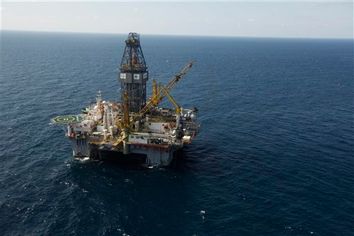
Gulf oil disaster, one year laterFILE - In this Sept. 18, 2010 file photo, the Development Driller III, which drilled the relief well and pumped the cement to seal the Macondo well, the source of the Deepwater Horizon rig explosion and oil spill, is seen in the Gulf Of Mexico, off the coast of Louisiana. More than 3,200 oil and gas wells classified as active lie abandoned beneath the Gulf of Mexico with none of the cement plugging normally required to help keep unused wells from leaking, threatening the same waters fouled by last year's BP oil spill, The Associated Press has learned. (AP Photo/Gerald Herbert, File)(Credit: AP)

Relatives of some of the 11 men who died aboard the Deepwater Horizon oil rig are flying over the Gulf of Mexico on Wednesday, back to the epicenter of the worst offshore oil spill in the nation’s history.

Meanwhile, on land, vigils were scheduled in Louisiana, Mississippi, Alabama and Florida to mark the spill.

On the night of April 20, 2010, the Deepwater Horizon, a rig owned by Transocean Ltd., burst into flames after drilling a well for BP PLC, killing 11 workers on or near the drilling floor. The rest of the crew evacuated, but two days later the rig toppled into the Gulf and sank to the sea floor. The bodies were never recovered.

Over the next 85 days, 206 million gallons of oil — 19 times more than the Exxon Valdez spilled — spewed from the well. In response, the nation commandeered the largest offshore fleet of vessels since D-Day, and BP spent billions of dollars to clean up the mess, saving itself from collapse.

“I can’t believe tomorrow has been one year because it seems like everything just happened,” Courtney Kemp, whose husband Roy Wyatt Kemp was killed on the rig, wrote on her Facebook page Tuesday. “I have learned a lot of things through all of this but the most important is to live each day as if it were your last … what matters is if you truly live.”

In a Wednesday statement, President Barack Obama paid tribute to the 11 men killed in the blast and thanked the thousands of responders who “worked tirelessly to mitigate the worst impacts” of the oil spill.

“But we also keep a watchful eye on the continuing and important work required to ensure that the Gulf Coast recovers stronger than before,” Obama said in the statement.

The president said significant progress has been made but the work isn’t done.

Transocean invited up to three members of each family to attend the flyover. They were expected to circle the site a few times in a helicopter, though there is no visible marker identifying where their loved ones perished. At the bottom of the sea, 11 stars were imprinted on the well’s final cap.

Several families said they didn’t want to go on the flyover, and Transocean decided to not allow media on the flight or at a private service later in the day in Houston.

The solemn ceremonies marking the disaster underscore the delicate healing that is only now taking shape. Oil still occasionally rolls up on beaches in the form of tar balls, and fishermen face an uncertain future.

Louis and Audrey Neal, a Mississippi couple that survives on catching crabs, said it’s gotten so bad since the spill that they’re contemplating divorce and facing foreclosure as the bills keep piling up.

“I don’t see any daylight at the end of this tunnel. I don’t see any hope at all. We thought we’d see hope after a year, but there’s nothing,” Audrey Neal said.

“We ain’t making no money. There’s no crabs,” said Louis Neal, a lifelong crabber in Pass Christian, Miss.

“I’m in the worst shape I’ve ever been in my whole damn life. I’m about to lose my whole family,” he said. “I can’t even pay the loans I have out there. That’s how bad it’s gotten.”

His wife said the financial hit was only part of the past year’s toll. “Our lives are forever changed,” she said. “Our marriage, our children, it’s all gotten 100 percent worse.”

She said the couple received about $53,000 from BP early on, but that was just enough money to cover three months of debt. They haven’t received a dime from an administrator handing out compensation from a $20 billion fund set up by BP, they said.

Still, it’s not all so bleak.

Traffic jams on the narrow coastal roads of Alabama, crowded seafood restaurants in Florida and families vacationing along the Louisiana coast attest to the fact that familiar routines are returning, albeit slowly.

“We used to fuss about that,” said Ike Williams, referring to the heavy traffic headed for the water in Gulf Shores, Ala., where he rents chairs and umbrellas to beachgoers. “But it was such a welcome sight.”

Many questions still linger: Will the fishing industry recover? Will the environment bounce back completely? Will an oil-hungry public ever accept more deepwater drilling?

“It seems like it is all gone,” said Tyler Priest, an oil historian at the University of Houston. “People have turned their attention elsewhere. But it will play out like Exxon Valdez did. There will be 20 years of litigation.”

Most scientists agree the effects “were not as severe as many had predicted,” said Christopher D’Elia, dean at the School of the Coast and Environment at Louisiana State University. “People had said this was an ecological Armageddon, and that did not come to pass.”

Biologists are concerned about the spill’s long-term effect on marine life.

“There are these cascading effects,” D’Elia said. “It could be accumulation of toxins in the food chain, or changes in the food web. Some species might dominate.”

Meanwhile, accumulated oil is believed to lie on the bottom of the Gulf, and it still shows up as a thick, gooey black crust along miles of Louisiana’s marshy shoreline. Scientists have begun to notice that the land in many places is eroding.

For example, on Cat Island, a patch of land where pelicans and reddish egrets nest among the black mangroves, Associated Press photographs taken a year ago compared with those taken recently show visible loss of land and a lack of vegetation.

“Last year, those mangroves were healthy, dark green. This year they’re not,” said Todd Baker, a biologist with the Louisiana Department of Wildlife and Fisheries.

Land is eroding on sites where the oil has killed vegetation, he said.

On a tour of the wetlands Tuesday, Robert Barham, Louisiana’s wildlife secretary, showed reporters the lingering damage.

Roseau cane is growing again where it was cut away during early cleanup efforts, but Barham said the 3- to 4-foot-high stalks should be a lush green. Instead, they were pale green and brown.

“It’s because of oil in the root system,” Barham said. He put his hand into the dirt and pulled up mud saturated with oil. Tossing the sludge into nearby water, it released a rainbow-colored sheen.

Barham complained that BP had not done enough to clean the area. “What they’ve done thus far is not working.”

In the remote Louisiana marsh, there’s still yellow boom in places — not to keep oil out but to keep the tides from carrying oil to untouched areas.

Confidence in Louisiana’s seafood is eroding, too.

“Where I’m fishing it all looks pretty much the same,” said Glen Swift, a 62-year-old fisherman in Buras. He’s catching catfish and gar in the lower Mississippi River again. That’s not the problem.

“I can’t sell my fish,” he said. “The market’s no good.”

But the BP spill has faded from the headlines, overtaken by the tsunami and nuclear disaster in Japan, unrest in the Middle East and political clashes in Washington.

“Nationally, BP seems like a dim and distant memory,” said Douglas Brinkley, a Rice University historian. But the accident will have long-lasting influence on environmental history, he said.

Associated Press writers Melissa Nelson in Pensacola, Fla.; Jay Reeves in Gulf Shores, Ala.; Brian Skoloff in Salt Lake City, Utah; and Harry Weber and Kevin McGill in New Orleans contributed to this report. Videographer Jason Bronis contributed from Baton Rouge, La.

Continue Reading Close

Panel: Transocean not providing oil spill documents

Co-chair of federal investigation panel says organization has failed to provide materials for two months

  • more
    • All Share Services

Members of a federal panel investigating the cause of the Gulf of Mexico rig explosion and oil spill and how to improve safety and oversight are accusing rig owner Transocean of thwarting their efforts to get to critical documents and a witness.

The co-chair of the panel, U.S. Coast Guard Capt. Hung Nguyen, told a packed hearing room Tuesday in a New Orleans suburb that members have been trying for two months to get Transocean to turn over materials related to its compliance with international safety management codes.

Nguyen says the panel also has been unable to get a specific Transocean manager to come in and testify about safety.

Transocean lawyers say the document request is too cumbersome. They say whether the witness testifies isn’t within their control.


Contractor: BP interfered with critical efforts

A salvage firm executive accuses the oil company of unjustly delaying an attempt to close the failed cap

  • more
    • All Share Services

BP interfered with critical efforts to lower an undersea robot to try to close the device that failed to stop the massive Gulf of Mexico oil spill because of concerns over heat buildup from the burning rig, a salvage firm executive said Monday.

The testimony came from Doug Martin, president of Smit Salvage Americas, which was hired to help try to save the Deepwater Horizon after it exploded. He told a federal investigative panel that in the hours after the April 20 disaster, he thought it was important to quickly get the robot into the water so engineers could choke off the oil.

But, Martin said, BP officials discussed calculating how the heat from the fire would impact the boat that was to launch the robot. He said he believed that it was a waste of time and that BP was interfering.

“When they wanted to calculate the heat load on the boat, I said, ‘How do you know how hot the fire is?’” Martin told the joint U.S. Coast Guard-Bureau of Energy Management, Regulation and Enforcement investigative panel. “I had a hard time believing there was data available at that time to do that. That’s why I felt it was better just to keep the boat cool and use commonsense tools to get the ROV in the water.”

Martin said several hours went by before the undersea robot was lowered into the water. Martin said he didn’t arrive at a Transocean command center until seven hours after the explosion.

Engineers were unable to close the so-called blowout preventer that failed to stop the spill, and the rig eventually sank. Eleven workers were killed in the rig explosion, and some 206 million gallons of oil spewed from BP PLC’s undersea well, according to government estimates.

The federal panel meeting this week at a hotel near New Orleans is trying to determine the cause of the blast and massive oil spill that followed. Besides figuring out a cause, the panel, which is holding its fifth series of hearings, is examining how to improve safety and oversight.

At least one more series of hearings is expected before the panel members begin collaborating on their report.

Also at the hearings Monday, a U.S. Coast Guard official testified that the fact that more than 100 people escaped the Gulf of Mexico rig explosion alive is a sign the evacuation effort went fairly well. But oil industry partners, because of their expertise, are currently needed to help the government during such a disaster, the official said.

Except for the workers who died, the rest of the 126 people on board the rig survived.

Capt. James Hanzalik, chief of incident response for the Coast Guard’s 8th District, told the investigative panel there was nothing more his agency could have done to prevent the rig from sinking.

Hanzalik also said the Coast Guard currently relies on oil industry partners for help in rescuing so many people.

“Typically we don’t have the assets to do that,” Hanzalik said. He added that he would expect owners and operators of vessels at sea to have their own evacuation plans.

Fighting the fire on the rig is largely the responsibility of the industry, Hanzalik said.

“We never exercised our control over the firefighting efforts,” he said. “We’re not trained firefighters.”

Among the witnesses scheduled to testify later this week are key workers for BP and Transocean, an expert on mobile offshore drilling units, an expert on maritime alarm systems and a deepwater well equipment expert.

Perhaps the most critical testimony is expected to come from two BP officials who were familiar with the company’s decision to use only six centralizers during the cementing of the well that blew out. Halliburton had recommended the use of 21 centralizers, which are devices that make sure the casing is running down the center of the well bore. If the casing is cemented off-center, there is a risk of an imperfect seal that could allow oil and gas to escape.

BP said in its internal report on the disaster that it released last month that its centralizer decision probably did not contribute to the cement’s failure. But federal investigators are still asking pointed questions.

BP’s well gushed for three months before being capped in July and then permanently sealed in September. The British oil giant owned the well but was leasing the rig from owner Transocean Ltd.

Continue Reading Close

Page 1 of 6 in Harry R. Weber