Maura Kelly

More tips for literary lovers

Is it truly better to love and lose than not to love at all? Further book-themed advice for Valentine's Day

Authors Jack Murnighan and Maura Kelly.
Last week, we asked you to tell us about your love woes for a special Valentine's Day advice column. Many of you responded; while our guest columnists couldn't answer everyone, we hope the following responses -- along with an earlier installment, published this morning -- will inspire you to seek wisdom and comfort in the words of some of literature's true greats. For more on love in classic literature check out Maura and Jack's book, "Much Ado About Loving" (out now).

Dear Maura and Jack,

I’ll keep this as short as I can, because the situation is quite simple really. After many years of keeping in touch across long distances (from occasional emails and phone calls to sleeping together if we happened to be in the same city), I finally live in the same city as a man I have been infatuated with, in love with and everything in between. Now that I’m here, he has become evasive, flaky and sometimes a flat-out jerk. I’m accustomed to being pursued and wooed and made a priority. Now I am bending over backward to try to see someone who changes plans, doesn’t make an effort to make time for me and doesn’t put any effort into our plans when we do get together. I have never been treated worse in my life. I have never been treated like this by a man — and yet I keep going back for more. I hate the way it makes me feel, but for some reason I can’t stop.

Hit me with the canon. I need it.

Maura writes:

Dear Girl Doesn’t Get Boy:

Jane Austen and I feel your pain. In “Sense and Sensibility,” her character Marianne Dashwood has a very similar experience. She and a charming young guy named Willoughby are thick as thieves, as my grandmother might say; he seems to be just as besotted by her as she is by him. But then he moves away unexpectedly, to London. When she shows up there, for an unannounced visit, he gives her the cold shoulder so hard that all of us readers shiver, and pull the couch blankets up around our necks. He is — like your man — evasive, flaky and flat-out jerky. Marianne later figures out why Willoughby is blowing her off: He’s gotten engaged to another (much wealthier) woman.

But my guess is that your guy isn’t a player as much as a commitment-phobe. He was perfectly into you when he didn’t have to take the relationship seriously; now that he does, he can’t be counted on for anything. Commitment-phobes abound in literature, and run the gamut from unremitting scalawags, like Lucas Burch in Faulkner’s “Light in August,” to people so obsessed with ambition that they just can’t be seriously involved in relationships, like the main man in “The Aeneid,” to more deeply conflicted characters, like Esther Greenwood in “The Bell Jar,” who fears getting too close to anyone will only set her up for a great emotional disturbance, like the one she experienced when her father died in her childhood.

I don’t know why your guy is acting like he is — whether it’s because he’s a plain old scalawag, someone who’s scared of loss, or because, like Aeneas, he believes he’s destined for great things. But one thing is for sure: He’s not treating you right. Trying to change him is likely to be a losing battle. (Just ask Pip Pirrip, of “Great Expectations,” who spent the better part of a lifetime trying to get the girl he loved to pay attention to him.) But you can change yourself. Detach yourself from this ball of confusion. Get out there and see what your new city has to offer.

– – — – — – — – — – — – — – –

Dear Jack and Maura,

I am absolutely, head over heels in love with my man of two years. I think about him constantly, and we each dream of the future and have joked once or twice about what our wedding would be like. That is not the problem. This is a fairy-tale love and we are perfect for each other. Except … There’s a time limit of three years. He’s enlisted in the U.S. military and will be reassigned (likely far away) in one year. Great, I could marry him and move with him, you say? Everyone says that to me, but no. I’m a single parent and can’t see myself moving out of state — I don’t want to take my child away from his father. So I go on and enjoy each day that I have him, knowing that as this charges ahead my heart will eventually break — harder than if I ended it today. I go on, and I love him more and more every day because it’s better to have love and lost than never to have loved, right?

Jack writes:

It’s a sad fact that there are great loves that aren’t destined to last, but, for my money, I’d much rather love hard and lose than not love at all. And, yes, he’s going to be reassigned, but who knows what will come of things after that. If you can keep your connection strong, he might be able to arrange to come back to you in time.

To me, the beauty and wonder of real romance is worth a lot of risk and sacrifice — and even a lot of heartache. If you were to walk away now, you’d always wonder what you might have had, and, over time, that could end up more frustrating than taking it all the way and seeing what happens. I say go for it!

As for books to read, I’d go for the subtle love story of “The Odyssey.” Odysseus is forced to leave his beloved wife, Penelope, to go and attack Troy with a slew of Greek ships, and it takes him 20 years to get home (granted, a few too many of those are spent in the caresses of Circe, but forget about that part …). When he finally does get home, his love for Penelope is as strong as ever — and my, what quick work he makes of all the other guys trying to get her hand. It’s an excellent parable of the endurance of real love.

Literature for your love woes

Never been in love? Obsessed with someone who lives far away? Our guest columnists have classic books for you

Authors Jack Murnighan and Maura Kelly.
Last week, we asked you to tell us about your love woes for a special Valentine's Day advice column. Many of you responded; while our guest columnists couldn't answer everyone, we hope the following responses -- the first in a series of two installments -- will inspire you to seek wisdom and comfort in the words of some of literature's true greats. For more on love in classic literature check out Maura and Jack's book, "Much Ado About Loving" (out now). We'll publish the second set of answers this afternoon.

Dear Jack and Maura,

I’m a 23-year-old straight male, and I’ve never been in a relationship. In fact, I’ve never even been on a second date before (and only a couple of first dates, for that matter). I’ve only ever kissed two girls, and that’s the extent of my sexual experience. I feel like I’ve missed out on so much over the years, and it’s made me wonder if there might be something horribly wrong with me. I’m seriously on the brink of giving up on dating (and everything that goes with it) altogether.

Moreover, I don’t think I’ve ever met anyone who is as much of a romantic “blank slate” as I am. Because I’ve never been in a relationship, I don’t have a reference point; I have no idea what kind of partner I’d be for a woman (whether I’d be clingy, whether I’d be open to the possibility of commitment, etc.). So not only do I think I’ve missed out on a wealth of experiences, but I’ve also missed out on the self-discovery (or whatever Disney cliché you want to use) that goes along with those experiences.

If you have any literature to recommend me, I’d greatly appreciate it.

Maura writes:

Dear Never Been in Love:

You haven’t missed out all! Very few people who are 23 truly know what they’d be like in a relationship. These are the years — your 20′s and 30′s — for figuring this stuff out. I know it’s hard to remember in our hyper-sexualized age, but you still have plenty of time for all sorts of experiences and self-discoveries — even if you may need to push yourself out of your comfort zone a bit to have them.

Read a book like “Jane Eyre,” and you’ll meet a main character a bit like yourself, even though she’s female. She lives a very lonely and solitary life — and surely has no idea what she‘d be like in a relationship — until she meets a true kindred spirit in her employer, a man named Edward Rochester. You might, however, feel more affinity with Margaret Schlegel, the heroine of “Howards End.” A thirty-something spinster, she’s pretty sure she won’t ever fall in love — until the day when an older male friend unexpectedly makes it clear that he’s deeply enamored of her by asking her to become his wife. His love for her is so strong that her own love grows out of it — and they go on to build a remarkable marriage.

But there are also male characters who think they’ll never find love, only to discover it unexpectedly — like Karim, a computer programmer who gets into a sweet relationship with his office mate, in the novel “Kapitoil,” by my friend Teddy Wayne. Or Raskolnikov, the murderer from “Crime and Punishment,” who is redeemed by the love of a good woman (who happens to be a prostitute). Although, come to think of it, maybe it’s not Raskolnikov who thought he’d never find love, but I who thought no one could ever love an over-educated, self-important jerk like him.

So please, Mr. Never Been, have faith! Remember how much opportunity and possibility there is out there — and how young you are. Life is yours for the living, friend.

– – — – — – — – — – — – — – –

Dear Jack and Maura,

Two years ago I met a very sweet guy from out of town at a friend’s party. We kept in touch primarily via letters and saw each other once or twice a year. Since I met him I have been irrationally in love with him, but he always seemed a little cold to me (even though he supposedly cared for me). We didn’t declare our mutual love for one another (and he didn’t explain why he had been so paralyzed by his feelings for me) until after I had already moved a continent away. We’ve since decided to try being friends (leaving a romantic relationship to the unforeseeable), and I have a great new French boyfriend, but I don’t know how to let go of this guy back in the States. Help!

Jack writes:

My guess is that what you call “irrationally in love” is really just honest-to-goodness infatuation; you guys have only seen each other a few times, and each visit got to be a reunion. That doesn’t add up to the reality that long-term relationships have to go through.

As a result, it’s pretty likely that your man back home is really more of an idealization than the one that got away. I’d advise you to put your energies into the fantastic French boyfriend, knowing that one way or another, you have the American as a backup. But don’t compare the two: the American is still a dreamy soap bubble that could easily burst the first time you spend real time together. Fantasy is fun, but don’t let it make you discontent with reality.

A good literary example of this is Hans Castorp in Thomas Mann’s “The Magic Mountain.” He convinces himself he’s in love with Claudia Chauchat, another patient at the sanitarium he is staying in, but he’s barely exchanged introductions with her. Seeing how far he can go down the road of “love” without having real information is a warning to us all.

– – — – — – — – — – — – — – –

Dear Maura and Jack,

My plight is simple: my beloved husband died in 2008 after a several-year struggle with cancer. While he was not my first husband or love, he was the best. Also the one I had a daughter with (she’s now away in college). I guess the woe is this: I’m 58, look OK, have a good job (though always precarious) and live in a metro-New York family town chock-full of younger Park Slope émigrés. I’m interested in finding someone, but know how hard it is, and I’m weary at the prospect. No one on Match.com who’s also interested in me seems interesting. I listen to live music, read and write a lot; I’m a little cynical; I’m a lot of fun. I do seek out books and movies that I can relate to, but somehow my life isn’t turning into “Shirley Valentine.”  I’m not Olive Kittredge, or some 70-plus widow either. Find my literature that balms my soul! Or gives me hope that even one such as I will serendipitously find love again.

Maura writes:

Dear Aging Cynically:

When I was 33, I had a tearful heart-to-heart with a friend of mine that ended with me saying, “I just feel too old to find love — like if my love juice hasn’t been activated yet by now, it’s probably expired.” He said, “Maura, sweetheart, you realize you’ve been saying that kind of thing since you were about 25, don’t you?” This is a long way of saying age might be a matter of perception more than anything else.

What’s more, I know of plenty of people who have found love unexpectedly much later in life — like my friends Donna and Ari, who found each other online when she was in her 50s and he was in his 60s. They’re like two newlyweds whenever I see them: always affectionate, holding hands, and kissing. If Match.com isn’t working out for you, why not try another site, like OkCupid? Or Alikewise, which caters especially to bibliophiles?

Or you could take a cue from “Love in the Time of Cholera.” The two main characters in that get together, finally, for the first time, when they are quite old … though the man, Florentino, has held a candle for the woman, Fermina, since they were kids. Do you happen to have any high school reunions coming up? Maybe you should go!

Another great — if far more bawdy — novel about love in older age is Philip Roth’s “Sabbath’s Theater.” The main character lives in a little Massachusetts town that might be a little like your New York town — and he and the town’s innkeeper fall into a passionate love affair when she’s in her late 50s, he in his 70s. It’s far from  a conventional relationship, but it brings them both new zest for life, inspiring in them deeper feelings (and lust) than they’d imagined they could feel. So perhaps it’s worth attending a few Chamber of Commerce meetings … or getting involved in local politics … or maybe just treating yourself to a drink at the little hotel in town, where that charming older bartender works.

Continue Reading Close

When I almost jumped off the Brooklyn Bridge

I thought I was just sleep-deprived. Then one night in December, I began contemplating my suicide

On top of the Brooklyn Bridge late one strange December night, I found myself plotting. I’d text the passwords for my e-mail and Facebook accounts to my closest friend before leaving my phone in my bike basket. (The police would find it and contact her, and she’d understand what I wanted her to do.) Then I’d climb over the railing onto one of the beams stretching above the lanes of traffic. At the edge, I could jump.

Before that night, I’d had passing thoughts that if life wasn’t less agonizing by the time I turned, say, 50, I’d end it. It had come to seem normal; that was just where my brain went when I was overwhelmed by stress, unhappiness, exhaustion. I would picture myself falling upon a sword, like some kind of medieval maiden, a (not quite) virgin sacrifice. I’d mentioned these “suicidal ideations” to my shrink, kind of laughing them off, and, indeed, she never seemed too concerned. “I can be so melodramatic,” I’d say.

Jumping off a bridge, when you happen to be on the bridge in question, was different. I’d been weeping the whole way up the cyclist path, but it wasn’t until I reached the top that the idea took on a startling power. As I stood there in the darkness, watching the cars pass beneath me, I suddenly felt like a real threat to myself. If I lost my balance and fell off the beam into the traffic before I made it all the way out, the impact surely wouldn’t kill me, but would a car? If I did jump, what would happen after I hit the water? Would I break so many bones that I’d die immediately? Or would I drown?

I’d never thought of myself as seriously depressed. Sure, my childhood had been unhappy — my mother died of cancer; my father and I fought bitterly and constantly; I spent four months of my freshmen year of high school hospitalized for anorexia — and I’d evolved into a brooder. But by my early 30s, mental illness seemed long gone. I had some “issues” to “work through” — I had problems getting into healthy romantic relationships, I made impractical career moves, I refused to give up on certain unrealistic dreams — but hey, that describes half of New York.

My real problem, I would’ve told you, was exhaustion. Not that I didn’t have time to sleep; it’s that I couldn’t. My insomnia started eight years before, after one of my best friends killed himself on his 28th birthday. (He’d taken Ecstasy for the first time, which led to a manic fit, followed by a severe crash.) In the following weeks and months, I would wake up in the middle of the night, haunted by questions: Why had he done it? Why hadn’t he told me what he was thinking?

Eventually, I came to terms with his death, but my sleeping never returned to normal. The slightest sound could stir me, and I’d be up till dawn, or I’d awake suddenly after six or seven hours, even eight, feeling grainy and exhausted but unable to go back to sleep. I did all the things that are supposed to improve sleep quality: I used a white noise machine, earplugs, an eye mask. I exercised regularly, maintained a regular sleep-wake schedule as best I could, quit booze entirely, and even gave up caffeine (for a while). Nothing worked. I plodded through my days with a strange hangover — an achiness, like I was always on the verge of getting the flu. Sleeping pills were only a temporary relief. Both Benadryl and melatonin worked, but left me in a groggy daze.

My exhaustion shaped — or mangled — my life. I became flaky about meeting up with friends. I’d say yes to social outings, then bail at the last minute. Whenever I managed to get involved with a guy, I rarely spent the night at his place; if he stayed at mine, I pulled out the love seat. Luckily, I was able to work as a freelance writer, because after a few years, I couldn’t imagine ever having a 9-to-5 job again. Often, I simply could not make it through the day without napping. It’s embarrassing to remember all those awful customer service calls, where I’d try to explain whatever computer problem or Internet issue I was having, only to break down in tears while the disembodied voice on the other line tried to calm me down. I’d cry on the mat at the gym or on the subway platform because I felt so tired that trying to retain my posture and composure till I got home seemed daunting. On one occasion, I fell apart in front of my former landlord, who took me in her arms and gently suggested Prozac. I appreciated her compassion, but depression wasn’t my problem. Fatigue was.

By the time I found myself contemplating diving off the edge of Manhattan, I felt out of options: I’d tried everything to no avail. A life of chronic debilitation just didn’t seem worth living. The straw that broke the camel’s back was absurdly minor: That night, an ex, who I’d assumed would try to reconcile with me eventually, told me he had a new girlfriend. I didn’t want to get back together with him but I’d been propping myself up with the idea that he loved me, and even minor setbacks like realizing he didn’t required more energy than I had. How could I possibly slog through another half-lifetime of them?

Before that day, being at the top of the Brooklyn Bridge had lifted my spirits during some of my bleakest moments. I loved the urban majesty: the red-pink sun sinking between Jersey and downtown Manhattan; the yellow moon that sometimes hangs so low over Brooklyn it’s nearly hidden among the building tops; the train crawling along the Manhattan Bridge like some outsize glowworm. To stand on that bridge was to feel on top of New York City — for once!

But on that terrible night, life didn’t seem full of grandeur and possibility; it seemed relentless. Directly in front of me was a way out. Knowing how exhilarated I normally felt there made me realize I wasn’t in my right mind; so did the sense of terror that dominated some part of my consciousness. Moved by my body more than my brain, I pushed my bike down to street level, too vertiginous to ride. When I got home, I knew I was clinically depressed.

The next day — feeling furious with my shrink for letting me get to such a scary low — I paid an emergency visit to my physician. After I told her what had happened, she prescribed an antidepressant, explaining my fatigue was probably either caused by, or a symptom of, depression.

After a few weeks on Celexa, I found myself sleeping remarkably well and feeling healthier, happier and more stable than I had in nearly a decade. All sorts of things began to seem possible again — going away on vacation, working for hours at a stretch, making social plans in advance. The one negative side effect: Though I was eating less and exercising a bit more, I was rapidly gaining weight. So my doctor and I experimented with a number of alternatives till we found a good medication cocktail; now, I’m taking Wellbutrin along with five milligrams of an herbal supplement called 5-HTP (a precursor to melatonin, a neurochemical the body makes to put itself to sleep) before bed. I haven’t felt so good since high school.

I’d never attached any real stigma to psychopharmaceutical drugs. I appreciated how crucial they were for people with bipolar disorder and schizophrenia, and saw firsthand how much antidepressants had helped my father after decades of mood swings. All the same, I had the impression that most of the people I knew who were taking them didn’t really need them; they all seemed so well-adjusted! (Funny how that works, isn’t it?) Now I appreciate just how crucial they can be for functioning. And when I saw the reports that they don’t help cases of mild depression, all I could think was, “Welp, mine must’ve been serious, because they sure work for me.”

This week marks two years since my night on the bridge. And though I still have occasional dreary moments, offing myself no longer seems appealing, not now or 10 years down the road. I don’t cry uncontrollably in public anymore. I can take the subway without fear I’ll have an emotional breakdown somewhere underneath New York City. I can depend on my body to come through for me and restore itself when darkness falls. My morale is sturdier, too. When I bike over the Brooklyn Bridge these days, I don’t feel fear. I feel happy. I feel alive.

In early 2012, Free Press will publish the book that Maura Kelly is co-writing, tentatively titled, “Jane, Don’t Err: What Great Literature Can Teach Us About Moby Dickheads, Brief Wondrous Relationships, and Love in the Time of Internet Dating.”

Continue Reading Close

Hair apparent

I told myself that coloring my gray streaks would somehow be a self-betrayal. Then I got a hair makeover, and suddenly, I'm the babe outside that I feel like inside.

I must have been a third or fourth grader when I vowed never to turn into someone like Mrs. K., a friend’s mom, who was still sporting her very frosted beehive hairdo decades after the style became outdated. She resembled Frenchie from “Grease,” after Frenchie’s extreme DIY blond dye job cum upsweep came out looking like (according to her boyfriend, Sonny) “a beautiful blond pineapple.” And Mrs. K.’s crowning glory was further dramatized by her startling height: Though well over 6 feet tall, she never wore anything but the biggest heels in town. Mrs. K. was so out of touch, so absurdly anachronistic, that I thought of her as slightly mentally deranged — or maybe lightheaded from the altitude? — though there was no real evidence she was. Every time I saw her, I tried to figure out what kind of crucial brain material she could be missing to be so strangely unaware of how odd she looked.

People might have been wondering the same thing about me just a few months ago, when I was an otherwise young-looking 29-year-old woman with a head full of prematurely gray hair.

How had I ended up with such a unstylish, unflattering look? The journey to bad hair started for me when I was only 10 and my first two or three silver hairs showed up, sticking out like desperadoes against the rest of the law-abiding jet-black citizens of my scalp.

The rogue follicles were exotic enough at that age that I was a schoolyard celebrity for a few days after discovering them. A more significant settlement of unpigmented tough guys put down roots during my freshmen year of high school, around the same time that I spent four months in the hospital getting over a bad case of anorexia. When I finally got out of the kiddie psych ward — with 40 extra much-needed pounds and a thin but distinct line of white growing out from the right-front corner of my hairline — I didn’t want to ever go back again. But the only way I could stay free (and, I realized, not be totally miserable for the rest of my life) was by maintaining a healthy weight. To do that, I forced myself to make peace with the body and looks I had been born with. So I wasn’t going to try and look like anyone else: not Alyssa Milano, the teen star of “Who’s the Boss?” whom all the boys I knew had a crush on, nor the twiggy models in the New York Times “Fashions of the Times” magazine, who I thought were so perfect. From then on, I was going to be perfectly honest with myself and the world about my appearance. After all, wasn’t truth beauty, beauty truth?

As a consequence of my willful reprogramming, I decided early on I would never dye my prematurely aging hair, even though by the time I was in college I had a full-blown white stripe in the right-front corner of my head. Though that was long before the hair-streaking craze hit, I thought my look was super cool: rock star, badass. Sometimes I even thought it marked me as a survivor, or someone destined for greatness, like being able to pull the sword from the stone did for Arthur. And my skin was in such great peaches-and-cream shape then that my hair actually accentuated my youthfulness. Another unexpected thing: All the guys I knew told me how hot they thought my do was — calling into question the conventional wisdom that men hate gray. Just more proof, as far as I was concerned, that Keats was right and that the accepted rules of behavior were worth challenging.

By the time I was halfway through my 20s, the gray took up more real estate on my head. Like a black-and-white Mrs. Robinson, I had three or four streaks by then, but they were still attractive enough that people regularly asked me if I had them professionally done. Around the same time, I accepted a job in the news department of Glamour magazine. There, I was happy to be working on stories about inspiring women who fought back against their rapists, helped impoverished kids get out of the ghetto, and battled Congress to get stricter gun-control laws. But I was also very careful not to drink any Kool-Aid: I told myself when I started (somewhat ridiculously and self-importantly, I’ll admit) that if anyone at Glamour ever even hinted I should change my hair, I would quit! (No one ever did.) Along the same lines, I doubted that the makeover candidates that appear just about every month in the pages of Glamour experienced any deep or lasting benefits; I pooh-poohed the idea that any superficial adjustment would make anyone truly happier with herself. Meaningful change needs to come from within, right?

Sure. But by the time I turned 29, I was much less enamored of my hair than I had been during my days as a college student. I was predominantly gray then — less punk chic like the Bride of Frankenstein and more Church Lady dumpy, like Barbara Bush. Though men were still regularly complimenting my hair, they had started saying they admired me for daring not to dye, rather than telling me it looked sexy. (Yes, I want to be respected, but I also want to be lusted after!) Worse, they started saying I reminded them of their mothers, who were graying naturally, too — as if that was the biggest compliment in the world. Clearly Oedipal! I’d tell myself. But it wasn’t much consolation.

A far bigger downer, though, was simply looking in the mirror every morning. It had become too much like flossing my teeth: an unavoidable chore. My skin had lost the rosy luminescence of youth, and all the white hair surrounding my face nullified any speck of color left; my reflection was washed-out, tired, haggard. I was like a reverse Dorian Gray: The image I saw appeared years older than I was.

This is the way you look now, like it or not, and you need to accept it, I would tell myself, like some puritanical and slightly cruel matriarch, relying on my old philosophy. Under its terms, dyeing was not an option; I had too deeply inculcated myself with the idea that coloring my hair would qualify as a lie and worse, an act of self-hatred — that covering my gray would be on a par with blanketing my “true” self. If I did it, wouldn’t I once again be trying to look like someone else, as I had when I was anorexic, rather than myself?

Then, last fall — after three people overestimated my age, horrifically, by 10 years, and a well-intentioned Indian man told me I looked like a movie star (Richard Gere!) — Glamour’s fabulous and gorgeous style editor, Suze Yalof, sent around an e-mail asking if anyone knew a great hair makeover candidate. Rather than deleting her message right away as I had similar ones in the past, I kept it in my inbox. Living with my ugly hair was making me totally miserable, and if I could see what it looked like with color for free, why not try it out?

After a week passed, I decided I had nothing to lose and offered myself up to the makeover gods. The minute I called Suze to tell her I’d do it if she’d have me, she said, “Oh, good! I love your style, but I’ve been dying to get my hands on your hair for a long time.” (I think it’s fair to say there was no pun intended.)

The day before the big transformation was going to take place, I freaked. I don’t think I want to do this, I thought. What if I hate it? My hair had been my identifying characteristic for so long, like Harry Potter and his glasses. What would I be without it? Would I ever stand out in a crowd? Would I lose the power of my personality as Samson had lost his strength? And even if I liked it, would I ever be able to make it to the beauty salon once a month to maintain it? I could barely make it there twice a year to get my layers cut.

I called Suze in a panic, begging her to let me out of my commitment, but she laughed: If the makeover and photo shoot scheduled for the next day didn’t happen, Glamour would be out of a story it was depending on for its next issue, and a ton of money — easily thousands of dollars, by my estimate — would go down the drain. I asked if we could use a rinse instead of the permanent stuff — thinking myself incredibly helpful, I even offered to pick it up at Duane Reade — but Suze said washout color wouldn’t be dramatic enough for the camera.

So the next day, I, er, let the dye be cast. In a huge West Village brownstone that doubled as a photo studio, Suze, her makeover team and I decided on my “new look” while the photo crew took my “before” shots. The cameras kept clicking as I was dyed and highlighted by Emilie, a top colorist for John Frieda Salon in New York; shorn and blown out by Frieda creative consultant Richard Marin; and had my face painted by makeup artist to the stars Mally Roncal. When they were finished, I had been transformed: Where once I had salt-and-pepper shoulder-length hair parted down the middle, I now had a chestnut base with golden highlights, long bangs, and “texturized” layers. Everyone around me was oohing and aaahing, and — silently — so was I. I was genuinely amazed and absolutely thrilled: I was still me — just younger looking and prettier than I’d been in a long time. And, frankly, I finally felt as though the babe I looked like on the outside matched the babe I felt like on the inside. I felt a bit like Dorothy newly landed in Oz — except it wasn’t the world that suddenly had color, but me!

And I’m continuing to enjoy the hell out of my new mop. I get a lot more second (and even third) looks now; the number of men who ask for my number has quadrupled; and this jaw-droppingly hot 21-year-old from my gym suddenly asked me out for drinks. (When I told him I had been working out there for at least a year, he said, “Why didn’t I ever notice you before?” Hmmm. I wonder…) Once they recognized me, my family and friends all said they loved the look, too — even the ones, and there were plenty of them, who had voted against the change.

The only person who said he liked me better before — a security guard who works in my office building — told me he had always found it refreshing that I had been bold enough to look so unusual amid the mass of perfectly coiffed, stick-thin, stiletto-heeled fashionistas who work in my building. (Condé Nast, the company that owns Glamour, also owns Vogue, Allure, Lucky, Self, GQ, Vanity Fair and a number of other top glossy magazines.) When I mentioned this to Suze, maybe with a bit of wistfulness, she said: “But was being the poster girl for coolness worth the sacrifice of not looking as great as you do now?”

And it wasn’t, I realized; I didn’t want to be a Rebel Without a Hair Color anymore. I was sick of being miserable just to prove some point.

And what had the point been, anyway? Oh, right: that I needed to be content with the body and looks that were my birthright — a smart move back when I’d been treating myself like a concentration camp prisoner. But dyeing my hair isn’t in the same league as starving myself. It doesn’t threaten my life or health. It doesn’t cause me an ounce of unhappiness. In fact, it does the opposite — and the thing that had been paining me was not dyeing my hair.

I realized that depriving myself of color was pretty similar to withholding food from myself: a practice that I had taken too far, that had turned into a punishment, that had warped my self-perception. When I was anorexic, nothing was ever enough: no matter how much weight I lost, I never felt satisfied with my appearance. Now the only thing I can’t get enough of is checking myself out in the looking glass.

Continue Reading Close

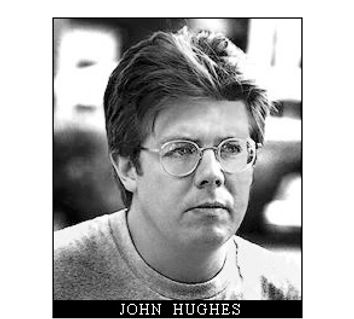
John Hughes

The films he created in the decade of greed made adolescent angst funny and bearable without romanticizing it.

To this day, when I hear the name John Hughes, I get a rush in my stomach that’s an awful lot like the feeling I’d get in high school when I spotted my crush standing in the parking lot after classes let out. I became a Hughes fan in 1984, the year his movie “Sixteen Candles” came out, and I revere him to this day for being the first filmmaker who connected with me on a personal level, with an insight into my everyday thoughts, worries and experiences, and for being the only movie person to capture what it was like to be an adolescent in the ’80s.

There were plenty of other movies that came out around the same time that I liked. “The Outsiders” (1983) made me incredibly melancholy before I even knew what the word meant. “Return of the Jedi” (1983) and “Indiana Jones and the Temple of Doom” (1984) thrilled me with their epic tales, and “Ghostbusters” (1984) amazed me with its ingenuity and special effects. “Footloose” (1984) made me sick with the desire to be beautiful and sexy and daring like its stars, Kevin Bacon and Lori Singer. And then there was “Risky Business” (1983). All I remember about that one is the nudity, which made me, a strictly raised Catholic girl, feel guilty and confused. But four John Hughes movies — “Sixteen Candles,” “The Breakfast Club” (1985), “Pretty in Pink” (1986) and “Some Kind of Wonderful” (1987) — were more than entertainment for me. They were comforting and smart but also funny and cool, intimate and personal without being uncomfortably sappy.

Hughes dropped out of the University of Arizona after only a year and began working in advertising, traveling to New York regularly to see clients. During one of these trips, he met some editors from National Lampoon, who eventually asked him to join their team. It was during his time as a Lampoon editor that he made the break into films. In 1978, Hollywood took a Lampoon story and turned it into the hugely successful frat-party movie “Animal House.” Sensing they’d stumbled upon a gold mine, the big Los Angeles film companies raided the Lampoon offices, signing movie development deals with a number of people there including Hughes. In 1983, a short piece he’d written, “Vacation ’58,” was translated into the huge screen hit “National Lampoon’s Vacation.” The same year, Hughes had his second big winner with a script called “Mr. Mom.” The movie, based on Hughes’ own experience, starred Michael Keaton as a stay-at-home dad.

Around the time that “Mr. Mom” came out, movie industry executives were figuring out that teen dramedies could be big winners, thanks to the success of movies like 1982′s “Fast Times at Ridgemont High” and “Risky Business.” Hughes caught on quickly and in 1984 parlayed his early successes into a deal that allowed him to direct a quirky script he’d written about a day in the life of a suburban Chicago girl whose family forgets her 16th birthday. “Sixteen Candles” featured unforgettable performances by Molly Ringwald in the lead role and Anthony Michael Hall as the geek.

What set “Sixteen Candles” above others of its genre was that it was so real; the primary characters were like the kids you’d known since pre-K. Ringwald was 15 years old during filming, with the soft face and figure of someone that age. Her character, Sam, was dorky and vulnerable enough that we could relate to her, but also cool enough that we were proud to, as when she tells herself in the mirror on her birthday morning, “You need 4 inches of bod and a great birthday.” I needed some inches myself as I sat watching the film in the dark theater, my mouth full of metal, squinting because I refused to wear the geeky glasses I needed so badly. Sam was so hip she had bangle bracelets and a flouncy skirt that another arbiter of ’80s chic, Madonna, would have been proud to wear; but it was also an outfit that I thought I might be able to pull together with babysitting money and a little time at the mall.

Hughes’ movies made the awkward angst of adolescence funny and bearable without romanticizing or glorifying it. And Hughes did it best in “The Breakfast Club,” about a group of high school students forced to spend morning detention together. As we learn in the opening voice-over, the students are seen by adults, their peers and maybe even themselves “in the simplest terms, the most convenient definitions [as] a brain, a prom queen, a basket case, a jock and a criminal.”

Now that “The Breakfast Club” has become a teen movie classic, it’s hard to believe it was ever viewed as a commercial risk. But before the movie was released film critic, Gene Siskel asked: “Will today’s young audience sit still for a film that’s virtually all talk? Do teenagers want to see an adolescent ‘My Dinner With Andre’?” Siskel wasn’t the only one who knew it was a gamble. Hughes himself warned his actors that the movie might bomb but that if it did they would have nothing to be ashamed of. “We have made a movie that will be around for a long time,” he told Siskel. “Even if it doesn’t do any business, we have documented a slice of life that normally doesn’t get documented in the movies. It will live on … We can be proud of this.”

“The Breakfast Club” is basically plotless, an action-free drama about abstract themes like teen identity and social dynamics. As it begins, principal Vernon — the embittered detention underlord, the classic authority figure — tells the kids to write an essay describing who they think they are. His assignment is an echo of that favorite adult demand: “Who do you think you are?” It’s a rhetorical question that usually implies some version of the answer “You’re just a kid. What do you know?” But any kid who’s asked knows the real, often unspoken, answer: “I know what I experience; I know I am someone you don’t understand.” The characters seem to forget about the assignment until the last few minutes of the movie, yet they spend the entire detention period exploring the topic. They define themselves as part of certain cliques, as members of certain clubs, as children of difficult parents, as different from each other, as similar to each other.

For these kids, what goes on at home is a lot more significant and formative than what happens at school. And “The Breakfast Club” recognizes all kinds of domestic dysfunction and child abuse, from the subtle to the blatant. Judd Nelson’s character, Bender, has his dad to thank for a cigar burn on his arm; and though the moment when Bender announces this to the room is almost maudlin, Nelson’s performance and a challenge from Andy (Emilio Estevez) that Bender prove it make the scene snap with tension and rage. The effect is at least as visceral when Andy cries as he talks about his dad’s relentless pressure on him to be the best, and when Andy asks Alison (Ally Sheedy) what her parents do to her and she whispers, “They ignore me,” as tears well up around the thick black eyeliner she wears. By talking about their parents, the kids relieve some of the pressure and pain they feel. They also mature a little by recognizing they are not the only ones who have unhappy homes — and that their pain is helping to make them the people they are.

Hughes was able to capture the youth Zeitgeist on-screen in part because he talked to the teenage children of colleagues and relatives, asking them what they thought of his scripts and generally treating them like underage consultants. When Siskel asked him what he had observed about his young friends, Hughes said, “Many filmmakers portray teenagers as immoral and ignorant with pursuits that are pretty base … [as not] very bright. But I haven’t found that to be the case. I listen to kids. I respect them … Some of them are as bright as any of the adults I’ve met … The other thing that many filmmakers miss is that a lot of kids are very conservative about sex.”

Later in 1985, Hughes started shooting “Pretty in Pink,” which he wrote the week after wrapping up “Sixteen Candles.” He had Ringwald in mind for the lead after she told him she liked the eponymous song by the Psychedelic Furs. Though “Pink” was the first Hughes movie actually inspired by a pop song, in his earlier films Hughes expertly matched scenes with the kind of rock ‘n’ roll songs that, then and now, make up the soundtrack for every American kid’s personal drama about growing up. Hughes’ movies helped bands like the Furs and Orchestral Maneuvers in the Dark find fame as much as they shone the spotlight on some of the best and brightest young acting talents of the ’80s: Hall, Ringwald, Nelson, Sheedy, Estevez, Andrew McCarthy, Eric Stoltz and John and Joan Cusack, to name a few. (He also, incidentally, launched Macaulay Culkin’s career.)

The plots of “Pretty in Pink” and its follow-up, “Some Kind of Wonderful,” aren’t startlingly original. In “Pink,” Ringwald is the poor little poor girl Andy, who gets romanced, spurned and then reunited with rich-but-sensitive guy Blaine (Andrew McCarthy); a brilliantly funny Jon Crier plays Andy’s best friend Duckie, who is also in love with her. In “Wonderful,” Keith (Stoltz) wants to win over beautiful Amanda Jones (Lea Thompson) so badly that he overlooks the fact that he might be in love with his best friend Watts (Mary Stuart Masterson), who is definitely in love with him. What makes these movies resonate is not story so much as Hughes’ respectful and candid treatment of his characters. When Duckie tells Andy, “I live to love you,” anyone who has ever had a crush feels his anguish. Anyone who has ever been passed over or dumped understands why Duckie grabs Iona (Annie Potts in a crackpot role) and kisses her in the hopes of making an onlooking Andy jealous. Hughes also knows that the socioeconomic aspects of the schoolyard make for some of the most loaded emotional material. In another scene in “Pretty in Pink,” Blaine can’t understand why Andy won’t let him drop her off at her house. Finally she blurts out, “I don’t want you to see where I live, OK?”

Had Hughes started his career in 1988, he would probably never rank as an exceptional filmmaker because in the time since, though he’s made plenty of blockbusters and many really funny flicks, like the first “Home Alone,” he hasn’t done much with staying power or impact. But the quartet of movies he made for teens growing up in the decade of greed has yet to be beat. He has influenced every filmmaker putting out work for that demographic since; director Kevin Smith went so far as to thank Hughes in the credits of his film “Mallrats” (1995) and centering the plot of “Dogma” (1999) around the main characters’ quest to find the fictional town where a number of Hughes’ movies are set, Shermer, Ill. “Everybody can relate to a good teen movie; it’s more immediate [and] honest,” Hughes told Lollipop. It’s his candor that has made Hughes’ greatest works relevant and resonant to kids, then and now, who have to do the hard work of growing up.

Continue Reading Close

Stop the madness

Admissions officers at top-rated colleges prescribe time out for burnout.

In a front-page New York Times article last week, admissions officers from the nation’s top-rated colleges bemoaned the fact that new students were arriving on their campuses drained and frazzled after competing for places in their hallowed halls. In the article, titled “Ease Up, Top Colleges Tell Stressed Applicants,” the mostly Ivy League gatekeepers fretted that the admissions process “has become such a high-stress exercise in résumé-padding that students are arriving at their campuses on the brink of burnout.”

A paper released earlier in the week by the Harvard University admissions office apparently prompted the Times’ coverage. “Time Out or Burn Out for the Next Generation,” written by Harvard dean of admissions and financial aid William Fitzsimmons and other Harvard admissions officers, reported that today’s students are significantly more stressed about getting the “right” college degree than previous generations were. Fitzsimmons and his colleagues added in the paper that, these days, the pressure to put together the right blend of talents and abilities often starts when children are infants and builds continuously, leading to self-destructive behavior or a sense of discontentment later in life.

The observations of Fitzsimmons and those of his peers at other colleges quoted in the Times are hardly surprising to the students who are driving themselves or being driven by their parents to achieve greatness as defined by college entrance. Nor is it any mystery how the applications process has become a painful and frequently defeating exercise spanning a period of years.

More people apply for the same number of slots at a handful of institutions every year, in part because many of the schools intensified their marketing efforts and partly because their rankings have become a subject of intense media coverage. With more students than ever vying for places, the schools refined their selection criteria, creating intimidating expectations that applicants (and their parents) push harder and harder to meet.

Despite their public statements of concern for students who labor to the point of exhaustion to meet ever-higher standards of admission, the administrators of colleges quoted in the Times had little to offer in the way of relief. In their paper on burnout, Fitzsimmons and his co-authors at Harvard made some suggestions on how parents can help their kids to ease up — by building “down-time” into the fabric of family life, for instance, or seeing that students use summer time for vacation or old-fashioned summer jobs instead of highly structured programs. But there was little in the paper, or in the Times, to suggest that concrete steps will be taken by admissions offices to reduce pressure on applicants.

We asked admissions officers at a selection of colleges (Harvard University, Duke University, Georgetown University, Dartmouth College, Williams College, Stanford University, Wellesley College and Yale University) if they had plans to go beyond offering sympathy to applicants — by making changes that would offer relief in the applications process and by acknowledging, institutionally, the limits and needs of adolescents interested in a top quality college education. Writer-reporter Maura Kelly conducted the interviews for Mothers Who Think.

Harvard University: Marlyn McGrath Lewis, director of admissions

What steps are you taking to ensure that kids stop putting so much pressure on themselves to get into the most selective institutions?

We want students to know that being busy, or over-commitment in and of itself, is not a quality that we respond favorably to in the admissions process. We are looking for people who are whole, who are balanced, who have some perspective. We hope candidates applying here — and people in general — pause to reflect on how they can make a difference.

We accept people at Harvard who have done well in the area they have chosen to commit themselves to, which is different from filling all the hours of the day with some kind of commitment or developing one’s self without a kind of humane balance in one’s life.

Are you taking any specific steps to relieve the pressure on high schools students?

I don’t think there is much we can do beyond what we said in the paper. We wanted to point out that there are lots of pressure points along the way in life and parents and students can respond to them in any way they want, and that people are not admitted to Harvard according to our assessment of who is busiest.

We admit people who follow their own passions. We are looking for people of talent and interest who want to develop those talents and interests further, and who persuade us that they will do that, who take direction from within. [But] that is not a new prescription for getting into Harvard.

Do you think pointing out this problem is as much as you can do?

I think it is what we can do now. We hope the paper gets discussion started on this issue. It is the one contribution we thought we could make.

Do you think the real burden is on parents?

I wouldn’t call it a burden. But the opportunity here is for parents and students to think about how they want to conduct their lives. The paper was a message to parents, students and, to some extent, the people who advise students … a message we thought they would find particularly helpful or interesting. We don’t think we created this problem. We refuse to take the entire blame for this.

Who created the problem?

I don’t think the colleges are the sum total of the problem. Part of the reason there is all this angst about getting into colleges is … because people are ambitious. Now, it would be hypocritical for us to point a finger at people who are ambitious [but] getting into any one college is not necessarily going to produce a more fulfilling life.

There are lots of people for whom Harvard would be a good fit that we don’t admit. But it is foolish to think we would be the only good fit. It can’t be true that the only path to a happy life is a particular college.

Duke University: Christoph Guttentag, director of undergraduate admissions

What concrete steps are you taking to ease the pressure on high school applicants?

When we are recruiting, we try to explain how the admissions process works and emphasize that it is not the quantity of activities that matters when we are evaluating applicants.

People think they need this incredibly long list of commitments, that they need to fill every day, do something spectacular every summer. That is just not the case. We try to explain that quality matters more than quantity, that depth and commitment matters more than a long list of superficial commitments.

We look for people that have made a difference in some arena, in some community. We try to explain that impact often comes from focusing on a small number of things, from developing a real and sincere interest in something.

Also, people don’t realize how much recommendations count. Students think they need to have great grades, great SATs. What recommendations establish for us is the students who think from those who simply get good grades. We’d rather have someone who thinks, who engages in the material, than one who gets good scores.

We turn down over 50 valedictorians every year but often take students who are ranked lower in the same classes, from the same schools, because thinking well is more important to us than good grades. It really is the passion and the impact more than filling every minute.

There is a distinct perception in this country that students who don’t get into the top schools won’t be as successful later in life as those that do. Are you taking any steps to change this impression? Or is it simply true?

That’s a tough one because we are in the position of recruiting for our school. We counsel prospective students to try and make sure to let them know that a reason to choose Duke is because it is a good match, not because it is a good name. One of my favorite books is called “Colleges That Change Lives.” It’s about 40 colleges, none of them Ivies or the most selective schools, that do a really wonderful job of changing students, of really adding to their lives.

We do not troll for applications. We don’t ask students to apply just so we can deny them. We don’t try to make Duke appeal to everybody. Obviously we want students to look at us. But it is not the right place for everybody.

Do you think colleges have a responsibility to try to counteract the effects of the marketing push in the ’80s?

Well, actually, I don’t think colleges are doing any less marketing now than they were then. In the ’80s we saw the number of high school seniors was declining and would keep doing so into the ’90s. So we all increased our recruiting so we would have nice big applicant pools.

As the number of high school seniors has started to increase again, nobody has tamed their marketing efforts because everybody learned the institutional benefits of a larger applicant pool — you get to make more interesting choices, your selectivity statistics improve, and so on. Colleges saw the advantages of fairly aggressive and sophisticated marketing. There is no institutional pressure to do less of that. I think the landscape has changed in a way that has exacerbated the pressure students feel.

But shouldn’t the burden be on institutions like Duke to change this?

I think there is a burden on institutions to be honest with their audiences. But one can’t expect institutions to act in a way that is not in their own best interest. Institutions can be honest with their audiences while acting in their own best interests. I think colleges and universities have an obligation not to misrepresent themselves or their policies.

It is going to be very difficult to change this landscape, to convince students who have been high achievers for much of their lives and whose parents only want the best for them of the value of relaxing a little. I think it will take a lot of explaining and making some courageous admissions decisions.

What kinds of courageous decisions?

I think we will have to admit students who don’t have long laundry lists, but students who have the personal qualities that we seek. To turn down some students who seem to have everything but who actually have a little less than meets the eye. But it is hard.

Is that something you plan to do, something you plan to institute at Duke?

It is a continuation of what we have been trying to do and what we plan to keep trying to do. But it is not a black-and-white situation, where students are clearly split into two groups. We changed the application so that now we ask students to describe two to four current or ongoing activities that required the greatest commitment or meant the most to them rather than just asking them to list everything they were involved in. The old way made it hard to tell the true nature of a commitment.

The way our application is now structured should help us distinguish those students who really exhibit a depth of interest and commitment that we may not have been able to see before. It will help us to make the sorts of decisions that we have been trying to make all along.

Did parents help to create this problem?

Part of it is our own fault. The degree to which we’ve been recruiting students is at a much higher level than it was 15 years ago, so to a certain extent, we are responsible. But I will say that that is not all bad. More students on the East Coast have learned about Stanford, more in Maine about Duke … so part of it is a good thing. But the unintended consequence is that it has created greater stress.

A second thing that fueled this is the increased interest in rankings. Fifteen years ago people would not have thought about precisely where a school was ranked in relation to its peers. The incorrect assumption that colleges can be precisely ranked has really fed into this. So that some people think it really matters whether you go to a school that is ranked 16 over one that ranked 25.

This imposition of value has threatened to overshadow the much more important issue which is the match between a student and an institution. A student does not gain by going to a school that is not the right match because it is ranked higher.

The problem, I’m sure, is related to larger societal issues — how we define success, what parents want for their children, the idea that parents can help their children create their success rather than letting the children find it for themselves. I think there are a lot of forces that are coming together here and it is hard to pinpoint exactly where it is all coming from.

But we do find in general that the issues of prestige and ranking tend to be more a concern of parents than of students. When we get phone calls asking about why we made a particular decision [not to admit an applicant], we get them more often from parents than we do from students. We think students understand the real meaning of the process, that this is not a reflection of their values as people, more than their parents do.

Georgetown University: Charles Deacon, dean of undergraduate admissions

What steps are you taking to ensure that kids stop putting so much pressure on themselves to get into the most selective institutions?

Georgetown representatives travel with representatives from Harvard, Duke and University of Pennsylvania to meet with prospective applicants and their parents and high school counselors. We go as an advising group rather than a recruiting group and travel to 115 places in all 50 states. We go as a group in order to give general information rather than hype one school. We try to give them as much information about the application process as possible in order to demystify the process.

One of the things that we try to convey, for instance, is that it is a misimpression that you need to have all A.P. courses. If you’re not going to be doing a science or math major, you don’t need A.P. calculus.

There is not a lot we can do about the hysteria that has developed around this process, but we are doing what we can do at the grass-roots level to make it more reasonable and relaxed.

Most students who get in to Georgetown are well-rounded students. The intangibles count as much as the tangibles. By intangibles, I mean the human qualities — the way a student comes across through their interviews, essays, and so on. These personal qualities are very important. Georgetown is also stressing that there is no advantage to applying early — we’re accepting the same percentage of students from the early pool as the regular pool. We’re holding early applications to a similar admittance rate as regular applications in an effort to bring some sanity to that process.

But what steps are you taking to say, “If you don’t get in here, it’s not the end of the world”?

We do it at the front end, in the outreach programs. One of the messages we deliver as a group is the importance of [recognizing] that there are many good opportunities. We try to advise students to keep this in perspective at the front end, to realize the kind of competition they are facing. It is something we’ve always done, but in a more pointed fashion in recent years.

Do you think pointing out this problem is as much as you can do?

I think we can advise students to the best of our ability rather than just recruiting them. If a person is a long shot for our schools, we need to tell them rather than encouraging them to apply to improve our [selectivity] statistics … [Some schools] try to improve their numbers in the pecking order, sometimes artificially by encouraging students to apply just so you can build your applications numbers.

In the current marketing environment, where how you rate seems to be very important, there is a tendency to try to soft-pedal [to students] the importance of having good academic credentials just to get them to apply. People in my profession should be realistic with students about their chances of getting in rather than just encouraging them to apply to improve their statistics. We have to be more honest with students about the competition they face so people can really figure out what their chances are. We have to be very honest upfront with them.

Do you think the real blame is on parents? On the media?

You have to look at all the influences. Parents certainly contribute to it with the expectations they put on children — of course, that is an age-old issue. The media contributes by stressing the import of rankings. That in and of itself elevates the importance of getting into certain schools and there should be more balance to that. But then again the media has a job to do, and that is to report the situation as it is. So I don’t know that the media really has a responsibility.

Dartmouth College: Karl Furstenberg, dean of admissions

What concrete steps have you taken, if any, to reduce pressure on high school applicants?

There are a variety of things we’re trying to do and the question is whether or not it will make any difference. We are very consciously spending more time trying to describe our selection process and what we are looking for in students, both on and off campus. We try to be very honest and candid with people. We try to get to know applicants as individuals. We try to make the process as fair and equitable as it should be. People tend not to believe that; they feel they have to do unusual things to distinguish themselves.

But don’t they?

They don’t. The students who are successful in our admissions process tend to be students that are bright, enjoy learning, trying new things and meeting new people. They tend to be individuals who are engaged in what is going on around them. That kind of approach to their education comes from a genuine curiosity … and depends less on what they do than that they do it well and if the student has the discipline to do it. The student could have a job and not an extracurricular activity, for instance, and that would be OK with us.

What steps are you taking to say, “Relax, you don’t need to get in here to be successful in this world”?

We are willing to talk to anyone who doesn’t get in here, and guidance counselors as well, and share information about how the process works in general. If the student calls up, we are pretty honest with them. We are not trying to keep the process secret.

Gaining admission to a top college is a highly prized outcome for many students and the applicant pool has gotten larger and much stronger in recent years. It is much more of a national and international market now — whereas 15 to 20 years ago it was a more regional process, a local process — because of things like the Internet and U.S. News and World Report. People all over the world now know about the top schools, and that makes it harder to get in.

But there is a perception that if you don’t graduate from a top college, you will be less successful later in life, that you will not achieve as much after you graduate.

There is that perception. [But] if you look at people who are successful in this society, there are plenty of people who didn’t go to Ivy Leagues who are successful … The fact is that it is hard to get into these places and for many of these students it is the first time they have ever not been successful. That is hard for them but when you shoot for the big time, you aren’t always going to make it. And, by the way, students do much better with this process than their parents do. I think parents are [often] much more disappointed than the students are.

Have you done any marketing to get out statistics that show you don’t limit acceptance to class valedictorians?

We publish many stats, and not just how any valedictorians we accept but also how many people we admitted that were doing social work, for instance. Our publications stopped using SAT averages. Instead of saying the average student accepted had, for example, 712 verbal and 715 math, we started giving the middle 50 percent range of the class — which for Dartmouth is about 670-750. So people have a better general sense of where the class is. It is a less off-putting statistic.

It is a funny chicken-and-egg problem: Did this process get tougher because schools started recruiting more aggressively or because our academics are better? I don’t think colleges like Dartmouth have any self-interest in getting more and more applications because that just means we’re going to have to turn down more and more students, because we’re not getting any bigger.

We try to give as much information about what we’re looking for and what works but again, people are very much fascinated by the process. Colleges like Dartmouth are more popular than ever for the economic value of it … which really misses the point of education.

The top colleges get more attention because of the media — the New York Times article talked about what needs to be done but they only talked to people at very competitive places — which just feeds the frenzy.

Williams College: Richard Nesbitt, acting director of admissions

What concrete steps have you taken, if any, to reduce pressure on high school applicants?

We exclusively accept a common application — the kind that can be used to apply to a number of different colleges. We started doing this two years ago to reduce some of the anxiety and take pressure off senior year. Many colleges do the common application and then ask for a separate essay. But we don’t ask for a separate one because we think that defeats the whole purpose; we accept the common application essay.

Also, the trend toward early decision seems to cause a lot of anxiety. It seems students think they have to apply early. There are colleges and universities that are accepting over half their classes early decision, which is a real shift from what it was in the past. But we are holding the line. We only accept about one-third of the class early, which is the same amount we have been taking for the past 30 years or so. We use the same criterion to judge early applications as we do regular decision so it is not necessarily an advantage if you apply early.

Have you done anything to combat the perception that a student needs to get into a highly selective school like yours or he or she will not be as successful?

I don’t know that that is a perception that we are promoting. I used to be a college counselor and I felt my job was to convince students that, in fact, the best colleges to go to are not the most prestigious but the ones that are the best match. I think it is important for students to understand that, but I think it is really something the high school counselors have to do. The misperception is that there is only one school out there that is the right fit and that is not the case.

So what should colleges do? What about toning down marketing efforts?

When you look at a lot of the brochures out there, it seems a lot of the colleges are not playing up their unique attributes but rather playing to the middle ground. So that every school starts to sound the same.

By doing a direct-mail search [similar to direct-mail advertising], we have broadened our applicant pool. We’ve gotten students applying from schools that we are not able to visit. We’ve increased the socioeconomic and geographical diversity of our applicants, which is very beneficial to our college.

If colleges are misrepresenting themselves, that should be toned down. But it is helpful to educate students about the particular benefits of a particular college, and I don’t think that is something that adds to the anxiety.

Stanford University: Marlon Evans, assistant director of undergraduate admissions

What concrete steps have you taken, if any, to reduce pressure on high school applicants?

When we’re on the road doing outreach and talking with prospective applicants and their families we try to emphasize … that we are trying to look at students as complete packages, as complete people. They shouldn’t get caught up in looking at the [acceptance] numbers.

We try to emphasize that there is not one ideal Stanford student out there, so they shouldn’t be trying to turn themselves into what they think that person is. The misconception is that we only want the captain of the team, the president of the class, the world-class musician.

While we have some students like that at Stanford, we don’t want all our students to be like that. We don’t want applicants to manufacture interests or get involved in everything because they think that’s what we want. That is not how our process works. We look at each individual person to see what he or she brings to the table.

But don’t colleges like yours play up the perception that if you want to be successful, you need to graduate from a top institution?

You don’t need to go to a school like Stanford to achieve all of your goals. But of course, one of our roles in the admissions office as a part of the institution is to play it up and say lots of doors will be opened to you if you graduate from here, so you should apply.

But doesn’t that just contribute to the problem?

At a college fair, it is hard for us [as admissions officers] to compete against what parents and the media are telling students. If they are being told since nursery school that these are the places you need to get into, we can’t change everything they might have heard over the past 18 years. Ivies and schools like Stanford are not the keys to everything in life. There are other great universities out there that can help students get to where they want to be.

Wellesley College: Janet Lavin Rapelye, dean of admission

What steps are you taking to ensure that kids stopping putting so much pressure on themselves to get into the most selective institutions?

A couple of years ago, we went from having just the Wellesley application to having just the common application. We figured it was one way to reduce pressure on students — they didn’t have to fill out so many forms. Yes, we have a supplement, everyone does, but it is not a long process.

Another thing I’ve done, now, when a student writes to me after she’s been admitted saying she wants to take a year off, I automatically grant it. They don’t even have to give me a reason anymore. I will grant it to any admitted student if she feels she needs it.

Why?

Far be it for me to demand a student come to college when she might not be ready. I think there is a great advantage in a student being ready for this very rigorous academic experience. Sometimes they just feel they need a year off, and I rely on their judgment.

But I’ll be honest, I don’t know how we can reduce stress on the high school students. The world of admissions itself has gotten extremely competitive.

You don’t think schools bear any of the responsibility for that?

Well, it’s a chicken-and-the-egg question. We have more students applying now than we did 10 years ago and there is a higher premium placed on the top-level schools. I don’t think we did that; the selective schools have always been selective.

The public has decided that going to a name-brand college means more. Parents want the best for the children and believe they will have better job prospects and have bigger successes in their lives if they go to one of the top 50 most selective schools.

Though I believe in the Wellesley education, you can get a great education at many, many places in this country.

Ten years ago, admission officers didn’t sit down and decide to make this process more stressful. We are educators. That was never our goal and yet it is absolutely more stressful. Yet I think the fact that some of the Ivies have been admitting a larger percentage of their classes early has had the unintended consequence of adding to the stress.

But who bears the responsibility, then, for reducing the stress on these kids?

My hope is that the families separate the questions of prestige and quality. There are lots of places to get a quality education. I want them to ask themselves, “What is the best match for my son or daughter?” and work with their children to find that best match, not only academically but also personally.

Parents need to separate their own goals from the goals the children might have for themselves. Sometimes parents are ambitious for their children in ways the children aren’t. I have seen too many families come through my door saying, “We are applying to Wellesley this year!” I think, “No, you are not. Your daughter is.”

Parents sometimes see this process as a report card on their parenting and it isn’t that. It is often the first time their child is competing on a national and international basis, and that is difficult. It is hard on parents to see their children judged on paper.

So there is a certain amount of responsibility families need to take in researching the schools and finding the right place for their children, which might be one of the very selective schools and might not be. I urge families in this process to cast a wide net. Students need to have a range of schools they are applying to.

So do you think there’s not much more schools can do beyond acknowledging the problem?

I think the colleges do have a responsibility to be clear about how they choose students and to publish statistics — to be really honest about the group they admitted the previous year and the group they didn’t admit.

We make decisions knowing that we have far more qualified students than we have spots. We need to keep being really honest about how we make our choices. I think my colleagues are really good about being honest, about articulating the process.

The hard part is we are not telling people what they want to hear. I think this doesn’t fit with what a lot of people in America think: that if you worked hard and you earned it, you deserve a certain spot. Unfortunately none of us have enough space for all the qualified applicants. But unlike other countries, every one in this country who wants to go to college can, so it is about finding the right match.

Yale University: Richard H. Shaw, dean of undergraduate admission and financial aid

What steps are you taking to ensure that kids stop putting so much pressure on themselves to get into the most selective institutions?

Why students feel this stress is a complex issue. Some places, some communities, some families feel the pressure more than others do.

What kinds of places?

Well, let’s say that if you look at where the most newspapers are writing about these things, you will find where the most angst is. Maybe it is even overplayed a little by the press.

The best way of dealing with kids feeling this tremendous stress about getting in is to emphasize that there are many schools across the country that might be excellent fits. Sometimes [high] schools and families don’t do that. They don’t help kids make application choices that take into account … that there are plenty of great colleges.

If the eye is always on the prize, and the prize is [one of] the most competitive institution[s] in the world, anxiety will always be attached to the process because students are competing for rarified positions. Family and students should realize there are lots and lots of alternatives that are excellent. There aren’t just 10 or 20 or 30 schools and if they don’t get into those, it will be the end of their lives.

In this country, students can go on to take advantage of the opportunities at public and private schools. It is really what they make of their experiences in institutes of higher education that will determine [their futures]; it is a matter of how they translate their experience into their own success. We shouldn’t put so much emphasis on the most competitive institutions and should instead emphasize that there are lots of different opportunities for students to take advantage of.

What about the link, which is publicized by some colleges, between success and a degree from the “right” college?

People are successful if they work hard. We’re not involved in the business of going out to try and combat the behavior of students at the moment. The message of the Times article is clear: Take it easy. The message is there are lots of alternatives, choices and opportunities that students have in applying to colleges and universities and they ought to be wise in choosing places where they will be happy.

There are lots of myths that float around about what makes a person successful. One of them is you have to go to one of the top 25 schools. The reality is, it is what you do with your opportunity and how you translate your opportunities into your own future.

No, we are not spending all our time talking about what students should be doing, nor do I think we should be. We are trying to say … that students should stop and smell the roses. They are wound so tight they don’t take the time to have fun and they should.

So do you think pointing out this problem is as much as admissions offices can do?

I’d ask you, “What would you expect?” Our role is to provide education … My message would be: “Make sure you understand the nature of schools where you apply and pick schools you know you are going to be competitive for. Make sure you’ve got a good spread. Don’t simply turn to a ranking chart and pick the first five schools you see.

If students and families do the research, they are going to find a happy place, a happy solution. They should have other choices besides the top institutions. One of the downsides of all this is that students feel a need to strive to get into the most competitive institutions and if they are not successful, they respond with outrage and disappointment. The focus should be on the other very fine schools they get into. The focus should be on the idea that they do have some very fine opportunities.

So then is the real burden of guilt here on the parents?

The real burden to some extent is on the press. I think a lot of this is really emphasized heavily in the public domain, in the popular press. The popular press is establishing the cues. So I think the responsibility may very well lie with you.

Don’t focus only on schools that are ranked at the top of the charts. Focus on opportunities. When we think that only certain places are the right ones, that is where we lose ground. Parents will respond to what they read, and what you write will make a difference. Everybody has responsibility for approaching this in the right way.

Continue Reading Close

Page 1 of 3 in Maura Kelly