For all that we think of our world as somehow post-feminist, the words “women’s fiction” and “high literature” still seen to occupy different real estate, and I don’t need to say which of these rents space 17 floors below the penthouse. Heidi Julavits has spent much of her career as a writer of fiction — this is her fourth novel — using the brute strength of her considerable intellect and ambitious style to winch the nonworking elevator to the top of the building. In most of her work, the world of female concerns becomes, simply, the world.
In “The Uses of Enchantment” (2006), Julavits turned a surveyor’s eye on the emotional life of girls at the brink of womanhood, unsure how to get there after the road signs were unscrupulously switched by adults who should have been more considerate guides. Here she coined the style of compression she uses to impressive effect in her new novel, and for many of the same psychologically observant aims (“Part of her allure could be attributed to the fact that people felt self-congratulatory when they discovered it, as though this said something special about them and their unique powers of perception”).
With “The Vanishers,” Julavits continues the large project of employing fiction to advance a theory of startling truth: Women’s inner lives are replete with destructive fury. The vaunted givers and nurturers of life pay dearly, psychically, for their gifts. In this novel the baleful forces usually directed inward take literal form, and the cast of characters injuring one another in inventive ways are, in fact, psychics, those who can see (and bleed from) the manifestations of mother-daughter hurt.
The first-person narrator is Julia Severn, a student at the Institute of Integrated Parapsychology (located in hippie-tweedy New Hampshire, of course) and the stenographer of its most celebrated professor, Madame Ackermann. In a reverse case of anxiety of influence, Ackermann forces Julia, an obviously gifted psychic, to flee the academy. Julia undergoes her mentor’s brutal “psychic attack” — chronic debilitation resembling the mysterious 21st-century psychosomatic illnesses that seem to plague women exclusively — and is thenceforth pulled into an occult thriller’s action. The story takes us in turn to a film conference in New York, a “pricey psychic attack recovery center” that is also a plastic surgery hospital treating Hungarian landed gentry and a class known as “surgical impersonators” (in Vienna, heart of the psychoanalytic heartland), a Paris visited through astral projection, and a spa ominously situated in “Breganz-Belken.” And in the end, it is all because of Mommy. She (a suicide, hence the book’s frequent Plath quotations) is both the giver of life and of all the pain that follows.
Although fiction of the futurist or paranormal variety often suffers from a certain effortful specificity — protons, gravity, and time may behave in ways no Einstein could parse, but by gum here’s something clearly meant to be recognized as a Little Debbie snack cake — Julavits avoids the form’s faux flavor by hewing carefully to emotional truth. Instances of which may well be met by the reader with all the unlikely joy of hitting big on a scratch-off ticket:
…perhaps it was the crying woman’s mention of the unread library books, because truly there was nothing sadder, except a gift that a person has hand made for you, a scarf or a poncho, that, try as you might, you cannot ever see your way into wearing. This is when the cold indifference of the world envelops you, and makes you feel invigorated by emotion but also acutely alone. These moments of heartbreak for unwanted scarves and unread books can reveal to you, more than the inattention of any long dead mother, what it is to be alive.
Julavits has sometimes been called on the carpet for flaunting her smartness, but in these pages she is not showing off; she can’t help it. More to the point, it is of a piece with her enterprise: to create a vaulting novel of ideas. In fluid form, she advances the radical notion of an essential, and unsolvable, sadness that afflicts the state of being female, since if their only worldly currency is the time-stamped value of their bodies, women enact a tragedy every time they bear the daughters who will usurp it. Housing such a subject in the empty shell of a ridiculous pseudoscience shows Julavits a canny deployer of irony.
(She can also be as fun to settle down with as the Sunday crossword puzzle: Madame Ackermann’s story is braided with that of Dominique Varga, “the Leni Riefenstahl of France,” who toys avant-gardishly with porn (hmmm, 6 Across: Chantal Akerman?); Julia’s room overlooks Gutenberg Square, a tip of the author’s hat to the history of books; count how many chairs make cameo appearances, from Barcelona to Biedermeier.)
It would be annoying if “The Vanishers” were merely up to this sort of literate gamesmanship, or even to highlighting Julavits’ exceptional talent at writing smarty-pants provocateuses, who figure with enough frequency in her work that we might venture a guess at the author’s own conversational style. Rather, the book’s decorative nature — reading it can feel like you’re admiring housewares in the type of high-end shop where every item is the best of its class — plays profitably against its raw gravity. At one point the enrapt anger and bootless desire that are the two laces in the mother-daughter knot find expression thus: “a violent wave of need surged through me. A need to pull her hair, tear her face to pieces with my teeth. A need to kiss her.” A disfigurement, and a kiss. What a pretty collision they make.
In these days of Occupy Wall Street, when it seems the long-suffering serfs of the Western world are finally rising against the corporate monarchy, it is either dislocating or highly serendipitous to be given the consummate biography of a woman who ruled over earth’s largest empire in the 18th century. Catherine the Great commanded unimaginable wealth and power. Her world is both far from ours, an impossible fiction, and right next to it.
She was the daughter of a German prince and an ambitious mother with slender strands of connection to the Russian throne that were reeled in with steely determination. When, in 1744, Sophia Augusta Fredericka was 14, her mother’s efforts finally engineered a summons to bring the girl to Russia as a potential bride for Grand Duke Peter Ulrich, the heir of Empress Elizabeth — that is to say, as an incubator for the next heir. This bizarre fact, from an ever-higher tower of incredible details, is what gives Robert K. Massie’s expansive life of Catherine its particular power: it is a “portrait of a woman” rather than “of an empress” because the eminent, Pulitzer-winning historian of Russian royalty (“Peter the Great” and “Nicholas and Alexandra”) understands that what is most fascinating is not the story even of passing strange institutions but that of the very human individuals who became captive to them. And so we are offered the full menu of feminine concerns, including but not limited to sexual liaisons (Catherine had 12 lovers, her husband the least of them) and matters of dress (at her wedding she wore a “horribly heavy” crown that gave her a headache but which she was forbidden to remove, and a silver brocade gown encrusted with silver roses; the person inside this tinseled affair was further festooned with sparkling earrings, bracelets, brooches, and rings). She would not have lasted longer than any other female ruler of the empire — from 1762 until her death in 1796 — if she had not used both intellect and wiles to make of herself something more than a simple end user, however.
It begins as a byzantine story of lineage. As the author says of the situation after the death of Peter the Great in 1725, he could equally say of the whole complex of European nobility: every death and every marriage “plunged the already complicated Russian succession into greater confusion.” For the modern reader already in need of a flowchart, the habit of changing names when exchanging crowns additionally complicates the complicated. One day in 1705, Martha of Latvia became Catherine I; Sophia would follow the trend to become Catherine II.
For an incipient empress, Massie demonstrates, life is not all diamonds and caviar, though there are exorbitant amounts of those. There are life-squelching demands for conformity: the teenage girl was forced to renounce her Lutheran faith in favor of Orthodoxy upon her arrival in Moscow, where she was to be groomed as a mate for an odd and unappealing young man (Peter was brutalized by his tutor, so he in turn tormented whomever he could, including small animals). She also paid for her wealth and promise of power with years of intense loneliness. Her friends were chosen for her and banished at the empress’s will; her husband came to hate her and preferred playing with toy soldiers to giving her the pregnancy she was blamed for not achieving. Later still, the cost of ascending the throne was having to learn whom she needed to eliminate before they had a chance to eliminate her. There was no reclining, figuratively at least, on silken divans. Perhaps most cruelly, she lived through what amounted to the kidnapping of her three children; she had been brought to court as a royal brood mare, an unsavory fact made plain when each baby in turn was taken from her immediately after birth. Still, she moved with grace through this most difficult obstacle course to become a largely beloved sovereign (though always in danger from those who favored a native son) as well as a thoughtful student of Voltaire, Diderot, and Montesquieu.
The lonely years served her well, for she used them to read. One wonders if Machiavelli was among the authors she surveyed: she came to power after her inept husband wore the crown for only six months; he died within days of a bloodless coup d’état that left Catherine suspiciously blameless but in possession of that which her whole life, it appears in retrospect, had been directed toward. A trajectory this impressive makes well over 500 pages appear a condensed account.
In the end, this fascinating and self-created woman, who expanded the borders of her empire by some 200,000 square miles and reigned over what is considered the Golden Age of Russia, made substantive changes to the system of monarchy. She spent two years rewriting the Russian legal code. Her “Nakaz” of 1767, drawn from Enlightenment philosophy, was published to extraordinary acclaim. In the telling, Massie redresses what initially seemed a strange omission: a chapter devoted to the institution of serfdom. The presence of millions of men and women in bondage is only a ghostly supposition in the first half of the book, with its recitation of ruble-heavy retainers, gifts of jewels and titles, banquets and the aforementioned finery, gown after gown. Just who had supplied all that capital in the first place?
The author has written a popular history in the sense that it is thoroughly engaging to read: this is People magazine for the educated set — those with a taste for summer palaces instead of Malibu, the pressures of governance over the distress of canceled series. It is a feat of magic to bring a person back from the distance of nearly 300 years in such vibrant specificity that we see her (“On the morning of Sunday, July 30, she drove through the streets to the Kremlin, sitting alone in a gilded carriage”) and know her. Reading such history is a peculiar pleasure all its own: the sensation of being drawn through time as if on a carnival ride; the complexities of factions and factors building layer upon layer; attaining the privileged view where one sees just how everything is connected, and where politics and personalities collide. History is, after all, made by people. Some of them are like some of us. Our time just waits for its own literate historian to show us who was great, and why.
Continue Reading
Close
“He believed the dog was immortal,” Susan Orlean writes at the beginning of “Rin Tin Tin: The Life and the Legend.” Although the pronoun refers to Lee Duncan, the American soldier who found the German shepherd puppy on a battlefield in France in 1918, the author spends the rest of the book building a case for what became her own powerful belief that the iconic cinema canine, “idea and ideal,” will never die.
Certainly, he lives forever in one ghostly way — as does anyone whose temporal shape has been chemically fixed on celluloid. Even though relatively few of the early films starring the original dog (as opposed to the doppelgängers of later vehicles and television serials) survive, Netflix ought to be ready. They’ll soon be flying out of there in great volume because of the inevitable popularity of this beguiling work by an eminent New Yorker writer who has a knack for crafting bestsellers. Rin Tin Tin’s immortality in this regard was guaranteed less by what he was than by what he wasn’t: specific. As a creature whose agency necessarily remained mysterious, he could represent what was most desired in any age. At the outset of his career, the silent movie era of the twenties, what was wanted was the classically proportioned hero: steadfast, emerging from brutal or cruel circumstances with stoic character, ageless already because the screenplays were drawn from ancient legend. There were a lot of pictures set in the frozen North; it provided the elemental backdrop required by the primal morality plays craved by audiences in rapidly changing, industrializing America.
Too, there was something about Rin Tin Tin that endowed him with a special aptitude for carrying the freight of those mythic roles: even prominent critics such as Carl Sandburg praised his ability to convey profound emotion. In 1927, Orlean recounts, the dog received more votes than any other actor for an Academy Award. (Instead of giving it to a canine, they created a new category for animal stars.)
In 1932, the “real” Rin Tin Tin died. There was a great outpouring of sadness; obituaries and memorials and an hour-long radio tribute. No one was more affected than Lee Duncan, the man who had loved Rinty so much he had devoted most of his adult life to making sure the public knew how important a dog — this dog — could be. He succeeded so completely that even well after his own death he convinced a famous writer to spend ten years researching every aspect of his beloved companion’s life and times.
Orlean rarely takes on a single subject. Rather, her subjects take her on, and then they expand. She becomes a part of her story: her motivating desire to investigate a person or a cultural phenomenon illuminates, for her, the topic’s ability to encompass nearly everything. Because she wrote herself into “The Orchid Thief,” screenwriter Charlie Kaufman wrote himself writing about her (writing about herself as well as her subject) for the surreal film “Adaptation.” Likewise, the subject of Rin Tin Tin concatenates: one line radiating from it is a psychological portrait of Duncan, his desperate childhood yielding a sad explanation of his lifelong drive to give his dog eternal life.
Another line is the history of cinema in America, arcing from a start in which heroic, mute characters nonetheless spoke most loudly to audiences, all the way to the rise of television, which gradually turned into a theater where more sentimental portrayals of dogs like Lassie were preferred. Finally, she shows, it became a screen that, like a mirror, reflected a society for whom dogs were no longer Other, or generally seen as heroes — they were pets. (The author notes that “between 1947 and 1953, the number of dogs in the United States grew from 17 million to 22 million, and the dog population was growing four times as fast as the human one.”)
Before this well-painted scenery — America between two world wars; the changing role of dogs in both society and fictional representation; the nutty way Hollywood operates; the history of the German shepherd — she arrays the indelible characters whose lives intersected with the one dog who eventually became many. Perhaps the saddest, and most unsettling, aspect of the Lee Duncan story is that, just as he had suffered everlasting pain from being for a time an orphan, he visited a version of the same fate on his own daughter, Carolyn. She was backgrounded to a dog and his career; she never got over being essentially forgotten by her father.
Along the way through this and the many other tales enfolded within this book, Orlean makes free with her trademark flashes of incisive aperçu: “Popular culture is a period of time captured in a look or gesture.” Neither heavy nor scholarly but trustworthy and true, she makes us want to follow wherever she leads. And in the end, that takes us into the midst of a lunatic mess of competing personalities, a spectacle that becomes both laughable and terribly sad. Suits and countersuits among has-beens, impostors, upstarts, and people with what sound suspiciously like personality disorders. These are the people who now try to keep the legacy of a noble canine alive — oh, and make a buck in the process. It is hardly what we expected at the beginning, where an innocent pup survived shot and shell to become the improbable symbol for another type of survival: that which lives forever. Susan Orlean can be forgiven for repeating her central thesis a few times too many, for she herself has now assured it: “[T]here will always be a Rin Tin Tin because there will always be stories.” Well, at least if the stories are as good as this.
Continue Reading
Close
The most alchemistic thing a writer can do is take a place you’ve never been much interested in and turn it into something so alluring you can’t bear to turn away. The most generous thing such a writer can do is take you there in a book so you don’t have to go yourself.
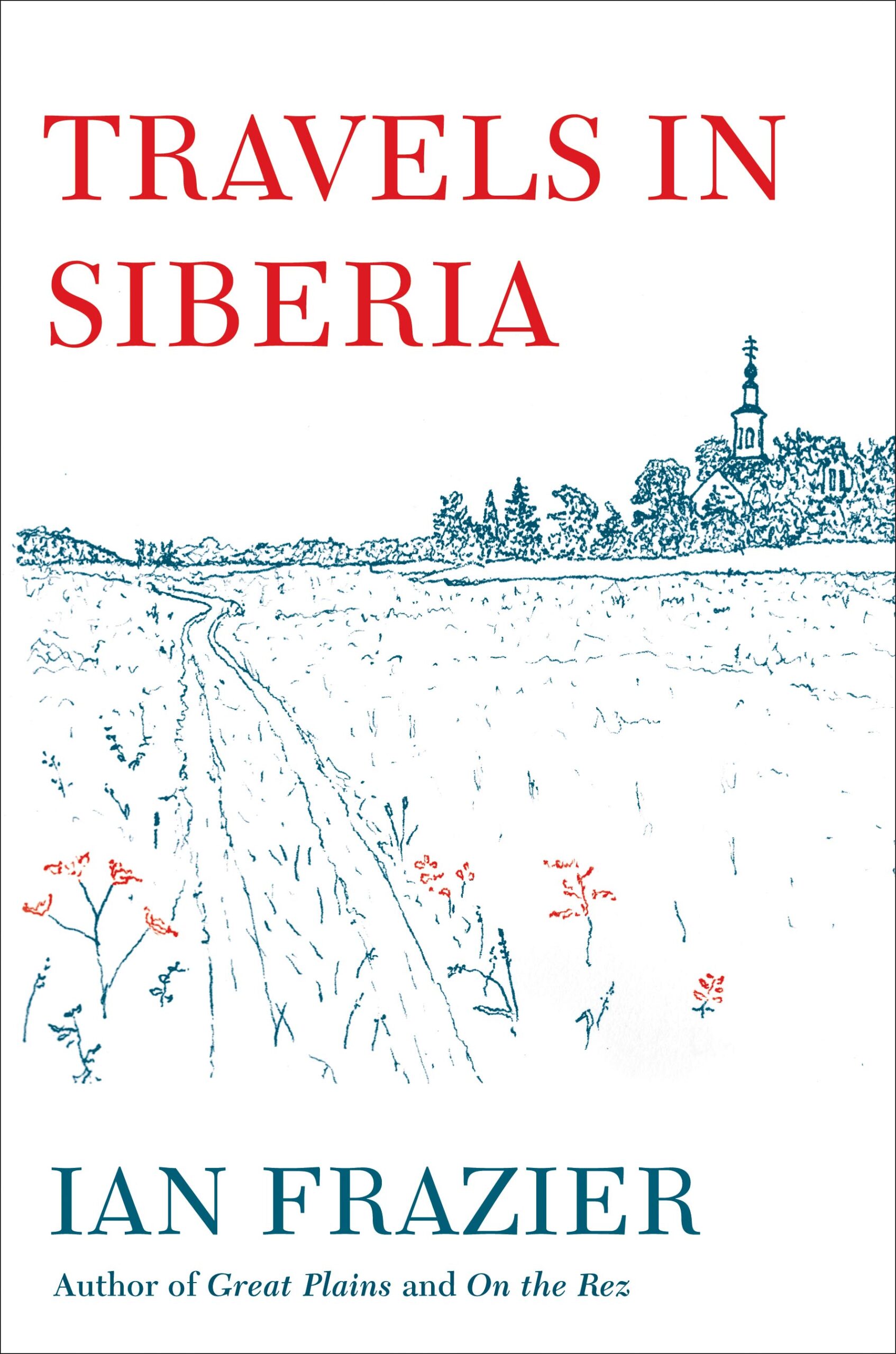
Both are done with the subject of Siberia by the matchless Ian Frazier (who does not know how to write a disappointing book — just pick up “Great Plains” or “On the Rez” or any one of seven others). If you are already interested in this vast and largely unknown place, then after reading his treatment of it, you are liable to buy a ticket there immediately. He covers many of the reasons you might proceed with caution, but even these are likely to impassion. Like I said: alchemy.
His new book, “Travels in Siberia,” has the immense sweep of a place that seems unreal — not a country or a territory, he reminds us, but more like a concept or a literary conceit that nonetheless takes up the northern third of Asia — and it has the tiny idiosyncratic particulars that make it altogether real; in this it reminds one of a painting by Hieronymus Bosch. Except, in a way, Siberia is a lot weirder.
Still, or maybe because of this, Frazier adores it. Like a lover, his gaze takes in every detail — Look! her almond eyes! And look! her sweater’s hole! — with equal overspilling enthusiasm. The very idea of Russia has gotten under his skin, and when he actually arrives … “No bells or sirens went off as we crossed into Russian airspace. I felt I was in an X-ray machine: a big change had taken place, but silently and invisibly.” His explanation of, or rather his explanation of how he cannot explain, his infatuation with this grand, strange country is an emotive tour de force.
The reasons the reader loves Frazier’s work are easier to name. For one, there’s his irrepressible humor, which arises unexpectedly to provoke outright laughter (on encountering no fewer than five weddings in an afternoon of driving, Frazier notes, “I couldn’t tell whether the bridal couples had actually been married on the highway or were just having their receptions there”) and displays his credentials as one of our finest comic writers, which he also shows in the New Yorker. For another, there’s the way he paints himself winsomely into the corner of the picture; no matter how majestic the scene, there he is down there, winking. For a third, there’s his absolute mastery of narrative prose, its rhythmic propulsion and digressive powers. There is little he is not interested in, and little he does not cover (Russian literary history, lunch, purges, landscape, the Revolution, economics, fishing, ballet, the tsars). He is the tour guide who talks your ear off, but who fascinates anyway.
Indeed, when was the last time you heard someone get at the essence of a place just by examining its smell? Frazier made the country more real for me than a whole stack of Kodachrome postcards (or even the author’s own pencil drawings, sweet though these are) in describing the Russian national smell as made up of sour milk, diesel, cucumber peel and several other disparate items. Then there are colors (lots of cement-gray, apparently, and man-made chemical tones), flavors — berries and mushrooms — and, overwhelmingly, people’s faces, bodies, clothes. This is a book made of textures.
There are some standouts in a work that seems to be all standout (except for some passages of history you may feel guilty for thinking a tad boring, wishing he’d get back to the broken-down-van ride across 9,000 miles, which is the true heart of these pages). One of them is his description of the epic swarms of mosquitoes:
With such astronomical numbers, Siberian mosquitoes have learned to diversify. There are the majority, of course, who just bite you anywhere. Those are your general practitioner mosquitoes, or GPs. Then you have your specialists — your eye, ear, nose, and throat mosquitoes.
Another is … well, just about every vignette is of a chance meeting — and that is all he had, months’ worth of daily chance meetings — with Siberians (also Russians and other foreigners): “the usual Russian Miss Universes, some in really unseasonal outfits, went step-stepping along.” He picks only the telling details, lines them up just right, and zing: a comic masterpiece in miniature. Then he repeats the success again and again.
Not that it’s all funny. Frazier has a refined taste for the melancholic, too, and Siberia is the station to fill your tank full of that. Lonely roads through lonelier expanses, the long history of breathtaking cruelties, the sense that there is so much space and very few people to care about it; mostly, though, the feeling that in this insular place, so many lives have been launched, ended, then forgotten that it seems saturated with a true existential hopelessness that is somehow heartening in its grandeur: “the blankness of eternity.”
This is only nominally a travel book; really, it is a valentine. Although he still did not succeed in making me want to go — even the most aching love poem does not make you desire the exact subject of its lines, just one of your own — I am glad. For the real Siberia might pale next to the enrapturing lands seen through the eyes of the lovesick, and genius, Ian Frazier.
Continue Reading
Close