Naomi Abraham

Religious leaders battle African homophobia

Facing bombs and bigotry, a growing band of clerics stands up for gay rights

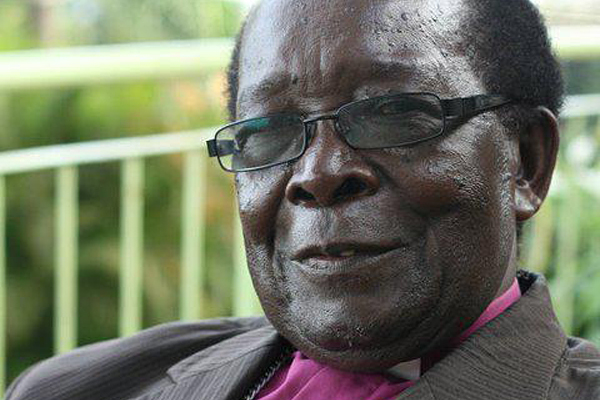
Ugandan bishop Christopher Senyonjo, defender of gay rights (Credit: Facebook)

When Secretary of State Hilary Clinton made a historic speech in Geneva on Dec. 8 calling for recognition of gay rights and support for those who brave hostility to defend gay rights, she might have been speaking of the Rev. MacDonald Semberka who was in the audience listening.

On the evening  of Sept. 11, 2011, Sembereka, a Malawian Episcopalian, found his house reduced to unrecognizable rubble by a petrol bomb. A month later, he borrowed money for airfare so he could attend a conference at Union Theological Seminary, a Manhattan institution with a long history of social activism.  He arrived wearing a clerical collar and a smile that belied the horror of seeing his home and nearly everything his family owned destroyed. At the two-day conference in New York, he would meet and strategize with other Christian leaders in the fight against Africa’s perilous and increasingly prevalent brand of homophobia.

Sembereka is one of a small but growing group of African religious leaders who have taken great personal and professional hits for supporting LGBT rights. For their efforts, they have faced violence, professional alienation and social ostricization. Yet these straight men and women, primarily Christian clergy, continue to criticize the intensifying vitriol and violence against gay Africans.

The motivation behind the bombing of the house Sembereka shared with his wife, two children and extended family has yet to be determined, and the perpetrators may never be brought to justice. But Malawian human rights organizations say Sembereka was likely a target because of his outspoken pro-gay views and his valiant defense of human rights.

Fortunately, the only ones home that fateful night were two teenage boys who managed to run out unharmed. “I’m thankful that miraculously no one was hurt,” Sembereka told me in an interview. “But what hurts me the most is to see my [7-year-old] daughter traumatized. She’s had bad nightmares since the attack.”

For the most part, African faith leaders have either fanned the flames of homophobia or stayed quiet on the issue.  In some cases, they have been the key agitators of anti-gay attitudes in their countries.

In an interview last summer, Bishop Benjamin Nzimbi, the former archbishop of Kenya, told me that he could fix homosexuals by marrying off lesbians with gay men. Ugandan evangelical pastor Martin Ssempa has shown same-sex pornography to his congregation of hundreds in Kampala in order to rally up support for the Ugandan government’s anti-gay position.

Last month, after British Prime Minister David Cameron threatened to cut aid to Ghana unless it retracted its anti-gay policies, religious leaders there made sharp comments against homosexuality and warned against capitulation.  Some of the criticism came from 53 LGBT African groups who wrote,  “While the intention may well be to protect the rights of LGBTI people on the continent, the decision to cut aid disregards the role of the LGBTI and broader social justice movement on the continent and creates the real risk of a serious backlash.”

Last week, after Clinton announced a similar decision to tie U.S. foreign aid to a country’s record on gay rights, the backlash was evident. Yoweri Museveni, Uganda’s president, said of homosexuality, “It’s something anathema to Africans, and I can say that it is abhorrent in every country on the continent that I can think of.” The National Council of Churches in Kenya stated flatly, “We don’t believe in advancing the rights of gays.”

Where religion plays a significant role in the lives of many Africans, faith leaders yield great influence over politics and in setting the moral compass of most African societies. Last spring when Kenyan President Mwai Kibaki nominated Willy Mutunga, a pro-gay judge, many of the country’s religious leaders sprang into action to oppose his nomination. Making matters worse for them, Nancy Baraza, the president’s choice for the deputy chief justice, was also supportive of gay rights.  For two months, substantive issues were sidelined for questions on the nominees’ sexuality.

The two nominees, both straight, were eventually confirmed as chief and deputy chief justice.  Activists in Kenya and across Africa hailed this as an unparalleled victory in their struggle for equality. Longtime gay rights activist David Kuria said, “Things are changing and the most pertinent example is the nomination of the deputy and chief justice. This discredits that Africa is universally united in its opposition of homosexuals.”

Methodist Rev. John Makokah of Kenya, who’s been blasted for his pro-gay views, said, “We have a long way to go but Willy Mutunga and Nancy Baraza will help usher a new dawn for persecuted homosexuals.” But the hearings in the Kenyan parliament last summer also demonstrated the strong sway of religion on government decisions.

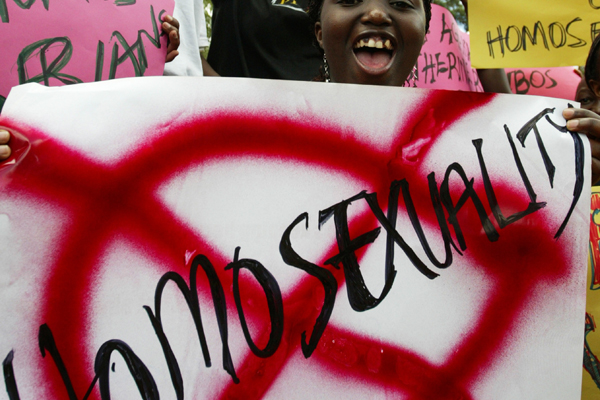
Generally, media reports on homosexuality in Africa have focused on the legislative push in Uganda to render certain acts of homosexuality a crime punishable by death and on the wave of lesbian “corrective” rapes in South Africa. But little attention has been given to the African activists, gay and straight, who challenge the mistreatment of gay Africans and the criminalization of homosexuality in 38 of 54 countries in Africa.

For example, Bishop Christopher Senonjo, a retired 80-year-old Anglican Bishop from Uganda,  has been a beacon of support for LGBT Ugandans since 1998 when he began to counsel gay men and women.  Around the same time, a group of gay men founded one of Uganda’s first gay groups and asked the bishop to chair the organization.  His decision to accept the invitation would lead to years of persecution. Because of his support of homosexuals, he would be ostracized from the church, stripped of his pension and precluded from performing his religious duties.

But he says the most difficult part of his ordeal has been the backlash against his family.  Recently, his daughter’s fiancé broke off the engagement because he said he didn’t want to be associated with a family who held pro-gay views.  But early on, he says, even his family had their doubts.  His wife, Mary, 73, did not understand or agree with what he was doing but, laughing and showing his toothy smile, he said, “God changed her heart.”

Today, Mary is a quiet force of support for her husband and the LGBT individuals she meets through his work.  When a Ugandan lesbian broke down into uncontrollable tears at the conference in New York, Mary scooted her chair to where the woman was sitting and rubbed her back till she stopped sobbing and stayed by her side for the rest of the day.

Albert Ogle, president of St. Paul’s Foundation for International Reconciliation, a faith-based organization headquartered in San Diego, says that the Senonjo and Sembereka “are fueled by a moral value, which is about including all the marginalized in ministry and service. It’s not that their mission is about gay rights necessarily but to serve all humanity.”

By the end of the conference Ogle and those in attendance formed a coalition, which they dubbed “Compass to Coalition” to combat punitive laws and attitudes toward LGBT people in Africa and in the 76 countries around the world where it is illegal to be gay.

Anglican priest Michael Kimindu of Kenya says religious leaders in Africa have to be at the helm for changing attitudes toward gay people.  Like many of his counterparts, he’s also been banished from the church and alienated from family members for his work with LGBT Kenyans. “We can’t let them be treated this way,” he says of gay Kenyans. “The church has to lead in bringing dignity to these people.”

When Sembereka took the stage at the conference, he also spoke of the formidable challenges that he and other LGBT-affirming faith leaders faced: “We are branded as Western puppets or gay ourselves.” He added that these attacks would not stop him or his colleagues from continuing to fight the unnecessary persecution of people of diverse sexualities. Later when asked about his destroyed home he said, “That too will be something of the past just like the plague of homophobia.”

Gay Africans flee persecution

As Uganda revives anti-gay legislation, gays seek haven in other countries

Anti-gay sentiment in Africa is creating a new kind of refugee (Credit: Reuters/James Akena)

I first met Fred at a prayer service for gay men in an industrial part of Nairobi where even on a Sunday morning, the noise was deafening. The service was part biblical study and part support group. The other men who were worshipping with Fred in the dingy and cavernous room that day were Kenyans, but he was not.

Fred, a lanky Ugandan, became a refugee in December 2009 after he was brutally assaulted by a mob in Kampala for being gay.

Fred, who asked that his last name not be used, bought a one-way ticket to Nairobi days after the assault with the intention of never returning. “It’s OK to kill me,” he said. “People would be happy to see me dead, even some of my family.” I asked what he meant by OK, and he explained that no one would ever have to pay a price for his murder.

Within the last decade, rancorous anti-gay rhetoric has infiltrated public discourse in many African  countries. Just last week, the Ugandan parliament revived a proposal to legalize capital punishment for people who engage in homosexual acts. This is new for Africa. In the past, homosexuality was rarely brought up privately let alone in the public sphere. The new acrimonious tone against homosexuality espoused by politicians and religious leaders has percolated across all strata of African society including the media. It has also given rise to increasing homophobic and transphobic violence, which for a growing number of gay Africans has meant that life in their own countries has become untenable.

Fred’s journey from Uganda to Kenya followed the same logic as that of other Lesbian, Gay, Bisexual and Transgendered (LGBT) African refugees I spoke to. They move to urban centers in neighboring countries not necessarily because these places are any less hostile to homosexuals but for the anonymity that comes with being a newcomer in a densely populated area.

Navi Pillay, the U.N. High Commissioner for Human Rights, went on record last May saying that anti-gay hate crimes are increasing around the world and now account for a high percentage of all reported hate crimes.

Homophobia is not necessarily a new attitude for most African societies. Being gay is a crime in 38 of the 54 countries in Africa. Many of these laws have been on the books since colonial times. But it’s a stretch to think, as some have claimed, that homophobia is simply a vestige of colonial times.

However, some pundits believe that the shift to a more sinister form of homophobia in many African countries over the last decade has its root in conservative religious indoctrination. Some reports suggest that U.S. evangelical groups have had a hand in creating the venomous anti-gay attitudes and violence that have swept over the continent and pushed gay Africans out of their countries.

“It wasn’t until the late 1990s that we saw Africans with the help of American conservative religious groups using this issue (homosexuality) as an organizing tool,” said Rev. Kapya Kaoma, an Anglican priest from Zambia who has studied the U.S. evangelical influence on African societies.

Fred, who looks a decade or so younger than his 48 years, said that for most of his life he had guarded his sexuality with the utmost care for fear of social retribution and becoming estranged from loved ones. He lived his life relatively undisturbed until 2009 when the “Kill the Gays” bill, which sought to legalize capital punishment for homosexuality, was first introduced. Fred says it was during this time that he started to fear for his life.

His neighbors began to suspect he was gay and threatened to turn him in to authorities or to kill him themselves. On the night of his near fatal assault, he says, a large group of people from his neighborhood stood outside his bedroom quietly waiting to get the final proof they needed to confirm their suspicions. When they had heard enough, they broke his window and attacked him and his partner.

“People don’t leave their countries on a lark seeking more gay bars,” says Cary Alan Johnson, executive director of the International Gay and Lesbian Human Rights Commission.  He adds that in places like Uganda it is because of an overwhelming sense of fear for their lives.

Kaoma says Uganda is unique only in that it has gotten more international attention. Other African countries continue to take steps to criminalize homosexuality. This, he says, will increase the flow of LGBT refugees if the international community doesn’t put pressure on these governments.

Also, because some gay African advocates have chosen to become more visible in their fight for equality, anti-gay factions have become more vehement. Some gay rights advocates have been driven  into hiding.

Larry, a leading Kenyan gay rights advocate who now lives in Texas after being granted political asylum, was forced to relocate to Uganda in 2007 after he appeared on Kenyan national television as an openly gay man. “I left for Uganda because I needed to go undercover since there were multiple threats to my life.” He says he chose Uganda because of its proximity to Kenya and because he had friends there.

Neil Grungas, executive director of Organization for Refuge, Asylum and Migration, a San Francisco-based organization assisting LGBT refugees and asylum seekers, says that while there is no way of knowing exactly how many LGBT African refugees there are, it is a growing problem. “We know that it’s an enormous issue in Africa because the continent has the most concentrated persecution against gay people,” he said in a phone interview.

The U.N. High Commissioner for Refugees and the U.S. State Department do not track refugees who are displaced because of their sexual orientation. But even if those numbers existed, Duncan Breen, senior associate at Human Rights First, a D.C.- and New York City-based human rights organization, says the numbers would be grossly inaccurate given how many of these refugees might be afraid to reveal their sexuality.

But those working on refugee issues believe that the flow of LGBT refugees is on the rise. They point to the U.N. High Commissioner for Refugees issuing guidelines for working with LGBT refugees and providing sensitivity trainings to its field staff. Also this past summer, the Office of Refugee Resettlement within the Department of Health and Human Services funded the very first LGBT resource center, at Heartland Alliance for Human Needs and Human Rights, a Chicago-based organization that provides services to immigrants and refugees. Under the grant, the group is to come up with best practices for resettling LGBT refugees in the U.S.

Still, advocates and some U.S. politicians say the U.S. government should do more to expedite the resettlement process for refugees fleeing antigay persecution.  In a February 2010 letter addressed to Secretary of State Hillary Clinton, Sen. Kirsten Gillibrand (D-N.Y.) and  Rep. Tammy Baldwin (D-Wis.) urge Clinton to take decisive steps to protect LGBT refugees, who are targets of violence in the countries they have escaped from as well as the ones they’ve escaped to.

Danny Dyson, one of the first African refugees to be resettled in the United States because of the anti-gay persecution he faced in Uganda, went back and forth between Uganda and Kenya before his arrival in San Francisco. “It was a nightmare in Kenya,” he said. “At first I didn’t have any help, and I had to leave the refugee camp I went to because other refugees started harassing me for being gay.”  Dyson finally found help with a U.S. nongovernmental refugee assistance group, which asked that it not be named because they feared recriminations for their work with LGBT refugees.

Dyson and Fred met in Kenya as refugees. Fred awaits a decision from the U.S. government on his application for resettlement. Having heard about Danny’s successful resettlement in America, he asked me, “Is it true there are lots of us there and I don’t have to hide?”

Continue Reading Close
www.salon.com/writer/naomi_abraham/index.html