Nicole Pasulka

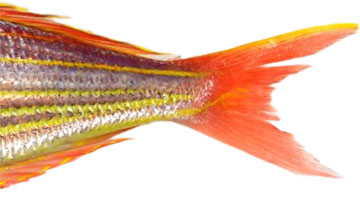
Drop that salmon!

With the days of indiscriminate fish consumption long gone, food writer Taras Grescoe explains how to eat seafood ethically. (Hint: Order mussels; skip shrimp.)

  • more
    • All Share Services

Drop that salmon!

On the subject of seafood, I’d always been well intentioned but underinformed. It’s not that I didn’t care, didn’t hear the dispatches about avoiding Chilean sea bass or the antibiotics in shrimp, but I felt overwhelmed by a stream of investigative reports and gloomy forecasts. Overwhelmed is how a lot of us feel these days, as food-related crises proliferate in the news — potentially contaminated beef from sick cows, possibly toxic crop spraying in California, food riots in Haiti. The bleak onslaught can make eating ethically seem like a daunting, if not impossible, goal. It was with this sense of doom that I began Taras Grescoe’s “Bottomfeeder: How to Eat Ethically in a World of Vanishing Seafood.” But by the time I was done, I found myself holding court in the canned fish aisle explaining to fellow shoppers the difference between skipjack and albacore tuna.

Grescoe, a Canadian nonfiction writer and respected food and travel journalist, takes us on an international tour of controversial cuisines — shark fin soup in China, whale sashimi in Japan, monkfish tail in New York City — meanwhile offering an overview of the corrupt practices that have put the oceans (and our health) in danger. The portrait he paints is grim: oceanic dead zones that, because of pollution and overfishing, can no longer support organic life; salmon farms polluted by pesticides and disease; ruthless bottom trawlers with nets that can destroy entire ecosystems.

A warning is not a death sentence, however. The book empowers consumers to ask the right questions — if the halibut is from the Atlantic or Pacific, for instance, and whether the lobster pasta is actually made from monkfish, which is endangered. And asking these questions will make it possible to enjoy seafood for years to come. Eating has become about a lot more than mere nutrition or pleasure these days; it carries the burden of being environmentally and economically aware. Which means that we need to be not just well intentioned but informed as well. The future of seafood relies on knowing where — and even if — your salmon used to swim.

Salon spoke with Grescoe on the phone from his home in Montreal.

How did you first start caring about sustainable seafood?

I was getting sick of food writing and of writing food porn. I thought the form was shot. There are the Anthony Bourdains having these “to die for” meals and having a great time, but no one’s really talking about what’s at the end of the fork and where it comes from. There’s this food-writing convention where you’re not supposed to think about the origins of your food and suspend any judgment against people who eat endangered songbirds, or whatever. It’s been a real privilege to be able to write articles about this kind of thing. But after a while, you know what? You’re contributing to the impoverishment of the world. In a way this is a bit of a “Fuck you” to the food-writing world.

You think food writers have an ethical responsibility to discuss sustainability?

Yes, they do, and for the last 10 to 15 years people haven’t been shouldering that responsibility. We’ve lived through a strange time where there were great expense accounts, but in the context of food riots around the world, how much time do you want to spend writing food porn? If you don’t start looking at where your food comes from, you’re just being irresponsible.

What about the rest of us? Why should we bother learning about our seafood?

Cultures where people do care about where their food comes from have richer lives because the supply chains are shorter. Spanish people, even the ones who live in Madrid, pride themselves on knowing a farmer.

North Americans are quite conscious about their health, and fish is amazing for your health. There are theories out there right now that early hominids’ brains were able to grow because they had a source of omega 3 [fatty acids] in their diet that is only possible with a shore-based diet. In North America we consume a lot of fish, but we eat the bad fish. Eating these fish disrupts the food chains in the ocean and creates a situation where there are all these strange trophic cascades. All of a sudden there are more jellyfish in the ocean, more bottom feeders. We’re changing the very nature of the oceans.

What’s the most important thing fish eaters should take away from your book?

The message is contained in the title. You should probably stay away from fish at the top end of the oceanic food chain right now. Big fish like tuna, swordfish, shark — these are traditionally middle-of-the-plate proteins in the world’s best restaurants, and they’re actually a lot of the riskiest ones in terms of having things like mercury and, in the case of salmon, persistent organic pollutants. If you really want to do some good for the oceans, start exploring the pelagic fish — whiting, for example; the schooling fish like sardines and anchovies; things that we don’t even really cook right now but are quite popular in other countries.

OK, so we can eat sardines, anchovies …

Oysters, pollock — it’s got a terrible name, but that’s the stuff that goes into [McDonald's] Filet-O-Fish sandwiches. It’s very abundant. There’s trout, which isn’t a bad fish. Sablefish and Arctic char are currently quite abundant. I love herring, and there’s herring off the Pacific Coast as well. Try to the best of your ability to buy things locally.

And which big fish are we supposed to stay away from?

Avoid big predator fish — shark, swordfish, Chilean sea bass, tuna, with the exception of skipjack, which is pretty abundant light tuna. Avoid farmed carnivorous species like shrimp, salmon and bluefin tuna. Avoid imported farmed seafood because domestic standards are a lot higher. The exception to that is [domestically farmed] salmon, which is terrible.

Can you explain what’s so bad about salmon farms?

Salmon from these farms tends to be full of persistent organic pollutants, [some of which] are highly carcinogenic. Salmon farmers grind up smaller fish like anchovies, sardines and anchoveta to make the pellets — all of which should be going to feed humans, not making deluxe fish, especially in the context of food riots — and salmon farms have been proven to spread disease and parasites like sea lice to wild fish populations, among them sea trout in Ireland and wild salmon in British Columbia.

Some farmed fish aren’t so bad: trout and Arctic char, which are raised inland so there’s no risk of spreading parasites to wild fish; tilapia and carp, which are herbivorous species; and of course oysters and mussels, which actually help clean the oceans of their excess plankton.

So is there a way we can safely enjoy salmon?

If you want to make a canned salmon sandwich or something like that, look for any can that has Alaska stamped on it. They should be all over. It’s fantastic for you, and it’s really clean protein. Don’t buy Atlantic salmon. That’s definitely farmed, because Atlantic salmon is commercially extinct right now. Those that appear in streams and rivers are actually escaped fish from salmon farms. Chinook and certain runs of salmon in California and Oregon are doing really badly this year. Nobody’s quite sure what’s going on — it could be dams, fertilizer, ocean conditions. In British Columbia, they’re not doing as well either, but Alaskan stocks are pretty good. And there’s organic farmed salmon. I want to give those guys some credit. If you go to a restaurant and the menu says “organic farmed salmon,” then the fish was raised under higher standards and it’s probably better for you. The question is whether the fish are still spreading parasites to other fish. You can eat that in sort of “half-conscience.” It’s important to realize that right now about 45 percent of the seafood we get is farmed. And this is having a huge impact on the livelihood and well-being of people in other cultures. In the book I talk about how salmon farms affect native people in British Columbia and people who are affected by shrimp farms in India.

Scarier than the state of farmed salmon is your depiction of farmed shrimp, from farms in environmentally sensitive areas of developing countries filled with pesticides and antibiotics that cause dermatitis in shrimp-farm employees. What should we know about the shrimp we’re eating?

I don’t want to condemn all shrimp out of hand. I’ve seen fish farming in these things called closed-container tanks, which aren’t in the ocean. There are attempts to raise organically farmed shrimp on land. There is cold-water shrimping, which is controlled off the coast of Great Britain and eastern Canada and even off the coast of British Columbia. That’s fantastic. But you can’t go to Red Lobster or your local chain restaurant and expect to be getting that stuff. If you get cheap shrimp now, it’s from a turbid, pesticide-infested pond somewhere in the developing world, and it’s guaranteed you’re contributing to the misery of all humans by buying that stuff.

But buying things like organic farmed salmon gets expensive. How are people who have limited resources or a family to feed supposed to get seafood into their diets?

Start with canned fish, sardines, mackerel, herring. They’re really cheap and they should be. It’s basically forage fish. If you’re a mother, start eating that in the third trimester when the baby’s brain really needs it. There are virtually no contamination or mercury issues with those fish. Stay away from canned tuna — except for skipjack.

In the end, are we just supposed to eat less of things like shrimp and salmon?

Shrimp and salmon in particular, two of the most popular seafoods in North America, should be luxury foods. When I was a kid, my mom was paying $15-$20 a pound for salmon and it tasted fantastic. Now it’s one of the choices on an in-flight meal and it’s rubbery and disgusting. You’ve got to have some respect for the fishermen, too. That’s an amazing trade. It’s really hard and they actually care about the resources. They want to have fish next season and maybe their kids will go into fishing, too. There’s a real connection to the resource.

But when is fish coming from local fisherman and when is it the result of large-scale industrial fishing?

Mostly it isn’t coming from local fisherman. We’ve stopped asking that question. We don’t really want to know where our food comes from, and our government is complicit in that. We don’t have any labeling laws in Canada. In the U.S. there’s something called “country of origin” labeling laws, but that’s only where the fish or seafood was processed. People will say, “Oh it’s too hard to do it,” but they just don’t want to. We’ve got to start asking questions. Ask why your fishmonger is still selling Chilean sea bass, or ask him where the halibut came from, because Atlantic halibut is pretty much endangered right now, but Pacific halibut is in pretty good shape. All fish comes from someplace in the world — an ocean, a bay, an estuary — you get to know your world by asking those questions.

What others resources do you suggest to help people make ethical choices about seafood?

In Canada there’s a Web site called Seachoice.org. In the U.S. there’s the Monterey Bay Seafood Watch. You can type in the name of a species down to albacore tuna and it will give you a check mark or a red “x” and you’ll know to avoid it at that time. In Europe right now, there’s pretty good labeling. You can go to Marks & Spencer and the Marine Stewardship Council will have its blue and white label on [seafood that's safe to eat]. We don’t have that yet. [People] are working on it, but it’s going to take growth and consciousness among chefs, and consumers saying “I’m not going to eat that.” Once we start expecting more from our chefs and fishmongers, I think that we’ll see, if you will, a sea change.

You take issue with the menus of some high-profile New York City chefs.

I was hard on Eric Ripert [executive chef at Le Bernardin in New York City], but he’s pretty good in general. I hope that came across. But I don’t know why he’s still serving monkfish. It’s considered overfished even by the American government. There are a lot of chefs right now in North America who are paying attention to this issue. There’s a growing movement — admittedly, it’s mostly on the West Coast right now, but I hope that this book and a growing consciousness will help the movement spread.

After reading your book, I’m now pointing out things on the menu that are overfished and full of mercury and I’m spending 15 minutes in the canned fish section of the grocery store.

That’s what I spend, but I’ve got my favorites now.

What are some of your favorites?

There’s a company called Connétable. They have amazing herring. I rely on it for lunch. They do great sardines and line-caught small tuna. It tends to be a little expensive, but I think it’s worth it. I treat fish as a kind of high-quality protein that I’m willing to pay a bit more money for.

What needs to change right now?

That’s pretty easy. We need to stop high-seas trawling, which is going on beyond international waters. It’s stripping the seamounts, which are some of the only oases of biodiversity on the high seas. They’re areas where the big, old female fish congregate. These are giant multi-ton trawl nets that are being dragged over some of the most fragile formations we’ve ever discovered. It’s really scary, and it makes me crazy. Fish that haven’t even been explored by science are showing up in fish markets for sale because of this. A lot of countries are complicit — Russia, China, New Zealand — and a lot of countries have voted in favor of high-seas trawling, including Canada, which voted in favor of it only to protect their inshore trawling industry. We have no idea what we’re damaging, and we damage it forever. It’s all heavily subsidized.

So destructive, unsustainable fishing is subsidized by governments?

The cost of fuel is so high right now. When times get tough these people have to be bailed out. One of the solutions to all these problems is just to remove subsidies. We pay for their gas, we pay for new ships — if you remove the artificial subsidies, the industry starts to make more sense. You go out in day boats and get the fish that are practical to get. Coincidentally, that helps the oceans. Something that’s really easy that they’re already starting to do in New Zealand is setting up green reserves, which are no-fish areas — no-take zones. There are quite a few off the coast of California right now thanks to Gov. [Arnold] Schwarzenegger. They become nursery areas for fish, tourist sites for snorkeling, and there’s an immense spillover because the fish that are born there move to other areas. I’m hopeful, because there’s an area off Cape Canaveral in Florida that has some of the most amazing big fish in the Atlantic Ocean right now. Huge swordfish, huge tuna — that’s because there’s no fishing in that area. Apparently during World War II, when half of the fishing boats in Europe were commissioned and the others weren’t operating, there was a huge revival of big fish all over the oceans. So it wouldn’t take that long. We can make some of these changes overnight and see positive results in three or four years.

Despite all this you can actually say that you’re hopeful about the future of seafood?

Food chains are not rocket science. I love seafood, and when I started out I worried that when I finished this research process I wouldn’t be eating it. I’d be eating tofu or something. But that’s not the case at all. I’ve taught myself how to eat better, and I actually feel a lot better.

Live large and prosper

An interview with Leonard Nimoy, whose new photography book, "The Full Body Project," brings Rubenesque nudes back into contemporary art.

  • more
    • All Share Services

Live large and prosper

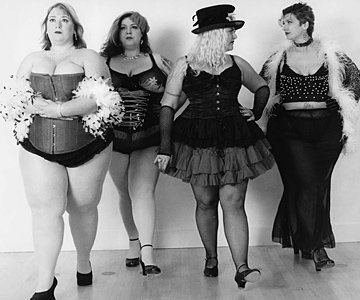
William Shatner seems perfectly content spoofing his iconic status in Priceline commercials, but for Leonard Nimoy, life after “Star Trek” has been a more solemn existence. The man who would rather you not call him Spock has, for decades now, immersed himself in music, poetry and fine art. His new book “The Full Body Project,” is an arresting collection of black-and-white nude photographs featuring full-bodied women who stare into the camera, practically daring us to judge them on their nakedness or their size. Nimoy is one of the few contemporary artists (another would be British artist Jenny Saville) working with full-figured models these days. With its references to artists from Matisse to Herb Ritts, “The Full Body Project” recalls a rich history of zaftig women in art at the same time it reminds us of their current absence. Indeed, “The Full Body Project” could be read as a critique of Hollywood — or at least the glamour machine that runs on size 2 supermodels.Salon spoke recently with Nimoy about how he became fascinated by female body image, the decade and a half he spent working as a photographer, and how he made Joy Behar feel svelte.

Where did “The Full Body Project” come from?

I was doing a seminar with some earlier work, and a lady in the audience came up and said, “I’m a model, and I’m a different body type than what you’ve been working with. Would you be interested in working with me?” I discussed it with my wife, who is very much involved in what I do and very much involved in contemporary art — she’s a trustee at the Hammer Museum in Los Angeles. She encouraged me to go ahead and do it. I was concerned with how to photograph this kind of figure because I simply was not used to it. I shot her in black-and-white. I was quite satisfied with what I got, because I thought she looked like a marble sculpture in black-and-white.

I began to become conscious of this question of body size and body image in our culture. I became more aware of what we’re bombarded with in magazines, newspapers and television commercials — “Lose 10 pounds in three weeks! Eat and be thin!” It’s incredible if you stop and think about it. I found this burlesque group in San Francisco called the Fat-Bottom Review. I made arrangements to photograph them in San Francisco and then again in Los Angeles.

Did the fact that you were photographing burlesque performers, who probably have strong personalities and a great deal of confidence, influence the project?

It made it very easy for them to be photographed. They’re comfortable with their bodies and they are performers, so once I gave them some direction, they were able to get to it very comfortably. We had a terrific time. There was music playing, there was dancing. They were joyous, and they were comfortable. They’re a terrific bunch of people.

Should we see your models as erotic or sexual subjects?

No matter who my models are, I don’t work sexually. I’m not thinking sexually. I’m thinking about concept, lighting and composition. If it comes off sexually, so be it. That’s up to the viewer. But I believe I’m not objectifying these women. Objectifying [occurs] when you put forth a figure of a woman that’s intended to titillate and be seductive. I don’t do that.

As you mentioned, in some way these portraits were uncharted waters for you –

And uncharted waters for the viewer.

Yes, but despite the unusual subject and form, the work seems very referential.

Yes, definitely referential. I use classic images and contemporary iconic images as a starting-off point. There’s a very famous photograph by Herb Ritts of five famous fashion models sitting nude on the floor. I sent that photograph to the group in San Francisco and said I wanted to replicate it with them. I also sent a Helmut Newton diptych of four models walking toward the camera — one side in high-fashion clothes and the other totally nude. I started with those as jumping-off points. The second time I photographed [the burlesque performers], I sent them images of Matisse’s “Dance,” Marcel Duchamp’s “Nude Descending a Staircase” and “The Three Graces,” which was done by many artists, including Raphael about 500 years ago. These became iconic references for us. [It was] intriguing to find out what a different contemporary approach to those images might look like.

Which other artists were reference points for you?

The development of ideas came from the project itself, not from inspiration from other photographers or artists. I thought, “OK I’ve got these women to shoot. Now what would be interesting to do?” I think the first impulse I had was the Herb Ritts photographs, because that was so much about fashion models of a body size and shape that is sold as the ideal. Once I latched on to that, then the rest of it came –the Helmut Newton, Matisse, Duchamp and the Raphael.

And what did you end up learning about the ideals of female beauty?

The great thing for me about working in the arts, whatever the endeavor is and especially in this work I’ve been doing with photography for the past 15 years, is the educational process. As soon as I get in touch with a concept that intrigues me, I suddenly find information exploding all around me. You pick up messages like vibes in the air. I could have gone my whole life without paying much attention to the question of body image and what women are experiencing. This particular project has put me richly and intensely in touch with this cultural question of beauty. Women are being sold a concept of beauty. In other countries and at other times, and even in this country at other times, a robust woman was considered beautiful. In other countries, these women would be considered affluent.

My grandmother grew up with that idea, that larger weight signaled affluence. We’re only a few generations removed from those standards of beauty. But, in light of medical concerns about obesity, how do you respond to those who would say your subjects are unhealthy because of their weight?

I’m concerned about the health issues, but there are mixed messages right now. It’s clear obesity has its dangers. Diabetes is a possibility. Heart trouble is a possibility. Knee problems from carrying the weight. But then again, there was a medical report that came out just a couple weeks ago saying people with additional poundage are less likely to get certain diseases. Then there’s the alternative question about anorexia and bulimia. Look, the fact is that young girls 12 and 13 are already becoming disenchanted with their bodies. They’re looking in the mirror and struggling to achieve something that, for many of them, is unattainable. You’re born with the body that you’re born with, and you can work and diet all you want, and for many women, it’s still unlikely you’ll attain the look that advertisers say you should.

What do you expect the average art audience will learn or take away from this project?

I didn’t set out to teach anybody anything with this work. I set out to explore a cultural phenomenon. If it creates conversation, if it creates discussion, that’s fine. Some women have told me they feel liberated by these photographs. I’m very happy to hear that. Joy Behar, from “The View,” held this book up and said, “These pictures make me feel svelte.” I love that. I think it’s wonderful.

Most people are just now learning about your photography. When did you become interested?

I became enchanted with photography when I was about 13 years old. I still have the family camera that I used in the early 1940s. I still have a photograph I took of my grandfather that I printed myself in 1943 or 1944. So that photograph is over 60 years old. In the early ’70s I went back to school to study photography seriously at UCLA. I had finished “Star Trek” and a couple years on “Mission: Impossible.” I was looking at the possibility of changing careers. I decided that I didn’t want to do commercial photography, I wanted to do fine art photography. I had a very interesting teacher, Robert Heineken, who’s legendary in photography circles. He taught me about conceptual photography: “Why are you taking these pictures?”

“The Full Body Project” isn’t your first go at fine art photography.

The previous book that I did, “Shekhina,” was about the feminine aspect of God and was based on Jewish mythology. Both books, interestingly enough, are about the empowerment of women.

You’ve transitioned between so many artistic media. Do you have a consistent audience?

The audience for my acting and directing is quite different from the audience for my artwork. For the millions of people who are aware of my acting and directing work, you can’t just say, “Now come on over here into the art world.” It doesn’t work that way.

I can see how having iconic status in one area could be both blessing and a curse.

I have work in several museums now, and it’s not because I’m an actor. There are people now who are collecting my photography who don’t know me as an actor and director. [Laughs.] There are people who don’t know “Star Trek”!

Continue Reading Close