Noah Shachtman

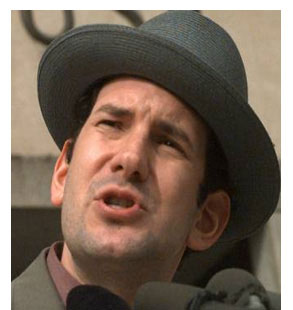
Matt Drudge, GOP scourge?

The online enemy of the Clinton White House has found a new target: The bumbling Bush administration.

  • more
    • All Share Services

Matt Drudge, GOP scourge?

Liberals, Bush-haters, disillusioned right wingers: Meet your new journalistic hero, your muckraking defender of the everyman, your razor-sharp slasher of the Bush White House and Arnold Schwarzenegger’s drive to take over California for the GOP.

Meet Matt Drudge.

OK, don’t sign him up for a Salon Premium subscription just yet. But as unlikely as it seems, the online bottom feeder, who made his mark in the ’90s spreading allegations that Bill Clinton got Oval Office nookie (true) and his aide Sidney Blumenthal beat his wife (false), is now going after the Bush White House with similar gusto.

This time, however, Drudge isn’t trolling for tidbits about the administration’s private lives. Instead, he’s zeroing in on policy and the political messes the Bushies are making — of the budget, of civil liberties, and of Iraq.

Just look at a sample of Drudge’s headlines, from one week early in September:

“FORCES STRAINING IN IRAQ MISSIONS, CONGRESS IS TOLD … Army troops, Budget Stretched to the Limit.”

“COUNTRIES WARY IN REACTING TO BUSH’S SPEECH ON IRAQ …”

“ZOGBY POLL: Bush Numbers Hit New Low; Dean Tops List of Dem Presidential Contenders …”

“Report Finds Size of Government Up Sharply Under Bush …”

“Secret Pentagon Report Faults War Planning for Iraq … ”

“U.S. Lacks Manpower to Keep Current Occupation Force in Iraq Past March.”

But if these 72-point screamers aren’t exactly what you’d expect from a former Fox News Channel talk show host, neither is Drudge’s relentless focus on government plans to snoop on average citizens. In recent months, Drudge has given attention to creepy surveillance programs like the CAPPS II airline passenger screening system and “Combat Zones That See,” the Pentagon’s plan to keep an entire city under watch.

“[Attorney General] Ashcroft argued as a senator that there should be no Big Brother police state on e-mails, even with the most heinous crimes,” Drudge recently told Radar magazine (he wouldn’t respond to interview requests from Salon). “So to hide behind the World Trade Center to start going into our hard drives is a complete folly, and the Bush administration will pay the price with votes.”

It’s not that Drudge has had a political conversion, allies and observers say. A registered Republican, he gave nearly $2,500 to the GOP in 2001. (After this story was published, Drudge emailed Salon to say he nas “never” given money “to anyone in politics,” and that the GOP donation was “a fraud. Someone did it in my name.” In an MSNBC appearance, Drudge admitted that “White House staffers of all ranks help me in research and tipping off stories.”

But Bush’s 10-thumb approach to handling a number of key areas, from the budget to the war on terror, has Drudge and many other conservatives growling.

“The concern Drudge is expressing is part of a wider sense of angst among the right wing,” notes Michael Franc, with the Heritage Foundation, the conservative think tank.

“We’ve had enough distance from 9/11 that there’s a new willingness to raise questions,” says GOP power broker Grover Norquist, who counts himself as a “daily” Drudge reader. “And you pick it up with Drudge.”

Drudge puts it more colorfully, of course.

“Oh, how we wish he [Reagan] would descend from St. Cloud Street and save us from this monster government that’s being created — under Republicans!” Drudge told his radio audience on Sept. 20. “The consolidation of this government and the expansion of this government, the databasing of our lives, the cameras being put all over — is, is creeping me out.”

But beyond the Orwellian itchiness, there’s a more basic reason for Drudge’s targeting of the Bush camp, site watchers say. Step into the limelight, and you’ll feel the sting of Drudge’s darts — no matter what your politics are.

“He’s taking on the high school administration,” says one Drudge ally. “All authority figures are enjoyable targets. And it’s the mischievousness of it all that gets under the skin of the establishment, à la Ferris Bueller.”

“I didn’t think of him so much as a conservative as an outsider,” adds Susan Estrich, the former Dukakis campaign manager, who publicly defended Drudge during his legal tangle with Sidney Blumenthal.

Camille Paglia, a longtime Drudge pal, phones in, “He has an independent voice and an independent imagination. He doesn’t carry water for the Republicans or any organization, although it might seem that way sometimes.”

Drudge’s legion of loathers disagrees, strongly. Look at his treatment, they say, of Gen. Wesley Clark, the new Democratic presidential candidate.

“Drudge has been flashing the sirens for a photo of Clark and a Serbian commander wearing each other’s hats in 1994, but he has never run the photo of Donald Rumsfeld warmly shaking Saddam Hussein’s hand in 1983,” e-mails Rogers Cadenhead, who runs the Drudge Retort,” a parody site.

To Cadenhead, the fact that White House officials revealed the name of a CIA operative married to a political opponent is one of the biggest political scandals in recent memory. But for days Drudge didn’t even have the tiniest of links about the imbroglio, despite the fact that Bush staffers may have committed a crime under the Intelligence Identities Protection Act of 1982, punishable by up to 10 years in the can.

“If Drudge had that kind of allegation to sling at the Clintons, he would’ve put it on the Drudge Report with a link bigger than his head. Walter Lippman he ain’t,” Cadenhead concludes.

Don’t hand over the New Republic editorial reins yet. But give Drudge some credit: Over the weekend, he featured the Plame affair in a font that may have been slightly smaller than his fedora-topped skull — but not by much. On Monday, he gave the story similar play.

Bush White House aides aren’t the only Republicans getting the scandal treatment. Just ask Arnold Schwarzenegger. Since he got into the California recall race, the “Kindergarten Cop” has been the subject of a seemingly endless series of saucy Drudge links:

“WORLD EXCLUSIVE: SECOND BLACK BODYBUILDER CLAIMS SCHWARZENEGGER RACIST COMMENTS …”

“CAMPAIGN CHASES EROTIC MAPPLETHORPE NUDE PHOTOS OF SCHWARZENEGGER …”

And, of course, the now-legendary:

“OUI, OUI: ARNOLD PUMPS UP ORGIES AND DOPE IN ’77 SHOCK INTERVIEW …”

Headlines like these should be expected, notes online publishing consultant Vin Crosbie. Drudge is more of an entertainer than he is an ideologue. “This isn’t a political matter at all — it’s part of his business plan.”

In the ’90s, Drudge and porn industry gossip Luke Ford were the harbingers of a new, fast-moving, link-rich form of Internet journalism. Today, there are millions of blogs that owe at least some debt to Drudge and Ford’s examples.

During that time, Drudge was also at the forefront of a sharply ideological movement to skewer the Clinton administration on moral issues. Will he be as influential in the effort to impale the Bush administration on its policy gaffes? Probably not. But for Republicans, long used to a reliable, 7 million-visit-per-day ally, having Drudge as a critic — even an occasional one — cannot be good news.

This story has been corrected since it was originally published.

The homeless blogger

Kevin Barbieux sleeps in abandoned buildings or shelters -- and writes a daily journal that has made him an Internet celebrity.

  • more
    • All Share Services

If you want to know what cereal a total stranger eats for breakfast or how he feels about invading Iraq, there are hundreds of thousands of Internet journals, popularly known as blogs, waiting for you. But to find out where the best soup kitchen is in Nashville, Tenn., or how it feels to pick up trash until dawn for $30, or what it’s like to sleep in a ’71 Ford Granada, you’ll have to go to Kevin Barbieux’s Internet diary for answers.

Most “bloggers” bleat from a computer in their home or office. But for Barbieux, that’s not possible. He doesn’t own a computer. He rarely has a steady job. And for years, he hasn’t had a place to call home.

Instead, Barbieux catches a few furtive hours of sleep at one of Nashville’s shelters, in a public park, or underneath an abandoned building. During the day he hangs out at public libraries, spending hours updating his journal.

The idea, he says, is to use the intensely personal medium of blogging to demolish the near-universal negative stereotype of homelessness. In place of the image of the dirty, stinking wino, Barbieux hopes to insert the story of himself: clean, articulate, spiritual, busy, taking in a favorite cigar — the Excalibur No. 1 Maduro by Hoyo De Monterey — but staying away from junk and booze.

“My intention is to legitimize homeless people, to show them as worthy of being treated like human beings, with compassion, acceptance, and assistance,” Barbieux writes.

Quoting everyone from Tom Waits to Carl Jung, Barbieux writes about the joys of going, on a donated ticket, to hear the symphony. He describes his fears of walking into the event unshowered while so many others are in formalwear. He posts passionately on man’s ability to have an intimate relationship with the Divine. And he rages against “homeless shelters [that] promise to help homeless people, but only on the condition that the homeless person worships their god.”

Barbieux’s entries grab the gut in a way typical blogs can’t. Early in September Barbieux detailed how “Bull,” a fellow transient, jealously guards his resting place: a 5-foot ledge jutting out from a parking lot beneath an empty building.

“‘Hey, we can’t have a bunch of homeless people coming up here!’ Bull stated, and he was right. Once news got out about a good sleeping place, EVERYONE would know about it, the wrong guys would show up, there would be a ruckus. [Then] the police would find out about it, [and] chase everyone away.”

Two days later, Barbieux updated his journal. Bull, he tells us, has been beaten to death.

It’s not the only time violence rears its head in Barbieux’s world. A journal entry in August described a clash outside a shelter between an elderly Mexican man and a young African-American woman:

“He kept walking away, muttering Spanish obscenities as the crowd tried to provoke an altercation. Suddenly the woman bolted toward the old man — he didn’t see her coming — and she landed a hard fist on the right side of his head. The crowd howled. The man stumbled. She turned to receive the crowd’s cheer, relishing her victory. She wasn’t aware that the old man had pulled a knife from his pants pocket, stumbling toward her. Only his drunkenness prevented him from attacking with a force of vengeance. As the old man neared, a couple volunteers from the shelter ran out to stop the fight. The old man reached out for the woman, trapping the two volunteers between them. The old man held his knife up, as if for God to inspect, then brought it down in anger. Simultaneously the four fell down to the ground. The police were called. A fire truck arrived soon after the police. The shelter opened, and the homeless began to filter in. Four officers held the old man to the ground as his clinched fist would not relinquish the knife. Several hands grasped against the wrist and forearm of the old man, keeping the knife away from everything. Then an officer mashed the old man’s hand against the asphalt with a baton until the old man cried out in pain, releasing the knife.”

Barbieux is “reflective, quiet, not aggressive in any way,” according to Charles Strobel, who runs a Nashville homeless services center, the Campus for Human Development. Jack Davis, a friend and fellow homeless man, called Barbieux “reserved” and “a bookworm type.”

“If you walked by him on the street, you’d never have any idea Kevin was homeless,” said the director of one Nashville shelter.

Known increasingly as “professor” in his community, Barbieux was the editor of a short-lived homeless newspaper. Now, he’s encouraging other homeless people to express themselves through blogs. (Only one has taken him up on the offer, so far.) And he’s helping put together a debate for local political candidates on homeless issues. The activity has gotten so intense of late, Barbieux writes, that he barely has time to sleep.

For some readers of Barbieux’s journal, this energy is exasperating.

“You’ve got the brains and ambition to set up this little operation but claim to be homeless. The fact is, we’re all homeless. The difference is some of us find the will to get off our ass and find temporary shelter,” comments one visitor to Barbieux’s site.

Barbieux, in turn, has little sympathy for the “beggars and panhandlers,” who so dominate the public’s perception of the homeless. These people, he says, are only looking for drug money when they ask for spare change.

Barbieux, 41, has held an array of what he calls “junk jobs” — as a cook, a construction worker, a telemarketer and a convenience store clerk. Most recently, he helped catalog a 16-millimeter film collection as a volunteer with the Downtown Presbyterian Church, which provides “arguably the best feed going for the homeless in Nashville,” Barbieux writes.

For Barbieux, it’s important that his readers understand that “the difference between being homeless and non-homeless is not black and white.” Barbieux has been living in varying shades of gray since February 1982. Riddled with anxieties and learning disabilities, Barbieux struggled at school, and was a social outcast in his native San Diego. One day, it all became too much. He packed up his Opal Cadet, and headed East.

Barbieux ran out of money in Nashville. Broke and unable to find work, he began sleeping in the Cadet. But the cold weather eventually became intolerable, and so he sought refuge in the city’s homeless shelters.

Eventually, Barbieux met a woman, Sarah, married her, and started a family. But “the kind of relationship we had, it was more like being taken care of in a shelter, than actually being married,” he writes in an e-mail. By 1995, they split. The couple’s son, now 11, and daughter, now 7, went with Sarah. Barbieux hasn’t seen them in over a year.

“I don’t want my kids torn up between my ex and I,” he explains in an e-mail. “I’d rather she have them, than to have us fighting over them. The saddest part is that because we rarely see each other, when we do, we really don’t have much to talk about, since we don’t have anything in common.”

For Barbieux, the separation is searing.

“My every day starts and ends with prayers for [the children's'] health and well being, and for the time when I can be in their lives again,” he recently posted.

And it’s only one of several sources of pain.

Charles Strobel, from the Campus for Human Development, explained, “Kevin has a real sensitivity that, at times, can torture him.”

Barbieux goes further than that, blaming his homelessness on mental illness.

“To function as non-homeless, a person must be able to establish and maintain a certain level of community — the anxieties prevent me from doing this,” Barbieux writes. “I took [the anti-depressant] Paxil for a few months and it helped. [But] I was dropped from the state insurance plan because they could not locate me (homeless people can be hard to find), so I no longer have the means to obtain the medicine.”

For years, Barbieux added in an e-mail, he’s been “struggling to overcome my disabilities, my inabilities, to rid myself of anything that might give people the perception that I really am stupid.”

Receiving a flood of compliments on his articulate, passionate journal hasn’t freed him from these feelings. Started in late August, the journal has already had over 35,000 visitors, and is quickly turning Barbieux into an Internet celebrity. Glenn Reynolds, one of the elders of the blogging movement, lauds Barbieux as the “ultimate example” of blogging’s do-it-yourself spirit.

“All this attention is really stressful. And when I feel stressed, it brings on a kind of depression,” he said.

But Barbieux hasn’t given in to despair quite yet. In fact, he said, he’s trying to figure out a way to leverage the stature he’s gained from his blog, and turn it into a book deal.

He writes, “If it means I’ll have to go on the Oprah show, I’ll have to be sedated.”

Continue Reading Close

Prog rock lives!

The band Yes is back -- in a soundtrack for the hit video game Homeworld.

  • more
    • All Share Services

For at least the last couple of years, video-game soundtracks have joined movie soundtracks as a lucrative sideline for pop musicians looking for a career boost. Trent Reznor’s work on Quake probably has the highest profile, but now, even aging progressive rockers Yes are getting into the act — with the title song for the new PC strategy game Homeworld.

“We’ve always been interested in the modern, the avant-garde,” Yes front man Jon Anderson reminds us. “We were the first band to use lasers onstage.”

Those far-out stage shows, combined with the band’s sci-fi themes and Heavy Metal-esque album art appealed to the Dungeons & Dragons crowd of the ’70s. Now, Anderson and company are trying to inspire a whole new generation of geeks with lyrics like:

Ancient ones/They watch and listen/Carry our wishes/Took upon themselves to guide us/Through the endless skies.

Anderson says he’s long been attracted to video games. “I’ve thought about them for 10 years, ever since I met Jaron [Lanier, the virtual reality guru] in 1989,” he notes. “They can be one of those immersive sound/color/perfume experiences — real healing things that touch our chakras.”

Looks like it’ll touch Yes’ wallet, too — the group’s affiliation with the game is more than just a single tune on a soundtrack. It’s full-on, multimedia, you-scratch-mine-and-I’ll-scratch-yours synergy. The video game theme, “Homeworld (The Ladder),” is the title track on Yes’ recently released album “The Ladder.” Game graphics blaze while the band rocks live. Tour merchandise features Homeworld art. And a limited edition CD will feature both Yes tunes and a version of the game.

Like Age of Empires, Starcraft and Command & Conquer before it, Homeworld is a real-time strategy game: The goal is to harness resources, develop technologies and then smear your enemy. The game has been well received: Gamespot.com says, “Homeworld is the sort of game that can inspire unbridled hyperbole in game reviewers” — because of its stunning 3-D graphics and carefully crafted story line.

The game’s internal narrative world opens with the discovery of ancient starship technology that the descendants of the original star farers use to return to their original “Homeworld.” Yes may be hoping that the new video-game generation similarly discovers the band’s ancient recordings. Anderson says that originally, “I wanted to do the whole new album as a video game — even started doing work on the sketches and design. But nobody was interested.”

But maybe Anderson’s finally about to get his chance. He’s now collaborating with Sierra Studios, Homeworld’s publisher, on a “visual game experience” of his own.

Continue Reading Close