Quincy McCoy

Is my son the next Trayvon?

A senseless shooting reminds a father that there's no way to keep his son safe -- even if he's just walking home

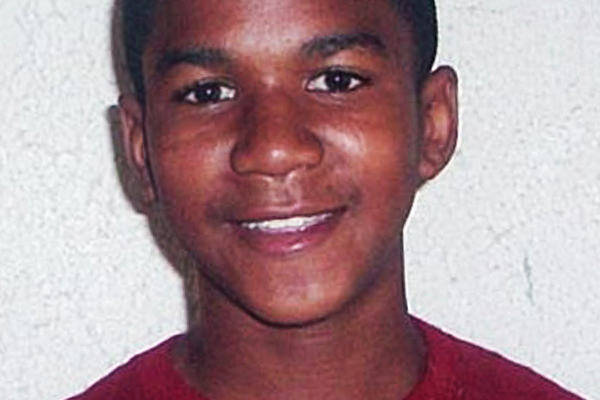
Trayvon Martin

Will my son be the next Trayvon Martin?

This question is not a new slogan for fighting injustice. Sadly, black folks have been asking it for hundreds of years,  merely replacing the victims’ names — Emmett Till, Sean Bell and Oscar Grant, to name a few.

Two things happen when I hear about black teenage boys gunned down by trigger-happy policing or executed in senseless drive-bys, or, in Trayvon’s case, killed by a fear-riddled, self-appointed vigilante who shot the unarmed young man. First, my blood pressure rises to an unhealthy level. Second, I try to devise the impossible — a plan to keep my 19-year-old son safely inside our home forever.

Why do black men have a propensity for high blood pressure? From where I sit, as a middle-aged black man, this is a ridiculous question considering the levels of anxiety, stress and danger we navigate on a daily basis. I worry about my teenage son wherever he goes, day or night. Do you?

When your teenage son leaves the house, do you have to prep him on how to handle a store security guard or a police officer who gets in his face? Rehearse him on how to calmly say “Yes, sir,” “No, sir” and “May I call my parents now, sir?” Now, with Trayvon’s killing, I’ll have to add new language to quell self-appointed Neighborhood Watch captains. Obviously, “I live here” just isn’t good enough.

Do you remind him never to run in a shopping mall? Do you remind your son to keep his ID separate, preferably in an outside pocket, so his wallet won’t be mistaken for a weapon? Do you tell your son to keep his driver’s license and car registration in the sun visor, so when stopped by the police he doesn’t have to reach in the glove box and be shot mistakenly for reaching for a deadly weapon? Does your son carry your family lawyer’s business card in his wallet?

How about wardrobe inspection? Do you have to check to make sure he’s not wearing a color that could offend an idiot gangbanger? Or make sure his pants don’t sag enough to disturb the sensitivity of an airline steward or draw the already alerted eyes of TSA guards. And please, son, even if it’s raining, don’t pull up your hoodie.

If your answers to my questions are “no,” then your son is white — and I bet your blood pressure numbers are nice and low.

These survival rules are an oral tradition passed on from fathers, mothers and grandmothers to our teenage boys. They’re perpetuated by this country’s history of violence against black men for walking, talking, reading or driving while black since slavery. Even President Obama mentioned during his 2008 campaign that he found the best way to navigate white folks was to be courteous, smile and make no sudden moves.

In an effort to keep our son out of harm’s way, we sent him from Oakland, Calif., to a Connecticut prep school 3,000 miles away to avoid the “wrong time, wrong place” random acts of violence in our hometown. Acts that have no regard that you’re a compassionate human being, a varsity athlete and scholar. It was a hard decision because we knew we would miss him terribly and miss out on his rites of passage as he moved from puberty into adulthood. But the prep school “bubble” was the safe house we chose for our member of an endangered species.

Some folks are trying to blame the media for creating negative stereotypes of young black men. That might be a part of the problem, but violent incidents like Trayvon’s murder have been happening in this country years before Fox News, Rush Limbaugh and the right-wing fear-mongers began using race as a divisive issue. If made to shoulder the blame, we must be generous and give social media credit for helping to generate the national outrage about Trayvon’s killing.

Everyday life for young African-American men is getting more dangerous, with states adopting laws like Florida’s “stand your ground.” These types of shoot first and ask questions later legislation give gun-happy racists license to kill, as we have witnessed.

Like all parents, I want the best for my son.  But today I would settle for him and thousands like him to be able to go to the store, buy Skittles, and put his hood up as shelter from the rain without fear that he will be hunted down on the street by someone who has made up his mind that my kid is a thug because of the color of his skin. I remember a speech a man made about judging people on the content of their character and not the color of their skin. Damn! They shot him too.

We want you to get pissed about “F**ked”

Our series asks: What happens when your unemployment benefits expire and you still haven't been able to find a job? VIDEO

Update: Announcing the F**ked Sneak Preview Webcast – See Details Below

What happens when your 99 weeks of unemployment benefits expire and you still haven’t been able to find a job? Academy Award nominee Immy Humes explores this question in Salon’s upcoming video series premiering Jan. 24.

Humes follows “99ers” in 
“F*cked: The United States of Unemployment,” a documentary about the long-term unemployed and their struggle to survive and fight back.

“The mystery of our day is why 30 million Americans remain so invisible, and silent, after so long a time in the hell of unemployment,” said Humes, a filmmaker who has faced the grim reality of unemployment herself. “This series gives a voice to these people who are so often ignored as they hunt for jobs, organize to fight economic injustice, and deal with the stigma of being out of work.”

“F**cked” follows a diverse group of New York City-area 99ers from food pantries to marches to tense confrontations at Occupy Wall Street, tracing the roller-coaster lives of those desperately struggling to survive in the worst economy since the 1930s.

Salon’s goal with this series is not only to show the human impact of our nation’s deteriorating social safety net, but also inspire a conversation with you, our readers and viewers, about what America should be doing to confront this unemployment crisis. Stay tuned in the coming weeks for more articles, call-outs on Open Salon, live webcasts and events where you’ll have a chance to engage on this topic with Humes, 99ers, Salon writers and leaders of national economic justice organizations.

Salon is excited to be partnering on this six-episode series with Humes, a New York City-based documentary filmmaker who has produced stories for PBS, NBC News and Michael Moore – and we look forward to hearing from you on how American can get un-f**cked.

Update: Announcing the F**ked Preview Webcast– Join Immy Humes, the director of Salon’s new video series, for a sneak preview of “F**ked” episode one and a live webcast Q&A on January 23 at noon, EST. Salon Core members, log in and click “RSVP” on the Core landing page for webcast link and details.

Continue Reading Close

“Pariah” director Dee Rees: The catharsis of coming out

In a Salon exclusive, the woman behind one of the most buzzed-about films of the year tells her inspiring story VIDEO

The film “Pariah” is a contemporary drama about a 17-year-old African-American woman coming to grips with her identity as a lesbian. The film is semi-autobiographical, loosely based on writer-director Dee Rees’ experience, which echoes in the struggle of her lead character, Alike (pronounced ah-lee-kay) to become comfortable with her sexuality.

Check out our interview with Dee Rees below.

Click here to see the trailer for “Pariah.”

Continue Reading Close

Salon’s Occupy panel

Salon’s founder and CEO, David Talbot, moderated a constructive panel discussion and Q&A in San Francisco VIDEO

Salon’s founder and CEO, David Talbot, moderated a panel discussion and Q&A last Thursday in San Francisco with veterans of social movements and organizers of Occupy San Francisco, Oakland and the University of California, at Berkeley. Speakers included Dan Siegel, civil rights attorney; Matt Haney, executive director of UC Students Association; Rebecca Solnit, author, contributor to “Occupy!: Scenes From Occupied America”; Peter Coyote, actor and activist; and Melanie Cervantes, activist, artist and co-founder of Dignidad Rebelde.

Watch Salon’s Occupy Panel Discussion