Rob Young
Watchers: “To the Rooftops”
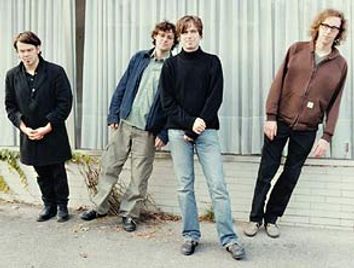
This Chicago art-punk quintet supplies a sophisticated blend of funk rhythms, synthesized strings and crunchy guitar slices.
Like their ancestors from the first wave of punk rock, present-day trailblazers such as the Liars and Yeah Yeah Yeahs favor the visceral over the intellectual. They temper their razor-blade rhythms and rabid vocal fits with intentionally simplistic arrangements, lending a sense of immediacy that complexity would only muddle. It was just a matter of time before this burgeoning punk sound generated an artier rebuttal to its unspoken code of strict simplicity.
The Watchers play the Talking Heads to the Yeah Yeah Yeahs’ Ramones. On their debut album, “To the Rooftops,” the Chicago quintet presents a sophisticated blend of punk-funk rhythms, synthesized strings and crunchy guitar slices, but avoids the obvious pitfall of overintellectualizing their music.
On “Two Worlds,” jagged guitar collides with a thumping bass, as vocalist Michael Guarrine channels the irony of David Byrne; bongo shots fire off below the groove, lending a worldly funk to the attack. Elsewhere, the Watchers mine the depths of soul (“The Dirty Sponsor”), infuse dub-styled bass lines (“Strays”), and play straight funk (“My Cube”) — all with their punk core intact.
“To the Rooftops” is out now on Gern Blandsten.
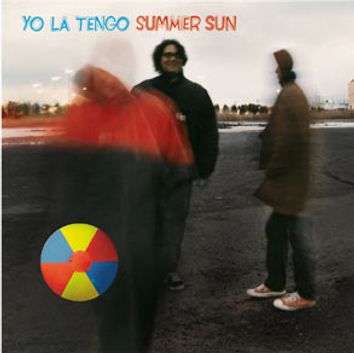
Yo La Tengo: “Summer Sun”
For their latest album the New Jersey indie rockers cut the distortion in favor of a smooth and relaxed jazzy sound.
After 17 years in the music business, Yo La Tengo hardly requires introduction. Spanning the chasm between fuzzed-out Teenage Riot rock and slow-core balladry, the Hoboken, N.J., trio’s discography is littered with records that challenge the idea of what indie rock is or should sound like. In 2000 the band’s brilliant album, “And Then Nothing Turned Itself Inside Out,” raised the bar even higher with a startling exercise in restraint and subtlety.
With “Summer Sun,” the eargerly anticipated follow-up, Yo La Tengo breaks little new ground, instead opting for a reflection of records past. On several songs, like the 10-minute-plus “Let’s Be Still,” ethereal keyboard and muted trumpet coalesce in jazzy vamps in the style of last year’s “Nuclear War” EP. Carefree songs like “Season of the Shark” and the organ-driven “Winter A-Go-Go” recall their eclectic LP “I Can Hear the Heart Beating As One” from 1997. Elsewhere, as on “Don’t Have to Be So Sad” and “Little Eyes,” there are hints at the efficient minimalism of “And Then Nothing.”
Diverse, yet cohesive, “Summer Sun” is a pleasantly quiet album for summer afternoons spent sipping lemonade on the front porch, watching the shadows move across the lawn.
“Summer Sun” is out now on Matador Records.
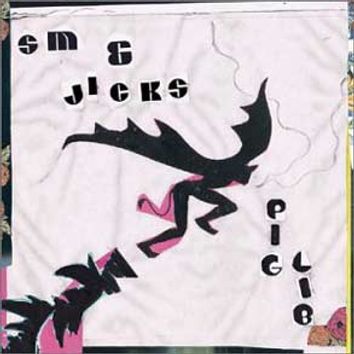
Stephen Malkmus & the Jicks: “Pig Lib”
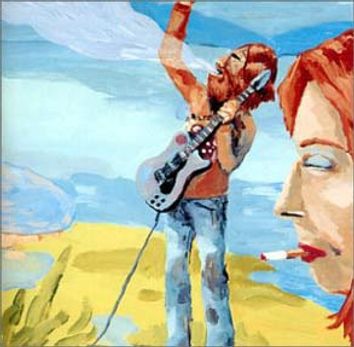
After a sub-par solo debut, Malkmus the Irreverent returns to form, effortlessly spanning the gap between quirky pop and hard rock.
As the leader of the ’90s indie rock band Pavement, Stephen Malkmus was crowned the king of irreverence. After the demise of the band in 2000, Malkmus quickly announced the beginning of his solo career, but his self-titled debut album confused fans and was met with mixed reviews.
“Pig Lib,” the second release from Malkmus and his backing band, the Jicks, sprawls in all directions, effortlessly spanning the gap between breezy pop and hard rock. The thrifty arrangement of “Ramp of Death” recalls the pop tendencies of the Velvet Underground, albeit with Malkmus’ nonsensical narration.
On “One Percent of One,” Malkmus spins out a dense guitar solo worthy of anything on Television’s classic, “Marquee Moon.” It’s this kind of stunning guitar work that holds the album together, and there’s nothing confusing about that.
Links:
“Pig Lib” is out now on Matador Records.
Audio:
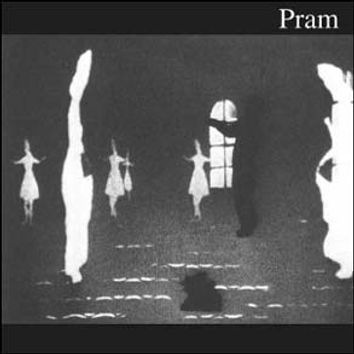
Pram: “Dark Island”
The experimental U.K. pop group's beautifully spooky new album would make an apt soundtrack for a rainy murder mystery.
Since forming in Birmingham, England, in 1992, Pram have been stirring up bits of pychedelic pop melodies with an overriding experimental verve. They’ve maintained a respectable obscurity, operating in the shadows of their compatriots, Broadcast and Stereolab. “Dark Island,” the group’s sixth album, continues the noir tradition established on past releases.
“Track of the Cat” sets the tone with a lilting synthesizer line; slices of spooky percussion surge below a fantastic melody; twangs of Western guitar take over midway, subsiding amid blasts of trumpet. “Penny Arcade” and “The Pawnbroker” lack the breezy thrift of the opener, opting instead for a haze of drone and melancholy. “Paper Hats” pairs jazzy guitar squiggles with the ethereal voice of Rosie Cuckston.
“Dark Island” would make an apt soundtrack for a rainy murder mystery, or alternately a great addition to any space-age bachelor pad.
Links:
“Dark Island” is out now on Merge Records.
Audio:
Pulse programming: “Tulsa for One Second”
Chicago-based Pulseprogramming infuse winterly electronic soundscapes with moaning cellos, whispered vocals and other warming elements.
Electronic music is still splintering and mutating. While artists like Autechre and Aphex Twin travel further into the digital abyss, others, like Chicago-based Joel Kriske and Marc Hellner (aka Pulseprogramming), are infusing a human element into their sound.
The duo’s new record, “Tulsa for One Second,” is a pliant dialogue between man and machine. Somber vocal tracks are layered over bubbling, skittering beats and synthesized handclaps. The opener, “Blooms Eventually,” harmonizes a Vocodered vocal with a whispered one. The voices are bent and shifted at times, lending a rhythmic quality to the melody.
Continue Reading CloseThe Notwist: “Neon Golden”
On their latest album, Germany's Notwist elegantly blend acoustic pop and atmospheric glitch electronics.
The Notwist formed in Germany in 1989 as a punk-metal outfit, but you’d never know that by listening to their latest album, “Neon Golden.” Drawing on Jamaican dub and electronic music, the band has evolved and is now mapping the blueprint for the burgeoning glitch-pop subgenre of electronic music. (See also Matmos, or any release on the German Morr Music label.)
“Neon Golden” opens with singer Markus Acher’s subdued vocals and wisps of bowed strings, laying the groundwork for a melancholy album. Layers are added and taken away: a reverbed guitar plucks out a sad arpeggio; sheets of static lap up against organic instrumentation, lending an undercurrent of tension. At times, the stunning violin passages fully envelope the electronic bedrock. At others, like on the decidedly rockin’ “One With the Freaks,” it’s hard to discern where the electronics end and the acoustics begin.
Elegant and subtle, “Neon Golden” convincingly balances the scales of pop and glitch electronics and is the best argument yet for combining the two.
“Neon Golden” is out now on Domino Records.
Page 1 of 2 in Rob Young