Robert Christgau

The tough love of Etta James

In the wake of the unforgettable singer's death, we look back on her life and the best compilations of her music

This article appears courtesy of The Barnes & Noble Review.

Barnes & Noble ReviewEtta James’s death at 73 on January 20th was not a surprise. Her leukemia had been declared incurable in December; her dementia was ongoing; her kidneys were bad. The gastric bypass surgery that put the 400-pound singer back on her feet in 2002 had long since proven more dangerous than promised. And though none of the many laudatory obits mentioned it, there was also her liver, which, having soldiered through decades of heroin, alcohol, cocaine and painkiller addiction, must have been ready for a rest.

Prepared by these hard facts for the inevitable sales uptick — James even appeared briefly in the Top 10 of the Rhapsody streaming site after she died, though never as high as Adele, who has said James inspired her to become a singer — Universal asked ace compiler Andy McKaie to prepare a four-CD set to supplant or supplement 2000′s excellent three-CD “The Chess Box.” This he achieved by adding nine tracks from 1954-58 and 22 from 1977-2007 while subtracting 19 from James’s Chess/Argo/Cadet years, 1960-76. Because this arrangement respects James’s extraordinary longevity, “Heart & Soul: A Retrospective” would appear to be where to catch up with this essential artist you may well have ignored. But it’s not like those omitted Chess tracks would waste your time. Even before she died, they kept sounding better, just like the five years we’d always thought Aretha Franklin threw away at Columbia. Great voices get more precious with the years.

Great voices are also difficult to describe, so much so that obituaries seldom try, although Peter Keepnews recalled a few useful words from Jon Pareles in The New York Times: “a huge range, a multiplicity of tones and vast reserves of volume.” All true, and relevant, but if range and volume did the trick there’d be great voices by the thousand — it’s in those unspecified tones that the vocal “grain” resides. Preliminarily, say that James, who began recording at 15, was often girlish and always not, and that her jailbait clarity coexisted readily with her big-mama grit. Combined with her range, volume, and knack for drama, those contradictions rendered her a sing-the-phone-book original, which served her well with the generic R&B ditties of her pre-Chess teens and also in her fifties and sixties, when she turned out some 20 rather miraculous if somewhat hit-or-miss albums. That she should have recorded effectively for so many decades, from 1955 till 2012 — leukemia and dementia notwithstanding, her 2011 farewell, “The Dreamer,” is more hit than miss — puts her in a class with Ray Charles, Johnny Cash and James Brown, slightly older artists who unlike James never identified as rock and roll or targeted teenagers. She wasn’t merely “influential.”

More than their contemporaries, all four ’50s lifers survived harrowing childhoods: extreme poverty, very young and/or absent mothers, prostitution in everyday life, brothers dying before their eyes. Born at the tail end of the Depression, Jamesetta Hawkins was the best off economically and also biracial. But what really set her apart was that she wasn’t southern or “downhome” — she grew up in Los Angeles and San Francisco, and her family was from Omaha. Raised till she was 12 by a nurturing stepmother who suffered the last of multiple strokes under James’s care, young Jamesetta then shuttled between her footloose party-girl mother, her self-possessed hooker aunt, and a working-class uncle who was the family’s rock. Musical from infancy, she was taught to sing by the gay choirmaster of a big-time Baptist church and always enjoyed LGBT support. No showbiz life is square. But not many girls go pro at 14 the way James did. She was one hip chick, and like her biological mother’s beloved Billie Holiday, she surveyed the many options her upbringing posited and made up her mind to be bad.

All this I gather from one of David Ritz’s finest R&B as-told-tos, James’s 1995 autobiography, Rage to Survive.” Not that every memory is factual or every date verified — Ritz’s calling is to help artists tell the story they want to tell, not research it for them. But James’s chosen story is rich in insight as well as incident. The players in her private life are worth meeting, and the artist sketches are revealing whether their subjects are well-chronicled like Sam Cooke, Jackie Wilson, Sly Stone, and Ike and Tina Turner, cult heroes like Allen Toussaint and Esther Phillips, or all too undocumented like Jesse Belvin, Richard Berry, Johnny Guitar Watson, Larry Williams and doo-wop headman turned world-beating producer-bizzer Harvey Fuqua, the first and far from worst of the many users James loved more than they loved her. Moreover, the dysfunction tales — the hyperextended family saga, the “crafty grafty men,” the copping and chiseling and arrests and incarcerations and rehabs and millions down the toilet — don’t dominate the music. If anything, they help us understand it.

Musically, James was all shook up. Church-trained at the behest of her godly stepmother, she never sang in church again after her stepfather tried to take over her nascent gospel career when she was 10, though she happily cashed a check for a gospel album once. Her jazz-sophisticate mother warned Guitar Slim-blasting Jamesetta that she’d “wind up in a bucket of blood,” which sounded fine to a mouthy hellion who “adored” jazz but resented its “discipline, being exactly in tune, working out complex harmonies and subtle rhythms.” Convinced that the R&B she dove into with pals like Watson and Williams was the real rock and roll — and still outraged that Georgia Gibbs got to bowdlerize James’s 1955 “The Wallflower” into the crossover smash “Dance with Me Henry” — she nonetheless pays selected white musicians compliments so astute I feel sure she means them: Janis Joplin, who idolized and imitated her; Randy Newman, whose songs Joplin’s producer Gabriel Mekler gave her; the Rolling Stones, who in 1978 judged her “wildass enough” to open for “the most intense fans I’ve ever seen”; Stevie Ray Vaughan, credited by James with instigating an ’80s blues revival that improved her paydays.

James was hardly the only African-American singer with such a broad frame of reference. Because musicians tend to be interested in music for some reason, it happens all the time. But few have taken so much stuff so deep or mastered it so variously. James’s street-tough come-hither and wronged desolation, her hunger and relish, reflected the girlish-yet-not tension built into her physical voice and also — shaped as she was by both shrewd demimondaines and solid citizens — her psychological makeup. This was an observant, cynical, highly intelligent woman who lived as much for the fun of it as for the love she craved and the dark nights she got for her trouble. She made many friends and took no guff. And in the course of her very long career she mixed R&B, rock, soul, pop, blues and eventually even jazz.

In a lifelong pattern, James recorded plenty in the ’50s whether she had hits or not, writing a few songs (including “W.O.M.A.N.,” when she was 17) and leaving a legacy summed up by Virgin’s “The Essential Modern Records Collection but well-represented on the “Heart & Soul” box. Hear especially the revealing texts “Crazy Feeling,” better known as “Do Something Crazy,” and the Etta-penned, Little Richard-influenced eHarmony application “Tough Lover”: “He can make you laugh, he can make you cry / He’s so tough he’ll make Venus come alive / He can do anything that he wants to do / He’ll step on Jesse James’s blue suede shoes” (and Etta James’s too, bet on it). Thus she proved one of only two female heroes of the rock and roll ’50s. Ruth Brown and LaVern Baker were experienced nightclub singers who never grokked the teen thing; Esther Phillips got hooked on junk so fast she was out of commission from 1954 to 1962. James’s only competition started recording at 15 but was otherwise her diametrical opposite: the classically trained Catholic schoolgirl Arlene Smith of the Chantels, a grave teen angel who later studied at Juilliard and became a schoolteacher while James did something crazy and then something crazier.

As indicated in the absurd Leonard Chess biopic “Cadillac Records,” where Beyoncé plays that OD-sex scene that never happened  more soulfully than she sings “Stop the Wedding,” James then became Chess’s most reliable ’60s hitmaker. But despite all the obit talk of how she crossed over by turning the minor Tin Pan Alley chestnut “At Last” into Barack Obama’s theme song, that one never broke Top 40 — James’s biggest pop-chart successes were “Pushover” in 1963 and “Tell Mama” in 1968, and neither got to 20. Much more than the soul-identified Curtis Mayfield, Wilson Pickett, Gladys Knight, or Aretha Franklin, she remained R&B-specific as “R&B” itself became a temporarily outmoded concept. This reflected both her tough sound and her blues label — Chess a&r chief Ralph Bass lacked the pop instincts and connections of Motown and Atlantic. When he finally sent James down to Muscle Shoals, where Pickett had found so much success, she recorded the hit Janis Joplin latched onto, “Tell Mama,” which she admired technically but found wanting as ideology: “I didn’t like being cast in the role of the Great Earth Mother, the gal you come to for comfort and easy sex.”

In Muscle Shoals James formed a lasting musical relationship with keyboardist Barry Beckett, who was producing her as late as 1996. And she did good work in this vein, always when she covered Otis Redding and sometimes too on her two albums with the controlling yet irresistible Jerry Wexler. But to my ear that soon-familiar soul groove seems too friendly and civilized for someone who learned to sing in church and never went back, and perhaps unintuitive for a non-southerner. Not that I was any more skeptical at the time than, for instance, Janis Joplin. On the contrary, it was Joplin’s man Mekler moving in on James that seemed dubious to me — why foist Randy Newman on the “Tell Mama” gal? But now James’s choir-powered, bitterly sacrilegious reading of Newman’s “God’s Song” seems like her truest recording, and his calmly incendiary “Let’s Burn Down the Cornfield” captures her badness well. “Feeling Lowdown,” where Mekler set her to moaning miserably over jazz chords for three minutes, is also a coup.

Post-Chess, James’s catalogue is a morass. I was surprised to learn, for instance, that she’d done an album with Toussaint in 1980, and when I located it was equally surprised to find out how mediocre it is. Unfortunately, her best late-period producer, Private Music’s John Snyder, was not Universal-affiliated, which is presumably one reason the standards albums he did with her — the finest the Billie Holiday tributes, “Mystery Lady” and “Blue Gardenia” — get short shrift on “Heart & Soul.” But given the box’s title we can also assume a desire to showcase James as Queen of Soul II, a mistake not just for the musical reasons laid out above but because the melodrama built into the concept tends to overwhelm both her brains and her disruptive impulses. James was right to distrust jazz as a tough teen — its veneer of class wasn’t for her. But early on at Chess she was assigned the likes of “At Last,” “Stormy Weather,” and “These Foolish Things.” And without ever turning a cocktail lounge into a bucket of blood, she claimed these ballads by roughing them up like a drunk in a china shop — a mouthy, sexy kid brazening through. Redoing Billie 40 or 50 years later, she’s gained polish, savvy, wisdom, pain. But she’s still rough. By never letting her palpable respect smooth over her well-weathered prerogatives, she maps peaks and valleys in this sacrosanct territory beyond the emotional ken of Madeleine Peyroux or Carmen McRae.

All of which is to regretfully suggest that Etta James is a little too deep to catch up with via a single career-spanning box. There’s no easy route — why should there be? “The Chess Box,” “The Essential Modern Records Collection,” and one or two of the Snyders would be my best advice. Or if you’re feeling skint you could limit Chess to the budget “Millennium Collection” and nose around for those Mekler tracks.

And then there’s “The Dreamer,” with her co-producing sons on bass and drums. By January 10th I’d concluded sadly that it didn’t click somehow. By January 30th I couldn’t get enough of “Groove Me” and “Cigarettes and Coffee” and had come to terms with her patently unautobiographical claim to have been “born and raised in the boondocks.” Great voices get even more precious when you know they’re gone.

Reading the financial crisis

We review 10 recent books that take on the defining political issue of our time

This article appears courtesy of The Barnes & Noble Review.

Last March, seeking a readable take on the prospects of my retirement savings, I picked up Michael “Moneyball” Lewis’s character-driven financial crisis tale “The Big Short.” Soon a word Lewis favors there caught my fancy: quant. A quant is a math whiz who sells his skills to the banking industry. Quants invented, elaborated and tailored the collateralized debt obligations (CDOs) and credit default swaps (CDSs) that wrecked the world economy, and like everyone in the banking industry, albeit at a higher level of difficulty, they think more in numbers and less in words than I or probably you. The term stayed with me because I was given my college scholarship to become a quant but stubbornly trained instead to become a wordsmith. Soon my math aptitudes atrophied, as did any chance I had to internalize the fast-evolving language that would so profoundly affect my material well-being. In this I’m like most civilians — it’s not an easy language.

Barnes & Noble ReviewSo having already decided that “The Big Short” was too glib to serve as my last word on the defining political issue of our time, I hoped more reading might help me become, if not fluent, at least an informed citizen who knows how to ask directions out of town. Intuitively and associatively, although with an eye to balance, I ended up downing ten books all told, a million-some words’ worth, without ever getting to Andrew Ross Sorkin’s well-regarded “Too Big to Fail” or anything by a name left-liberal economist like Joseph Stiglitz. Since there’s no way to cover them fully, let me begin with a graded list in the order I finished. Anything under B plus isn’t worth your time.

Michael Lewis, “The Big Short.” Focuses on the value investors who bet against, that revealing parlance, the mortgage securities market. Too entertaining about greed and irrationality for its deep pessimism to be altogether trustworthy. B+

John Lanchester, “I.O.U.” Having survived a mortgage of his own, British novelist and banker’s son finds a journalistic specialty, which he aces. Explains credit default swaps, dismantles risk models and actually visits one of the ruined neighborhoods whose fates so many bemoan. A

Ha-Joon Chang, “23 Things They Don’t Tell You About Capitalism.” South Korean-born British economist loves Swedish capitalism and hates the free-market kind. Like most liberal economists, not much use on political implementation of his sane proposals. A-

Richard Posner, “A Failure of Capitalism.” With dispassionate clarity, brainy, union-hating conservative jurist insists the recession is a depression, puts “greed” in quotes and calls for regulation in due time — because, after all, “no one has a clear sense of the social value of our deregulated financial industry.” B+

Matt Taibbi, “Griftopia.” Rolling Stone staffer explains abstruse things lucidly, nails the evil Alan Greenspan and uncovers heartbreaking stuff on commodities speculators ginning up the 2008 gas shortage and investment bankers gulling Greece and Chicago. But he’s so mad he can’t resist dumb ad hominems like “dumbasses” and thinks his myriad targets are both stupider and more malevolent than they are. A-

Robert Scheer, “The Great American Stickup.” Lefter-than-thou scold proves efficient and clear on the Glass-Steagall and GSE fiascos that paved the way for the subprime disaster, only mounting his pulpit at the very end. B+

Gretchen Morgenson and Joshua Rosner, “Reckless Endangerment. In need of a hook, Times reporter and the researcher who noted early that “A Home Without Equity Is Just a Rental with Debt” come down too hard and long on Fannie Mae and Freddie Mac, the profit-mad government-sponsored enterprises (GSEs) the Right fallaciously blames for the whole crisis. The many lobbying details are scary and disgusting. B-

Danny Schechter, “The Crime of Our Time.” Documentarian lodges poorly written, abysmally edited, sketchily sourced criminal charges against, well, all of Wall Street. But because he knows these can’t stick in court and thus puts some thought into other avenues of public action, his name-calling is more tonic than Taibbi’s. C+

Bethany McLean and Joe Nocera, “All the Devils Are Here.” Although the Vanity Fair and New York Times stars are too understanding about the inner lives of cutthroats, their outrage is palpable as they get the story. From the earliest mortgage-backed securities to Dodd-Frank, they drive their narrative by devoting whole chapters to firms and agencies, whose cultures vary just like characters do. A

Henry M. Paulson, Jr., “On the Brink.” The long-winded Treasury secretary who oversaw the bailouts gets credit for working inhuman hours in 2008, and for emphasizing if not quite elucidating the “repo” market in overnight liquidity loans. Wish he’d mentioned his leverage-escalating efforts as Goldman Sachs CEO. Or the $500 million stock sale that would have been $400 million if he’d ponied up capital gains taxes. Or that Fannie Mae mortgage Schechter says he got his mom. These guys don’t pay cash for anything. C

Let me continue by briefly explaining some of the terms above. What I call the banking industry includes many entities that aren’t banks and has been weasel-branded the “financial services industry,” a phrase I can’t type without scare quotes. Glass-Steagall is the 1933 law that prevented commercial banks, where citizens and small businesses can stockpile and borrow money, from acting like investment banks, which deal speculative, high-stakes instruments and maneuvers affordable only by rich people, large corporations and such naive collectivities as local governments and pension funds; its Republican-powered 1999 repeal was abetted by gung-ho Democratic Treasury secretaries Robert Rubin and Larry Summers and a complaisant Bill Clinton. A collateralized debt obligation is a bond typically backed by student loans, credit-card debt and, notoriously, mortgages; even more notoriously, synthetic CDOs are backed by other CDOs, and then additional synthetic CDOs are backed by them, pretty much ad infinitum. A credit default swap is an insurance policy on debt you’re owed — if your creditor defaults, your insurer has to cough up the cash instead. And if you’re “subprime,” another weasel brand, many would say you can’t afford that mortgage some shyster is talking up. Multiply by x million home buyers — and even more owners transforming their abodes into piggy banks — and many CDOs will go south.

And there you have the makings of what we hope is merely the worst financial crisis since the Great Depression. If you take the Glass-Steagall rout as a metonym for the breakdown of regulation that began with Reagan, speeded up with Clinton and took off under Bush, all that’s missing is the perfidy of the rating agencies and the ugly specifics of the greed Posner doesn’t believe in. We all know the crisis is upon us, certainly including the 1 percent, as we’ve learned to label them. The difference is that few of the 1 percent are morally gifted enough to internalize it, while even the frugal or lucky or relatively well-off among the rest of us feel the contraction: the jobs sped up or pared down or done in, the savings eroded, the investments gone sour, the kids stuck at home, the public services starved, the stores shuttered, the anxiety and fear and ambient rage.

In fact, many understand how it happened well enough to be depressed if not overwhelmed by their own powerlessness. That’s one reason most people I talk to have yet to pick up a single book on the crisis. But this seems wrongheaded to me. I won’t claim that my reading has allayed my own sense of powerlessness — certainly not as much as the Occupy agitators have. But at least it’s familiarized me with the terms of my exploitation. “We are the 99 percent” is a great slogan. I’ve chanted it myself. But if we’re to imagine what we want from the 1 percent, we need a better grasp on how they’re screwing us.

For us word people, one level of this understanding comes easy: seeing through jargon, obfuscation and weasel words, like calling an insurance policy a “swap” or saying short sellers are (I love this one) “expressing their views.” Weasel words traditionally come in the form of the fine print where Moody’s declines to verify the information its ratings are based on, or a buried hedge like “the pool may contain underwriting exceptions and these exceptions, at times, may be material.” But “collateralized debt obligation” is itself just a weaselly way of saying “consumer debt bond.” As Lewis observes, “bond market terminology was designed less to convey meaning than to bewilder outsiders”: overpriced bonds weren’t “expensive,” they were “rich,” divided into risk levels dubbed “tranches” rather than “floors,” with the high-risk triple-B tranche designated the “mezzanine,” “like a highly prized seat in a domed stadium.”

Having likened the 1973 invention of the Black-Scholes formula for calculating derivative risk as finance’s modernist moment, Lanchester, the most artful writer-qua-writer here, sees the 2008 derivatives crisis as its postmodernist moment, in which value recedes from our comprehension like meaning in Derrida, with the crash its Derridean “aporia.” In this he was anticipated by the genius who was wrong about everything, the Ayn Rand-schooled, postobjectivist Fed czar Alan Greenspan. As Taibbi reminds us, that supreme oracle once crowed about the “ever increasing conceptualization of our Gross Domestic Product — the substitution, in effect, of ideas for physical value.”

Speaking in 1998, what Greenspan meant by “ideas” was the business plans of Internet start-ups that would soon go bust as the mathematicians who designed them failed to achieve monetization. But his pronunciamento applies as well to the triumph of math in the banking industry. The most telling fact I ran across in my million-plus words appears only in Lanchester. In 1986, the financial sector earned 19 percent of U.S. profits; by the ’00s, that percentage had doubled to 41 percent. In other words, two-fifths of what Americans made money on wasn’t material goods or human services, but money itself, as average pay in banking, which ran parallel to the rest of private industry till 1982, rose to 181 percent of par by 2007. No wonder that for Lanchester “there is sometimes a moment talking to [bankers] when you hit a kind of wall” — a wall “based on the primacy of money and the unreality of other schemes of value.”

Granted, I just did some weaseling myself, by pretending that math and money are the same thing. My excuse is that, ultimately, the instruments the quants devised were what separated Lanchester from his City pals, because all serve what McLean and Nocera call “the delinking of borrower and lender.” Only rapacious mortgage sellers coked up on Red Bull had any concrete knowledge of the default-prone subprime suckers on whom the “real estate boom” was built. For everyone else they were abstractions, and not just as victims — as risks. With overworked grunts at the ratings firms cowed into adjusting the numbers till every CDO got the triple-A rating few whole corporations were awarded, traders who outearned the analysts by factors of 10 and 100 could convince themselves that even if the boom ended, someone else would be holding, in Taibbi’s metaphor, the hot potato.

This is partly because they were as rapacious as the mortgage hawkers — just smarter and better educated. And it’s partly because they weren’t quants themselves. Because if we’re talking competing languages, here’s a really scary part: as physicist-turned-risk manager John Breit told McLean and Nocera, most traders were “quantitatively illiterate. Executives learned terms like ‘standard deviation’ and ‘normal distribution,’ but they didn’t really understand the math, so they got lulled into thinking it was magic.” This is especially unfortunate because, as Lanchester explains, the quants themselves are terrible at predicting very unlikely events. According to their risk models, the 1998 failure of the Long-Term Capital Management hedge fund — an early warning sign quickly forgotten — was a “seven-sigma event” that, statistically, could only happen once every three billion years. That is, it was impossible. Nearly-as-impossible five- and six-sigma events arose “numerous times.” Yet the risk models remained in place. One hopes they seem less magical now; maybe they’re even more realistic. But who knows whether the worst financial crisis since the Great Depression is destined to set off disastrous aftershocks even so? Taibbi, Lewis, Scheer and Morgenson/Rosner are the gloomiest, but no one’s sunny about it. Read up on the euro and you won’t be either.

As a better-informed citizen, my biggest takeaway from my million-plus words is that, as Posner especially maintains, the Paulson bailouts addressed not illiquidity, in which cash is temporarily unavailable, but insolvency, in which banks have leveraged themselves so irresponsibly that it isn’t there at all. As Lanchester says, “nobody knows which banks are solvent.” I’m also persuaded that the doubling of consumer debt between 2000 and 2007 was deeply unhealthy even if I see raw survival as well as rank self-indulgence in it. I’m convinced along with economist Chang that the economics profession is bad for most economies. And I also think Chang is right to argue that markets need to become less rather than more “efficient,” thus allowing for the development of long-term “patient capital” as well as impeding the rapid-fire computerized trading that turns Wall Street into a rich guys’ casino like nothing else. And with no more idea than Chang how to implement this sane idea, I’ll resist sharing any more of my inexpert economic insights. Instead I’ll conclude with a few thoughts on language, where I can claim some professional authority.

First, I feel enriched if not empowered to have gained minimal fluency in Quantish and Traderese, including a rudimentary grasp of their mathematical underpinnings. Having glanced regularly at the business pages since the crash of 1987, I find that my ease of comprehension has taken a major leap, and recommend an informal course of study to every politically concerned person. One advantage of my fluency is that it buttresses my right to voice my disdain for those who turn human beings into abstractions by making abstractions the substance of their private subcultural argot — who think primarily in numbers. But it also buttresses my admiration for an economist like Chang, who takes care to deploy numbers humanistically.

Second, these books set me thinking about rhetoric. Partial to Lewis and Taibbi on old New Journalistic principle,  here I find their approaches inappropriate. Lewis’s characters — the most appalling a walk-on junk-CDO dealer who in one year went from bagging $140,000 in life insurance to $26 million in the banking industry — are fascinating. By taking on the social-historical task of portraying subcultures, however, McLean and Nocera tell a more gripping story more suitable to the crisis’s shape and scope. Similarly, as a lifelong partisan of impolite discourse I share Taibbi’s anger that “in our media you’re just not allowed to kick the rich in the balls and use class-warfare language.” But flinging schoolyardese like “dumbasses” or, famously, calling Goldman Sachs a vampire squid leaves the testicles at issue unscathed. Goldman Sachs is too savvy, complex and powerful to beat in a bar fight. Still, I was heartened to read that a few Occupy agitators took a papier-mâché squid to the streets while I was writing this. And in an October blog post called “Hit Bankers Where It Hurts,” Taibbi provided one of the more focused and practical of those lists of demands with which thoughtful progressives have showered Occupy Wall Street.

My own linguistic contribution to that struggle is briefer. It’s a slogan: “Tax and prosecute / We want their loot.” Chant it loud. You may be screwed, but you’re still proud.

Continue Reading Close

Rock criticism’s brilliant pioneers

A pair of new collections feature essays by two giants of music criticism: Paul Nelson and Ellen Willis

This article appears courtesy of The Barnes & Noble Review.

It’s a little silly for me to do the full-disclosure tap dance around the books at hand. I’m quoted 10 times in Kevin Avery’s Paul Nelson biography-collection-tribute, “Everything Is an Afterthought,” and thanked prominently in the acknowledgments. Paul and I were friends in the ’70s, although he had many closer ones, and I edited a few of the pieces Avery chose; Paul helped me move into the apartment where I’m writing this and was directly responsible for the recording career of my beloved New York Dolls. And with Ellen Willis I have no “objectivity” whatsoever — we were a couple from 1966 to 1969, and, except for my wife, no one has influenced me more. Six years younger than Nelson, Willis died four months after him in 2006, when she was only 64. At a memorial colloquium the next year, I called for a collection of the rock criticism she’d written decades before, and I meant all of it. Overseen by her daughter, Nona Willis Aronowitz, “Out of the Vinyl Deeps” is pretty much the omnibus I imagined. I blurbed it. I’m in the damn video.

Barnes & Noble ReviewI believed Willis was a better critic than Nelson before I read these books, and for whatever my objectivity is worth, I still do. But I believed even more that both collections deserved to exist before their authors attracted attention by dying. From where I sit inside the whale, ’70s rockmags and alternaweeklies generated a lost trove of American criticism. With Willis and Nelson added to the eight other names now compiled one way or another — Lester Bangs, Greil Marcus, Robert Palmer, Richard Meltzer, Dave Marsh, Nick Tosches, Jon Landau and myself — the early record is in a sense complete. The Village Voice, Creem and Rolling Stone archives could yield multi-author miscellanies that document the democratic babble of that brief era with the diversity it deserves. But Willis and Nelson cultivated distinct voices that merit consideration on their own terms — very similar in their passion for lucidity, very dissimilar in their ideological impetus.

Re-encountering these voices in book form years later differs radically from meeting them in their journalistic moment. So I should note that although I originally edited parts of both books, I’d never read most of either. Willis and I split up in late 1969, and she was the one with the New Yorker subscription, so I picked up on her column rarely after that. (If this seems weird, I’m sorry — I did really prefer both Creem, which came free, and the Nation, which was cheaper.) Nelson’s reviews I checked out regularly in Rolling Stone, but not his profiles nor, obviously, the previously unpublished work Avery has unearthed. Moreover, half of “Everything Is an Afterthought” is a biography Avery heroically assembled from years of interviews with Nelson’s friends and boxes of interview tapes Nelson left behind.

Both books are better than you might figure. With Willis, the red flag is that it comprises all of her published rock criticism, and completist omnibuses are not generally the way to do collections — some pieces always work better than others and some get old quick. Yet despite a few sequencing glitches and a handful of outright failures, “Out of the Vinyl Deeps” reads strong from start to finish, its more casual concert reviews humanizing the focused intellect Willis soon trained exclusively on her sex-positive vision of left feminism and feminist leftism. With Nelson, the wild card was Avery, an unknown from Utah whose national track record starts here. But he’s done inspired, diligent work. Constructed from a greater proportion of direct quotes than is normally deemed proper, the biography is doubly gripping as a result: As Avery sadly and scrupulously establishes, Nelson spent the last two decades of his life as a blocked, depressive loner, so the warm affection and unblinking realism of admirers from Jackson Browne to his boss at the video store says worlds for his inner worth. And though the critical analyses that triggered this admiration shone less brightly than I’d hoped, the narrative writing I’d put less stock in compensated.

Willis’ book, out since May, has been widely and enthusiastically reviewed, which is gratifying even if the collective amazement that this woman once wrote among us speaks poorly of how well kids today do their homework. Pub date on the Nelson is Nov. 18, eight weeks after its astonishingly thorough Avery-edited companion “Conversations With Clint: Paul Nelson’s Lost Interviews With Clint Eastwood,” so reviews are sparse as I write. But my guess is that Nelson will finish second in this race, and would have even if Willis’ feminist cred didn’t give her such a head start.

Nothing illustrates Nelson’s cult status more impressively than the fact that Jonathan Lethem, whose foreword to “Conversations With Clint” describes his tour as the master’s cinematic apprentice, based the central character in “Chronic City” on Nelson. But in the end, Nelson’s critical vision, especially as regards music, also has a cultish quality. An escapee from the laced-tight confines of a small Minnesota town, Nelson maintained a longer career in journalism and the music business than you’d predict for such a screwed-up guy. A neurotically painstaking writer who wasted years on unfinished articles, books and screenplays, he was also a hopeless romantic silently tormented by both guilt (over his split with his high school sweetheart and their son) and rejection (by the other woman, a beguiling folk singer who told Avery: “He wasn’t a complete person. You know, Paul’s interests really were in three areas: music, books and movies”). But none of this negates how readily artists took to his laconically encyclopedic cool, or how awestruck colleagues were by his high-principled, dryly humorous, reference-dropping style.

“There was a gentleness and compassion in everything that he did,” says Nelson’s great bulwark, critic-turned-screenwriter Jay Cocks. “I think it was unique in rock writing, that kind of compassion.” Compassion is there if you look for it, and you can see its wellsprings in a biography that helps explain Nelson’s weakness for sensitive cad Jackson Browne. But up on the surface is his never-ending quest for the kind of rugged yet thoughtful American hero who came to the fore as Ford and Hawks, Chandler and Macdonald were adjudged classic. Nelson wasn’t insensible to music per se — as his life ran down, there were long, long spells when he obsessed on Chet Baker and later Ralph Stanley. But from Minneapolis scavenger Bob Dylan to Dolls mastermind David Johansen and beyond, all his rock heroes were rock poets, and all were white men. The only female Avery highlights is Patti Smith, via Nelson’s pan of her “pointlessly pregnant” “Horses.” Even worse was Muhammad Ali fanatic Nelson’s utter indifference to African-American music — I once assigned him a Millie Jackson album on the optimistic theory that she was a hell of a lyricist, but to no avail. A generous man, R&B adept Lethem diagnoses this vast lacuna as an “autism.”

Like most rugged individualists, Nelson was staunchly apolitical, a tendency accentuated by his early immersion in the folk movement and his tour as managing editor of Sing Out! under Irwin Silber, whose commitment to socialist realism survived his 1955 departure from the Communist Party proper. This didn’t distance him as much as you might think from Willis, who like most radical feminists was staunchly political, but also an individualist, plenty tough if not literally rugged. Willis couldn’t stand Silber’s aesthetic, either. His sober moralism seemed to her a repressive, objectively counter-revolutionary burden just waiting to be swept away by a hedonistic-libertarian analysis. That she should find herself getting paid to develop that analysis for a ruling-class outlet of notorious gentility exemplified the pop contradictions it was her mission to resolve. Whether the gig made her, as her New Yorker heir Sasha Frere-Jones calculates, the most widely read of America’s few working rock critics depends on how many subscribers actually perused “Rock, Etc.” The really big deal was that out of nowhere, this obscure 26-year-old had a beat.

The dealmaker was one long, painstakingly turned essay published first in (I kid you not) Commentary, and then in the short-lived weekend-hippie slick Cheetah. Its subject was Bob Dylan, its focus his image(s), and it remains one of the richest things ever written about the artist or the ’60s, even though it was formulated without benefit of historical perspective. “Dylan” leads “Out of the Vinyl Deeps,” as it did Willis’ 1981 collection, “Beginning to See the Light.”

There’s been a lot of kerfuffle over how personal, casual and fannish these columns seem. But in fact the first-person anecdotal was a standard ploy in early rock criticism — Willis just knew how to make it signify. The laid-back Colorado reflection “Stranger in a Strange Land,” for instance, is every bit as thought through as it is peaced out, a rigorous examination of the limits of rigor. Even at her most contemplative, Willis is in command of something she valued more than tone: ideas.

Because Willis was writing so early, her concepts are sometimes crude and her facts under-researched. Because she devoted so much attention to icons long since analyzed down to the molecules, not all her critical insights come as revelations. Still, read her on Randy Newman or Black Sabbath or “Blood on the Tracks,” to name just three, and find stuff that never occurred to you. Ponder her notes on Bette Midler’s camp and rethink your views on interpretation. And tucked away in the back is her fourth New Yorker column, the audaciously theoretical “The Star, the Sound, and the Scene,” a post-communist manifesto that celebrates celebrity, praises mass culture, and puts virtuosity in its place. I was right to want it all. Having never read most of this book before, I’ve now read most of it twice, and I’m not done yet.

Willis was a pioneer, feeling her way through the underbrush like all of us, who treasured ’60s notions of freedom. She was perceptive enough to call out utopian nostalgia as it arose. But she writes a whole hell of a lot about the usual suspects: Dylan, Stones, Beatles, Who and Creedence (whom she considered dance music). Inconveniently for a radical feminist, all are men. Nevertheless, she didn’t miss many major women artists, either — Grace Slick, I guess, Raitt and/or Ronstadt, and Gladys Knight, whom she name-checked but never tackled. Knight’s absence is especially unfortunate, because beyond an imaginative Stevie Wonder report and a halting Aretha Franklin review, too much crucial black music does get missed. More perplexing omissions than the generally neglected James Brown are failed hippie Sly Stone and politico-sexual obsessive Marvin Gaye, and I could go on (AlGreenAlGreenAlGreen). Still, compared to Nelson she was a polymath.

Nelson was a pioneer, too — I wish Avery had made room for some work from Little Sandy Review, the folk journal Nelson co-founded in 1960,  which I don’t know. But between 1974 and 1982, when he and Rolling Stone underwent a bitter divorce, Nelson had the run of the ranch. It’s to his immense credit that he recognized the literary cowboy under David Johansen’s glam, and certainly his tastes ranged wider than his big pieces suggest. But those tastes were very narrow for a major critic. That’s why I came away less taken with his reviews than with his magnificent Warren Zevon profile and Clint Eastwood interviews, which would mean far less without their critical underpinnings. As I told Avery, Nelson “liked what he liked.” Too bad his Neil Young book was never written and his Rod Stewart book was passed off to Lester Bangs.

Different as they were, Willis and Nelson shared two things. One was that they prized clarity. Willis strove for an elevated plain style that at its most finished — best exemplified not by her columns but by ambitiously worked essays like “Dylan,” her Velvet Underground exegesis for Greil Marcus’s 1979 “Stranded,” and the title piece of “Beginning to See the Light” — made abstractions seem part of the natural world. Nelson was more poetic, endlessly pursuing rhythm and overtone. But neither was much for describing physical facts, and as a result neither much conveyed how music sounded — a common enough challenge that rock criticism’s pioneers defeated in their own ways as they stuck at it. This brings us to the second thing Willis and Nelson shared. They didn’t stick at it.

About sticking at it I am even less objective than I am about my old companions Ellen and Paul. I am rock criticism’s champion lifer, churning out 200 record briefs a year as if I still thought it was fun, which I do. But I can say this much. Although both turned out some of their best rock criticism after they retired — in Nelson’s case an account of his five-year tour at Mercury Records written in the mid ’90s — I suspect that their failure to get to the nub of music, per se, helps us understand why they quit.

Willis’ partisans aver that she got out while the getting was good, while Nelson’s mourn the loss of his genius. I believe the opposite. Nelson was right to get out. Rock’s hero quest has been a dead end since circa 1980 — there’s Springsteen, that’s one, and then there’s, well, Bono, whom it’s impossible to imagine Nelson taking seriously for a host of reasons good and bad. But I think Willis would have been better off staying. She was a powerful thinker, and though she never wrote enough she almost always wrote well when she did. But as someone who spent 15 years extricating himself from her politics and is so glad he did, I say continued attention to her beat would have changed those politics for the better, sensitizing her to mass pleasures, countercultural anxieties, class antagonisms, and racial contradictions she lost touch with. Mere attention wouldn’t have done it, though — she would have had to enjoy it. And it’s my guess that for writers as gifted as Willis and Nelson never to have found language to describe music means that in the end they didn’t enjoy music for all it’s worth. When Ellen and I were feeling our way through the music of the ’60s, we scoffed at such notions. But we were wrong.

Continue Reading Close

Does ’50s music still matter?

New books and tribute albums reassess the decade's influence in rock 'n' roll

The deathless doggerel I want to share is from Teddybears’ “Devil’s Music,” where it’s preceded by an electronically treated 22-second snippet from a Charles Bukowski documentary about tending sparks that can start fires. Personally, I prefer rapper Eve’s kicking “Rocket Scientist”: “I am the robot Elvis rocking my bionic pelvis / I’m Technotronic sipping vodka tonic yeah I’m selfish / I am the Killer shaking up some more rock and roll.” And then the capper, from an electronically treated Teddybear: “Them drum machines ain’t got no soul.”

Barnes & Noble Review“Devil’s Music” is a concept album about the uses of rock ‘n’ roll that’s mistaken for a hodgepodge because it features nine guest artists, including Teddybears’ hottest collaborator, Swede Robyn. The quatrain’s focus is the ’50s, but Elvis and Jerry Lee aren’t its only historical referents. There’s also the long-gone Belgian house-pop unit Technotronic, whose many déclassé “Pump Up the Volume” variants I loved unreasonably circa 1990. Note too that the title song, which name-checks a medieval idea the ’50s revived with a vengeance, adduces Robert Johnson and Eddie Van Halen as well as Bo Diddley, and that the electronically treated “Wolfman” begins: “Seasons come and go / Everybody knows / All the players change / The song remains the same.”

I’m not endorsing this platitude, which would be stomach-turning from a garage purist or Americana sap rather than a Eurodisco production team. Nor do I believe it signals a trend — if I did trends, I’d bet heavily against ’50s revival. Still, I was struck when a similar theme was taken up by another déclassé dance act on Teddybears’ American label, which happens to be called Big Beat: the reformed L.A. screamo vocalist Skrillex, who opens his “Scary Monsters and Nice Sprites” EP with chipmunks electro-harmonizing “Together we can play some rock n’ roll.” I was delighted, too, to be bowled over by recent albums called “Rave On Buddy Holly” and “Dedicated: A Salute to the 5 Royales.” I even found a good ’50s book: Albin J. Zak III’s “I Don’t Sound Like Nobody: Remaking Music in 1950s America.”

Where for most rock historians the ’50s begin circa 1954, musicologist Zak’s angle is to encompass the entire decade. For him, the game changer was the man who symbolized the pop establishment rock ‘n’ roll displaced: Columbia Records production chief Mitch Miller, auteur of Frankie Laine’s “Mule Train,” Johnnie Ray’s “Cry,” and Rosemary Clooney’s “Come On-A My House” as well as his own “The Yellow Rose of Texas.” What unites these “novelty” records is that each, like many early-’50s hits from Miller and others, constituted a unique soundscape whose only natural environment was the studio. Thus they challenged recording’s performance-based, ear-on-the-wall ethos. Zak believes that although rock ‘n’ roll began with different materials, it found new ways to exploit and embellish the novelty aesthetic.

Zak overstates his thesis, and although he doesn’t ignore race, which remains fundamental no matter how revisionists nitpick, he does downplay it, as he does the bigness of the beat. Nevertheless, this is a well-researched study that pokes major holes in Americana and garage orthodoxy, both of which conceive early rock ‘n’ roll as a species of folk music in which unschooled young bucks gain entrance to a recording facility and do their fresh and simple thing. Instead, Zak emphasizes the willingness of indie label owners to turn off the clock through many humdrum hours until fresh music actually happened, be it Buddy Knox’s raunchy “Party Doll” or the Drifters’ semi-sophisticated “There Goes My Baby.” He honors the tricky sound effects that delighted musical thrill seekers. He describes how deliciously amateur singers rubbed against jazz-trained sidemen in doo-wop and elsewhere. And beyond the Mitch Miller effect, he insists on a truth long denied — that ’50s rock ‘n’ rollers also dug pop’s pre-rock history, on a hit parade with room for Frank Sinatra and Gogi Grant and in rocking covers of such chestnuts as “Blue Moon,” “Blueberry Hill,” “Baby Face,” and “Smoke Gets in Your Eyes.”

Zak’s revisionism might have been tonic for Simon Reynolds, the one-time techno utopian whose strange new “Retromania” is particularly glassy-eyed about what a long chapter calls “The Never-Ending Fifties Revival.” But this was not to be — Reynolds’ extensive bibliography cites only one outdated and sketchily researched work that documents the decade. Retromania is an entertaining if long-winded exposé of backward-looking fads most of us were too sensible to pay any mind in the first place, from Sha Na Na to postpunk revival concerts featuring full-length renditions of albums never before performed beginning to end. A committed futurist for all of a quarter-century critical career, Reynolds is old enough to feel nostalgic about futurisms past and smart enough to know this is weird. But he isn’t humble or candid enough to admit that although he can write with passable insight about chart pop, black music and America in general, he has no heart for any of them. Hence he doesn’t get the ’50s at all, which renders doubly redolent his explanation of why he believes 1963 was “The Year That Rock Began”: “Rock’n'roll in the fifties sense was both rawer and more showbizzy; 1963, the year of The Beatles, Dylan, the Stones, is when the idea of Rock as Art, Rock as Revolution, Rock as Bohemia, Rock as a Self-Consciously Innovative Form, really began.”

Reynolds is making fun of himself a little; he knows all those capitalized concepts generate folderol aplenty. But the real problem is the absoluteness of the bifurcation he proposes. As Zak is one of many to point out, the standard 1955 dividing line is problematic enough. It’s much worse that what the Beatles and the Stones and the less showbizzy Dylan are actually doing in the supposed year of Rock as Innovative Art is seizing the past by reinterpreting Americana (albeit not in the garages they didn’t have). The Beatles and the Stones share Chuck Berry, a bugbear of Reynolds, while the Stones and Dylan share blues, which he never addresses. But all define an aesthetic in which a modernity they will soon start messing around with begins with the insurgent American pop of the ’50s.

Most of what’s become of this aesthetic, especially when it imagines a utopian ’50s that never existed like “Grease,” is as artistically flabby and intellectually barren as any other golden-age escapism, including many of the retro strategies and subcultures Reynolds dissects. But for some reason he skips one of the most egregious: the tribute album, in which artists take time out of their busy schedules to honor an earlier cynosure in cover versions of widely varying approach, quality and enthusiasm. I count precisely six such tributes of any consistency since 1990: reconstituted Jimmie Rodgers, Hound Dog Taylor and Fela Kuti, well-respected Richard Thompson, Gram Parsons and Loretta Lynn. Now, suddenly, there are two more.

Like 1997′s “The Songs of Jimmie Rodgers — A Tribute,” the brainchild of none other than Bob Dylan (who has a Hank Williams tribute due in October), “Dedicated: A Salute to the 5 Royales” benefits from the input of a legendary sponsor: Stax-Volt guitarist Steve Cropper, who has long considered the 5 Royales’ Lowman Pauling his hero. “Dedicated” is doubly welcome because the 5 Royales aren’t famous and should be — the only first-rank rock ‘n’ rollers who never broke pop. Yoking pithy language to irresistible refrains in one of the ’50s’ deepest songbooks, their writer was guitarist Pauling, whose fancy licks and decisive rhythms meshed with a panache that would culminate in none other than Jimi Hendrix. Presented with Pauling’s simple yet manifestly excellent songs, soul stick-in-the-muds like Steve Winwood, Bettye LaVette, Delbert McClinton and an inspired Sharon Jones throw down their vainglory and rock while a jubilant Cropper and a band as sharp as the M.G.’s motorvate those songs like never before.

Everybody wins on “Dedicated.” But there are no drum machines with soul here. Its accomplishment is to juice the present with the past rather than propel either into the future. A sense of occasion plus a trove of underutilized material allows a bunch of spiritually and formally weary boomers to reaccess some spark. However, my favorite performance is “Come On & Save Me,” which joins 55-year-old Sharon Jones — who, backed by her excellent Dap-Kings, has spent a decade proving that she’s not James Brown because she just doesn’t have the songs/riffs/beats/whatever those things were — with a kid, 21-year-old Dylan LeBlanc. I was so put off by LeBlanc’s low-consonant flow that I walked out on it at the Mercury Lounge earlier this year. Here he’s tuneful, funny and sexy, all because Lowman Pauling wrote him a song.

Multiplied tenfold, something similar happens on “Rave On Buddy Holly,” where 19 new renditions of Holly songs — a dozen he wrote and seven more he defined — are divided between six veterans, five in their 60s, and 13 new jacks, most between 29 and 33. With exceptions — I’m a Modest Mouse fan; Fiona Apple is a force; I haven’t given up on Patti Smith or Lou Reed; Paul McCartney outdid himself on 1999′s “Run Devil Run,” the extraordinary collection of ’50s covers he recorded to exorcise his wife’s death — these are not artists I expect much of. But the new jack group includes many whose jib is cut smartly enough to make me wish they’d catch a headwind: My Morning Jacket, the Black Keys, She & Him, Florence + the Machine, Justin Townes Earle, Karen Elson. And here they do.

It’s not just the songs. But songs are where it starts, and so it’s notable that neither Zak with his focus on the studio nor Reynolds with his jones for the experimental writes much about songs. Before he died in that plane crash when he was just 22, Holly was the finest and most prolific songwriter of a youth culture he epitomized. He kept his chords basic enough for any high school band, and his childishly simple lyrics evoked a nice guy’s romantic travails with exceptional clarity. Holly was plenty brash offstage, and behind the whispering and hiccuping a horny boy lurks. But he wasn’t just going to jump Peggy Sue’s bones.

For new jacks who’ve devoted too much of their limited creativity to the formal exploration Reynolds craves or, more often, the recombinant microgenre cocktails he’s fed up with, Holly’s irresistible little tunes are manna. Even when they modernize his instrumentation they honor his mood, and since they’re 10 years older than Holly was, as well as half a century later, this required some imagination. With the inevitable nuances and exceptions, all achieve a return to aesthetic and emotional innocence too playful, tender and provisional for “Grease.” The women seem especially grateful for the opportunity — cf. Florence Welch’s dreamy “Not Fade Away” or Zooey Deschanel’s kissable “Oh Boy!” The kids keep it short the way Holly did — their mean length is a minute under the old-timers’. But then, the old-timers have the heavy lifting of deconstruction and reinterpretion to do: Reed’s metal-machine “Peggy Sue” with Laurie Anderson sawing away; Smith’s “Words of Love” as sweetly solemn as a wedding vow; McCartney’s “It’s So Easy” guttural, eccentric and “su-uch fun!!”

Holly would have been 75 on Sept. 3, and he’ll have another multi-artist comp out soon enough: overstated self-promotions by big names whose excuse is that proceeds go to charity. Although Brian Wilson’s title track has its harmonized charms, “Listen to Me”‘s near keepers are by youngsters — aspiring Irish belter Imelda May and fallen-out boy Patrick Stump. As if each collection’s mind-set shapes the second-level stuff, even repeater Zooey Deschanel overdoes it. Nick Lowe would probably sound bored and Lyle Lovett kindly if they were on each other’s records.

These tribute albums aren’t going to start any fires. It’s fun to pretend with Teddybears that song-conscious dance music — a liberation-focused variant on the “big beat” style that raved on and then faded away just after Reynolds published his “Generation Ecstasy” in 1998 — might raise the temperature in the room. And it’s correct to insist that there’s no intrinsic opposition between Rock as Revolution and Rock as Historical Consciousness — that in fact they need each other. But all that’s really happened here is that some old players got some new old songs and some young players got some old ones that were new to them. Nothing remains the same, but that doesn’t mean every change is for the better. In a formulation that’s retained plenty of spark, Raymond Williams used to argue that both the residual and the emergent are essential weapons in any battle against the dominant. Retrosanity, you could call that notion. Changing all those changes, as Buddy Holly once put it in a song.

Continue Reading Close

The music business’s real shady history

From Ice-T's memoir to a history of the Memphis club scene, four new books explore the dark side of the art form

Although it’s long accommodated a few idealists and loads of fans, the music industry is not for the faint of heart. On the contrary, it’s always been long on tough guys and worse, for reasons that are not hard to figure out. Cash businesses conducted at night in places where alcohol is served would have their shady side even in nations where the liquor trade wasn’t illegal for 14 crucial years, and although jukeboxes didn’t catch on until well after Prohibition, the Mob was positioned to take them over, and get its mitts on record distribution into the bargain. Nor is it all about the Benjamins. If by popular music you mean domestic palliatives from “Home Sweet Home” to Celine Dion, OK, that’s another realm. But most of what’s now played in concert halls and honored at the Kennedy Center has its roots in antisocial impulses — in a carpe diem hedonism that is a way of life for violent men with money to burn who know damn well they’re destined for prison or the morgue.

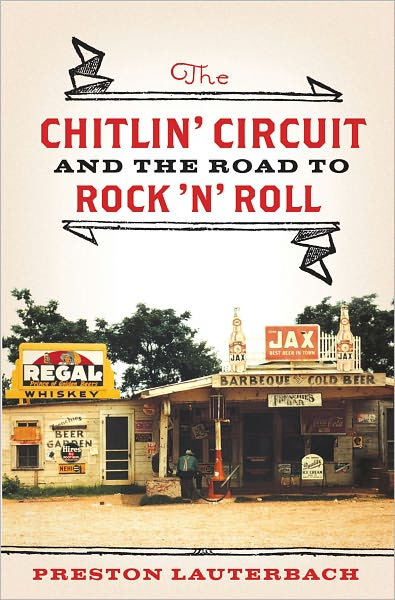
Barnes & Noble ReviewMost music books assume or briefly acknowledge these inconvenient facts when they don’t ignore them altogether. But they’re central to two recent histories and two recent memoirs, all four highly recommended. Memphis-based Preston Lauterbach’s “The Chitlin’ Circuit and the Roots of Rock ‘n’ Roll” relishes the criminal origins of the mostly southern black club scene from the early ’30s to the late ’60s. Journalist-bizzer Dan Charnas’s history of the hip-hop industry, “The Big Payback,” steers clear of much small-time thuggery and leaves brutal L.A. label boss Suge Knight to Ronin Ro’s “Have Gun, Will Travel,” but plenty of crime stories rise up as profits snowball. Ice-T’s “Ice” devotes 25 steely pages to the lucrative heisting operation the rapper-actor ran before he made music his job. And ’60s hitmaker Tommy James’s “Me, the Mob, and the Music” is an artist memoir distinguished by its substantial portrait of American pop’s most legendary gangster, Morris Levy.

Owner of Roulette and countless other labels as well as the jazz club Birdland and the Strawberries record retailing chain, Levy is said to be the model for Hesh Rabkin of “The Sopranos” and deserves fuller treatment than the fast-moving 225-pager James wrote with Martin Fitzpatrick. After he died of cancer while appealing an extortion conviction in 1990, a few of Levy’s machinations were detailed in the likes of Dorothy Wade and Justine Picardie’s Ahmet Ertegun biography, “Music Man,” and John A. Jackson’s Alan Freed biography, “Big Beat Heat.” But James’s stories are the most closely observed to date. IRS men examine Levy’s books for so long that he gives them their own office at Roulette, where low-level enforcers and future Genovese boss Tommy Eboli stroll in and out. Levy roughs up James’s first manager and threatens James himself. When James gets his draft notice, Levy phones a friend who’s on the board of both Chemical Bank and the Selective Service, and James is classified 4-F. Finally, in 1972, with the hits dried up anyway, James confronts Levy in a pill-fueled rage and walks out with his knees intact.

James hated Morris Levy. Yet he also loved him, and he’s not the only one. With James, maybe this is understandable. Although he and his Shondells were no Paul Revere and the Raiders quality-wise, he was a smart, ambitious, hardworking kid compelled to learn the music business at 19, and so Levy inevitably became a father figure — a father figure who robbed him of millions in royalties while overseeing a five-year run where James made his own pile touring, served as a youth advisor to Hubert Humphrey, and married a Mob-linked Roulette secretary whose dad forwarded the kids pharmaceutical samples from his Post Office job. But Levy had more sophisticated fans, especially in jazz, which he greatly preferred to rock and roll. Count Basie, Dizzy Gillespie, and Nesuhi Ertegun are among the many to testify to his kindness and generosity. James simply says, “He was more fun to be with than anybody.”

Levy — who also shows up in “The Big Payback” when he acquires the groundbreaking hip-hop label Sugarhill in a usury scheme — is the only white crook with a prominent role in these books. This is demographically unrepresentative. The Mob had its hooks into MCA, long America’s dominant booking agency, and Levy’s notorious predecessor Joe Glaser, who managed and fleeced both Louis Armstrong and Billie Holiday, was only the best-known of the many Mob-linked operators who controlled the nightclubs that became such a big deal as of the ’20s. For the most part, however, these were northern clubs, because the North was where jazz fans had money and where white gangsters were organized. Preston Lauterbach tells the story of their black counterparts in the South, where ruder music was germinating.

Lauterbach’s kingpin is Denver Ferguson, second in Indianapolis’s Bronzetown only to that seminal black capitalist, hair-straightening queen Madame C. J. Walker. Ferguson was a numbers tycoon from a frugal landowning family in a predominantly white Kentucky town. His printing business generated a specialty in gambling devices called “baseball tickets,” and by the early ’30s that operation, plus the real estate it bought, led to his brother Sea Ferguson’s Cotton Club and his own Trianon Ballroom, and these ventures to the Ferguson Brothers Agency a decade later. Lauterbach cares plenty about music, offering insightful descriptions of, among others, Little Richard, Louis Jordan, Johnny Ace, Gatemouth Brown, and journalist-bandleader Walter Barnes, whose well-embellished “Chicago Defender” columns on the South’s many bronzetown “strolls” did much to raise African-American cultural consciousness in the ’30s. But what he emphasizes about Ferguson is his workaholic organizational capacities. Though Ferguson accrued capital breaking the law, he was basically a businessman, and a responsible one: “He collected black dollars in underworld trade and gave back to the community at large, carving economic independence out for himself and employing black locals.”

At times Lauterbach finds his material so colorful he can’t resist providing prose to match, and he obsesses predictably on the ineffable southernness of rock and roll. But these are forgivable tics given what he’s achieved — a coherent, musically savvy history of a performance culture that until now was known only piecemeal. In addition to Denver Ferguson we get the lowdown on Houston’s Don Robey, remembered because he owned a record label, and Memphis’s Sunbeam Mitchell and Bob Henry, uncelebrated because they didn’t. We also get revealing glimpses of unsafe havens where black men who knew damn well the white man was keeping them down could have more fun than anywhere — where music imparted spiritual concord to wine, women, and craps.

A redolent factoid is the name of the fraternal organization that staged the Baby Doll Dance at Natchez, Mississippi’s Rhythm Club on April 23, 1940: the Moneywasters Social Club. How better declare your dissent from the Puritan ethic than by calling yourselves the Moneywasters? Unfortunately, the reason these spendthrifts are remembered is the 209 people who died that night in a one-exit venue where Spanish moss had been doused with kerosene to disperse mosquitoes — including Walter Barnes, who had seen lots of fires and kept playing in a doomed attempt at crowd management. Also unfortunately, what has been dubbed the Natchez Dance Hall Holocaust would have been less deadly had not the Moneywasters boarded the windows and padlocked the back door to thwart freeloaders. But that’s the kind of tradeoff you live and sometimes die with when you aim to have more fun than anybody.

Although most of the chitlin’-circuit impresarios went to their rest in more comfort than they’d been born to — and more comfort than their artists, especially the earlier ones — none of them got rich; Don Robey ended up selling Duke-Peacock for $100,000 and a leased Cadillac. Two generations later, their successors have profited rather more spectacularly, marketing a rock and roll offshoot that began as un-southern as any African-American music this side of Anthony Braxton. The even tone of Dan Charnas’s account of this big payback differs markedly from Lauterbach’s. A Boston University summa whose thesis was entitled “Musical Apartheid in America” and who always capitalizes “Black” and “White,” Charnas was an early contributor to “The Source” and worked in the record business for much of the ’90s. “The Big Payback” fuses these complementary orientations in a swift, detailed, thoughtful narrative that stands tall alongside Jeff Chang’s canonical hip-hop overview “Can’t Stop Won’t Stop.” At 638 pages, it weaves substantial portraits of at least 50 artists, businessmen, and radio pros into a story that isn’t quite encyclopedic — it fast-forwards from 2000 and pretty much skips the Dirty South — but justifies its grand conclusion: “”Hip-hop succeeded not by being correct. It succeeded by being.” In its materialistic ubiquity, hip-hop won. It is takeover. America has officially been remixed.”

Half a century after Denver Ferguson opened the Trianon Ballroom, Afro-America had been changed drastically by an entrenched civil rights movement, an expanding economy that stalled just as the black middle class was taking off, and the partial breaching of racial barriers by rock and roll itself. Maybe the runners and enforcers who manned the chitlin’ circuit weren’t all that different from the many casual drug dealers who find a better way in Charnas’s book: among them, in roughly ascending order of seriousness, Russell Simmons, Jay-Z, Damon Dash, Biggie Smalls, and Chris Lighty (plus the very casual young Ice-T of “Ice,” well before he figured out that robbing jewelry stores with a sledgehammer was a better deal). But the general mood was certainly angrier and more polarized — fatherless children were everywhere, and so were guns. Although hip-hop refutes the Lauterbach-approved Jane Jacobs truism that public housing projects destroy “”innovative economies”" (her italics), none of the thuggery described by Lauterbach, James, or any other pop historian approaches the murders of Tupac and Biggie. And those are merely the most spectacular examples of what Charnas calls “hip-hop’s cycle of violent one-upmanship,” which made the beatdown a social currency.

In “Ice,” Ice-T observes that this cycle began with escalating hostilities among L.A.’s gangbangers. But these were obviously cranked up by the profits at stake in the inner city’s innovative response to Reaganism’s entrepreneurial imperative: the drug trade — especially, as Ice-T also observes, “once crack hit.” Of the small-time dealers named above, several of whom sold only weed, Simmons and Dash were born businessmen on their way to safer hustles. Ice-T was an army veteran and a non-deadbeat dad who preferred to keep his ambitions reasonable — once he went into the crime business, he refused to use a gun on the job or traffic drugs. Biggie and Jay-Z, on the other hand, had much bigger dreams than street dealing could satisfy, and turned to music to fulfill them, as did two less casual dealers, 50 Cent and Wu-Tang headman RZA. Who knows whether any of these men had what it takes to become a crime boss — probably not, we hope. But they kept their eyes on the prize, which was untold wealth. And except for the slain Biggie, all made bigger bucks rapping than any but a few of the African-American musicians who preceded them. That is, all made out like gangsters, including the moderately talented 50, who cashed out of his VitaminWater deal with as much as $100 million and has a net worth Charnas estimates at nearly half a billion.

One of Charnas’s most fascinating portraits is of supermanager Chris Lighty. His absentee dad an FBI agent, Lighty may be the one guy here with the makings of a crime boss — like Morris Levy, he’s proven “calm, but completely capable of carnage.” After one particularly fraught beatdown early in a career that began with his Violators crew providing muscle for DJ Red Alert, Russell Simmons’s Israeli-born partner, Lyor Cohen, told Lighty: “You have to make up your mind. Do you want to be “that “guy, or “this “guy?” Lighty chose “this “guy, but when necessary — convincing Suge Knight to OK a Def Jam video, say — he became “that” guy. Charnas says Lighty got into hip-hop because he “was interested in girls and thrills.” He took 15 percent of 50 Cent’s VitaminWater money and may well be worth as much as his client.

“The Big Payback” documents the phenomenal talent, faith, and enterprise that went into hip-hop’s takeover. Little Richard and Louis Jordan were musical titans, but Jay-Z and Wu-Tang belong in their company, and even adjusting for history, Chris Lighty and Puffy Combs as well as Jay-Z the label exec dwarf Denver Ferguson and Don Robey. And though there were quite a few whites and middle-class blacks in the hip-hop mix, many crucial innovators came up from circumstances as daunting as those of Ferguson’s time. Charnas celebrates their admirable achievements without sensationalism or sentimentality.

Yet though he’s not a political idealist on the order of fellow historian Jeff Chang, the onetime student of musical apartheid sees hip-hop’s limitations. Economically, “there is still no great Black-owned major record company, no film studio. The winning paradigm…seems to be the joint venture.” And culturally, the man who again and again depicts gangsters finding a better way — the scariest of Lighty’s Violators now has his master’s and a guidance counselor job — is less sanguine about gangsta rap, starring those hyperreal villains who became hip-hop’s commercial mainstay by pretending to be ordinary thugs and sometimes acting like same. Charnas believes that what got Tupac killed was his pursuit of a “street credibility…measured by money, violence, brutality, and blind loyalty.”

Such gangsta images as the gun and the beatdown have gradually lost ground to a carpe diem hedonism long on a sexist sexual candor that offends its female fans far less than feminists of either gender would prefer — no more “correct” than gangsta, but less deadly in its generalized escapism. Hip-hop accommodates many other kinds of expression, and I’m gratified when it makes them work. But at hip-hop’s core is a dissent from the Puritan ethic that achieves its own kind of spiritual concord. And behind it, as behind many popular musics before it, are more or less shady businessmen with a special appreciation for girls and thrills.

Continue Reading Close

Kicking Bob Marley from his pedestal

A new biography explores the extraordinary, contradictory life of the reggae legend

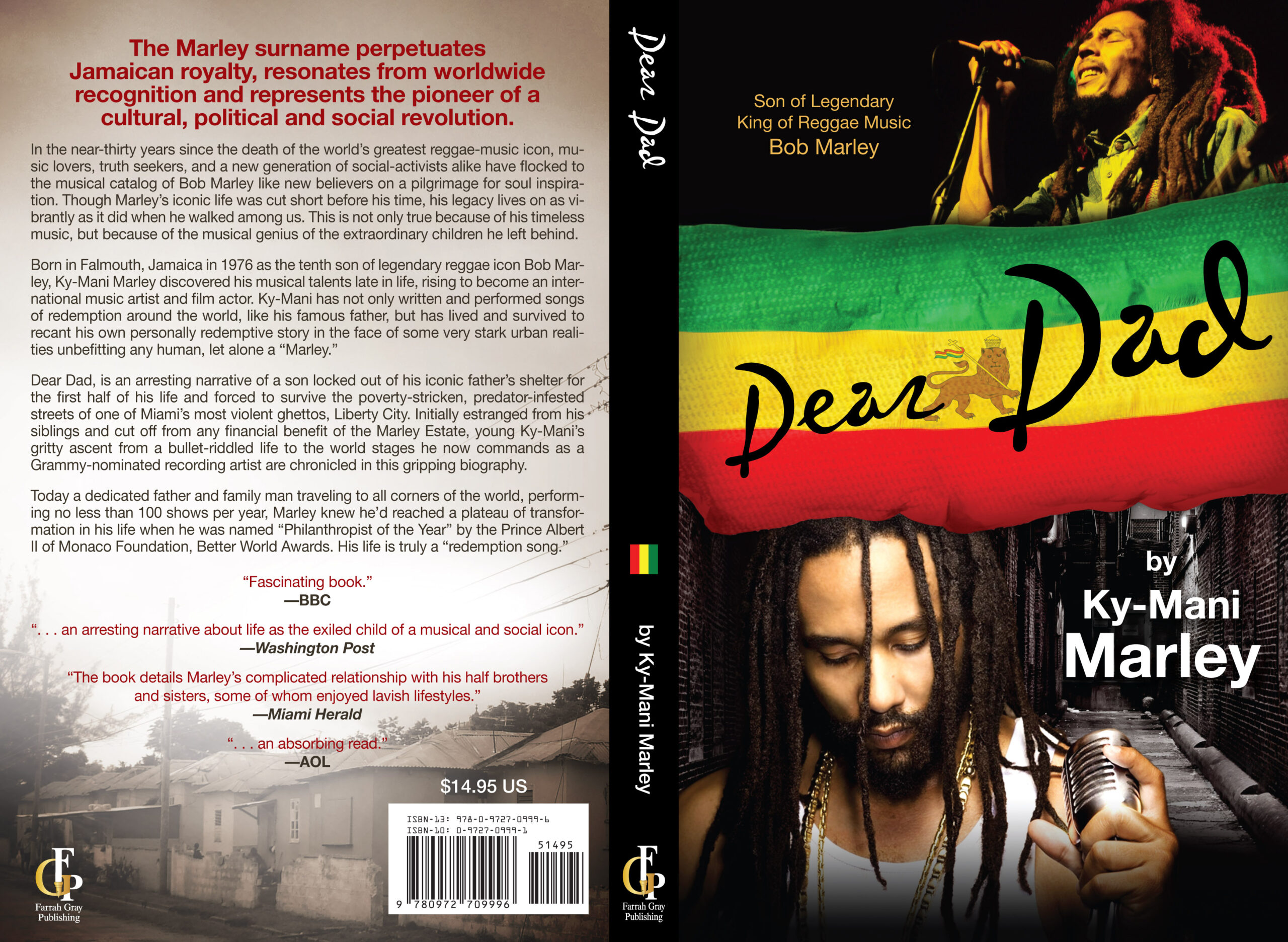
"Dear Dad," by Ky-Mani Marley

As Chris Salewicz’s “Bob Marley: The Untold Story” isn’t the first to report, many human beings worldwide — he cites Hopis, Maoris, Indonesians and, of course, Africans — regard Bob Marley as a “Redeemer figure coming to lead this planet out of confusion,” and some consider him nothing less than the literal second coming of Jesus Christ. Say what you will about the adoration accorded John Coltrane, John Lennon, Elvis Presley, Michael Jackson, Um Kulthum, this is another order of iconicity. Say what you will about the religious dimensions of pop fandom, Marley’s Rastafarianism renders the metaphor literal. These mystifications bode ill for Marley’s biographers, who number at least 15 or 20 by now. Take, for instance, Stephen Davis, who closes with two triple-indented lines: “Bob Marley lives. He’s a god./’History proves.’” And Davis’ bio is one of the good ones.

Barnes & Noble ReviewMaybe it’s the ganja — well, definitely it’s the ganja, with its built-in third eye, its aura of secret significance. More fundamentally, though, it’s the transport, the release — the suprarational rewards music lovers love music for, which Marley claims are owed solely to the divinity of the Ethiopian autocrat Haile Selassie. Who are we to gainsay him, especially we white Babylonians? He has bestowed upon us this feeling of transcendence, and not only that, articulated a political consciousness that needs articulating. “I remember on the slave ship/How they brutalized our very souls/Today they say that we are free/Only to be chained in poverty” might not turn many heads at a socialist scholars conference, but by pop standards it’s a smart, blunt, hard-headed augury of militance. As a result, many all too readily suspend their disbelief when the politics turn out to herald twistier “reasonings,” as Rastas call their stoned biblical bull sessions.

So when I noticed Salewicz embellishing his first-chapter account of Marley’s fatal cancer with matriarch Cedella Booker’s conspiracy theories and backup singer Judy Mowatt’s lightning-bolt premonition, I said uh-oh. But these were feints. Davis’ “Bob Marley” is wrenching on Marley’s final months, Timothy White’s “Catch a Fire” provides unmatched blow-by-blow on the Marley estate, and both bring their own details to the life story proper. But Salewicz’s book is faster, fuller and fairer than either. It’s faster because through plenty of incident it sticks to the story, a welcome improvement on Salewicz’s bloated 2007 Joe Strummer bio. It’s fuller due not to Salewicz’s relatively late and limited personal contact with his subject, but to the spadework of the 11 other biographers he cites, the low-lying fruit he picked up during two years of living in Jamaica, and what looks from here like some plain old digging. As for fairer, well, Salewicz admires Bob Marley deeply without deifying him. That’s what I call reasoning.

Marley was born in 1945 to the 18-year-old daughter of a locally prominent black family in the Jamaican high country and a much older white bureaucrat who married the mother but barely knew the son. He moved to Kingston’s Trench Town ghetto at 12 and cut his first record at 17. For the next decade, he and fellow Wailers Peter Tosh and Bunny Livingston grew in skill and Jah love as they negotiated the rough and tough Jamaican music business. Advised by a motley crew of thuggish Kingston minimoguls, devious Rastafarian elders, and small-time American bizzers, twice joining his mother in Delaware to replenish his capital in working-class jobs, he and the Wailers were the biggest thing in Jamaica by 1970. They performed in the States, undertook an abortive Swedish film project, and ended up in London. And in early 1972 they connected with Island Records’ Chris Blackwell, the great white record man who staked them to the breakthrough album “Catch a Fire.”

For most of his fans, Marley equals his Island output, and understandably so. Not only does it remain music of the highest quality, it was the engine of the cultural, spiritual and political quest that led to his deification — his “legend,” to cite the title of the Island compilation that has poured from the dorm rooms of millions of stoners since 1984. Nevertheless, this output reflects only a quarter of his tragically foreshortened 36-year life, for the previous quarter of which Marley was just as prolific. More than White and much more than Davis, though in less musical detail than the scrupulous academic Jason Toynbee (whose study is titled, what else, “Bob Marley“), Salewicz respects this truth without tackling the monumental job of codifying it. Near as I can count, the 1970 Jamaican hit “Duppy Conqueror,” later rerecorded for “Catch a Fire’s” ruder, stronger follow-up “Burnin’,” has appeared on some 300 Marley and reggae comps.

The first disc-plus of Tuff Gong’s “Songs of Freedom” box is a good introduction to Marley’s strictly Jamaican period, overlapping only slightly with Sanctuary’s highly recommended “The Essential Bob Marley & the Wailers” and barely at all with Heartbeat’s earlier, weaker “One Love at Studio One 1964-66.” But none of these include “Nice Time,” “Treat Her Right,” “The World Is Changing,” or “Black Progress,” all of which Salewicz tipped me to, or the Toynbee faves “I’m Still Waiting” and “Jailhouse,” not to mention “Milk Shake and Potato Chips,” a touching trifle I streamed because I liked the title. There’s not all that much sense to be made of a discography that embraces half a dozen producers, a hazily documented myriad of backup musicians, and material ranging from “Black Progress” to “Milk Shake and Potato Chips.” But dip in and many things become clear.

As a teen, Bob would do anything for a hit, including covers of “And I Love Her” and “What’s New Pussycat.” He loved American soul music but wasn’t always so great at it. He was militant early, as on 1968′s “Bus Dem Shut (Pyaka),” “bus” meaning “bust” and “pyaka” meaning “liar.” He was on top or ahead of every rhythmic shift in Jamaican pop and several elsewhere. He shared with certain country songwriters the ability to express deep content in simple language, both personal (think Hank Williams) and social (Merle Haggard). And most important in the long run, he had the gift of tune, devising songs so compelling that many from his 1969-71 flowering were inevitably reprised on Island: “Concrete Jungle,” “Slave Driver,” “Small Axe,” “Trench Town Rock,” “Lively Up Yourself,” “Kaya.”

There are purists who claim Marley’s music went north once he signed with Island, or broke with Tosh and Livingston, or enlisted American guitarist Al Anderson. But Salewicz isn’t among them. Like most observers, he sees Blackwell as an essentially benign force who helped Marley achieve “the international sound we were expecting to have” — a quote not from Marley but from Livingston, who felt so ill at ease in Babylon that he rejected the touring life for a sporadically inspired solo career as Bunny Wailer. Marley’s internationalism was better assimilated in Britain, where Jamaicans dominated the small black population, than in the U.S., where, as Marley knew all too well, a much larger black population preferred competing musics of its own. A cordial but ultimately rather private man, Marley drove himself hard, perfecting his stagecraft and writing a song a day as he studied scripture, pondered politricks, acted the don, played soccer barefoot, bedded innumerable women, and fathered what Salewicz reckons as 13 children by eight of them including his wife Rita, though estimates do vary.

Unsurprisingly, Marley’s choices and circumstances embroiled him in contradictions. I hesitate to say his insatiable womanizing is the least of them, especially since some of his kids had it so much better than others — his son Ky-Mani’s “Dear Dad” is a much better book about growing up in a drug-dealing culture than about music or his dear dad. But at least it’s a familiar pattern. Less so the man of peace who delivered the occasional beatdown and hired ropey-haired toughs who promoted his records by delivering many more. And what are we to make of the Marley who Salewicz reports watched the private executions of three men who’d tried to assassinate him shortly before his 1976 Smile Jamaica concert — a comeuppance that came down a week or so after his 1978 One Love Peace Concert, which Salewicz unconvincingly judges “one of the key civilizing moments of the twentieth century” because Marley got two warring politicians to grasp hands onstage for an awkward spell? But I was in fact more shocked by the famously generous philanthropist dropping 35 grand on a Miami dinner with a daughter of the Libyan oil minister, 1953 Chateau Lafite Rothschild included — and more saddened by Salewicz’s account of Marley’s embattled 1980 visit to a newly independent Zimbabwe, where Robert Mugabe’s cohort was already proving more autocratic than Ras Tafari’s.

To repeat, it was righteous of Salewicz to tell these tales. But that’s only because they don’t turn his book into a debunk. If it’s foolish to deify Bob Marley, it’s far more foolish to dismiss him, in effect blaming him for not living up to the magnitude of his achievement. Praise Peter and Bunny all you want — they deserve it. But credit Marley’s reservations: “Is like them don’t want understand mi can’t just play music fe Jamaica alone. Can’t learn that way. Mi get the most of mi learning when mi travel and talk to other people.” And recognize in that one-world bromide the seriousness of his cultural-spiritual-political ambitions. Salewicz reports that the assassins just mentioned were armed by the CIA, while others blame the right-wing Jamaican Labour Party. Probably not much difference, and either way you can trust his enemies to know his power. Most of the 14 million Americans who’ve bought the calculatedly anodyne “Legend” are in it for the herb. But Marley is very different for people of color such as the Tanzanian street vendors of Dar es Salaam’s Maskani district, one of many third-world subcultures to integrate his songs and image into a counterculture of resistance.

Peter and Bunny wouldn’t have brought Marley near such a consummation. Nor would the rhythmic muscle and dubwise byways of Lee “Scratch” Perry, whom the purists reasonably account Marley’s best and toughest producer. In fact, it worked pretty much the opposite. The gunmen who invaded Marley’s Kingston compound in 1976 managed to crease Bob’s arm and Rita’s skull. After playing the concert in bandages two days later, the two fled to England, where Marley took musical vengeance not by screaming bloody murder but by fulfilling his crossover dreams with heightened understanding, focus and subtlety. In six months he recorded all of “Exodus,” which Time magazine hyperbolically declared the greatest album of the century in 1999, and the equally blessed “Kaya,” which leads with the languorous “Easy Skanking” and climaxes with “Runnin’ Away” and “Time Will Tell” — this normally unalienated visionary’s haunted meditation on the confusions of fame followed by a promise of justice no tougher than anything else on his gentlest albums sonically and his most acute aesthetically. “Exodus” and “Kaya” opened the door on a three-year period in which he cemented his international fame while fighting the cancer he might have beaten if Rastafarianism looked more kindly on Babylonian medicine, amputation in particular — the disease began in a long-troublesome big toe he reinjured playing soccer barefoot.

Marley’s big Kingston concerts didn’t prevent Jamaica from turning into the most gun-ridden state in the western hemisphere. Lee “Scratch” Perry relocated to Switzerland. The Maskani district has been plowed under to make room for a bank. And reggae has evolved into a beat-dominated music of crotch-first sexism and toxic homophobia that’s far livelier than the Bob-worshipping hippie and Afrocentric crap that surfaces wherever spliffs are smoked or tourists go dancing. In short, Bob Marley has yet to remake the world — a failing he shares with just about everyone else who’s tried. But that doesn’t mean he hasn’t changed it. Gandhi and King and Mandela didn’t leave utopias behind either, and unlike them, Marley was merely a musician no matter how much praise he proffered Jah. His music is as firmly ensconced in the pop pantheon as the Beatles’ or James Brown’s, and it signifies a remade world even if that doesn’t make it so.

A Redeemer? We don’t play that. “Redemption Song”? That we play. “Won’t you help to sing, these songs of freedom/Cause all I ever had/Redemption songs, redemption songs/Redemption songs.”

Continue Reading Close

Page 1 of 2 in Robert Christgau

www.salon.com/writer/robert_christgau/index.html