Rozina Ali

In defense of Muslim women’s choice

I've seen first-hand how the veil is used to control women, and Europe's battle over the burqa is no different

  • more
    • All Share Services

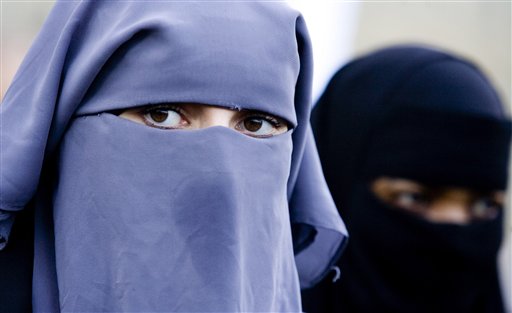
In defense of Muslim women's choiceFile - In this Nov. 30, 2006 file photo unidentified women are seen wearing a niqab in The Hague, Netherlands. A parliamentary committee in Belgium on Wednesday March 31, 2010, has unanimously voted to ban the wearing of full face-covering veils in public, a major step in the country's legislative process. The full House of Representatives is now expected to vote on the issue late April. (AP Photo/ Fred Ernst, File)(Credit: AP)

When my mother turned 12, she started wearing a burqa in her hometown of Multan, Pakistan. More than a decade later, she got married and moved to Karachi, then a thriving capital of modernity, where few women wore hijabs, let alone all-encompassing veils.

Growing up in Central Valley, Calif., I had no qualms about showing off my legs in shorts and skirts, and I was shocked to learn my mother had covered every inch of her body. Even more unbelievable to me, though, was that my mother felt pressured when she moved to Karachi to suddenly give up the burqa, a blanket of fabric that had at that point been part of her identity for more than half her life. It provided her with a sense of comfort, it helped define her identity as a Muslim and a woman, and it was gone virtually overnight.

It angered me that she hadn’t protested. What had she wanted to do, I asked her. “It doesn’t matter,” she told me. “We must do what we can to fit in our community.”

That is the crux of the problem I see today in Europe’s current battle over the veil: Communities defining how women should cover up or what they should take off. Just yesterday, the lower house of Belgium’s parliament voted to ban the full-face veil in public. Last week, French President Nicolas Sarkozy called for a bill that would do the same – all in the name of women’s rights. According to Sarkozy, the veil “threatens the dignity of women.” What about the dignity of choice?

Religion ultimately became a very private affair for my mother. Not personal, but private — so much so that I suspect there was a great disconnection between what she truly felt and believed, and the appearance she put on for others. She never went back to wearing the burqa after she got married, and for as long as I can remember, she only wore a veil in religious ceremonies. In Multan, she donned a burqa; in Karachi, she took it off; and in the United States, she took to wearing pants and T-shirts. Like most migrants, she caved to the pressure to fit in.

Of course, it makes me mad that women are forced to cover their heads in Iran or Saudi Arabia. In those cases, it isn’t a symbol of religion; it’s a symbol of patriarchy. It makes me just as angry, though, to see a veil ban imposed on women in the name of modernity and liberalism. Mullahs and governments are both guilty of attempting to unilaterally define what empowerment means for women.

I grew up on the opposite side of the world as my mother, but still encountered similar pressures to conform. It was difficult as a teenager to balance the modesty that Islam encourages with the latest fashion trends. I paraded in dresses and short sleeves throughout high school, much to the chagrin of my mother who was disappointed but never told me how to dress. As I grew older, I started reading feminist literature and chatting with like-minded female friends. I found that being a feminist was often equated with being free of the “restrictions” of religion. “Covering up” in particular was taken as de facto proof of oppression, which I knew to be a untrue based on my personal experience with modestly-dressed Muslim women who were outspoken, opinionated, and politically and socially liberal.

I believe the way Islam has been defined in certain contexts has oppressed women, and I disagree with anyone ever being forced to veil. But it isn’t the religious basis for covering up that matters most, it’s a woman’s right to choose whether to cover up because of religion. Religion is her personal domain and she should be able to navigate that realm on her own terms.

Twitter feud: Ebert vs. Breitbart

The film critic and the commentator tweeted their way through a minor spat over Herzog's "Grizzly Man"

  • more
    • All Share Services

Tweet wars are not exactly the stuff epic battles are made of, but they do make for entertaining reads, especially when they occur between two strong personalities like Roger Ebert and right-wing media controversialist Andrew Breitbart. The two were caught up in a tête-à-tête on Tuesday over Timothy Treadwill, the bear enthusiast whose life and death was explored in Werner Herzog’s 2005 documentary “Grizzly Man.” The squabble started when Ebert tweeted his review of “Aguirre, the Wrath of God,” Herzog’s 1972 film, which prompted Breitbart to bait the great critic:

andrewbreitbart: @ebertchicago Did you like Werner Herzog’s ‘Grizzly Man’? Best, perhaps, inadvertent exploration of progressive/leftist mind. Seriously.

ebertchicago: @andrewbreitbart Huh? Treadwell was universally deplored as unhinged, and condemned for leading his girlfriend to death.

andrewbreitbart: @ebertchicago film wasnt political but treadwells challenging absurd beardogma was embraced by mediaschools & framed as idealism & progress.

ebertchicago: @andrewbrietbart Show me a “media school” that embraced Tim (“Grizzly Man”) Treadwell, “& framed [him] as idealism & progress.”

Point to Ebert! The argument lasts for a few more tweets but eventually the two men find themselves drawn to other happenings in the world of social media. For the sake of entertainment, though, I hope they decide to continue. I wouldn’t mind seeing Ebert tweet a few more zingers Breitbart’s way. Oh, what great stuff people can do when armed with 140 characters.

Continue Reading Close

Release of Guantanamo detainee has everything to do with torture

A judge has freed Mohamedou Ould Salahi. Some on the right want to blame ... Obama? But it's the torture, stupid

  • more
    • All Share Services

On Monday, federal Judge James Robertson ordered the release of Mohamedou Ould Salahi, a Guantánamo Bay detainee who had petitioned for habeas corpus back in 2005. The explanation for the decision is now classified, but Robertson stated he would make it public in the next few weeks. Slahi is the 34th prisoner to be released from Guantánamo since the Supreme Court ruled in 2004 that detainees could challenge their detention in U.S. courts.

But Slahi is also what authorities called a “highly valued detainee.” He is suspected of helping recruit the 9/11 hijackers in Germany and of involvement in the attempted millennium bombing in Los Angeles. He has also been held illegally in Guantánamo for eight years without criminal charges.

Like most things pertaining to the war on terror, Monday’s ruling produced some gross misinterpretations. Several Fox News hosts, for instance, suggested that Robertson’s decision was a result of President Obama’s push for civilian trials for some Guantánamo detainees. But the chain of events that brought the Slahi case to Robertson actually began years before Obama’s presidency.

In March 2004, Lt. Col. Stuart Couch, the prosecutor in Slahi’s military trial, halted that process, claiming that the evidence against Slahi had been obtained through torture and was thus inadmissible under U.S. and international law. It is this mistreatment, ultimately, that allowed Slahi to win his release this week.

Indeed, what is most notable about the Slahi case is how severe and well-documented his mistreatment was. A report released last April by the Senate Armed Services Committee highlighted the interrogation techniques used against Slahi, who has become a notorious example of mistreatment of U.S. prisoners of war.

In 2003, then-Defense Secretary Donald Rumsfeld gave approval to a memo outlining standard interrogation techniques against terror suspects. The list included sleep deprivation, emotional abuse, hooding, strip-searching using female interrogators, and using dogs to agitate and shock detainees. (Curiously, months earlier, Maj. Gen.Geoffrey Miller, one of Gitmo’s interrogation authorities, had deemed the use of dogs an unacceptable technique. But Rumsfeld approved the memo nonetheless.)

In July 2003, interrogators requested permission to use addition techniques against Slahi, including: replicating the “Stockholm syndrome,” in which he was made to believe he was going to be killed; shackling him in a room for hours; playing loud music; and claiming his mother was detained and implying she would be gang-raped by the guards.

Almost as frightening as these techniques was the gross disregard for the rule of law, even within the convoluted legal world of Guantánamo. Interrogators had already started using some special techniques five days before Rumsfeld approved the memo. Moreover, Slahi had already agreed to cooperate by August 2003, but interrogations continued for months after anyway.

That October, an e-mail between an interrogator and the Gitmo psychologist Diane Zierhoffer discussed Slahi’s mental state:

An October 17, 2003 email from a JTF-GTMO interrogator to LTC Diane Zierhoffer, a ITF-GTMO Behavioral Science Consultation Team (BSCT) Psychologist, stated that ‘Slahi told me he is “hearing voices’ now… He is worried as he knows this is not normal…. By the way… is this something that happens to people who have little external stimulus such as daylight, human interaction etc???? Seems a little creepy.’ …LTC Zierhoffer responded ‘sensory deprivation can cause hallucinations, usually visual rather than auditory, but you never know…In the dark you create things out of what little you have …’

Robertson’s ruling points to a failure on the part of the military and CIA to treat prisoners humanely, and also a stunning lack of knowledge about the effects of torture on suspects’ mental health.

But the ruling also speaks far louder to the credibility of our judicial system to hold the CIA and military accountable, especially at a time of war. What’s ultimately frightening is not that a suspected terrorist was released, but that interrogators didn’t believe their actions would have consequences. They did, and that’s why Slahi is a free man today.

Continue Reading Close