Tamim Ansary

Dancing on land mines

After 9/11, I told America it couldn't bomb Afghanistan back to the Stone Age -- it was already there. Since then, the story of my country has been one step up, two steps back.

  • more
    • All Share Services

Dancing on land mines

Because I grew up in Afghanistan, because I often write about it, because I warned against America bombing the poor country back to the Stone Age after 9/11, people often ask me how the country’s doing now, five years after the American intervention. Is it bound for glory or headed for hell?

All I can say is yes.

It’s not that I lack information. I track news of the country closely. I’ve been there since the Taliban fell. I keep in touch with relatives who never left and cousins who have gone back. Friends of mine who come and go keep my impressions fresh. Still, I’m undecided.

The United States drove the Taliban out of Kabul with a brief, tightly targeted military campaign that entrusted most of the fighting to the long-standing Afghan resistance and made artful use of diplomatic pressure on the Taliban’s Pakistani sponsors. The dreaded shock-and-awe bombardment and eviscerating invasion — later visited upon Iraq — did not materialize in Afghanistan. Once the fighting ended, room for hope opened up.

At that moment, however, a race broke out between chaos and order. That contest is still on and its outcome remains unknown. On one side are people who have no skills except the arts of violence, trying to reignite a war of all against all, because in that environment their kind can thrive. Their hope lies in sowing enough anxiety to make a critical mass of people pick up guns again for self-protection.

On the other side, modernists, technocrats, returning exiles, the old aristocracy and countless war-weary others seek to restore the peaceful order of a remembered Afghanistan. Their hope lies in getting enough normalcy going — enough fruit and meat in the bazaars, enough traffic flowing normally, enough consecutive days without bloodshed — to make a critical mass of people say, “This is working, I better get on board so I’ll get my share.”

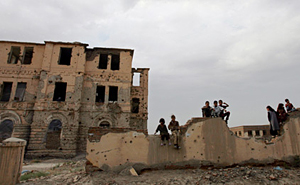
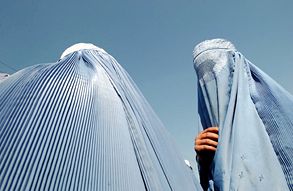
After the Taliban fled, most Afghans simply wanted to start rebuilding. When I went to Kabul in June 2002, I found what should have been a scene of despair: a city teeming with amputees and burka-clad widows begging for money, about one-quarter of it reduced to rubble. Instead, Kabul felt as luminously euphoric as any place I’ve ever set foot. Why?

Because everyone thought the 23-year nightmare was finally over. Kabul belonged to Afghans again. And there was going to be a Marshall Plan for Afghanistan now! Everywhere I went, people told me their schemes for getting in on that money.

Even on the plane going in, I met a fellow with a black beard bigger than my head, wearing tribal clothes, his eyes rimmed with kohl, the archetypal image of a Taliban guy, I thought — until he told me he was planning to start a cosmetics factory because the market for lipstick would be hot, now that the Taliban were gone.

In my ancestral village, my relatives had arid fields marked out for the vineyards they would plant, as soon as they got some of that Marshall Plan money to dig “deep wells” for irrigation. One fellow hoped to sell raisins to whoever makes Raisin Bran, a box of which he’d seen somewhere.

But talk of a Marshall Plan soon faded. At an international conference in Tokyo, economists said rebuilding Afghanistan would take $30 billion, the Afghan delegation asked for $10 billion, donor nations pledged $4.5 billion, and actual receipts that year came to less than half the pledged amount. In midyear, someone discovered that the U.S. budget had penciled in zero for Afghanistan. Zero. But it wasn’t a policy decision, I’m told: The administration simply forgot. A distracting new war was brewing by then in Iraq. And so the crucial first year ended in a fizzle.

Then, the war in Iraq did break out, drawing attention away from Afghanistan and sucking America into the very trap it had sidestepped in Afghanistan. Eventually, spillover from Iraq came rippling back to Afghanistan. The suicide bombings began. Believe me, Afghans find these just as horrifyingly alien as Americans. Even at the height of tearing itself apart, Afghanistan never saw one single suicide bombing. Now it has suffered through a rash of them.

And yet reconstruction inches forward. The Japanese, French, Germans and Chinese have come in with money to repair airports, deliver police equipment and rebuild hospitals. The United States has now budgeted some $3.5 billion for Afghan reconstruction, mostly for highways (which have military utility) but also for schools, textbooks and clinics.

My friend Abdul Hayy, who traveled with the mujahedin during the ’80s, went back to northern Afghanistan last year and found numerous men he had known as guerrilla warriors now making their living as shopkeepers.

But unintended consequences keep mounting. Foreign entrepreneurs, technical experts, aid officials and charity workers flooding into Kabul have sent rents skyrocketing. The Kabul office of the International Foundation for Hope, which cost $200 a month in 2002, now rents for $4,000. Soaring rents have dragged up other prices, making Kabul as expensive as many American cities.

The foreign workers can afford Kabul because they’re paid on a foreign wage scale. But locals? Senior civil servants make $120 a month, teachers about $50. Policemen make less, so they live off traffic accidents. When two cars crash into each other in Kabul (I witnessed four serious accidents in just two weeks!) the cops arrive, fine both parties without inquiring into fault, pocket all the money and leave. “They have to get by too,” my cousin explained. Naturally, in this environment, anyone who can extort a bribe does so.

Wahid Omar, a University of Colorado professor who teaches part time at Kabul University, says a Kabul postal clerk charged him 150 afghanis for a 10-afghani stamp. When he protested that the value was printed right on the stamp, the clerk said, “I’ll charge the face value when I myself get a living wage.”

In one ruined neighborhood, my cousin Zahir witnessed government bulldozers knocking down houses that some residents had rebuilt on their own — allegedly because the construction didn’t fit in with the five-year-plan. More likely the residents didn’t pay the bribes for building permits.

Development is undeniably going forward in Kabul, but much of it exacerbates standing schisms in Afghan society between rich and poor, city and country. The capital has an American-style shopping mall, but locals can’t afford the goods. It has five-star hotels, but who can stay there? You can easily get liquor in Kabul now. Glory be. And everyone knows about the Chinese brothels.

Imagine how this looks to rural Afghans, out where the soil is still loaded with land mines. In the Shomali Plain north of Kabul, I saw a guy crouching beside the road, raking through dirt with a device like a garden fork: He was looking for land mines. Behind him, a crowd of children played tag. I said, “Hey, if there might be land mines here, might there not be mines over there?” He allowed that there might. “Well, then,” I said, “shouldn’t someone tell those kids to stop playing there?”

“Where should they play?” he shrugged. “That’s where they live.”

Farmers who must risk limbs and children clearing land for plowing often dare to rescue only small patches for their farms. On that much land, they can’t grow enough wheat to support their families, so they plant opium poppies. But this crop links peasant farmers to a global criminal market that turns idle warlords into busy drug lords, with petty commanders reporting to bigger commanders, creating a new feudal order that stretches into Pakistan (where the drug labs are). In this new feudalism, the Afghan peasants are … still peasants.

Idealistic Afghan-Americans have launched several efforts to build schools in the countryside. They know that rural children are exposed constantly to the jihadist idea of an apocalyptic showdown between God and Satan, in which Westerners represent Satan. They hope that if such kids learn to read, they’ll have access to competing messages and grow up less likely to hate Americans.

But schools face an uphill road because any information they dispense is seen as inherently political. Even pure science implies changes to the local way of life, a transfer of power from traditional authority figures to technical experts from somewhere else. And it’s school builders from far away, those of us with the money and energy, who want to highlight science and geography as much as (more than?) the Quran and theology. We want to use textbooks that devalue martial virtues. (One alphabet book I saw from mujahedin days really did include items such as “M is for Mother, who teaches her sons to kill infidels.”) And we want to educate girls.

Rural Afghans really do need literacy, more than they know. But schools as stand-alone projects, separate from more palpable aid — fruit trees, seed for next year’s crop, herds, water, medicine — present easy targets for Islamist propaganda. Certainly, in southern Afghanistan, unknown parties are distributing anonymous documents (“night letters”) characterizing schools as the sharp tip of the Western knife coming in to kill the one thing rural Afghans proudly feel they do possess — their religion. An afterlife.

When violence breaks out in Afghanistan, the Western media reflexively blames “the Taliban.” But that label implies an organization, headquarters, cadre, leaders. I see no proof that such a Taliban still exists. At its height, the Taliban cadre consisted mainly of young men recruited out of the Afghan refugee camps in Pakistan, funded and led (most Afghans believe) by Pakistani Pashtun with links to the ISI (Inter-services Intelligence), Pakistan’s version of the CIA.

What “Taliban” really refers to now is an attitude, a social movement, a historical current. “Taliban” means “those who do Talibanish things.” They no doubt include people associated with the former Taliban regime, Arab Islamists who settled in Afghanistan during the war, and renegade mujahedin guerrillas such as Gulbuddin Hekmatyar, a one-time client of the ISI and the man who garnered the greatest amount of U.S. military aid to Afghanistan during the anti-Communist campaigns of the ’80s.

So who’s finally behind the mounting violence in Afghanistan? It’s not one group but many. Or “any,” perhaps: anyone who stands to gain some power if the central government loses some. That could include tribal chieftains threatened by mandates from officialdom in the capital. It could include reactionary local clerics, drug lords’ henchmen, cross-border terrorists, saboteurs dispatched from Pakistan, stateless militant international revolutionaries, and perhaps even local young men out to impress their friends.

Whoever they might be, the Taliban exploit old dramas to fuel fresh anger. After all, the current conflict in Afghanistan sits atop layers of history. Emancipation of women? Afghanistan went through a violent revolution over that one in 1928. Tribes fighting the central government? Centuries old. The troubled southern border? That arbitrary line drawn by 19th century Russian and British imperialists split a homogenous population in two and assigned each part to a different country. How could it not be troubled? When I traveled to Peshawar in 2002, my Pakistani Pashtun hosts hailed me with the disquieting greeting, “Welcome to Free Afghanistan!”

And so the race between chaos and order goes on.

At this time five years ago, Afghanistan had only 900,000 students, all of them boys. Now over 5 million Afghan kids are going to school, both boys and girls, even in remote provinces like Helmand, the home turf of the Taliban.

On the other hand, over the past year, unknown thugs have been torching schools, burning books, intimidating students and threatening teachers, forcing at least 200 schools to close. They dragged one poor guy out of his home and slit his throat in front of his family.

But then, Kabul University is back in business. The television station is broadcasting not just news but sitcoms. The Afghan film institute is making movies again. The capital has Internet cafes, even if electrical service is iffy. A theater troupe is touring a Dari version of Shakespeare’s “Love’s Labors Lost,” translated to an Afghan setting. It’s all so thrilling to modernist Afghans like me.

And yet, in this same country, deadly riots broke out over Danish cartoons lampooning the prophet Mohammed. The Afghan Supreme Court was ready to execute a man for converting to Christianity. (He got off on a “technicality.”) The United States still has about 20,000 troops in the country, and both Afghan and American war causalities have risen every year since 2003.

Is Afghanistan better off since the American intervention? Of course it is! Afghan children are playing again.

But they’re playing on land mines.

Leaping to conclusions

Well-meaning observers are making dangerous assumptions about Afghan women and their goals for the future.

  • more
    • All Share Services

Leaping to conclusions

Some of the language I hear in conversations about women’s roles in post-Taliban Afghanistan makes me nervous. It seems that certain misconceptions may have crept into public perception of the issue.

For example, if I go by what I read and hear, women in pre-Taliban Afghanistan lived pretty much as women do in Italy or France. They enjoyed access to all the professions, served in the government, dated and married whom they pleased and wore cosmetics and miniskirts.

Not quite.

Some women did these things, but they constitued a fraction of the population — 10 percent tops. These were the women who lived in the city of Kabul and belonged to the Westernized, educated, urban elite. In rural Afghanistan, in the villages, smaller towns and provincial cities such as Kandahar — which is to say, most of Afghanistan — a different way of life prevailed.

I’m 53, and when I was growing up in Kabul, Afghanistan was a world of villages and walled compounds with virtually no technology, no factories and no industries — a society of tribal peasants who eked out their subsistence as farmers and herders.

In this world, life was divided, not exactly between men and women, but between a public realm and a private one. The public realm belonged, indeed, to men. Women rarely left the shelter of their compound walls without male escorts and then they wore chadris, that body-bag veil now known as the burqa.

The roles of men and women were firmly divided: Women were in charge of home, household, food, domestic animals, marriage, children and the fundamentals of early religious instruction. Men were in charge of farming, fighting, commerce and government.

This wasnt Afghanistan in medieval times. This was Afghanistan when Elvis was king. What’s more, although Afghanistan represented an extreme, this concept of a divided world prevailed down through south Asia. It didn’t just spring out of Islam; it came out of a deep soil of local traditions.

And here is what outsiders didn’t realize: The private realm, at least in old Afghanistan, was a universe unto itself — big, rich and complex. In that hidden universe, women had authentic power. You want proof? The first three female heads of state in the modern world emerged not in France, Italy or the United States, but in Pakistan, India and Sri Lanka. Clearly, in that hidden universe, women were somehow growing up trained for leadership.

Then the changes began. The Cold War brought both superpowers glad-handing into Afghanistan with suitcases full of cash and ideas for development projects. Wherever the 20th century rubbed directly against traditional Afghanistan, ferment bubbled up. Kabul went through 2,000 years of social change in two decades.

But the provinces didn’t — largely, I think, because people there, women included, had a way of life that was working for them and fit their material circumstances. For this reason, a cultural rift opened up between Kabul and the rest of Afghanistan until, inevitably, Kabul began to function like an imperialist power within its own borders, attempting to impose cultural hegemony.

And the thorniest issue between Kabul and old Afghanistan had to do with sexuality and women’s roles.

When the Communists took power, their program departed even more radically from traditional Afghan culture, and their methods were so coercive that the rift turned into a rip. The countryside took up arms. This sparked the Soviet invasion. Virtually all Afghans then opposed the Soviets as foreign invaders, but the bloodshed that erupted seeped into the deeper indigenous conflict between old Afghanistan, which was tribal, rural, conservative and religious, and new Afghanistan made up of the urban, Westernized, elite minority.

As the war developed, most of that educated urban elite escaped to Europe and America. Those who stayed to fight the Soviets were by and large the provincials. The refugees in Pakistan, those millions who lived in the squalid camps that spawned the Taliban, were mostly the women and children of the men who stayed in the country to fight the Soviets and die like ants.

When the Mujahedin finally toppled the last Communist ruler of Afghanistan and marched into Kabul, it wasnt just the triumph of the Afghan people against the foreign invaders but the conquest, finally, of Kabul (and its culture) by the countryside.

Now, thanks to American intervention, the educated, Westernized, urban elite will come back to power. This is good news. When the traditional conservatives got their hands on the levers they tore the country to shreds and ran it into the ground. But it’s wishful thinking to suppose that Kabul equals Afghanistan. Most of Afghanistan was never Kabul, and most of Afghanistan is still out there.

Which brings us to the question of women.

The Taliban did not spring directly from hell. They sprang from Afghan culture strained through hell. They had roots and antecedents in Afghan culture, just as Charles Manson had roots and antecedents in the Summer of Love. Because of these thematic echoes, criticisms of the Taliban do not always make careful distinctions between the depravities of the Taliban and the values of traditional Afghan culture. Attacks on the one merge unnoticed into attacks upon the other. Enthusiastic prescriptions for restoring peace and justice to Afghanistan sometimes boil down to plans for replacing Afghan-style traditional Islamic culture with Western-style (secular) democracy.

Personally, I doubt that’s going to happen. I think rural Afghans will be looking to reinstate the traditions and the way of life they lost. In the short term anyhow, Afghanistan will emerge from this as a socially conservative Islamic society. And if it does, this should not be confused with restoring the Taliban. If left alone and allowed to heal, Afghanistan will evolve, and who knows to what. But social change imposed from outside by fiat cannot produce a healthy society.

I worry about coercive language that has found its way unnoticed into conversations about the women’s issue in Afghanistan. I think it was Laura Bush who said “putting” women into the Afghan government was “nonnegotiable.” But instead of “putting women into,” why don’t we think in terms of supporting Afghan efforts to build a government of their own that includes women?

A powerful organization of European women recently laid down a quota: 40 percent of government posts in Afghanistan have to go to women. Refresh my memory: What’s the legal quota for women in the U.S. Congress?

Virtually all the talk about empowering women in Afghanistan focuses on the agenda of the urban elite — getting women into the national government, liberating women from a dress code, ensuring their access to all professions, and affording them a university education. Excellent goals. I hope they’re met.

But what about the rest of Afghanistan? Is access to professional jobs and freedom from a dress code next on the agendas of rural women? Perhaps their most immediate hopes are for a cow to milk, shelter from strangers and a functional extended family that includes men. Maybe not, I haven’t asked them; but to my knowledge, neither has anyone else.

Wherever Afghans choose their traditional way of life, I think the international community should work with rather than against the grain of the culture. Empowering women through their traditional roles may lead to the deepest changes. To me, right now, a historic opportunity exists to support the real empowerment of Afghan women without engaging in a cultural tug of war with traditional Afghanistan. This country’s most critical needs coincide with the roles traditionally assigned to women, and shouldering these tasks will put women center stage, authentically shaping the future of Afghanistan.

Afghanistan is starving. Food shipments will come in. Someone will have to distribute it. It makes sense to put rural women in charge of that. Families are decimated, households shattered, someone will have to care for the old, ill and feeble. If international aid agencies work directly through women to attack these problems, rural women could end up running social services, staffing clinics, distributing medicines.

Afghans are in rags; someone will have to make and distribute warm clothing. It makes sense to provide small loans to rural women to buy looms so they can clothe their own families. And one day, perhaps, they will be able to produce a surplus to sell. And eventually perhaps they will develop a garment industry, but that’s up to them. And isn’t that better than having Levi Strauss build a factor in Kunduz and impose on them the rule that half their hires have to be women?

And then there’s a task that looms above all others. Someone will have to take in the orphans — half a million of them, and many of them disabled. Someone will have to tend to those broken bodies, mend their hearts and make them feel important and loved, because if those kids don’t get a stake in peace and a chance to grow up healthy, we’re looking at another generation of emotionally damaged troublemakers 15 years down the line — more Taliban.

So when the aid money starts flowing, how about earmarking a serious chunk of it for orphanages? And let those orphanages be staffed and administered by Afghan war widows. The orphans need shelter, the widows need honorable employment and the world, for its own sake, needs to rescue the next generation of Afghanistan from horror.

Putting a few women into the national government is fine, but if it stops there it could end up as tokenism. Worse, it could line up the international community on one side of the enduring tension in Afghanistan between city and country. If Afghanistan is to heal, the well-wishers need to be on both sides of that line.

Continue Reading Close

An Afghan-American speaks

You can't bomb us back into the Stone Age. We're already there. But you can start a new world war, and that's exactly what Osama bin Laden wants.

  • more
    • All Share Services

I’ve been hearing a lot of talk about “bombing Afghanistan back to the Stone Age.” Ronn Owens, on San Francisco’s KGO Talk Radio, conceded today that this would mean killing innocent people, people who had nothing to do with this atrocity, but “we’re at war, we have to accept collateral damage. What else can we do?” Minutes later I heard some TV pundit discussing whether we “have the belly to do what must be done.”

And I thought about the issues being raised especially hard because I am from Afghanistan, and even though I’ve lived in the United States for 35 years I’ve never lost track of what’s going on there. So I want to tell anyone who will listen how it all looks from where I’m standing.

I speak as one who hates the Taliban and Osama bin Laden. There is no doubt in my mind that these people were responsible for the atrocity in New York. I agree that something must be done about those monsters.

But the Taliban and bin Laden are not Afghanistan. They’re not even the government of Afghanistan. The Taliban are a cult of ignorant psychotics who took over Afghanistan in 1997. Bin Laden is a political criminal with a plan. When you think Taliban, think Nazis. When you think bin Laden, think Hitler. And when you think “the people of Afghanistan” think “the Jews in the concentration camps.” It’s not only that the Afghan people had nothing to do with this atrocity. They were the first victims of the perpetrators. They would exult if someone would come in there, take out the Taliban and clear out the rats’ nest of international thugs holed up in their country.

Some say, why don’t the Afghans rise up and overthrow the Taliban? The answer is, they’re starved, exhausted, hurt, incapacitated, suffering. A few years ago, the United Nations estimated that there are 500,000 disabled orphans in Afghanistan — a country with no economy, no food. There are millions of widows. And the Taliban has been burying these widows alive in mass graves. The soil is littered with land mines, the farms were all destroyed by the Soviets. These are a few of the reasons why the Afghan people have not overthrown the Taliban.

We come now to the question of bombing Afghanistan back to the Stone Age. Trouble is, that’s been done. The Soviets took care of it already. Make the Afghans suffer? They’re already suffering. Level their houses? Done. Turn their schools into piles of rubble? Done. Eradicate their hospitals? Done. Destroy their infrastructure? Cut them off from medicine and healthcare? Too late. Someone already did all that. New bombs would only stir the rubble of earlier bombs. Would they at least get the Taliban? Not likely. In today’s Afghanistan, only the Taliban eat, only they have the means to move around. They’d slip away and hide. Maybe the bombs would get some of those disabled orphans; they don’t move too fast, they don’t even have wheelchairs. But flying over Kabul and dropping bombs wouldn’t really be a strike against the criminals who did this horrific thing. Actually it would only be making common cause with the Taliban — by raping once again the people they’ve been raping all this time.

So what else is there? What can be done, then? Let me now speak with true fear and trembling. The only way to get Bin Laden is to go in there with ground troops. When people speak of “having the belly to do what needs to be done” they’re thinking in terms of having the belly to kill as many as needed. Having the belly to overcome any moral qualms about killing innocent people. Let’s pull our heads out of the sand. What’s actually on the table is Americans dying. And not just because some Americans would die fighting their way through Afghanistan to Bin Laden’s hideout. It’s much bigger than that, folks. Because to get any troops to Afghanistan, we’d have to go through Pakistan. Would they let us? Not likely. The conquest of Pakistan would have to be first. Will other Muslim nations just stand by? You see where I’m going. We’re flirting with a world war between Islam and the West.

And guess what: That’s bin Laden’s program. That’s exactly what he wants. That’s why he did this. Read his speeches and statements. It’s all right there. He really believes Islam would beat the West. It might seem ridiculous, but he figures if he can polarize the world into Islam and the West, he’s got a billion soldiers. If the West wreaks a holocaust in those lands, that’s a billion people with nothing left to lose; that’s even better from Bin Laden’s point of view. He’s probably wrong — in the end the West would win, whatever that would mean — but the war would last for years and millions would die, not just theirs but ours.

Who has the belly for that? Bin Laden does. Anyone else?

Continue Reading Close