Tiffany Brubeck

When I learned to scrape by

Hungry, jobless and pinching pennies to print resumes, I started to lose hope of ever finding a job

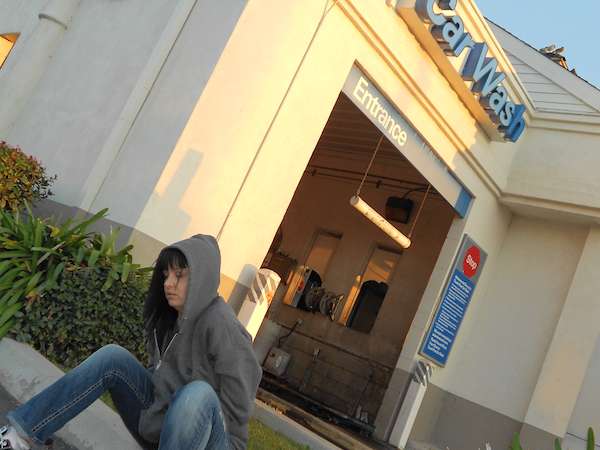
The author outside a gas station
A longer version of this piece originally appeared on Tiffany Brubeck's Open Salon blog. Do you have a story about being unemployed during the Great Recession? Blog about it on Open Salon -- and we might publish it on Salon.

Three dollars in the gas tank, 49-cent burrito, a paper cup of water from the bathroom sink; I sit on the curb, eating my breakfast and listening to Javier sing. Every so often a car pulls up; Javier dips his brush in a bucket of suds and then scrubs gluey insects off the windshield before directing the driver’s tires onto the tracks of the auto-wash.

“You should try out for one of those singing shows,” I tell him, swaying to his melodic crooning.

Without looking up, Javier shakes his head, and snorts, “Who’d vote for an ol’ man, eh?” He yanks a hand-towel from his back pocket and coughs hard into it. His somber brown eyes meet mine for a moment.

“Fix your car, yet?” He asks brusquely, clearing his graveled throat.

“Nuh-uh,” I tell him, scraping the last shrivels of burrito cheese from the wrapper’s foil crevices. “It’s making a stinky smell, now.”

“Aye, chica, it’s leaking coolant. You can’t keep driving on a blown head gasket.”

“Fix the car or pay rent,” I shrug. “I like my car, but I don’t wanna sleep in it.” I wad up the foil, and stand. “It’s almost 8. Catch ya later.”

“Good luck today, mija,” Javier calls after me. “I’ll put water in ‘er while you’re gone.”

My hair slaps my face as I walk two miles east towards the library. The wind is freezing, but at least the burrito has dulled the empty, dizzy feeling. I think about Javier, his cough. He’s worked at the gas station for 15 years. Last month the company decided to cut his hours. Working part-time means he’s no longer eligible for benefits. I lower my head to pull my hoodie up over my hair when I spot a nickel sparkling in the street. I stoop down and fish it from the gutter slime. There’d been a time when I would’ve scoffed at the thought of weighted coins scraping against the bottom of my designer purse. But on this day, nine more nickels will score me another burrito.

They did this. Greed did this. I did this.

When I arrive at the library, there’s already a small crowd waiting for the doors to open: schoolkids with backpacks and cellphones; homeless with shopping carts; and others like me who are searching for work. When they let us all inside, I make copies of my résumé (5 cents each), check my email inbox (empty) and scour the Internet for job postings that look legitimate. On my way out, I sign up for another promising job fair (my third in four weeks). I borrow a pen from Kristen, a pretty blonde; she confesses she’s a medical biller who can’t find work because of a 6-year-old alcohol related charge. On the walk back to the service station, the wind tears against my cheeks and lips, and turns dog-eared corners on my freshly copied résumé pages. I cross the street, walking pass the consignment store where I sold my designer purse for money to buy groceries. “2nd chance for your stuff,” reads the sign above the door. I think about Kristen from the library, about a world where shoes and sunglasses get second chances but human beings don’t.

I’m the face of the recession.

In the gas station bathroom, I change into my suit, transform my hair and makeup, and try to look as professional and confident as possible. Today will be different, I promise my reflection. I climb into my hatchback and pull onto the street. Obsessively checking the car’s thermometer, hoping the water Javier put in will help me get to the other side of town without overheating, I pass through the most expensive neighborhoods in my city. The beautiful homes are all breathtaking, but there’s always one that catches your eye, makes you believe it was crafted just for you. Mine is a two-story Victorian, ivy snaking over granite exterior. I love making up stories about a family living there. I imagine what it would be like to brush my teeth in the gilded sink or to slide on my belly down the massive staircase. But I’ve learned to separate reality from fiction: Whoever lives in that home might not be any luckier, happier or less stressed out than I am. Still, as I sit, stomach growling, in my broken car, it’s hard to imagine that they couldn’t afford another burrito.

The news said it was the country, the world. Sometimes it felt like just me.  

I park the car and walk for miles submitting my information to stores, offices, restaurants — anybody who’ll take it. I spend all day saturating the area. It goes like this:

“Can I fill out an application?” I ask.

“Don’t have any more,” the employee answers. “Apply online or leave a résumé.”

I’ve already applied online. Still, I pass my stats sheet to the employee, hoping the personal effort will earn me points. It gets tossed below a counter without a glance. I just wasted my nickel, I think on my way out.

The sun is setting, I’ve put water in the car three times, eaten only the small burrito this morning, and have blisters burning my feet. But at least it’s supper time. The diner is packed with people. Stephanie spies me from behind the counter. She dashes over and nervously whispers in my ear that her district manager is in the kitchen. I apologize and make for the door. Biting her fingernails and glancing over her shoulder, she tells me to wait in the parking lot, she’ll be out in five minutes. I walk back to the car, pop open the trunk, and pull out the bag with the spoon and Styrofoam cup. Minutes later Stephanie saunters across the parking lot carrying two steaming cups.

“Thanks, Steph,” I say.

“Aww … Girl, don’t even sweat it,” she says, “Makin’ a fresh pot, they throwing that out anyhow. You know I got you.”

“You’re my angel,” I tell her taking a sip of the coffee. Eagerly I rip the paper lid off my styro-cup, and pour hot water over the dry noodles inside. She looks away blushing; I realize, too late, that I’ve done something to make her uncomfortable.

“Want some?” I offer, eager to break the tension. She shakes her head no. I lean on the car slurping my soup and sipping coffee while Steph lights a smoke. We talk about our hopes for the future.

“Not like it used to be,” exhales Stephanie. “When our parents was coming up, you stayed loyal, worked hard — you kept moving higher. But nowadays, people working places 10, maybe 20 years, then corporate goes and hires some kid with a fresh degree on his wall to manage a whole district, when he ain’t even got experience in the field.”

I nod showing Stephanie I’m listening even though juicy noodles are dangling from my lips. After a few minutes, she snuffs her cigarette. “Better get back in there,” she sighs. “Need anything else?”

I assure her I’m good, thank her again for the coffee, water and company. As I watch my friend hurry back towards the restaurant, I know her life will be OK. But, I wonder how much truth is in what she believes. Are hard work and loyalty really not enough to make it anymore? She must be wrong, I tell myself. This is America.

As the weeks turn into months, I slowly begin to lose hope in finding another job. I give in to recession depression and stop searching so eagerly. I’ve applied everywhere and there’s nothing left to do but wait for a road out.

A few months later I’ll find one, and take off on it. But I still thank God every night for my dear friends. I try to convince myself tomorrow will be better for all of us. That life is fair and good souls eventually win. I pray for the hardhearted among us, those who lack compassion, those who feel the downtrodden earn their fates, that everybody gets exactly what they deserve – for their sake I hope that’s not true.

The female trucker you never saw coming

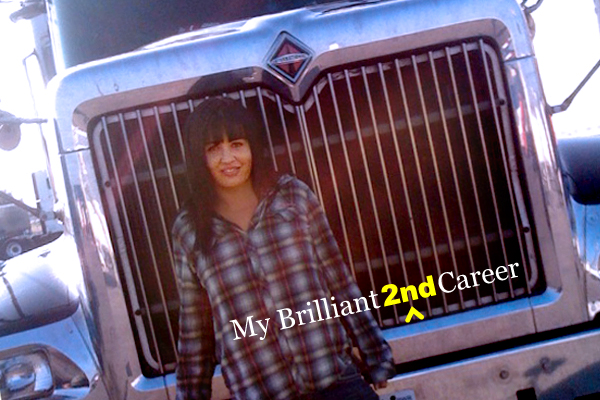
I used to schmooze clients and drive a fancy car. But when I lost my sales job -- I embraced my true calling

(Credit: Image courtesy of the author)
This is the second in a series about people who stared down the Great Recession -- and reinvented themselves along the way. Do you have a great Plan B success story? Post it on Open Salon, tag it "My Brilliant Second Career," and we might publish it on Salon -- and pay you for it. A version of this story first appeared on Tiffany Brubeck's Open Salon blog.

It’s four o’clock in the morning. I’m slumped in a corner booth at Klein’s truck stop. It’s been a heck of a night, but I have a wad of cash in my purse and the coffee’s hot. Joint’s empty, with the exception of a couple old-timers chatting up the counter waitress. All three sneak glances in my direction, uncertain what to make of me. “Too pretty for a lot lizard,” one says, shoveling spoonfuls of gravy into his leathered face. “Why in tarnation a young gal would be out here alone at this hour,” mumbles his buddy between bites of toast. Their gossip is muffled by a deep rumble that rattles the windows. In the darkness, illuminated by hundreds of tiny diesel lights strung along the side of cabs like it’s Christmas — another long, shadowy 18-wheeler slides out onto the interstate.

I’ve been coming to places like this for long as I can remember. When I was a six-year-old kid growing up in the Ozark mountains, only one thing was more wonderful than Grandpa, and her name was “Betsy,” his ’79 Kenworth K100. Climbing up into Betsy’s cab the grownup world outside seemed to shrink. I became the Invincible Girl. I’d maneuver the wheel of the motionless truck, imagining the steel beast under my command. I wish I’d held tighter to that six year old — cultivated her priceless imagination and guarded her innocence with ferocity. But something shifted. Maybe it was jerky school kids who snickered when I boasted Gramps was a trucker, or nasty ankle biters who argued I should be playing with Barbie, not Hot Wheels. Perhaps it was Cliff Huxtable and Jason Seaver, TV dads of the 80s, who arrived home every night before dinner in cable-knit sweaters and never made mommies cry. Whatever it was, by the time I turned eight, I’d determined life as a long-hauler wasn’t something to brag about.

After graduating, I moved out west to work in sales. I mingled on the scenes, networking, and schmoozing clients. I chowed down at swanky restaurants, charged designer clothes, and even leased a fancy convertible. I walked and talked with left-coast confidence, but inside I felt phony. This is California, I assured myself. Everybody assimilates. I soaked up la-la-land like a soppy biscuit. I had no idea what a bellyache it would give me.

One morning in November 2008, the fantasy stopped. I’d fallen behind on my quota for signing up customers to open lines of credit. And when the axe started swinging, I was the first to go. I went home and cried hysterically, partly because I was stuck in debt quicksand with no tree branch in sight, but also because in my gut, I’d known the danger all along. I’d seen the quicksand — and told myself it was a hot tub. I certainly couldn’t ask my folks for help. My grandparents toiled for every dime they ever earned; they wanted a better life for me — which did not include my sacrificing health insurance so I could afford bigger car payments. After years of dismissing their penny-pinching values as old-fashioned and hokey, I was too humiliated to confess that living high on the hog had eaten me alive.

For the next few months, I wore my pajamas all day long. The streets were tomb quiet while the rest of the world went to work. The mid-afternoon sunlight pouring through the windows was bright enough to cause headaches. And on TV, every commercial peddled the snake oil that will catapult you off your couch and back to success. During that slump of unemployment, I entertained the idea of becoming everything from a court reporter to pastry chef, all while devising a no-fail formula for winning both showcases on “The Price Is Right.” But after I waded through all the GET RICH! CHANGE YOUR LIFE! DIAL NOW!” boob-tube malarkey, I realized sometimes the right path out is to turn your heels and head back the way you came. So I sucked in a deep breath, picked up the phone  – and made a call about becoming a long-haul trucker.

It didn’t make sense that trucking was something I should want. That image of a trucker was so different from me — the flannel clothes and John Deere caps, the greasy fast food gobbled while driving, the conservative, red-state values — all of that stood in stark contrast to the adult I had become. But then I realized what almost destroyed me was buying into stereotypes — trying to play a role I thought I needed to play, to be the very picture of what the world deems successful. Heck with that! The truth is that the dream of being a hauler had always been with me, like a soft, faded blanket you tuck in the closet until you’re cold. I sailed through my Commercial Driver’s License written exam. I’ve never been my best under pressure — my skin prickles, and I overthink the simplest questions — but sitting in that exam room, I had that magical feeling you get when you something you’ve dreamed about is something you’re finally doing.  

Outside Klein’s Truck Stop, a pale periwinkle sky foretells of the breaking dawn. The old men at the counter have moved on to politics and complaining about the weather. I knock back the last swig of coffee — truck stop gold, we call it — and stand to stretch my creaky bones. On my way out, I breeze past the counter, making sure I’m close enough for the menfolk to get a whiff of my perfume.

The chilled morning air feels fresh as I stroll across the parking lot. A disheveled woman approaches to ask if I can spare any change. She’s made some bad choices, she says, but she’s trying to find her way back home. I tell her I can relate, place 10 bucks in her palm, and wish her good luck. I check the air pressure in the tires and do a quick pre-trip inspection. I climb into the cab of my semi, and then fire up the engine. I’m on a turnaround to Shaky Town — got a five-hour drive ahead of me, but I should make it to Los Angeles this side of lunchtime.

The old men swagger outside toward their pickups. Rubbing their bloated stomachs, they cast eyes over the packed lot, taking in the next generation: a convoy of the most diverse truckers in American history. When they spot me warming up, they hoot and whistle, elbowing one another in the ribs. Old leather face removes his cap and makes an exaggerated bow before me, the other shoots me a thumbs up. I smile back, giving them a long bellowing honk before I disappear out onto the highway again.

Continue Reading Close
www.salon.com/writer/tiffany_brubeck/index.html