Tom Engelhardt
Memorial Day’s lessons in amnesia
If nothing else, the holiday allows us to reflect on our commitment to forgetting bloody conflicts
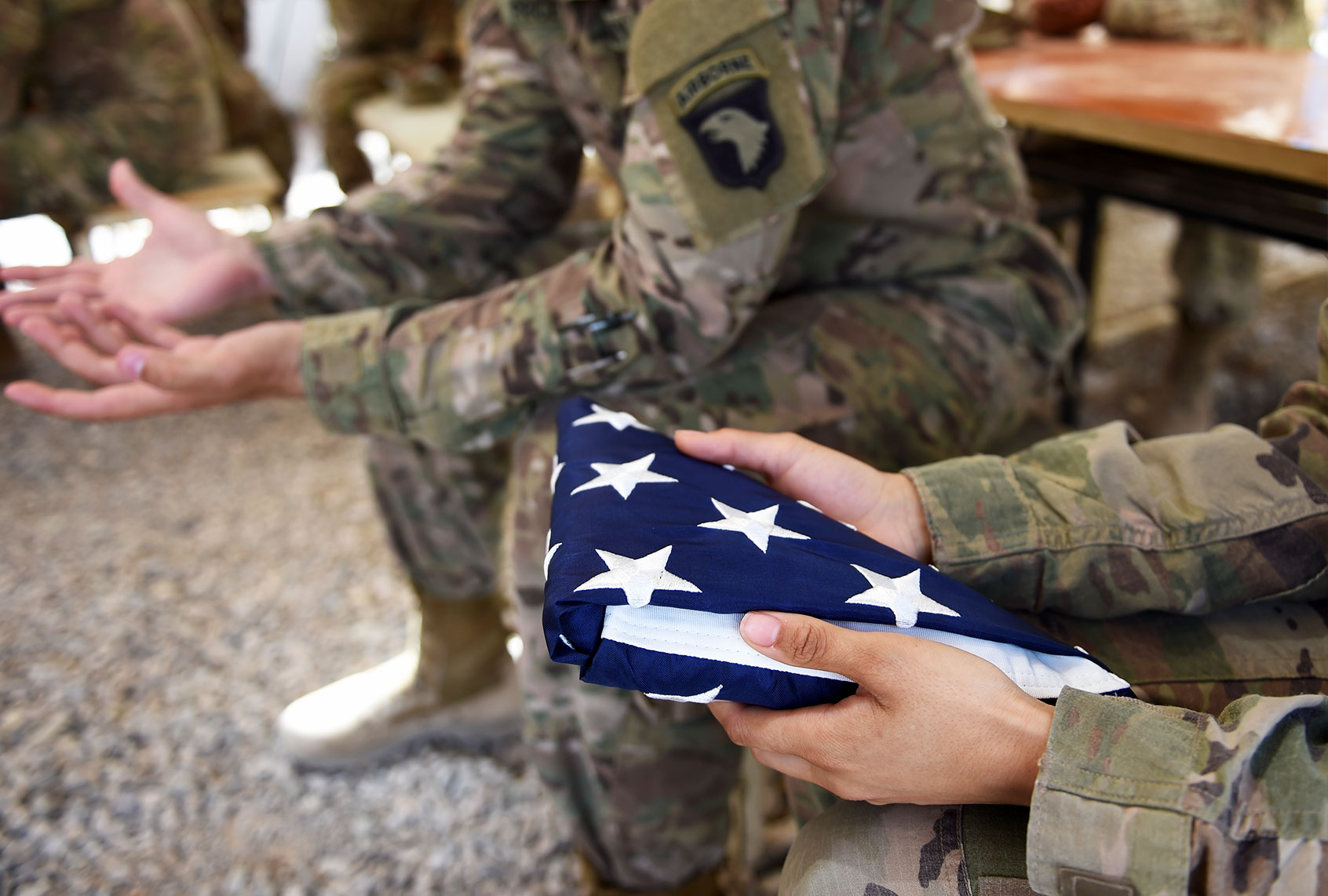
(Credit: Carly Rose Hennigan via Shutterstock) It’s the saddest reading around: the little announcements that dribble out of the Pentagon every day or two — those terse, relatively uninformative death notices: rank; name; age; small town, suburb, or second-level city of origin; means of death (“small arms fire,” “improvised explosive device,” “the result of gunshot wounds inflicted by an individual wearing an Afghan National Army uniform,” or sometimes something vaguer like “while conducting combat operations,” “supporting Operation Enduring Freedom,” or simply no explanation at all); and the unit the dead soldier belonged to. They are seldom 100 words, even with the usual opening line: “The Department of Defense announced today the death of a soldier who was supporting Operation Enduring Freedom.” Sometimes they include more than one death.
They are essentially bureaucratic notices designed to draw little attention to themselves. Yet cumulatively, in their hundreds over the last decade, they represent a grim archive of America’s still ongoing, already largely forgotten second Afghan War, and I’ve read them obsessively for years.
Into the Memory Hole
May is the official month of remembrance when it comes to our war dead, ending as it does on the long Memorial Day weekend when Americans typically take to the road and kill themselves and each other in far greater numbers than will die in Afghanistan. It’s a weekend for which the police tend to predict rising fatalities and news reports tend to celebrate any declines in deaths on our roads and highways.
Quiz Americans and a surprising number undoubtedly won’t have thought about the “memorial” in Memorial Day at all — especially now that it’s largely a marker of the start of summer and an excuse for cookouts.
How many today are aware that, as Decoration Day, it began in 1865 in a nation still torn by grief over the loss of — we now know – up to 750,000 dead in the first modern war, a wrenching civil catastrophe in a then-smaller and still under-populated country? How many know that the first Decoration Day was held in 1865 with 10,000 freed slaves and some Union soldiers parading on a Charleston, South Carolina, race track previously frequented by planters and transformed in wartime into a grim outdoor prison? The former slaves were honoring Union prisoners who had died there and been hastily buried in unmarked graves, but as historian Kenneth Jackson has written, they were also offering “a declaration of the meaning of the war and of their own freedom.”
Those ceremonies migrated north in 1866, became official at national cemeteries in 1868, and grew into ever more elaborate civic remembrances over the years. Even the South, which had previously marked its grief separately, began to take part after World War I as the ceremonies were extended to the remembrance of all American war dead. Only in 1968, in the midst of another deeply unpopular war, did Congress make it official as Memorial Day, creating the now traditional long holiday weekend.
And yet, when it comes to the major war the United States is still fighting, now in its 11th year, the word remembrance is surely inappropriate, as is the “Memorial” in Memorial Day. It’s not just that the dead of the Afghan War have largely been tossed down the memory hole of history (even if they do get official attention on Memorial Day itself). Even the fact that Americans are still dying in Afghanistan seems largely to have been forgotten, along with the war itself.
As the endlessly plummeting opinion polls indicate, the Afghan War is one Americans would clearly prefer to forget — yesterday, not tomorrow. It was, in fact, regularly classified as “the forgotten war” almost from the moment that the Bush administration turned its attention to the invasion of Iraq in 2002 and so declared its urge to create a Pax Americana in the Greater Middle East. Despite the massive “surge” of troops, special operations forces, CIA agents, and civilian personnel sent to Afghanistan by President Obama in 2009-2010, and the ending of the military part of the Iraq debacle in 2011, the Afghan War has never made it out of the grave of forgetfulness to which it was so early consigned.
Count on one thing: there will be no Afghan version of Maya Lin, no Afghan Wall on the National Mall. Unlike the Vietnam conflict, tens of thousands of books won’t be pouring out for decades to come arguing passionately about the conflict. There may not even be a “who lost Afghanistan” debate in its aftermath.
Few Afghan veterans are likely to return from the war to infuse with new energy an antiwar movement that remains small indeed, nor will they worry about being “spit upon.” There will be little controversy. They — their traumas and their wounds — will, like so many bureaucratic notices, disappear into the American ether, leaving behind only an emptiness and misery, here and in Afghanistan, as perhaps befits a bankrupting, never-ending imperial war on the global frontiers.
Whistling Past the Graveyard of Empires
If nothing else, the path to American amnesia is worth recalling on this Memorial Day.
Though few here remember it that way, the invasion of Afghanistan was launched on a cult of the dead. These were the dead civilians from the Twin Towers in New York City. It was to their memory that the only “Wall” of this era — the 9/11 Memorial at Ground Zero in lower Manhattan — has been built. Theirs are the biographies that are still remembered in annual rites nationwide. They are, and remain, the dead of the Afghan War, even though they died before it began.
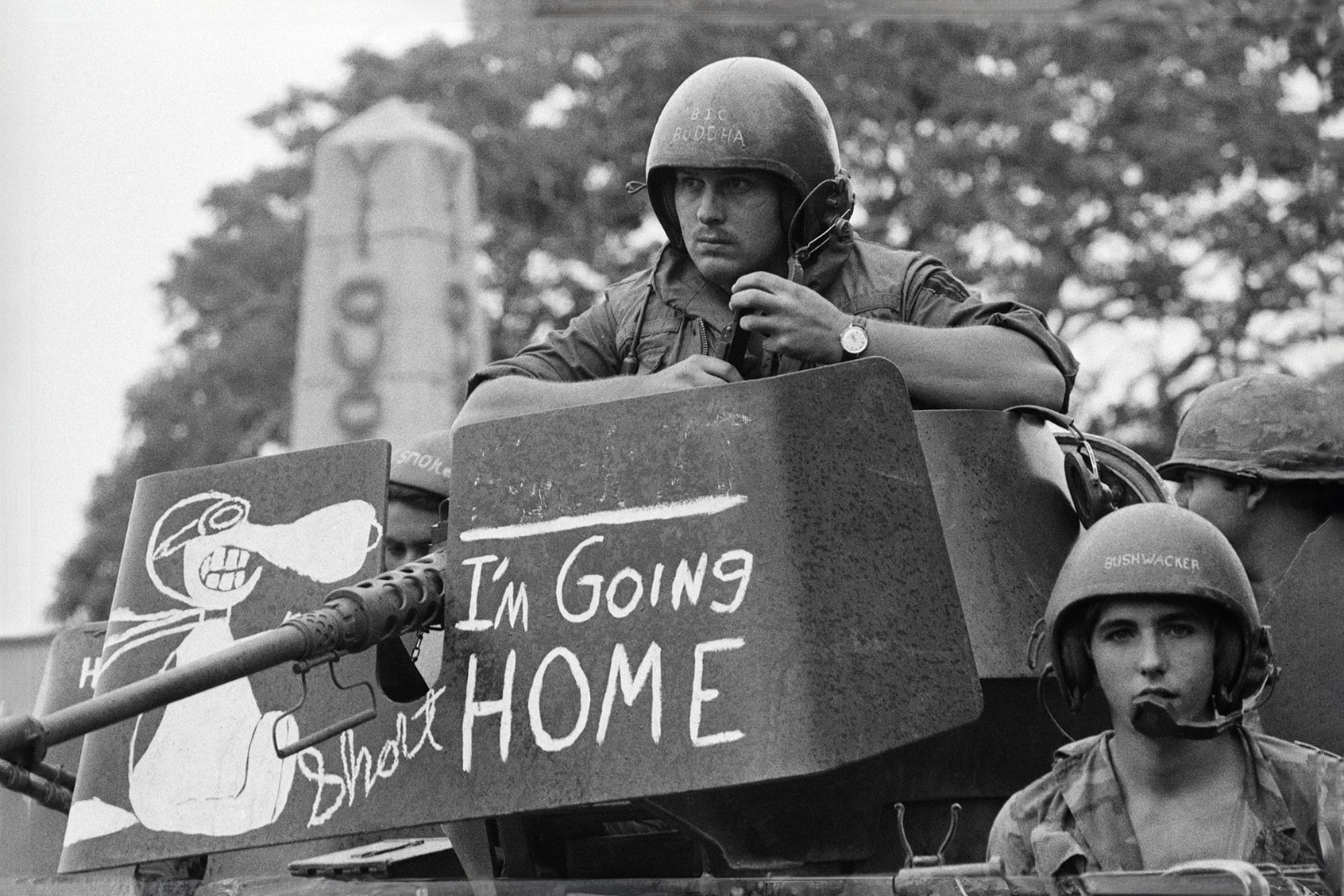
On the other hand, from the moment the invasion of Afghanistan was launched, how to deal with the actual American war dead was always considered a problematic matter. The Bush administration and the military high command, with the Vietnam War still etched in their collective memories, feared those uniformed bodies coming home (as they feared and banishedthe “body count” of enemy dead in the field). They remembered the return of the “body bags” of the Vietnam era as a kind of nightmare, stoking a fierce antiwar movement, which they were determined not to see repeated.
As a result, in the early years of the Afghan and then Iraq wars, the Bush administration took relatively draconian steps to cut the media off from any images of the returning war dead. They strictly enforced a Pentagon ban, in existence since the first Gulf War, on media coverage and images of the coffins arriving from the war fronts at Dover Air Force Base in Delaware. At the same time, much publicity was given to the way President Bush met privately and emotionally — theoretically beyond the view of the media — with the families of the dead.
And yet, banned or not, for a period the war dead proliferated. In those early years of Washington’s two increasingly catastrophic wars on the Eurasian mainland, newspapers regularly produced full-page or double-page “walls of heroes” with tiny images of the faces of the American dead, while their names were repeatedly read in somber tones on television. In a similar fashion, the antiwar movement toured the country with little “cemeteries” or displays of combat boots representing the war dead.
The Pentagon ban ended with the arrival of the Obama administration. In October 2009, six months after the Pentagon rescinded it, in an obvious rebuke to his predecessor, President Obama traveled to Dover Air Base. There, inside a plane bringing the bodies of the dead home, he reportedly prayed over the coffins and was later photographed offering a salute as one of them was carried off the plane. But by the time the arrival of the dead could be covered, few seemed to care.
The Bush administration, it turns out, needn’t have worried. In an America largely detached from war, the Iraq War would end without fanfare or anyone here visibly giving much of a damn. Similarly, the Afghan War would continue to limp from one disaster to the next, from an American “kill team” murdering Afghan civilians “for sport” to troops urinating on Afghan corpses (and videotaping the event), or mugging for the camera with enemy body parts, or an American sergeant running amok, or the burning of Korans, or the raising of an SS banner. And, of course, ever more regularly, ever more unnervingly, Afghan “allies” would turn their guns on American and NATO troops and blow them away. It’s a phenomenon almost unheard of in such wars, but so common in Afghanistan these days that it’s gotten its own label: “green-on-blue violence.”
This has been the road to oblivion and it’s paved with forgotten bodies. Forgetfulness, of course, comes at a price, which includes the escalating long-term costs of paying for the American war-wounded and war-traumatized. On this Memorial Day, there will undoubtedly be much cant in the form of tributes to “our heroes” and then, Tuesday morning, when the mangled cars have been towed away, the barbeque grills cleaned, and the “heroes” set aside, the forgetting will continue. If the Obama administration has its way and American special operations forces, trainers, and advisors in reduced but still significant numbers remain in Afghanistan until perhaps 2024, we have more than another decade of forgetting ahead of us in a tragedy that will, by then, be beyond all comprehension.
Afghanistan has often enough been called “the graveyard of empires.” Americans have made it a habit to whistle past that graveyard, looking the other way — a form of obliviousness much aided by the fact that the American war dead conveniently come from the less well known or forgotten places in our country. They are so much easier to ignore thanks to that.
Except in their hometowns, how easy the war dead are to forget in an era when corporations go to war but Americans largely don’t. So far, 1,980 American military personnel (and significant but largely unacknowledged numbers of private contractors) have died in Afghanistan, as have 1,028 NATO and allied troops, and (despite U.N. efforts to count them) unknown but staggering numbers of Afghans.
So far in the month of May, 22 American dead have been listed in those Pentagon announcements. If you want a little memorial to a war that shouldn’t be, check out their hometowns and you’ll experience a kind of modern graveyard poetry. Consider it an elegy to the dead of second- or third-tier cities, suburbs, and small towns whose names are resonant exactly because they are part of your country, but seldom or never heard by you.
Here, then, on this Memorial Day, are not the names of the May dead, but of their hometowns, announcement by announcement, placed at the graveside of a war that we can’t bear to remember and that simply won’t go away. If it’s the undead of wars, the deaths from it remain a quiet crime against American humanity:
Spencerport, New York
Wichita, Kansas
Warren, Arkansas
West Chester, Ohio
Alameda, California
Charlotte, North Carolina
Stow, Ohio
Clarksville, Tennessee
Chico, California
Jeffersonville, Kentucky
Yuma, Arizona
Normangee, Texas
Round Rock, Texas
Rolla, Missouri
Lucerne Valley, California
Las Cruses, New Mexico
Fort Wayne, Indiana
Overland Park, Kansas
Wheaton, Illinois
Lawton, Oklahoma
Prince George, Virginia
Terre Haute, Indiana.
As long as the hometowns pile up, no one should rest in peace.
Tom Engelhardt, co-founder of the American Empire Project and the author of ”The American Way of War: How Bush’s Wars Became Obama’s“ as well as ”The End of Victory Culture,” runs the Nation Institute’s TomDispatch.com. His latest book is ”The United States of Fear“ (Haymarket Books). To listen to Timothy MacBain’s latest Tomcast audio interview in which he discusses what Americans should consider remembering on Memorial Day, click here or download it to your iPod here.
[Note on Further Reading: For those interested in exploring the history of Memorial Day, there’s no better place to visit than the always fascinating website History News Network. For carefully put together records on American and NATO deaths in Afghanistan, visiticasualties.org. Simply to keep up on American war news, not always the easiest thing in the mainstream media these days, make sure to visit Antiwar.com (as I do daily).]
America’s drone exceptionalism
Always the world leader, our country has pioneered terrifyingly expansive new rules for drone warfare
(Credit: Salon/Shutterstock) Here’s the essence of it: you can trust America’s crème de la crème, the most elevated, responsible people, no matter what weapons, what powers, you put in their hands. No need to constantly look over their shoulders.
Placed in the hands of evildoers, those weapons and powers could create a living nightmare; controlled by the best of people, they lead to measured, thoughtful, precise decisions in which bad things are (with rare and understandable exceptions) done only to truly terrible types. In the process, you simply couldn’t be better protected.
Continue Reading CloseAfghanistan syndrome
Today's endless war has overtaken Vietnam in our collective consciousness as America's great military nightmare
Wounded U.S. soldiers lie on the ground at the scene of a suicide attack in Maimanah, the capital of Faryab province north of Kabul, Afghanistan on Wednesday, April 4, 2012 (Credit: AP Photo/Gul Buddin Elham) Take off your hat. Taps is playing. Almost four decades late, the Vietnam War and its post-war spawn, the Vietnam Syndrome, are finally heading for their American grave. It may qualify as the longest attempted burial in history. Last words — both eulogies and curses — have been offered too many times to mention, and yet no American administration found the silver bullet that would put that war away for keeps.
Richard Nixon tried to get rid of it while it was still going on by “Vietnamizing” it. Seven years after it ended, Ronald Reagan tried to praise it into the dustbin of history, hailing it as “a noble cause.” Instead, it morphed from a defeat in the imperium into a “syndrome,” an unhealthy aversion to war-making believed to afflict the American people to their core.
Continue Reading CloseThe final unraveling of Afghanistan?
The massive anti-Quran-burning protests may mark the beginning of the end of America's military misadventure
Afghan policeman aims at protesters by a burning police truck set alight during an anti-U.S. demonstration over burning of Qurans at a U.S. military base in Afghanistan, in Herat, Friday, Feb. 24, 2012. (Credit: AP Photo/Hoshang Hashim) Is it all over but the (anti-American) shouting — and the killing? Are the exits finally coming into view?
Sometimes, in a moment, the fog lifts, the clouds shift, and you can finally see the landscape ahead with startling clarity. In Afghanistan, Washington may be reaching that moment in a state of panic, horror and confusion. Even as an anxious U.S. commander withdrew American and NATO advisors from Afghan ministries around Kabul last weekend — approximately 300, military spokesman James Williams tells TomDispatch — the ability of American soldiers to remain on giant fortified bases eating pizza and fried chicken into the distant future is not in doubt.
Continue Reading CloseObama’s “mission accomplished” moment?
At the Pentagon, the president whitewashes the Afghan war and looks to continue a disastrous military-first policy
resident Barack Obama delivers speaks on the Defense Strategic Review, Thursday, Jan. 5, 2012, at the Pentagon (Credit: AP Photo/Haraz N. Ghanbari) Here’s the ad for this moment in Washington (as I imagine it): Militarized superpower adrift and anxious in alien world. Needs advice. Will pay. Pls respond qkly. PO Box 1776-2012, Washington, DC.
Here’s the way it actually went down in Washington last week: a triumphant performance by a commander-in-chief who wants you to know that he’s at the top of his game.
When it came to rolling out a new 10-year plan for the future of the U.S. military, the leaks to the media began early and the message was clear. One man is in charge of your future safety and security. His name is Barack Obama. And — not to worry — he has things in hand.
Continue Reading CloseIt’s time to admit defeat
If we want to avoid repeating our mistakes, we need to stop whitewashing the disasters in Iraq and Afghanistan
U.S. Army Sgt. Omar Sprott, from Brooklyn, New York, of the 115th Brigade Support Battalion carries his luggage in preparation for leaving Camp Kalsu near Hillla, Iraq December 6, 2011. (Credit: © Shannon Stapleton / Reuters) It was to be the war that would establish empire as an American fact. It would result in a thousand-year Pax Americana. It was to be “mission accomplished” all the way. And then, of course, it wasn’t. And then, almost nine dismal years later, it was over (sorta).
It was the Iraq War, and we were the uninvited guests who didn’t want to go home. To the last second, despite President Obama’s repeated promise that all American troops were leaving, despite an agreement the Iraqi government had signed with George W. Bush’s administration in 2008, America’s military commanders continued to lobby and Washington continued to negotiate for 10,000 to 20,000 U.S. troops to remain in-country as advisors and trainers.
Continue Reading ClosePage 1 of 9 in Tom Engelhardt