Tracie McMillan

Mister bean

Ken Albala, author of "Beans: A History," discusses the social and culinary impact of the humble legume.

  • more
    • All Share Services

Mister bean

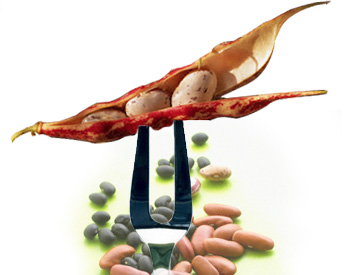
Every food has its fans, and with Ken Albala’s new book, “Beans: A History,” the humble legume may well have found its champion. Over a year spent eating beans on a daily basis, from minuscule rice beans to 4-inch whoppers called gigantes, the culinary historian put his expertise — and his stomach — to work, compiling a detailed family history of the world’s edible beans.

But lest that seem like an avalanche of research to pour into a humble subject, Albala is quick to point out that beans are one of the few foods that appear in nearly every national cuisine, from French cassoulets to Filipino bean and fruit desserts. Pairing a foodie’s curiosity with an academic’s knack for detail, Albala carefully charts the food’s historical arc while also offering recipes in keeping with each era. A simple lentil soup punctuates the tale of the small legume’s role in stabilizing early agriculture in the Fertile Crescent of Mesopotamia, while tepary beans, native to North America’s indigenous cultures, show up both in both a hearty stew and haute “slow food” dishes.

Still, Albala’s work is at its best when he dissects the social cues tied up in beans, particularly our tendency to use beans as a metaphor for simpler times and leaner wallets. As a case in point, he contrasts Bill Clinton‘s biography — which details the former president’s love of beans, suggesting humble beginnings to his affluent readers — with an early Clinton campaign jingle aimed at the poor, which dismissed beans in favor of steak.

Salon caught up with Albala at his University of the Pacific office to talk about bean myths, whether to soak or not and why gourmands may be the biggest booster for the lowly legume.

Why do beans matter?

There are very few foods that serve as a unit of analysis across cultures that you can pick up everywhere, but beans are one of those things. Every culture on earth has a staple grain; there’s rice in Asia, wheat and barley in Europe and corn in the American, but beans go next to them all — they’re sort of a universal accompaniment to the grain staple.

Beans are also interesting as a social marker: Almost every culture has some sort of idea about what beans “mean.” In cultures where meat is an important part of the diet, beans are the first thing to go when fortunes improve, so beans become a marker of poverty there and low classes. It is like a unit of social analysis.

I couldn’t keep track of all the beans you wrote about, but it seems safe to say it’s in the three-figures range. How did you find them all?

Cookbooks don’t focus much on beans, so I mostly used agricultural reference works. In the 1970s, there were a lot of books published about introducing new bean species and agricultural techniques to developing nations.

What surprised me is that the beans we eat [in the U.S.] are almost all the exact same species. Black beans and kidney beans and pinto beans and Christmas beans — those are all the same species, and they’re just bred to be different colors and sizes. And, of course, the colors disappear when you cook them. People look at them in packages and think, “Oh, isn’t this beautiful,” but [the bean] turns brown when you cook it.

There are all sorts of beans that are really easy to grow and that are high in protein and low in fat that just have not been discovered. Some people are thinking about growing them, but Americans aren’t bean eaters, really. There are so many species that you don’t see in North America unless you look really, really hard.

Where did you get the recipes you include in the book?

The recipes are mostly all mine, but based on research. My favorite, I’d have to say, is the cassoulet — it’s the longest and most complicated, but if you have the right ingredients, it’s amazing. There’s confit duck legs and sausages, and [the dish] gets brown and crusty and beautiful. I never did get to Toulouse [France] for this book, but someday I will taste a real cassoulet.

In doing my research, I found it fascinating that in different cultures, beans are cooked in completely and utterly different ways. In the Philippines, they’re sweet and put on ice cream. And you find sweet bean paste in Japan, in cakes or frozen as bean pops — which are totally bizarre but great. In Africa, they’re ground up and fried into little cakes. In the U.S., we just think “Beans: You soak them and you cook them,” but they work with almost any flavor. You can pickle them, which makes them sour. You can salt them — like the salted black beans fried with soy or sweetened that you find in Chinese cuisine. Not many foods hold up to as many variations as that.

You include some strange recipes, too: Bean fudge from the Michigan Bean Council, and a bean fruitcake. Did you really try those?

I just put those in because they’re novel and a little gross, though I did make them. Of everything I tried, the thing I’d be least likely to eat again is natto [Japanese beans in a gelatinous mixture]. It was really, really bizarre — but I’ve been tempted to buy it again, just for the fear factor.

By the end of your year of beans, did you have favorites?

I really like tepary beans. They’re not easy to get, and they cost about $20 a pound, but for flavor and texture, they hold up well. They take several hours to cook, but it’s worth every second. But I think lupines are my favorite. Any good Italian grocery store will sell them; they’re called lupini. They’re more like olives — salty and a little sour and bitter — and you can cook them forever and they still remain crunchy. I have an addiction to them.

But one kind I still don’t care much for is lima beans. I didn’t include this in the book, but in cartoons there are a lot of things about beans, and in one cartoon I have, as a torture device, they feed people lima beans — like that’s the worst thing you could do to someone.

One thing that I was really surprised by were just how many different myths and rituals made use of beans; in particular, I was surprised to hear that in ancient Greece there was a concern that killing a bean plant meant killing a soul. Where did that come from?

It comes from Pythagoras; everyone in the ancient world comments on Pythagoras’ being vegetarian and not eating beans. Pythagoras not only wouldn’t eat them, but when [he and his followers] were being invaded, he wouldn’t cross through a bean field and was killed. The idea was that beans [contain] human souls in the process of transmigration. Souls go into the ground and are borne up through the hollow stems of the fava bean plants.

Where would you get that idea in the first place? Well, the rhizobium bacteria on the nodes of the plant’s roots draw nitrogen from the air, and add it back to the soil. But what I didn’t know is that the nodules also have something very much like human hemoglobin, except that it’s in the plant and binds with oxygen and makes it red like blood. So if you pull out a bean plant and break open the little nodes, there’s this “blood” inside. That might be why people thought beans were people being reincarnated.

Every time I cook with dried beans, they inevitably end up dry — and most of my friends report the same problem. What’s the secret to tender beans?

The problem is that the beans you find on the shelf in grocery stores often have been sitting there for a couple of years, and they get really, really tough and hard to cook — sometimes no amount of cooking will save them. Indian grocery stores are the best, not only for the variety but because [Indians] eat beans more often; the inventory moves there.

The universal rule is, if you can get them fresher, the better — dried but fresh. Soak them first overnight, and cook in absolutely plain, ordinary water. Not salt, not vinegar, not flavoring, not anything to start with. When they begin to get soft, then you can add the flavoring, and they’ll absorb it. Sometimes if you add salt, they never get soft. Or if you add some other flavoring, they harden. But I have to admit, I eat them out of a can more often — it’s just easier.

You write about how in Europe, there are bean classifications that denote heirloom varieties, and you even came across a gourmet food competition featuring heirloom bean varieties in San Francisco.

It’s sort of ironic: After so long of being looked down on culturally, beans have found a classy little niche. But it’s never just prepared ordinary pinto beans or navy beans; it’s usually some bizarre species. That’s the strange irony of the slow-food movement — it started as communist and now they’re selling these disappearing foods to gourmets. I don’t think it’s a bad thing because they’re promoting varieties that would otherwise disappear, but it’s kind of a reverse elitism. Traditionally, being elite has [meant] buying expensive stuff, like caviar and Champagne. This is turning all that on its head, saying we’re going to eat the lowest, most common of foods, and we’re assuming that only you can get it.

There are bean societies too, mostly in Europe. Some of them include growers and distributors, and they throw parties once a year and all get drunk and eat beans. Partly it’s financially motivated — I’ve met a few of them at fancy-food shows and things like that, and they all have agents there trying to sell these beans.

Americans aren’t really bean eaters, but beans do seem to show up in our comfort foods — like red beans and rice, and black-eyed peas — in ways that break along lines of race and class. What did you learn about that history?

Well, in some places, beans are stigmatized as immigrant foods. For instance, in Mexico there’s really no stigma about beans, but when Mexicans come to the United States they get called “beaners.” Then what you see is that later generations try to recover the recipes as markers of ethnic pride. To be genuinely African-American you cook black-eyed peas; to be Brazilian, you eat feijoada [a stew made of black beans, pork, onions and cassava]. Whatever it may be, there are things that are eaten traditionally that ethnic groups try to recover.

I think the best way to sell beans would be to use those recipes, the interesting ethnic ways beans are used. Goya has already started that; it began selling primarily to an ethnic market, but that trickled down to all sorts of consumers. Indian dals come in hundreds of forms and use all sorts of interesting beans with different textures and flavors, and those beans are the ones that are going to get people excited. Ethnic recipes and ethnic varieties are the future of beans.

The anxiety of appetite

Barry Glassner, author of "The Gospel of Food," takes aim at foodies' sacred cows and explains why many of our menu choices are motivated by fear as much as hunger.

  • more
    • All Share Services

The anxiety of appetite

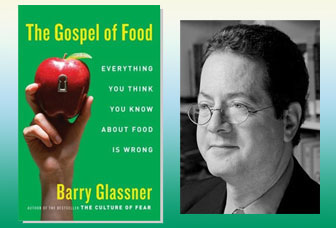
America’s food enthusiasts may find it hard to place the name Barry Glassner. He’s not a television chef, or a restaurant critic, or a diet guru. Indeed, the University of Southern California sociologist is known primarily for his best-selling 2000 book, “The Culture of Fear,” a dissection of the anxious underpinnings of the American psyche. It’s a subject that might seem to have little relevance to the dinner table, but Glassner begs to differ. If his latest book, “The Gospel of Food,” makes one thing plain, it’s that few topics generate more worry among Americans than our breakfasts, lunches and dinners.

Glassner relishes debate, and “Gospel” — which sports the insistent subtitle Everything You Think You Know About Food Is Wrong — takes on nearly every sacred cow of contemporary food culture. High-end restaurant reviewers, eaters seeking “authentic” ethnic eateries, organic converts, local agriculture proponents, and fast food’s detractors all receive a methodical interrogation of the accuracy of their claims.

But while Glassner examines nearly every issue populating the food landscape, “Gospel” shines brightest when he turns his gaze to two that are frequently absent from it: poverty and class. Though he places himself in the company of industrial food’s most vocal critics, like Michael Pollan and Eric Schlosser, Glassner sets his sights on them, too, questioning the very journalists, writers and advocates who claim to speak truth to power. The problem, he argues, isn’t that the Pollans and Schlossers of the world are wrong, but that they’re not exactly right, either. To get to the bottom of something as complicated as America’s obsession with fast food — a category of dining, he points out, that offers low-income families a clean, affordable and convenient meal in ways that anti-industrialists seldom acknowledge — he’d rather engage with the complexity of the matter than reduce it to sound bites.

Glassner manages nonetheless to come up with a few maxims of his own: Restaurant reviews rarely reflect the experience of average diners — because most top-notch food critics, disguises or no, are rapidly recognized by chefs, who heap special treatment upon such visitors. The American family meal is not dead — in fact, one of the most oft-cited studies in this vein, which attributed the success of a cohort of National Merit Scholars to eating regular family meals, never existed. And obesity is not a simple problem of eating less and exercising more; its prevalence among the poor is likely attributable to bingeing brought on by a periodic scarcity of food — not mere ignorance.

Still, Glassner’s laundry list of inaccurate spins should not be taken as a humorless diatribe. “Gospel” is also sprinkled with a passionate eater’s enthusiasm for cuisines both street and haute. And the extensive journalistic and academic research around which the book revolves is bookended by discussions of the pleasures of food, ranging from Glassner’s own horror at a birthday cake devoid of wheat, sugar, milk and eggs to his hearty enjoyment of a rib joint in south Los Angeles. The point, says Glassner, is that a mix of American puritanism and health obsession has stripped the pleasure out of many Americans’ meals — with little to show for it.

Salon recently caught up with Glassner by phone to discuss why trans fat bans aren’t all they’re cracked up to be and how your mom’s advice about food may be the best you’ll ever get.

How did the idea for this book come about?

When I finished my previous book, “The Culture of Fear,” it became obvious to me that I had missed one of the biggest fears in American culture, which is that many Americans are afraid of just about every kind of food for one reason or another. So that’s what got me started. And secondly, I myself am a big food enthusiast, I love eating diverse foods in very diverse sorts of places, so this gave me an opportunity to do that — and make it tax deductible.

Was there a specific incident that made you recognize Americans’ fear of food?

It’s the one I start the book with: I was at this birthday party for a child, and I took a bite of the birthday cake and my tongue stuck to the roof of my mouth. The parents were so proud that they had provided this “healthy” birthday cake, because it didn’t have anything in it that would make you want to eat a cake. It didn’t have eggs, or milk, or wheat, or butter, of course, and it didn’t have any sugar because, of course, that could kill you immediately. I started thinking, “It is bizarre that this is what we’ve come to,” and that was kind of the turning point.

You work hard to debunk studies, pulling out ones that contradict commonly held assumptions, or ones that are based on one or two earlier studies or a misrepresentation of findings. What was the most surprising discrepancy you came across?

I guess I’d pick that National Merit study, which supposedly showed that the common denominator among a cohort of National Merit Scholars was that they all had regular family meals. It’s mentioned all over the place, when in fact it never existed. The whole truth about family meals was a surprise; I had thought that the family meal was a thing of the past, when in fact families eat together at about the same level as the 1950s.

Food and obesity are such hot topics right now, but you take aim at some very well respected writers on the subject. For instance, Greg Critser’s book “Fat Land” basically argues that we need to be hardcore about the idea that it’s not OK to be fat and, really, lines must be drawn in the sand. But my sense is that you come at the problem from a different angle.

I think there’s a lot of merit about Critser’s book and I’m also critical of parts of it. So when he says that the rich are more insightful about what to eat, that concerns me. I think that if we want to understand why it is that people of lower income are more likely to be overweight or obese, to simplify it to a moral condemnation is not a wise way to go. The very notion that wealthy Americans are constrained in their consumption patterns is absurd. Witness their SUVs, their oversize homes. It’s fashionable for the wealthy to be thin and eat particular sorts of foods that are on the approved list, but let’s not give them undue credit for that, especially at a time when you can go to most any high-end restaurant and get very high-fat, high-calorie meals.

If you want to understand why people of low income tend to be more overweight and obese, it’s a complicated story. But we shouldn’t leave out the effect that food insecurity itself has; in the book I go into this in some detail, but basically there’s a parallel pattern to binge eating, where people who periodically run low on food resemble people who are on diets. When food stamps run out, or the kids’ medical expenses take precedence, or the local food bank shuts down or runs out of food, you’re not going to eat a lot. And when food becomes available again, you binge.

We know that this pattern, this binge pattern, contributes to overweight and obesity. Yet we’ve come to have this odd notion that it’s what people eat, it’s what low-income people eat, rather than what they don’t eat, or when they don’t eat, or which options are not available to them, that explains their weight. And moreover, to the extent that heavy people are stigmatized in this country — as they very widely are these days, including by people who see themselves as liberals or progressives — the more we’re heaping on further dangers to their health because we know that discrimination itself is a predictor of ill health.

What do you hope to add to the debate?

What I’m hoping is that my book will really open up people’s eyes to thinking about some of these topics in ways they haven’t before, and in particular, it will make people more open to greater diversity in their diets. I think the good news about this food-obsessed age of ours is that there’s a lot of variety out there that wasn’t there before. Many Americans take pleasure in exploring new tastes. But at the same time, vast segments of the population greatly restrict what they eat, whether it’s because they’re on a low-fat diet, a low-carb diet, they shun places that are too popular, or only go places that are very popular. For a whole range of reasons that I write about, they’re very restricted, so I think there’s a lot more opening up to be done than has happened so far.

What’s your sense of how many people are really on these diets? I certainly don’t know them — but then, I’m in Brooklyn.

Let me put it this way; I think that the dietary regimens people put themselves on vary and contrast with one another but in many cases are very restrictive, whether it’s veganism or the Atkins diet. And part of what I find interesting is that in each of these cases, followers believe that their diet is miraculous, almost.

My own view is eat and let eat. I’m perfectly comfortable with people following an Atkins diet and eating meat with every meal, or a vegan diet and never eating any animal products. What I’m uncomfortable with are the exaggerated claims that they make, that a meatless regimen can prevent most every serious malady from heart disease to world hunger, or that following an Atkins diet is a magical potion for longevity and weight loss.

I think there are millions and millions of Americans who try to follow one version or another of the “gospel of naught,” which is this notion that the worth of a meal lies primarily in what it lacks rather than what it has. So the less sugar, salt, fat, calories, preservatives, animal products, carbs, additives or whatever the person is concerned about, the better the food. And this seems to me a quite curious notion that’s worth a lot more attention than we’ve given it.

While I was reading the book, I couldn’t help feeling a little overwhelmed by all the ways in which commonly held beliefs about what’s healthy — whole grains, low fat, being lean — were being called into question. And the big question I came away with was: What do I do now?

I think that there is a basic precept that serves very well, and that’s to eat well and enjoyably and moderately over the long haul. I certainly do not advocate that eating a large quantity of any of the substances that are currently considered bad or unhealthy would be a good idea. The kind of diet that Morgan Spurlock went on in “Super Size Me” is obviously going to make you sick. But so would eating three meals a day of boiled broccoli. So, I think that it’s certainly wise to be concerned with eating well and eating moderately and taking into account the sorts of advice that generations of mothers have given, and occasionally fathers. Eat your veggies, eat your fruit, and don’t overdose on sweets. So, in no way am I advocating that we should replace the gospel of naught with some kind of absurd diet that would go in the opposite direction.

What about people who say, “Oh, I’m going to treat myself,” and end up treating themselves almost daily. How good are Americans at eating moderately?

I think that one way that the food industry is brilliant is in picking up on the bipolar approach to food that we have in this country where we think that certain foods are good or bad, or sacred or profane. The food industry will sell us foods that make us feel like we’ve been good and righteous and then they’ll say, often in so many words, “Now that you have been good you can be bad and buy this other product.” And they win both ways.

When you listen to a lot of people talk about their meals, they use words like, “I’ve been bad,” if they order a creamy dessert at a meal. Or, “I’ve been good,” if they stay on their diet. The key motivator there is guilt and the avoidance of guilt. And it applies not only to ourselves, but to other people. So many Americans take as a literal truth the old maxim that you are what you eat. We believe that we can tell a lot about a person by what he or she eats when really what we’re expressing are prejudices.

In the book I talk about one of my favorite studies, which was a study where students were shown photographs of people their age and researchers told one set of students that the people in the photographs ate foods like whole wheat breads and chicken, and they told another set of students that these same people ate hamburgers and French fries and hot fudge sundaes. And in fact, the students had been shown the same people, but they ranked them very differently based on what foods they’d been told they ate; ranked them as more or less likable, more or less attractive. I think that really goes to a deeply ingrained prejudice in society.

Where does that prejudice come from?

I think it comes from our religious backgrounds, which we’ve taken in this secular direction. In both Judeo and Christian traditions, diet is emphasized and special foods are emphasized. In traditional religious teachings it’s very specific; Judaism and Islam prohibited pork, Catholicism decreed fish on Friday. Today we have more secular versions of it, and the response that comes out in an experiment like that is an example of it. People engaging in elaborate rituals to prepare meals; that’s another part of it, as is the kind of godlike status of celebrity chefs. I take the titles of my books very seriously, and it was after a lot of thought that I decided to call it “The Gospel of Food.”

I was interested in how you classified different groups of advocates and writers as “food adventurers,” those who seek out authentic foods, or “adherents to the gospel of naught,” who seek health. How would you classify yourself, and what are you seeking?

I’m very much a food adventurer and a little bit of a foodie. I love expanding my horizons and exploring different cuisines. I’m truly delighted when I’m enjoying ribs from Phillips Bar-B-Que here in south L.A. — and at the same time, I’ve had some of the most wonderful moments of my life at meals at some of the top restaurants in the country, at places like French Laundry and Daniel. So, I’m kind of odd in that regard.

Food adventurers can be annoyingly focused on finding undiscovered places, but aren’t most just saying, “Go out, and eat foods that aren’t necessarily in the mainstream”? What’s wrong with that?

I’m very enthusiastic about the food adventurers but, as with every other group I discuss in the book, you get a substantial subpopulation of them who just go to extremes or limit what they consider acceptable. In their case, the limits often revolve around the notion of authenticity, and that’s a very difficult notion and in the end not terribly helpful. I am critical of food adventurers who dismiss out of hand mainstream reviewers of the sorts of places that they go, who think that if the reviewer for the Village Voice or the L.A. Weekly discovered a place and liked it, why would you go there? Their point is to go only to places people either wouldn’t know about or wouldn’t like. When, in fact, there are some great food critics out there, who specialize in the sorts of places food adventurers like to say they discovered.

You take to task one of the more popular ideas among socially conscious foodies like Michael Pollan, which is that America’s food is artificially cheap and we should be paying more to help make it possible for workers to earn better wages.

In my mind, you’re raising a couple of different issues. It became evident to me in doing this research that the official dietary guidelines are just that. They’re guidelines for most of the population. But they’re not for the poor who have to rely on programs that are required to comply with them. Programs like school meal programs and government-run hospitals, and Women, Infants and Children are required to comply with the Department of Agriculture’s dietary guidelines — and that’s one example of many I uncovered in the present and the past, where the poorer you are, the more likely it is you will have food regulations imposed upon you. That’s not to say these regulations are bad overall, but we should look at who’s affected and in which ways. We should do that as well when we criticize eateries that provide low-cost meals to people on limited income. The fast-food industry deserves a lot of criticism and I level it in the book, but at the same time, to be able to get a complete or nearly complete meal for a few bucks, with distractions for the children thrown in at no extra cost, is not in itself a bad thing. And until those of us on the progressive side of the political spectrum have real alternatives in place, we’d be well advised to look at the good as well as the bad.

I’m certainly critical of the political right for its opposition to minimum wage and various labor laws, but when I see the left focusing so heavily on symbols, rather than on actual conditions, it concerns me. I see relatively little organized attention to hunger, for example, relative to, for instance, the kind of effective and organized campaigns against particular types of foods, like trans fats. When somewhere around 35 million to 40 million Americans are facing hunger every year it seems to me that that would be the top priority of any reasonable food activist. The ban on trans fats may be a good thing, but should it be the first thing? Should it take precedence over much more pressing food issues like hunger in the city, or the availability of fresh foods to the poor in the city? No, not for one minute.

Continue Reading Close

The Julia Child of Malaysian food

James Oseland, editor in chief of Saveur magazine, talks about culinary colonialism, his love of home cooking and why Malaysian cuisine may be the next big thing.

  • more
    • All Share Services

The Julia Child of Malaysian food

Pre-made sushi and pad thai may now be making appearances on American dinner tables from coast to coast, but mention Malaysian food to your Midwestern aunt, and you’re still likely to get a raised eyebrow. James Oseland is on a mission to change that. Just as Julia Child‘s “Mastering the Art of French Cooking” brought French food into the hearts and hands of American housewives 40 years ago, Oseland’s new cookbook, “Cradle of Flavor: Home Cooking From the Spice Islands of Indonesia, Singapore and Malaysia,” is a comprehensive and charismatic attempt to introduce Americans to a great, global cuisine.

Oseland, who recently replaced Colman Andrews at the helm of Saveur magazine, first encountered the region’s cooking in 1982 when he took a college friend up on an invitation to visit her family in Jakarta, Indonesia. Intoxicated by the cuisine’s rich layering of spices — in which nutmeg, lemongrass and tamarind frequently reside in the same dish — Oseland began to return on a nearly annual basis. Along the way, he visited old friends and made new ones, learning from local cooks, carefully gathering their recipes and stories. The result of two decades of living research, “Cradle of Flavor” pairs Oseland’s personal tales of exploration with detailed explanations of ingredients and cooking methods. Equal parts how-to manual and cultural guide, the 100-recipe volume bursts with both exotic specialties like fern curry with shrimp and some nearly all-American staples, like spiced roast chicken with potatoes.

Studiously authentic and respectful of traditional methods, Oseland’s book fills a culinary vacuum created by the relative absence of Malaysian and Indonesian immigrants on American shores. Unlike the foods of Thailand and China, which entered the U.S. through waves of immigration, the dishes in “Cradle of Flavor” have had few native cooks promoting them on American soil. But while Oseland has found himself in a de facto ambassadorial role as a result, he’s not looking to simply spark a trend. He leaves that, instead, to star chefs like New York’s Zak Pelaccio — whose Malaysian restaurant, Fatty Crab, has been crammed since opening in 2005 — and to the Malaysian government, which in mid-November announced an initiative to promote its native cuisine by establishing 8,000 restaurants abroad by 2015. Instead, Oseland is betting that a cuisine’s true staying power in the American melting pot will be measured by its presence on kitchen tables — and it’s there that he hopes to make his mark.

Salon recently stole in on one of Oseland’s cooking classes — and pre-class shopping trip — at Manhattan’s Institute for Culinary Education to get his take on the trouble with idolizing restaurant chefs and why the tastes of Malaysia aren’t so foreign after all.

You spent five years writing this book, which gives an overview of more than two decades of traveling and eating. Why spend all that time and energy to bring a relatively obscure cuisine into the American lexicon?

When I started the book, Indonesia — if it was known at all — had become kind of a dirty word thanks to CNN sound bites about global terrorism. And that was so contrary to the place that I knew — the warm wonderful place wasn’t represented at all. So I thought, “OK, I’m going to give people something different.”

The food in the book is the food that transformed my palate. I came from a basic meat-and-potatoes, chicken-pot-pie background and so finding this world of taste beyond what I knew was an astonishment. It was also a great entry point into understanding a place that was at times overwhelming and elusive for me.

It’s a region of the world that was subject to centuries of colonialism. Do you think that history influences the cuisine?

Yes, although I tend to think that, because those transactions go on for so many thousands of years, we look for easy stories, like “the Indians influenced the Javanese.” That seems a bit oversimplified. What if the reverse is happening? I’ve heard people say, “Vietnamese cuisine is so wonderful because the French were there.” And that’s actually kind of patently offensive. Basically there is French bread in the banh ml, those Vietnamese sandwiches, but that’s about it.

So, it’s just so flagrantly off. It’s a Eurocentric vision of the world — which is actually something I’m trying to shake up at Saveur, too. Italy and France are great, but they’re not the be all, end all.

You focus a lot on home cooking, too. Why?

I think that in the part of the world that I’m dealing with, cooking reaches its apogee, its highest point, in the home. In a way, even the more famous street foods of the region — the celebrated satays and the glorious noodles — are made in stalls that are just a small outdoor extension of someone’s home. So I just wanted to reflect that kind of relaxed, soulful idea.

A slow pace, a relaxed cooking style — that’s not how most Americans interact with food.

In the West a lot of times our model is about expediency first and foremost — perhaps because of our growing dislocation to cooking and the convenience foods we were raised on. But there has also been an encroachment of an idea that restaurant cooking is the top of the top. It’s what we strive for but, heck, we’re probably never going to be able to realize it; after all, we all haven’t spent two years at Culinary Institute of America.

I tend to think cooking at its highest is an expression of home and of family and its bonds. And I suspect that’s one of the reasons that Malaysia produces such miraculous and pure cooking. It’s chilled out. People connect to what they eat in as fun and relaxed a fashion as possible, and it ultimately tastes better.

What sets Malaysian food apart from other Asian cuisines?

I think probably the vigorousness of its flavors, the intensity, and the immediacy of the flavors involved. Cooks there have a wonderful way of layering on spice on top of spice on top of heat on top of sweet on top of sour on top of savory.

I adore a really good French sauce as much as the next person, but I think a lot of times in the West we conceive of flavor as this very fragile, poetic thing — and it’s almost a kind of miracle when we can sense the faintest essence of sage that once passed through a stock. At that point taste becomes an intellectual conceit more than a sensory one. So there’s something about the bold taste of Malaysian food that’s just immediately and passionately accessible.

How do Malaysian flavors blend into the American palate?

I’ve traveled extensively throughout Asia, especially Southeast Asia, and actually a lot of the common ingredients of the region are fundamentally American favorites: nutmeg, cinnamon, which is in fact cassia, and ginger, for example. And though certainly not deep and old in the American taste vernacular, there’s also lemongrass, lime leaves and coconut milk, which are just immensely approachable tastes. I couldn’t break that down into hard science, but I’ve felt it and I’ve seen it in other people, too. It’s almost as though they have been etched into our genetic knowledge of flavor, our genetic palate — as if subliminally we can immediately identify with the tastes of Malaysia in ways that we can’t with those of Thailand, say, or Vietnam or even Japan or Korea.

Malaysian food is getting a bit of press lately; the Malaysian government has launched an initiative to open restaurants abroad, and there are already a few well-known Malaysian restaurants in NYC. Is it going to be the food world’s next big thing?

Well, I certainly hope so, but I think when you’re talking about Malaysian food, you’re talking about cuisines that are ultimately the byproduct of literally thousands upon thousands of years of development and influence. One thing I just want to be careful of in my work is creating a new, hot trend. I don’t think Malaysian food is a hot new flavor, I think it’s an ancient flavor that deserves our respect. So I’m fine with someone coming to my book and only taking one directly or indirectly related aspect to it, say, simply the idea of using lemongrass to infuse a certain dish. It might be a Western dish.

I think that what I’m trying to give my readers in this book is as genuine, true and — dare I use that dangerous word — authentic a version of this food and ultimately of this part of the world as I can. I think it’s important to really understand the roots, the underpinnings, the histories of a particular food before you can really own it. I’m all for experimentation, I’m all for shaking things up as much as possible, and I’m not saying it’s disrespectful to use ingredients if they’re not used as some old grandmother would use them in a Malaysian village. But I guess I’d like to encourage people to at least know what the Malaysian grandmother does with the dish before you make it your own.

In your introduction, you say that you left out some of your favorite recipes that contain hard-to-find ingredients — and later you make a point to incorporate tips for using modern equipment, notably the food processor. How much of a purist are you?

I definitely view myself as a purist, not as messianic, but I do think it’s about respect. Still, in my mission to expose people to these flavors, I didn’t want to wreck anyone’s Sunday trying to find foods that would be difficult or in some cases impossible to find. I talk about some of those dishes and those ingredients in the book because I think they are essential to understanding that whole spectrum of the place’s cuisines, but that’s for book No. 2.

You’re so passionate about this food, and have such a deep connection to it — do you hope to be an advocate for Indonesian/Malay cuisine the way that Julia Child was for French cooking and Marcella Hazan was for Italian?

Those are incredibly flattering comparisons, but I don’t see myself that way. I do, I guess, view myself as an interpreter. I felt a special impetus, a special fire to write this book because the place means so much to me, and has meant so much to my development as a person.

I’ve heard you talk before about your sense that Americans are becoming increasingly disassociated from their food, and from cooking in particular. Can you explain that a bit more?

It does worry me, honestly, just as an American. I think maybe generationally, we’re losing mothers and grandmothers who teach us even simple things — like how to scramble eggs or make our favorite pancakes. Instead we’ve grown dependent on opening a package of Bisquick or just going down to the I-Hop. In my cooking classes, over and over again, I see who has an inherent, nascent fear of even turning on the gas to boil water. It is an insecurity — people think, “I don’t know how to cook, I don’t know how to do that” — and it’s something that does get reinforced when restaurant cooking is seen as the ideal. We don’t aspire to make the amazing beef stew our great grandmother cooked on the farm in Indiana anymore, we focus on a very difficult dish that Gordon Ramsay is ranting about on TV.

Maybe it sounds too histrionic, but I think that there is a kind of danger in that. I will do anything I can to encourage people to find the real joy of cooking — you know, that was the title of our greatest American food book and it is not so far off after all. It takes so little! I want to gently try to encourage people to smell, touch, taste. Cooking can be an amazingly settling, powerful act. And then of course there’s the great benefit of being able to eat afterward, too.

Do you think the American palate is evolving to be increasingly appreciative of exotic flavors?

When I grew up in California, it was pretty Asian — and now I go back there and its even more so. In Stockton, Calif., south of Sacramento, they have a farmers market there Saturday mornings. On good days in the summer there can be upward of 9,000 people coming to the market, and it is essentially 90 percent Asian. So instead of piles of heirloom tomatoes and arugula, there are piles of lemongrass and bitter melons and fresh chilies. Twenty years ago, even, finding that produce would have been impossible — but I think there is truly a seismic shift happening in the way we as Americans see food because of who we now are ethnographically and I think that’s a fantastic thing.

You became editor in chief at Saveur a few months ago, replacing Colman Andrews. How did that come about?

My first piece in Saveur was published in 1999, and pretty immediately, I knew that it was the magazine for me. That sounds cultlike but it really is true; it was a natural and organic fit. Over time, I played with the idea of going on staff, but my itchy feet prevailed, and instead I went on walkabout journeys for a couple of years to Southeast Asia and to India, mainly. Then last fall I was approached about coming on as executive editor, and decided the time was right. I had literally just finished up the book, just gone over the copy editors’ final notations, and it seemed like the perfect thing to do. When Colman Andrews, who was editor in chief since about 2001, decided he was ready to move on, he asked me if I was interested in taking over. I said yes, and here I am. And loving it.

What sort of role would you like the magazine to play in the food world right now?

To celebrate as warmly and joyously who we are as eaters of food: That was our role in the past, that is our role now, and it will be our role into the future. With all due respect, America’s other food magazines tend to get caught up in trends and hot young chefs, and snazzy new ingredients from exotic parts of the world. And I think that Saveur’s approach since its inception has been to instead embrace what’s old and timeless and rich and soulful. I think ultimately readers respond so intensely to the magazine because it’s for all of us, every last one of us, not just the elite few who can afford to eat at that fancy foam restaurant in Chicago. We try to balance that, not cast aspersions on any of it, but just respect it all equally. We respect the White Castle hamburger as much as the creations of Ferran Adria.

You’re planning on sending a writer to Beirut. Why now?

Some other publication might be adverse to covering Beirut now, because of the conflict going on there, but to my knowledge, and from the contact I’ve had with people in Beirut, I can say that life goes on there. The same wonderful people live there, and are making some of the best food on the planet, and I think it’s important to write about that, especially now, when the rest of us are thinking, “Ooh, that’s where they breed terrorists!” It’s about celebrating an extraordinary place full of great people and great food and to not let those CNN sound bites make us afraid of them. I want to connect the world, not disconnect it.

Continue Reading Close

Jicama in the ‘hood

Legislators and local food activists are fighting to get healthy, organic food into the nation's poorest neighborhoods.

  • more
    • All Share Services

Jicama in the 'hood

Amid a crowd of New York City public high-schoolers, Antonio Mayers, 16, is trying — with modest success — to wrap his head around the idea of freezing a mango pit for later consumption as a popsicle.

“How long you put it in the freezer?”

“Just until it gets, you know, frozen. It’s really good,” says Michael Welch. Welch is leading Mayers and his tittering cohorts in a cooking class coordinated by EatWise, a New York nutrition and food systems education group. As simple as that mango may seem, for Welch’s students — and their counterparts in the many high-density, urban areas around the country that researchers have deemed “food deserts” for their lack of grocery stores — fresh fruit, indeed fresh anything, is largely inaccessible. Welch has carefully selected today’s dishes with his students in mind, a calculation that has resulted in a menu featuring both local sweet corn and Philadelphia Cream Cheese. “Not all these kids can afford the high-end and organic stuff,” explains Welch. “I wanted it to be something they can find in their neighborhood.” Continuing his presentation, Welch shows his skeptical students some of the less-familiar ingredients they’ll be using: jicama, raw corn sliced from the cob, honey. Much of the produce was grown in local dirt, a particularly relevant fact given the venue: Stone Barns, the Westchester County estate James Beard-recognized chef Dan Barber has transformed into a working sustainable farm, education center and restaurant. The site is just 30 miles from Manhattan, but the combination of fine dining at Blue Hill Stone Barns restaurant and the rolling farm it overlooks are a world away from the concrete grid where Welch’s students buy their groceries. Indeed, Stone Barns is to New York foodies what Alice Waters’ Edible Schoolyard and Chez Panisse are to food-conscious San Franciscans: an institution committed to wholesome food and local ingredients, set on convincing the next generation to avoid industrial food in its favor. It’s a lofty goal, one routinely — and effortlessly — sold to food acolytes, but today Stone Barns is aiming at a different audience.

There is, it appears, something lost in the translation — and the lesson this July Saturday hits a few snags. After Welch’s class has scarfed down the results of the recipes they’ve prepared — the fruit salad and tuna wraps are deemed “slammin!” but the three-bean salad met with skepticism — the group reassembles to offer their opinions.

“What did you like about the food? What do you like to make in the summer?” he asks the crowd.

“Pop tarts!” yells out Stephen Colsn, 14.

Ebony Williams, 18, disagrees. “Toaster strudels!”

“I like those!” says Colsn.

While teens’ taste for sugary junk is nothing new, in this case, the kids are motivated by more than just an insatiable sweet tooth. While Colsn says he understands the importance of local food, and that he should eat more vegetables, he’s quick to note that it’s also easier said than done near his home in Harlem.

“At the Garden of Eden, everything is maintained,” he says, referring to an immaculate, upscale grocery a 15-minute walk from his apartment. “But sometimes it costs more money. I just go to the bodega or the corner store.”

Colsn might not know it, but he’s just expressed one of the most salient critiques of the earnest, though sometimes elitist, slow food movement typified by Barber, Waters and their ilk: For most Americans eating healthfully is not a question of finding locally grown, organic apples. It’s a question of finding an edible apple near their homes, period.

- – - – - – - – - – - -

The sheer lack of quality food in low-income neighborhoods is bringing some unlikely colleagues to the foodie pioneers’ table. Spurred by concerns equal parts public health and fiscal prudence, a burgeoning movement of politicians, lawyers and advocates — and the occasional retail developer or small business owner — is leading a charge to improve access to better food among the nation’s poor. In doing so, they are infusing public policy with a notion traditionally considered a luxury: That fresher, higher-quality food is worth some trouble.

In an effort to bring the message home, Rep. Nydia Velazquez, D-N.Y., last week introduced in the House the Bodegas as Catalysts for Healthy Living Act. Velazquez was spurred on by dramatically high rates of obesity and diabetes in her New York district, and her legislation, if enacted, would create a grants program designed to help small stores stock healthier food like fresh produce and low-fat milk, market it aggressively, and supplement their work by partnering with local health groups. The bodega bill marks the first federal effort around issues of structural access, but Pennsylvania has been testing the local waters for a while. In 2004, Gov. Ed Rendell established a state program to encourage the development of supermarkets in low-income areas found to be lacking them; since its inception, the program has spawned seven new grocers and helped four existing ones stock healthier options.

These formal legislative efforts represent the beginning of a shift from questions of consumption — prescribing certain foods while proscribing others — to access. As such, they also form the top tier of a vast and uncoordinated campaign to get healthy food to the nation’s poor neighborhoods. Some efforts garner ridicule, as has an initiative by New York City Council member Joel Rivera to limit the density of fast food restaurants. Other projects focus on raising fresh produce right in the neighborhoods, as did the South Central Urban Farm in Los Angeles until its bulldozing a few months ago. Still others focus on retail. Brooklyn, N.Y., will soon supplement the nationally known Park Slope Food Coop — sometimes derided as a yuppie magnet — with a similar enterprise in East New York, a venture motivated by concerns over that low-income community’s high rates of obesity and diabetes.

If using bodegas for health promotion sounds far-fetched, store owners and public health experts are betting they can prove you wrong. Velazquez’s bill has backing from the Bodega Association of the United States, and was developed partly in response to recommendations from the New York City health department. What’s more, store owners like Christian Diaz, a Bushwick, Brooklyn, bodeguero, are coming around to the cause, eyeing health food and fresh produce as a new market opportunity. When Diaz opened his bodega 18 months ago, he started out stocking mostly whole milk, but soon ramped up his low-fat options.

“I was only bringing in, like, two gallons” of low-fat milk at first, says Diaz. “Now I’m carrying a case and a half. Little by little, people are starting to get more oriented on the low-fat products.” What’s more, he’s eager to start carrying quality fruits and vegetables, a service offered by less than one-third of the neighborhood’s bodegas, according to a recent health department study. (The same research also found that eight in 10 of the neighborhood’s food stores are bodegas.) Diaz initially explored the idea of stocking fresh fruits and vegetables, and then largely jettisoned it once he researched refrigerator costs. “The reason I put ‘market’ on the name of the business is I wanted to put in a fruit market,” says Diaz. “People do come in and ask for it.”

Part of the inspiration for legislation like the bodega bill comes from a small but growing body of research suggesting a link between poor access to food and higher rates of obesity and related conditions like diabetes and heart disease. “You can’t choose healthy food if you don’t have access to it,” says Mari Gallagher, a national expert on local markets and community development who authored a recent report on “food deserts” — areas with no food stores or ones a distance away — in Chicago.

Indeed, for all the ruminations on the perils of the modern food economy — from bestselling author Michael Pollan’s disturbing finding in “The Omnivore’s Dilemma” that industrial corn so thoroughly dominates the American diet that we are “corn chips with legs,” to the widely published statistic from Iowa State University that most food travels 1,500 miles to make it onto American store shelves — a more rudimentary concern has begun to present itself: Proximity to plate. Even when Gallagher’s researchers controlled for income and education, rates of obesity rose as the distance to the nearest grocery store increased. “We did find a real relationship between obesity and grocery store placement,” she says. There’s also reason to believe that better access helps foster better diet. For every additional supermarket in a census tract, for example, fruit and vegetable consumption has been shown to increase by as much as 32 percent, according to a 2001 American Journal of Public Health study.

Food deserts are almost exclusively found in poor, urban areas, where premier retailers — particularly shops like Whole Foods, which have based their business on charging a premium price for premium foods — often fear to tread. Even when large retailers are eyeing an urban locale, nuts-and-bolts concerns such as complex zoning laws, high land prices and few available lots often pose difficulties for companies that are used to dealing with the suburbs. That leaves small-scale corner stores to fill the gap — and residents with fewer food choices and higher grocery bills. Low-income communities have an average of one midsize or large grocery store per 80,000 residents, compared to one for every 25,000 residents in wealthy communities, according to a recent Brookings Institution survey of 10 American cities. The same study also found prices to be higher in small stores; a survey of 132 food items found that over two-thirds were more expensive at small grocers than at supermarkets. And even the simple fact of higher cost may lead to health problems. A Rand Corporation study published last year linked higher prices for produce with greater rates of obesity.

But obesity itself comes with a hefty price tag — yet another reason legislators are joining the food fray. Annual spending on obesity-related health problems in America in 1998 was an estimated $80 billion, according to the journal Health Affairs, and likely has risen since. Nor does it appear that it will abate soon; ever since the surgeon general declared an obesity epidemic in 2001, the bad news just keeps coming: Obesity could soon overtake tobacco as the No. 1 killer in the U.S., according to the Centers for Disease Control.

- – - – - – - – - – - -

Well before food access was making it onto the legislative roster, getting good food in the ‘hood was being tackled by a scrappier set of operatives: the people who lived there. “We were observing local health problems in the community related to diet,” says Brahm Ahmadi, co-director of the People’s Grocery, a West Oakland, Calif., food justice group. “The initial goal was to create a worker-owned community grocery store and education center.”

When Ahmadi and his two co-founders confronted a steep learning curve — none of them had run a business before — they scaled back the retail component to a “mobile market.” They bought a milk truck, then outfitted it with a booming sound system, a graffiti paint job and a load of fresh produce; it has since become a community fixture. This year, they’re hoping to get a “Soul Box” program off the ground, where they’ll hook food stamp recipients into community supported agriculture clubs, groups that partner with a farmer who delivers fresh produce weekly in exchange for payment upfront. Next year, the group hopes to finally open a store.

Though it would be easy to rest on its laurels, the growing organization — it now boasts five full-time positions — is thinking bigger than just one truck and one store. People’s Grocery devotees pride themselves on addressing a complex, interconnected set of food-related issues. At the top of the list is advocating and practicing sustainable agriculture and urban farming, with a goal of creating a locally based food system, ideally while generating jobs and stability in their communities.

All of which situates groups like People’s Grocery not in opposition to the affluent, consumer-based charge led by Pollan and Waters, but rather as the grass-roots flip side of it. “They’ve been pioneering quite a bit,” Ahmadi says of the food luminaries. “But that hasn’t quite trickled down to the challenges of healthy food in West Oakland.” Which, he adds, is precisely where groups like his come in. “A lot of our current planning is geared toward a long-term vision of placing people into food companies to bridge that divide,” he says, emphasizing that organic companies have traditionally aimed for an up-market consumer.

They may have their work cut out for them. Back at Stone Barns, the cooking class has finished and the students have reassembled en masse. Animated chatter bubbles through the room — there’s a general distaste for the haute cuisine sandwiches dispensed at lunchtime by farm staff, and talk of a McDonald’s run back in the city is making the rounds — and then a dozen kids take center stage at the front of the room.

The presenters are summer interns and volunteers with EatWise, the nutrition education group that has brought everyone to Stone Barns today. Joelina Peralta, a feisty 18-year-old from Bushwick with a mane of curls sprouting from a ponytail, starts the group off with a quick go-around about the benefits of eating locally. Everyone seems to grasp that local food is fresher, better for the environment and helps the New York economy — an achievement that would make even the most dyed-in-the-wool foodie swoon. Then Victor Lopez, a diminutive 15-year-old from East New York, sporting bling in both ears, takes over.

“Have any of you heard about a farmers market?” He pauses for effect. “Not too much? That’s OK, that’s why I’m here.” With a magician’s showmanship, Victor announces that they will be having a taste test and unveils two paper plates of diced tomato, one from a farmers market, the other a grocery store.

To a trained eye, it’s easy to pick out the farm-fresh tomato’s bright red, juicy flesh, and cast a disdainful look at the pinkish, mealy option on the other plate. Yet, for most of the kids gathered, this is their first encounter with taking a critical look at food. When the three volunteers come up for a taste, results are mixed. Two choose the farm tomato, to the delight of the EatWise interns — but Cesar Pimentel, a lanky 21-year-old youth program staffer who brought several students with him, shakes his head. “I like that one!” he says. “The grocery store!”

The scene hits home for Joelina, who says she’s gone through a metamorphosis since joining EatWise. “They just grew up with that type of food, so they are used to that,” she says of her fast-food-loving peers, adding that before she started working with EatWise she was the same. Now, she’s trying to eat well, but she’s finding it rough going in Bushwick. “I was in the supermarket not too long ago; I was trying to buy some organic stuff and I couldn’t find anything at all,” she explains. Another time, she stopped at the corner store and picked up some tomatoes, only to find that her palate had begun to outstrip her budget. “It was like, it had no flavor at all,” she groans. “It was disgusting.”

Continue Reading Close