Troy Jollimore

“The Patagonian Hare”: The man behind “Shoah”

In a new memoir, filmmaker, reporter and French Resistance fighter Claude Lanzmann reflects on his remarkable life

Those Americans who are familiar with the name Claude Lanzmann most likely know him as the director of “Shoah,” his monumental 1985 documentary about the extermination of the European Jews in the Nazi gas chambers. As it turns out, though, the story of Lanzmann’s eventful life would have been well worth telling even if he had never come to direct “Shoah.” In addition to film director, Lanzmann’s roles have included those of journalist, editor, public intellectual, member of the French Resistance, long-term lover of Simone de Beauvoir and close friend of Jean-Paul Sartre, world traveler, political activist, ghostwriter for Jacques Cousteau — I could go on, but it’s a good deal more entertaining to hear Lanzmann himself go on, and thanks to the publication in English of his memoir, “The Patagonian Hare,” we now have the opportunity to do so.

Barnes & Noble ReviewThe book begins with a disturbing and at times grotesque meditation on executions, on the tendency of human beings to kill each other in the name of the law or some other abstraction. This dark reverie consumes the entire first chapter, providing an important early glimpse into the memoirist’s attitudes and preoccupations. (Capital punishment in general, and the guillotine in particular, have been “the abiding obsession of my life,” he announces in the book’s first sentence.) In what will prove to be a repeating pattern in Lanzmann’s life, the political concern becomes, or perhaps reveals itself always to have been, deeply personal. Reflecting on the executed murderer Eugene Wiedmann, he writes, “Wiedmann, Lanzmann — the identical endings of his name and mine seemed to portend for me some terrible fate. Indeed, as I write these words, even at my supposedly advanced age, there is no guarantee that it will not still be so.” He then recounts how, in conversation with Jean Genet, he once gave voice to his fear that he would die by the guillotine, to which Genet replied, “There’s still time.”

A certain dark humor is clearly intended here, but it would be a mistake to read this exchange as merely funny: the awareness that the death penalty is still practiced in much of the world seems to be a genuinely haunting fact for Lanzmann, and it is worth keeping in mind that as a teenager during World War II he took part in the French Resistance, an activity that carried a very real threat of being caught and put to death. (His father, too, was secretly involved in Resistance activities, and the scene in which they confess their involvement to each other is memorable and touching.)

Indeed, throughout this memoir, Lanzmann records his propensity both for engaging in dangerous behaviors — visiting political hot spots and war zones, flying in fighter jets, mountain climbing with de Beauvoir with inadequate equipment and preparation — and for barely escaping multiple varieties of accidental death even when he does not appear to be taking inordinate risks. He is nearly shot while attempting to interview a suspected murderer (the bullet “ripped through the shoulder pack in my anorak”). He is catapulted from a car and badly injured during a high-speed accident. Attempting to talk a policeman out of giving him a parking ticket, he walks through a plate glass window; a falling shard pierces an artery, putting him in the hospital for several weeks. In Israel in 1977, taking a break from his attempts to find funding that would allow him to continue shooting “Shoah,” he goes for a swim in the Mediterranean, is caught by its powerful currents, and very nearly drowns. (“Striking out rather than following the shoreline has always been my practice,” he remarks — an understatement, to be sure.)

It seems a bit of a miracle, indeed, that Lanzmann lived to write this book. Perhaps these near-encounters with death help explain the deep attachment he feels to life. “You must understand that I love life madly, love it all the more now that I am close to leaving it — so much so that I do not even believe what I have just said, which is a statistical proposition, a piece of pure rhetoric that finds no response in my flesh, in my bones.” Or perhaps it is this intense attachment that somehow explains why he has not died, despite his so often having stuck his neck out (to revert to the language of the guillotine).

After the war, as a student living in Paris, his involvement with the French Resistance finished, he found himself able to take less hazardous, more amusing risks. When his mother withdrew her financial support, he rented a priest’s garb and went door to door, collecting money allegedly for the Church — an endeavor that ended up costing him more for the costume rental than he managed to take in. He also tried his hand at stealing books, not to make money — he only stole philosophy books, and they were to read, not to sell — but to experiment, it seems, with the thrill of transgression. When, as was inevitable, he was apprehended — for stealing a copy of Jean Hyppolite’s “Genesis and Structure of the Phenomenology of Spirit” — his stepfather explained to their lawyer that the crime was to be attributed to Lanzmann’s “unwholesome passion for philosophy.” (For his part, the author of the stolen book was flattered rather than disturbed by the crime — “for a khâgne student to steal Genesis and Structure was the ultimate accolade, the equivalent of being a bestseller” — so much so that he wrote a letter asking the court to go easy on Lanzmann.)

The book’s depictions of leading European intellectuals of the postwar period are striking and incisive. Lanzmann describes how Sartre’s “Cornelian determination to be dependent on no one led him to extremes: I would watch him suffer for days with a vicious toothache, resulting in abscesses and gumboils, and still he carried on writing, claiming he could master the pain, since it was unthinkable that he should ask anyone — even a dentist — for help.” But Lanzmann also admired Sartre greatly and to some degree was in awe of him. One memorable incident finds him watching Sartre deploy his logical abilities and “metallic, authoritative voice” in order to seduce Lanzmann’s sister, the actress Évelyne Rey:

Sartre had everything it took to seduce Évelyne, complimenting her, his reasons articulate, cogent and neatly strung together. Watching this formidable thinking machine at work, the well-oiled gears and pistons revving until it was at full throttle, left you stunned with admiration, all the more so if the goal of his implacable, passionate logic was to flatter you. Sartre’s enemies mocked him for his ugliness, his squint, caricatured him as a toad, a gnome, some sordid, baleful creature. I found him handsome in a way, powerfully charming, I liked the extraordinary energy of his approach, his physical courage and, above all, that voice of tempered steel, the quintessence of irrefutable intelligence.

As for Lanzmann’s own romantic life, love at first sight seems to be its guiding principle. On meeting Judith Magre, who would later become his first wife, he was “immediately taken with this nervous, sylphlike girl of twenty, by her firm, slender body, her deep voice rich with every possible inflection … In the lift on the way down from my mother’s apartment to the ground floor, we fell into each other’s arms, never for a moment breaking our wordless, passionate embrace.” In North Korea, as part of the first Western delegation to that country, Lanzmann fell in love with the nurse who was assigned to give him daily injections, a love that would remain unconsummated and, perhaps in part for that very reason, would haunt him for many decades. In Israel in the early 1970s he met Angelika Schrobsdorff, a novelist and actress who would become his second wife: “in my rough and ready way, I swept her off her feet by the intensity and sincerity of the passion I felt for her from the moment I first set eyes on her. It was mutual love at first sight….”

And then, of course, there is Simone de Beauvoir. “Castor,” as her friends referred to her, was Lanzmann’s lover for five years and remained his close friend afterward. Along with Sartre she is one of the central figures in his life, but in this book, at least, she is more of an enigma than Sartre, more distant, more elusive. This may be due in part to the fact that Lanzmann says almost nothing about her intellectual work. We learn about their travels together, about her love for skiing, hiking, and outdoor activities, and a bit about her political activism and unconventional love life, but such singular works as “The Second Sex,” “The Ethics of Ambiguity” and “The Mandarins” go mostly unmentioned. What comes across most vividly is the combination of deep seriousness and powerful passions that formed the basis of her personality, allowing her to serve as a beacon of integrity and a source of emotional support for Lanzmann until her death in 1986:

During the twelve difficult years when I was making “Shoah,” I went to see her whenever I could, I needed to talk to her, to tell her of my uncertainties, my fears, my disappointments. I always came away from these evenings together if not serene, at least strengthened in my resolve. It was not so much what she knew and what she shared — how could she have known about the horrors I was discovering? It was I who told her about them — but the unique and intensely moving way she had of listening, serious, solemn, open, utterly trusting. She was transfigured by this act of listening, her face became pure humanity, as though her ability to focus on other people’s problems relieved her of her own fears, of the weariness of living that never truly left her after the death of Sartre.

“The Patagonian Hare” concludes with an account of the making of “Shoah,” about which film de Beauvoir would write, “I have never read nor seen anything that has so movingly and so grippingly conveyed the horror of the ‘final solution’; nor anything that has brought to light so much evidence of the hellish mechanics of it.” This nine-and-a-half-hour documentary about the grimmest of possible subjects was, unsurprisingly, difficult to find funding for, and difficult in other ways as well. Some subjects were reluctant to speak with him, some refused entirely, and some — particularly former Nazis who had worked in the extermination camps — had to be approached under false pretenses and filmed using the Paluche, a small camera that could be hidden in a handbag. Such equipment is routine these days, but at the time the Paluche was a real innovation, and an imperfect one. Lanzmann describes how, in an early attempt at using it, they made the mistake of hiding it under a pile of books and newspapers, causing it to overheat and begin to emit smoke during the interview, from which he and his assistant were forced to flee.

Readers who approach this book out of an interest in “Shoah” may be tempted to skip the first three-quarters and begin with the chapters that concern its filming, but “The Patagonian Hare” should be read in its entirety: it is the  account of an entirely fascinating life, related with great skill. Lanzmann’s decision not to adhere to a strictly chronological presentation but to follow his memory where it leads him, lends the book a refreshing informality, and his sense of humor and memory for anecdote prove consistently engaging. What comes through most clearly is the tremendous passion for life that underlies and informs everything: Lanzmann’s risk taking, his activism, his love affairs, his remarkable gifts as a storyteller. But then again, how could one fail to be passionately, even madly attached to life, when the life to which one is attached is as colorful, as vibrant, as rich as this?

The words we live by

A brilliant new book of essays explores the unique experience of reading fine writing

This article appears courtesy of The Barnes & Noble Review.

“Life Sentences” might well have been called “Live Sentences”: William Gass’ sentences are among the liveliest being written today. Let’s start with an example of one that occurs early in “The Literary Miracle,” the opening piece in this new collection. “The finer works of art are miracles in the sense that they are so unlikely to have emerged from the ignoble and bloody hands of man that we stand in awe of them, and that they have been written or built or composed at the behest of superstitions so blatantly foolish as to embarrass reason, and cause common sense to snicker, is itself wondrous and beyond ordinary comprehension.”

Barnes & Noble ReviewThis is beautiful writing, an amalgam of music, syntax and thought working in perfect concert to express a complex but unified idea. What such a sentence presents is a person, a mind on the page, a personality or, to borrow a word that has, sadly, fallen somewhat out of fashion, a sensibility. As Gass himself writes (and the trouble with reviewing Gass is that he is constantly preempting you by finding ways of putting the point you had planned to make more eloquently than you would have managed to), “What works of art testify to is the presence in this world of consciousness, consciousness of many extraordinary kinds … For that is what fine writing does: it creates a unique verbal consciousness.”

As a novelist, literary critic and philosophy professor (his previous books include the highly praised novels “The Tunnel” and “Omensetter’s Luck,” as well as several collections of essays and short fiction), Gass has spent much of his life thinking about how sentences are constructed and how they manage to express, capture and construct this sort of verbal consciousness. “Life Sentences” ends with a pair of remarkable and challenging essays, “Narrative Sentences” and “The Aesthetic Structure of the Sentence,” either of which could probably keep any aspiring literary writer engaged and entertained for months. But “Life Sentences” is primarily for readers, not writers, and Gass is at his best when discussing other writers, particularly novelists. Here he is on Proust:

Reading Proust we are constantly sadly, guiltily, reminded of the paucity of our own recollections: life went on around us and we missed it; we might have pondered our place but we did not; we might have discerned connections, for they were there in Jamesian numbers, yet we failed to follow; we might have indulged an obsession, but we were too distracted by the trivial; we might have retained a fond touch, a glimmer of insight, a bit of wit; we might have; we might … have …

Gass is equally captivating on Katherine Anne Porter, John Gardner, Gertrude Stein and (of course) Henry James. And there are pieces that conduct bold experiments with form. “Unsteady as She Goes: Malcolm Lowry’s Cinema Inferno” is presented as a series of notes in the language of cinema, while “Kafka: Half a Man, Half a Metaphor” seems to alternate confusingly but fascinatingly between Gass’ own point of view and two others, both of which seem to represent (various aspects or sub-personalities of) Franz Kafka.

His essay on Nietzsche, meanwhile, is surpassingly good: It moves with the suspense and excitement of good fiction, and manages to infuse the biographical with the philosophical in ways that capture both the intimacy of the connection between the two and the ironies that arise from the discrepancies between them. Once again I cannot resist quoting: “For this second enlistment — because of his eyes, his past experience, and his present citizenship — Nietzsche was forced to join a medical unit, even though he knew nothing about tending the sick beyond the attentions he had given himself….  Nietzsche soon came down with his patients’ infections, but coming down with an illness was something he had practiced until he was nearly perfect at it.”

It is great fun, too, to watch Gass write about those he does not admire. His devastating indictment of the Norwegian novelist, Nobel laureate and Nazi sympathizer Knut Hamsun is both scathing and highly amusing: “In some later works, like the misnamed novel ‘The Last Joy,’ Hamsun’s pedestrian style slows to the halt that follows a hike.”

Some of the most memorable pieces in “Life Sentences” are more personal. “Slices of Life in a Library” is probably the most charming book-related personal essay I’ve read since Anne Fadiman’s “Ex Libris.” “The First Fourth Following 9/11″ and “What Freedom of Expression Means, Especially in Times Like These” are moving political reflections on American life and society in the post-9/11 era. (I cannot mention “The First Fourth” without pausing to praise Gass’ sentential skills one more time, as the final paragraph of that piece is a real beauty, consisting almost entirely of a single and quite stunning 189-word sentence.)

Other than praising the book and urging people to read it — and quoting as many elegantly constructed passages as one can get away with — there isn’t much for a book reviewer to do. I can’t even resign myself to giving advice on where to start and what to skip, because “Life Sentences” is that rare book of essays that has no low points and can be read straight through. The only answer to “where to start?” then, is, at the beginning, and don’t stop until you’re done (you won’t want to anyway). As for “what to skip?” well, skip meals. Skip work. Get hold of this book and call in sick tomorrow to whatever your job might be. The economy will survive, as will the country, and you’ll be the richer for it.

Continue Reading Close

The private life of Karl Marx

A new biography takes a humanizing look at the man who sparked a revolution

Karl Marx did not know what we know: he did not know that he was Karl Marx. Had this knowledge been available to him, it would have consoled him during the many moments when he wondered whether his life’s work would matter to anyone, whether the sacrifices he and his family endured in the process of constructing the edifice of his thought would ultimately be justified by his role in history. Perhaps even we, with the benefit of hindsight, still cannot answer that question: whether the effects of his work have been good or bad, on the whole, is an impossible question to answer, given the impossibility of imagining a Marx-less twentieth century. It cannot be doubted, though, that Marx had a profound and radical impact on that century and will continue to matter for the foreseeable future. The man who sometimes expressed skepticism about the power of ideas to alter reality and who famously wrote, “Philosophers have tried to describe the world — the point is to change it,” could not possibly have known the extent to which his ideas would alter the course of world events.

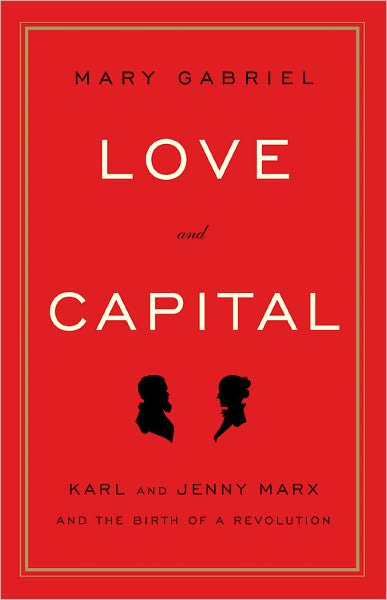
Barnes & Noble ReviewThe influence of Marx’s ideas has been so momentous that at this point the name Karl Marx hardly even seems to attach to a person. It is easy to forget that a human being stands behind those voluminous and forbidding books, and the even more forbidding system of thought those books express. As Mary Gabriel’s new biography of the Marx family, “Love and Capital,” makes clear, though, Marx was indeed human: a philosopher and revolutionary thinker, yes, but also a husband and father who loved his family and who experienced a tremendous anxiety over his failure to provide for them.

Marx’s more human aspects have been played down by both his detractors and his supporters. Some Marxists, Gabriel notes, went so far as to try to suppress knowledge not only of certain scandalous aspects of their idol’s history and conduct (the fact, for instance, that he fathered an illegitimate son with the family’s housekeeper while his wife was in Europe pleading with her relatives for financial assistance) but also of such innocuous facts as that Karl had a nickname (his close friends and relatives called him “Mohr”).

But the attempt to cleanse Marx’s profile of human elements is both silly and misleading. The idea that “the personal is political” has become commonplace if not a cliché, but it is nevertheless true, and Karl Marx’s life and thought provide a quite compelling example of their inseparability. One cannot fully understand the radical elements in Marx’s thought without being acquainted with the details of his life. To take an obvious example, the fact that he witnessed the political persecution of family members and their associates at an early age surely contributed to his resistance to the authority of the state, and his awareness of the variety of ways in which that authority could be used as a means for limiting human liberty and maintaining the status quo. “Freedom,” he wrote in 1875, “consists in converting the state from an organ superimposed upon society into one completely subordinate to it” — a statement that clearly indicates the distance between his own views and many of the programs that were eventually implemented in his name.

More broadly, it surely helps us understand the overall meaning and intent of Marx’s economic critiques to know that he and Jenny, his wife, spent the majority of their life together in considerable and frequently miserable poverty, relying on contributions from supportive friends (most reliably Friedrich Engels, Marx’s lifelong intellectual companion and coauthor of The Communist Manifesto). “The man who wrote ‘Capital,’ ” writes Gabriel, “was an extraordinary philosopher, economist, classicist, social scientist, and writer, but he was also someone intimately acquainted with the slow death of the spirit suffered by those condemned to poverty while surrounded by a world of wealth.”

If this was hard on Marx, it was surely harder still on Jenny. Born in Prussia in 1814, four years before her future husband, Jenny von Westphalen was raised in an aristocratic family but inherited her father’s relatively radical political views. Though she knew that in uniting with the young Karl she was turning her back on a life of comfortable privilege, she could not possibly have predicted just how uncomfortable and impoverished her life with Marx would prove to be. Karl Marx’s journalistic writings earned him little, his philosophical writings nothing at all. Both he and Jenny lived in the expectation that his masterwork, “Capital,” would earn enough capital to relieve their debts and render them financially secure. But the book took far longer than expected to write — Marx missed the publisher’s deadline by sixteen years — and when the first royalty check arrived, sixteen years after that, it had to be delivered to his children because both he and Jenny had died some years before.

The tardiness of “Capital,” while extreme, was characteristic of Marx. More than once in his life he promised some publisher a brief pamphlet on some topic or other, only to turn in, months or years past the deadline, a work of several hundred pages. Gabriel writes of Marx:

[He] never met a deadline, adhered to length limits, or completed an assignment in the manner requested it (the sole exception to this last was The Communist Manifesto). The problem was not lack of initiative but his inquisitive mind. Marx simply could not set aside research and begin writing; he was enthralled by the unknown and felt he could not commit his theories to paper until he understood every angle of his ever-evolving subject. But that, of course, was impossible — the halls of knowledge are infinite and mutable, and though he would have been happy to wander through them for the rest of his days, a contract required that he stop.

Moreover, Marx’s intellectual curiosity was far from his only distraction. His political activities drew the attention of authorities wherever he went, and his family spent several years relocating from one European country to another before finally finding a home — London — they would not be expelled from. He spent much of his life in poor health and constant pain as a result of various ailments. (One particularly humanizing moment has him writing to Engels that he had had to give up going to the British Museum Reading Room on account of his hemorrhoids, which “afflicted me more grievously than the French Revolution.” ) And there were other, profounder sufferings: four of the couple’s seven children — including all three sons — died before reaching adolescence. Perhaps the most poignant moment in “Love and Capital” has Marx at the funeral of his second son, the eight-year-old Edgar, or “Musch,” shouting at those who attempted to comfort him, “You cannot give me back my boy!”

A good deal of “Love and Capital” is devoted to the three surviving Marx daughters. Like their father, they tended to be intellectually adventurous and possessed a zeal for social reform. And like their father, they lived lives plagued by personal difficulties — indeed, two of the three ended up dying by their own hand. It is hard not to feel compassion, and at times admiration, for these women and for their mother, all of whom ended up living, in more than one sense, in Marx’s shadow. Yet one ends the book still feeling somewhat remote from them — as one does, despite Gabriel’s efforts, from Marx himself. “Love and Capital” is well researched and does a fine job of relaying historical facts, but it will leave at least some readers longing for a deeper delving into the daily texture of its subjects’ lives, an intimate portrait rather than a deftly sketched big picture.

Perhaps to some degree this is due to the nature of its primary subject, who, Gabriel writes, was “often fiercely argumentative, intellectually arrogant, and notoriously impatient with anyone who disagreed with him. His frequent drinking episodes…often devolved into verbal if not physical fights. He had little time for niceties; for someone so conceptually fascinated by the alienation of man, Marx routinely alienated those who encountered him.” Yet on the same page she notes that “in private Marx was warm, loving, kind, and generally described as excellent company when he was not plagued by sleepless nights or stricken by disease, both due to anxiety over his work.” Many visitors to the Marx home, indeed, remarked with surprise on how warm, hospitable, and charming the great theoretician turned out to be.

Some of the book’s most touching moments center not on Marx’s relations with his wife and daughters but on his friendships; it is here, perhaps, that he managed to be most fully human. Following Marx’s death, Engels took it on himself to go through his voluminous papers, trying to assemble the later volumes of “Capital” that his friend had so often claimed were near completion. At one point he wrote to an acquaintance, “For the past few days I have been sorting letters from 1842-62. As I watched the old times pass before my eyes they really came to life again, as did all the fun we used to have at our adversaries’ expense. Many of our early doings made me weep with laughter; they didn’t after all ever succeed in banishing our sense of humor.” A long-dead figure’s sense of humor, and other such subtleties of character, are tremendously difficult for the biographer to capture. But in this and other passages we get hints of another Marx, a shadow Marx who has somehow contrived to escape even the re-humanized depiction Mary Gabriel has given us.

Continue Reading Close
www.salon.com/writer/troy_jollimore/index.html