William Astore

What ever happened to Gary Cooper?

A seven-step program to return America to a quieter, less muscular, patriotism

  • more
    • All Share Services

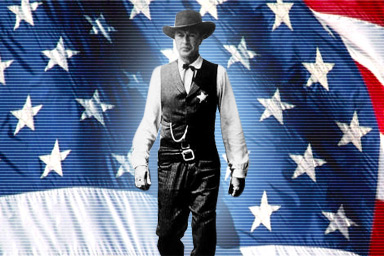
What ever happened to Gary Cooper?Gary Cooper in "High Noon"

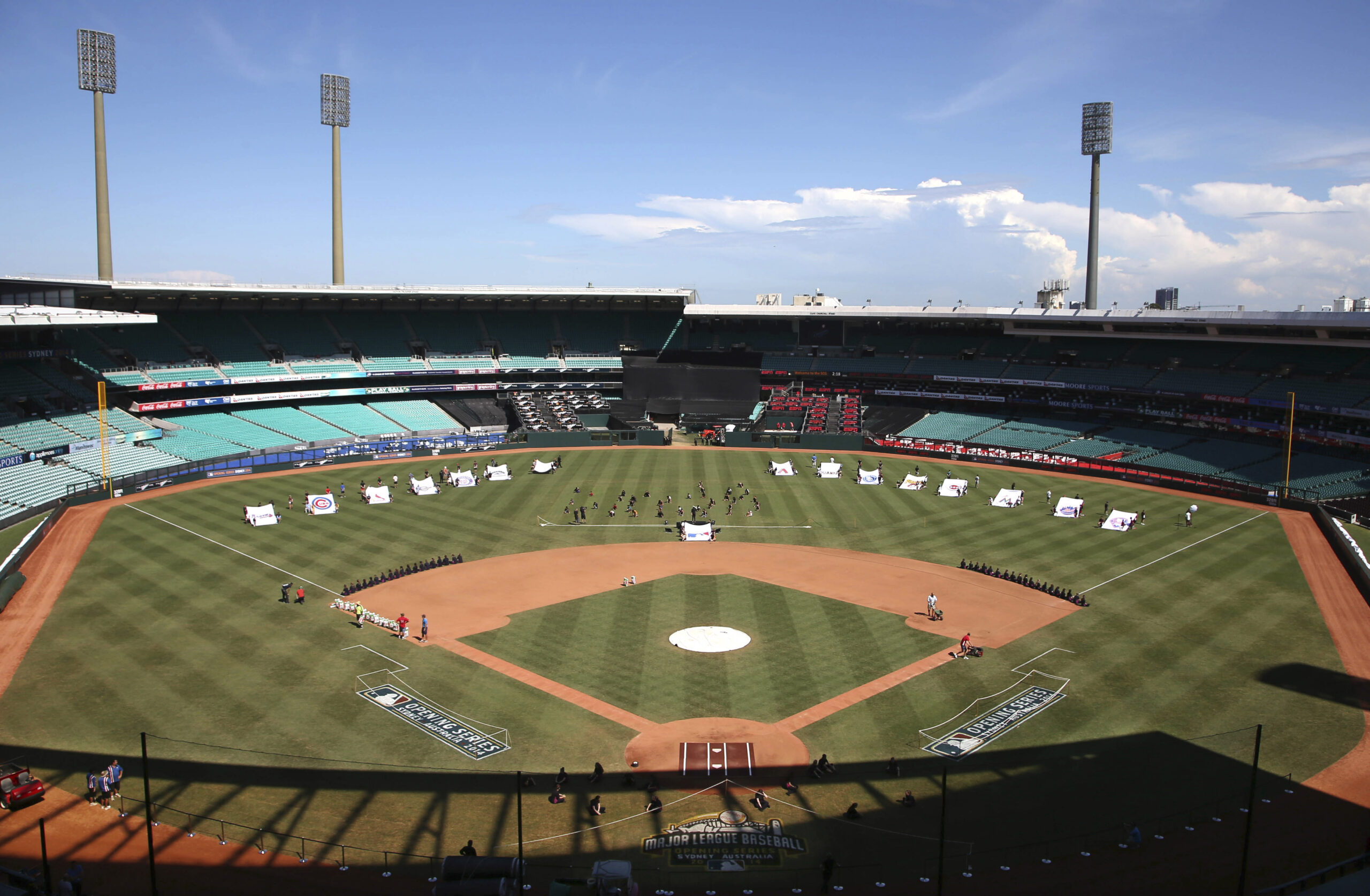
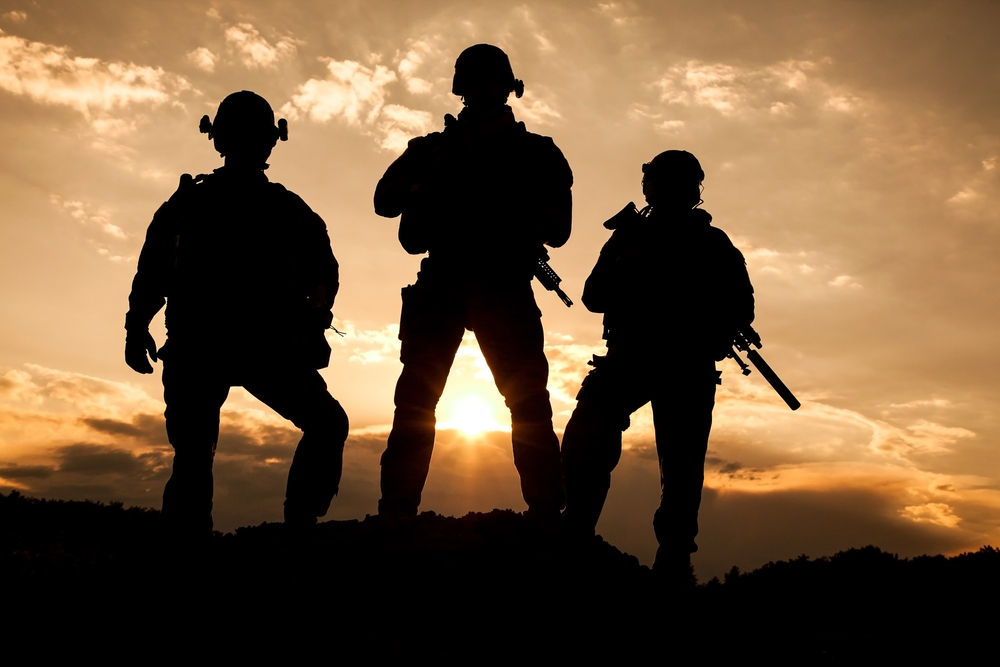
I have a few confessions to make: After almost eight years of off-and-on war in Afghanistan and after more than six years of mayhem and death since “Mission Accomplished” was declared in Operation Iraqi Freedom, I’m tired of seeing simple-minded magnetic ribbons on vehicles telling me, a 20-year military veteran, to support or pray for our troops. As a Christian, I find it presumptuous to see ribbons shaped like fish, with an American flag as a tail, informing me that God blesses our troops. I’m underwhelmed by gigantic American flags — up to 100 feet by 300 feet — repeatedly being unfurled in our sports arenas, as if our love of country is greater when our flags are bigger. I’m disturbed by nuclear-strike bombers soaring over stadiums filled with children, as one did in July just as the National Anthem ended during this year’s Major League Baseball All Star game. Instead of oohing and aahing at our destructive might, I was quietly horrified at its looming presence during a family event.

We’ve recently come through the steroid era in baseball with all those muscled-up players and jacked-up stats. Now that players are tested randomly, home runs are down and muscles don’t stretch uniforms quite as tightly. Yet while ending the steroid era in baseball proved reasonably straightforward once the will to act was present, we as a country have yet to face, no less curtail, our ongoing steroidal celebrations of pumped-up patriotism.

It’s high time we ended the post-Vietnam obsession with Rambo’s rippling pecs as well as the jaw-dropping technological firepower of the recent cinematic version of G.I. Joe and return to the resolute, undemonstrative strength that Gary Cooper showed in movies like High Noon.

In the HBO series “The Sopranos,” Tony (played by James Gandolfini) struggles with his own vulnerability — panic attacks caused by stress that his Mafia rivals would interpret as fatal signs of weakness. Lamenting his emotional frailty, Tony asks, “What ever happened to Gary Cooper?” What ever happened, in other words, to quiet, unemotive Americans who went about their business without fanfare, without swagger, but with firmness and no lack of controlled anger at the right time?

Tony’s question is a good one, but I’d like to spin it differently: Why did we allow lanky American citizen-soldiers and true heroes like World War I Sgt. Alvin York (played, at York’s insistence, by Gary Cooper) and World War II Sgt. (later, 1st Lt.) Audie Murphy (played in the film “To Hell and Back,” famously, by himself) to be replaced by all those post-Vietnam pumped-up Hollywood “warriors,” with Sylvester Stallone and Arnold Schwarzenegger-style abs and egos to match?

And far more important than how we got here, how can we end our enduring fascination with a puffed-up, comic book-style militarism that seems to have stepped directly out of screen fantasy and into our all-too-real lives?

A seven-step recovery program

As a society, we’ve become so addicted to militarism that we don’t even notice the way it surrounds us or the spasms of societal ‘roid rage that go with it. The fact is, we need a detox program. At the risk of incurring some of that ‘roid rage myself, let me suggest a seven-step program that could help return us to the saner days of Gary Cooper:

1. Baseball players on steroids swing for the fences. So does a steroidal country. When you have an immense military establishment, your answer to trouble is likely to be overwhelming force, including sending troops into harm’s way. To rein in our steroidal version of militarism, we should stop bulking up our military ranks, as is now happening, and shrink them instead. Our military needs not more muscle supplements (or the budgetary version of the same), but far fewer.

2. It’s time to stop deferring to our generals, and even to their commander in chief. They’re ours, after all; we’re not theirs. When President Obama says Afghanistan is not a war of choice but of necessity, we shouldn’t hesitate to point out that the emperor has no clothes. Yet when it comes to tough questioning of the president’s generals, Congress now seems eternally supine. Senators and representatives are invariably too busy falling all over themselves praising our troops and their commanders, too worried that “tough” questioning will appear unpatriotic to the folks back home, or too connected to military contractors in their districts, or some combination of the three.

Here’s something we should all keep in mind: Generals have no monopoly on military insight. What they have a monopoly on is a no-lose situation. If things go well, they get credit; if they go badly, we do. Retired five-star Gen. Omar Bradley was typical when he visited Vietnam in 1967 and declared: “I am convinced that this is a war at the right place, at the right time and with the right enemy — the Communists.” North Vietnam’s only hope for victory, he insisted, was “to hang on in the expectation that the American public, inadequately informed about the true situation and sickened by the loss in lives and money, will force the United States to give up and pull out.”

There we have it: A classic statement of the belief that when our military loses a war, it’s always the fault of “we the people.” Paradoxically, such insidious myths gain credibility not because we the people are too forceful in our criticism of the military, but because we are too deferential.

3. It’s time to redefine what “support our troops” really means. We console ourselves with the belief that all our troops are volunteers, who freely signed on for repeated tours of duty in forever wars. But are our troops truly volunteers? Didn’t we recruit them using multimillion-dollar ad campaigns and lures of every sort? Are we not, in effect, running a poverty and recession draft? Isolated in middle- or upper-class comfort, detached from our wars and their burdens, have we not, in a sense, recruited a “foreign legion” to do our bidding?

If you’re looking for a clear sign of a militarized society — which few Americans are — a good place to start is with troop veneration. The cult of the soldier often covers up a variety of sins. It helps, among other things, hide the true costs of, and often the futility of, the wars being fought. At an extreme, as the war began to turn dramatically against Nazi Germany in 1943, Germans who attempted to protest Hitler’s failed strategy and the catastrophic costs of his war were accused of (and usually executed for) betraying the troops at the front.

The United States is not a totalitarian state, so surely we can hazard criticisms of our wars and even occasionally of the behavior of some of our troops, without facing charges of stabbing our troops in the back and aiding the enemy. Or can we?

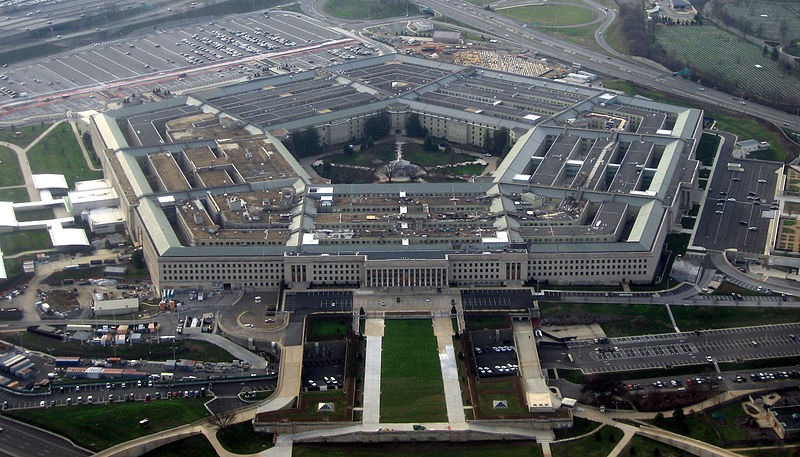
4. Let’s see the military for what it is: a blunt instrument of force. It’s neither surgical nor precise nor predictable. What Shakespeare wrote 400 years ago remains true: when wars start, havoc is unleashed, and the dogs of war run wild — in our case, not just the professional but the “mercenary” dogs of war, those private contractors to the Pentagon that thrive on the rich spoils of modern warfare in distant lands. It’s time to recognize that we rely ever more massively to prosecute our wars on companies that profit ever more handsomely the longer they last.

5. Let’s not blindly venerate the serving soldier, while forgetting our veterans when they doff their spiffy uniforms for the last time. It’s easy to celebrate our clean-cut men and women in uniform when they’re thousands of miles from home, far tougher to lend a hand to scruffier, embittered veterans suffering from the physical and emotional trauma of the battle zones to which they were consigned, usually for multiple tours of duty.

6. I like air shows, but how about — as a first tiny step toward demilitarizing civilian life — banning all flyovers of sporting events by modern combat aircraft? War is not a sport, and it shouldn’t be a thrill.

7. I love our flag. I keep my father’s casket flag in a special display case next to the very desk on which I’m writing this piece. It reminds me of his decades of service as a soldier and firefighter. But I don’t need humongous stadium flags or, for that matter, tiny flag lapel pins to prove my patriotism — and neither should you. In fact, doesn’t the endless post-9/11 public proliferation of flags in every size imaginable suggest a certain fanaticism bordering on desperation? If we saw such displays in other countries, our descriptions wouldn’t be kindly.

Of course, none of this is likely to be easy as long as this country garrisons the planet and fights open-ended wars on its global frontiers. The largest step, the eighth one, would be to begin seriously downsizing that mission. In the meantime, we shouldn’t need reminding that this country was originally founded as a civilian society, not a militarized one. Indeed, the revolt of the 13 colonies against the King of England was sparked, in part, by the perceived tyranny of forced quartering of British troops in colonial homes, the heavy hand of an “occupation” army, and taxation that we were told went for our own defense, whether we wanted to be defended or not.

If Americans are going to continue to hold so-called tea parties, shouldn’t some of them be directed against the militarization of our country and an enormous tax burden fed in part by our wasteful, trillion-dollar wars?

Modest as it may seem, my seven-step recovery program won’t be easy for many of us to follow. After all, let’s face it, we’ve come to enjoy our peculiar brand of muscular patriotism and the macho militarism that goes with it. In fact, we revel in it. Outwardly, the result is quite an impressive show. We look confident and ripped and strong. But it’s increasingly clear that our outward swagger conceals an inner desperation. If we’re so strong, one might ask, why do we need so much steroidal piety, so many in-your-face patriotic props, and so much parade-ground conformity?

Forget Rambo and action-picture G.I. Joes: Give me the steady hand, the undemonstrative strength, and the quiet humility of Alvin York, Audie Murphy — and Gary Cooper.

America’s imperial police force

How did the American military become the French Foreign Legion?

  • more
    • All Share Services

A leaner, meaner, higher tech force — that was what George W. Bush and his Secretary of Defense Donald Rumsfeld promised to transform the American military into. Instead, they came close to turning it into a foreign legion. Foreign as in being constantly deployed overseas on imperial errands; foreign as in being ever more reliant on private military contractors; foreign as in being increasingly segregated from the elites that profit most from its actions, yet serve the least in its ranks.

Now would be a good time for President Barack Obama and Secretary of Defense Robert Gates to begin to reclaim that military for its proper purpose: to support and defend the Constitution of the United States against all enemies, foreign and domestic. Now would be a good time to ask exactly why, and for whom, our troops are currently fighting and dying in the urban jungles of Iraq and the hostile hills of Afghanistan.

A few fortnights and forever ago, in the Bush years, our “expeditionary” military came remarkably close to resembling an updated version of the French Foreign Legion in the ways it was conceived and used by those in power — and even, to some extent, in its makeup.

For the metropolitan French elite of an earlier era, the Foreign Legion — best known to Americans from countless old action films — was an assemblage of military adventurers and rootless romantics, volunteers willing to man an army fighting colonial wars in far-flung places. Those wars served the narrow interests of people who weren’t particularly concerned about the fate of the legion itself.

It’s easy enough to imagine one of them saying, à la Rumsfeld, “You go to war with the legion you have, not the legion you might want or wish to have.” Such a blithe statement would have been uncontroversial back then, since the French Foreign Legion was — well — so foreign. Its members, recruited worldwide, but especially from French colonial possessions, were considered expendable, a fate captured in its grim, sardonic motto: “You joined the Legion to die. The Legion will send you where you can die!”

Looking back on the last eight years, what’s remarkable is the degree to which Rumsfeld and others in the Bush administration treated the U.S. military in a similarly dismissive manner. Bullying his generals and ignoring their concerns, the Secretary of Defense even dismissed the vulnerability of the troops in Iraq, who, in the early years, motored about in inadequately armored Humvees and other thin-skinned vehicles.

Last year, Vice President Dick Cheney offered another Legionnaire-worthy version of such dismissiveness. Informed that most Americans no longer supported the war in Iraq, he infamously and succinctly countered, “So?” — as if the U.S. military weren’t the American people’s instrument, but his own private army, fed and supplied by private contractor KBR, the former Halliburton subsidiary whose former CEO was the very same Dick Cheney.

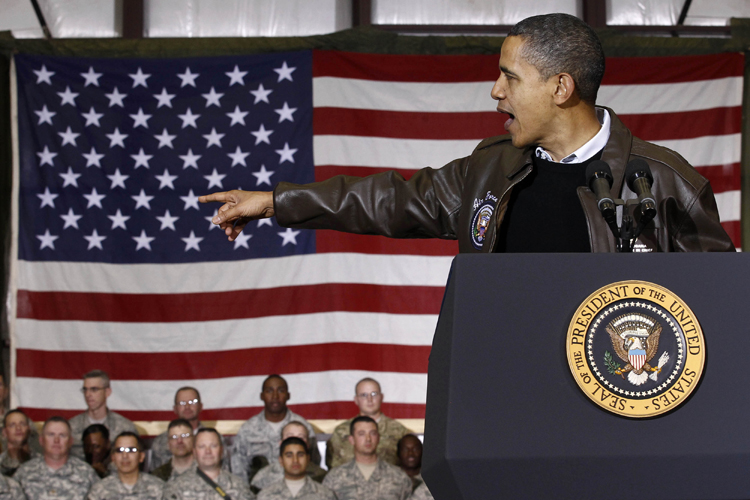
Fond of posing in flight suits, leather jackets, and related pseudo-military gear, President Bush might, on the other hand, have seemed overly invested in the military. Certainly, his tough war talk resonated within conservative circles, and he visibly relished speaking before masses of hooah-ing soldiers. Too often, however, Bush simply used them as patriotic props, while his administration did its best to hide their deaths from public view.

In that way, he and his top officials made our troops into foreigners, in part by making their ultimate sacrifice, their deaths, as foreign to us as was humanly possible. Put another way, his administration made the very idea of national “sacrifice” — by anyone but our troops — foreign to most Americans. In response to the 9/11 attacks, Americans were, as the President famously suggested only 16 days after the attacks, to show their grit by visiting Disney World and shopping till they dropped. Military service instills (and thrives on) an ethic of sacrifice that was, for more than seven years, consciously disavowed domestically.

As the Obama administration begins to deploy U.S. troops back to the Iraq or Afghan war zones for their fourth or fifth tours of duty, I remain amazed at the silent complicity of my country. Why have we been so quiet? Is it because the Bush administration was, in fact, successful in sending our military down the path to foreign legion-hood? Is the fate of our troops no longer of much importance to most Americans?

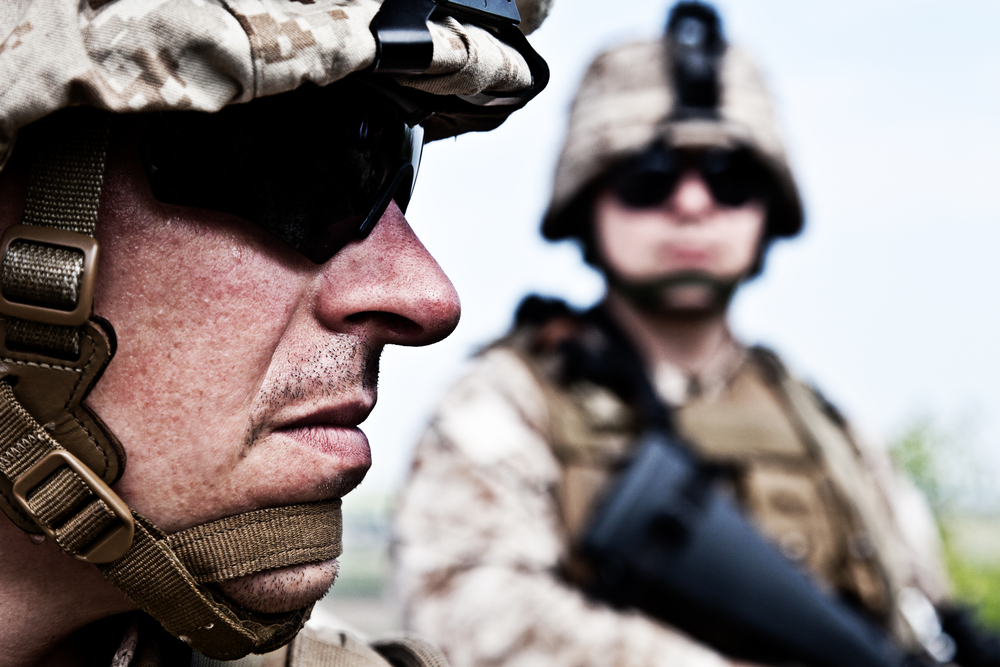
Even the military’s recruitment and demographics are increasingly alien to much of the country. Troops are now regularly recruited in “foreign” places like South Central Los Angeles and Appalachia that more affluent Americans wouldn’t be caught dead visiting. In some cases, those new recruits are quite literally “foreign” — non-U.S. citizens allowed to seek a fast-track to citizenship by volunteering for frontline, war-zone duty in the U.S. Army or Marines. And when, in these last years, the military has fallen short of its recruitment goals — less likely today thanks to the ongoing economic meltdown — mercenaries have simply been hired at inflated prices from civilian contractors with names like Triple Canopy or Blackwater redolent of foreign adventures.

With respect to demographics, it’ll take more than the sons of Joe Biden and Sarah Palin to redress inequities in burden-sharing. With startlingly few exceptions, America’s sons and daughters dodging bullets remain the progeny of rural America, of immigrant America, of the working and lower middle classes. As long as our so-called best and brightest continue to be AWOL when it comes to serving among the rank-and-file, count on our foreign adventurism to continue to surge.

Diversity is now our societal byword. But how about more class diversity in our military? How about a combat regiment of rich young volunteers from uptown Manhattan? (After all, some of their great-grandfathers probably fought with New York’s famed “Silk Stocking” regiment in World War I.) How about more Ivy League recruits like George H.W. Bush and John F. Kennedy, who respectively piloted a dive bomber and a PT boat in World War II? Heck, why not a few prominent Hollywood actors like Jimmy Stewart, who piloted heavy bombers in the flak-filled skies of Europe in that same war?

Instead of collective patriotic sacrifice, however, it’s clear that the military will now be running the equivalent of a poverty and recession “draft” to fill the “all-volunteer” military. Those without jobs or down on their luck in terrible times will have the singular honor of fighting our future wars. Who would deny that drawing such recruits from dead-end situations in the hinterlands or central cities is strikingly Foreign Legion-esque?

Caught in the shock and awe of 9/11, we allowed our military to be transformed into a neocon imperial police force. Now, approaching our eighth year in Afghanistan and sixth year in Iraq, what exactly is that force defending? Before President Obama acts to double the number of American boots-on-the-ground in Afghanistan — before even more of our troops are sucked deeper into yet another quagmire — shouldn’t we ask this question with renewed urgency? Shouldn’t we wonder just why, despite all the reverent words about “our troops,” we really seem to care so little about sending them back into the wilderness again and again?

Where indeed is the outcry?

The French Foreign Legionnaires knew better than to expect such an outcry: The elites for whom they fought didn’t give a damn about what happened to them. Our military may not yet be a foreign legion — but don’t fool yourself, it’s getting there.

Continue Reading Close

Page 2 of 2 in William Astore