

During Thanksgiving week, from the soft neutral cocoon of my parents’ guest room, I burrowed into an impulsive rewatch of the BBC “Sherlock” — yes, the Benedict Cumberbatch era, all sculptural cheekbones and good outerwear. I’ve seen it enough times to carry around a private hierarchy of favorite episodes (my shame-free Roman Empire), including the first season’s “The Blind Banker.” It has everything: cyphers, priceless antiquities, a rogue circus troupe. But the moment I always wait for is a micro-scene — practically the size of a breath — that glows like a coal in the larger mystery.
In it, amid all the breathless detectiving, John Watson (Martin Freeman, forever the patron saint of beleaguered charm) has managed to land a date with Sarah (Zoe Telford) from the surgery. Bless him. Except the kitchen at 221B is… well, it’s not a kitchen so much as a crime-scene-adjacent holding pen. It’s the sort of place where you’d be more likely to find a severed head in the crisper than a respectable pantry item.
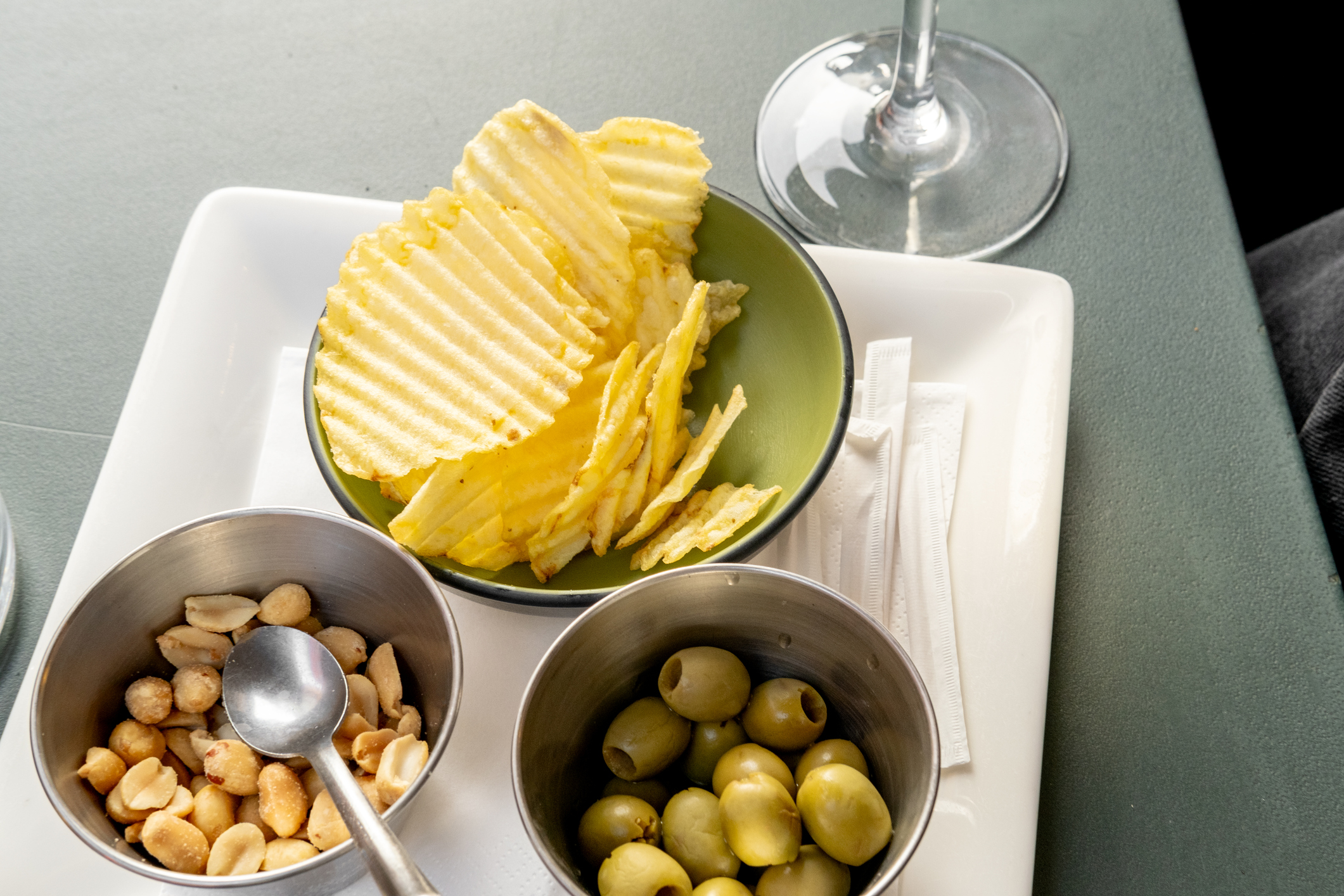
Enter Mrs. Hudson (Una Stubbs), the landlady with the moral clarity of a lighthouse, who breezes in and saves the day. She lifts a tea towel with all the ceremony of a magician revealing a dove and announces, “I’ve done punch and a bowl of nibbles,” offering up a jug of punch, a bowl of chips and what appears to be a bowl of dip that could, frankly, be anything. John beams. “Mrs. Hudson, you are a saint!” And in that tiny exchange, the air warms. It’s a crumb of hospitality, flung together and nonetheless holy.
That scene was soft-lapping around my brain when I read a recent story in The Philadelphia Inquirer titled, with endearing bluntness, “Is it rude to bring a store-bought Thanksgiving dish when everyone else is cooking from scratch?” I clicked with the trepidation of someone bracing for a purity test. Instead, food editor Margaret Eby practically leapt onto the page: “I feel very strongly about this! The answer is no, of course not! Unless you said you were bringing a homemade casserole and show up with a bag of half-eaten Doritos or something, it’s not rude.”
Put together, those two warm moments — Mrs. Hudson’s nibbles, Eby’s sensible gospel — really highlight the chasm we’ve created around hospitality. One that only seems to be growing. We’ve built up this idea that hosting must be an achievement, a spectacle, a tableau of labor: no shortcuts, no store-bought, no leaning on anyone. But in reality? Most of us are aching not for perfection but for presence. And sometimes the thing that cracks us open, even during this time of the year, isn’t the twelve-hour turkey or the hand-fluted tart. It’s the equivalent of a tepid jug of punch and a bowl of question-mark dip proffered with genuine care.
In other words: the saintliness was never in the spread. It was in the gesture.
Want more great food writing and recipes? Sign up for Salon’s free food newsletter, The Bite.
As someone who works in food, I see two main reasons behind all this crescendoing pressure. The first is that many Americans are simply more fluent in food than we used to be. We’ve spent the past couple decades marinating in cooking shows, food podcasts, restaurant documentaries, TikTok pantry tours — an endless syllabus of how things ought to look and taste. The second reason, of course, is the one that creeps into every conversation sooner or later: social media.
Think about attending a dinner party in the pre-Facebook era. Sure, someone might have taken a couple snapshots of the table — maybe your aunt with her point-and-shoot, the flash so bright it washed out the ham. But it would’ve felt a touch unhinged to track down your old third-grade teacher two days later and slap a Polaroid of your crudités into her hand like, Look upon my vegetable glory!
Now, though, we’re living inside a 24/7 feed where everyone is supposedly keeping up with everyone else’s tablescape, even if “everyone else” is an influencer family three states away with 45,000 followers (a good third of whom are bots incapable of hosting anything more than a phishing scam). We scroll, and along with the images come the opinions: what’s chic, what’s gauche, what’s suddenly “out.” I once saw a post declaring it “cheugy” — with a bold, almost moral indignation — to serve Trader Joe’s appetizers because “everyone knows what they are.” As if your guests would lock eyes across the room and whisper, shocked, “Potstickers? From a national retailer? In this economy?”
We need your help to stay independent
It’s an absurd little circus, and yet we’ve all absorbed the script.
And because of it, we’ve gradually lost a certain kind of ambient hospitality: that quiet, low-stakes readiness our parents or grandparents kept — a pan of brownies under foil in the fridge, a living room always half-presentable, a freezer cake no one was allowed to touch. It wasn’t about perfection. It was about soft availability. These days, that’s been swapped out for “performance hospitality.” If people come over, it’s because we curated it, cleaned for it, mood-lit it, scheduled it and mentally prepared for it three days in advance.
Comedian Sebastian Maniscalco has a stand-up bit that nails this better than any sociologist. These days, he says, if the doorbell rings unexpectedly, the whole household snaps into survival mode — lights off, bodies flattened behind the couch, everyone holding their breath until the offending visitor slinks away.
But “twenty years ago, your doorbell rang — that was a happy moment. It was called company,” he says. The idea that someone might simply be “in the neighborhood” and decide to stop by felt charming, not confrontational. And of course, out would come the cake — the one every mother kept on ice like a sacred relic. “Your mother had a little Entenmann’s,” he says. “Maybe a Sara Lee crumble cake. Just in case company came over.”
Then he delivers the line every 90s kid can feel in their marrow: “She made an announcement when she bought it: ‘Listen, nobody touch this cake. This is for company. Those crap muffins are for you.’”
It’s a great bit, but it also lands like a lesson: hospitality isn’t about performance or perfection. Sometimes, the simplest gestures — a cake on ice, a bowl of nibbles, the quiet readiness to receive someone — are what linger in memory, long after the fanfare has faded. I’ll be honest with you all: this is a muscle I’m currently trying to build.
Something about being around family this time of year sharpens the edges of things — suddenly life feels both impossibly short and impossibly tender, and the smallest gesture of welcome can ripple out for weeks. I feel it every time I walk into my mom’s house and discover she’s already made, batched, and frozen my favorite homemade candies, a quiet ritual she learned from her own mother. It’s nothing grand, just a palm-sized sweetness waiting for me in the freezer, but it undoes me every time.
So in that spirit, as we tilt toward the holidays and whatever fresh start the New Year promises, here are a few gentle practices I’m trying to fold into my own life — perhaps they’ll spark something for any other intrepid hosts out there, too.
Let store-bought be the hero once in a while
There’s no rule that says everything on your table must be hand-crafted from scratch. Sometimes the kindest, most generous gesture you can make is to lean on something already made — the good hummus, the fancy crackers, the supermarket shrimp ring. But here’s the little trick that makes it feel thoughtful rather than “I just grabbed this on the way in”: decant it. Scoop the hummus into a pretty bowl, arrange the crackers on a small plate, pour olives into a glass. The gesture is subtle, but it signals care — and suddenly, store-bought doesn’t feel like compromise; it feels like an offering.
Adopt a signature easy thing
Think of it as your small, reliable flourish. Something that can be produced in seconds but still feels intentional. A house drink (sparkling water with a curl of citrus peel, or a quick batch of punch), a bowl of warmed and spiced nuts, a tiny tray of chocolate squares — whatever feels like “yours.” The magic isn’t in complexity; it’s in familiarity. Your guests may not remember the exact ingredients, but they’ll remember the gesture.
Keep one “company cake” equivalent
This is your quiet, background gesture of readiness — a small thing that signals you’re prepared to receive, without requiring a full production. A loaf of banana bread, a batch of cookies, a jar of preserves, even a frozen pie — something tucked away just in case. It doesn’t need to be fancy or fresh out of the oven; the point is the thoughtfulness baked in advance. When a friend or family member drops by unexpectedly, pulling it out feels effortless, like you’ve been waiting all along to welcome them.
Let one room stay a little bit ready — not perfect, just friendly
Ambient hospitality isn’t a showroom; it’s a corner where someone can settle in the moment they step through the door. A chair cleared of laundry, a table with a little breathing room, a soft spot on the couch — that’s enough. The goal isn’t Instagram perfection or curated aesthetic; it’s a quiet signal that you’re open to company, that your home is a place where people can land without ceremony.
Reframe “hosting” as “receiving”
I’m still trying to really soak this idea in, but true hospitality isn’t a performance; it’s a posture. Hosting asks you to orchestrate, rehearse and curate. Receiving asks only that you be present. Open the door, offer a smile, make room for whoever arrives — that’s it. There’s no checklist, no perfect centerpiece, no judgment about what’s “in” or “out.” Just presence, warmth, and attention. In that simple act, you give someone the gift of ease, and in turn, you remind yourself what hospitality was always meant to feel like: welcoming, effortless and a little holy.
It’s the little things — a bowl of nibbles, a slice of cake, a chair just cleared — that carry the same quiet magic Mrs. Hudson carried into 221B.
This story originally appeared in The Bite, my weekly food newsletter for Salon. If you enjoyed it and would like more essays, recipes, technique explainers and interviews sent straight to your inbox, subscribe here.
