
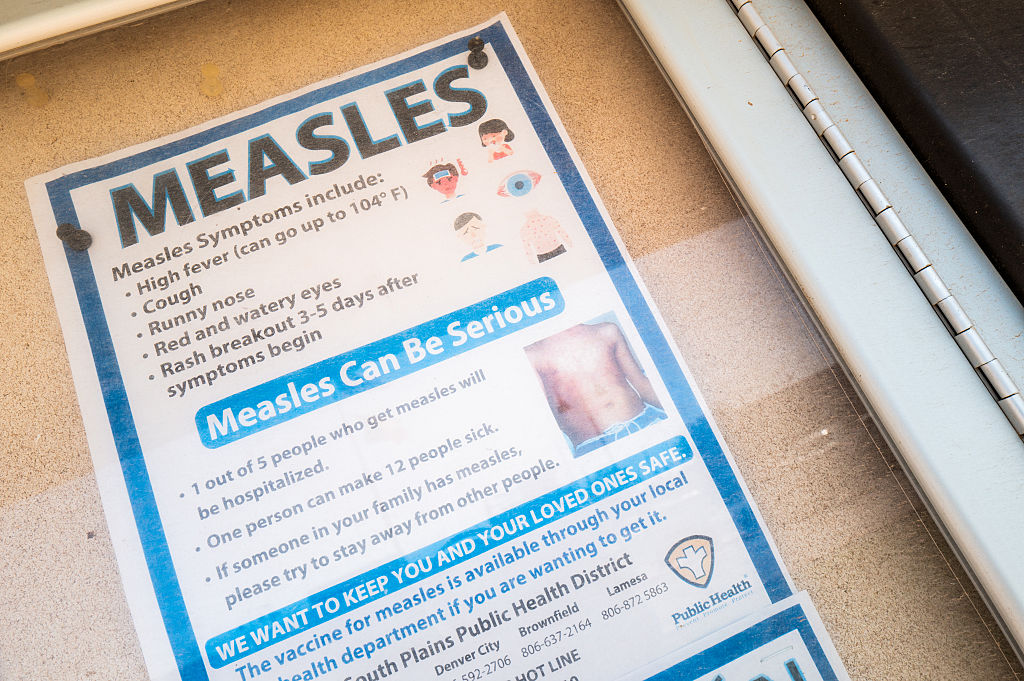

Health officials are warning of a spike in measles cases across parts of the United States as anti-vaccine rhetoric gains traction, fueled in part by high-profile figures like Robert F. Kennedy Jr.
The Centers for Disease Control and Prevention reported dozens of confirmed cases in several states this month, including clusters linked to unvaccinated communities. Public health experts say that while measles was declared eliminated in the U.S. two decades ago, gaps in vaccination coverage have allowed the virus to resurface.
Before becoming the head of Health and Human Services, Kennedy has been a longtime vaccine skeptic and served as the head of Children’s Health Defense. That organization has repeatedly questioned the safety and necessity of childhood immunizations, including the MMR vaccine.
The debate has reignited discussions about vaccination policies in schools and public spaces. One idea is to match the schedule found within the Denmark school and health system. That country maintains high vaccination compliance through its childhood vaccine schedule, helping the country keep measles nearly eliminated.
However, Danish doctors question its direct correlation as the medical needs of children in both countries don’t entirely line up. But some public health officials in the U.S. point to such models as examples of how consistent messaging and access can prevent outbreaks.
Start your day with essential news from Salon.
Sign up for our free morning newsletter, Crash Course.
In response to rising case numbers, some states are tightening school-entry vaccine requirements and launching outreach campaigns. CBS News reported that Georgia Sen. Raphael Warnock called Kennedy a “hazard to public health,” reflecting broader concern in political circles.
Experts warn that the outbreak could expand if vaccination rates continue to lag. “Children should be getting all the vaccines recommended by the American Academy of Pediatrics,” said Dr. Swathi Mannava Gowtham, a Pennsylvania pediatric infectious diseases physician.
“One of the triumphs of 20th century medicine is that vaccines have significantly reduced infant and childhood mortality, along with other public health measures, and immunization is one of the strongest public health measures we have,” Dr. Gowtham said. “My worry is that when we have pockets of nonvaccination or undervaccination we’re going to see a rise in cases in which each incidence, each complication was preventable. And that to me is tragic,”
