
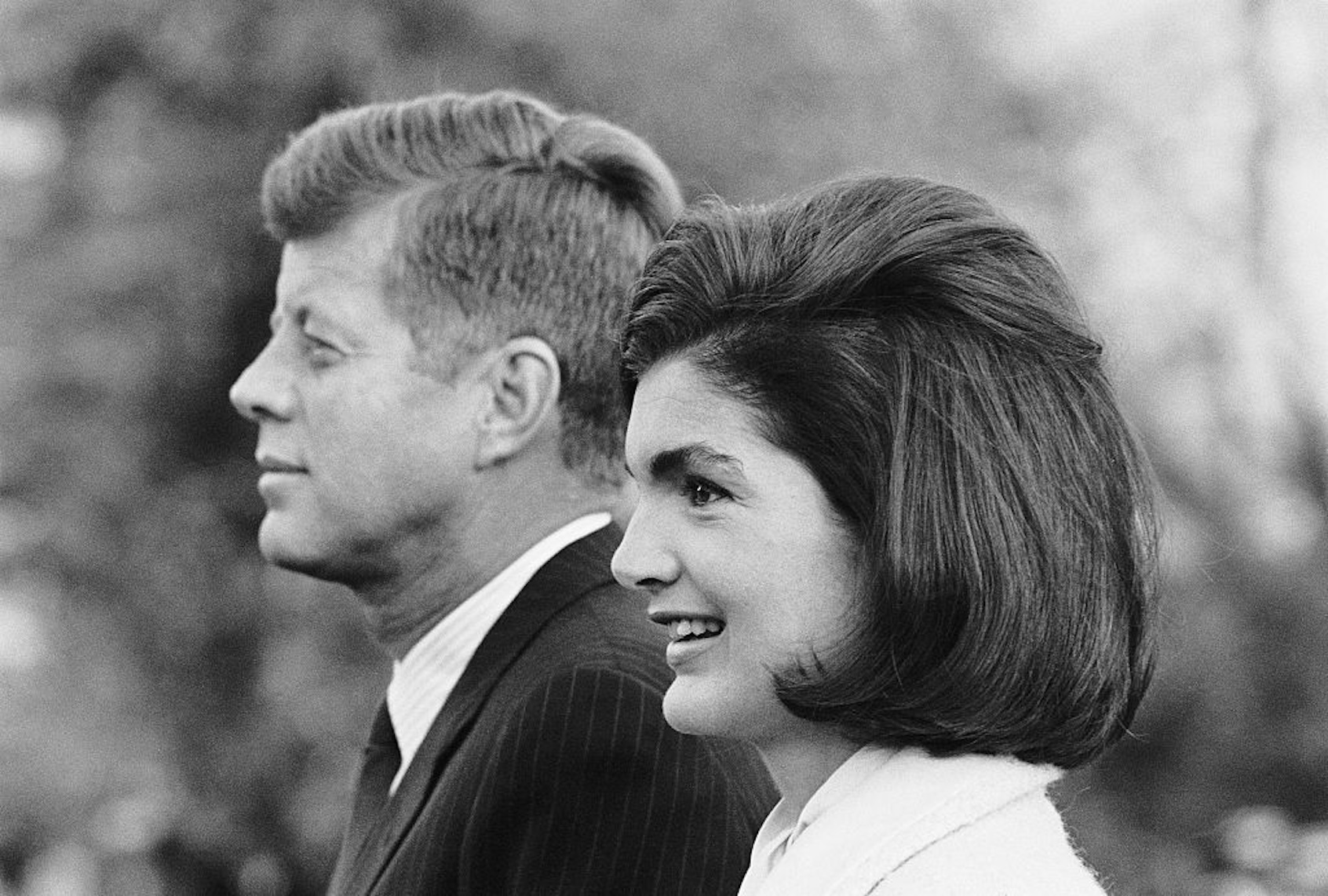

It’s yet another cruel moment in a cruel presidency: Mere hours after Tatiana Schlossberg — daughter of former Ambassador to Australia and Japan Caroline Kennedy, granddaughter of President John F. Kennedy and First Lady Jacqueline Kennedy Onassis — died at 35 on Dec. 30 from a rare and aggressive form of leukemia, Donald Trump took to Truth Social to attack the Kennedys in deeply personal terms.
“The Kennedy Family have LONG neglected the Kennedy Center, btw,” read one post from a supporter that was shared by the president. “They don’t raise money for it. They never show up. And the only Kennedy who has been there recently is a member of Trump’s cabinet.” Another was more concise and straightforward: “The Trumps have always been supporters of the arts. The Kennedys are supporters of the Kennedys.”
While the president’s posts didn’t mention Schlossberg by name or allude to her death, they were nonetheless telling about his priorities and nature. Trump, who is often incapable of showing grace, is fond of hitting people at their lowest point. In this case, he chose what was undoubtedly the saddest day of Caroline Kennedy’s life — darker even than the assassination of her father and uncle Bobby, than her mother’s untimely passing at 64, than her brother’s tragic death in a plane crash — to celebrate his coup of the Kennedy Center board, which voted to extend his cult of personality by tacking on his name, wholly unearned and unmerited, to the 54-year-old living memorial to the 35th president.
The name change and overhaul of the center’s staff, focus and programming, is just the latest example in a year-long war, intentional or not, that is being waged by Trump against the Kennedy legacy. The Kennedys have a special way of getting under Trump’s skin, and since his return to office a year ago, the president has had the family’s contributions in his sights.
There can be little doubt why. The notion of Camelot in the nation’s collective memory represents, as Jacqueline Kennedy intended when she conjured it for Life magazine journalist Theodore H. White in the days after her husband’s assassination, an era of charisma, glamour and vigor that revolutionized American politics. Everything, in other words, that Trump yearns for, as well as other qualities in which he has never appeared interested, including a tradition of public service, intellectual curiosity, debate and an appreciation for history, literature and the arts. Sixty-two years after his assassination, Kennedy remains the country’s most popular modern president, with a 90% approval rating.
The Kennedys have long been considered American royalty, a fact that must rankle the image-conscious — and thin-skinned — Trump, who fancies himself a monarch in all but name. In his mind, there is only room for one dynasty in American politics: his own.
To lay siege to the Kennedy legacy is to also attack the millions of people whose lives were changed by the programs, initiatives and rhetoric not only of President Kennedy and Jacqueline Kennedy, but also Sens. Robert F. Kennedy and Ted Kennedy, as well as civil and disability rights advocate Eunice Kennedy Shriver.
But it’s not simply the Kennedys that Trump is targeting. The family’s legislative contributions run broad and deep, with programs and initiatives that have woven themselves into the fabric of our national life in stitches both large and small. To lay siege to the Kennedy legacy is to also attack the millions of people whose lives were changed by the programs, initiatives and rhetoric not only of President Kennedy and Jacqueline Kennedy, but also Sens. Robert F. Kennedy and Ted Kennedy, as well as civil and disability rights advocate Eunice Kennedy Shriver.
The Civil Rights Act, which was introduced by President Kennedy, has come under sustained assault from the Trump White House. In April, the president issued an executive order intended to gut the disparate impact standard, which is at the very heart of the legislation. (The provision, which was largely uncontroversial for decades, allows challenges to seemingly neutral policies that cause unintentional but disproportionate harm to protected groups.) In October, the Supreme Court also heard oral arguments challenging a key section of the Voting Rights Act.
Earlier this year, Trump’s Department of Government Efficiency (DOGE), under the leadership of Elon Musk, effectively shuttered the United States Agency for International Development (USAID), founded by Kennedy in 1961 to administer foreign humanitarian aid. Over the past two decades, the agency’s programs have been credited with saving the lives of 92 million people around the world. According to a tracker created by Brooke Nichols, an infectious disease mathematics modeller and health economist at Boston University, as of Saturday, Trump’s closure of USAID has resulted in nearly 725,000 deaths, or over 88 deaths per hour. Over two-thirds of them are children.
That’s a conservative estimate, as Atul Gawande of Harvard’s T.H. Chan School of Public Health pointed out in a November essay in the New Yorker. (Nichols’ model, Gawande wrote, assumes, “for example, that the State Department will fully sustain the programs that remain.” That, of course, is a big assumption.)
But Trump hasn’t been content to simply gut foreign aid. He has also slashed domestic social spending that originated in the Kennedy White House.
After the first food stamp program ran from 1939 to 1943, the administration created a pilot project in 1961 that was inspired by the endemic poverty Kennedy encountered in West Virginia during the previous year’s Democratic primary. By January 1964, less than two months after his assassination, the program included 380,000 participants scattered across 22 states, becoming permanent later that year with the passage of the Food Stamp Act.
Trump’s damage to the Supplemental Nutrition Assistance Program (SNAP), the successor to food stamps, remains ongoing and is still being calculated. His One Big Beautiful Bill Act, which he signed in July, included $186 billion in cuts, or about 20% of its funding, which the nonpartisan Congressional Budget Office projected would result in the loss or significant reduction of benefits for four million people. In December, the administration threatened to withhold SNAP management funds from Democratic-controlled states if officials refused to provide data about recipients to the federal government, including names and immigration status.
Want more sharp takes on politics? Sign up for our free newsletter, Standing Room Only, written by Amanda Marcotte, now also a weekly show on YouTube or wherever you get your podcasts.
Head Start, another initiative that originated in the Kennedy White House and was established as a federal program in 1965 to serve low-income families, has also found itself under threat. Trump’s initial budget proposed eliminating the program altogether, and Health and Human Services Secretary Robert F. Kennedy Jr. set about closing several regional offices and overhauling the program. In May, he promised Congress that the administration would not cut funding. But in July, the New York Times reported that congressional investigators had determined that the administration illegally withheld $12 billion in funding for the federal child care program for around three months. Although that appears to have been resolved, a report by the Government Accountability Office, which provides federal oversight, “[found] that the government’s actions may have caused immense financial hardship” to child care agencies and, by extension, to the families they serve.
Secretary Kennedy has also cut access of undocumented immigrants to Head Start, and in December it was revealed that centers have been told to avoid using a list of nearly 200 words and phrases — including “accessible,” “disability,” “minority,” “Black,” “tribal,” “female” and “women.”
With guidelines like these, the secretary has proven himself a useful stooge of the president. Trump’s choice of the vaccine skeptic and former Independent presidential candidate gave him some validation; after all, who better to have on side in a crusade against Kennedy initiatives than a Kennedy? But it also doubtless served a psychological need for the president. No matter his promise to let RFK Jr. “go wild” on vaccines and the nation’s health, Trump must also be keenly aware that a Kennedy is subject to him
For his part, Secretary Kennedy is hard at work dismantling a vaccine structure that his uncle played a pivotal role in implementing. In 1962, President Kennedy signed the Vaccination Assistance Act, which ensured that all children under five, regardless of income, could receive vaccines against polio, diphtheria, whooping cough and tetanus. Three years later, the bill was amended to cover the new measles vaccine, which was first licensed for use in 1963.
Now, on Secretary Kennedy and Trump’s watch, a measles outbreak is continuing to spread, with more than 2,000 cases reported in 2025, the highest number in 33 years. Dan Jernigan, who led the vaccine safety office at the Centers for Disease Control before resigning in protest against the administration’s public health policies, told the Washington Post that Secretary Kennedy aimed to “raise the risk, bury the benefits, sow confusion, drive down use” of vaccines.”
Along with Trump, he is also chipping away at the life’s work of his aunt, Eunice Kennedy Shriver, who was an advocate for children’s health and rights for people with intellectual disabilities. The founder of the Special Olympics, Shriver was also instrumental in the creation of the National Institute of Child Health and Human Development (NICHD), which President Kennedy signed into law in 1962 and was named in honor of Shriver by Congress in 2007. Since her nephew took over at HHS, the NICHD has faced an onslaught of staff reductions, including the Safe to Sleep initiative, a public awareness campaign launched in 1994 that sought to prevent sleep-related infant deaths.
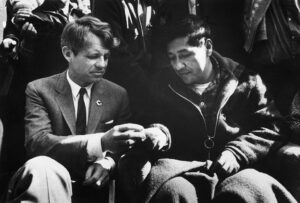
(Getty Images) Sen. Robert F. Kennedy visits Cesar Chavez and migrant workers on March 10, 1968.
The secretary’s father, New York Sen. Robert F. Kennedy, championed the rights of people of color, Native Americans, migrant workers, Appalachians and people in poverty, and he promoted human rights around the world, from Eastern Europe to Latin America and, most famously, in South Africa, where he spoke out against apartheid. In March 1968, the senator addressed migrant workers in support of Cesar Chavez in Delano, California. His speech was optimistic and aspirational, promising to “fight together.” He said, “You stand for justice, and I am proud to stand with you. Viva La Causa.”
Trump’s rhetoric and actions are the direct antithesis of Sen. Kennedy’s speech. The president’s Immigration and Customs Enforcement raids on farms and orchards, and in cities across the country, leave no doubt that he sees migrant workers and undocumented immigrants not as partners in a struggle for justice but as adversaries — people to be rounded up and deported en masse.
Then there’s Ted Kennedy, whose fingerprints can be found on nearly every progressive piece of legislation from the early 1960s until his death from brain cancer in 2009, including the Immigration and Nationality Act of 1965 — which originated during his brother’s administration and abolished discriminatory quotas based on ethnicity and national origin — the Americans with Disabilities Act and hate crimes legislation. But Kennedy was most known for championing what he called “the cause of my life” to “guarantee that every American — north, south, east, west, young, old — will have decent quality health care as a fundamental right and not a privilege.”
What we know as Obamacare could easily be called Teddycare, and Trump’s assaults on the program, as well as on the Children’s Health Insurance Program (CHIP), which Kennedy introduced, go to the heart of the Massachusetts senator’s legacy.
Kennedy didn’t live to see the Affordable Care Act signed into law by Barack Obama, but his decades of steady advocacy, coalition building and political influence, not to mention his leadership of committee staffers, ensured that he would be among its architects. What we know as Obamacare could easily be called Teddycare, and Trump’s assaults on the program — the continuous efforts to defund it, the ending of subsidies under the One Big Beautiful Bill Act and refusal to extend them — as well as on the Children’s Health Insurance Program (CHIP), which Kennedy introduced, go to the heart of the Massachusetts senator’s legacy.
Trump, though, is not content to stay in the realm of policy when it comes to the Kennedys’ enduring influence. He seems intent on erasing the aesthetic symbolism and history of Camelot altogether.
“Everything in the White House must have a reason for being there,” Jacqueline Kennedy famously told Life magazine as she began her famed restoration of the White House, which, after decades of neglect, had come to resemble a mid-range hotel lobby. “It would be a sacrilege merely to redecorate it — a word I hate. It must be restored, and that has nothing to do with decoration. That is a question of scholarship.”
Historical preservation was at the heart of the first lady’s agenda, as she and her staff, along with a bevy of contacts in the fine arts world, tracked down pieces of furniture and art that had once resided in the White House or would showcase the “evolving nature” and “‘living’ character” of the mansion.
Minimalism, which was the foundation of Jacqueline Kennedy’s own personal style, was key. “No other residence reflects so meaningfully the struggles and aspirations of the American people,” she outlined in a memorandum, and the building’s “original blend of dignity and simplicity” was paramount.
Under Trump’s redecoration, dignity and simplicity have gone the way of the Rose Garden that the president and Jacqueline Kennedy commissioned. Once a showcase of American power, the Oval Office has now become a shrine to inelegance. Gilded fixtures, trim and ornamentation — rumored to be from Home Depot — mar the walls. Garish golden urns and vases clutter the mantelpiece, underscoring the “more is more” ethos that defines Trump’s aesthetic.
We need your help to stay independent
He has also made more permanent changes. In the summer, he uprooted and paved over the iconic Rose Garden with flagstones and café style tables, replete with umbrellas, inspired by his Mar-a-Lago club. On Oct. 20, without warning or required approval from the National Capital Planning Commission or Commission of Fine Arts, demolition began on the East Wing of the White House, which was constructed in 1902 under Theodore Roosevelt and housed the office of the First Lady. Trump’s action was so shocking that an important detail was overlooked in much of the news coverage: He had also destroyed the Jacqueline Kennedy Garden, which stood along the East Wing colonnade and was dedicated to the former first lady in 1965. In its place, and that of the East Wing, will be an enormous gilded ballroom — so big that it promises to dwarf the White House itself.
Finally, there’s Air Force One. In 2018, his plans to redesign the color scheme on the next version of the plane were revealed. Instead of the iconic white and robin’s egg blue, which were chosen by President Kennedy and Jacqueline Kennedy, Trump favors a “more American” color scheme: red, white and dark blue, the very colors that adorn his personal plane. When he was in office, Joe Biden ordered the new fleet, which was contracted to Boeing, to retain the Kennedy colors. But upon returning to the presidency, Trump grew impatient with the pace of the construction and decided instead to accept a Boeing 747-8 from the Qatari royal family that will include his preferred color scheme.
Sixty-two years from now, Americans will not remember the Trump presidency with the fondness that most recall — or imagine — the thousand days of John F. Kennedy’s administration. They will not speak of a family who, while human and flawed, devoted themselves to public service, to improving the lives and expanding the rights of the American people. The name Trump will be a byword for an era of cruelty, grift, national trauma — and supreme bad taste.
Read more
about this topic
