
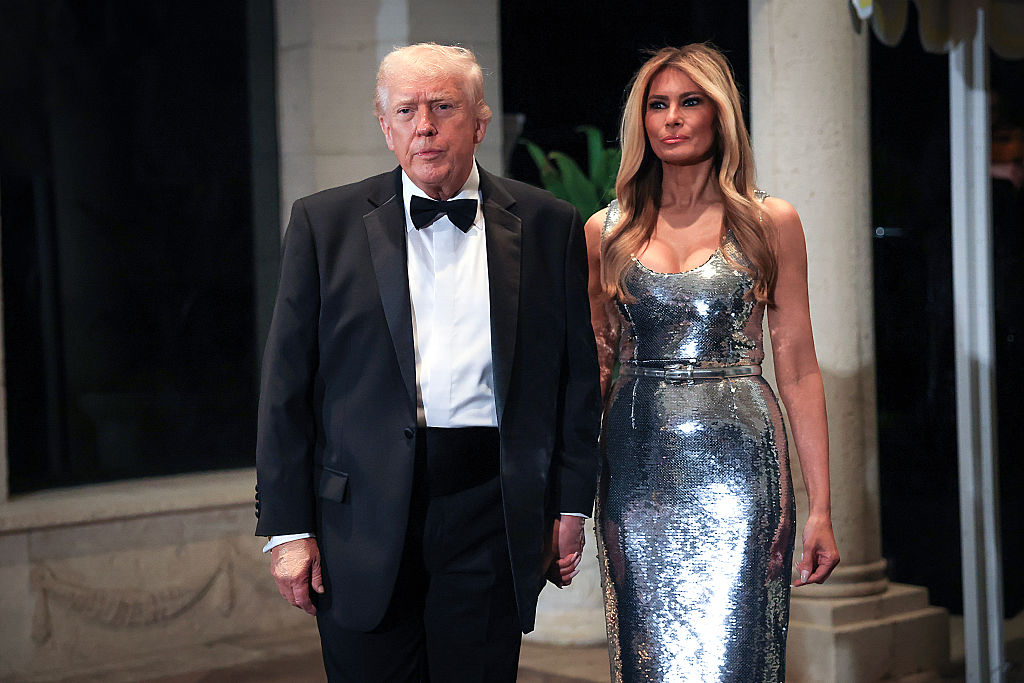

Not long ago, the “Mar-a-Lago face” seemed inescapable — a viral shorthand for an exaggerated cosmetic aesthetic marked by heavy bronzing, sharply sculpted cheeks, overly plumped lips and high-gloss polish. Think Melania Trump, Kristi Noem and Karoline Leavitt. The look spread quickly across social media, fueled by influencers, cosmetic providers and political meme culture that framed it as both aspirational and satirical.
But as quickly as it rose, the trend may already be losing steam.
According to recent reporting from USA TODAY, cosmetic professionals and social media watchers are beginning to see signs of fatigue. Searches and inquiries tied directly to the “Mar-a-Lago face” label have slowed, and online conversation has shifted toward newer aesthetics. Despite its ubiquitous appearance at the Trump’s New Year’s Eve party, what once felt like a dominant cultural signal now registers more as a punchline or perhaps a relic of a particularly loud political moment.
That trajectory isn’t unusual. Beauty trends shaped by algorithms tend to burn fast and fade faster. The more extreme and recognizable the look, the quicker it becomes caricature. Last year, Salon previously explored the Mar-a-Lago face as part of a broader pattern in which politics, identity and aesthetics collapse into a single visual code. But even politically charged aesthetics aren’t immune to trend cycles.
Start your day with essential news from Salon.
Sign up for our free morning newsletter, Crash Course.
What remains, though, is the lesson the trend offered while it lasted. The Mar-a-Lago face revealed how ideology can become aesthetic performance, how political identity can be signaled visually rather than verbally, and how consumer culture eagerly monetizes belonging. Cosmetic procedures, once framed primarily as personal choice, became a form of affiliation, something to display, post and brand.
As the look fades, it leaves behind questions rather than permanence. It seemed to almost reflect the intersection of both deeply held beliefs and a moment when politics and influencer culture collided at the right time The Mar-a-Lago face may no longer dominate feeds, but its rise and now decline underscores how quickly even the most politicized trends can lose power once the algorithm moves on.
