
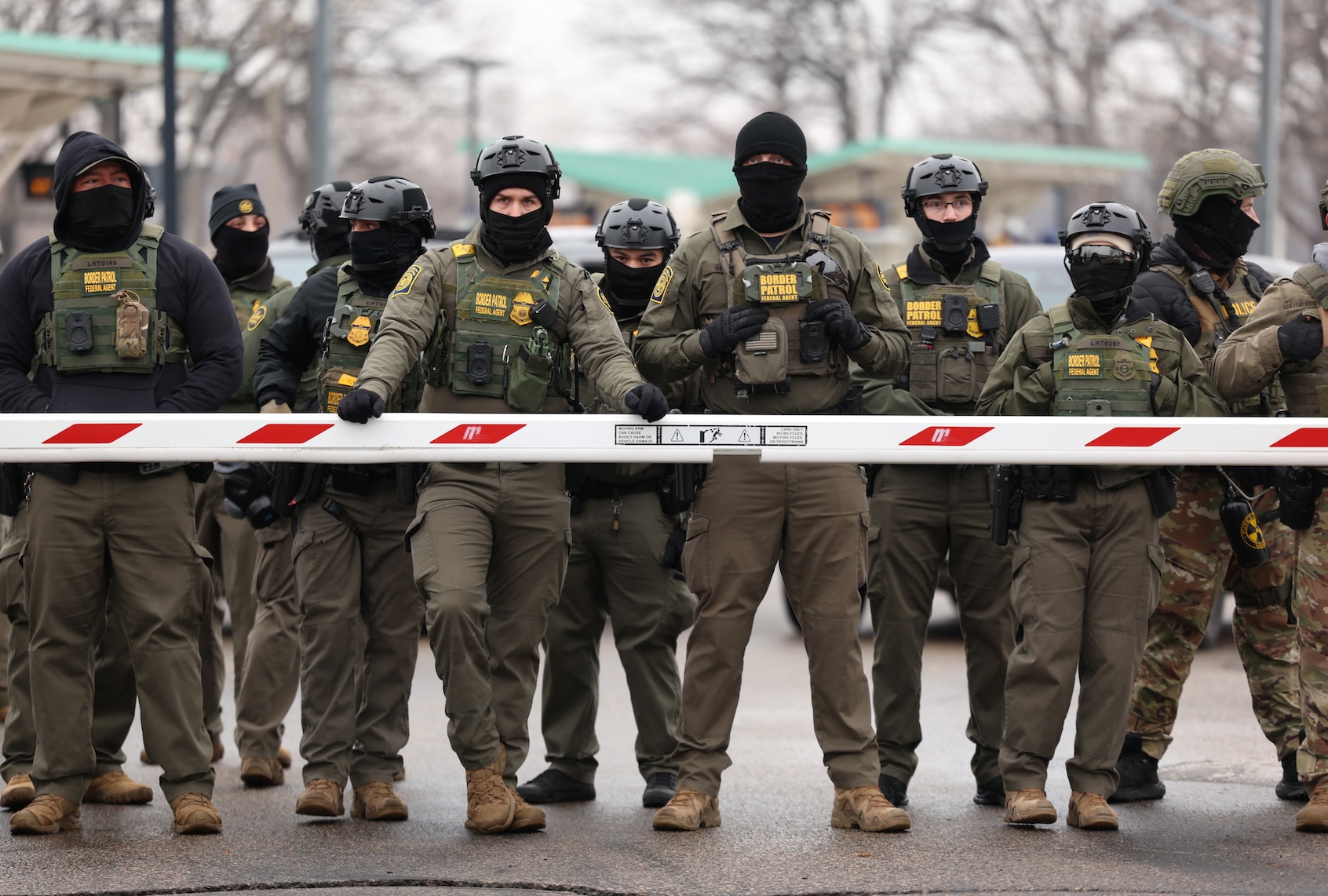

As the Trump administration’s crackdown on immigration continues and the administration prepares the military for deployment, Minnesota organizers describe Immigration and Customs Enforcement’s presence as so pervasive and violent that some question whether the deployment of the actual military would even affect conditions there in practical terms.
Christa Sarrack, the president of Unite Here Local 17, a Minnesota hospitality workers union, told Salon that union members were afraid to go to work in hotels and airports in particular due to the ICE presence there.
“Many are choosing to just stay home and not go to work because of that fear. And this is across the board, regardless of immigration status,” Sarrack said. “It seems that ICE doesn’t really care about immigration status. It is just about the color of their skin. That’s how our membership is feeling. At the airport, we have had 15 members who have been detained.”
Sararck said that if the federal government cared about the safety of Minnesotans, it would pull ICE out of the state. Still, Sarrack noted, ICE’s behavior in the city — which has included snatching immigrants, citizens, protesters and bystanders alike — has sparked fierce resistance, which culminated Friday in a city-wide general strike.
Billed by organizers as “ICE Out of Minnesota: Day of Truth and Freedom,” the protest is a product of collaboration between unions, faith leaders and community organizations. It also acts as a call for national leaders and those in cities that have not yet experienced the ICE treatment to take heed. The day will feature an economic blackout, with organizers calling on those who can to not go to work and not to shop. School closures were already planned due to a dangerous storm bringing temperatures as cold as below 21 degrees to the region.
“We refuse to participate in the economy that is ripping our neighbors from us, that is destroying families.”
So far, Gov. Tim Walz, a Democrat, has called on ICE to leave the state, alongside Minneapolis mayor Jacob Frey. Since the killing of Minneapolis resident Renee Nicole Good by ICE officer Jonathan Ross earlier this month, tensions have escalated between the state and federal authorities. Trump’s Justice Department has launched an investigation into Walz and Frey with Trump’s former personal attorney, Todd Blanch, who now serves in the DOJ, accusing them of “terrorism.”
Trump has also ordered the military police to prepare for deployment to Minneapolis and has threatened to invoke the Insurrection Act, a 19th century law that could empower him to deploy active duty military in Minneapolis.
Shannon Gibney, an organizer with Minneapolis Families for Public Schools, one of the groups participating in the Friday protest, told Salon that she hoped those in power would take notice of the action. She also highlighted a recent House bill that passed Thursday, which would funnel $10 billion into ICE, thanks to seven Democrats voting in favor.
“All this money is going towards this mass deportation complex, and so the idea is just to refuse,” Gibney said. “We refuse to participate in the economy that is ripping our neighbors from us, that is destroying families.”
Gibeney has been helping to raise money and resources for families with children at public schools and said that families have needed help with everything from making rent to putting food on the table since ICE’s operations in Minnesota started. The organization has helped orchestrate the delivery of groceries and household products to these families since ICE’s blitz on Minnesota began.
We need your help to stay independent
“There are families that haven’t been able to work because they can’t leave their house for fear of being deported,” Gibney said. “Then the other huge need that we have is rent. We’re pushing the Walz administration for an eviction moratorium, but that’s not looking super likely at the moment.”
In her own experience, Gibney has seen ICE conducting early morning raids in South Minneapolis. One Saturday morning, she said, she was woken up by her dog around 6:30 am because ICE was in the process of taking two of her neighbors, people that she and others in the community are still working to locate.
“We have been trying to track down who was taken for a week, more than a week, and we cannot, we cannot find any information. They’re trying to detain people and then send them to Texas,” Gibney said, adding that organizers have been trying to support those detained by ICE as soon as they can. “So this information is crucial to interrupt the process.”
Jill Garvey, the co-director of States at the Core, a rapid response organization that has worked in multiple states affected by ICE, told Salon that she doesn’t see how even the military, which has been put on alert for a potential deployment, could further militarize the federal presence in the Twin Cities.
“I can’t imagine deploying the military to Minneapolis will change much, given the current reality that the city is already overwhelmingly occupied by armed forces,” Garvey said. “In my opinion, additional armed forces are meant to escalate tensions and fear, and perhaps normalize these types of developments for other cities.”
Start your day with essential news from Salon.
Sign up for our free morning newsletter, Crash Course.
Garvey, who has been working in Minneapolis since the ramp-up of ICE operations there, said that people can barely leave the house or navigate the city without interacting with ICE in some way, whether it’s in traffic, at work, at a shopping center or in their own neighborhoods.
One issue that Gibney noted is that, despite myriad videos showing ICE deploying so-called “less lethal force” against Americans, officers themselves are not eager to confront larger groups of people, understanding that their actions and presence is incredibly unpopular. Instead, Gibney said, the officers prefer to grab people and then quickly make their escape.
“They are hated here. I just don’t think they’re going to come to a place where there are literally thousands of people who want them out and are marching in sub zero weather,” Gibney said of the prospects of ICE confronting protesters Friday.
Read more
about this topic
