

You had to know it was coming.
Ten days ago, as he closed out the annual Light of Day festivities at Red Bank, New Jersey’s Count Basie Theater, Bruce Springsteen stepped up to the plate and bemoaned the troubling nature of American discourse and the fragile state of our democracy.
“Right now we are living through incredibly critical times,” he remarked. “The United States, the ideals and the values for which it stood for the past 250 years, is being tested like it has never been in modern times. Those values and those ideals have never been as endangered as they are right now. If you believe in the power of law, and that no one stands above it,” he continued, “if you stand against heavily-armed masked federal troops invading an American city, using gestapo tactics against our fellow citizens, if you believe you don’t deserve to be murdered for exercising your American right to protest, then send a message to this president.”
This past weekend, as tensions in Minnesota continued to mount, Springsteen turned to the medium that made him into a household name and recorded a protest composition. “I wrote this song on Saturday, recorded it yesterday, and released it to you today in response to the state terror being visited on the city of Minneapolis,” he reported. “It’s dedicated to the people of Minneapolis, our innocent immigrant neighbors and in memory of Alex Pretti and Renee Good. Stay free, Bruce Springsteen.”
Titled “Streets of Minneapolis,” the song’s very name hearkens back to Springsteen’s 1993 paean to the victims of the AIDS crisis. As with “Streets of Philadelphia,” Springsteen’s latest protest song serves as a call to action by challenging us to see the humanity in our neighbors, both friend and foe. “We’ll take our stand for this land, and the stranger in our midst,” Springsteen sings. “We’ll remember the names of those who died on the streets of Minneapolis.”
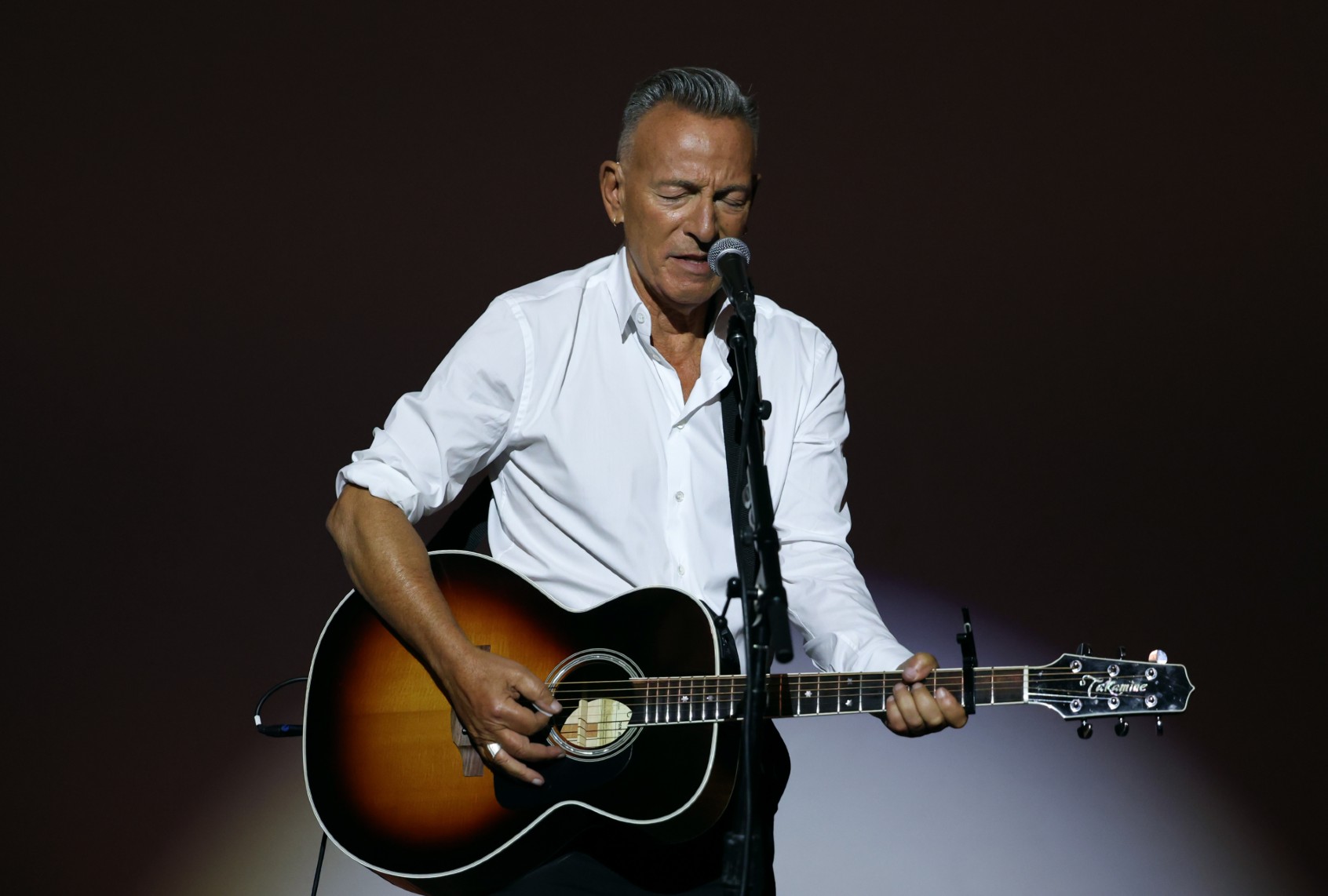
It’s a moving song, to be sure, with Springsteen’s vocals and guitar ably supported by Ron Aniello on bass, drums and keyboards, along with Patti Scialfa providing harmony vocals. The personnel is rounded out by the E Street Choir, comprised of Ada Dyer, Curtis King, Lisa Lowell and Michelle Moore. And better still, Springsteen borrows the melody, at least in part, from “Desolation Row,” the classic number from Minnesota’s own Bob Dylan, who knows a thing or two about protest tunes.
At its core, Springsteen’s populist ethics has long entreated listeners to seek out the humanity in others and find common ground. “Streets of Minneapolis” is no different. Even still, the song joins a scant few artists engaging in protest music. Indeed, in spite of the polarization and rancor that characterize American life over the past decade, there has been an observable dearth of protest songs in stark contrast, say, with the 1960s, when they numbered in the thousands.
Still, the release of “Streets of Minneapolis” finds Springsteen’s voice joining such luminaries as Demi Lovato’s “Commander in Chief,” which asked pointed questions about the rampant nature of suffering and greed, and Fiona Apple’s “Tiny Hands,” which was released contemporaneously with the 2017 Women’s March. And then there’s A Tribe Called Quest’s “We the People . . .,” which addresses alarming instances of racism and xenophobia in our social fabric.
Want more from culture than just the latest trend? The Swell highlights art made to last.
Sign up here
“Streets of Minneapolis” also arrives on the heels of Lucinda Williams’s protest album “World’s Gone Wrong,” which examines the corrosive landscape of today’s political climate. And the musical commentary has by no means been limited to American artists. Scottish rockers Franz Ferdinand’s “Demagogue” takes issue with the heightened political rhetoric of our age. Even Depeche Mode, those stalwart Englishmen from the Second British Invasion, got involved. With “Going Backwards,” they derided the social de-evolution of our politics and the ongoing loss of our shared humanity.
It is worth noting that the protest songs of the Civil Rights era and the anti-war movement were often met with disdain from the establishment. Yet by the end of the Vietnam era, the great majority of Americans were convinced about the value of celebrating the diversity of our community and rethinking an unjust war. With the advent of songs like “Streets of Minneapolis,” we can only hope for a similar reevaluation in the coming years as Americans cleave to their better angels.
Read more
about Bruce Springsteen
