

As I encounter more middle-aged people who are only recently coming around to the concept of cooking as a crucial, money-saving life skill, it seems the concurrent embrace of individualized social media and decline in instructive TV content may have something to do with their being late to that discovery. After all, foodie content is everywhere these days. Approachable, practical counsel on how to make it, however, is no longer as passively accessible as it once was.
Here’s what I mean by “passively accessible,” using my own admittedly dated experience as an example: Julia Child played a central part in developing my confidence in the kitchen. I thought of her as a babysitter of sorts, although I never met the woman in person. But “The French Chef” and “Julia & Company” share equal space in my memory with PBS’ children’s programming because to me, they all served the same purpose.
Foodie content is everywhere these days. Approachable, practical counsel on how to make it, however, is no longer as passively accessible as it once was.
While “Sesame Street” and “The Electric Company” sharpened my literacy, Child helped me understand that the kitchen is a creative lab. By the time I was five or six, I was trusted with chopping boiled eggs to be folded into tuna salad. Soon after that, I mixed up brownie batter and cookie dough. Many decades later, creating meals from scratch – not because I have to, but because I want to – is a cherished avocation.
Over the years, I expanded my teacher roster to include Nigella Lawson, Ina Garten, Martha Stewart, Alton Brown and others, each of whom diversified my skillset. On Food Network, Brown’s “Good Eats” exposed me to the science behind culinary methodology. Syndicated episodes of “Martha Stewart Living” upheld the attainability of elegance and the value of precise execution, appealing to my inner overachiever. Lawson’s “Nigella Feasts” and “The Barefoot Contessa” gave me permission to relax, which, in the long run, is better for my blood pressure.
I will never know whether I would have sought out those lessons or eaten as well during my broke 20s if my malleable toddler brain hadn’t absorbed Child’s lessons and coaxed me to put the most remedial of them into action, albeit with plenty of adult supervision and assistance. What I have noticed, however, is the lack of their equivalents in our present media maelstrom.
Today, budding chefs and other nascent artisans are tossed into the algorithmic rapids to figure out for themselves, say, the difference between frying and sautéing, or what it means to cook pasta to the al dente phase. This is not to say that information isn’t available; quite the opposite. Between influencer blogs, #FoodTok, and similar content on Instagram, YouTube and other platforms, hundreds of versions of such lessons (of varying utility and quality, granted) can be put into practice in any of the millions of recipes available to try.
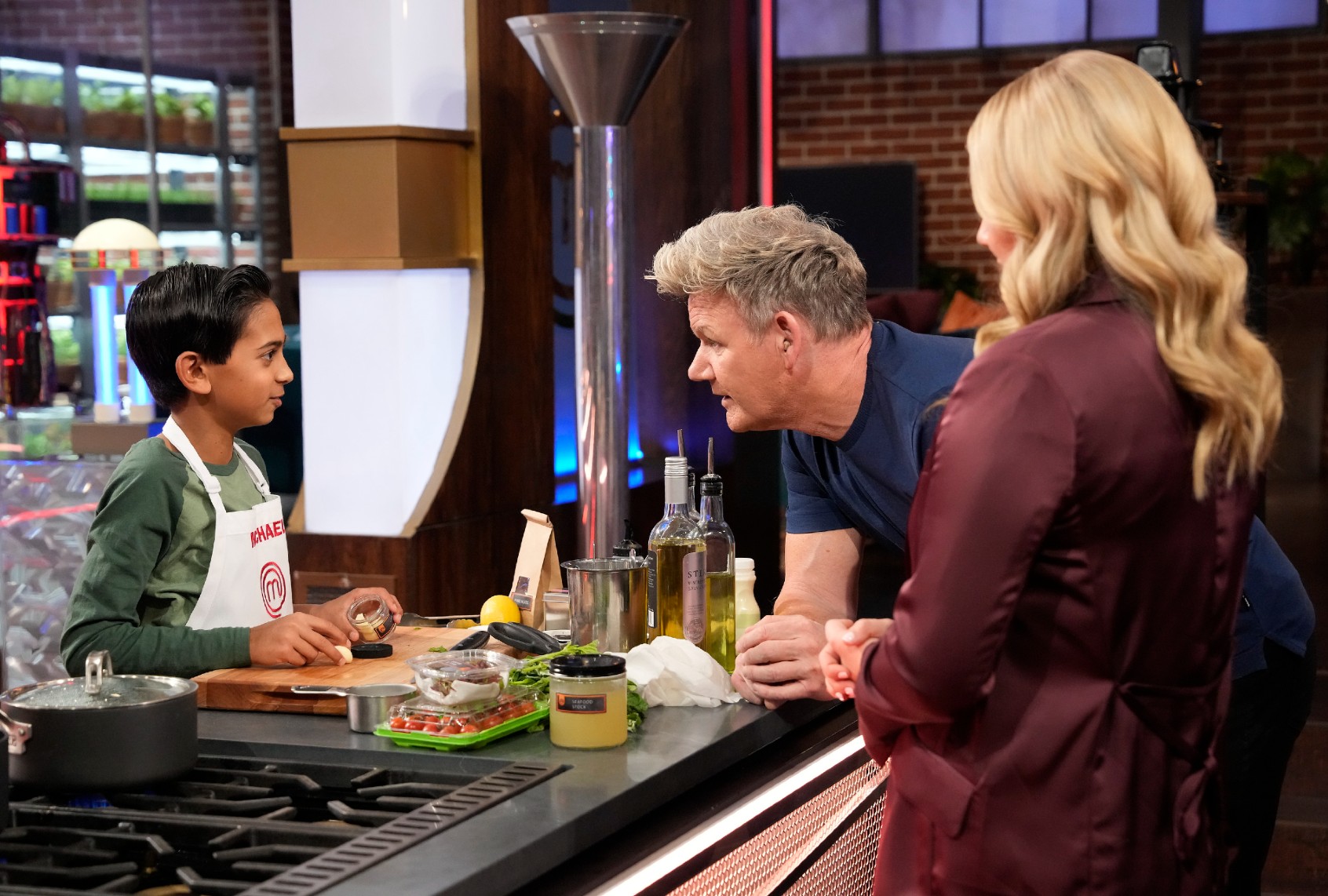
Meanwhile, culinary competition is its own highly prolific reality TV subgenre. On Fox, Gordon Ramsay’s “Hell’s Kitchen” franchise has been forging celebrity chefs in the fires of the host’s verbal abuse for decades. Bravo responded with a politer version in “Top Chef.” Netflix churns out an array of contests pitting dish against dish, including “Next Gen Chef” — an entirely separate show from the Ramsay co-hosted “Next Level Chef,” which premiered a new season this week.
As for Food Network, the one-time standard bearer of instruction and inspiration long ago abandoned that original mandate in favor of “Chopped” and other high noon-style cooking and baking battles, along with endless reruns of Guy Fieri’s “Diners, Drive-Ins and Dives.”
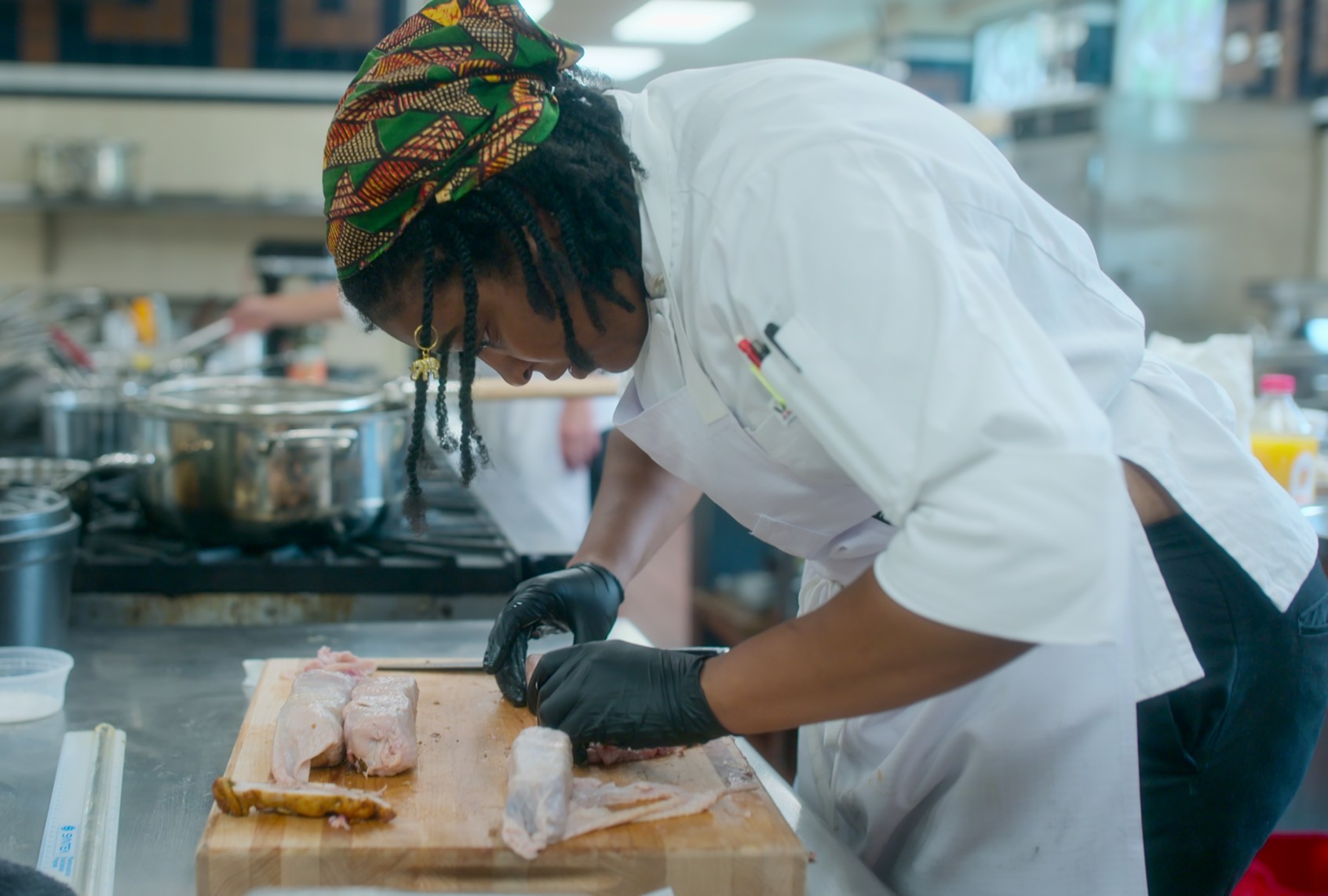
(Netflix) Chef Courtney Evans in “Next Gen Chef”
Fieri also hosts “Guy Fieri’s Tournament of Champions” and “Guy’s Grocery Games,” and has a new series, “Flavortown Food Fight,” set to premiere in March. It will join “Baking Championship: Next Gen,” “Worst Cooks in America,” “Beat Bobby Flay” and . . . you get the idea.
Let me clarify that this is not some “dinosaur rails against extinction-level comet collision” rant. There’s no reversing this trajectory, and most adventurous culinary enthusiasts wouldn’t want that. But we might remark on the breadth of its impact as another result of transformed educational priorities, monoculture’s demise and individualized information streams.
This is how technological progress works. The old gives way to the new. But that also marks a clear transformation in culinary programming from emphasizing the development of proficiency to encouraging consumption.
For much of the 1900s, family and consumer sciences, more broadly known as home economics, were a staple of educational curricula in most American communities. (I didn’t attend a school where such classes were offered, hence my mother’s embrace of Child’s supplemental education and other PBS shows.) Such classes helped students develop confidence in the kitchen and other areas of household maintenance, including budgeting. But enrollment in FCS classes has been in steady decline since the late 20th century. Their availability was further endangered in the aughts by the shifted emphasis to testing instead of skill development spurred by the No Child Left Behind Act of 2001, as explained in a 2018 NPR story.
This was also when Stewart’s “Living,” Rachael Ray, Emeril Lagasse and other Food Network celebrities were ascendant, serving much of the same purpose Child and her contemporaries did for a new generation of young adults and their children. Social media’s explosion in the mid-aughts initially amplified these celebrities’ ubiquity until legions of their loyal TV viewers and pupils launched their own blogs and social media channels.
This is how technological progress works. The old gives way to the new. But that also marks a clear transformation in culinary programming from emphasizing the development of proficiency to encouraging consumption, and the fade-out of the shared cultural exploration Food Network once chaperoned.
We need your help to stay independent
I’m not the only one who’s noticed this. “I can tell you when Food Network started losing the plot, baby,” said Tori Paschal, a digital creator who posted this spot-on, hilarious observation in a TikTok video. “It was when my damn lineup became more cooking challenges than actual cooking, like it used to be.”
Paschal goes on to list some of the channel’s Hall of Famers, including Lagasse, Brown, Giada DeLaurentiis and Paula Deen (“before we found out how racist she was,” she said) before saying, with no small portion of frustration in her voice, “Before there was TikTok and before there was YouTube, we all had to go to Food Network. Rachael Ray gave us EVOO — extra virgin olive oil. Gotta have a garbage bowl when you’re cooking!
“Sandra Lee [was] the very first housewife to show us how cool day drinking was, but we couldn’t comprehend because we were 10, 12 years old, and it’s noon and we were at our grandmama’s house,” Paschal continued to riff. “Food Network started losing its originality when it started to be more ‘Iron Chef America’ . . . cake-offs and ‘Iron Chef’ and ‘Chopped’ and all that. I’m like, ‘OK, everybody doing it for the money, ain’t nobody doing it for the food no more.’”
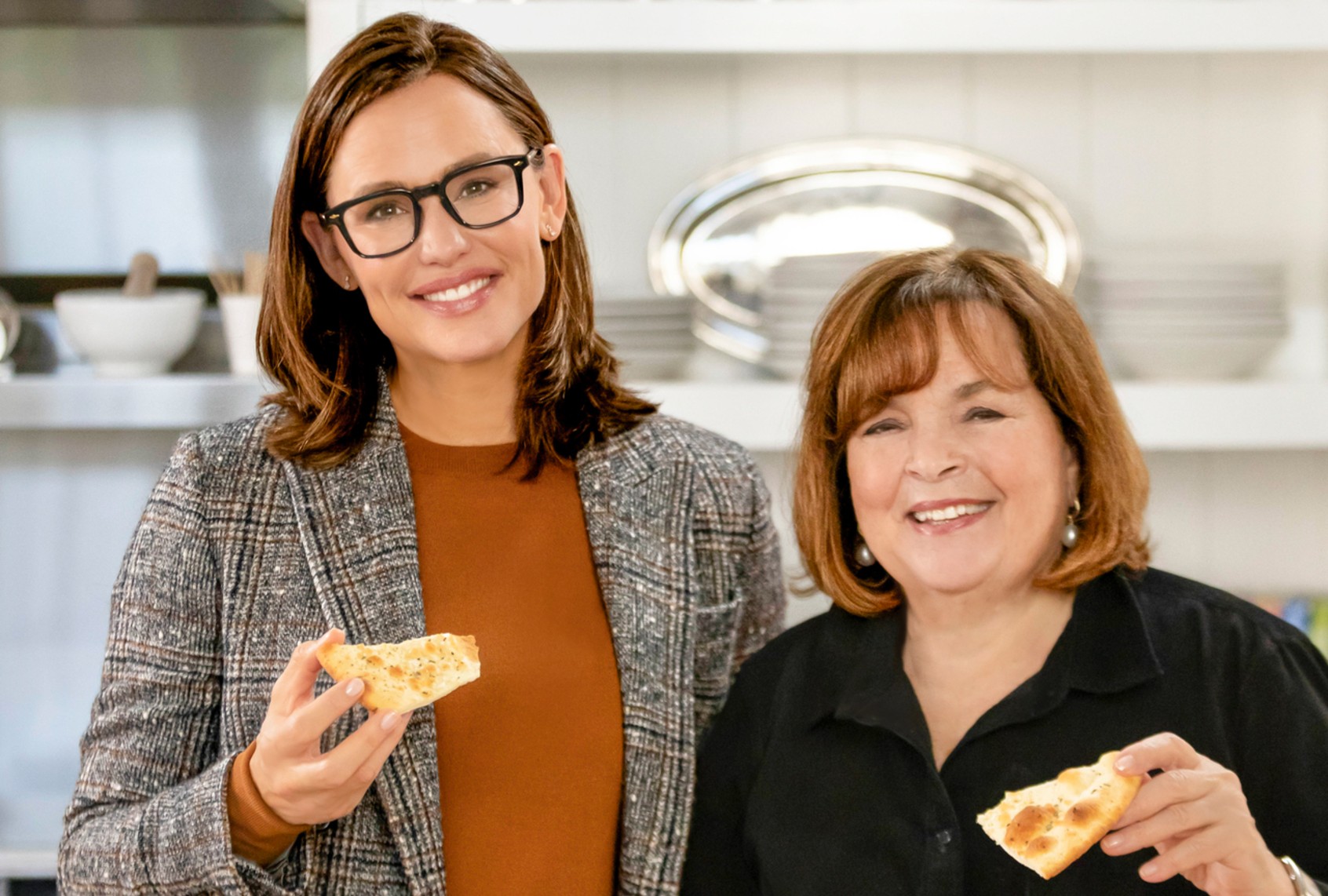
(Food Network) Jennifer Garner and Ina Garten in “Be My Guest with Ina Garten”
Mind you, the Food Network greats are still seen as authorities, but primarily in their capacity as competition judges or hosts. On “Be My Guest with Ina Garten,” the Barefoot Contessa shares her cutting board with A-list celebrities like Jennifer Garner and Tina Fey, which is a bit light on utility and the common touch. Lawson, meanwhile, has just been announced as Prue Leith’s replacement on “The Great British Baking Show,” which, in its way, encourages amateurs to hone their baking technique by featuring other amateurs showcasing theirs, step by step . . . in, yes, a baking tourney.
Shows like these and “Top Chef” — which I love, by the way — teach us to genuflect at the altars of celebrity culinarians, viewing their restaurants and signature dishes as luxury experiences as opposed to showing regular folks how to think innovatively about dinner. They can create an intimidating aura around the kitchen, and while that often makes fantastic television, it also distances us from the accessibility yesterday’s TV chefs used to preach.
Filling that gap, we have the Internet and dozens of influencers post short montages of their latest creations, which may not necessarily pass our taste tests. Since AI invaded social media, some of those influencers aren’t even human. It follows that their tips and hacks don’t work. They were never meant to, because the prevailing understanding is that content is primarily a feast for the eyes and shortened attention spans.
Shows like “Top Chef” teach us to genuflect at the altars of celebrity culinarians, viewing their restaurants and signature dishes as luxury experiences as opposed to showing regular folks how to think innovatively about dinner.
Earlier this week, New York Magazine tech columnist John Herrman published a piece called “Welcome to desocialized media” that explains the contradictory outcome of the social media revolution, where algorithms are tailored to deliver what they determine we want to us instead of encouraging exploration. He calls this “[the] long (and nearly complete) process of platform desocialization.”
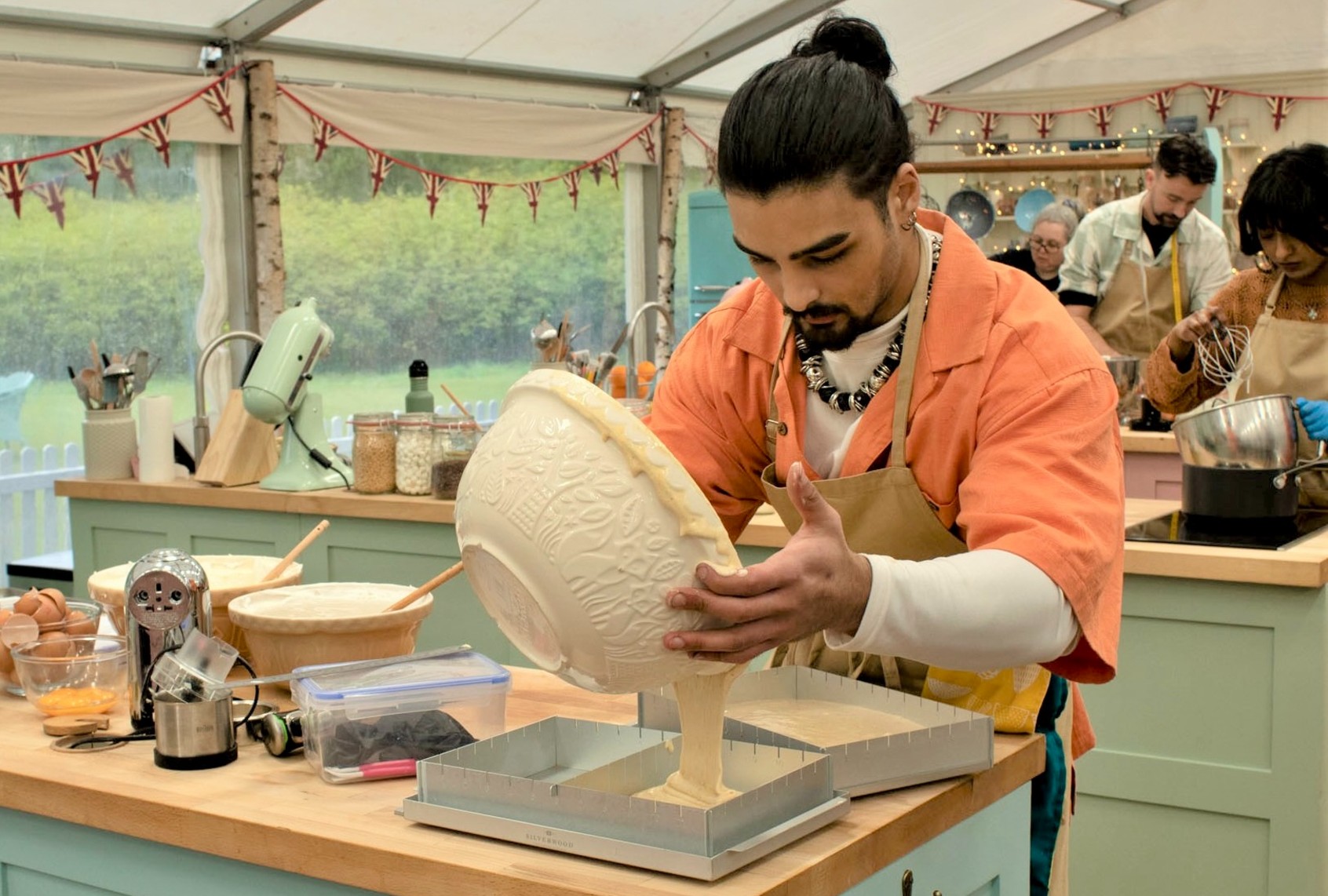
(Channel 4 / Love Productions ) Dylan Bachelet in “The Great British Bake Off”
“Platforms originally defined by keeping up with people you know, or have at least heard of, become something fundamentally different,” Herrman writes, adding the pivot from encountering things on purpose to seeing content an algorithm predicts we’ll engage with, “remains an underrated factor in just how strange the internet — and downstream entertainment, and media, and politics — can feel in 2026.”
And, I’ll add, how additionally removed we might feel from acts and practices that strengthen our life satisfaction, like cooking.
That skill and any deeper affinity we may develop for it is typically passed from one person to another.
Want more from culture than just the latest trend? The Swell highlights art made to last.
Sign up here
My mother shaped my love of gastronomy more intimately than Julia Child. But I was her fifth kid, and by the time I came along, she’d returned to work. Plopping her youngest in front of our local public TV station’s daytime lineup meant she didn’t have to worry about me being exposed to what she viewed as unsavory material. As a bonus, I’d learn a few things while she availed herself of uninterrupted free time, which wasn’t really free, since I’d often hear a running vacuum or dishes clanking in the sink.
Because of what I picked up from “The French Chef,” I eventually shadowed and assisted her in chopping vegetables or cutting shortening into flour without hesitation, internalizing many of her recipes to the degree that I can make them taste just like they did when she prepared them. It keeps her present in my life nearly a decade after she died.
An endless buffet of Internet content is available to help anyone of any age develop the same competency and desire. Finding it starts with the urge to make something, along with the desire to learn and improve at making it. Such appetites sharpen with maturity, but are much more enjoyable if we learn the baby steps when we’re young.
But it seems we haven’t quite figured out an updated recipe substitute for what we had in the time before TikTok and “Chopped.” Maybe one isn’t forthcoming. But I echo Paschal’s mourning: “Lord, don’t it just break your heart,” she said. “It’s like looking at somebody who has so much potential, then it just went downhill.”
Anyone who’s contended with a broken sauce or a burnt roast knows that happens on occasion. They also know they can start over and remake what was lost. Contestants on “The Great British Baking Show” do that all the time.
Read more
about how food connects us, and how we connect to food
