
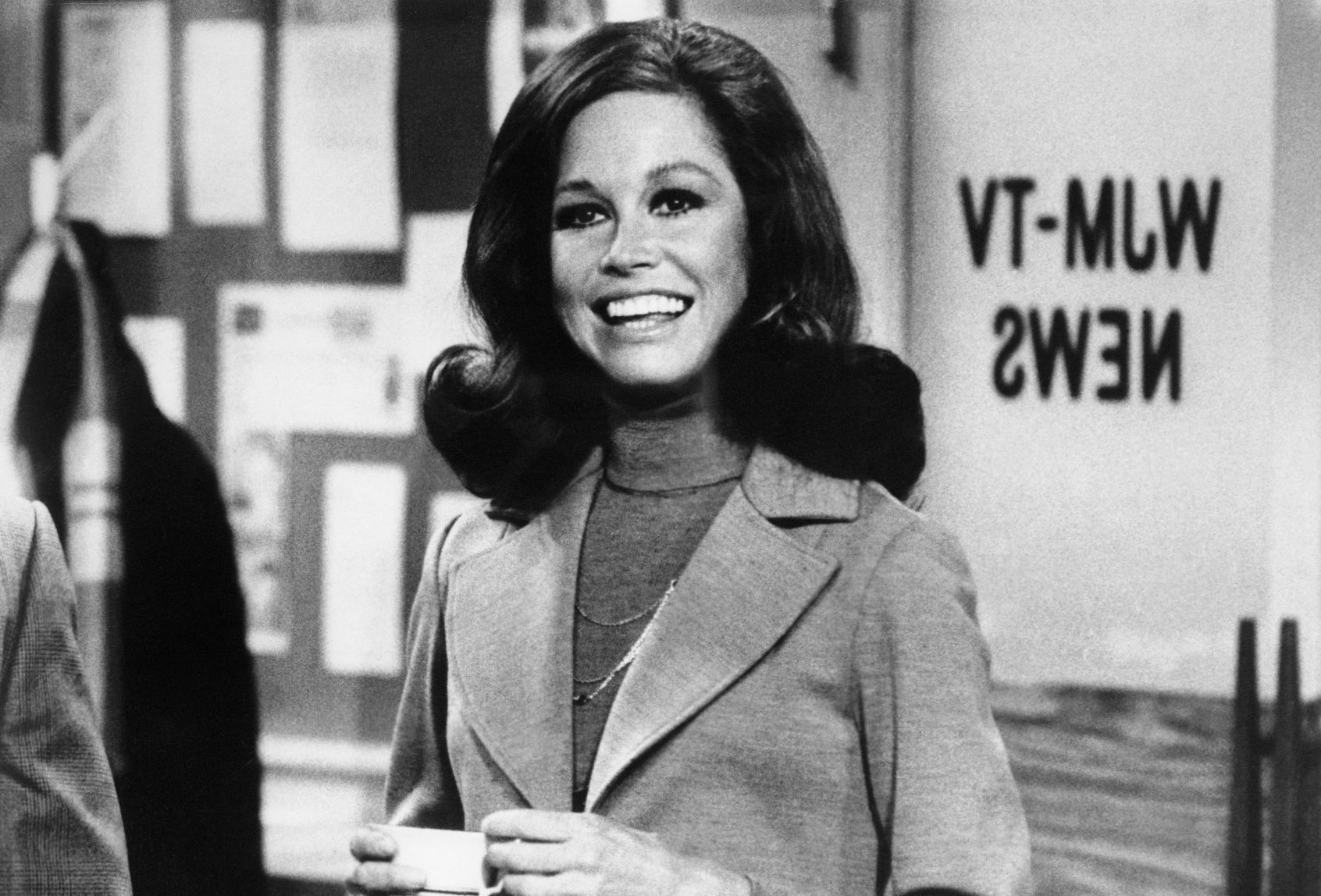

Even if you haven’t seen an episode of “The Mary Tyler Moore Show” in years, you can probably picture it via a single freeze-frame. You know the one: Mary Richards, smiling brightly amid the herd gathered at a crowded Minneapolis intersection, suddenly whirls and flings her tam-o’-shanter into the air. Probably the most famous frozen moment in film and TV, that carefree toss tells us everything about a woman determined to live happily ever after, on her terms.
In Mary’s hometown, women stand up for themselves, and the men at their side love them for it.
What comes to my mind, though, are the wide shots of Mary traveling the pedestrian path beside Lake of the Isles with long, purposeful steps, unhurried yet anything but slow. Over its seven seasons, which aired on CBS between 1970 and 1977, “The Mary Tyler Moore Show” introduced three versions of its opening credits sequence. Each highlights Mary’s professional evolution and, of course, her changing wardrobe and hairstyle.
The only constants are her signature hat toss and those solo lakeside walks, part of a montage illustrating her perpetual forward movement. Moore replicates that stroll in different seasons, but the most memorable shows Mary marching beside a snow-blanketed lake doubling as an unspoiled canvas, wide with possibility.
To me, a Midwestern kid familiar with winter winds dragging their fangs across her face, Mary’s upright spine and sure gait set an example worth heeding. She didn’t hunch against the chill or under the press of society’s low expectations for a single, ambitious woman. Nothing got in the way of Mary Richards charging toward satisfaction.
The show introduces Mary to viewers, and Minneapolis, at the end of a long-term relationship and the beginning of a career at WJM-TV as an associate producer. As the only woman in WJM’s newsroom, her work life is a never-ending struggle for respect. Her boss, Lou Grant (Ed Asner), is a grump who drinks too much and hires her with the backhanded compliment of, “You know what? You’ve got spunk . . . I hate spunk!”
But Mary’s spirit proves to be unconquerable.
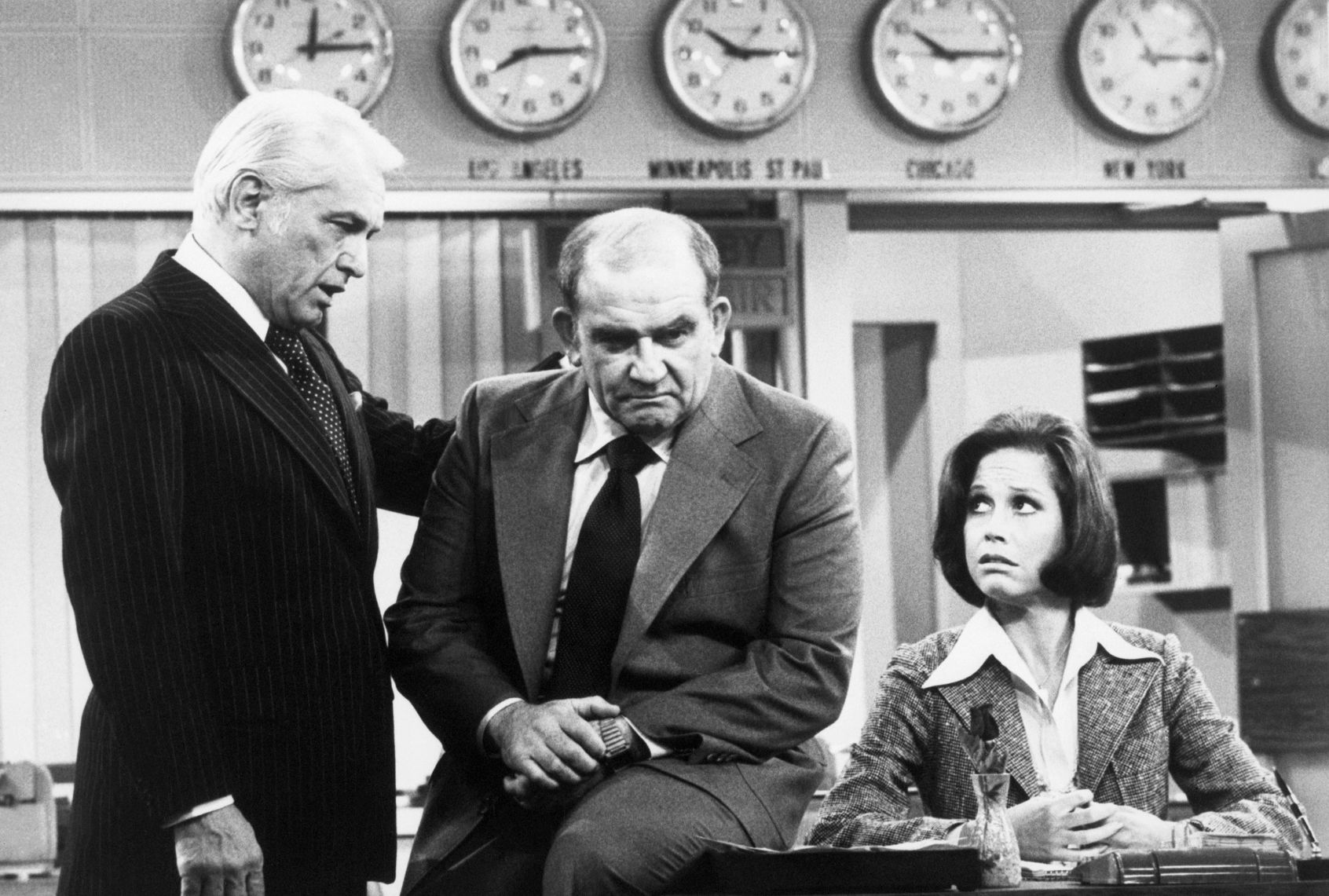
(Getty/Bettmann) “The Mary Tyler Moore Show” still featuring Ted Knight, Ed Asher and Mary Tyler Moore
“The Mary Tyler Moore Show” casts Minneapolis as progressive and neighborly, a bustling metropolis located between stereotypical Midwestern patriarchal stubbornness and a feminist future. In Mary’s hometown, women stand up for themselves, and the men at their side love them for it.
Let’s also remember that Mary Richards is a journalist dedicated to cutting through the fog to surface the truth,
Academics and critics herald “The Mary Tyler Moore Show” ensemble as one of television’s best, of any decade. Affectionate fans venerate the dialogue’s electric crackle and the cast’s peerless comedic timing. It’s tough to top the superlative energy Moore shared with Asner, Valerie Harper’s wisecracking Rhoda Morgenstern and Cloris Leachman as Mary’s smugly married downstairs neighbor, Phyllis.
Those names alone formed a powerhouse combo before Betty White joined the show’s fourth season as Sue Ann Nivens, WJM’s “Happy Homemaker” who’s as skilled at wrecking marriages as she is in schooling housewives on how to mix up a feather-light chocolate soufflé.
Let’s also remember that Mary Richards is a journalist dedicated to cutting through the fog to surface the truth, even if blustery anchorman Ted Baxter (Ted Knight) tended to be the station’s top haze belcher. Today, reporters and citizen news gatherers are risking their lives to tell us what’s really happening to Minnesota’s communities and families, and their clarifying accounts refute any government spin attempting to portray its people as less deserving of peace.
The killings of Renee Nicole Good and ICU nurse Alex Pretti at the hands of roving Immigration and Customs Enforcement officers have spurred protests nationwide, demanding they receive the justice the law guarantees its citizens that, so far, this administration is denying them. Minnesotans have responded by protecting each other — delivering groceries to neighbors too afraid to leave their homes, walking their kids to school and shielding immigrants in their midst.
When syndicated and cable reruns embroidered “The Mary Tyler Moore Show” onto our memory quilts in the ‘80s and beyond, the very idea that an American president’s viciousness would necessitate any of this was furthest from our minds. Instead, we absorbed the comforts the show spooned out while relaxing supine on our couches or splooted on bean bags, along with its optimistic prompts to aim for the clouds and keep smiling.
We need your help to stay independent
Few young women’s dreams of success weren’t built on Mary Richards’ blueprint; she epitomizes a woman hitting her stride. But you probably know that, courtesy of the many shows and movies paying homage to “The Mary Tyler Moore Show.” The “Girls” pilot announces the kind of young women that Hannah Horvath and Marnie Michaels want to be by mentioning their habit of falling asleep while watching Mary Richards work.
The friends leading “Broad City,” “30 Rock” and “Sex and the City” have been accurately described as Mary’s and Rhoda’s direct descendants. Others could only hope to be thought of that way.
Regardless, the desire to be “the Mary” is natural to anyone raised on “Mary Tyler Moore,” which describes pretty much anybody who remembers rotary dial phones or Nick at Nite. That covers untold millions of Boomers, Xers and Millennials to whom Moore demonstrated that sky-high career aspirations and happiness are a woman’s right.
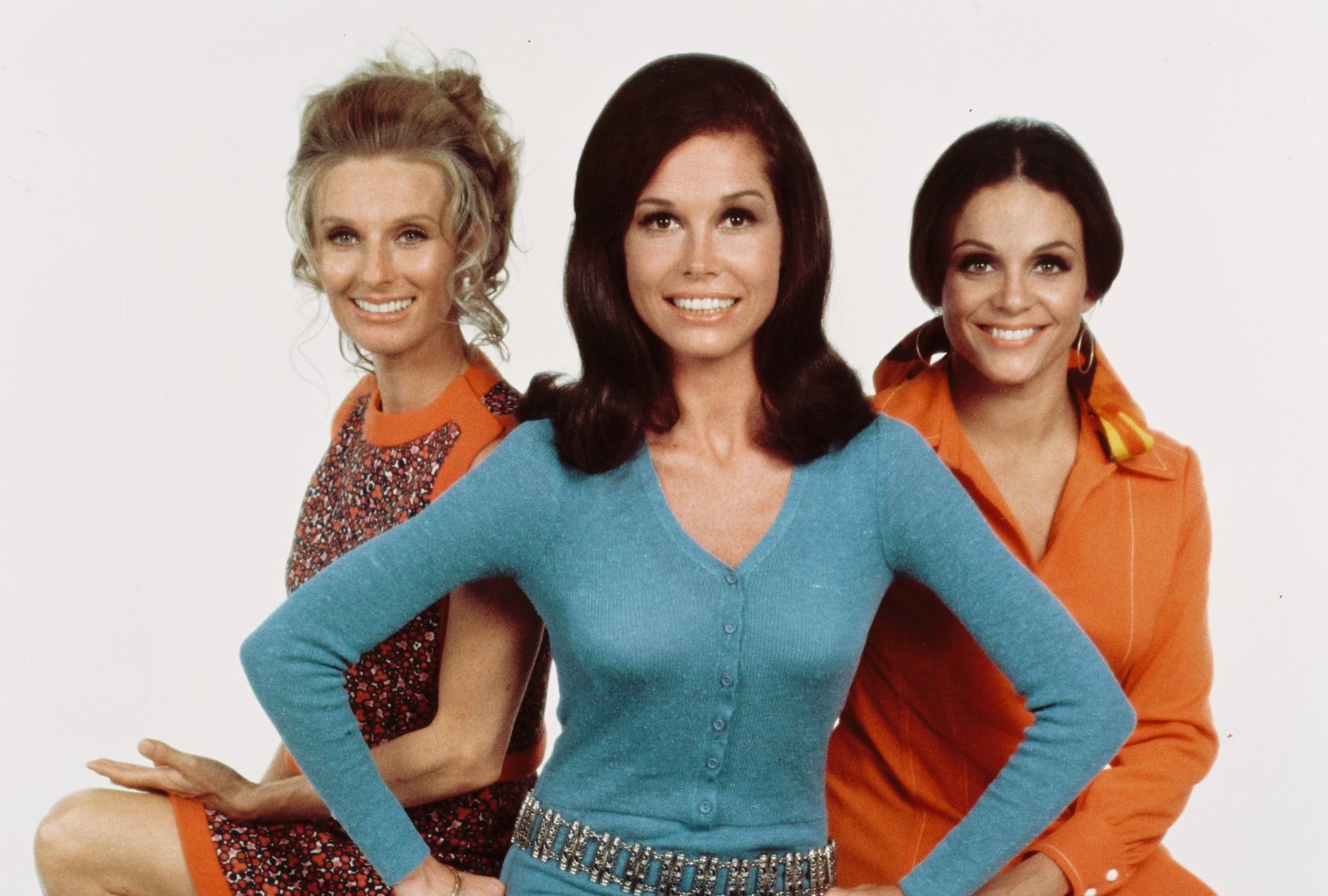
(Silver Screen Collection/Getty Images) From left to right: Cloris Leachman, Mary Tyler Moore and Valerie Harper in a publicity photo for “The Mary Tyler Moore Show,” circa 1974
In the third season premiere, Mary argues for equal pay when she discovers she’s making $50 less per week – a $385 pay difference in today’s dollars, after adjusting for inflation – than the man who did her job before her. (She eventually earns her pay parity by telling Ted to shut up in the middle of a newscast.) Along with navigating her male coworkers’ messy lives and moods, she pitches daring stories. In one fifth season episode she even goes to jail for refusing to reveal a source.
The show even became one of the first to center a queer character in a storyline when Rhoda breaks it to Phyllis that Phyllis’ cultured, fashionable and charming brother she wants to set up with Mary is single because he’s gay.
“The Mary Tyler Moore Show” never hammered the audience with the producers’ and writers’ progressive leanings. Indeed, in the 2023 documentary “Being Mary Tyler Moore,” streaming on HBO Max, friends revealed that Moore bristled at the feminist label despite producing her show under MTM Enterprises, the company bearing her initials that she cofounded with then-husband Grant Tinker.
Today, time spent with Mary Richards still has the power to uplift and comfort us as we witness what’s happening to the city she calls home.
Another great contradiction of “Mary Tyler Moore,” a show about a 30-something bachelorette secure in her husband-free existence, was that its guiding philosophy is personified by a woman who by that time had been married twice. If Moore and her creative team weren’t aware of how society viewed her and single women, CBS’ preview audiences reminded them by reacting poorly to Mary Richards as a divorcée.
To those viewers, she was indistinguishable from Laura Petrie, everybody’s favorite perky wife on “The Dick Van Dyke Show,” and they couldn’t get over the thought of Laura divorcing Van Dyke’s charming, devoted Rob. So after a rewrite, Mary Richards launches her best life from the shoals of a broken engagement instead.
What Moore believed in, even years before “Mary Tyler Moore” came to be, was a woman’s agency and the ability of the right man to encourage and support it.
“Women are, or should be, human beings first, women second, wives and mothers third. It should fall in that order,” Moore told David Susskind in a 1966 TV interview shared in the documentary. “And . . . if there’s enough thought and effort put into this attempt . . . it will not hurt the family, it will not hurt the work, but they can function very nicely together. I’m proving it.”
The memory of that exchange came back to me recently while considering the legacy of “Mary Tyler Moore” in the context of what’s happening in Mary Richards’ beloved Minneapolis. Characterizing Susskind’s impression of women as low in that exchange is diplomatic. Audiences may have loved Laura Petrie, but Susskind denigrated her as “sort of a strained idealization of the American woman as she thinks she is,” in almost the same breath that he describes wives as “wretched nags.”
That doesn’t sound too far removed from right-wing influencers smearing single and/or childless women as miserable cat ladies. Some narratives related to Good’s killing surfaced another dehumanizing acronym: Talk-show host Erick Erickson dubbed her an AWFUL, reducing the unarmed mother of three to just another affluent, white, female urban liberal antagonizing the armed men rounding up her neighbors by filming them. What befell her, then, she brought on herself.
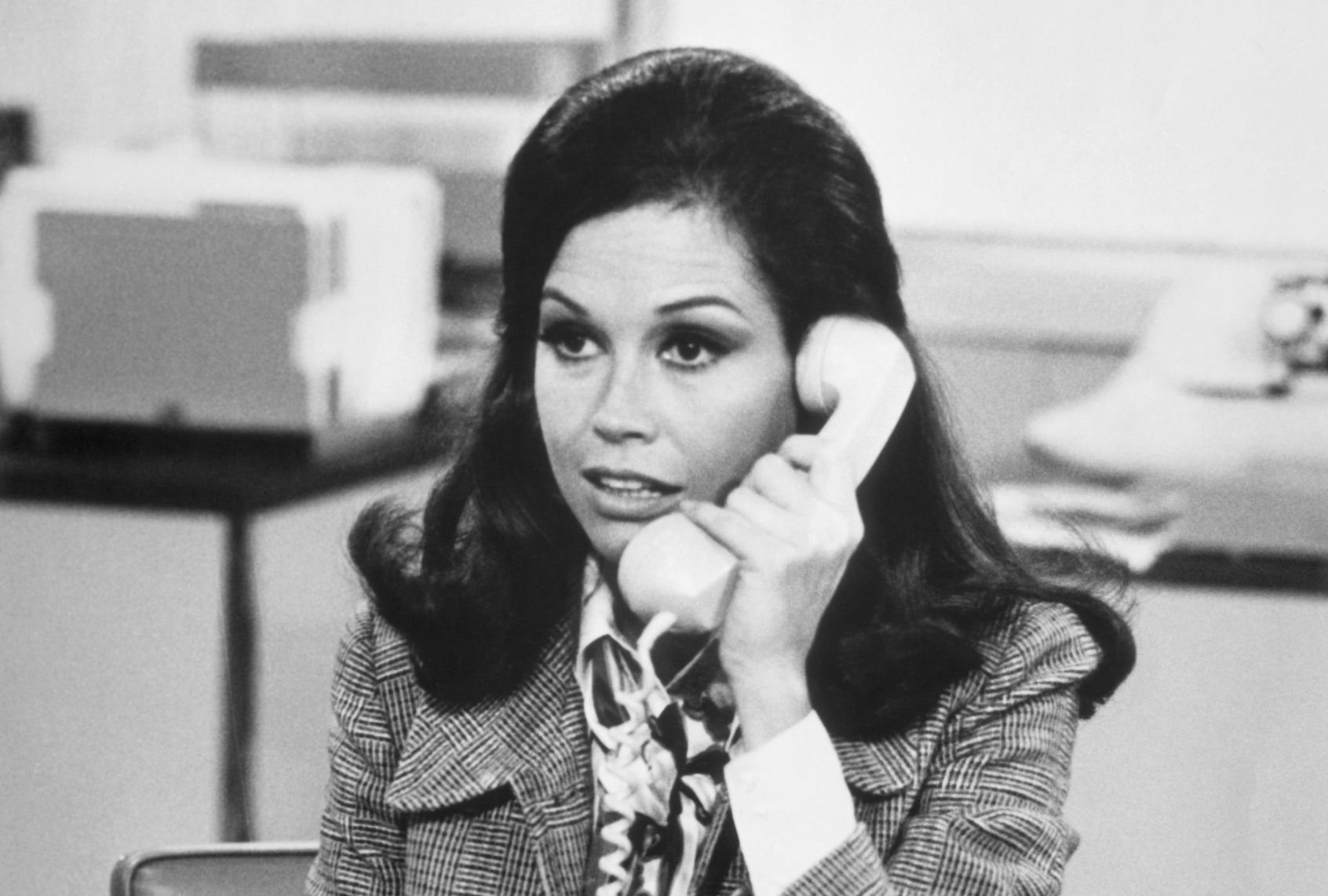
(Getty/Bettmann) Mary Tyler Moore talking on the phone in a scene from “The Mary Tyler Moore Show
Living without shame or apology in the dawning days of women’s liberation means Mary Richards also would have been labeled thusly by those same people. That most still cherish the character and the woman who played her as national treasures provides some relief.
Want more from culture than just the latest trend? The Swell highlights art made to last.
Sign up here
Nine years after Moore’s death in 2017, and following the revelations shared in “Being Mary Tyler Moore” and other appraisals, we can embrace the complexity of her legacy without losing sight of what her work did for the world. She died days after the Women’s March, a galvanizing nationwide event attended by many who count her among the forces that awakened their feminism.
Today, time spent with Mary Richards still has the power to uplift and comfort us as we witness what’s happening to the city she calls home. That makes it especially baffling to see that “The Mary Tyler Moore Show” isn’t available on a major streaming service. You can pay for it, of course. Philo subscribers can watch it on demand, and episodes can still be encountered on a hunt through the cable hinterlands.
Otherwise, most episodes and seasons are available on YouTube. We’ll take our balm where we can find it, especially now. In any era, whether the world felt bright or menacing, Moore’s depiction of a single, independent woman coming into her own always assures us that Minneapolis and all who love the city are gonna make it after all — even if reaching that contented place feels harder to pull off right now than Mary Richards made it look back then.
“Being Mary Tyler Moore” is streaming on HBO Max.
Read more
about Mary Tyler Moore’s legacy
