

In my family, birthdays arrive in a cheerful pileup. From August through November, we move from my mom’s to mine to my siblings’, with only a brief intermission before my dad’s rolls around in April. The result is that I grew up something of an at-home birthday party enthusiast. Our immediate family alone was large enough to create a built-in sense of occasion; add a handful of friends you actually like enough to invite into your living room, and suddenly there’s cake on the counter, ice cream sweating gently in its carton, and a feeling I’ve never quite been able to replicate elsewhere. Being surrounded by people you enjoy, eating something sweet, feels like its own small alchemy. These gatherings — casual, imperfect, warmly familiar — have always registered in my body as real celebrations.
Somewhere along the way, though, the at-home birthday party lost its cultural shine. I suspect this has something to do with the rise of a particular kind of reality television spectacle — one that insisted life’s milestones should not merely be marked, but maximized. I was twelve when “My Super Sweet 16” premiered, old enough to absorb its lessons in real time: that a birthday should involve a limo, a dress reveal, a surprise performance and a crowd of witnesses. From there, it wasn’t a long leap to a full ecosystem of escalation — lavish quinceañeras, competitive weddings, elaborately themed toddler birthdays (for children who will not remember them), promposals engineered for virality, twenty-first birthdays that require a club buyout and a videographer. Even “Four Weddings,” in which brides rated one another’s ceremonies on food, dresses and décor, now feels like a kind of collective fever dream.
If that kind of spectacle brings you joy, truly — no notes
But lately, I’ve found myself craving a different kind of celebration: one that feels less like a production and more like an act of welcome. This guide is part of a broader belief I have about food: that its greatest power isn’t impressing people, but bringing them closer. There’s something quietly radical about inviting someone into your home (or, if small spaces and people management feel like too much, laying out a blanket at the park), feeding them something sweet or satisfying, and letting the occasion unfold without choreography.
The classic at-home birthday party was never really about putting one person on a very expensive pedestal. It was about gathering — about making room, literally and figuratively, for the people who make up a life. Whether you’re hosting for yourself or for someone you love, the gesture isn’t “look at me,” but “come be with me.” Cake gets sliced, punch gets poured, conversations overlap. The celebration belongs to everyone in the room.
That’s the renaissance I’m interested in: birthdays that feel intimate without being precious, special without being stressful. Parties where food does what it has always done best — lower the stakes, soften the edges and remind us that joy doesn’t have to be optimized to be real. With a few thoughtful updates (and a wholehearted embrace of the sheet cake), the at-home birthday party still has everything it needs to feel meaningful again.
The snacks
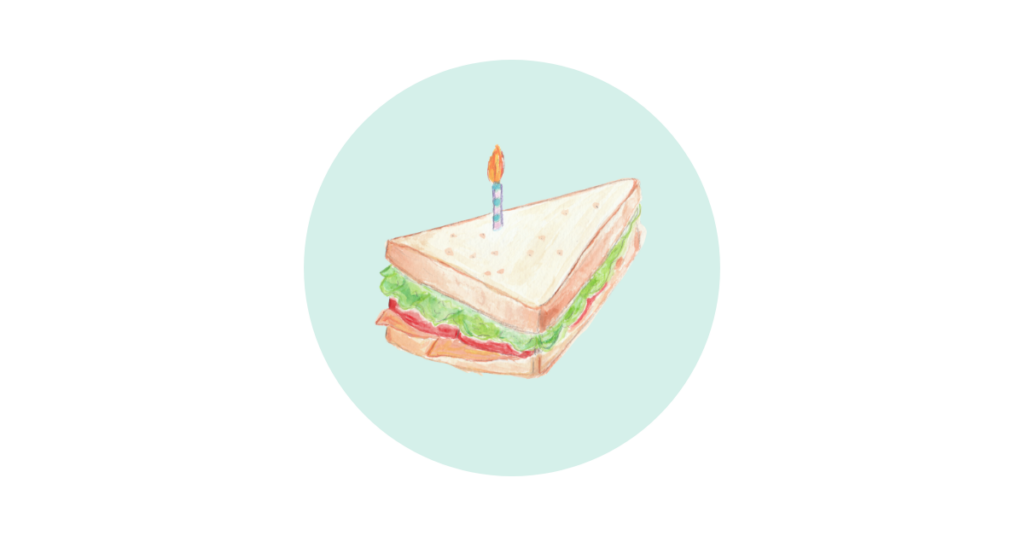
(Ashlie Stevens ) Birthday sandwich
An adult birthday party does not need a theme — but it is nice when the food speaks the same language. A taco-and-nacho bar. A tinned fish and olive spread. An all-dessert situation if cake feels like too much pressure. Coherence, not choreography, is the goal.
If I could offer one enduring piece of hosting advice, though, it’s this: a sandwich party is party gold.
You can go maximalist — an Alison Roman–style ham party, complete with pickled vegetables, fancy mustard and crusty bread — or you can go blissfully minimal with a giant sub sliced into generous hunks. Either way, sandwiches hit that rare sweet spot: filling but unfussy, communal without being precious, and universally understood.
A few years ago, I argued that giant focaccia sandwiches are the new party subs, and I stand by it.
Focaccia, with its airy, spongy interior and crisp, olive-oil–slicked crust, is equal parts hearty and delicate, an ideal sandwich bread if there ever was one. During the early days of the pandemic, it became a perennial favorite of the viral-baking set, in part because it’s deeply satisfying without being especially finicky (a relief, compared to sourdough or brioche). The payoff is high, the vibes are generous, and it feeds a crowd beautifully.
Want more great food writing and recipes? Sign up for Salon’s free food newsletter, The Bite.
Here’s the basic setup: Make your focaccia and let it cool slightly. I really love Claire Saffitz’s focaccia recipe from “Dessert Person,” which bakes in a standard half-sheet pan and gets gorgeously golden around the edges. Once it’s cool to the touch, use a serrated knife to slice it horizontally, creating a top and bottom layer for your sandwich.
Then comes the fun part. I tend to go Italian-ish — thin slices of prosciutto, a thicker layer of finocchiona, mortadella, sliced tomatoes, provolone, and a swipe of homemade broccoli rabe pesto — but this is an open invitation to follow your own cravings.
Return the assembled sandwich to the oven just long enough for the cheese to melt. That’s it.
Then, slice and serve. One half-sheet pan easily yields a dozen small sandwiches (or six more substantial ones), and the whole operation scales up effortlessly. You can even assemble everything the day before and simply warm the sandwiches right as guests arrive — a hosting gift to your future self.
And if you want something even lighter, or more mix-and-match friendly: enter the tartine.
Tartines are the unsung heroes of party food. They’re elegant without being fussy, easy to assemble, easy to eat without utensils (true party gold), and — if you care about such things — extremely photogenic.
A few top-tier combinations:
- Whipped ricotta + roasted tomatoes + olive oil + flaky salt
- Smoked salmon + crème fraîche + dill + lemon zest
- Avocado + pickled onion + chili flakes
- Prosciutto + fig jam + arugula + a drizzle of balsamic
Put a few of these out, slice a big sandwich, and suddenly you’ve created abundance without overwhelm — which, in many ways, is the whole point.
The punch bowl
In an era of increasingly coy, event-specific signature cocktails — and the quiet pressure of an open bar — there’s something deeply charming about a punch bowl. It’s communal by design, a little retro and refreshingly unbothered by trends. Whether you take this as an excuse to finally break out your grandmother’s crystal (a birthday is absolutely reason enough), or opt for one of the sturdy plastic versions from the party store, the punch bowl signals abundance without fuss.
Of course, you can make it boozy. A generously fruit-dotted sangria — red or white — is hard to beat, especially when it’s meant to be ladled rather than poured. Punch, after all, is about generosity, not precision.
We need your help to stay independent
But I’m especially fond of using the punch bowl as a way to elevate a non-alcoholic drink into something that feels genuinely celebratory. The liquid itself can stay simple. One of my go-tos: excellent sparkling water (I have opinions—message me if you want my ranked list, with notes), plus a splash of seasonal citrus juice. Blood orange in winter. Meyer lemon in early spring. Lime when things start to feel summery.
Then comes the real magic: the ice.
Freeze citrus peels, berries, fresh herbs or edible flowers into ice cubes and let them do the heavy lifting. Suddenly, what could have been “just sparkling water” becomes a showstopper — floating jewel-toned, botanical, quietly elegant. People will comment on it. They’ll ask how you did it. You’ll get full credit for something that took very little effort.
It’s a reminder that not everything special needs to be complicated. Sometimes the difference between everyday and celebratory is just a ladle, a bowl and the good ice cubes.
The cake
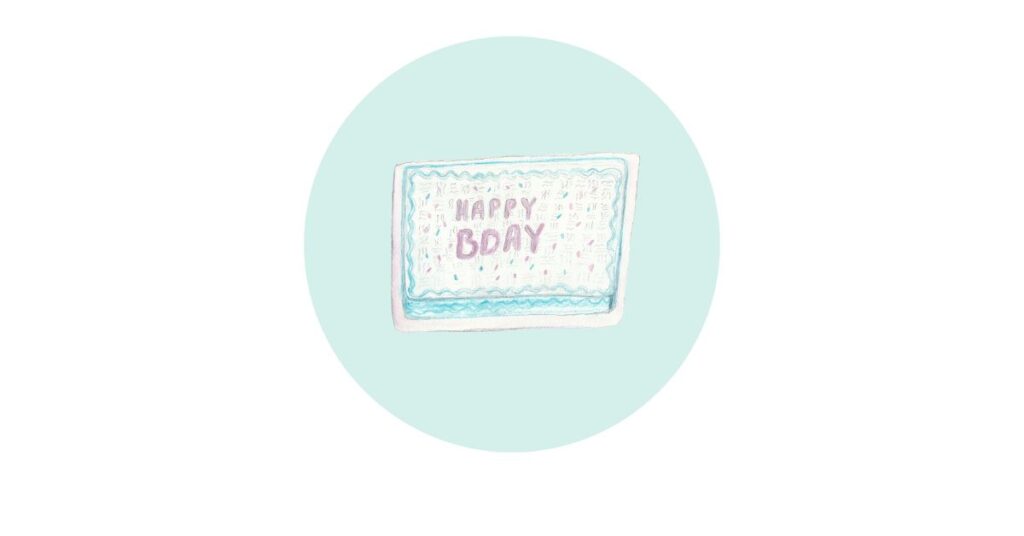
(Ashlie Stevens ) Sheet cake
When I casually mentioned this at-home birthday renaissance to a few friends while working on this guide, their reactions were nearly unanimous: excitement, relief — and then, almost immediately, anxiety about the cake.
Cake, it turns out, carries a lot of psychic weight. Choosing it. Baking it. Icing it. Storing it. Transporting it intact. Serving it without incident. The traditional layer cake, especially when it’s for someone else, can feel like a high-stakes performance. On the other end of the spectrum, professionally designed cakes are undeniably beautiful — but they can also cost a pretty penny, and rightly so. Not everyone wants their celebration to hinge on a single, expensive dessert.
So first, permission to opt out entirely.
If cake isn’t your thing, or the idea fills you with dread, skip it. One of my favorite birthday parties I’ve ever attended featured a pie bar instead — four or five of the guest of honor’s favorite varieties, plus bowls of whipped cream, cinnamon and strong coffee. Doughnuts work. Cheesecake works. Cupcakes work. A birthday is not a test; it’s an occasion.
But if a birthday doesn’t quite feel like a birthday without cake — and you want to make it yourself — I have one strong recommendation: embrace the sheet cake.
The sheet cake is generous. It’s forgiving. It doesn’t require architectural ambition or a steady hand with a piping bag. It wants to be shared. Frost it however you like, even if that means uneven swoops and visible crumbs. Let it be joyful rather than stressful. This is not a wedding cake; it’s a celebration among friends.
And let’s be honest: the best pieces are the corners. Everyone knows this.
The decor (and games)
One of the more challenging birthday parties I’ve attended as an adult unfolded like this: an icebreaker game, followed immediately by a game of “Risk,” followed by “The Settlers of Catan.” By the time everyone’s settlers were dutifully collecting wool and ore, the room had taken on the quiet, dazed feeling of a long-haul flight. Revelers were ready to call it a night.
Which is to say: not every gathering needs structure. And very few birthday parties benefit from too much of it.
My advice is simple, and I mean that sincerely. A good playlist goes a long way. Balloons and streamers are old-school cool for a reason. A few candles or string lights can do more for the mood than any elaborate setup. The goal is atmosphere, not agenda.
If you do want to have games on hand — for yourself or your guests — I stand by the advice I gave around Thanksgiving: think of them less as activities and more as gentle invitations.
For the socially anxious mingler (and there is almost always at least one), it’s a kindness to offer a soft landing somewhere outside the kitchen. A sprawling 1,000-piece puzzle with a painterly scene. Elegant adult coloring sheets. A beautiful Audubon matching game with delicately illustrated birds. A handful of old-school metal brainteasers that encourage people to hum thoughtfully to themselves. It helps create a place to land with a drink and a snack, without feeling adrift.
These are not games that demand participation. They’re there to be picked up and put down, joined and abandoned, returned to later. Often, that’s all someone really needs to feel at ease. Unless, of course, the point of the party is the game — which is an entirely different and equally valid proposition. (Hosting a board game night, after all, might deserve its own “Bite” guide.)
For birthdays, though, the truest success metric is simple: people linger. They drift. They stay longer than they meant to. The decor and games should quietly support that — never insist upon it.
Read more
from The Bite
