
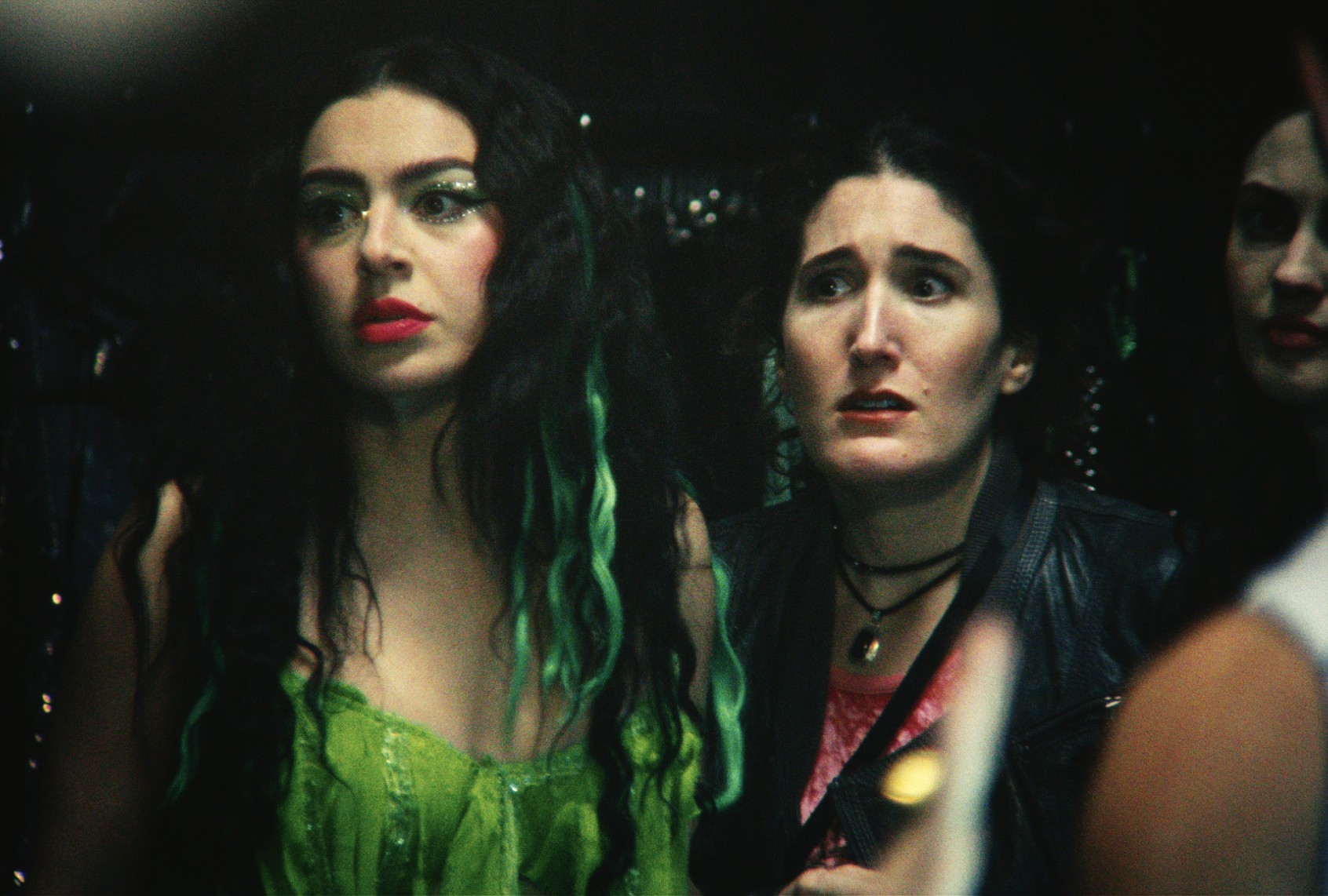

In March 2022, forward-thinking British pop auteur Charli xcx released what was to be her “sellout” record, “Crash.” The album capped a lengthy, constricting record label contract that Charli had been trying to optimize for years, to varying success. “Crash” eschewed Charli’s typical boundary-pushing electronic sound to aim for something notably more commercial, and, ever the rebel, Charli attempted to homogenize this marketable music with visual ideas that were more to her own taste. The album cover loosely referenced David Cronenberg’s 1996 psychosexual thriller of the same name, while its music videos and album packaging toyed with Faustian pacts and selling your soul for success. The idea was that Charli would, to some degree, mold her sound into what her label always envisioned while wryly commenting on the artistic and moral sacrifices that label executives deemed necessary for commercial success.
The experiment worked. “Crash” was Charli’s best-performing album to date, topping the charts internationally and debuting at number seven stateside — her first top-ten album in America after a decade of releasing music under a major label. It also featured some of the worst, most forgettable music of her career, songs that could neatly fit into the generic discography of radio-friendly pop artists and be slotted into the void of Spotify’s algorithm.
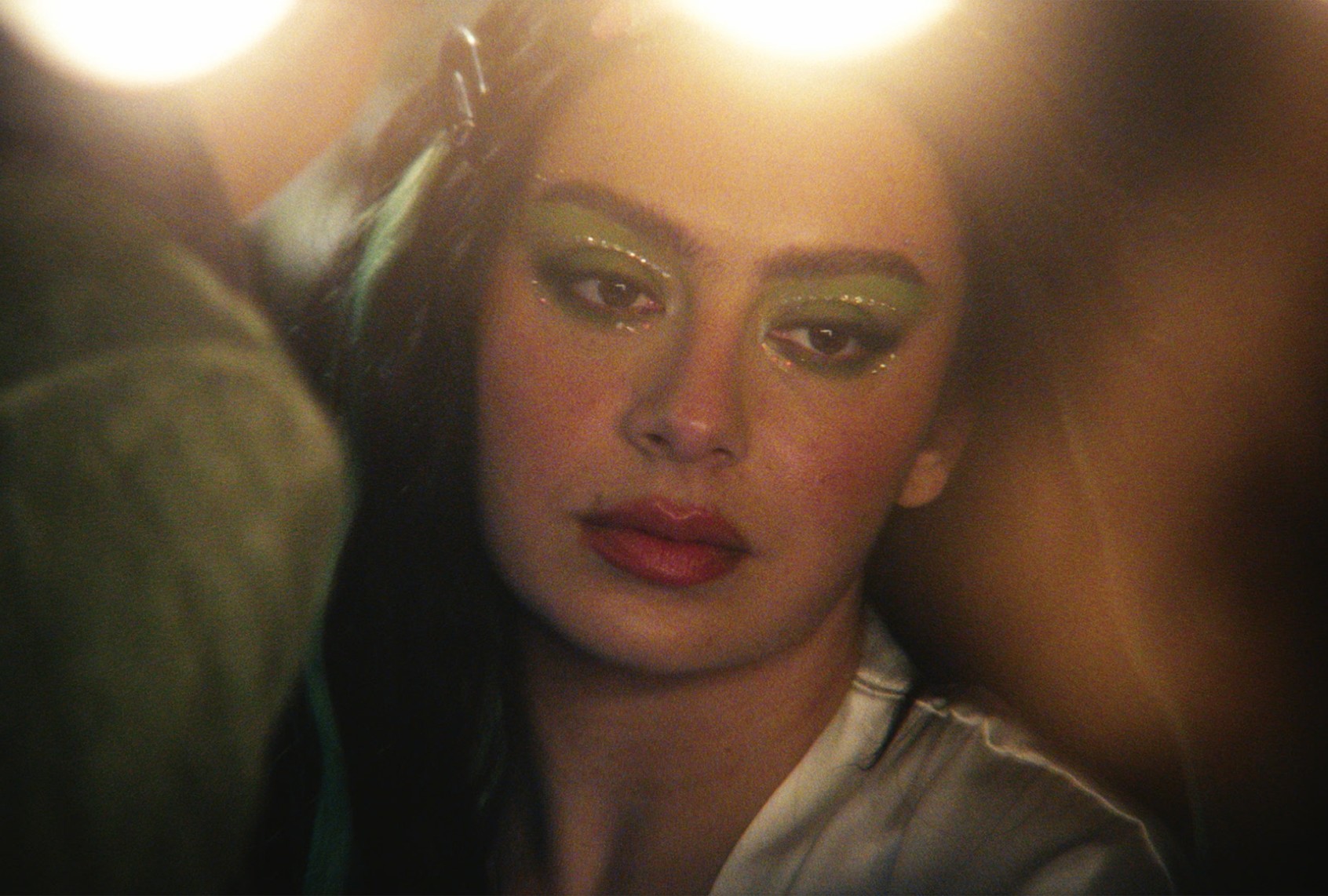
(A24) Charli xcx in “The Moment”
For this film to be greenlit, produced and finished, it needed the thrust of “Brat” behind it. There is no “The Moment” without “Brat,” just like there is no “Brat” without “Crash.” One idea fuels, feeds and finances the next, and “The Moment” is Charli’s account from the center of the music industry ouroboros.
But Charli relinquished her artistic identity to regain her power. She fulfilled one label contract, renegotiated another and proved herself marketable enough to the general public to make her follow-up album, 2024’s “Brat,” without interference. “Brat” would be done Charli’s way: intense electronic production in close collaboration with her friends, non-linear songwriting, serrated lyricism and a decidedly uncommercial puke-green album cover with nothing but the title scrawled on it in pixelated text. The rest, as we now know, is history. “Brat” catapulted Charli to a new echelon, dominating every sector of culture from music to memes to politics. It was, at last, irrefutable proof that Charli knows best.
But what if she didn’t? What if all that success and all of that pressure culminated in a complete and total artistic mindf**k that threatened to torpedo everything Charli’s worked for — and worse, flattened her taste? That’s the meta concept behind “The Moment,” the feature-length film co-developed by Charli and her friend and director, Aidan Zamiri, that plays like a mockumentary from an alternate reality. In the movie, Charli contends with the unfathomable triumph of “Brat” while fielding brand deal offers and label demands that reek of the capitalist desperation to extend the “Brat” era as long as possible. It is, at times, horrifying and anxiety-inducing; at others, it’s frustratingly drab. But in the space between, Charli and Zamiri strike a resonant note that exposes how fragile a musician’s integrity is, and how much is at stake for the average listener when fame’s unstoppable gyre sweeps up a pop artist and spits out a pop star.
In the months during its production and leading up to its release, “The Moment” was touted as a film developed “from an original idea by Charli xcx.” This banal statement doesn’t mean much, considering all films — and art, really — are the spark of someone’s idea. But in this case, it’s easy to imagine “The Moment” began as a broad thought (“What if ‘Brat’ was done the label’s way?”; “What if Charli made entirely different choices during the era?”) and was pruned by Zamiri and his co-writer, Bertie Brandes, from there. That’s not to say that the movie doesn’t have plenty of fascinating industry insider details to grab onto, or that it’s at all disingenuous, only that it lacks focus. If “The Moment” had more time to gestate, it would likely be a much sharper and shocking satire.
But there’s an irony there, too. For this film to be greenlit, produced, financed and finished, it needed the thrust of “Brat” behind it. The movie had to be made close enough to the album’s release that it could ride the coattails of the record’s popularity until the “Brat”-green wheels fell off. There is no “The Moment” without “Brat,” just like there is no “Brat” without “Crash.” One idea fuels, feeds and finances the next, and “The Moment” is Charli’s account from the center of the music industry ouroboros.
Want more from culture than just the latest trend? The Swell highlights art made to last.
Sign up here
Joining Charli in playing a version of herself is a host of other celebrities in small cameo roles — Rachel Sennott, Julia Fox and a surprisingly hysterical Kylie Jenner — as well as notable actors like Alexander Skarsgård and Rosanna Arquette taking on fictional characters. All of these familiar faces allow “The Moment” to consistently straddle realism and surreality, keeping the narrative precarious and compelling even in its most tedious moments. Every one of these people has their own agenda, and they’re intent on using Charli and the success of “Brat” to fulfill it. Their goal can be as small as bumming a line of coke in the club bathroom, or as large as roping Charli into a brand deal with an international bank to develop “Brat” credit cards aimed at young queer people. (“Are we asking them to prove that they’re gay?” Charli inquires while grimacing in the backseat of a sprinter van.)
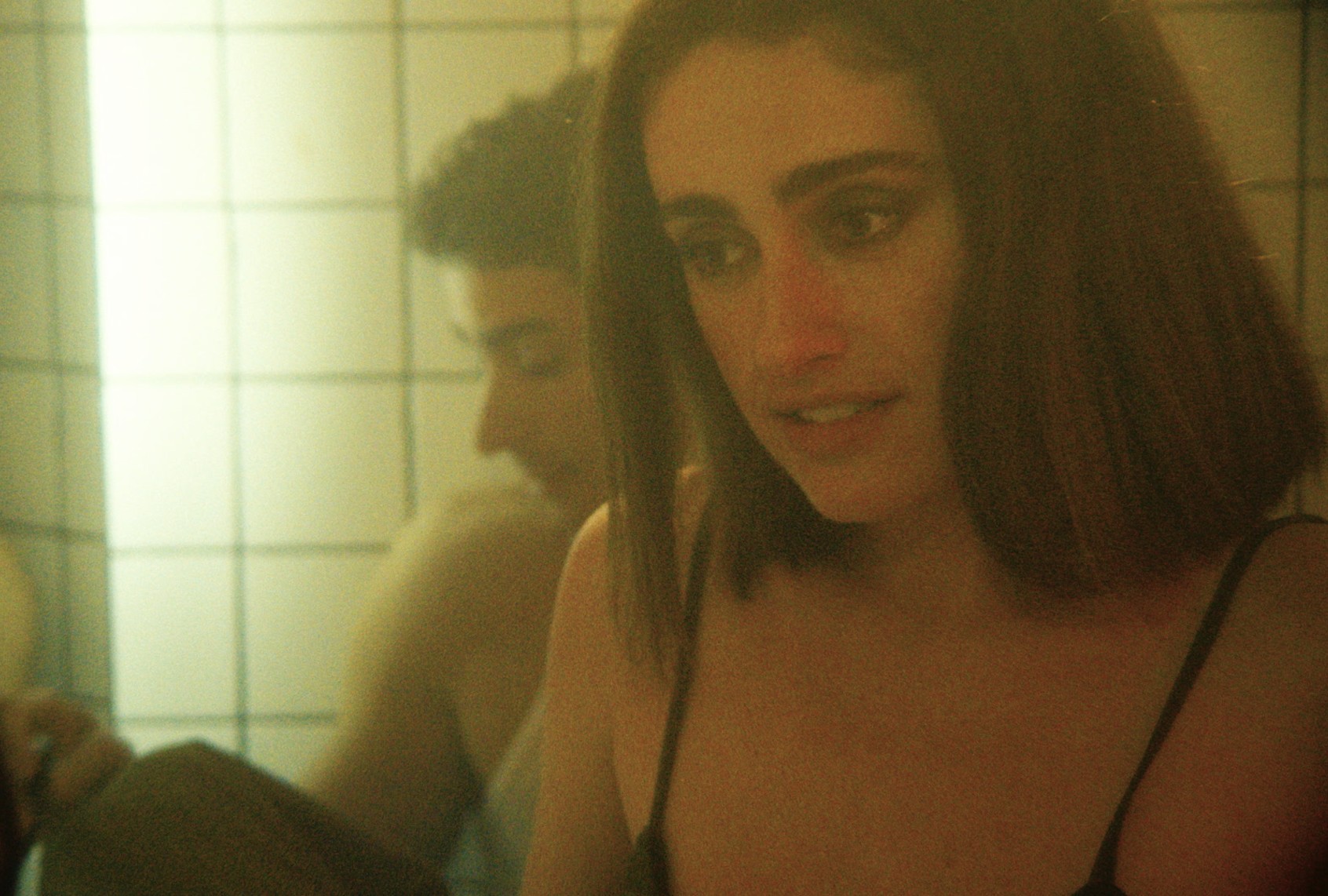
(A24) Rachel Sennott in “The Moment”
This is all a lot to deal with as it is, but the trouble really begins when Charli reluctantly agrees to do a concert film commemorating her arena tour debut. Charli and her creative director, Celeste (Hailey Benton Gates), have developed a show with strobe lights, live rain and a massive “Brat” curtain — all elements of the real-life tour Charli devised in 2024. But when the label hires famed concert film director Johannes Godwin (Skarsgård) to helm the project, his vision immediately clashes with Celeste and Charli’s. Johannes wants something marketable and safe, a show that the folks at Amazon who have purchased the distribution rights will be happy with. Instead of incessant strobes and Charli clad in a slinky skirt, performing solo with no choreography, Johannes proposes backup dancers, green glitter, high wires and harnesses. “We don’t want families to turn off the television,” he asserts. Vexed, Celeste retorts, “It’s supposed to feel like a club . . . A lot of the people coming to this show don’t even talk to their families.”
Though all of the back-and-forth between Celeste and Johannes grates the viewer as it circles the drain, Charli, Zamiri and Brandes are aiming and firing at a very real and expanding phenomenon. From Beyoncé to Taylor Swift — whose big-budget tour spectacles received theatrical releases — to Lady Gaga and Billie Eilish’s more modest streaming affairs, tour documentaries and concert films have become modern mainstays. In her “Vanity Fair” cover story last year, Charli told writer Anna Peele that she turned down a Brat Tour documentary, despite her label pressuring her to make one. “My problem with a lot of musician documentaries is [they] often show the musician coming up against some kind of opposition and eventually overcoming it to be the hero,” Charli said. “And that’s just not been my experience.” What’s clear is that Charli has no interest in faking it for the camera. Positioning herself as the star her fans orbit and look up to, instead of the party girl they’re hitting the club with, is not her style.
We need your help to stay independent
But “The Moment” very cleverly examines how tempting and easy it would be for an artist blinded by the glare of her newfound lime-green limelight to accept such offers. In the film’s slightly alternate reality, Charli sighs and goes along with what everyone else is telling her to do, simply because she’s never found herself in this position before. She’s made albums that people love, yes, but the hype has never been so enduring, never taken on a life of its own. There’s some reprieve and relief in letting go, allowing someone else to take the reins. When everyone else is talking at you, not with you, it becomes much more difficult to hear the voice inside your own head.
“The Moment” admits that selling out can feel good. It’s simple. It’s soothing. Everything is handled by someone else. So what if the price to pay is a tour with aesthetics completely divorced from the narrative and concept of her hit album? If it’s tepid enough to make everyone happy, maybe it will make Charli happy, too.
Suddenly, what the fans want, what the label wants, what the director wants and what Charli wants all start to blur. It’s overwhelming. There’s only so many times you can be asked the same question without either snapping or giving in, and for Charli — or, at least, this version of Charli — surrendering the success she’s worked so hard for isn’t worth it to maintain a modicum of integrity. Selling out is so much easier than digging your nails in to keep fighting.
Here, “The Moment” becomes briefly brilliant. The film and Charli admit that there’s a world where selling out can feel good. It’s simple. It’s soothing. Everything is handled by someone else. All Charli has to do is strap herself into a harness and float above her audience, looking like a fool. So what if the price to pay is a tour with aesthetics completely divorced from the narrative and concept of her hit album — the record she devised without all this pressure? If it’s tepid enough to make everyone happy, maybe it will make her happy, too.
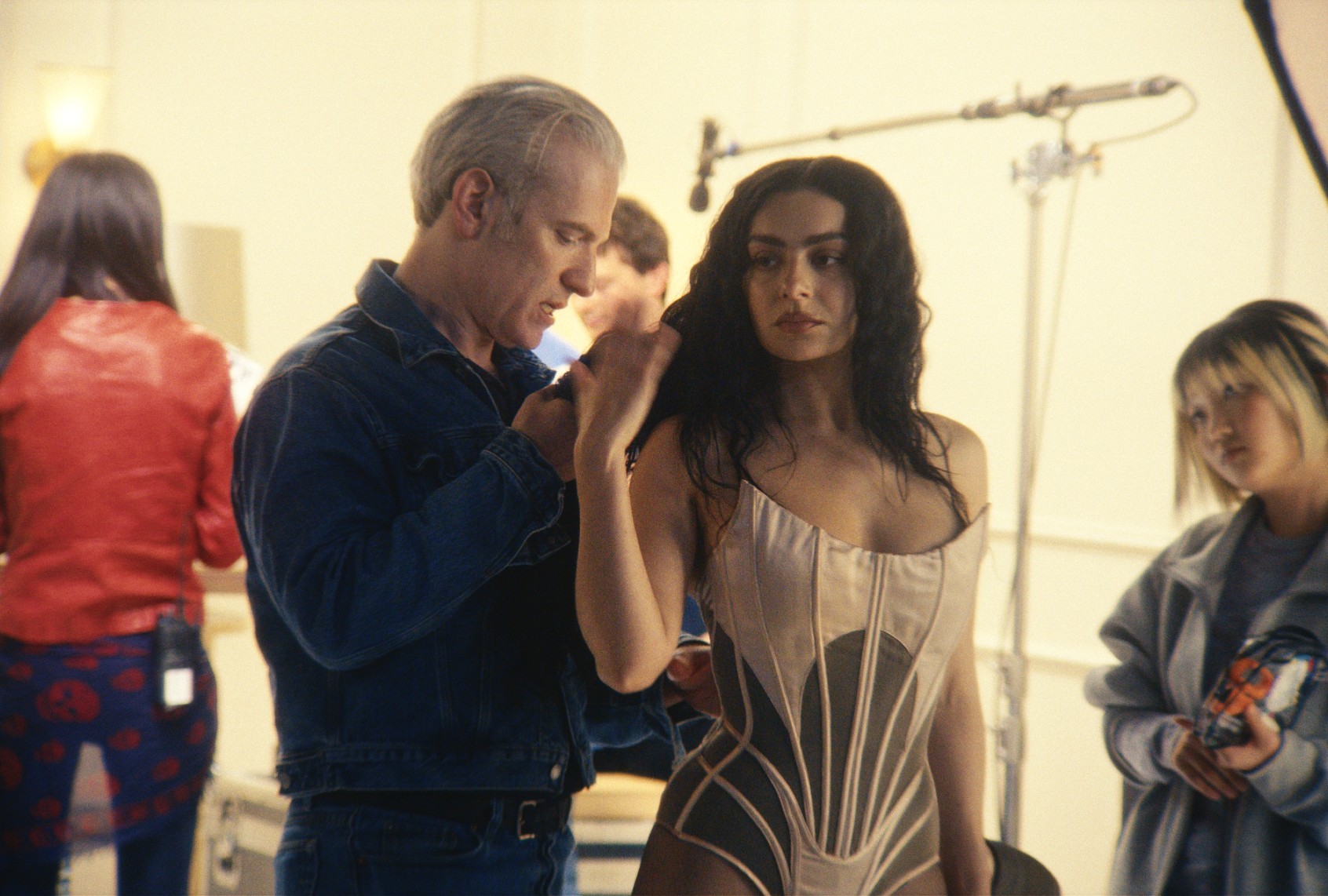
(A24) Mel Ottenberg and Charli xcx in “The Moment”
Throughout the film, Arquette’s candid record exec, Tammy, tells Charli and her team that they want to stretch the era’s longevity, and it quickly becomes clear that the “Brat” concert film is designed to be a cash cow they’ll milk until it’s dry. After all, it worked great for Taylor Swift, who followed up the Eras Tour with a concert documentary and a six-part limited series about the tour finally coming to a close. “The Moment” doesn’t quite lampoon Swift’s massively successful tour or its ensuing media, but it does take issue with the Eras Tour’s tame spectacle. In one of the standout “Brat” tracks, “Sympathy is a Knife,” Charli mused about what it was like to glimpse Swift’s world while Swift dated The 1975’s frontman, Matty Healy, whose bandmate is Charli’s husband, George Daniel. “I couldn’t even be her if I tried, I’m opposite, I’m on the other side,” Charli sings in the song’s explosive chorus.
The song was written ahead of the “Brat” explosion, before Charli was propelled to a level of fame that didn’t look so different from Swift’s anymore. But it’s telling that the version of the Brat Tour Charli ends up with in “The Moment” looks quite a bit like the Eras Tour. It’s safe, palatable and uninteresting — the result of Charli catering to the world and failing to trust her own vision.
Yet, the fictional reviews are stellar, praising the show as a whole new version of Charli. This tragicomic result winks at the slight but important difference between artistry and stardom. In “The Moment,” Charli isn’t ripping her contemporaries. Rather, she’s acknowledging that many musicians entertain without actually saying anything interesting. The fictional “Brat” show is fun, but it’s not good. It has no edge or critical thought. And when pop music loses those elements in favor of homogeneity, algorithms and TikTok trends, it also loses the ability to push culture forward in the way that Charli has, creating a stagnancy and stupidity that’s all too easy to get stuck in. And that’s just not very “Brat.”
Read more
to relive the unpredictable “Brat” era
