
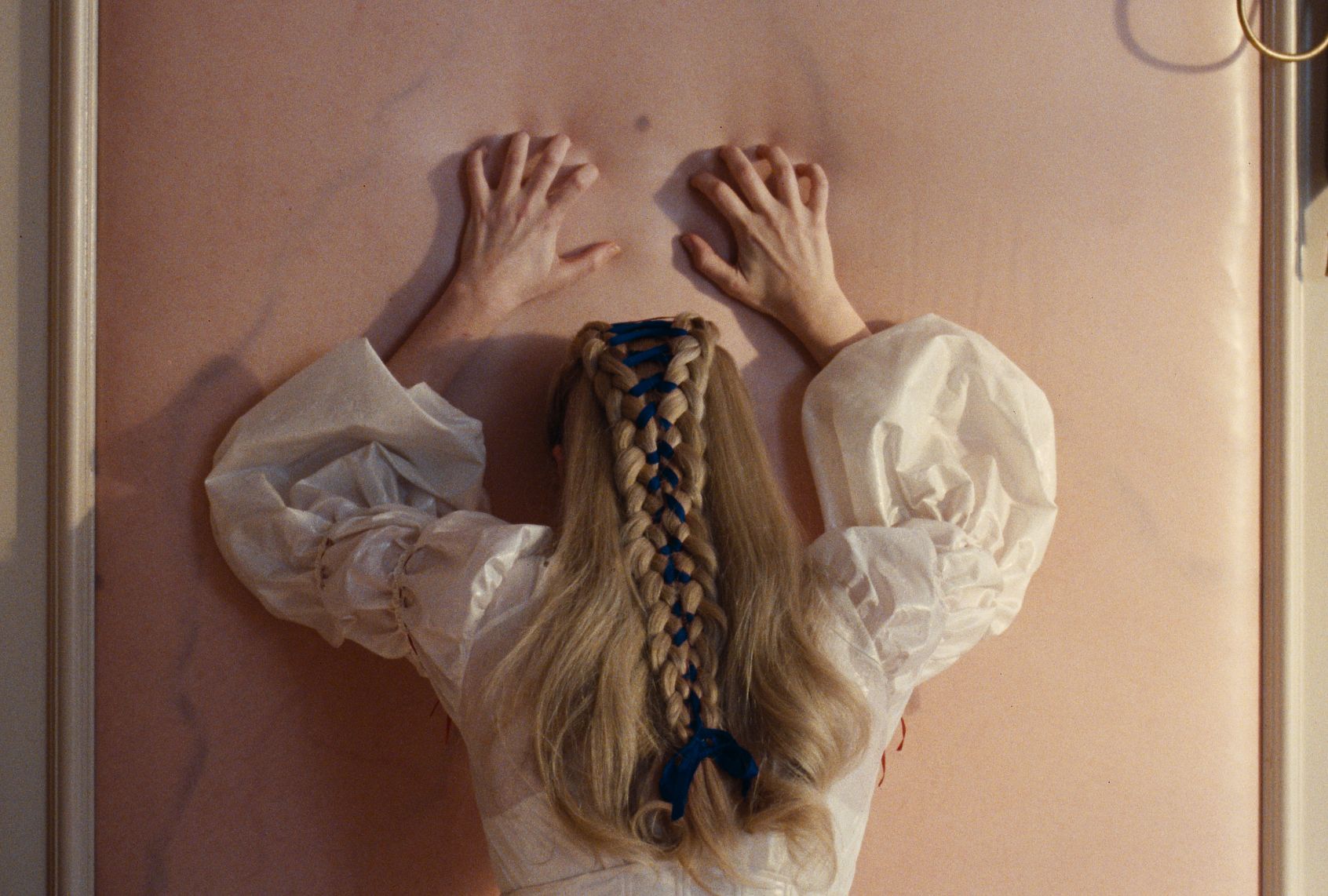

Just to get us all up to speed on what’s happening with The Youth: The social trend most associated with Gen Z is declining to date, and instead dedicating themselves to romantic yearning. Yearning is their common language; they yearn alone and they yearn together. The diffidence and unwillingness to risk putting themselves out there that older generations have already ascribed to them means that their desire to yearn is liable to be both ridiculed and catastrophized (will no one think about the birth rates?). Pop-psychology dispatches with ominous titles like “Gen Zers who romanticize yearning will likely learn these 5 things the hard way” suggest that there is perhaps too much yearning going on.
Hypotheses and presumed explanations mention the hyperconnectedness of their lives but also the gap created by both the COVID lockdown and the subsequent, lasting association of physical closeness and danger. But writing by actual members of this cohort suggests that embracing yearning is actually a healthy way to create space between who they are now and who they intend to be . . . you know, at some point. “In a landscape where dating apps encourage efficiency and optionality, longing becomes a way of resisting closure,” writes one, adding that yearning “allows feelings to exist without being immediately tested against reality.”
Gen Z yearns because nothing they see around them suggests that pursuing real-life love is something they should want to do. Older generations have messed it all up, cheapening dating and allowing reality shows and celebrities to frame love as unavoidably transactional. Technology, meanwhile, has left the bar on the ground, what with the normalization of ghosting, the ever-present risk of catfishing and the promise that someone better is one swipe away, even if it’s not clear what “better” is. There’s no evidence that this generation intends to make pining their only romantic activity; it’s more that they are very content, at the moment, to luxuriate in the many conduits for yearning available to them. They are listening to Jeff Buckley, watching Celine Song films, making memes about needing more hours in the day to yearn.
Generationally, the Zs don’t seem to share much common ground with “Wuthering Heights” author Emily Brontë. But the 1847 novel, her only published work, could be considered the ur-text of yearning. So it makes sense that members of Gen Z are among those most amped for “Saltburn” writer-director Emerald Fennell’s new adaptation of “Wuthering Heights,” which opened just in time, the trailer makes sure to note, for Valentine’s Day.
Want more from culture than just the latest trend? The Swell highlights art made to last.
Sign up here
In the months leading up to the release, social media, and #booktok in particular, prepped for the deluge of yearning by picking up a copy of “Wuthering Heights” — and shortly afterward realizing that the book bears no relation to the trailer for Fennell’s film, in which images of lusting, open mouths (is that? — yep, that’s someone licking a door) alternate with scenes foregrounded by sweeping gowns and dramatic horseback riding. What the hell did I just read? Are we sure this is the source material? Shouldn’t the main character not die so early? Is this even supposed to be a romance? are among the sentiments shared in innumerable TikToks whose creators sometimes seem to be taking the discrepancy between their Jacob Elordi-fied imaginations and the raw anger and outright abusiveness of the novel’s leading man very personally.
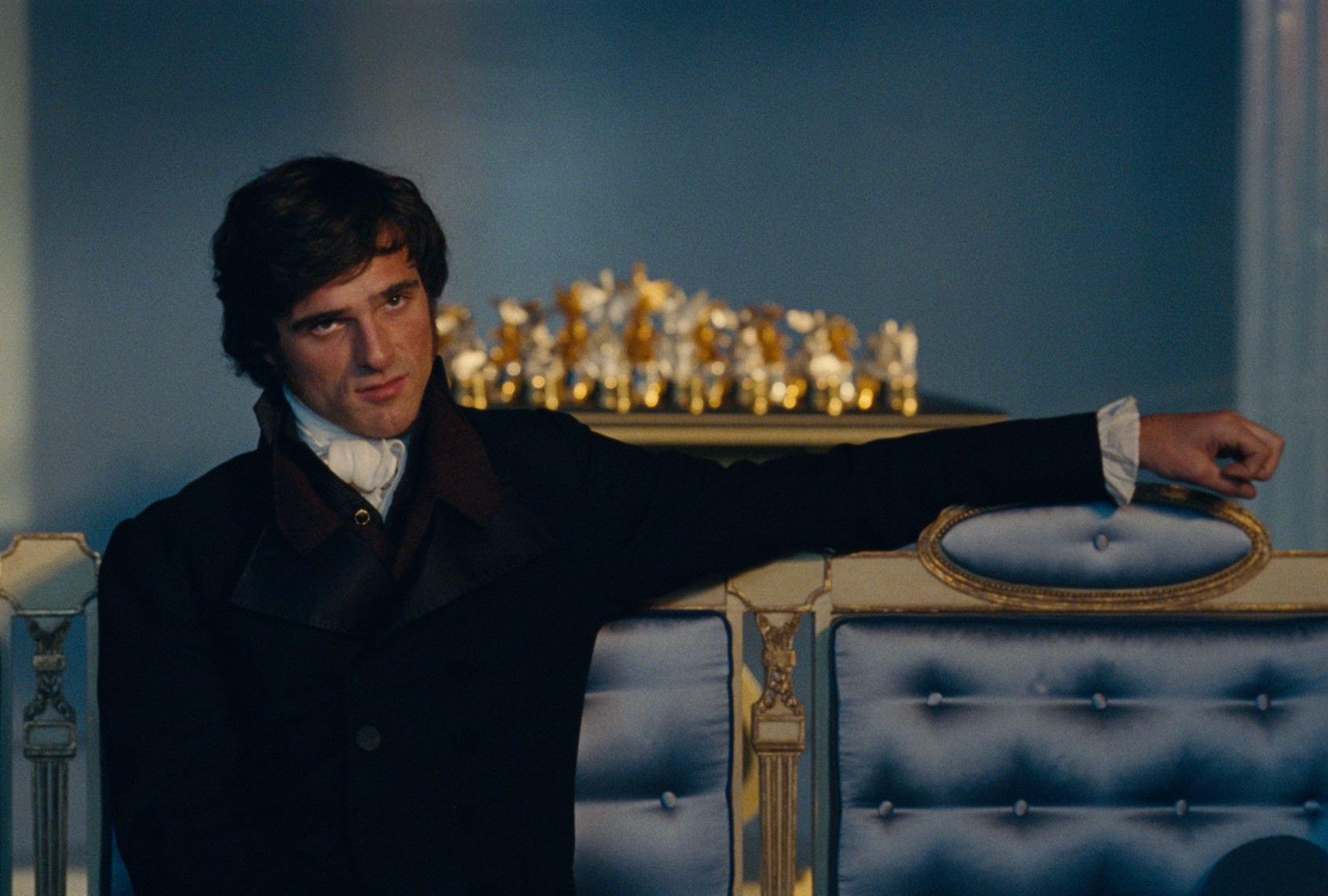
(Warner Bros. Pictures.) Jacob Elordi as Heathcliff in “Wuthering Heights”
For decades, there have been two distinct “Wuthering Heights” experiences. One is the dense, dialect-heavy Gothic novel, 400-plus pages of exposition told second- or even thirdhand. This version of “Wuthering Heights” is intense and slow and often one where readers find themselves having to take a break within the first few chapters to sketch out a couple of family trees — without them, it’s a challenge to follow a decades-spanning plot with a profusion of characters who in many cases share names with other characters. (There are dozens of different editions of the book; for best results, try an annotated one.) The unrelenting, full-tilt brutality of this “Wuthering Heights,” according to Brontë historian Samantha Ellis, led one critic to assert, “How a human being could have attempted such a book . . . without committing suicide . . . is a mystery.”
Most of its well-known screen adaptations, by contrast, are much less severe, the narration more direct, and the relationship between Catherine Earnshaw and her adopted brother Heathcliff firmly centered. In the category of books whose modern adaptations excise important context from their narratives, “Wuthering Heights” is an all-timer: Long before Fennell’s film entered the chat, the title alone was pop-culture shorthand for doomed, star-crossed obsession. MGM’s classic 1939 adaptation starring Laurence Olivier and Merle Oberon was billed as “The Greatest Love Story of All Time . . . Or Any Time!” a pronouncement that the trailer for the new film echoes.
Andrea Arnold’s spare, hauntingly earthbound 2012 rendition captured the bleakness of the story (and, notably, cast a Black actor to play Heathcliff, whose ethnicity Brontë described as “gypsy,” but who was almost definitely not white); still, like the 1939 film, it declines to include the book’s violent second half. And Kate Bush’s immortal 1978 single, with its swooping, operatic drama, interpretive dance–filled video and ghostly narrator only strengthened the book’s rep as a tale of exquisitely tortured love. (Each July since 2016, fans of all genders don their flowiest red garments and gather in city parks from Adelaide to Amsterdam to re-enact the iconic video.)
These adaptations, along with a 2009 BBC production starring Tom Hardy, have to halt where they do because the Heathcliff of the book’s second half is irredeemable — drunk, violent and passing intergenerational trauma down like it’s a gold pocket watch. “Emily Brontë’s Wuthering Heights,” released in 1992, is the sole screen adaptation that doesn’t ignore the second half of the book. Ralph Fiennes, in his debut, is a trip-wire Heathcliff, a man unstrung less by love than by mania who, after the death of Juliette Binoche’s Cathy, turns his fury on his family, her family and, unfortunately, dogs.
Its trailer, in which a voiceover intones: “A passion . . . An obsession . . . A love that destroyed everyone it touched,” is a bit unsettling to watch from the vantage of 2026, when love that destroys everyone it touches is generally understood to be suboptimal for all involved. Even at the time, the overheated language was belied by the filmic metatext of the author herself (played by an uncredited Sinead O’Connor), warning viewers in the film’s opening that her story is not one to be swooned at, but a study of unrequited love as a kind of sociopathy.
We need your help to stay independent
The fact that the book is canonically the favorite of “Twilight’s” Bella Swan is a nod to the generations of pop-culture texts that inculcated The Youth with a certainty that nothing but the most glorious and tempestuous friction is worth striving for — the kind that once made The Crystals’ “He Hit Me (and It Felt Like a Kiss)” an unremarkable bit of 1960s girl-group sentiment. Heathcliff might have been the most overtly unhinged boyfriend adolescent girls encountered in their assigned reading list, but he was far from the only one, even within the extended Brontë universe. (Kate Beaton’s comic “Dude Watchin’ with the Brontës” will never not be funny.) “Wuthering Heights” knew what it was about, and Brontë, despite her lack of firsthand experience in love, had the scripts of normative femininity dead to rights with the book’s relentless conflation of love and torment. She knew humans tend to make the same mistakes in love again and again and somehow never learn from them.
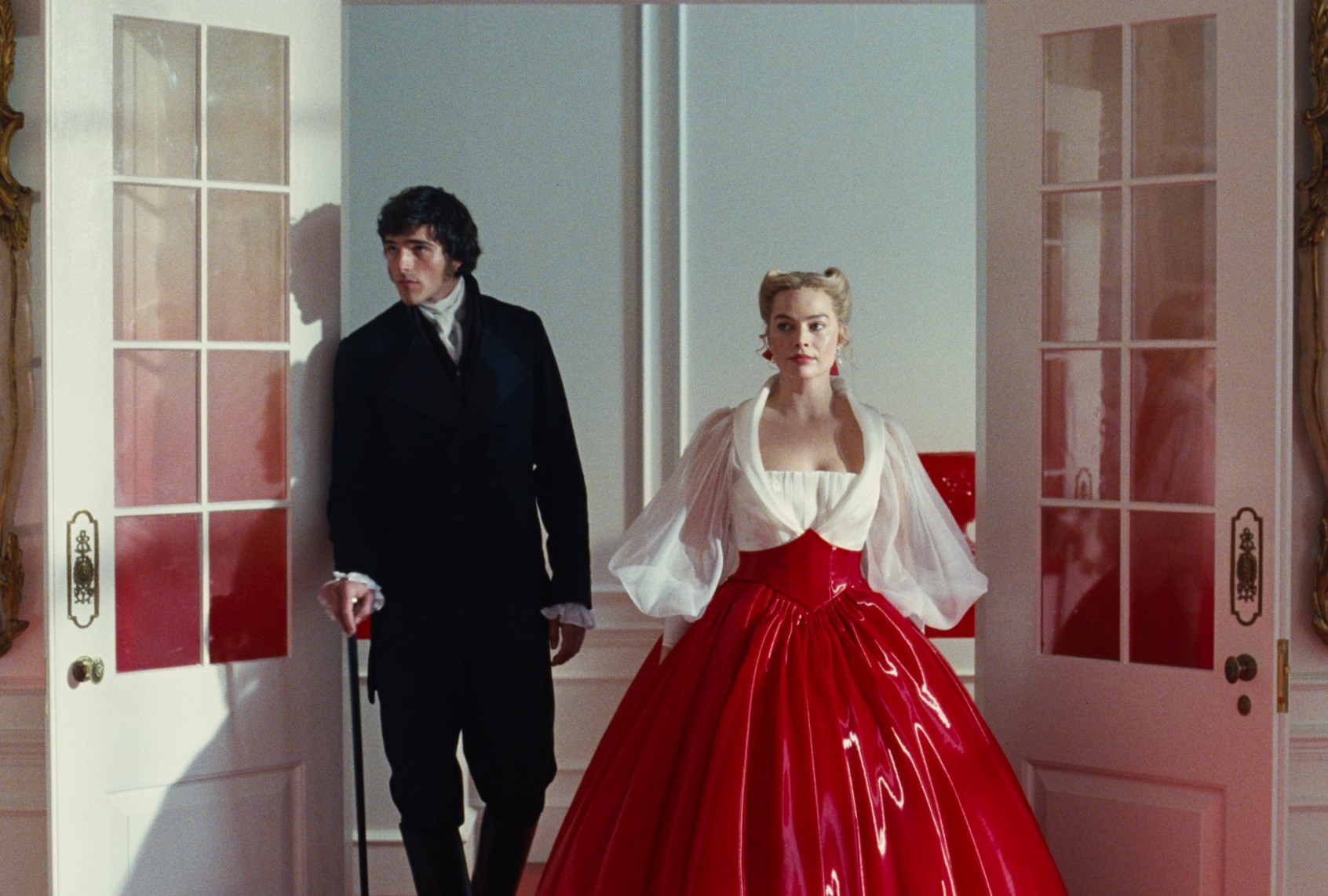
(Warner Bros. Pictures) Jacob Elordi as Heathcliff and Margot Robbie as Catherine Earnshaw in “Wuthering Heights”
In doing press for the film, Fennell has been clear that she never wanted the new “Wuthering Heights” to suggest that it is the “Wuthering Heights” — which is why the title of the movie itself is styled with quotation marks. “You can’t adapt a book as dense and complicated and difficult as this book,” Fennell told Fandango recently. “I can’t say I’m making ‘Wuthering Heights.’ It’s not possible. What I can say is that I’m making a version of it, [the] version that I remember of it, which isn’t quite real.”
Fennell’s emphasis on not claiming faithfulness to the text gives her “Wuthering Heights” the soft-focus gleam of the romance fanfiction that much of her audience likely grew up on. For those who create and read fanfic, rewriting stories that aren’t originally yours isn’t wanton IP infringement; they’re an extension of the formative, meaningful texts that, read over and over, feel like they become yours. Fanfiction that makes relationship and sexual dynamics thrillingly illicit is common; the genre arguably started with a Mr. Spock/Capt. Kirk pairing, after all. But consider the most successful fanfic adaptation to date: “50 Shades of Grey,” which back in the 2010s reified the belief that women don’t really want equality, but instead seek to be dominated by an exacting, cruel d-bags in sharp suits. The “50 Shades” juggernaut began as “Twilight” fan fiction. Brontë was right: We are total drama queens.
But when Gen Zs talk about their yearning to yearn, it’s not necessarily about a need to reshape existing stories to their specifications, but about whatever arrangement of words and attitudes resonates with them. It might be the “intense (but well suppressed) yearning” of Jane Austen’s “Persuasion,” or the confused yearning of the character whose lover up and becomes a nun or a mermaid or space alien, or the “half agony, half hope” kind celebrated in one romance novel Reddit thread. (“THIS WOMAN GOT HER DEGREE IN YEARNALISM” is the approving sum-up of author Lorraine Heath.)
There might even be a case to be made that Emily Brontë herself found yearning preferable to a flesh-and-blood love; it’s definitely one reason why many Brontë fans were salty that 2022’s fictionalized biopic “Emily” retconned the origin story so that Brontë herself had an obsessive love affair. But what if Fennell’s iteration of “Wuthering Heights” exists precisely because it’s comforting to think the happiest ending is made possible by a nonexistent beginning? Would that really be so bad? I don’t think so, but it also doesn’t matter: In times this uncertain, yearning doesn’t have to signal the absence of something real.
Read more
from Salon’s culture newsletter, The Swell
