
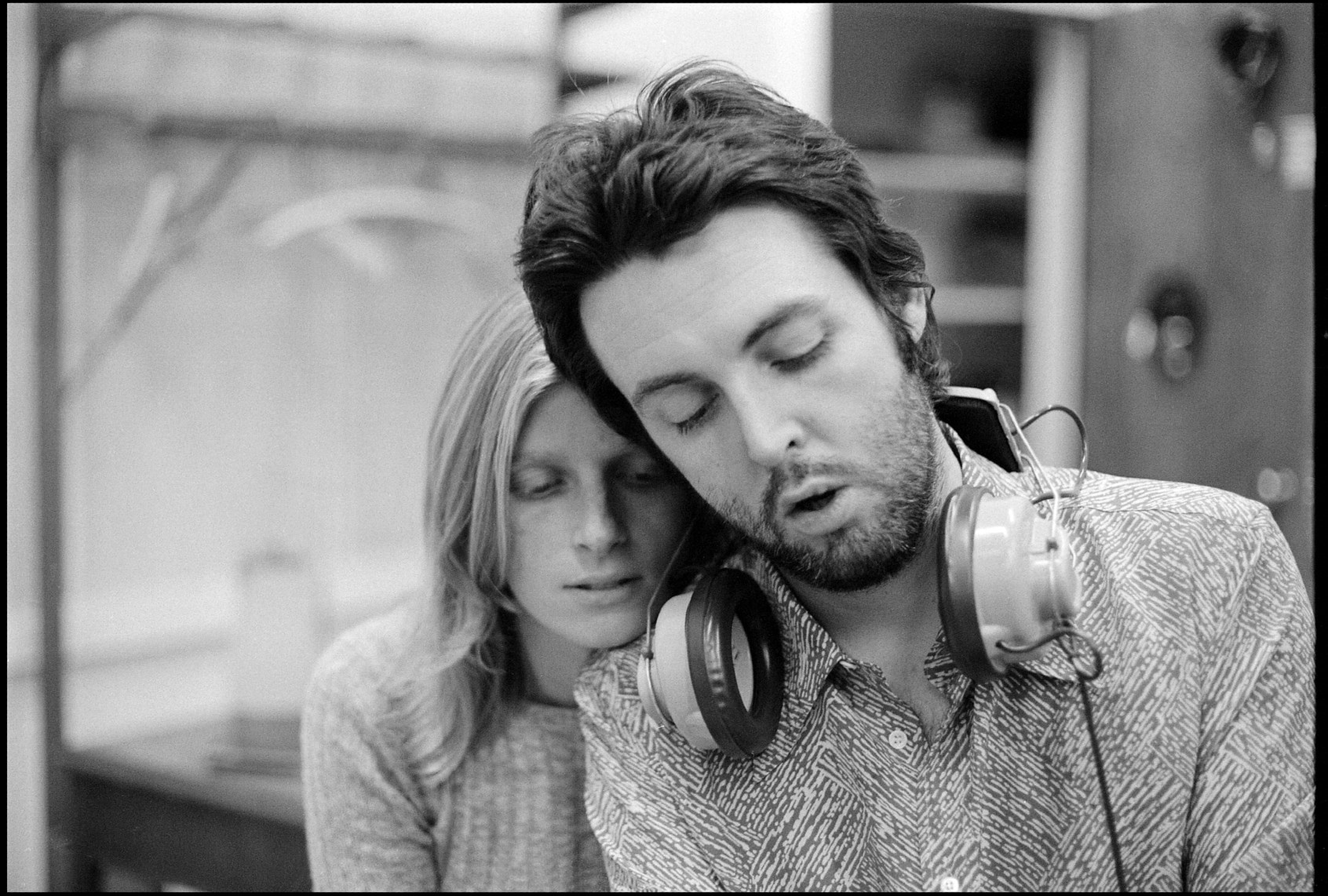

With thrilling stories about ordinary blokes willing some of history’s most beloved music into being, the tapestry of The Beatles is rife with drama and wonder. In his new documentary “Man on the Run,” director Morgan Neville addresses one of Beatledom’s — or, more accurately, post-Beatledom’s — most remarkable, even inspirational tales.
In April 1970, Paul McCartney announced The Beatles’ disbandment to a stunned world. But as Neville’s documentary makes abundantly clear: while music lovers across the globe certainly mourned The Beatles’ breakup, few suffered its heartbreaking aftershocks to McCartney’s extent. His saving grace proved to be his wife Linda, whom he married in March 1969. Linda had not merely been there to stave off the post-Beatles doldrums. She had helped him to conquer the significant depression that he experienced in the wake of the disbandment, a period in which he increasingly relied on alcohol to sate his aching soul. He also admitted in a 1974 Rolling Stone interview that he leaned more on Linda, saying, “I don’t think I have that many [friends]. No one went against me or anything, I think I isolated myself a bit.”
“Man on the Run” is chock-full of unseen archival footage — the kind that McCartney aficionados will relish as Neville paints a revealing picture of the musician’s post-Beatles challenges. And to his documentary’s great credit, Neville doesn’t deal obliquely with Linda’s role in Paul’s post-Beatles life. Neville takes the matter head-on, addressing Linda’s 1970s-era critics — and there were many. As for Linda’s prominence in his music and in Wings, Paul admitted that while “she did just kind of appear out of nowhere” as part of his musical image, “she was the main help for me on the albums around that time. She was there every day . . . So I think all this business about getting Linda in the billing was just a way of saying, ‘Listen, I don’t care what you think, this is what I think. I’m putting her right up there with me.’” For her part, Linda understood her place without reservation. “I’m not here because I’m the greatest keyboard player,” she explains in “Man on the Run.” “I’m here because we love each other.”
As the filmmaker behind the acclaimed “Won’t You Be My Neighbor?” and “20 Feet from Stardom,” Neville has a well-honed knack for getting to the heart of our most cherished stories. In its finest moments, “Man on the Run” does precisely that, shedding new light on the ways in which McCartney staged his remarkable 1970s comeback. And what a strange renaissance it was. As Neville explained during my recent interview with him, “Paul’s solution [after The Beatles] was the unlikeliest of solutions — moving to a farm and removing himself from rock ‘n’ roll and having kids. He had to begin at square one and get to square 100. But The Beatles also started that way. There were some great things that came out of that period, and there were some missteps, too — but the missteps were as important as the hits.”
Want more from culture than just the latest trend? The Swell highlights art made to last.
Sign up here
Focusing on McCartney’s first decade in the wake of The Beatles’ disbandment, Neville allots significant attention to the musician’s grit and determination during the formation of Wings, which underwent several lineup changes in the 1970s. As the documentary makes clear, the tide began to shift for McCartney when he came to recognize his role as Wings’ band leader. In many ways, “Man on the Run” is the narrative that unites us all — our personal tales of growing up. “And I thought,” Neville explained to me, “that that’s an interesting story to tell, you know, because if you’ve been a famous Beatle since you were 16 or famous since you were 20, it freezes you in a kind of adolescent state. You see this with lots of rock bands.” With The Beatles juggernaut out of the picture, Paul was suddenly forced to figure it out: “What kind of person am I? What kind of husband, what kind of dad, what kind of artist?” said Neville, “and I thought those were interesting questions that Paul was trying to answer.”
It’s a powerful story, to say the least, and Neville handles it in “Man on the Run” with great aplomb. In many ways, rebuilding his life and finding himself in the wake of The Beatles’ disbandment may be McCartney’s finest moment. And no less than John Lennon would agree with the filmmaker’s position. In one of his last interviews, Lennon admitted, ”I kind of admire the way Paul started back from scratch, forming a new band and playing in small dance halls, because that’s what he wanted to do with The Beatles — he wanted us to go back to the dance halls and experience that again. He did what he wanted to do.”
And as McCartney’s post-Beatles renaissance reveals, harnessing his ambitions has made all the difference.
Read more
about music documentaries
