
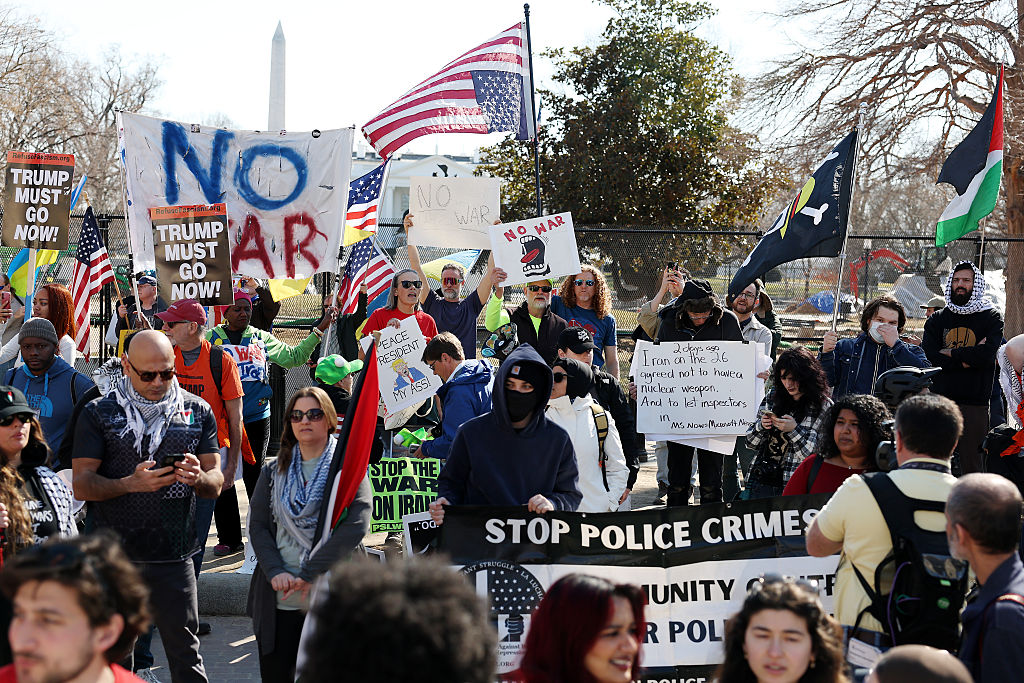

The United States’ role in the broad military operation against Iran has sparked an urgent political and legal showdown in United States Congress over the constitutional authority to take the nation to war.
President Donald Trump announced early Saturday that U.S. forces had joined Israel in coordinated strikes targeting Iranian military and nuclear sites. The president called the operation “major combat operations” aimed at eliminating threats from Tehran’s nuclear and missile programs and urged Iranians to rise against their government.
Unlike formal declarations of war that historically required approval from Congress under Article I of the U.S. Constitution, Mr. Trump did not request a formal congressional authorization before ordering the strikes. Critics say this marks a significant expansion of executive military power and raised immediate legal concerns among lawmakers.
Under the 1973 War Powers Resolution — legislation meant to check presidential war-making authority — the president must notify Congress within 48 hours of initiating military action and seek approval if operations extend beyond 60 days. Administration officials contend that Mr. Trump complied with the notification requirement by briefing the bipartisan “Gang of Eight” group of congressional leaders ahead of the operation, including through Secretary of State Marco Rubio.
But many lawmakers — led by Democrats and a handful of Republicans — argue that the strikes amount to “war” and should be approved by Congress before continuing. Sen. Tim Kaine, Rep. Ro Khanna and others called for an immediate war powers vote when lawmakers return to session, saying Americans have a right to weigh in on whether sustained military engagement is appropriate. Rep. Thomas Massie and other critics are pushing similar measures.
House Speaker Mike Johnson expressed support for the president’s action, while House Minority Leader Hakeem Jeffries vowed Democrats will seek a formal vote on military authorization next week.
Start your day with essential news from Salon.
Sign up for our free morning newsletter, Crash Course.
The debate highlights longstanding tensions over the balance of war powers in the U.S. and comes as the conflict with Iran continues to unfold, with civilian casualties mounting and global partners expressing alarm. Historically, Iran’s 1979 revolution transformed it from a U.S.-aligned monarchy to an adversarial theocratic state — a legacy that shapes today’s fears about protracted conflict and regional destabilization.
This situation remains fluid and developing, with legal challenges and international reactions continuing to evolve.
