

Donald Trump doesn’t like protesters — at least the ones who don’t carry tiki torches while chanting “blood and soil” or who storm the Capitol to disrupt the peaceful transfer of power. During his first campaign for president, he was known to encourage people to “knock the hell out of” protesters at his rallies. After the Black Lives Matter protests in 2020, Trump became maniacal in his loathing for what he called the “radical left.” He wanted to unleash the military onto the streets and even tried to order his defense secretary, Mark Esper, to shoot the demonstrators.
So it should come as no surprise that protesters have become a target in Trump’s inhumane mass deportation campaign. On Saturday the Wall Street Journal reported that Immigration and Customs Enforcement and Customs and Border Patrol’s practice of arresting American citizens who are protesting the policy is a deliberate strategy to, as they put it, “detain and demonize dissenters” who are simply exercising their First Amendment rights. The cases are typically not supported by evidence, so they rarely go anywhere, but the victims are often brutalized in the process, losing jobs and spending money on lawyers and legal fees.
Those are the lucky ones. As we know, two protesters, Renee Good and Alex Pretti, were shot and killed in Minneapolis — and were immediately pegged by members of the Trump administration as domestic terrorists and members of the radical left.
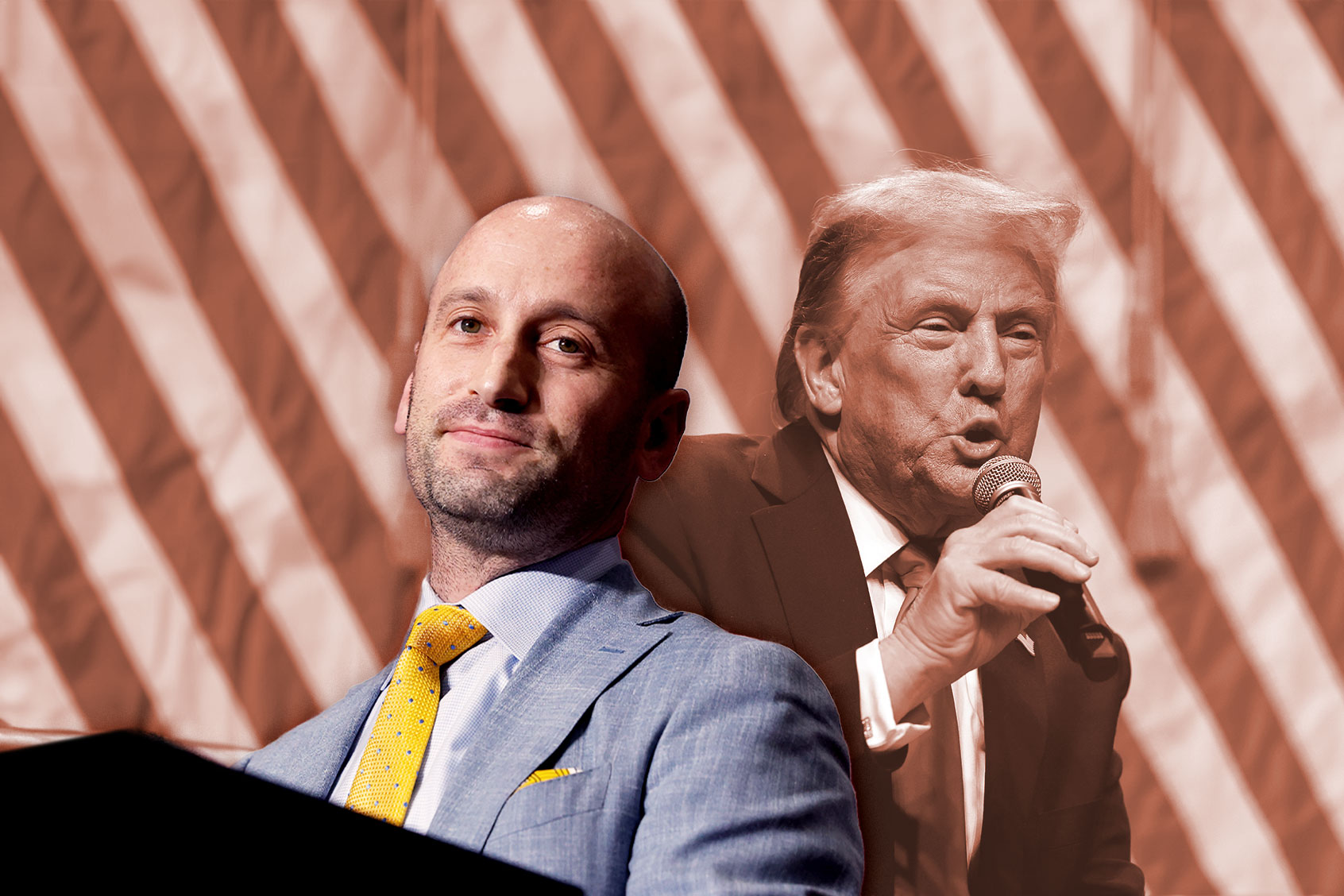
In many ways, this moment was the fulfillment of Trump’s vision that stretched back to his first term. As Mother Jones’ David Corn documented, the first known instance of Trump using the phrase “radical left” came in June 2020 during a Turning Point USA event. In a speech almost certainly written by his aide Stephen Miller, the architect of the administration’s mass deportation campaign, the president thundered that the “radical left” hate “our history, they hate our values, and they hate everything we prize as Americans.”
This became Trump’s most relentless theme throughout the 2020 campaign, and it culminated at his weird — and likely illegal — convention acceptance speech delivered in the Rose Garden at the White House. The election, he said then, would “decide whether we will defend the American way of life, or whether we allow a radical movement to completely dismantle and destroy it.”
Trump would go on to lose that race. But that didn’t stop him from having the chutzpah to deploy the term again during the 2024 campaign — even after the violent pro-Trump insurrection at the Capitol on Jan. 6. He even took it up a notch, pledging that as president he would “root out the communists, Marxists, fascists and the radical left thugs that live like vermin within the confines of our country that lie and steal and cheat on elections — they’ll do anything, whether legally or illegally, to destroy America and to destroy the American Dream.”
This time, voters rewarded him for using such rhetoric, and returned him to the White House.
Trump has tied his words to actions, targeting organizations, institutions, universities and law firms he perceives as being his enemies. He and his administration have attacked the press, limiting access to the president and the White House briefing room.
Since then, Trump has tied his words to actions, targeting organizations, institutions, universities and law firms he perceives as being his enemies. He and his administration have attacked the press, limiting access to the president and the White House briefing room. In April 2025, he signed an executive order directing the Justice Department to investigate the Democratic small donor platform Act Blue. Following TPUSA’s founder Charlie Kirk was assassinated in September 2025, the administration all-but declared war, with Vice President JD Vance invoking the last message he received from Kirk, which said “we have to dismantle and take on the radical left organizations in this country that are fomenting violence, and we are going to do that.” Within days, Trump issued a presidential memorandum directing the FBI’s joint terrorism task force to pursue various “domestic terrorists” who allegedly believe in “anti-Americanism, anti-capitalism, and anti-Christianity.”
Reuters reported shortly after that Miller, as White House deputy chief of staff, was heading a multi-agency task force that included the FBI, IRS, Department of Homeland Security and the Justice Department to crack down on Democratic groups like Indivisible, which they falsely accused of funding violence and terrorism.
The right was in high dudgeon. Individuals all over the country were fired from their jobs, shunned, ostracized and run out of town for insufficient reverence for Kirk on social media. People were refused entry into the country for “making light” of Kirk’s death. Cancel culture had never been so successful.
Want more sharp takes on politics? Sign up for our free newsletter, Standing Room Only, written by Amanda Marcotte, now also a weekly show on YouTube or wherever you get your podcasts.
Miller’s use of the power of the state to take down the left was an escalation. Influential conservative activist Christopher Rufo inadvertently drew the proper parallel when he wrote on X, “The last time the radical Left orchestrated a wave of violence and terror, J. Edgar Hoover shut it all down within a few years. It is time, within the confines of the law, to infiltrate, disrupt, arrest, and incarcerate all of those who are responsible for this chaos.”
“Within the confines of the law” is a convenient disclaimer. But what they were and are doing is pretty much exactly what Hoover did, they’re just not hiding it. Since Trump returned to office, his administration’s get-out-of-jail-free card has been “it isn’t wrong if it’s out in the open.” Regardless, as was the case with Hoover, using the power of the government to punish your political enemies is a textbook abuse of power.
Hoover was caught at this by chance when people who burglarized a suburban FBI office in 1971 found documents that showed the bureau had been engaged in a long-standing program going back to the 1950s to harass and “neutralize” organizations and individuals they deemed political enemies. COINTELPRO, or the Counter Intelligence Program, targeted all the usual suspects — communists, socialists, civil rights organizations and yes, the left, with a particular focus on protest organizers. Tactics they used ran the gamut from misinformation, wiretapping, bugging, burglary, blackmail and infiltration of groups by provocateurs and instigators.
We need your help to stay independent
The revelations led to congressional investigations. Along with all the other abuses uncovered during the Watergate era, new rules governing the FBI were put in place to preclude such abuses from happening again. Those haven’t held — and all it took was the election of a man who has no respect for the rule of law or the Constitution, and is completely unrestrained by his party to show how inadequate those reforms really are.
The rhetorical tarring of Alex Pretti and Renee Good following their killings by federal agents in Minneapolis showed that the administration isn’t giving up. As recently as Feb. 27, Trump used the term “radical left,” this time to describe a corporation — Anthropic, the artificial intelligence company involved in a running dispute with the Pentagon and is now suing the federal government for allegedly being “punished on ideological grounds.”
Trump considers any person or entity who voices dissent to be his personal enemy, and he’s determined to make them pay.
Read more
about Stephen Miller
