
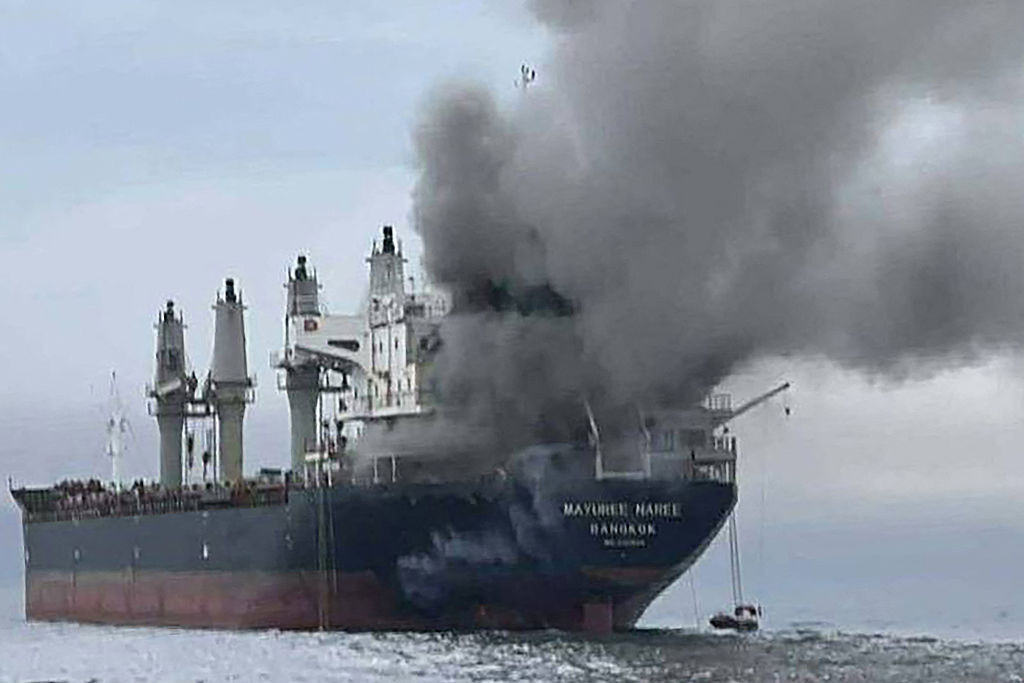

The U.S.-led campaign against Iranian military targets entered its third week on Friday, with both sides exchanging strikes and tensions continuing to ripple across the Middle East.
U.S. officials say American forces targeted installations on Kharg Island, a key military hub for Iran’s oil infrastructure. Authorities stressed that oil facilities were spared for now, but Iran warned that any future attacks on its energy assets would be met with retaliation.
The conflict has disrupted global energy markets. The Strait of Hormuz, through which roughly a fifth of the world’s oil supply passes, has seen heightened security concerns. Barclays raised its forecast for Brent crude to $85 per barrel in 2026, noting that prolonged disruption could push prices even higher.
Nearby countries are feeling the effects. Iraq has reported attacks spilling across its borders, raising fears that the war could destabilize the broader region. Tehran has also issued warnings for ports in the United Arab Emirates, while U.S. facilities in Baghdad have faced missile attacks attributed to Iranian forces.
The campaign began with coordinated U.S. and Israeli strikes earlier this month and has since expanded to include both military and strategic economic targets. Analysts note that while the U.S. and Israel are framing the strikes as limited, Iran’s response signals the possibility of further escalation.
President Donald Trump has also taken to social media and public statements to challenge how the conflict is portrayed in the media, dismissing what he calls misleading coverage and reiterating that his administration’s actions — including strikes on Iran’s Kharg Island — are being mischaracterized.
Officials and analysts are watching for several key developments: whether Iran targets oil infrastructure in the Gulf, how global oil markets respond, and whether diplomatic channels emerge to reduce the risk of broader regional conflict.
Start your day with essential news from Salon.
Sign up for our free morning newsletter, Crash Course.
As the war continues, international observers warn of the potential for the conflict to disrupt energy supplies, heighten regional instability, and draw in additional actors across the Middle East.
Read more
about the conflict with Iran
